
Why Is Polypropylene a Thermoplastic? Key Insights for OEM Managers
Introduction
Polypropylene stands at the forefront of thermoplastics, offering unmatched versatility and durability that can transform manufacturing processes. As OEM managers navigate the complexities of material selection, understanding how to fully harness these advantages is essential. Yet, many OEM managers struggle to fully leverage these thermoplastic characteristics due to misconceptions and lack of knowledge about the material's applications. This article delves into the defining traits of polypropylene, its molecular structure, and its extensive applications. Understanding how to effectively utilize polypropylene can be the key to unlocking greater efficiency and innovation in your manufacturing operations.
Define Polypropylene: Characteristics of a Thermoplastic
A common question in materials science is polypropylene, a thermoplastic polymer, known for its unmatched versatility and durability in various applications. Produced through the polymerization of propylene monomers, this process creates a semi-crystalline structure, which is key to its unique properties. Key characteristics of this material include its lightweight nature, high chemical resistance, and excellent fatigue resistance, making it suitable for a wide range of applications across various industries.
However, OEM managers often face challenges in finding materials that meet their specific operational requirements. One of the defining characteristics of thermoplastics, including polypropylene, is that it allows them to soften upon heating and harden upon cooling. This property enables simple processing and shaping into various designs and structures, enhancing its appeal in manufacturing.
At Lincoln Plastics, we work hand-in-hand with OEMs to guarantee their plastic products meet all quality standards, including specific checks for ‘fit and function’. Our robust quality management program, certified to ISO 9001:2015, includes dedicated quality books that document critical dimensions, in-process checks, and run documentation. We utilize various check gauges to ensure a proper end-use fit, reinforcing our commitment to precision and customization.
Additionally, we can easily source colors that meet your Pantone specifications, ensuring consistency across manufacturers. Current statistics indicate that the global demand for this plastic generates an annual market of approximately 45 million metric tons, with projections suggesting an increase to around 62 million metric tons. The packaging industry alone accounts for about 30% of this market, underscoring the material's widespread use.
Recent advancements in polyolefin technology have introduced thermoplastic elastomers (TPEs) as impact modifiers, improving flexibility and resilience, particularly in low-temperature uses. Furthermore, block copolymer plastic has emerged as a superior choice for applications needing high impact durability, such as automotive components.
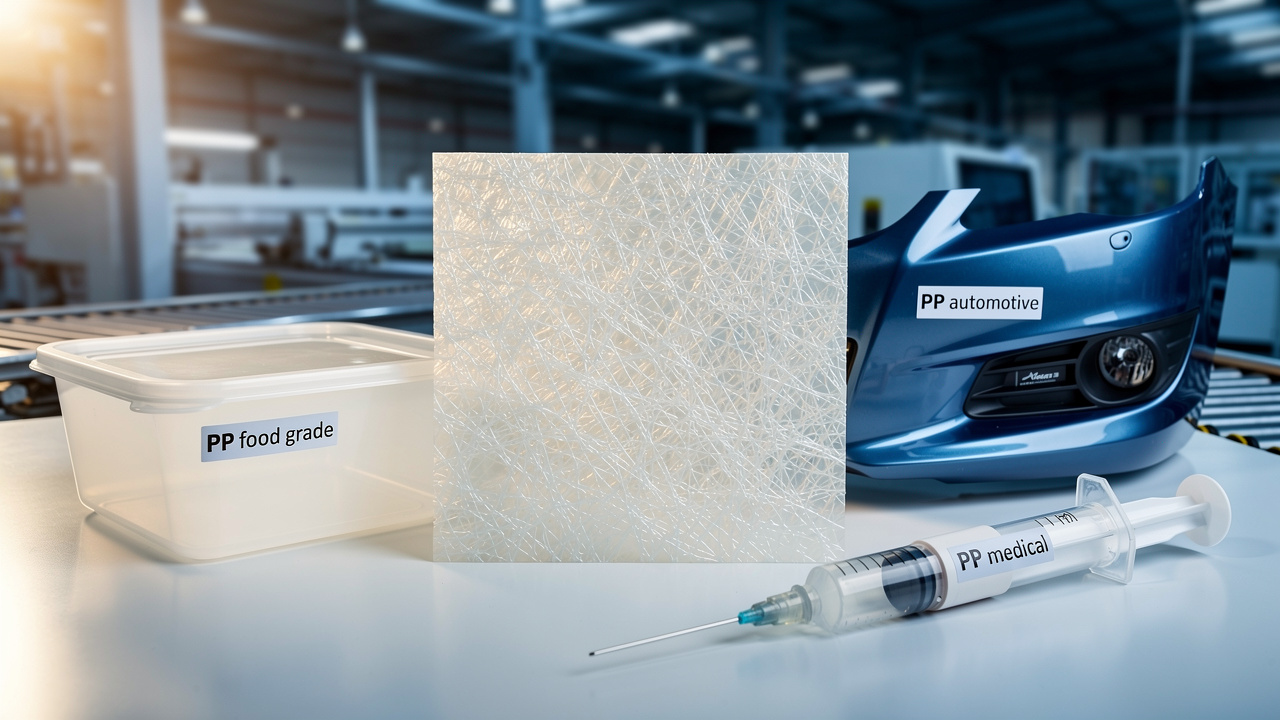
Case studies highlight polypropylene's effectiveness in various manufacturing contexts. For example, its chemical durability makes it perfect for containers and pipes that must withstand corrosive substances, while its lightweight and sturdy nature is utilized in automotive parts like bumpers and dashboards. Failing to recognize these benefits could lead to increased costs and inefficiencies in your manufacturing processes.
Expert views highlight that the distinct characteristics of this polymer, including its high impact durability and recyclability, make it a favored option for producers in various industries, such as packaging, automotive, and consumer products. However, it is important to note that this material has limitations, including low strength and poor impact resistance at low temperatures, which should be considered when selecting materials that align with operational needs and product specifications.

Examine Properties: Molecular Structure and Thermal Behavior
Understanding polypropylene's molecular structure is crucial for OEM managers aiming to optimize material selection and enhance product performance. Polypropylene's molecular structure is mainly linear, made up of repeating propylene units linked by carbon-carbon bonds. These variations in tacticity can dramatically influence the physical properties of polypropylene, making it essential to understand for optimal application.
For instance, the isotactic variant, with aligned methyl groups, shows higher crystallinity and strength compared to the atactic form, which has a more disordered arrangement. This polymer's thermal behavior is characterized by a melting point between 160°C and 170°C, with a softening temperature that’s lower, ensuring it holds up under heat. This thermal stability allows polypropylene to maintain its integrity during various processing conditions, making it ideal for applications requiring heat resistance.
Recent studies show that understanding this molecular structure is key to leveraging polypropylene's performance in diverse applications, especially for OEM managers in industries like automotive and medical. Failing to understand these traits can lead to costly production errors and compromised product quality. Comprehending these molecular traits and their effects on thermal behavior is essential for optimizing material selection and ensuring reliability.
Moreover, understanding the different types of plastic and their particular uses can assist OEM managers in making knowledgeable choices about procurement. To boost production efficiency and quality, OEMs must adopt best practices in tube extrusion, like optimizing the extrusion profile and enforcing strict quality management plans, which are hallmarks of Lincoln Plastics' commitment to excellence.
Additionally, Lincoln Plastics is ISO 9001:2015 certified, ensuring that our quality management practices meet the highest standards. Our co-extrusion capabilities enable the creation of multi-color or multi-material profiles, further enhancing the versatility and application of our plastic products. By leveraging our expertise in co-extrusion and adhering to ISO 9001:2015 standards, Lincoln Plastics empowers OEM managers to make informed decisions that drive success in their industries.

Explore Applications: Industries Utilizing Polypropylene
Polypropylene stands as a cornerstone material across multiple industries, showcasing its unmatched versatility and reliability. In the packaging sector, it serves as a key material for:
This is primarily due to its moisture protection and durability. The automotive sector also significantly depends on this plastic for manufacturing components such as:
- Bumpers
- Interior trims
- Battery cases
Here, lightweight materials are crucial for enhancing fuel efficiency. Furthermore, this material finds extensive use in the medical field for producing:
- Syringes
- Specimen containers
- Other disposable items
This is owing to its chemical resistance and ease of sterilization. Its versatility extends to textiles, where it is utilized in nonwoven fabrics for applications such as:
- Diapers
- Filters
The worldwide market for polypropylene is anticipated to expand from USD 116.4 billion in 2025 to USD 219.1 billion by 2035, indicating a rising demand across these sectors. Understanding the diverse applications of polypropylene empowers OEM managers to leverage its benefits for enhanced product performance and market competitiveness.

Assess Advantages and Challenges: Weighing the Pros and Cons
Polypropylene stands out as a top choice for manufacturers, thanks to its impressive array of benefits. Its lightweight nature significantly reduces transportation costs and enhances energy efficiency across various applications. Moreover, this polymer offers outstanding chemical durability, making it ideal for environments where contact with harsh substances is common. Its durability and fatigue resistance contribute to the longevity of products, minimizing the need for frequent replacements.
In 2020, polypropylene accounted for a leading share of 32% among materials used in automobile manufacturing, underscoring its importance in the automotive sector. Furthermore, the global plastic market size was £60 billion in 2022 and is projected to grow at a rate of 3.1%, reaching £66 billion by 2025, reflecting its increasing demand across industries.
Yet, despite its many advantages, polypropylene does present certain challenges that must be addressed. Its low surface energy can complicate bonding with adhesives or paints, often necessitating special surface treatments for effective adhesion. Additionally, the sensitivity of this material to UV radiation can lead to deterioration over time if not sufficiently stabilized, restricting its use outdoors unless reinforced. Moreover, its non-biodegradable nature raises environmental concerns, highlighting the need for improved recycling methods.
OEM managers must carefully weigh these benefits against the challenges to effectively integrate polypropylene into their designs. Case studies highlight the successful use of polypropylene in high-performance applications, particularly in the automotive and packaging sectors, where its properties contribute to improved fuel efficiency and product safety. Strategic decision-making is crucial for OEM managers to harness the full potential of polypropylene while navigating its challenges.

Conclusion
Polypropylene stands out as a thermoplastic due to its unique molecular structure and thermal behavior, making it a top choice for OEM managers. By understanding polypropylene's properties, OEM managers can select the right materials and boost product performance, ensuring they meet the demands of their specific applications.
Throughout this article, we've explored key insights into polypropylene's characteristics, including its lightweight nature, chemical resistance, and durability. Its applications span sectors such as packaging, automotive, and medical, showcasing its widespread use and the growing market demand. However, OEM managers often face challenges in effectively utilizing polypropylene due to its bonding difficulties and environmental concerns. This highlights the importance of strategic decision-making for OEM managers.
In conclusion, the significance of polypropylene as a thermoplastic cannot be overstated. Its advantages, coupled with a thorough understanding of its limitations, empower OEM managers to make informed choices that drive efficiency and innovation in their manufacturing processes. By collaborating with Lincoln Plastics, OEM managers can unlock the full potential of polypropylene, ensuring their products meet market demands and exceed expectations.
Frequently Asked Questions
What is polypropylene and what are its key characteristics?
Polypropylene is a thermoplastic polymer known for its versatility and durability. Key characteristics include its lightweight nature, high chemical resistance, excellent fatigue resistance, and the ability to soften upon heating and harden upon cooling, which facilitates easy processing and shaping.
How is polypropylene produced?
Polypropylene is produced through the polymerization of propylene monomers, resulting in a semi-crystalline structure that contributes to its unique properties.
What challenges do OEM managers face when selecting materials like polypropylene?
OEM managers often struggle to find materials that meet specific operational requirements, including ensuring that the materials provide the necessary fit and function for their applications.
How does Lincoln Plastics ensure the quality of polypropylene products?
Lincoln Plastics employs a robust quality management program certified to ISO 9001:2015, which includes dedicated quality books, in-process checks, and the use of check gauges to ensure proper end-use fit and compliance with quality standards.
Can Lincoln Plastics customize polypropylene products to meet specific color requirements?
Yes, Lincoln Plastics can source colors that meet Pantone specifications, ensuring consistency across manufacturers.
What is the current market demand for polypropylene?
The global demand for polypropylene is approximately 45 million metric tons annually, with projections suggesting an increase to around 62 million metric tons. The packaging industry accounts for about 30% of this market.
What advancements have been made in polypropylene technology?
Recent advancements include the introduction of thermoplastic elastomers (TPEs) as impact modifiers, which enhance flexibility and resilience, particularly in low-temperature applications. Additionally, block copolymer plastics have emerged as a superior choice for high impact durability needs.
In what applications is polypropylene commonly used?
Polypropylene is widely used in manufacturing contexts such as containers and pipes that must withstand corrosive substances, as well as automotive parts like bumpers and dashboards due to its lightweight and sturdy nature.
What are some limitations of polypropylene?
Limitations of polypropylene include low strength and poor impact resistance at low temperatures, which should be considered when selecting materials for specific operational needs and product specifications.
How can readers contact Lincoln Plastics for tailored solutions?
Readers are invited to contact Lincoln Plastics experts for quotes or tailor-made solutions to meet their specific needs in plastic products.
List of Sources
- Define Polypropylene: Characteristics of a Thermoplastic
- What Are PP Plastic Properties? Key Characteristics and Uses Explained (https://lincoln-plastics.com/news-post/what-are-pp-plastic-properties-key-characteristics-and-uses-explained)
- What are the advantages and disadvantages of PP?|News|POLYPVC (https://polypvc.com/news/What-are-the-advantages-and-disadvantages-of-PP.html)
- How To Enhance The Properties Of Polypropylene Materials? - News (https://polychemer.com/news/how-to-enhance-the-properties-of-polypropylene-81842378.html)
- Everything you need to know about PP plastic (https://essentracomponents.com/en-us/news/manufacturing/injection-molding/everything-you-need-to-know-about-pp-plastic)
- Everything You Need To Know About Polypropylene (PP) Plastic (https://paulmurphyplastics.com/industry-news-blog/everything-you-need-to-know-about-polypropylene-pp-plastic)
- Examine Properties: Molecular Structure and Thermal Behavior
- Research and application of polypropylene: a review - PMC (https://pmc.ncbi.nlm.nih.gov/articles/PMC10761633)
- Polypropylene Melting Point & PP Softening Temperature Explained (https://palmetto-industries.com/polypropylene-melting-point)
- Improved thermal behavior of polypropylene polymer loaded with bulk and nanoscale Bi2O3/CuO composite - Scientific Reports (https://nature.com/articles/s41598-025-26980-4)
- Polypropylene (PP) Melting Point: Properties & Applications (https://salesplastics.com/polypropylene-melting-point)
- New Composite Structure Boosts Polypropylene’s Low-Temperature Toughness | Newswise (https://newswise.com/articles/new-composite-structure-boosts-polypropylene-s-low-temperature-toughness)
- Explore Applications: Industries Utilizing Polypropylene
- Trends & Strategies Shaping the $219 Billion Polypropylene Industry, 2025-2035 - Packaging End-Use Leads; Automotive Gains Momentum in Polypropylene Use (https://globenewswire.com/news-release/2025/12/08/3201326/28124/en/trends-strategies-shaping-the-219-billion-polypropylene-industry-2025-2035-packaging-end-use-leads-automotive-gains-momentum-in-polypropylene-use.html)
- Polypropylene Uses: Versatile Applications in Industry | Goodfish (https://goodfishgroup.com/polypropylene-uses)
- What are the common uses of polypropylene plastic? – Adreco Plastics (https://adrecoplastics.co.uk/polypropylene-uses)
- Research and application of polypropylene: a review - PMC (https://pmc.ncbi.nlm.nih.gov/articles/PMC10761633)
- Assess Advantages and Challenges: Weighing the Pros and Cons
- What are the advantages and disadvantages of PP?|News|POLYPVC (https://polypvc.com/news/What-are-the-advantages-and-disadvantages-of-PP.html)
- Is Polypropylene Eco-Friendly? Stats & Trends (https://greenmatch.co.uk/polypropylene-environmental-impact)
- Polypropylene: Benefits, Challenges, and Applications. (https://prototek.com/article/polypropylene-benefits-challenges-and-applications)
- 5 Best Practices for Using Polypropylene (PP) Plastic in Manufacturing (https://lincoln-plastics.com/news-post/5-best-practices-for-using-polypropylene-pp-plastic-in-manufacturing)
Related posts

Discover how clear colored plastic transforms projects with versatility and visual appeal.


Discover the key benefits of extrusion cross heads that enhance manufacturing efficiency.
Discover essential insights on plastic extrusion tubing for OEMs, covering materials, applications, and trends.
