
What Type of Material is Plastic? Key Characteristics Explained
Introduction
Plastic is not just a material; it's a pivotal element in modern manufacturing that demands responsible innovation. As industries expand their applications, they face mounting pressure to address the environmental consequences of plastic use.
Let’s explore the different types of plastics and their unique characteristics, as well as the critical role they play in contemporary society. Without innovation, industries risk falling behind in a market increasingly driven by sustainability demands. The future of industries hinges on their ability to innovate sustainably, or they may find themselves outpaced by more responsible competitors.
Define Plastic: Understanding Its Composition and Importance
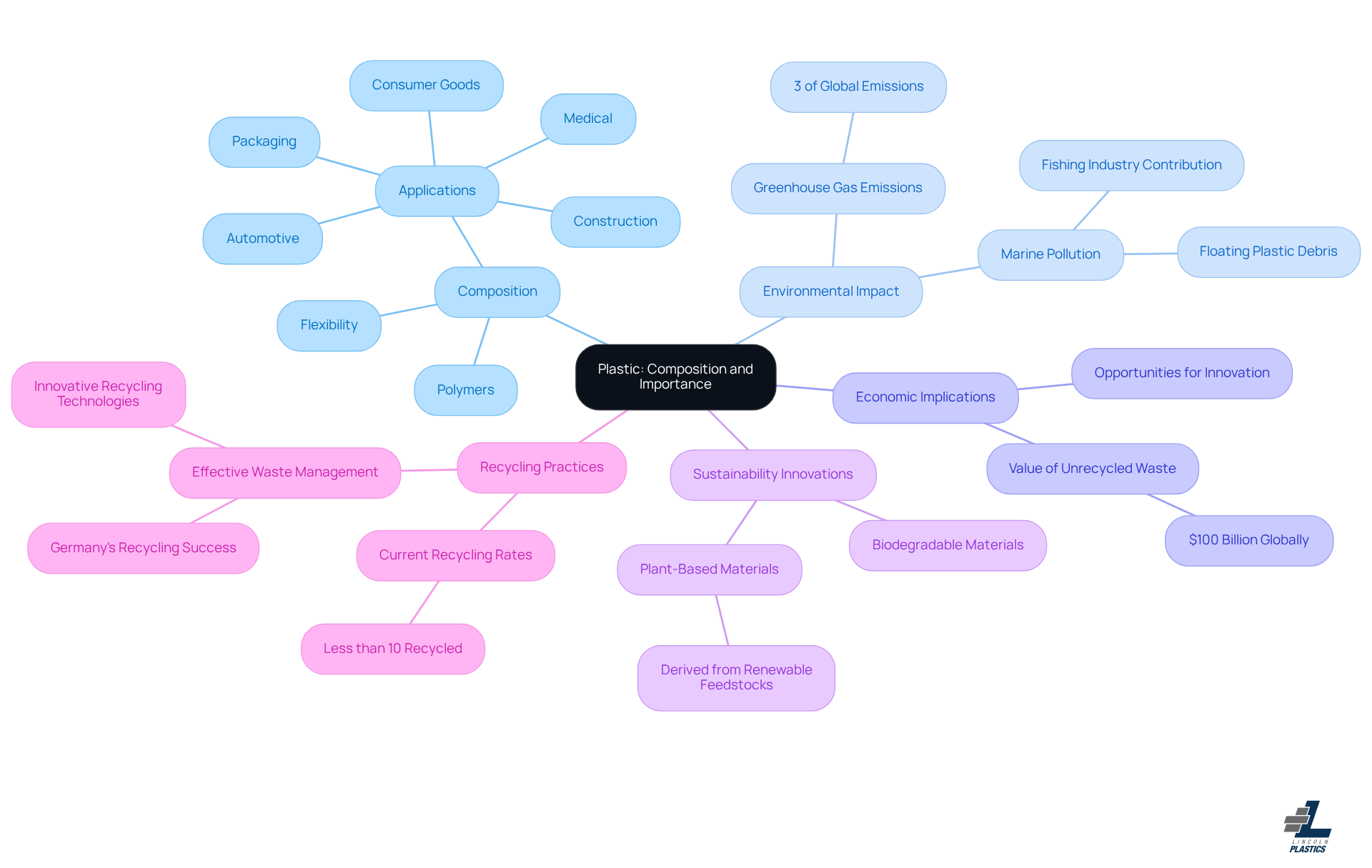
Plastic, a versatile material derived from polymers, is foundational to countless industries, yet its environmental impact raises pressing questions about sustainability. Polymers, long chains of molecules typically derived from petroleum, are characterized by their flexibility, allowing them to be shaped into various forms when heated and retain those shapes upon cooling. Plastics are lightweight and durable, making them suitable for a wide range of applications, from packaging to construction. Their importance in modern society cannot be overstated, as they play a critical role in numerous industries, including automotive, medical, and consumer goods. Understanding synthetic materials is key to recognizing their benefits and the sustainability challenges they present.
Have you noticed the rise of biodegradable materials in packaging and agriculture? Recent advancements in material composition have led to the creation of these substances, which are increasingly utilized in various sectors. These innovations are essential, as synthetic material production and disposal contribute approximately 3% of global greenhouse gas emissions, highlighting the need for sustainable practices in the industry. Furthermore, the value of unrecycled synthetic waste is estimated at $100 billion globally, underscoring the economic implications of effective waste management. Alarmingly, around 95% of the material value of synthetic polymer is lost after its first use. What happens to the vast majority of synthetic materials after their initial use? This loss not only impacts the environment but also represents a significant economic opportunity for innovation in recycling.
Case studies demonstrate the importance of synthetic materials in contemporary sectors. For example, the fishing sector is accountable for over three-quarters of floating waste in the ocean, highlighting the necessity for focused actions to reduce marine pollution. Additionally, countries like Germany have achieved high recycling rates through effective waste management systems, serving as models for improving recycling practices worldwide. Significantly, fewer than 10% of all materials are currently recycled, which poses a considerable challenge for the industry.
Experts agree that understanding what type of material is plastic and other materials is crucial for addressing sustainability issues. The rise of plant-based materials derived from renewable feedstocks, such as sugarcane and cornstarch, is gaining traction, although they currently account for less than 1% of global production. As the sector progresses, the emphasis on creating effective waste recovery techniques and self-decomposing materials is crucial for minimizing ecological effects and encouraging a circular economy.
As we innovate in material composition and recycling, the future of synthetic materials hinges on our commitment to sustainability and responsible practices.
Trace the History of Plastic: From Inception to Modern Use
The evolution of synthetic materials has revolutionized industries, but it also presents significant challenges that demand our attention. The history of synthetic material dates back to the mid-19th century when Alexander Parkes introduced Parkesine, the first man-made substance, in 1862. This marked the beginning of synthetic materials that could be molded and shaped.
The creation of Bakelite in 1907 by Leo Baekeland, acknowledged as the first entirely synthetic material, transformed the industry, resulting in the advancement of various kinds of polymers throughout the 20th century. Significantly, the 19th century witnessed important uses of synthetic materials, such as their application in comb-making, which led to the reduction of natural resources like tortoiseshell and affected species such as turtles.
The post-World War II period experienced a rise in synthetic material production, propelled by advancements in polymer chemistry and manufacturing techniques, with output growing from 2.3 million tons in 1950 to 448 million tons by 2015. Today, you can find synthetic materials in nearly every aspect of life, from packaging to automotive parts, showcasing their undeniable importance.
However, the widespread use of synthetic materials has led to significant environmental challenges that cannot be ignored. This has sparked urgent discussions about the need for sustainable practices in the industry.

Explore Different Types of Plastic: Characteristics and Applications
Choosing the right materials is essential for achieving optimal performance in manufacturing and construction. When discussing materials, one might ask what type of material is plastic, as they can be broadly categorized into two main types: thermoplastics and thermosetting materials.
Thermoplastics, such as polyethylene (PE), polypropylene (PP), and polyvinyl chloride (PVC), can be melted and reshaped multiple times, making them ideal for recycling. They are widely used in packaging, automotive parts, and consumer goods.
On the other hand, thermosetting plastics, like epoxy and phenolic resins, harden permanently after being shaped and are known for their durability and heat resistance, leading to the question of what type of material is plastic that makes them suitable for electrical insulators and automotive components.
Choosing the right type is crucial for industries where material performance is paramount. Without a commitment to quality and best practices, the reliability of your products could be at risk.
Lincoln Plastics emphasizes mastering the tube extrusion process, ensuring efficiency and quality in production. By implementing dedicated quality management plans and adhering to ISO 9001:2015 standards, Lincoln Plastics guarantees that their products meet the highest industry standards, making them a reliable partner for OEMs in various sectors.

Examine Environmental Impact: Sustainability and Challenges of Plastic
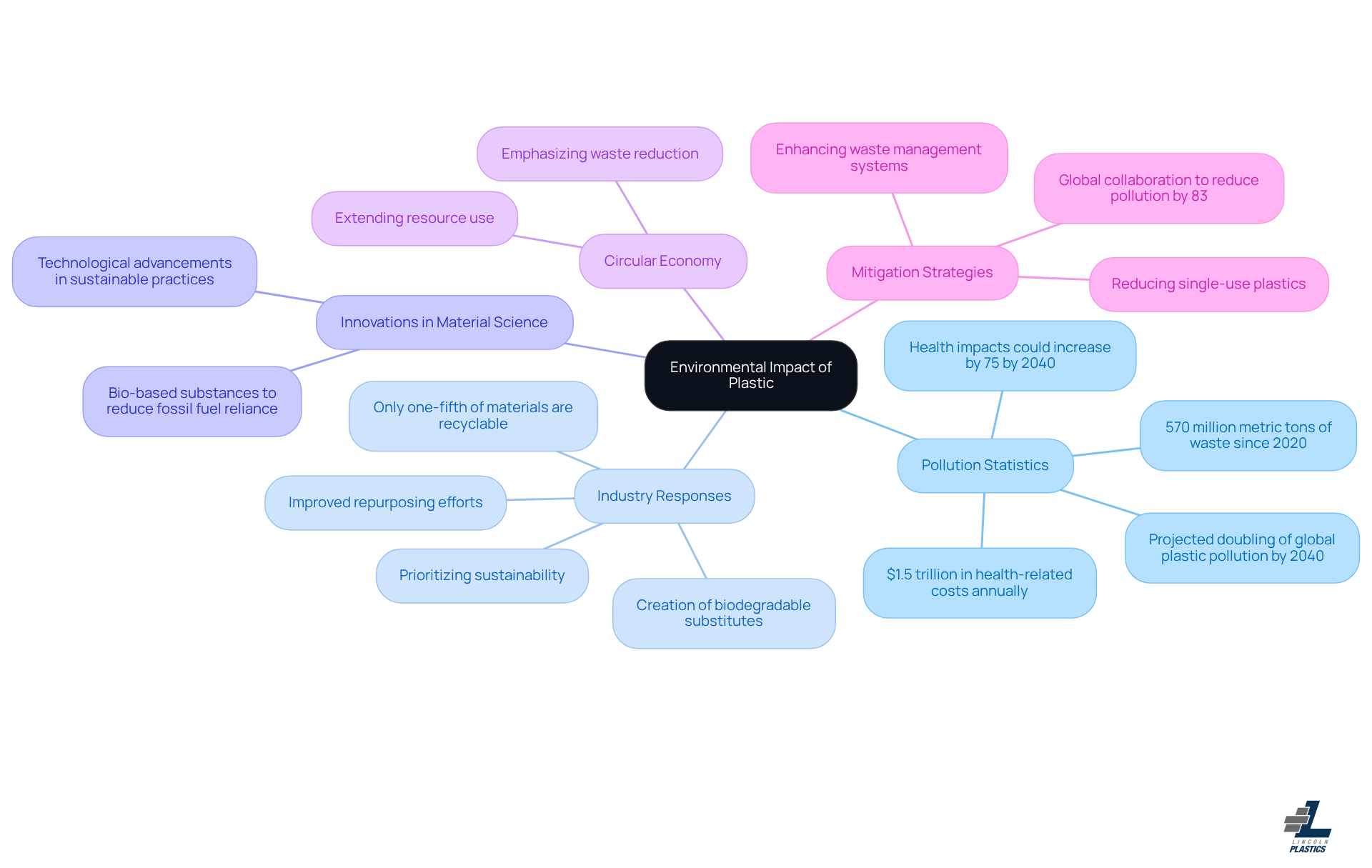
The staggering reality of synthetic material waste demands our immediate attention, with 570 million metric tons polluting our environment since 2020. The question of what type of material is plastic highlights that plastics are non-biodegradable, contributing to long-term pollution and posing significant threats to wildlife and ecosystems. Without significant policy changes, global waste pollution is projected to double by 2040. This will exacerbate existing environmental challenges. Health effects related to synthetic material production and pollution are anticipated to increase by 75% by 2040. This underscores the urgent need for action.
How is the industry responding to these challenges? By prioritizing sustainability. Initiatives focused on decreasing waste through improved repurposing efforts and the creation of biodegradable substitutes are gaining traction. Currently, only one-fifth of commonly manufactured materials are recyclable. This highlights the urgent need for improved recycling systems.
Innovations in material science are leading us toward more sustainable production methods, including bio-based substances that reduce reliance on fossil fuels. Are these advancements essential? Absolutely, as industries work to balance functionality with environmental responsibility. Shifting to a circular materials economy is crucial. This approach emphasizes reducing waste and extending resource use to mitigate environmental impacts.
Case studies reveal the interconnectedness of waste pollution and climate change. Effective mitigation strategies must address both issues simultaneously. As the global community seeks solutions, focusing on reducing single-use plastics and enhancing waste management systems is vital to combat the plastic pollution crisis. The time to act is now; our planet's future depends on our commitment to sustainable practices.
Conclusion
Navigating the complexities of modern manufacturing requires a deep understanding of plastic and its multifaceted characteristics. Plastics, derived from polymers, are integral to various industries due to their versatility and durability. Yet, how do we reconcile the benefits of plastics with their environmental impact? The pressing need for sustainable practices highlights the dual nature of this material - while it offers numerous benefits, it also poses significant environmental challenges that must be addressed.
Throughout this article, we’ve explored key insights into the types of plastics, their properties, and their applications. From thermoplastics like polyethylene and polypropylene to thermosetting materials, each type serves distinct purposes across industries. The historical context of plastic development underscores its evolution and the increasing urgency for sustainable solutions, particularly in light of the alarming statistics regarding plastic waste and pollution. Our commitment to quality, exemplified by Lincoln Plastics' adherence to ISO 9001:2015 standards and rigorous quality management plans, reinforces the importance of responsible manufacturing practices.
As the industry moves forward, the focus on sustainability and innovation in material science is paramount. Embracing biodegradable alternatives and enhancing recycling systems are critical steps toward mitigating the environmental impact of plastics. We must all prioritize sustainable practices and work together to foster a circular economy. Only through collective action can we ensure that the advantages of plastic do not compromise the health of our planet.
Frequently Asked Questions
What is plastic and what is it made from?
Plastic is a versatile material derived from polymers, which are long chains of molecules typically sourced from petroleum. Plastics are characterized by their flexibility, allowing them to be shaped when heated and retain those shapes upon cooling.
Why is plastic important in modern society?
Plastic plays a critical role in numerous industries, including automotive, medical, and consumer goods, due to its lightweight and durable nature. Its versatility makes it foundational to countless applications, from packaging to construction.
What are the environmental concerns associated with plastic?
The production and disposal of synthetic materials contribute approximately 3% of global greenhouse gas emissions. Additionally, around 95% of the material value of synthetic polymers is lost after their first use, highlighting significant environmental and economic challenges.
What advancements are being made in sustainable materials?
There has been a rise in biodegradable materials used in packaging and agriculture, derived from renewable feedstocks like sugarcane and cornstarch. However, these materials currently account for less than 1% of global production.
How does recycling impact the plastic industry?
Fewer than 10% of all materials are currently recycled, which poses a considerable challenge for the industry. Effective waste management systems, like those in Germany, serve as models for improving recycling practices worldwide.
What is the economic implication of unrecycled synthetic waste?
The value of unrecycled synthetic waste is estimated at $100 billion globally, underscoring the economic opportunity for innovation in recycling and effective waste management.
What role do case studies play in understanding plastic's impact?
Case studies, such as the fishing sector's contribution to ocean waste, highlight the necessity for focused actions to reduce marine pollution and improve recycling practices.
What is the future outlook for synthetic materials?
The future of synthetic materials hinges on a commitment to sustainability and responsible practices, with an emphasis on creating effective waste recovery techniques and self-decomposing materials to minimize ecological effects and encourage a circular economy.
List of Sources
- Define Plastic: Understanding Its Composition and Importance
- Plastic Pollution (https://ourworldindata.org/plastic-pollution)
- Promising breakthrough creates plastics that self-deconstruct on cue: Study (https://news.mongabay.com/2026/03/promising-breakthrough-creates-plastics-that-self-deconstruct-on-cue-study)
- Five Sustainability Trends Reshaping Plastic in 2026 (https://plasticsindustry.org/articles/five-sustainability-trends-reshaping-plastic-in-2026)
- The role of plastics in modern society: Navigating their importance and environmental impact (https://cambridgecleantech.org.uk/news/opinion-role-of-plastics)
- Trace the History of Plastic: From Inception to Modern Use
- The world’s plastic pollution crisis, explained (https://nationalgeographic.com/environment/article/plastic-pollution)
- The Age of Plastic: From Parkesine to pollution | Science Museum (https://sciencemuseum.org.uk/objects-and-stories/chemistry/age-plastic-parkesine-pollution)
- The History of Plastic | Invention & Evolution | Timeline (https://thesustainableagency.com/blog/the-history-of-plastic)
- History and Future of Plastics (https://sciencehistory.org/education/classroom-activities/role-playing-games/case-of-plastics/history-and-future-of-plastics)
- Explore Different Types of Plastic: Characteristics and Applications
- Thermoset vs Thermoplastics | Pros & Cons | Differences (https://vantageplastics.com/vantage-news-updates/thermoset-vs-thermoplastics-whats-the-difference)
- Thermoset vs Thermoplastic (What is the Difference?) (https://twi-global.com/technical-knowledge/faqs/thermoset-vs-thermoplastic)
- Thermoset vs. Thermoplastic: What’s the Difference? - Accu Inc (https://accu-components.com/us/p/456-thermoset-vs-thermoplastic-whats-the-difference?srsltid=AfmBOopdf2VYgTUMbH9X9k_ghz1hlrg-IFaozsDB0FnEIBIuRCvuFXLl)
- Thermoplastic vs. Thermosetting Plastic: Key Differences, Properties, and Applications (https://osborneindustries.com/news/difference-between-thermoplastic-thermosetting-plastic)
- Thermosetting and Thermoplastics Market Research Report 2033 (https://dataintelo.com/report/global-thermosetting-and-thermoplastics-market)
- Examine Environmental Impact: Sustainability and Challenges of Plastic
- Plastic pollution could more than double by 2040, report finds (https://thenewlede.org/2025/12/plastic-pollution-could-more-than-double-by-2040-report-finds)
- How climate change is reshaping the global plastic pollution (https://weforum.org/stories/climate-action/climate-change-reshaping-global-plastic-pollution-crisis)
- 2026 Plastics Industry Fly-In - Plastics Industry Association (https://plasticsindustry.org/flyin/2026)
- Tackling global plastic pollution (https://worldwildlife.org/our-work/sustainability/plastics)
Related posts

Discover key insights on profile extrusion plastic for OEM managers to enhance production efficiency.


Explore best practices for the extrusion of polymers to enhance quality and efficiency in manufacturing.
Discover the significance and applications of extruded polymers in modern manufacturing.
