

What Are PPO Plastics? Key Properties and Applications Explained
Introduction
PPO plastics, or Polyphenylene Oxide, are pretty amazing when you think about it! They’re known for their fantastic dimensional stability and heat resistance, making them a go-to choice in high-performance materials. As industries look for materials that can handle tough conditions while still being reliable, it’s crucial to get a grip on what makes PPO plastics so special.
Now, you might be wondering: what challenges do manufacturers face when trying to tap into the full potential of these versatile materials? And how can they use their strengths to spark innovation across different sectors? Let’s dive into this together!
Define Polyphenylene Oxide (PPO) Plastics
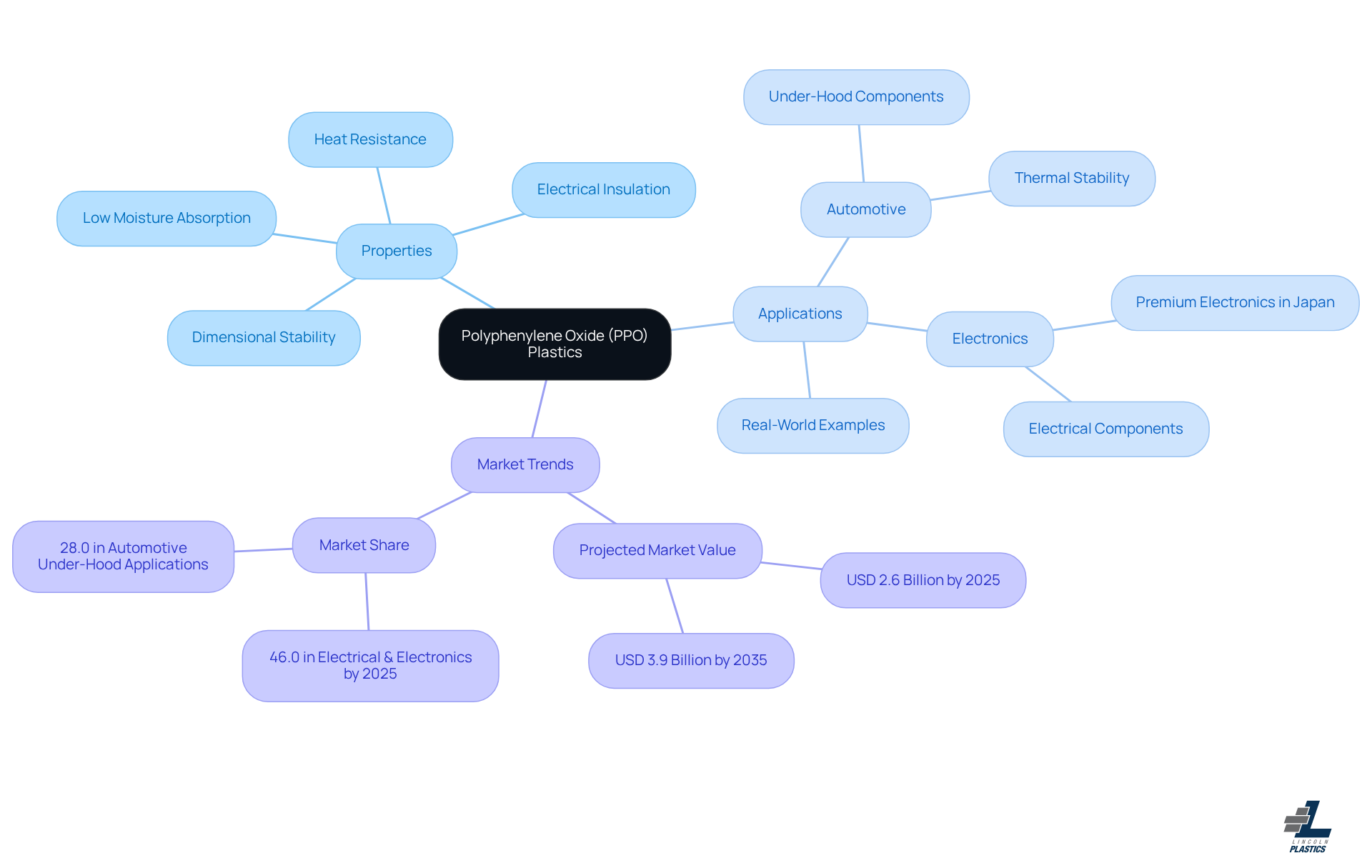
Have you ever wondered how certain materials can withstand extreme conditions? Well, let’s talk about PPO plastics, also known as Polyphenylene Oxide. PPO plastics are known for their impressive dimensional stability and low moisture absorption, making them a reliable choice. Plus, it offers excellent electrical insulation. Sounds pretty cool, right?
What makes PPO plastics stand out is their rigid structure and durability, making them a go-to choice for tough applications, especially in the automotive and electronics industries. And if you think that’s impressive, modified versions like Noryl take it a step further, enhancing their properties for specific needs.
Now, let’s dive into the science a bit. The chemical structure of PPO is made up of repeating units from phenolic compounds. This unique makeup contributes to its adaptability in various engineering contexts. Recent research shows that the market for PPO plastics is expanding, with an increasing demand. That’s a clear sign that demand for PPO plastics is on the rise!
You might be curious about where PPO plastics are actually utilized. Well, in the electrical and electronics sector, they are used extensively. This highlights how crucial PPO plastics are for modern technology. Real-world examples include its use in automotive under-hood components, where thermal stability is key for performance in high-temperature environments. It’s also found in premium electronics in Japan, showcasing just how versatile this material is.
As industries continue to focus on quality and performance, the use of PPO plastics is only set to grow. So, next time you hear about PPO, remember it’s not just a polymer; it’s a game-changer in many fields!
Trace the History and Development of PPO Plastics
Let’s take a trip back to the late 1950s, when a chemist named Allan Hay at General Electric was busy pioneering something pretty cool: PPO plastics. Fast forward to 1964, and voilà! PPO was patented and hit the market, initially under the name Noryl. This innovative material, known as polyphenylene oxide, especially its thermal stability and electrical insulation. Did you know it has a glass transition temperature (Tg) of 218°C? That’s impressive!
As the industry evolved, so did PPO. Improvements in processing methods and the introduction of modified PPO blends opened up a whole new world of possibilities. Remember when Noryl launched in 1966? That was a game-changer, establishing PPO as a leading material in various applications. And it didn’t stop there! With continuous advancements, like the introduction of new formulations and better mechanical characteristics, PPO plastics have solidified their place in modern manufacturing. You’ll find it everywhere - from automotive components and even consumer products. Isn’t it fascinating how a little innovation can lead to such a big impact?

Examine Key Properties of PPO Plastics
stand out due to several key properties that make them extremely useful across various industries.
Did you know that PPO can handle continuous operating temperatures above 220°F (104°C)? This makes it perfect for applications like automotive parts and electrical insulation. This is a big deal! It means PPO keeps its shape and performs reliably even in humid conditions. So, if moisture is a concern, PPO is definitely the way to go. With its high dielectric strength, PPO is a fantastic choice for electrical and electronic components. Think connectors and circuit boards - safety and reliability are key here! PPO is known for its rigidity and toughness, which means it can take a beating. This makes it a versatile material in fields like automotive, aerospace, and consumer electronics.
These properties not only show how versatile PPO plastics are but also highlight their applications that prioritize performance and reliability. For instance, the industry is leaning more on PPO for parts that need both heat resistance and moisture stability. It’s a clear trend towards advanced materials in engineering.
And here’s something interesting: the polyphenylene oxide market is expected to grow at a CAGR of 6.9% from 2025 to 2030, with the Asia Pacific region projected to hold a significant market share of 47.7% in 2024. This growth is driven by the rising demand for PPO in various applications, including automotive and electronics.
Industry leaders like Asahi Kasei and Mitsubishi Chemical are really emphasizing the benefits of PPO. They highlight its unique features, like durability and thermal stability, which are crucial for ensuring safety and reliability in high-voltage environments.
So, if you’re in an industry that values performance, it might be time to consider how PPO can fit into your plans!

Explore Applications of PPO Plastics in Various Industries
It's pretty fascinating how PPO plastics are used in a variety of ways across different industries!
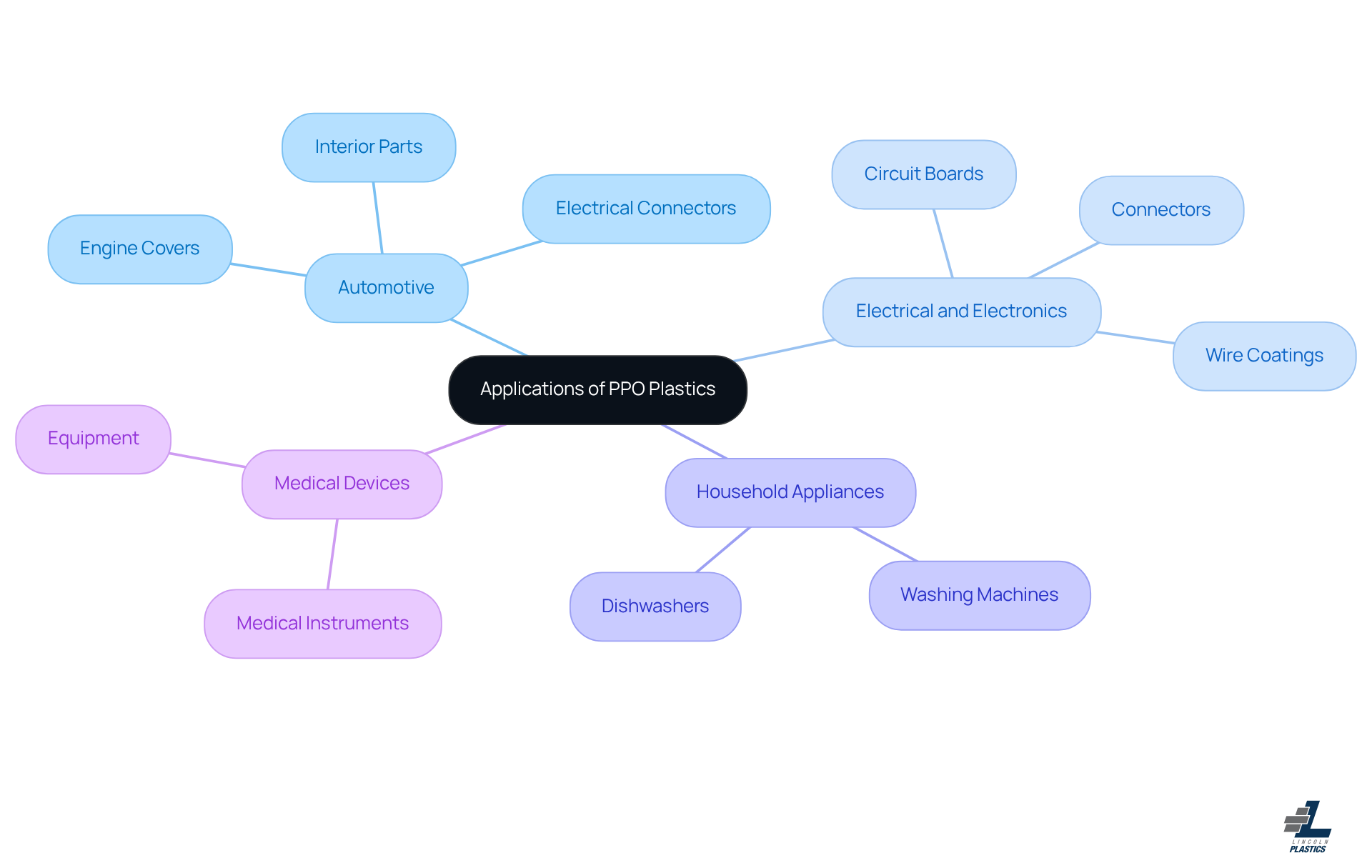
Automotive: Think about your car. Components like engine covers, electrical connectors, and interior parts are made from PPO plastics. Why? Because it’s lightweight and durable!
Electronics: You might not realize it, but PPO plastics are present in all your gadgets. It’s in wire coatings, circuit boards, and connectors, thanks to its insulating properties. At Lincoln Plastics, we team up with OEMs to make sure these components meet all quality standards, including special checks for ‘fit and function’. Plus, we’re all about customization, tailoring our products to fit the specific needs of electrical applications.
Home Appliances: Ever wondered what makes your washing machine or dishwasher so reliable? That’s PPO plastics in action! It’s durable and heat-resistant, perfect for those appliances. Our manufacturing process includes essential in-process checks to ensure that the materials we use are consistent and dependable. And if you need specific colors, we can match them to your Pantone specifications for a uniform look across manufacturers.
Medical Devices: When it comes to medical instruments and equipment, PPO plastics shine with their versatility. At Lincoln Plastics, we make sure all components are crafted to the exact critical dimensions, giving OEMs the confidence that their products will perform just right. The adaptability of PPO plastics keeps pushing the boundaries of innovation in product design and manufacturing processes.
The growing use of PPO plastics in these areas truly demonstrates their importance for modern technology. It’s a key player in modern manufacturing, and it’s exciting to see where it’s headed!
Conclusion
PPO plastics, or Polyphenylene Oxide, are pretty amazing when you think about it! They bring some fantastic properties to the table, making them super valuable in all sorts of industries. With their high heat resistance, low moisture absorption, and excellent electrical insulation, it’s no wonder that PPO is a go-to choice for tough applications in automotive, electronics, and more. This polymer has come a long way since it first hit the scene, really changing the game for high-performance materials.
Throughout this article, we’ve explored some key insights into what makes PPO plastics so special. From their sturdy structure and mechanical strength to their vital role in modern manufacturing, these plastics aren’t just versatile; they’re essential for keeping products safe and reliable. Whether it’s automotive parts or medical devices, the projected market growth shows just how much demand there is for these innovative materials. Staying in the loop about their capabilities and applications is definitely worth it!
As industries keep focusing on performance and sustainability, we can’t overlook how important PPO plastics are. Embracing this material in engineering and manufacturing can really boost product quality and spark innovation. If you’re in sectors like automotive, electronics, or household appliances, thinking about integrating PPO plastics could be a game-changer for achieving better efficiency and reliability in your products. So, why not take that step? It could lead to some exciting advancements!
Frequently Asked Questions
What are Polyphenylene Oxide (PPO) plastics?
PPO plastics, or Polyphenylene Oxide, are high-performance thermoplastic polymers known for their impressive dimensional stability, low moisture absorption, and excellent electrical insulation.
What are the key properties of PPO plastics?
Key properties of PPO plastics include a rigid structure, high heat resistance, and low moisture absorption, making them suitable for tough applications.
In which industries are PPO plastics commonly used?
PPO plastics are commonly used in the automotive and electronics industries, particularly in applications that require thermal stability and electrical insulation.
What is Noryl in relation to PPO plastics?
Noryl is a modified version of PPO plastics that enhances its properties for specific needs, making it even more versatile for various applications.
What is the projected market value for PPO plastics?
The global market for PPO plastics is projected to reach USD 3.9 billion by 2035, with an estimated worth of USD 2.6 billion by 2025.
What market share is PPO plastics expected to capture in the electrical and electronics sector?
PPO plastics are expected to capture a 46.0% market share in the electrical and electronics sector by 2025.
Can you provide examples of where PPO plastics are utilized?
PPO plastics are utilized in automotive under-hood components, where thermal stability is crucial, and in premium electronics in Japan, demonstrating their versatility in high-temperature environments.
List of Sources
- Define Polyphenylene Oxide (PPO) Plastics
- openpr.com (https://openpr.com/news/4286484/polyphenylene-oxide-market-forecast-to-hit-usd-3-6-billion)
- globenewswire.com (https://globenewswire.com/news-release/2025/09/03/3143548/0/en/Global-Polyphenylene-Oxide-Market-to-Reach-USD-3-60-Billion-by-2032-Driven-by-Growing-Demand-for-High-Performance-Thermoplastics-SNS-Insider.html)
- grandviewresearch.com (https://grandviewresearch.com/industry-analysis/polyphenylene-oxide-ppo-market)
- factmr.com (https://factmr.com/report/polyphenylene-oxide-ppo-resins-market)
- Trace the History and Development of PPO Plastics
- ptonline.com (https://ptonline.com/articles/tracing-the-history-of-polymeric-materials-part-22)
- plastiquarian.com (https://plastiquarian.com/?page_id=14282)
- imarcgroup.com (https://imarcgroup.com/polyphenylene-oxide-pricing-report)
- ptonline.com (https://ptonline.com/articles/tracing-the-history-of-polymeric-materials-part-23)
- mcgroup.co.uk (https://mcgroup.co.uk/news/20240829/polyphenylene-oxide-pioneering-advanced-thermoplastics-across-industries.html)
- Examine Key Properties of PPO Plastics
- archivemarketresearch.com (https://archivemarketresearch.com/reports/polyphenylene-oxide-ppo-plastic-62593)
- grandviewresearch.com (https://grandviewresearch.com/industry-analysis/polyphenylene-oxide-ppo-market)
- globenewswire.com (https://globenewswire.com/news-release/2025/09/03/3143548/0/en/Global-Polyphenylene-Oxide-Market-to-Reach-USD-3-60-Billion-by-2032-Driven-by-Growing-Demand-for-High-Performance-Thermoplastics-SNS-Insider.html)
- digitaljournal.com (https://digitaljournal.com/pr/news/polyphenylene-oxide-ppo-market-showing-rapid-expansion-latest-developments-and-detail-analysis-2023-2030)
- Explore Applications of PPO Plastics in Various Industries
- linkedin.com (https://linkedin.com/pulse/polyphenylene-oxide-consumption-market-dltof)
- linkedin.com (https://linkedin.com/pulse/north-america-polyphenylene-oxide-ppo-plastic-phlcf)
- dataintelo.com (https://dataintelo.com/report/ppo-engineering-plastics-market)
- openpr.com (https://openpr.com/news/4182359/polyphenylene-oxide-ppo-resins-market-is-expected-to-reach)
- openpr.com (https://openpr.com/news/4268022/global-polyphenylene-oxide-ppo-resins-market-forecast)


