
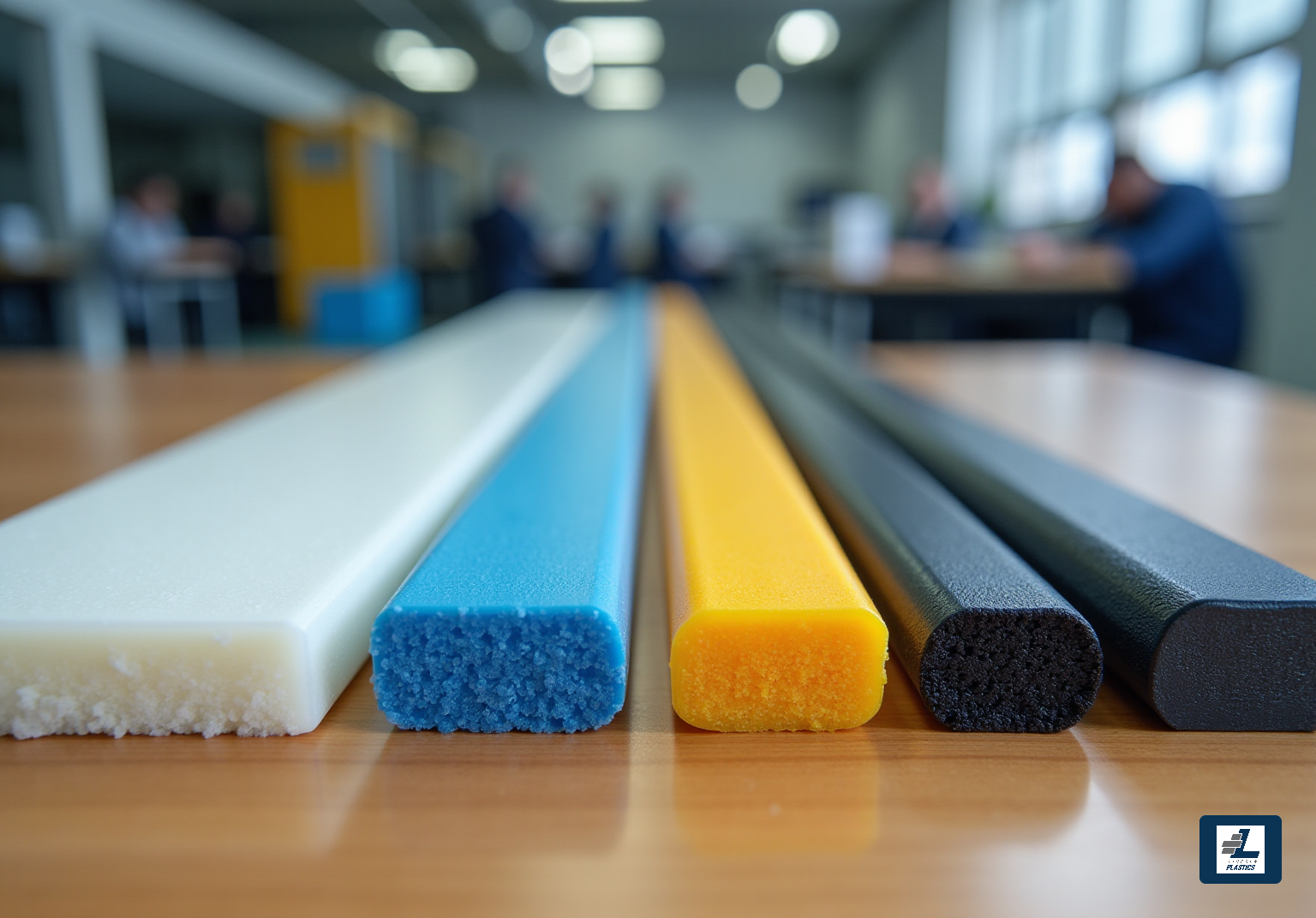
Understanding Plastic Density (kg/m3) for Optimal Material Selection
Introduction
Understanding plastic density can feel a bit tricky, right? But if you're involved in material selection or manufacturing, it's super important. The density of plastics, measured in kilograms per cubic meter (kg/m³), plays a big role in their strength, flexibility, and how they’re processed. This makes it a key factor in engineering decisions.
Now, you might be wondering how to tackle the differences in density among various types of plastics - like thermoplastics, thermosets, and elastomers. How do you ensure you’re making the best choices for performance and cost? This article dives into why plastic density matters, looking at how it affects material properties and offering some helpful tips for making informed selections.
Define Plastic Density and Its Importance
When we talk about synthetic materials, one key concept to grasp is density. Simply put, density is defined as the weight of the material divided by its volume, typically measured in kilograms per cubic meter (kg/m³). So, why should you care about plastic density? Let’s break it down.
- Consider this: Think about it - density impacts how strong, flexible, and thermally stable a polymer is. For instance, thermoplastics, which weigh in at about 1.30 - 1.45 g/cm³, are often chosen for applications that need durability and resistance to deformation. Heavier materials usually offer better heat resistance and mechanical strength, making them perfect for tough environments.
- Now, let’s talk money. The weight of a plastic is influenced by its density, which in turn affects shipping costs and resource usage. Using lighter materials, like polyolefins at around 0.91 - 0.93 g/cm³, can lead to significant savings in transportation and production. This is especially important in industries where shipping costs can eat into profits. Plus, understanding density is super important in fields like automotive and aerospace.
- Density also plays a big role in how materials are processed. It affects how easily they flow and can be molded during manufacturing. Lighter materials tend to flow better, which can boost production efficiency. Regular mass testing is essential to ensure products meet quality standards and performance criteria, helping maintain quality in polymer manufacturing.
In short, understanding kg/m³ of polymers is crucial. It helps you make informed choices about material selection, ensuring that the polymer you pick meets the specific needs of your application while keeping costs down and processing smooth.

Compare Density Across Plastic Types: Thermoplastics, Thermosets, and Elastomers
When it comes to plastics, did you know that their density can vary significantly? This difference plays a big role in what they’re used for. Let’s break it down:
- Thermoplastics: Think of materials like polyethylene (PE). You’ve got low-density polyethylene (LDPE) weighing in at about 0.91 to 0.93 g/cm³ and high-density polyethylene (HDPE) ranging from 0.94 to 0.97 g/cm³. These guys are typically lighter, which makes them super adaptable and easy to work with. That’s why you’ll find them in packaging and consumer products. Their great flow characteristics mean they can be molded into all sorts of shapes, boosting versatility.
- Thermosets: Now, let’s talk about thermosetting plastics, like epoxy and phenolic resins. These materials are heavier, usually between 1.2 to 1.5 g/cm³. This extra weight gives them more rigidity and thermal stability, making them ideal for structural applications, like in automotive and aerospace parts. The way their polymer chains are arranged really amps up their mechanical properties.
- Elastomers: These are your rubber-like materials, typically weighing between 0.9 to 1.2 g/cm³. Their unique mix of properties makes them perfect for flexible and impact-resistant uses, like seals and gaskets. Plus, their lighter weight can lead to significant savings in shipping and handling costs.
It is crucial for manufacturers to understand the characteristics of each type of plastic. The applications are directly impacted by the density. This knowledge helps in making informed choices about materials, optimizing performance and efficiency in production. And don’t forget, density can change with temperature! Knowing the variations is key for smart material selection. Standards like ASTM D792 and ISO 1183-2 provide methods for accurately measuring density of polymers, ensuring producers maintain quality and performance in their products.

Evaluate the Impact of Density on Processing and Application Suitability
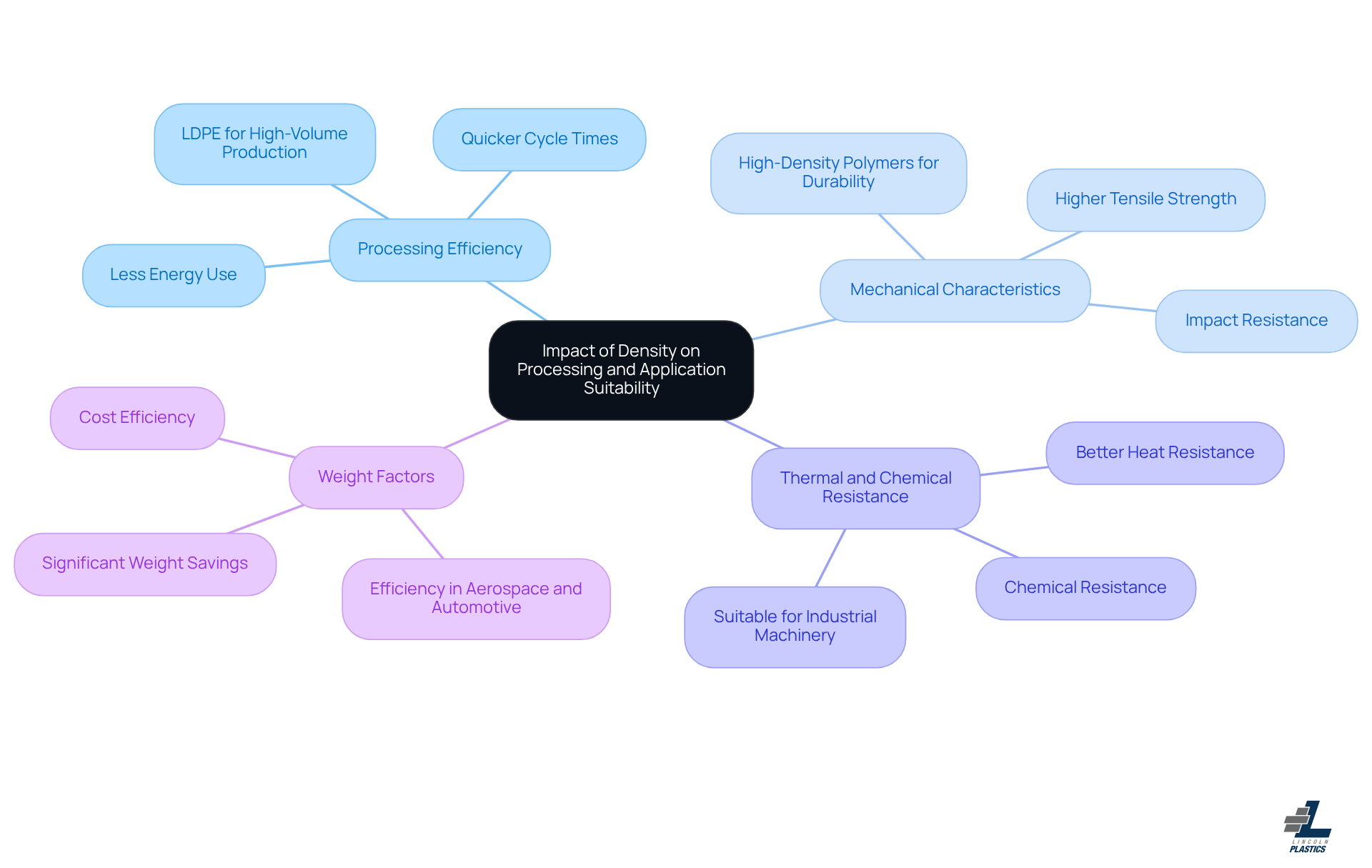
The processing of plastics and their effectiveness for different uses significantly depend on density.
Ever notice how thermoplastics tend to flow better during processing? This can lead to quicker cycle times and less energy use. Take polyethylene, for instance. It’s super easy to mold and extrude, making it a go-to for high-volume production. Plus, when cost is a concern, low-density polymers shine because they’re flexible and easy to work with.
Mechanical Characteristics: On the flip side, heavier materials often boast better properties, like higher tensile strength and impact resistance. This makes them perfect for tough jobs, like in construction or parts in cars, where durability is key. Think about steel, automotive parts, and industrial containers - they really deliver under pressure.
Now, let’s talk about how a polymer’s mass can affect its performance. Heavier materials usually handle heat and chemicals better, making them suitable for challenging environments, like industrial machinery. Regular testing, like ASTM D792, ensures these products meet the necessary standards and performance criteria in synthetic manufacturing.
Weight Factors: In industries like aerospace or automotive, weight is everything. Choosing a lighter plastic can lead to significant weight savings without compromising performance. Every gram counts when it comes to efficiency and fuel savings, right?
In summary, understanding how density affects processing and application suitability is crucial for manufacturers aiming to optimize their material choices and production methods. The synthetic materials sector accounts for over 30 percent of global energy consumption, highlighting the importance of improving efficiency in relation to energy use.
Summarize Key Density Comparisons and Selection Criteria
Let’s break down some key points about plastic density and why it matters when choosing materials:
- What’s the Deal with Density? The mass per unit volume of plastic, known as plastic density, is super important. It affects everything from how strong the material is to how easy it is to process and how much it costs. According to ASTM D792 - 98, we can measure the density for solid polymers in various shapes, which provides us with a consistent way to evaluate this crucial property.
- Density Differences: You might be surprised to learn that density varies significantly. Generally, thermoplastics are lighter than thermosets and elastomers. This difference can really impact how they’re used and how well they perform, so it’s essential for manufacturers to get a handle on these variations.
- Density Impact: The density plays a significant role in strength, durability, and even thermal and chemical resistance. For instance, high-density plastics and composites have a density that can handle high temperatures. On the flip side, low-density options might be better for flexible uses like food packaging and tubing.
- Selection Criteria: When you’re picking a plastic, think about weight, density, processing characteristics, and what you need it for. Doris Dokua Sasu points out that seawater has an average weight of 1.027 grams per cubic centimeter. This means some plastics will float, which is a key consideration in material selection.
By keeping these comparisons and criteria in mind, manufacturers can make smarter choices that boost product quality and efficiency. Plus, understanding density can help optimize storage and processing strategies, making operations even smoother.
So, what do you think? Ready to dive deeper into the world of plastics?

Conclusion
Understanding plastic density is super important when it comes to picking the right materials. The different densities of plastics not only affect how they perform and how we process them, but they also play a big role in how cost-effective they are in real-world applications. By getting a handle on plastic density, manufacturers can choose materials that fit their specific needs while also streamlining their production processes.
Now, let’s talk about some key points that really show why plastic density matters. Think about the flexibility of thermoplastics, the sturdiness of thermosets, and the bounce of elastomers. Each type of plastic has its own unique density traits that make it better suited for certain uses. Knowing these differences helps you make smarter choices that balance weight, strength, and processing efficiency, which ultimately leads to better product quality.
In a world where choosing the right materials can really affect both performance and cost, recognizing the role of plastic density is crucial. Manufacturers should definitely dig deeper into the specifics of plastic densities and what they mean for their choices. This way, every decision made is not just strategic but also sustainable. Embracing this knowledge can open doors to innovation and efficiency in the ever-changing world of synthetic materials.
Frequently Asked Questions
What is plastic density?
Plastic density is defined as the weight of the material divided by its volume, typically measured in kilograms per cubic meter (kg/m³).
Why is plastic density important?
Plastic density is important because it impacts material selection, cost efficiency, and processing characteristics of polymers.
How does plastic density affect material selection?
Density influences the strength, flexibility, and thermal stability of a polymer. High-density materials, like Polyvinyl Chloride (PVC), are often chosen for applications requiring durability and resistance to deformation.
What role does plastic density play in cost efficiency?
The weight of plastic, influenced by its density, affects shipping costs and resource usage. Using lighter materials, such as Low-Density Polyethylene (LDPE), can lead to significant savings in transportation and production.
How does plastic density impact processing characteristics?
Density affects how easily materials flow and can be molded during manufacturing. Lighter materials tend to flow better, which can improve production efficiency.
Why is regular mass testing important in polymer manufacturing?
Regular mass testing ensures that products meet quality standards and performance criteria, helping to maintain quality in polymer manufacturing.
List of Sources
- Define Plastic Density and Its Importance
- polychemer.com (https://polychemer.com/news/density-of-a-plastic-what-you-need-to-know-84948640.html)
- earth.org (https://earth.org/plastic-pollution-quotes)
- goodreads.com (https://goodreads.com/quotes/tag/plastics)
- infinitalab.com (https://infinitalab.com/plastics/density-of-plastics-technical-properties?srsltid=AfmBOoojQhUM8E0i2-flIYrZRVbQHN5EUShoaZot9gqpbb_E8KJ6dVxp)
- small-actions.com (https://small-actions.com/21-plastic-pollution-quotes-leading-to-the-right-actions)
- Compare Density Across Plastic Types: Thermoplastics, Thermosets, and Elastomers
- Density of Plastics Material: Technical Properties Table (https://specialchem.com/plastics/guide/density)
- finance.yahoo.com (https://finance.yahoo.com/news/thermoplastic-elastomers-market-size-expected-180000952.html)
- europlas.com.vn (https://europlas.com.vn/en-US/blog-1/density-of-a-plastic-what-you-need-to-know)
- Evaluate the Impact of Density on Processing and Application Suitability
- renoirgroup.com (https://renoirgroup.com/case_studies/plastics/redefining-success-in-plastic-film-manufacturing-a-strategic-approach-to-achieving-competitive-advantage)
- goodreads.com (https://goodreads.com/quotes/tag/plastics)
- Density of Plastics Material: Technical Properties Table (https://specialchem.com/plastics/guide/density)
- polychemer.com (https://polychemer.com/news/density-of-a-plastic-what-you-need-to-know-84948640.html)
- tsm-controls.com (https://tsm-controls.com/blog/case_studies/streamlining-production-at-polykemis-new-u-s-facility)
- Summarize Key Density Comparisons and Selection Criteria
- statista.com (https://statista.com/statistics/595434/plastic-materials-density?srsltid=AfmBOopXMRH_o5vMbPjygNawmjTS8MpecmjPraUnEElMB6rF9YQeAg4i)
- Density of Plastics Material: Technical Properties Table (https://specialchem.com/plastics/guide/density)
- earth.org (https://earth.org/plastic-pollution-quotes)


