
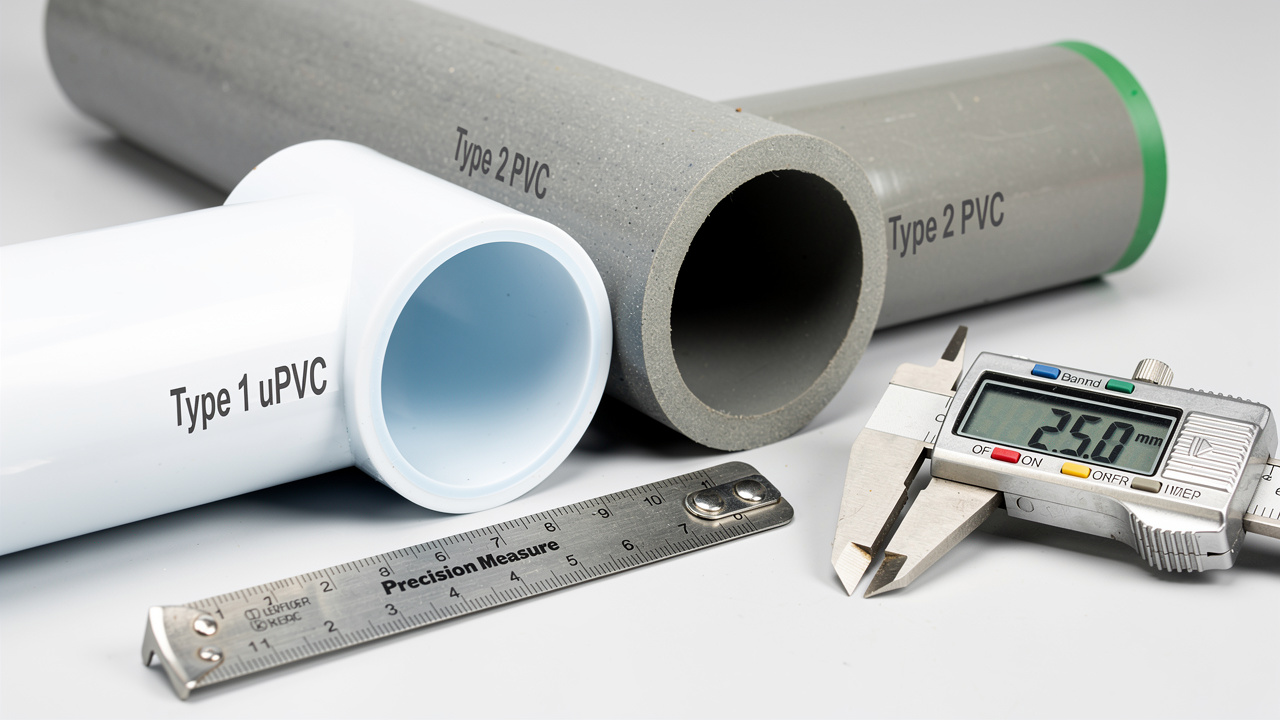
PVC Type 1 vs Type 2: Key Differences for OEM Purchasing Managers
Introduction
Selecting the right PVC type is crucial for ensuring performance and reliability in industrial applications. The choice between PVC Type 1 and Type 2 can have profound implications for your operations.
- PVC Type 1, known for its rigidity and exceptional chemical resistance, is often the go-to for environments demanding durability, such as agricultural irrigation systems.
- On the other hand, PVC Type 2 is engineered for enhanced impact strength, making it suitable for applications that encounter mechanical stress.
OEM purchasing managers face the challenge of navigating these options while understanding how distinct characteristics can influence their procurement decisions. Have you considered which factors are most critical for achieving optimal performance and compliance? Choosing the wrong PVC type can lead to costly failures and compliance issues, making informed selection critical. Failing to understand these distinctions can jeopardize performance and elevate operational risks.
Understand PVC Type 1 and Type 2: Key Characteristics
When it comes to selecting materials for demanding applications, the choice between PVC Type 1 vs Type 2 can significantly impact performance and reliability. PVC Grade 1, or unplasticized polyvinyl chloride (uPVC), is recognized for its rigidity, high strength-to-weight ratio, and exceptional chemical resistance. These attributes make it a top choice for applications that require durability and resilience against environmental factors. For instance, in agricultural settings, PVC Class 1 is often used for irrigation systems, where its durability ensures lasting performance under various weather conditions. At Lincoln Plastics, we use a variety of check gauges to ensure our PVC Category 1 products meet critical dimensions, providing OEMs with confidence in their performance.
In contrast, PVC Category 2 is modified to enhance its impact strength, making it ideal for applications that demand higher toughness. This type is commonly utilized in industrial environments where materials may encounter significant mechanical stress. While Category 1 excels in chemical resistance, Category 2 offers improved performance in impact situations, albeit with slightly reduced corrosion resistance.
Have you considered how these characteristics impact your procurement decisions? Understanding these differences is vital for OEM purchasing managers, as the choice between PVC Type 1 vs Type 2 can greatly influence product performance and reliability. Recent evaluations show that the demand for PVC Category 1 remains strong in sectors like agriculture, where its durability is crucial, while Category 2 is gaining traction in industries that require enhanced toughness. Furthermore, Lincoln Plastics is dedicated to meeting not only ISO 9001:2015 certification standards but also any additional regulatory requirements that may arise, ensuring our products are compliant and safe for use. Ignoring these distinctions could lead to procurement decisions that hinder operational efficiency. By understanding these distinctions, OEM purchasing managers can make informed decisions that enhance product reliability and operational success.

Compare Properties: Physical and Chemical Attributes of PVC Types
When it comes to selecting PVC for your projects, understanding the differences between Class 1 and Class 2 is essential. Clear distinctions emerge when assessing the physical and chemical characteristics of PVC type 1 vs type 2.
PVC Class 1 is recognized for its typical impact durability, making it suitable for a variety of general-purpose applications. It boasts exceptional chemical and corrosion resistance, which is vital in environments exposed to harsh chemicals. For example, Class 1 PVC is often used in chemical tanks and exhaust ducts due to its strong performance in these settings.
In contrast, PVC Class 2 is engineered for high impact strength, making it particularly advantageous in applications that demand enhanced durability, such as those involving mechanical stress. Yet, this increased toughness slightly reduces its chemical durability compared to Class 1. Both types are easy to fabricate and weld, but the decision between them should be guided by specific use case requirements, such as the level of chemical exposure or the need for impact resistance. Grasping these differences helps you make smarter choices when procuring materials.
Furthermore, it's important to note that the continuous use temperature for Class 1 PVC is rated at 140°F, with a Vicat softening point at 185°F, indicating where deformation begins under load. This information can assist purchasing managers in selecting the right PVC type for their specific applications. Making the right choice in PVC can significantly impact the longevity and performance of your applications.

Evaluate Applications: Best Uses for PVC Type 1 and Type 2
In the world of chemical processing and construction, the decision of PVC type 1 vs type 2 can significantly impact project success. PVC Grade 1 is predominantly utilized in chemical processing tanks, piping systems, and electrical insulation due to its exceptional chemical resistance and rigidity. It's particularly advantageous in environments where corrosion poses a significant risk, making it a favored option for uses in the construction and agricultural sectors. For instance, PVC Category 1 pipes represent 48% of the PVC usage market, propelled by their lightweight design and resilience, which are crucial for efficient water management systems.
On the other hand, PVC Category 2 is intended for applications that require greater impact resistance, such as lamp housings, seals, and certain piping systems. Its enhanced toughness makes it ideal for environments subjected to mechanical stress, which is common in manufacturing settings. The versatility of PVC Type 2 is reflected in its use across various industries, including automotive and construction, where durability is paramount.
Understanding these applications helps OEM purchasing managers choose the right option between PVC type 1 vs type 2 for their projects. By aligning the specific requirements of their uses with the strengths of each PVC type, they can optimize performance and reliability in their operations. Ultimately, the right PVC selection not only ensures project integrity but also drives long-term operational success.

Assess Pros and Cons: PVC Type 1 vs Type 2 for Your Needs
When it comes to selecting the right PVC for your application, understanding the strengths and weaknesses of PVC Type 1 vs Type 2 is crucial. PVC Grade 1 is renowned for its outstanding chemical durability and is the most frequently utilized variant, preferred for its standard impact durability and remarkable corrosion protection. This makes it especially suitable for corrosive environments. Its rigidity and strength contribute to its popularity across various industrial sectors. Yet, it falls short in impact durability when stacked against Category 2.
Conversely, PVC Category 2 is characterized by its high impact strength, making it perfect for applications where durability is essential. However, this benefit comes with a trade-off, as it offers slightly reduced chemical durability compared to Category 1. This decision ultimately hinges on the unique requirements of each application, balancing durability and chemical resistance.
Statistics show that PVC Category 1 is the most frequently utilized variant, preferred for its standard impact durability and outstanding corrosion protection. In contrast, PVC Category 2, while providing high impact strength, is better suited for situations demanding greater durability. Case studies highlight that when considering PVC Type 1 vs Type 2:
- PVC Type 1 is favored in applications requiring corrosion resistance, such as welded chemical tanks and piping systems.
- PVC Type 2 is utilized in environments demanding higher impact resistance.
By carefully evaluating these factors, you can ensure that your choice aligns perfectly with your operational demands, maximizing both performance and reliability.

Conclusion
Choosing the right PVC type is crucial for OEM purchasing managers who want to optimize their material selection. Understanding the differences between PVC Type 1 and Type 2 is essential, as this choice significantly impacts product performance and durability. It can also determine your overall operational success. By recognizing the unique characteristics of each type, decision-makers can ensure they select the most suitable material for their needs.
Key distinctions have been highlighted throughout the article. For instance, PVC Type 1 boasts superior chemical resistance, making it ideal for applications in agriculture and chemical processing. On the other hand, PVC Type 2 offers enhanced impact strength, suitable for environments facing mechanical stress. Have you considered how these differences might affect your operations? Aligning material properties with application requirements is crucial for ensuring procurement decisions support long-term reliability and efficiency.
Ultimately, the decision between PVC Type 1 and Type 2 should be guided by a thorough understanding of their respective strengths and weaknesses. Making the right choice not only enhances product integrity but also boosts operational efficiency. For tailored solutions and expert guidance, reaching out to Lincoln Plastics can provide valuable support in navigating these material choices, ensuring compliance with rigorous quality standards and meeting specific project demands. By understanding these differences, you can ensure your material choices lead to operational success and compliance with quality standards.
Frequently Asked Questions
What are the key characteristics of PVC Type 1?
PVC Type 1, or unplasticized polyvinyl chloride (uPVC), is known for its rigidity, high strength-to-weight ratio, and exceptional chemical resistance. These attributes make it suitable for applications requiring durability, such as irrigation systems in agriculture.
How does PVC Type 2 differ from PVC Type 1?
PVC Type 2 is modified to enhance its impact strength, making it ideal for applications that experience significant mechanical stress. While it offers improved toughness, it has slightly reduced corrosion resistance compared to PVC Type 1.
In what applications is PVC Type 1 commonly used?
PVC Type 1 is commonly used in agricultural settings, particularly for irrigation systems, due to its durability and ability to withstand various weather conditions.
What advantages does PVC Type 2 provide in industrial environments?
PVC Type 2 provides enhanced toughness, making it suitable for industrial applications where materials may encounter significant mechanical stress.
Why is it important for OEM purchasing managers to understand the differences between PVC Type 1 and Type 2?
Understanding these differences is crucial for OEM purchasing managers as the choice between PVC Type 1 and Type 2 can greatly influence product performance and reliability, impacting operational efficiency.
How does Lincoln Plastics ensure the quality of its PVC products?
Lincoln Plastics employs a variety of check gauges to ensure that its PVC Category 1 products meet critical dimensions, providing OEMs with confidence in their performance. Additionally, Lincoln Plastics adheres to ISO 9001:2015 certification standards and meets any additional regulatory requirements as needed.
What sectors show strong demand for PVC Type 1?
The demand for PVC Type 1 remains strong in sectors like agriculture, where its durability is crucial for effective performance.
How is Lincoln Plastics committed to quality management?
Lincoln Plastics is committed to quality management through rigorous quality plans, documented procedures, and in-process checks, ensuring that their products are compliant and safe for use.
List of Sources
- Understand PVC Type 1 and Type 2: Key Characteristics
- Master PVC Mechanical Properties for Optimal OEM Applications (https://lincoln-plastics.com/news-post/master-pvc-mechanical-properties-for-optimal-oem-applications)
- PVC — News Stories About Plastic Pollution — Beyond Plastics - Working To End Single-Use Plastic Pollution (https://beyondplastics.org/news-stories/tag/PVC)
- Premium Metals & Plastics Distributor | Next-Day Delivery (https://alro.com/divplastics/plasticsproduct_pvc.aspx)
- Scientists develop novel method for strengthening PVC products (https://news.osu.edu/scientists-develop-novel-method-for-strengthening-pvc-products)
- EPA considers reevaluating vinyl chloride, as PVC remains common in certain packaging (https://packagingdive.com/news/pvc-vinyl-chloride-packaging-epa-tsca-alternatives/697659)
- Compare Properties: Physical and Chemical Attributes of PVC Types
- Master PVC Mechanical Properties for Optimal OEM Applications (https://lincoln-plastics.com/news-post/master-pvc-mechanical-properties-for-optimal-oem-applications)
- Scientists develop novel method for strengthening PVC products (https://news.osu.edu/scientists-develop-novel-method-for-strengthening-pvc-products)
- Rigid PVC Sheet and Rod Are Excellent Chemical Resistant (https://iplasticsupply.com/home/plastic-materials-list/pvc-poly-vinyl-chloride-sheet-rod)
- PVC Plastic Properties — Mechanical, Chemical and Thermal (https://readyplastics.com/resources/materials/pvc/properties)
- What is the difference between PVC Type I and II? | U.S. Plastic Corp. (https://usplastic.com/knowledgebase/article.aspx?contentkey=820&srsltid=AfmBOoqhGG1cP9s2Ah06m39Pxenw7jMI3dpNK6K0kl4SfClj405IlxGw)
- Evaluate Applications: Best Uses for PVC Type 1 and Type 2
- Analyst talks PVC global demand, discusses packaging sector (https://plasticstoday.com/packaging/analyst-talks-pvc-global-demand-discusses-packaging-sector)
- Polyvinyl Chloride (PVC) Market Industry Share, Size, Growth Rate To 2035 (https://marketreportsworld.com/market-reports/polyvinyl-chloride-pvc-market-14718012)
- Master PVC Type 1: Best Practices for Sourcing and Manufacturing (https://lincoln-plastics.com/news-post/master-pvc-type-1-best-practices-for-sourcing-and-manufacturing?dcc2137a_page=6)
- PVC Market Set to Surge: Key Trends Shaping the Future of Plastics (https://openpr.com/news/4058572/pvc-market-set-to-surge-key-trends-shaping-the-future-of-plastics)
- Assess Pros and Cons: PVC Type 1 vs Type 2 for Your Needs
- PVC (https://curbellplastics.com/materials/plastics/pvc?srsltid=AfmBOorfWXXLLA-KhG6gugxQkJrFexGV2tBk_Nzd1pvkKHA1fpLaYtfO)
- What is the difference between PVC Type I and II? | U.S. Plastic Corp. (https://usplastic.com/knowledgebase/article.aspx?contentkey=820&srsltid=AfmBOore6cspkNnRZloOMInRI6Tim8JtWdgBHg7WfrWTSoxIGMmrh8Uz)


