
Maximize Efficiency with Crosshead Extruder Best Practices
Introduction
Crosshead extruders are shaking things up in the manufacturing world! They bring incredible efficiency and versatility when it comes to coating and encapsulating materials. But here’s the thing: understanding how these machines work can really help manufacturers cut down on waste and boost product quality.
Now, you might be wondering, how can companies make the most of crosshead extruders? What are the best practices to ensure they’re getting top-notch performance? This article is here to explore some essential strategies for maximizing efficiency. We’ll cover everything from picking the right materials to fine-tuning processes and keeping an eye on quality control. Let’s pave the way for some outstanding production outcomes together!
Understand Crosshead Extruder Functionality and Benefits
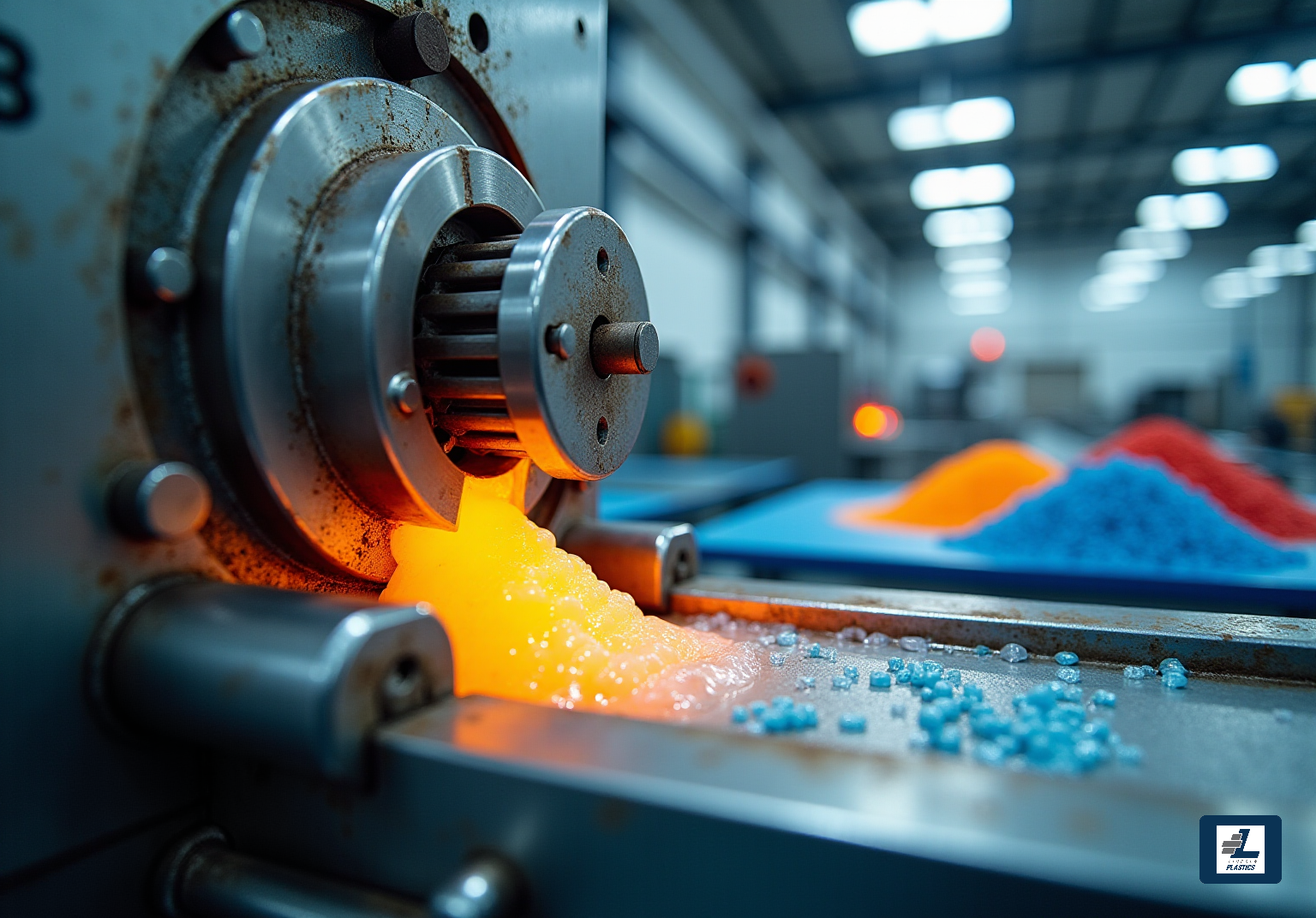
Crosshead extruders are impressive machines specifically engineered to coat or encapsulate items such as wires or cables with a plastic layer. They do this by guiding molten plastic through a die that shapes it around the core substance. So, what’s in it for you? Let’s break down the main benefits of using crosshead extruders:
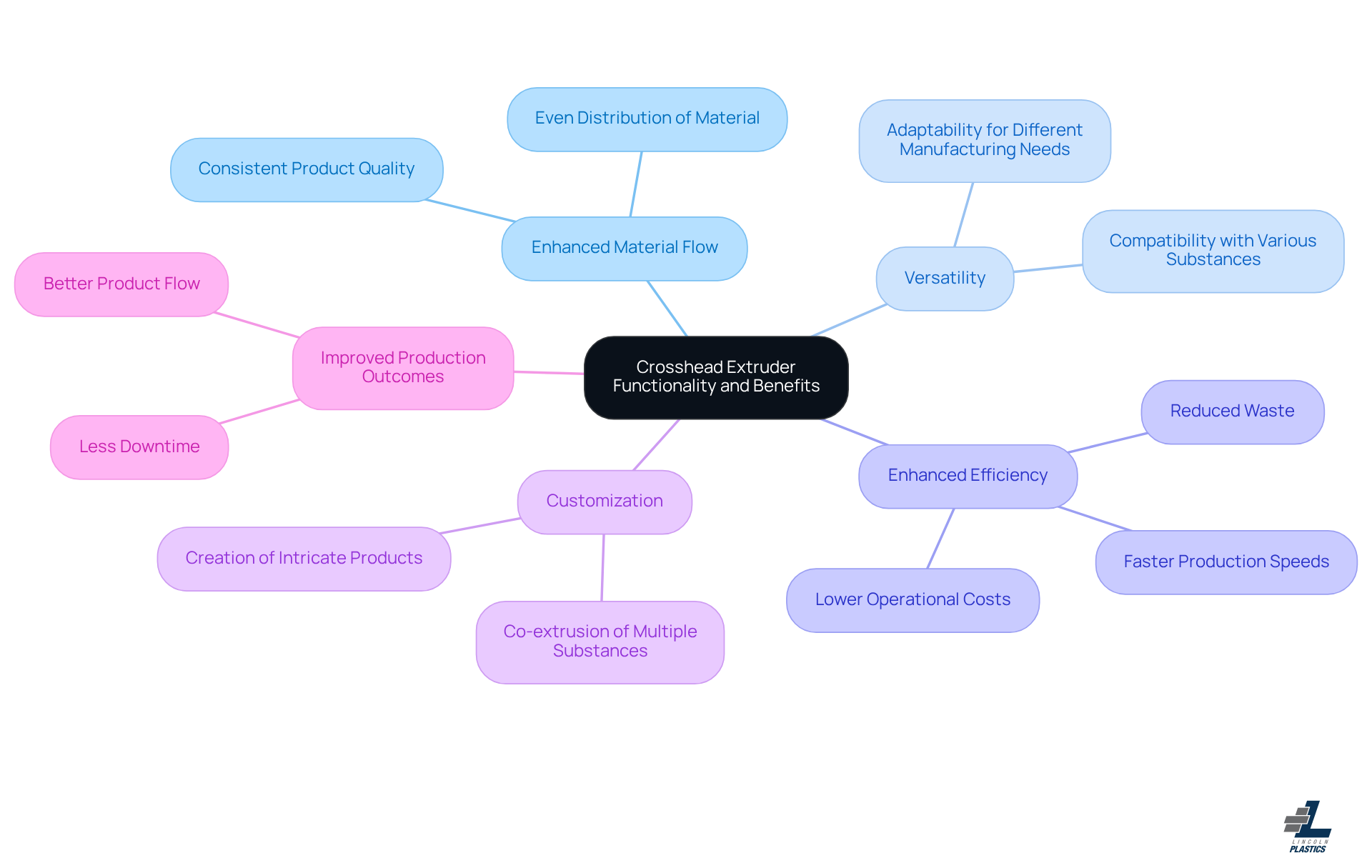
- Consistent Material Distribution: These extruders make sure the material spreads evenly, which is super important for keeping product quality consistent across different applications.
- Versatility: They can handle a bunch of different substances, including thermoplastics and elastomers, making them adaptable for all sorts of manufacturing needs.
Efficiency is achieved as production rates increase, reducing waste and speeding up production, which can significantly lower operational costs. In fact, recent stats show that companies using this technology can save a lot in the long run.
With precision control, you can achieve complex designs, allowing you to create intricate products with unique features.
Understanding how these machines work can really help manufacturers make the most of their operations with improved efficiency, leading to higher quality outputs and smoother processes. Real-world examples show that companies using this technology have seen increased productivity and less downtime. Isn’t it amazing how crosshead extrusion is making waves in modern manufacturing?
Choose Optimal Materials for Enhanced Extrusion Performance
Choosing the right components for the extruder is super important if you want to achieve optimal performance. So, let’s break down some key things to think about:
- Compatibility: First off, you’ve got to make sure the materials you pick work well with both the extrusion process and what you’re planning to do with them. Thermoplastics like PVC and polyethylene are often the go-to choices because they flow nicely and are really durable. For instance, Lincoln Plastics has products that can be co-extruded in different colors, which is great for customization.
- Mechanical properties: Next, think about the mechanical properties you need for your final product. Things like tensile strength, flexibility, and chemical resistance are crucial. This helps you choose materials that meet specific performance standards, ensuring your product is up to par. And don’t forget about thickness! Running at 52 µm instead of the specified 50 µm can waste a lot of resin, costing manufacturers a pretty penny over time.
- Cost-Effectiveness: Now, let’s talk about money. Finding the right balance between performance and cost is key. You should consider the total cost, which includes material costs, processing expenses, and any waste. This broader view helps you make smarter decisions that boost profitability, especially with rising aluminum billet costs and tariffs.
- Supplier relationships: Working with reliable suppliers is essential for keeping your material standards consistent. Good suppliers can help you out if any issues pop up, making your manufacturing process smoother. Lincoln Plastics is known for their quality products and timely delivery, so you can count on them to keep your supply chain running smoothly.
By carefully selecting your resources, you can really amp up the efficiency and effectiveness of your shaping processes, leading to better product quality and lower production costs. As Steve Melito, a technical writer, puts it, 'Plastic extrusion allows for the formation of intricate shapes and profiles with uniform standards.' This really highlights how important it is to choose the right materials to get the results you want.

Implement Process Optimization Techniques for Efficiency
To really get the most out of crosshead extruders, manufacturers can try out a few key optimization techniques that make a big difference:
- Keeping barrel and die temperatures just right is super important for smooth material flow. If things get too hot, it can mess with the materials and lower product quality. Experts agree that nailing temperature management is vital for production efficiency and achieving the right output characteristics. Bill Thiele points out that proper temperature control can really elevate the quality of extruded products.
- Tweaking the material flow speed based on the specific substance and desired outcomes is crucial. Finding that sweet spot between product quality and production rates can really ramp up overall efficiency. Did you know that optimizing speed can lead to impressive improvements in production metrics? A Cpk goal of ≥ 1.33 is what you’re aiming for with well-tuned lines.
- Using data acquisition systems to keep an eye on key parameters like pressure, temperature, and flow rate is a must. This allows for identifying inefficiencies and areas that need a little boost, allowing for proactive tweaks that enhance efficiency. Plus, adding continuous loss-in-weight gravimetric blenders can help optimize material usage.
- Investing in operator training is key to making sure your team understands the ins and outs of the shaping process. When operators are well-trained, they can make adjustments on the fly, which is essential for keeping production conditions optimal and minimizing waste. Realizing the financial impact of wasted resin from improper thickness can really motivate operators to stick to best practices.
By putting these methods into action, producers can significantly enhance their production efficiency, leading to better product quality and lower operational costs.

Establish Maintenance and Quality Control Protocols
To ensure that your equipment operates smoothly and efficiently, it is essential to implement solid maintenance and quality control. Let’s dive into some key strategies that can make a real difference:
- Regular Maintenance: First off, setting up a regular maintenance schedule is a game changer. Think about it - regular inspections, cleaning, and lubrication of crucial parts like the crosshead and die can really cut down on those pesky unexpected equipment failures. Did you know that 36% of maintenance leaders say this is a top priority? It’s worth considering!
- Quality Control: Now, let’s talk about quality control measures. Establishing checks at different stages of production helps you keep an eye on product specifications and catch any deviations early on. For instance, to ensure that their products meet all standards, including special checks for ‘fit and function’. This kind of proactive approach can really lower defect rates and boost overall product quality. As Marc Cousineau points out, "The average manufacturing facility experiences 25 unplanned downtime incidents per month, which adds up to 326 hours of downtime per year." That’s a lot of lost time!
- Documentation and Reporting: Keeping detailed records of maintenance and quality control results is another crucial step. Lincoln Plastics makes sure their products stick to defined critical dimensions through a robust quality assurance system. This includes a dedicated manual with drawings and essential in-process checks. Having this documentation helps spot patterns and informs future improvements, fostering a culture of continuous enhancement in manufacturing practices. Clean, standardized, and connected data is key for effective predictive maintenance.
- Operator Training: Last but not least, let’s not forget about training your operators. Ensuring they’re well-versed in maintenance procedures and quality control standards is vital. This not only fosters accountability but also helps maintain high production standards.
By focusing on these maintenance and quality control measures, you can significantly enhance the reliability of your crosshead extruder. This means consistent product standards and, ultimately, happier customers. Plus, incorporating feedback is essential. It not only enhances client satisfaction but also allows producers to charge premium prices without losing customers. And hey, Lincoln Plastics can easily source colors that match your Pantone specifications for consistency across manufacturers, making customization a breeze!

Conclusion
Maximizing efficiency in crosshead extrusion isn’t just about the technology; it’s about understanding it and putting the right practices into play. Think about it: when you leverage the benefits of crosshead extruders - like better material flow and versatility - you can really boost production outcomes and cut down on costs. This article highlights how crucial it is to pick the right materials, optimize processes, and set up solid maintenance and quality control protocols to keep product quality consistent.
Let’s dive into some key points. Material compatibility, performance needs, and cost-effectiveness are vital when choosing materials. Plus, techniques like temperature control, speed adjustments, and regular monitoring can make a big difference in extrusion efficiency. And don’t forget about routine maintenance and thorough quality checks! These steps help ensure everything runs smoothly and that you meet product standards, which ultimately leads to happier customers and better profits.
So, why is adopting best practices for crosshead extruders so important? Well, by committing to these strategies, manufacturers can not only boost their operational efficiency but also set themselves up for long-term success in a competitive market. Embracing these insights and taking proactive steps toward optimization can lead to amazing results in the extrusion process, paving the way for innovation and excellence in manufacturing. Ready to take action?
Frequently Asked Questions
What is the primary function of crosshead extruders?
Crosshead extruders are designed to coat or encapsulate items, such as wires or cables, with a plastic layer by guiding molten plastic through a die that shapes it around the core substance.
What are the main benefits of using crosshead extruders?
The main benefits include enhanced material flow for consistent product quality, versatility in handling different substances like thermoplastics and elastomers, improved efficiency that reduces waste and speeds up production, and the ability to customize products through co-extrusion of various substances.
How do crosshead extruders enhance efficiency in manufacturing?
Crosshead extruders optimize the flow of substances, which reduces waste and accelerates production, ultimately lowering operational costs for manufacturers.
Can crosshead extruders be used for different materials?
Yes, crosshead extruders are versatile and can handle a variety of materials, including thermoplastics and elastomers, making them suitable for diverse manufacturing needs.
How does customization work with crosshead extruders?
Customization is achieved through co-extrusion, allowing manufacturers to combine different substances to create intricate products with unique features.
What impact have crosshead extruders had on manufacturing operations?
Companies using crosshead extruders have reported improved product flow, less downtime, and better production outcomes, showcasing their effectiveness in modern manufacturing.
List of Sources
- Understand Crosshead Extruder Functionality and Benefits
- custom-profile.com (https://custom-profile.com/capabilities/profile-extrusion/crosshead-extrusion)
- lincoln-plastics.com (https://lincoln-plastics.com/news-post/10-benefits-of-extrusion-cross-heads-for-manufacturing-efficiency)
- lakelandplastics.com (https://lakelandplastics.com/crosshead-extrusion-coating-revolutionizing-industrial-manufacturing)
- guill.com (https://guill.com/news/guill-introduces-the-unicam-crosshead)
- plasticstoday.com (https://plasticstoday.com/extrusion-pipe-profile/guill-tool-releases-unicam-crosshead-combining-single-point-adjustment-with-cam-lock-assembly-system)
- Choose Optimal Materials for Enhanced Extrusion Performance
- Plastics Extrusion: 4 Critical Statistics to Track for Increased Quality & Plant Profit (https://gaugeadvisor.com/2025/05/26/plastics-extrusion-4-critical-statistics-to-track-for-increased-quality-plant-profit)
- A Guide to Material Selection for Extrusion | Inplex LLC (https://inplexllc.com/blog/a-guide-to-material-selection-for-extrusion)
- 2026 Aluminum Extrusion Trends & Outlook | Profile Precision Extrusions (https://profileprecisionextrusions.com/2026-outlook-innovations-and-trends-shaping-the-future-of-aluminum-extrusions)
- Plastic Extrusion Explained | Fictiv (https://fictiv.com/articles/plastic-extrusion-explained)
- Implement Process Optimization Techniques for Efficiency
- Plastics Extrusion: 4 Critical Statistics to Track for Increased Quality & Plant Profit (https://gaugeadvisor.com/2025/05/26/plastics-extrusion-4-critical-statistics-to-track-for-increased-quality-plant-profit)
- ptonline.com (https://ptonline.com/blog/post/reactive-extrusion-industry-icons-impart-their-insights)
- rayda.co.uk (https://rayda.co.uk/blog/the-role-of-temperature-control-in-high-quality-extrusion)
- How Temperature Impacts Plastic Extrusion (https://paulmurphyplastics.com/industry-news-blog/how-temperature-impacts-plastic-extrusion)
- The Importance of Barrel Temperature Optimization for Plastic Extrusion and Injection Molding - SANTA FE MACHINE WORKS, INC. (https://santafemachine.com/barrels/the-importance-of-barrel-temperature-optimization-for-plastic-extrusion-and-injection-molding)
- Establish Maintenance and Quality Control Protocols
- plasticsengineering.org (https://plasticsengineering.org/2026/02/managing-extruder-maintenance-in-the-pfas-free-transition-010689)
- 5 Proven Practices to Increase Product Quality in Extrusion (https://lincoln-plastics.com/news-post/5-proven-practices-to-increase-product-quality-in-extrusion)
- Quality Control in Plastic Extrusion for Consistent Results | Rocal (https://rocalextrusions.co.uk/news/quality-control-in-plastic-extrusion-to-ensure-consistent-results)
- 25 Maintenance Stats, Trends, And Insights For 2026 (https://getmaintainx.com/blog/maintenance-stats-trends-and-insights)
- Quality Control in Plastic Manufacturing: How to Improve Your QC Process for Optimum Results (https://pti.tech/2024/01/18/quality-control-in-plastic-manufacturing-how-to-improve-your-qc-process-for-optimum-results)


