
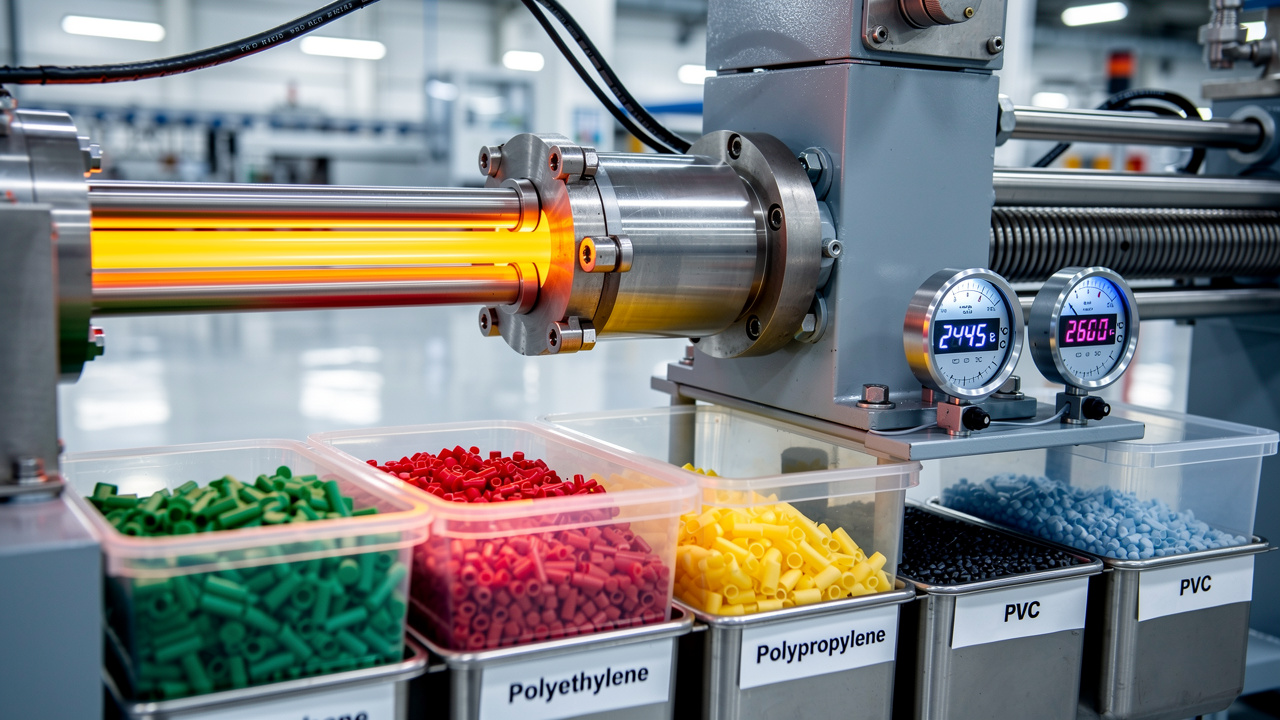
Master the Plastic Melting Temperature Chart for Effective Material Selection
Introduction
Mastering the plastic melting temperature chart is essential for manufacturers who want to elevate their extrusion processes. Understanding these intricacies is crucial for optimizing production efficiency. What could happen if these critical temperature guidelines are ignored? Ignoring these guidelines can lead to costly errors and wasted resources, raising the stakes for manufacturers. This article offers insights and strategies to enhance manufacturing efficiency and ensure superior outcomes by understanding these critical temperature parameters.
Understand the Plastic Melting Temperature Chart
The plastic fusion heat chart is an indispensable tool for manufacturers and engineers aiming to optimize extrusion processes. Grasping the significance of this chart is vital for effective processing. Let’s explore several key aspects:
- Definition of Softening Point: The softening point indicates the moment when a thermoplastic substance starts to become pliable and flow, showing considerable differences among various plastics. For example, thermoplastics such as polypropylene and PVC display unique softening points that affect their use in different sectors.
- Importance in Extrusion: Understanding the melting point is essential for determining the appropriate processing conditions. What happens if operators ignore these temperature guidelines? Setting downstream readings more than 25°F (14°C) below the melt point can lead to defects like gauge bands and production instability. Appropriate heat settings ensure that materials flow smoothly through the extruder, minimizing the risk of degradation and enhancing product quality.
- Temperature Ranges: Typically, common thermoplastics have softening points that range from 170°C to 260°C (338°F to 500°F). Familiarity with these ranges is essential for selecting the appropriate material for specific applications, particularly in sectors like agriculture and office management where performance and reliability are paramount.
- Using the Chart: When choosing a plastic for extrusion, referring to the fusion point chart is essential for establishing ideal processing levels. This practice aids in preventing problems like incomplete fusion or overheating, which can jeopardize the integrity of the final outcome. Recent advancements in climate control technology enable precise regulation, maintaining levels within about 1°F, which is essential for achieving consistent results. Furthermore, comprehending the function of additives such as plasticizers and fillers is crucial, as they can greatly change the behavior of plastics during heating, affecting processing and final output.
By leveraging the insights from the plastic melting temperature chart, manufacturers can elevate their production standards and enhance customer satisfaction like never before.

Identify Different Plastics and Their Melting Points
Choosing the right plastic is not just a decision; it's a critical factor that can determine the success of your project. Different plastics display unique fusion points that significantly affect their appropriateness for various applications. Understanding the plastic melting temperature chart for various types of plastics is crucial for preventing product failure and ensuring consistent part performance. Below are some common plastics along with their respective melting points and typical uses:
- The plastic melting temperature chart indicates that polyethylene (PE) has a melting point ranging from 105°C to 135°C (221°F to 275°F). This versatile plastic is widely utilized in packaging and containers, making it ideal for lightweight applications.
- The plastic melting temperature chart indicates that polypropylene (PP) has a melting point that typically falls between 160°C and 170°C (320°F to 338°F). Known for its strength and heat resistance, PP is commonly employed in automotive parts and industrial applications, where durability is essential.
- According to the plastic melting temperature chart, the melting point of Polyvinyl Chloride (PVC) ranges from 150°C to 200°C (302°F to 392°F). PVC is frequently used in construction materials, such as pipes and fittings, due to its robustness and versatility.
- The plastic melting temperature chart indicates that the melting point of Acrylic (PMMA) is around 220°C to 250°C (428°F to 482°F). Acrylic is favored for its clarity and is commonly used in signage and displays, where aesthetic appeal is crucial.
- According to the plastic melting temperature chart, nylon has a melting point that varies between 190°C and 260°C (374°F to 500°F), making it suitable for applications requiring high durability and resistance to wear, such as in textiles and mechanical components.
At Lincoln Plastics, we recognize that the choice of plastic is pivotal to the success of your extrusion projects. Our partnership with OEMs guarantees that we fulfill all standards, including special checks for ‘fit and function’. We uphold a strong management program, including dedicated plans and process check sheets, to ensure that your rigid profiles meet the specified critical dimensions. Moreover, grasping the significance of melt and mold heat levels is vital for enhancing product quality and optimizing manufacturing efficiency. For optimal performance, keeping the melt heat at 20°C to 50°C above the fusion point is essential during the injection molding process. By considering these factors, you can make informed decisions that lead to successful outcomes in your projects. For tailored solutions, we invite you to contact Lincoln Plastics experts today. By partnering with Lincoln Plastics, you ensure that your projects are built on a foundation of quality and reliability that stands the test of time.

Apply Melting Temperature Insights to Manufacturing Processes
To achieve excellence in custom plastic extrusion, referring to a plastic melting temperature chart is crucial. Follow these best practices to optimize your manufacturing processes:
- Choose the appropriate material by referring to the plastic melting temperature chart to select a plastic that matches your application needs. Consider essential factors such as thermal resistance and mechanical properties to ensure optimal performance.
- Set Processing Parameters: Adjust your extrusion machine settings based on the plastic melting temperature chart for the selected material. For instance, ABS is typically processed between 200°C and 240°C, while PLA is extruded between 170°C and 210°C. Properly calibrating barrel heat levels is crucial for achieving a uniform melt as indicated by the plastic melting temperature chart.
- Monitor Temperature During Production: Consider using real-time temperature monitoring systems to ensure your melt temperature aligns with the plastic melting temperature chart during extrusion. This practice helps prevent defects like bubbles or uneven flow, which can undermine the standard of the item.
- Conduct Regular Standards Assessments: Carry out control evaluations on the extruded items to ensure they meet specifications. Look for signs of overheating or underheating, as these can significantly impact the integrity of the final outcome.
- Optimize Cooling Rates: After extrusion, manage cooling rates carefully to solidify the material effectively. Quick cooling can cause warping, whereas gradual cooling might lead to dimensional instability, affecting the overall standard of the item.
Are you aware that even slight temperature variations can lead to significant production issues? By implementing these strategies, you enhance the efficiency and quality of your extrusion processes. You'll see superior product outcomes. For instance, case studies have demonstrated that maintaining accurate control of heat can reduce defects and enhance overall production efficiency, highlighting the significance of these practices in attaining operational excellence. At Lincoln Plastics, situated in Lincoln, Nebraska, we are dedicated to excellence and collaboration with OEMs, ensuring that we meet and surpass your expectations in plastic extrusion. We invite you to contact our experts for tailored solutions, including our co-extrusion capabilities for multi-color or multi-material profiles. The right practices not only enhance product quality but also safeguard your bottom line.

Troubleshoot Melting Temperature Challenges
Are you grappling with challenges related to the plastic melting temperature chart during your extrusion process? Addressing these issues is crucial for maintaining high-quality production. Here are expert troubleshooting steps to guide you:
- Inconsistent Melt Standard: Are you struggling with variations in melt standard? This may suggest miscalibrated heat settings. Make sure your barrel heat levels are calibrated just right, and ensure consistent material supply for uniformity. Industry data shows that thickness variation often arises from unbalanced die heat and inconsistent line speed, directly influencing melt standards. By optimizing your plastic extrusion profile, you can significantly improve melt characteristics and production efficiency, in line with Lincoln Plastics' ISO 9001:2015 certification and stringent management plans.
- Material Degradation: Are you noticing discoloration or a burnt odor? This could mean your melt heat is too high. Reduce the heat settings and carefully observe the material to prevent further deterioration. Extended exposure to elevated heat can lead to significant quality issues. A case study on excessive melt heat highlights that confirming melt heat with independent measurements can help identify and rectify sources of excessive warmth, ensuring your production aligns with Lincoln Plastics' stringent quality management plans.
- Incomplete Melting: If the material doesn’t melt entirely, this could stem from inadequate heat settings or improper feed rates. Slowly raise the barrel heat and adjust the feed rate for the specific material being processed to ensure thorough liquefaction. Monitoring actual melt heat at the extruder die is crucial for achieving better melt homogeneity and preventing incomplete melting, which can be effectively guided by the plastic melting temperature chart, essential for maintaining high-quality standards.
- Bubbles or Voids in Extrusions: Are you encountering bubbles or voids in your extrusions? These defects often occur when the melt heat is too low, trapping air within the material. Slightly increase the melt temperature and ensure smooth material flow through the die to mitigate this issue. Statistics indicate that bubbles can also be caused by trapped moisture or air in the material, underscoring the importance of proper drying conditions. Following best practices can help prevent these defects and enhance overall quality.
- Dimensional Instability: Warping or shape retention issues in extruded items may indicate improper cooling rates. Adjust your cooling system to ensure even solidification of the material at the correct rate, which is crucial for maintaining dimensions. Taking a structured approach to troubleshooting can clarify the process. Define defects and correlate signals for better outcomes in OEM applications.
Implementing these strategies can transform your production efficiency and product quality, setting you apart in the competitive landscape. Regular monitoring and adjustments based on these guidelines can significantly enhance production efficiency and product consistency, reflecting Lincoln Plastics' commitment to excellence and customer partnership.

Conclusion
Mastering the plastic melting temperature chart is crucial for manufacturers aiming to optimize their extrusion processes and achieve unparalleled product quality. With mastery of this tool, manufacturers can decisively enhance product quality and operational efficiency. Accurate interpretation of melting points is vital, directly influencing product performance and reliability.
This article highlighted key insights on the softening point, temperature ranges of various plastics, and best practices for applying this knowledge in manufacturing. Additionally, we emphasized troubleshooting common melting temperature challenges, highlighting the need for meticulous monitoring and adjustments to uphold high-quality standards.
To truly excel in plastic manufacturing, manufacturers must engage with Lincoln Plastics for expert insights and tailored solutions that drive quality and efficiency.
Frequently Asked Questions
What is the plastic melting temperature chart?
The plastic melting temperature chart is a crucial tool for manufacturers and engineers that helps optimize extrusion processes by indicating the softening points of various thermoplastics.
What does the softening point of a thermoplastic indicate?
The softening point indicates the temperature at which a thermoplastic begins to become pliable and flow, with significant differences among various plastics, such as polypropylene and PVC.
Why is understanding the melting point important in extrusion?
Understanding the melting point is essential for determining appropriate processing conditions. Ignoring temperature guidelines can lead to defects like gauge bands and production instability, while proper heat settings ensure smooth material flow and enhance product quality.
What are the typical temperature ranges for common thermoplastics?
Common thermoplastics typically have softening points ranging from 170°C to 260°C (338°F to 500°F), which is important for selecting materials for specific applications, especially in sectors like agriculture and office management.
How should the plastic melting temperature chart be used in extrusion?
The chart should be referenced to establish ideal processing levels, preventing issues like incomplete fusion or overheating that can compromise the final product's integrity.
What advancements have been made in temperature regulation for extrusion?
Recent advancements in climate control technology allow for precise temperature regulation within about 1°F, which is crucial for achieving consistent results in the extrusion process.
How do additives like plasticizers and fillers affect plastic processing?
Additives such as plasticizers and fillers can significantly alter the behavior of plastics during heating, impacting both the processing and the final output of the product.
List of Sources
- Understand the Plastic Melting Temperature Chart
- Plastic Melting Point Guide: Understanding Temperature Ranges (https://acomold.com/melting-point-of-plastic.html)
- To Produce Quality Extrusions, Get Control Over Melt Temperature (https://ptonline.com/articles/to-produce-quality-extrusions-get-control-over-melt-temperature)
- Master Plastic Melting Temp: Key Strategies for OEM Success (https://lincoln-plastics.com/news-post/master-plastic-melting-temp-key-strategies-for-oem-success)
- Paul Murphy Plastics: Mastering Melt Temperature for Quality Extrusions (https://paulmurphyplastics.com/industry-news-blog/paul-murphy-plastics-mastering-melt-temperature-for-quality-extrusions)
- Plastic Material Melt & Mould Temperature Chart | PlastikCity (https://plastikcity.co.uk/useful-stuff/material-melt-mould-temperatures)
- Identify Different Plastics and Their Melting Points
- Temperature Ranges for Different Types of Plastics (https://polymermolding.com/temperature-ranges-for-different-types-of-plastics)
- Melt Temperature of 12 Popular Plastics You Need to Know (https://sogaworks.com/blogs/melt-point-of-plastics)
- New Composite Structure Boosts Polypropylene’s Low-Temperature Toughness | Newswise (https://newswise.com/articles/new-composite-structure-boosts-polypropylene-s-low-temperature-toughness)
- Plastic Material Melt & Mould Temperature Chart | PlastikCity (https://plastikcity.co.uk/useful-stuff/material-melt-mould-temperatures)
- Plastic Melting Points: A Complete Guide (https://unionfab.com/blog/2026/02/plastic-melting-point)
- Apply Melting Temperature Insights to Manufacturing Processes
- Plastics Extrusion: 4 Critical Statistics to Track for Increased Quality & Plant Profit (https://gaugeadvisor.com/plastics-extrusion-4-critical-statistics-to-track-for-increased-quality-plant-profit)
- Temperature Control in Extrusion: Why It’s Critical | Bausano (https://bausano.com/en/press-and-news/temperature-control-in-extrusion)
- Master Extrusion Control: 4 Steps to Optimize Your Process (https://lincoln-plastics.com/news-post/master-extrusion-control-4-steps-to-optimize-your-process)
- Troubleshoot Melting Temperature Challenges
- Extrusion Troubleshooting: Root Causes & Expert Engineering Solutions (https://jwellanhui.com/extrusion-troubleshooting-root-causes-expert-engineering-solutions)
- Plastics Extrusion Troubleshooting Guide: 26 Common Problems, Causes and Solutions (https://gaugeadvisor.com/plastics-extrusion-troubleshooting-guide)
- Common problems in the plastic extrusion process - SHARC (https://sharcpm.com/news/common-problems-in-the-plastic-extrusion-process)
- Common Issues and Solutions in PET Sheet Extrusion | PET Sheet Troubleshooting Guide (https://aceretech.com/blog/marketing-event-3/common-issues-and-solutions-in-pet-sheet-extrusion-a-comprehensive-troubleshooting-guide-501)
- Troubleshooting MD Line Extrudate Issues | Film Quality Tips (https://nordson.com/en/about-us/nordson-blog/polymer-processing-systems-blogs/2021-07-30-troubleshooting-issues-md-lines)
Related posts

Designing Custom Extrusions: How We Work with OEM Engineers
Lincoln Plastics partners with OEM engineers to design custom extrusion profiles — reducing modifications, improving performance, and lowering costs


Precision Matters: Tolerances and Quality Control in Extrusion
Lincoln Plastics ensures precision in every extrusion with tight tolerances, in-line checks, and strict quality control for OEM applications
Plastic Extrusion for Agricultural Equipment: Beyond Irrigation
Lincoln Plastics supports agriculture with custom plastic extrusions that go beyond irrigation, delivering durability and reliability in the field
