

Master the Plastic Material Density Chart PDF for Smart Procurement
Introduction
Understanding the nuances of plastic material density is super important for procurement professionals navigating a fast-changing market. With the demand for plastics on the rise, it’s essential to grasp how density affects performance, cost, and sustainability. This knowledge can really boost your decision-making process.
But here’s the thing: with so many variables in play, how can sourcing specialists make sure they’re making the best choices when it comes to selecting materials? You might be wondering about that! This article dives into the details of using the plastic material density chart, sharing insights and strategies to help you optimize your procurement practices.
Understand the Importance of Plastic Material Density in Procurement
When it comes to plastic substances, weight is a big deal in the acquisition process. It impacts both how well products perform and how much they cost. Density, defined as mass per unit volume, affects how these materials behave under different conditions, such as stress and temperature, which can be referenced in the density chart. Understanding mass helps sourcing specialists pick the right materials for projects, ensuring products meet performance standards while keeping costs in check.
- Identify Key Properties: Think about how mass affects strength, durability, and weight. For instance, high-density polyethylene (HDPE) is tougher and lasts longer than low-density polyethylene (LDPE), making it a better fit for certain applications. As industry leaders often say, 'Understanding density is key to making decisions that align with operational needs.'
- Cost Considerations: Higher density materials usually come with a higher price tag. Knowing the compactness of materials, which can be referenced in the density chart, can help with budgeting and cost management. Recent market analysis from Fact.MR shows that the plastic product and packaging manufacturing market is set to hit $722.14 billion in 2024, climbing to $1,146.18 billion by 2034. This really highlights how important density insights are in a growing market.
- Application suitability depends on different applications requiring various levels of density, as indicated in the density chart. For example, lightweight materials might be preferred in automotive applications to boost fuel efficiency, while heavier options could be necessary for structural components. A case study on plastic density in seawater shows that plastics with a density lower than 1.027 grams per cubic centimeter will float, while those with a higher density will sink. This really drives home the practical implications of material selection.
- Sustainability Considerations: Density also plays a role in sustainability. Lighter materials can reduce the carbon footprint during transportation, making them more eco-friendly choices. Recent discussions have emphasized that being responsible in corporate environmental claims is crucial, and understanding density can help in making sustainable decisions.
By getting a handle on polymer substance weight, procurement experts can make informed choices that align with operational needs and budget constraints. This ultimately boosts their strategic sourcing skills.

Access and Navigate the Plastic Material Density Chart PDF
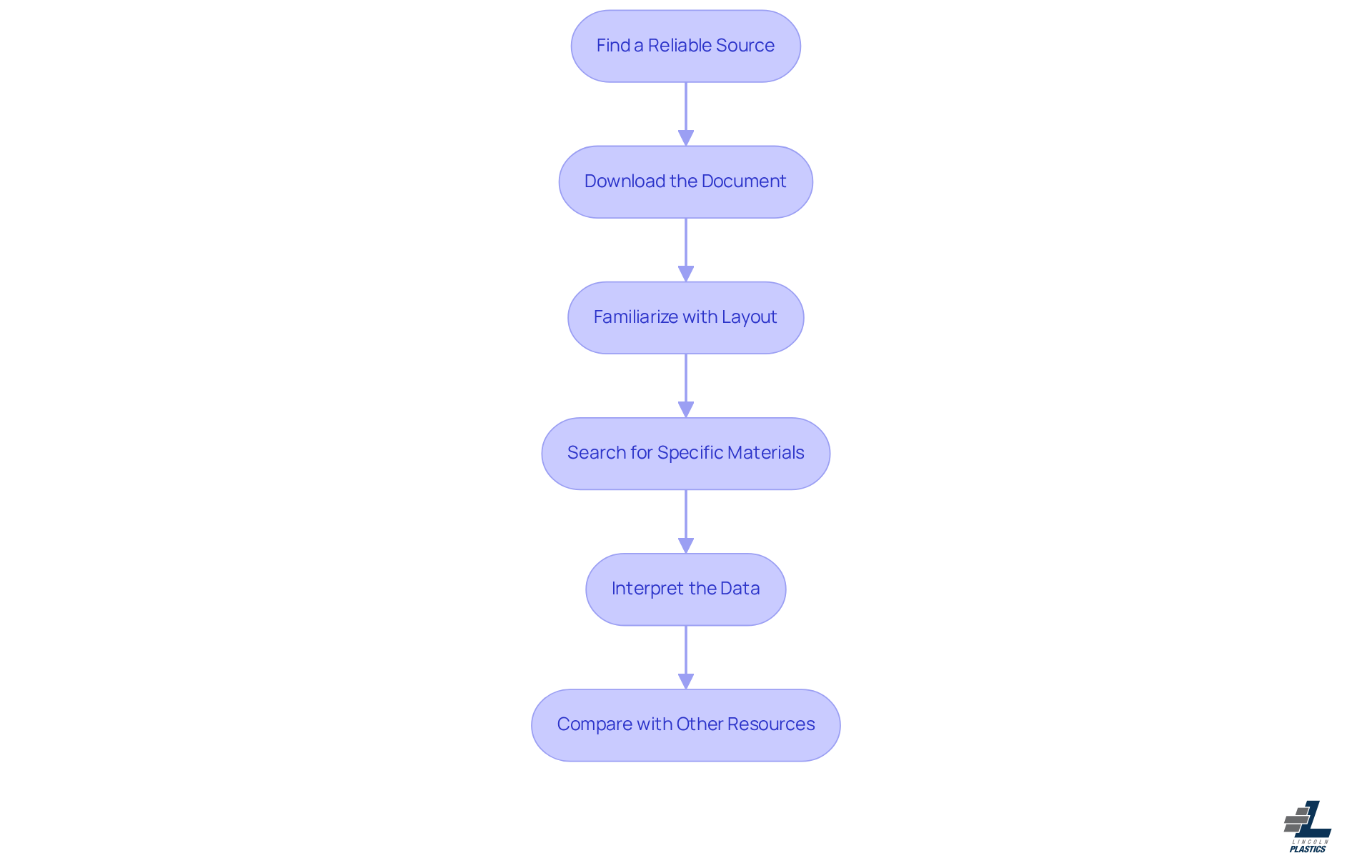
To effectively use the plastic material density chart, let’s break it down into some simple steps:
- First things first, you’ll want to track down a reliable source for the chart. You can usually find a PDF through industry resources or educational institutions.
- Download the Document: Once you’ve found the chart, just click the link to download the PDF file to your device. Make sure you have a PDF reader handy for easy access.
- Familiarize yourself with the layout of the chart by opening it and taking a moment to get a feel for its layout. Typically, the chart will include columns for resin ID, name, weight (g/mL), and common uses.
- Search for Specific Materials: Need to find something specific? Use the search feature (Ctrl + F) in your PDF reader to quickly locate materials by name or resin ID. This can save you a ton of time when you’re looking for particular weights.
- Interpret the Data: Now, pay close attention to the data. For example, if you see a density of 1.38-1.39 g/mL for polyethylene terephthalate (PET), it’s a good indicator of its strength and rigidity. Understanding these values is key, especially since the global plastic market is projected to be worth around USD 70 billion in 2023. That really highlights how important it is to make precise selections when procuring materials.
- If you’re feeling unsure, don’t hesitate to compare the mass values with other resources or refer to the specifications. This can help ensure you’re making the right choice. Plus, using standards, like ASTM D792 and D1505, can add extra credibility to the mass values you’re considering.
By following these steps, you’ll be well-equipped to access and use the chart for the weight of substances, guiding your decisions effectively. And hey, being aware of challenges in the HDPE market-like supply chain interruptions and price fluctuations-can really sharpen your decision-making when it comes to acquiring resources.
Apply Density Insights to Optimize Material Selection
To make the most of the plastic material density chart in your procurement process, let’s walk through some steps that can help you pick the right materials:
- Evaluate Project Requirements: First things first, take a good look at what your project really needs. Think about strength, durability, and how well the material holds up in different environments. Getting a handle on these factors is key to making informed decisions.
- Match Concentration to Application: Next up, use the concentration info to find the best material for your needs. For instance, polypropylene is a fantastic choice for lightweight yet sturdy packaging because it’s lighter than many other plastics.
- Consider Cost Factors: Now, let’s talk about costs. Different materials come with different price tags, which can be understood by referring to the density chart. Sure, higher density materials might boost performance, but they can also hit your budget hard. So, aim for that sweet spot where performance meets affordability.
- Test Substance Samples: If you can, grab some samples of the materials you’re considering. Testing samples is a great way to see if they live up to your expectations and project specs.
- Document Findings: Keep a record of what you discover along the way. This documentation will be super helpful for future projects and can make your procurement process smoother.
- Consult Experts: Don’t hesitate to reach out to specialists or suppliers for their insights. Their expertise can be invaluable in helping you choose the best materials based on density and other important properties.
By following these strategies, you can really enhance your resource selection process, ensuring you make the best choices that fit your project needs and performance goals.

Troubleshoot Common Challenges in Material Procurement
can throw some curveballs your way, right? Let’s chat about a few common challenges and how to tackle them effectively.
- Delivery Delays: We’ve all been there - unexpected hiccups can really throw a wrench in delivery schedules, messing with production timelines. To dodge this issue, it’s smart to build a contingency plan. That way, you’ve got backup options ready to go when the unexpected happens. This kind of diversification can really boost your resilience against surprises.
- Quality Control Issues: Nobody likes dealing with inconsistent product quality. It can lead to customer dissatisfaction, which is a headache. So, what’s the fix? Implementing strict quality control measures is key. Regular audits of your suppliers and sticking to established standards can help keep your resources in check. Did you know that 53% of supply chain leaders say they struggle with master data quality? That’s a big reason to beef up your data management practices.
- Cost Fluctuations: Material prices can be all over the place thanks to market dynamics. Staying in the loop about pricing trends is essential. One way to keep costs stable is by negotiating long-term contracts with suppliers. This can lock in favorable prices and help you budget better.
- Miscommunication with Suppliers: Clear communication is everything! Misunderstandings can lead to costly mistakes. When placing orders, be sure to use detailed specifications and confirm receipt with your suppliers. This way, everyone’s on the same page.
- Regulatory Compliance: It’s super important to make sure all your resources meet the necessary regulations and standards. Procurement pros should keep up with industry regulations and work closely with suppliers to ensure compliance. This helps minimize any legal risks.
- Substance Compatibility: If you’re sourcing materials, checking compatibility is a must. Conduct tests to ensure that everything will work together smoothly. This can save you from expensive production interruptions down the line.
By tackling these challenges head-on, procurement teams can streamline their processes and boost material sourcing efficiency. So, let’s get to it and make your operations even more successful!

Conclusion
Understanding the role of plastic material density is super important for effective procurement. Think about it: density affects not just how materials perform and their costs, but also how suitable they are for different applications. By getting a handle on the plastic material density chart PDF, procurement pros can really boost their decision-making. This way, they can pick the right materials that fit both their operational needs and budget constraints.
So, what are the key takeaways? First off, evaluating material properties is crucial. Then there’s the cost implications of density, plus the environmental factors that come into play when selecting materials. We also covered some practical steps for accessing and using the density chart, along with strategies to optimize material selection based on specific project needs. And let’s not forget the challenges in procurement, like supply chain hiccups and quality control issues. It’s clear that a proactive approach is essential to tackle these risks.
In conclusion, using the plastic material density chart not only makes procurement smoother but also helps in making smarter, more sustainable choices when it comes to material selection. By embracing these insights and strategies, procurement professionals can confidently navigate the complexities of material sourcing, driving efficiency and innovation in their organizations.
Frequently Asked Questions
Why is plastic material density important in procurement?
Plastic material density is crucial because it affects product performance, cost, and how materials behave under different conditions, such as stress and temperature.
How does density influence the properties of plastic materials?
Density impacts strength, durability, and weight. For example, high-density polyethylene (HDPE) is tougher and more durable than low-density polyethylene (LDPE), making it suitable for specific applications.
What are the cost implications of using higher density materials?
Higher density materials typically come with a higher price tag. Understanding material density helps with budgeting and cost management in procurement, especially in a growing market.
How does application suitability relate to plastic material density?
Different applications require various density levels. Lightweight materials may be preferred in automotive applications for fuel efficiency, while heavier materials may be needed for structural components.
What does the case study on plastic density in seawater illustrate?
It shows that plastics with a density lower than 1.027 grams per cubic centimeter will float, while those with a higher density will sink, highlighting the practical implications of material selection.
How does density affect environmental considerations in procurement?
Lighter materials can reduce the carbon footprint during transportation, making them more eco-friendly. Understanding material characteristics aids in making sustainable choices.
How can procurement experts benefit from understanding polymer substance weight?
By understanding polymer weight, procurement experts can make informed decisions that align with operational needs and budget constraints, enhancing their strategic sourcing skills.
List of Sources
- Understand the Importance of Plastic Material Density in Procurement
- earth.org (https://earth.org/plastic-pollution-quotes)
- Plastic Products Market Forecast Shows Significant Expansion (https://plasticsindustry.org/articles/plastic-product-market-forecast-shows-significant-expansion)
- statista.com (https://statista.com/statistics/595434/plastic-materials-density?srsltid=AfmBOoqJ_5ReKDJqZgPY1iDP_ch2RIVcA50TslrDvr67VJHX0VJjF1eL)
- Access and Navigate the Plastic Material Density Chart PDF
- plasticsnews.com (https://plasticsnews.com/suppliers/materials/pn-materials-outlook-2026)
- Density of Plastics Material: Technical Properties Table (https://specialchem.com/plastics/guide/density)
- linkedin.com (https://linkedin.com/pulse/high-density-polyethylene-market-insights-2026-trends-0w8ce)
- Apply Density Insights to Optimize Material Selection
- research.aston.ac.uk (https://research.aston.ac.uk/en/publications/an-integrated-case-study-of-material-selection-testing-and-optimi)
- 11 Great Quotes for Procurement Professionals | Vroozi (https://vroozi.com/blog/11-great-quotes-for-procurement-professionals)
- sciencedirect.com (https://sciencedirect.com/science/article/pii/S2352550924002823)
- georgevrakas.com (https://georgevrakas.com/2014/02/27/10-quotes-for-successful-procurement-and-contract-management)
- Troubleshoot Common Challenges in Material Procurement
- Supply Chain Statistics — 70 Key Figures of 2026 (https://procurementtactics.com/supply-chain-statistics)
- precoro.com (https://precoro.com/blog/procurement-challenges)
- 5 Important Things for Life Sciences Companies to Consider | MasterControl (https://mastercontrol.com/gxp-lifeline/quality-inspiration)
- digitaldefynd.com (https://digitaldefynd.com/IQ/motivational-supply-chain-management-quotes)
- iprojectmaster.com (https://iprojectmaster.com/statistics/final-year-project-materials/the-application-of-statistical-quality-control-in-plastic-producing-industry)
Related posts

Designing Custom Extrusions: How We Work with OEM Engineers
Lincoln Plastics partners with OEM engineers to design custom extrusion profiles — reducing modifications, improving performance, and lowering costs


Precision Matters: Tolerances and Quality Control in Extrusion
Lincoln Plastics ensures precision in every extrusion with tight tolerances, in-line checks, and strict quality control for OEM applications
Plastic Extrusion for Agricultural Equipment: Beyond Irrigation
Lincoln Plastics supports agriculture with custom plastic extrusions that go beyond irrigation, delivering durability and reliability in the field
