
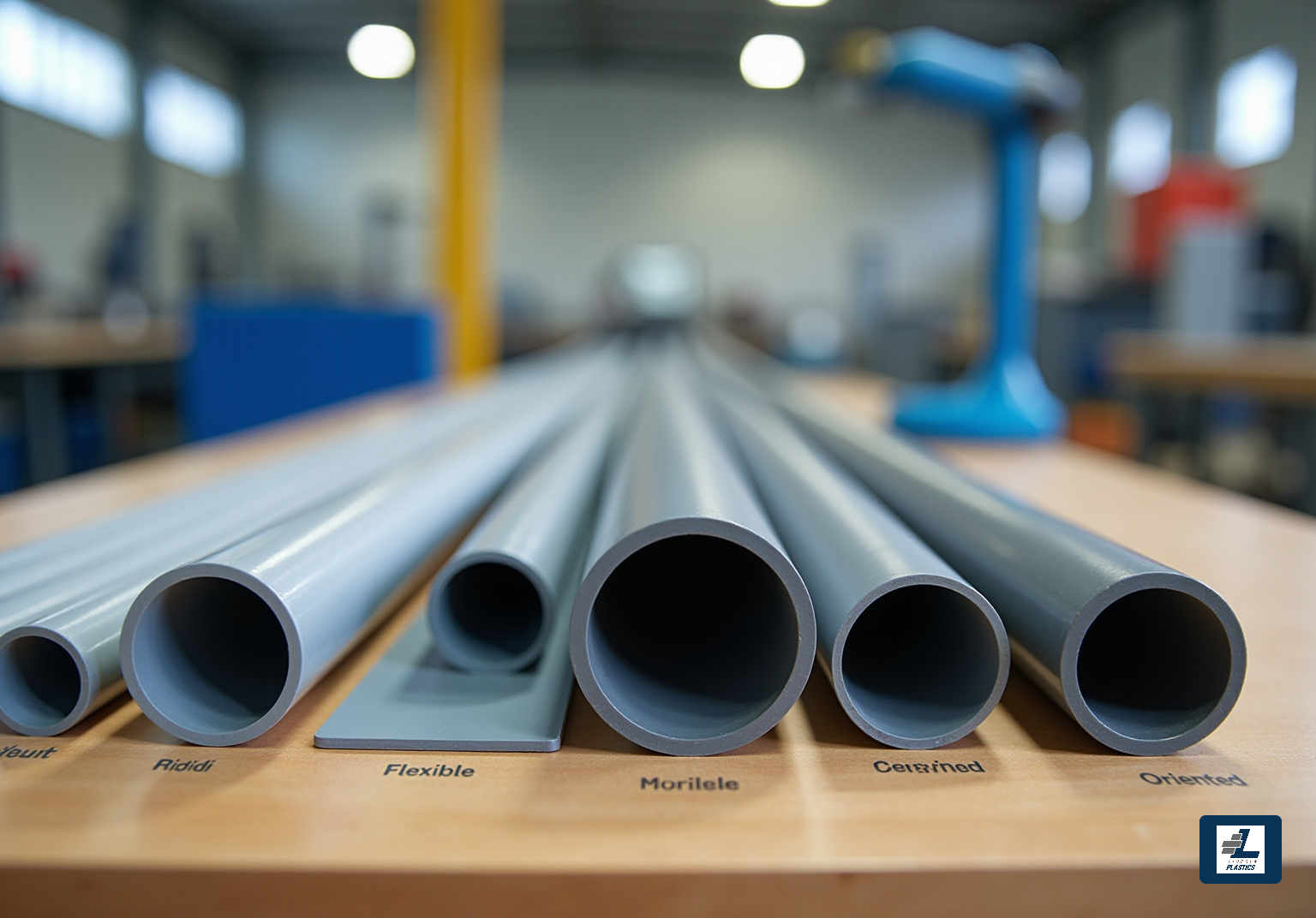
Master PVC Characteristics: A Comprehensive Guide for OEMs
Introduction
Polyvinyl Chloride (PVC) is a big deal in the world of plastics, coming in as the third most produced plastic globally. Its durability and versatility make it a go-to choice in many industries, from construction to healthcare. So, what’s the scoop on PVC? Let’s dive into its unique characteristics and see how understanding them can help original equipment manufacturers (OEMs) tap into its full potential.
But here’s the kicker: with so many types and grades of PVC out there, how do manufacturers figure out which one is right for their specific needs? You might be wondering how to navigate this maze of options. Don’t worry; we’re here to break it down together!
Explore the Fundamentals of Polyvinyl Chloride (PVC)
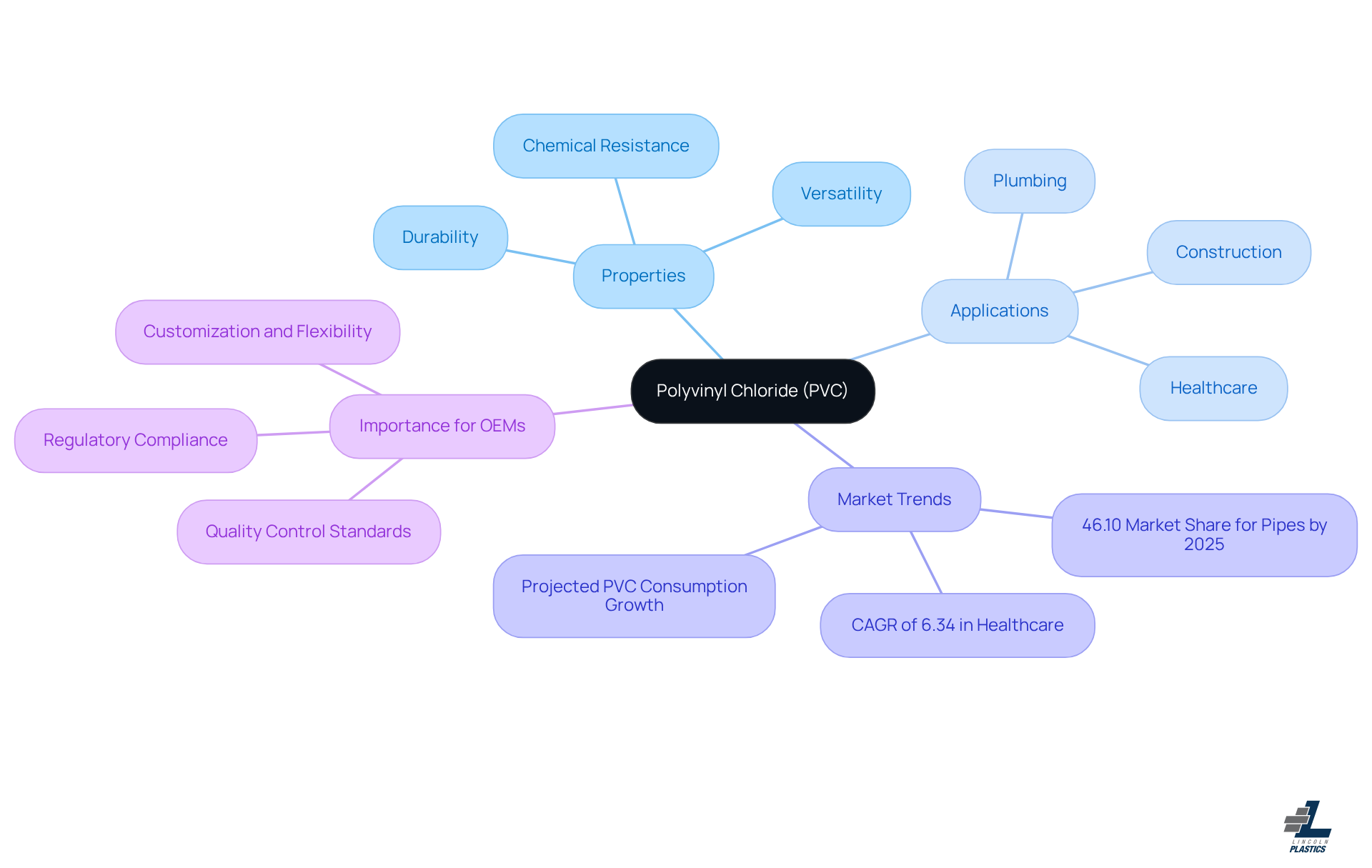
Did you know that Polyvinyl Chloride (PVC) is the third-most produced plastic in the world? It comes right after polyethylene and polypropylene. This synthetic polymer is made by polymerizing vinyl chloride monomer (VCM), resulting in a material that's known for its durability, chemical resistance, and versatility. Because of these traits, PVC is perfect for a wide range of applications, from construction materials to plumbing systems and even medical devices. Plus, you can tweak its properties by adding plasticizers, stabilizers, and other additives, allowing for both rigid and flexible forms.
At Lincoln Plastics, we specialize in crafting both standard and custom round plastic profiles. Need something flexible? We can tailor profiles to fit your specific needs. Our ability to co-extrude different colors into profiles - like adding a 'yellow stripe' - shows just how committed we are to customization and flexibility in production. We offer a variety of sizes, colors, and diameters, ensuring manufacturers have reliable solutions that meet their exact specifications.
Now, let’s talk about why PVC is so significant across various sectors. By 2025, pipes and fittings are expected to make up 46.10% of the North American PVC market. This surge is largely due to federal initiatives pushing for the replacement of lead service lines. Not only does this increase demand for PVC in plumbing, but it also helps shield it from broader economic ups and downs. And let’s not forget the healthcare sector - it's becoming a major player, with PVC used in medical-grade devices and IV bags projected to grow at a CAGR of 6.34% through 2030.
Industry leaders stress the importance of understanding PVC characteristics for OEMs. As the market evolves, staying informed about PVC characteristics and their applications is crucial for developing innovative solutions that meet regulatory standards and customer needs. For instance, PVC's use in agricultural plumbing systems has proven to be a game-changer compared to traditional metal pipes, offering lower maintenance costs and better performance. Plus, its role in high-speed doors for factories and food processing facilities highlights just how versatile and efficient it can be.
At Lincoln Plastics, we take quality seriously. Our rigid profiles are crafted to meet critical dimensions and quality standards through strict quality control processes. We partner with original equipment manufacturers to include special checks for 'fit and function', ensuring our products are tailored for their specific applications. In conclusion, the PVC characteristics, including its versatility and wide range of uses, make it an essential material for original equipment manufacturers. As the market keeps growing, understanding PVC's properties and market dynamics will be key to unlocking its full potential.
Classify Different Types of PVC for Optimal Use
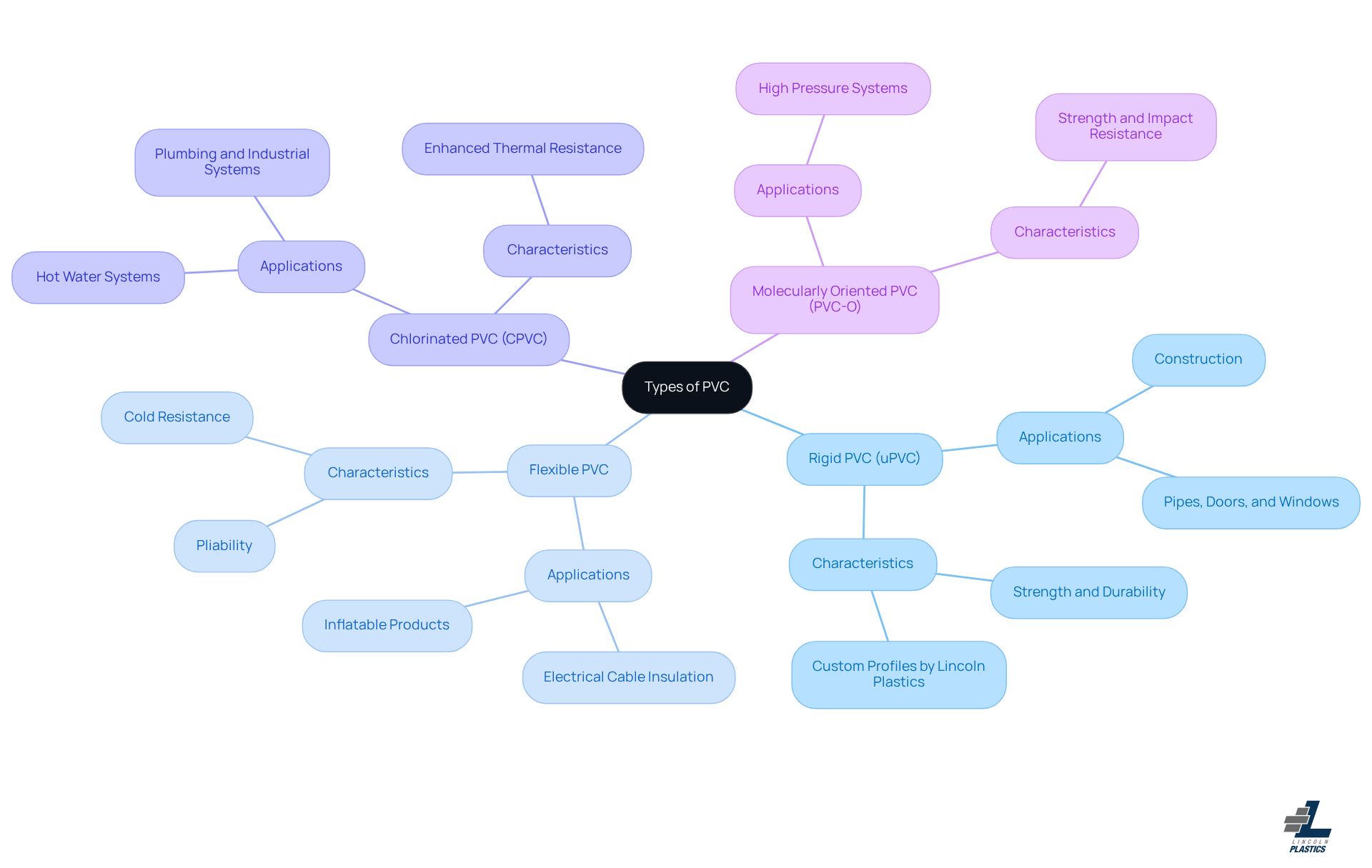
When it comes to PVC, there’s a lot to unpack! It’s not just one type; there are several distinct varieties, each with its own unique applications. Let’s dive into what Lincoln Plastics offers:
-
Rigid PVC (uPVC): You’ll find this tough guy in construction, used for pipes, doors, and windows. It’s known for its strength and durability, making it perfect for those demanding environments, especially in infrastructure projects. Lincoln Plastics specializes in crafting custom rigid plastic profiles, ensuring they meet those critical dimensions and quality standards that OEMs need.
-
Flexible PVC: Now, if you’re looking for something a bit more pliable, flexible PVC is your go-to. It’s often used for electrical cable insulation and inflatable products. Lincoln Plastics has tailored solutions like flexible cord covers and cable management options that protect businesses while staying flexible, even in chilly conditions. That’s why it’s a favorite across various industries!
-
Chlorinated PVC (CPVC): This one’s got a higher chlorine content, making it ideal for hot water applications. It offers enhanced thermal resistance, which is a big plus for plumbing and industrial systems where heat is a concern.
-
Molecularly Oriented PVC (PVC-O): If you need something that can handle high pressure, PVC-O is known for its strength and impact resistance. It really shines in challenging conditions.
Understanding these categories helps OEMs pick the right type of PVC by considering its characteristics, ensuring they get the best performance and reliability. Plus, there are some exciting innovations happening! For instance, modern bio-based plasticizers are stepping in to replace traditional phthalates in flexible PVC formulations, which is great for the environment without sacrificing performance. And did you know that flexible PVC is increasingly being used for electrical insulation? Its excellent dielectric properties make it a solid choice. Meanwhile, rigid PVC continues to dominate in construction and infrastructure due to its robustness.
As of November 2025, the demand for flexible PVC is on the rise, especially in sectors that need lightweight and durable materials. Just look at the growing interest in plastic pipes for infrastructure projects! A producer once said, "Flexible PVC delivers adaptability in uses, while rigid PVC offers unparalleled strength for structural requirements." So, as you can see, knowing these categories allows OEMs to make informed choices, backed by Lincoln Plastics' engineering expertise and commitment to quality assurance.
Understand the PVC Production Process and Its Implications
Creating PVC involves some key polymerization techniques, and each one plays a big role in the PVC characteristics and what the material is best suited for.
-
Suspension Polymerization: This is a popular method that produces a granular form of PVC, perfect for making pipes and fittings. Its structure not only makes manufacturing a breeze but also gives it fantastic mechanical properties. That’s why you’ll find it being used in a lot of OEM applications. Think about all those PVC pipes, fittings, and profiles that are crucial in construction and plumbing - they all come from this method!
-
Emulsion Polymerization: Now, this method is a bit different. It creates a fine powder that boosts flexibility, making it great for applications that need softer materials. The PVC characteristics of the material produced here include better impact resistance, which is super important for products that face dynamic stresses, like automotive parts and flexible packaging.
-
Bulk Polymerization: This technique is often the go-to for high-purity applications. It produces PVC with minimal additives, which can enhance performance in specialized areas, such as medical devices or food packaging, highlighting the important PVC characteristics.
And let’s not forget about the recent advancements in polymerization techniques! Innovations like next-generation impact modifiers are stepping up the game, allowing for tailored solutions that meet the ever-evolving industry standards. This means improved properties like toughness and thermal stability.
For original equipment manufacturers, understanding the PVC characteristics is key when selecting the appropriate PVC for their specific product needs. As industry expert Monicca Egoy pointed out, "The removal of BIS quality controls has eliminated the primary administrative barrier for Chinese PTA, MEG, and PET fibre exports to India." This highlights the ongoing changes in the PVC landscape that OEMs need to keep an eye on.

Analyze PVC Properties and Their Applications in Industry
The properties of PVC, known as PVC characteristics, make it a go-to material for all sorts of applications.
- Chemical Resistance: Ever had to deal with harsh chemicals? PVC can handle acids, alkalis, and many solvents, which makes it perfect for chemical storage and handling.
- Durability: It’s tough! With a high strength-to-weight ratio and resistance to weathering, PVC is a favorite in construction and outdoor projects. Plus, those pipes can last anywhere from 10 to 50 years, so you won’t be replacing them anytime soon.
- Electrical Insulation: If you’re looking for something to insulate your cables and wiring, PVC’s got excellent dielectric properties that do the job well.
- Cost-Effectiveness: Who doesn’t love saving money? PVC is often more economical than other materials, making it a popular choice in plumbing, construction, and healthcare.
- Sustainability Focus: The PVC industry is stepping up its game with a focus on sustainability. They’re working on innovations to reduce environmental impact and boost recyclability.
- Competitive Landscape: While PVC is a strong contender, it’s not alone. It’s up against materials like polyethylene and bioplastics, all vying for a piece of the market.
So, understanding the PVC characteristics can really assist OEMs in maximizing the use of PVC in their designs. What do you think? Ready to explore how PVC can work for you?

Select the Right PVC Grade for Your Specific Needs
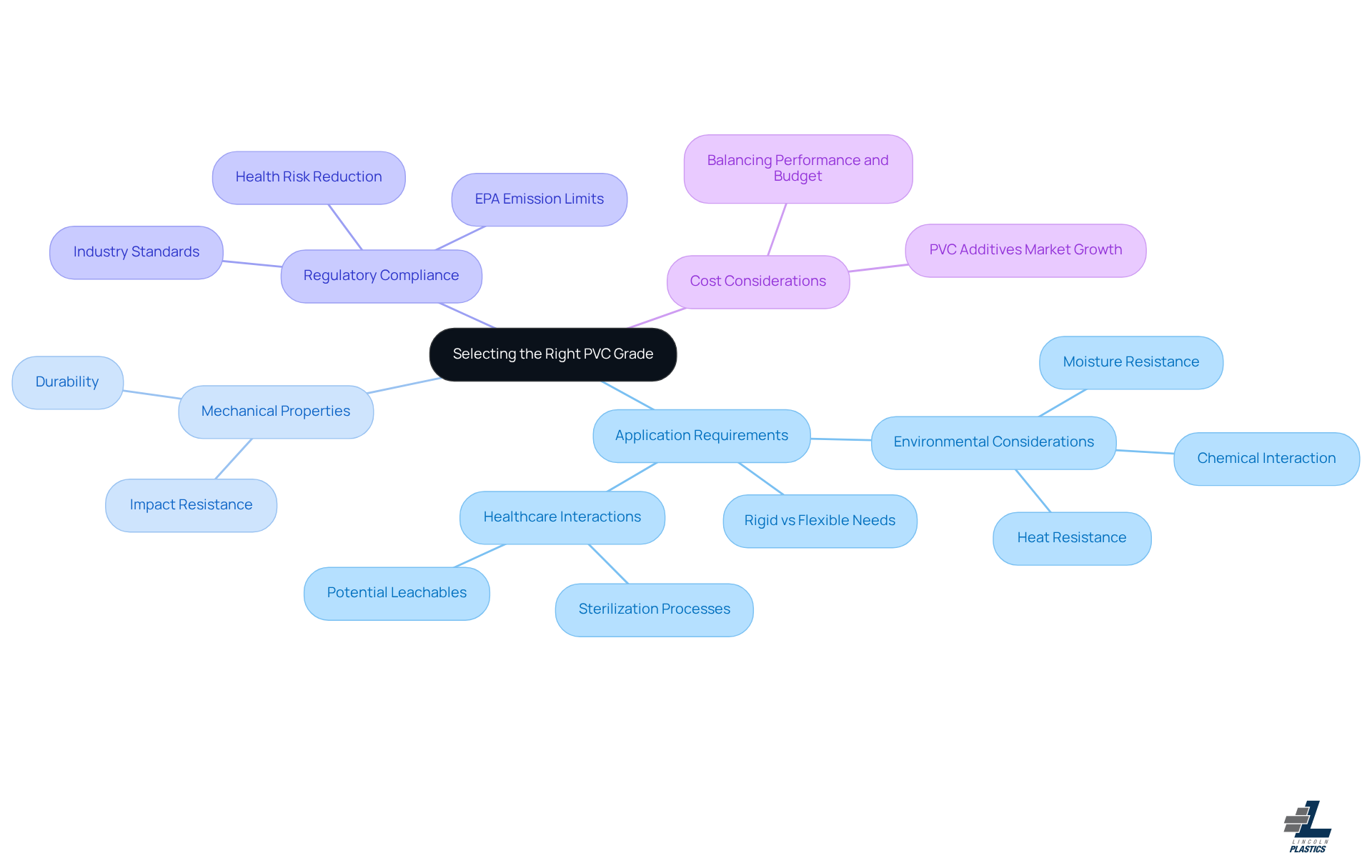
Choosing the right PVC grade can feel a bit overwhelming, right? But don’t worry! Let’s break it down together by looking at a few key factors that can help you make the best choice.
-
Application Requirements: First off, think about what you need. Does your application need something rigid or a bit more flexible? And don’t forget to consider the environment it’ll be in - like how it’ll handle heat, moisture, and chemicals. For example, in healthcare settings, you really want to think about how the PVC interacts with sterilization processes and any potential leachables.
-
Mechanical Properties: Next, let’s talk about strength and durability. What kind of impact resistance do you need? Different PVC grades have varying PVC characteristics, which can significantly affect the longevity and reliability of your final product.
-
Regulatory Compliance: Now, this is super important - make sure the PVC grade you pick meets industry standards and regulations. This is especially crucial in sectors like healthcare and food packaging. Did you know that the Environmental Protection Agency has strict emission limits for PVC production? Staying compliant helps reduce health risks from toxic pollutants.
-
Cost Considerations: Finally, let’s weigh the costs. You want to balance performance needs with your budget. The PVC additives market is on the rise, which means there are more options out there that might give you better performance without breaking the bank.
By taking a good look at these factors, you can confidently choose the right PVC grade that meets both your functional needs and regulatory requirements. So, what do you think? Ready to dive into your PVC selection process?
Conclusion
Polyvinyl Chloride (PVC) is pretty much everywhere, and it’s no wonder why! This versatile material is a game-changer across various industries. In this guide, we’ve taken a closer look at PVC and why it’s crucial for original equipment manufacturers (OEMs) to choose the right type for their needs. With the ability to customize PVC using different additives and manufacturing processes, it’s a top pick for everything from construction to healthcare.
So, what types of PVC are out there? Well, you’ve got:
- Rigid PVC
- Flexible PVC
- Chlorinated PVC
- Molecularly oriented PVC
Each type is designed for specific applications. Understanding how these different types are produced-through methods like suspension, emulsion, and bulk polymerization-can really help you grasp how they work and what makes them unique. Plus, let’s not forget about sustainability and regulatory compliance. These are key for OEMs who want to keep up with market demands while ensuring safety and performance.
The versatility of PVC is impressive, and it’s essential for manufacturers to stay informed and proactive when selecting materials. As the demand for PVC grows, especially in infrastructure and healthcare, tapping into its potential can spark innovative solutions that boost efficiency and sustainability. Engaging with PVC not only meets operational needs but also aligns with broader environmental goals. So, why not embrace this pivotal material for the future? It’s time to explore what PVC can do for you!
Frequently Asked Questions
What is Polyvinyl Chloride (PVC) and why is it significant?
Polyvinyl Chloride (PVC) is the third-most produced plastic globally, known for its durability, chemical resistance, and versatility. It is widely used in construction materials, plumbing systems, and medical devices. Its properties can be modified by adding plasticizers and stabilizers, allowing for both rigid and flexible forms.
What types of PVC does Lincoln Plastics offer?
Lincoln Plastics offers several types of PVC, including: - Rigid PVC (uPVC) for construction applications like pipes, doors, and windows. - Flexible PVC for electrical cable insulation and inflatable products. - Chlorinated PVC (CPVC) for hot water applications due to its enhanced thermal resistance. - Molecularly Oriented PVC (PVC-O) for high-pressure applications due to its strength and impact resistance.
How is PVC used in various sectors?
PVC is significant in various sectors, particularly in plumbing, where pipes and fittings are projected to make up a large portion of the North American PVC market. It is also increasingly used in the healthcare sector for medical devices and IV bags. Additionally, PVC's use in agricultural plumbing and high-speed doors for factories showcases its versatility.
What are the benefits of using PVC in plumbing systems?
PVC offers lower maintenance costs and better performance compared to traditional metal pipes, making it a game-changer in agricultural plumbing systems.
How does Lincoln Plastics ensure the quality of its PVC products?
Lincoln Plastics employs strict quality control processes to ensure that their rigid profiles meet critical dimensions and quality standards. They also partner with original equipment manufacturers to include special checks for 'fit and function' to tailor products for specific applications.
What innovations are occurring in the PVC industry?
Innovations include the use of modern bio-based plasticizers to replace traditional phthalates in flexible PVC formulations, enhancing environmental sustainability without sacrificing performance. Additionally, flexible PVC is being increasingly utilized for electrical insulation due to its excellent dielectric properties.
What is the projected market trend for PVC by 2025?
By 2025, the demand for flexible PVC is expected to rise, particularly in sectors requiring lightweight and durable materials, such as plastic pipes for infrastructure projects.
List of Sources
- Explore the Fundamentals of Polyvinyl Chloride (PVC)
- Westlake sees rebounding PVC demand in 2026 | Latest Market News (https://argusmedia.com/en/news-and-insights/latest-market-news/2748322-westlake-sees-rebounding-pvc-demand-in-2026)
- Polyvinyl Chloride (PVC) Production Cost Analysis 2025: Equipment, Raw Materials and Investment Overview (https://openpr.com/news/4092543/polyvinyl-chloride-pvc-production-cost-analysis-2025)
- North America Polyvinyl Chloride (PVC) Market Report | Industry Analysis, Size & Forecast (https://mordorintelligence.com/industry-reports/north-america-polyvinyl-chloride-pvc-market)
- PVC production volume worldwide 2020| Statista (https://statista.com/statistics/720296/global-polyvinyl-chloride-market-size-in-tons?srsltid=AfmBOoq2XNhdMdK3NUDukV_UaOA3xet9D5oIggUIE4weYUmzgTgcDnpT)
- CHEMICALS H2 2025: PVC makers rethink trade flows amid excess capacity, regulatory changes (https://spglobal.com/commodity-insights/en/news-research/latest-news/chemicals/072925-chemicals-h2-2025-pvc-makers-rethink-trade-flows-amid-excess-capacity-regulatory-changes)
- Classify Different Types of PVC for Optimal Use
- 14 Polyvinyl Chloride (PVC) Manufacturers in 2025 | Metoree (https://us.metoree.com/categories/5295)
- Understanding PVC Pipe Manufacturing: Importance and Process Explained (https://lincoln-plastics.com/news-post/understanding-pvc-pipe-manufacturing-importance-and-process-explained)
- Plastic pipe demand growing due to its ‘critical roles' (https://plasticsnews.com/news/us-plastic-pipe-market-hit-268b-2028-amid-infrastructure-surge)
- PVC compounds, properties and applications | Benvic Group (https://benvic.com/news-and-stories/PVC-compounds---properties-and-applications)
- Understand the PVC Production Process and Its Implications
- What You Need to Know About PVC Pipe Manufacture Today (https://lincoln-plastics.com/news-post/what-you-need-to-know-about-pvc-pipe-manufacture-today)
- Polyvinyl Chloride (PVC) Production Cost Analysis 2025: Equipment, Raw Materials and Investment Overview (https://openpr.com/news/4092543/polyvinyl-chloride-pvc-production-cost-analysis-2025)
- Viewpoint: PVC expansions loom over US market in 2025 | Latest Market News (https://argusmedia.com/en/news-and-insights/latest-market-news/2642451-viewpoint-pvc-expansions-loom-over-us-market-in-2025)
- The End Of PVC Production Risks: Breakthroughs in Next-Generation Impact Modifiers - News (https://upupstars.com/news/the-end-of-pvc-production-risks-breakthroughs-85281770.html)
- CHEMICALS H2 2025: PVC makers rethink trade flows amid excess capacity, regulatory changes (https://spglobal.com/commodity-insights/en/news-research/latest-news/chemicals/072925-chemicals-h2-2025-pvc-makers-rethink-trade-flows-amid-excess-capacity-regulatory-changes)
- Analyze PVC Properties and Their Applications in Industry
- Polyvinyl Chloride (PVC) Production Cost Analysis 2025: Equipment, Raw Materials and Investment Overview (https://openpr.com/news/4092543/polyvinyl-chloride-pvc-production-cost-analysis-2025)
- PVC Market Outlook 2025–2035: Global Trends and Growth (https://plastradeasia.com/market-insights/polyvinyl-chloride-pvc-market-outlook-2025-2035)
- Inside Materials - PVC (https://plasticsengineering.org/2024/09/inside-materials-pvc-006603)
- Saudi Arabia PVC Pipes Industry Report 2025: A $1.82 Billion Market by 2033, Driven by Infrastructure Expansion, Water Management Investments, and Rising Residential & Industrial Demand (https://globenewswire.com/news-release/2025/11/03/3179120/0/en/Saudi-Arabia-PVC-Pipes-Industry-Report-2025-A-1-82-Billion-Market-by-2033-Driven-by-Infrastructure-Expansion-Water-Management-Investments-and-Rising-Residential-Industrial-Demand.html)
- 2025 PVC Packaging Film Market Growth Driven by Recyclable Solutions and Consumer Safety Focus (https://finance.yahoo.com/news/2025-pvc-packaging-film-market-140000127.html)
- Select the Right PVC Grade for Your Specific Needs
- Indian quality controls for PVC set for December 2025 | Latest Market News (https://argusmedia.com/de/news-and-insights/latest-market-news/2701947-indian-quality-controls-for-pvc-set-for-december-2025)
- Global Medical PVC Plastic Market Growth Opportunities 2025-2032 (https://statsndata.org/report/medical-pvc-plastic-market-253052)
- New PVC Plastic Trends 2025: Market Growth & Sustainability Shifts (https://accio.com/business/trend-of-new-pvc-plastic)
- EPA Finalizes PVC Production Emissions Standard (https://designnews.com/assembly/epa-finalizes-pvc-production-emissions-standard)
- PVC Market Trends: Future Development and Challenges (https://sdzlplastic.com/news/pvc-market-trends-future-development-and-challenges-293951.html)
Related posts

Discover how clear colored plastic transforms projects with versatility and visual appeal.


Discover the key benefits of extrusion cross heads that enhance manufacturing efficiency.
Discover essential insights on plastic extrusion tubing for OEMs, covering materials, applications, and trends.
