

Master Plastic UV Resistance: Key Insights for OEMs' Material Choices
Introduction
Understanding the ins and outs of plastic UV resistance is super important for original equipment manufacturers (OEMs) looking to boost product durability and performance. With more people wanting outdoor products, the need for materials that can handle the relentless beating of ultraviolet radiation is on the rise.
So, let’s dive into the key factors that affect the choice of UV-resistant plastics. We’ll explore their applications, benefits, and the hurdles OEMs face when making smart material decisions.
How can manufacturers make sure their products not just survive but really thrive in the sun's harsh conditions?
Define UV Resistance in Plastics and Its Importance for OEMs
Let’s talk about UV resistance. It’s all about how well synthetic materials can demonstrate plastic UV resistance in handling the wear and tear from ultraviolet (UV) radiation. You know, that pesky sunlight that can cause things to fade, become brittle, or lose their strength? This kind of degradation can really impact how long products last, especially those we use outdoors.
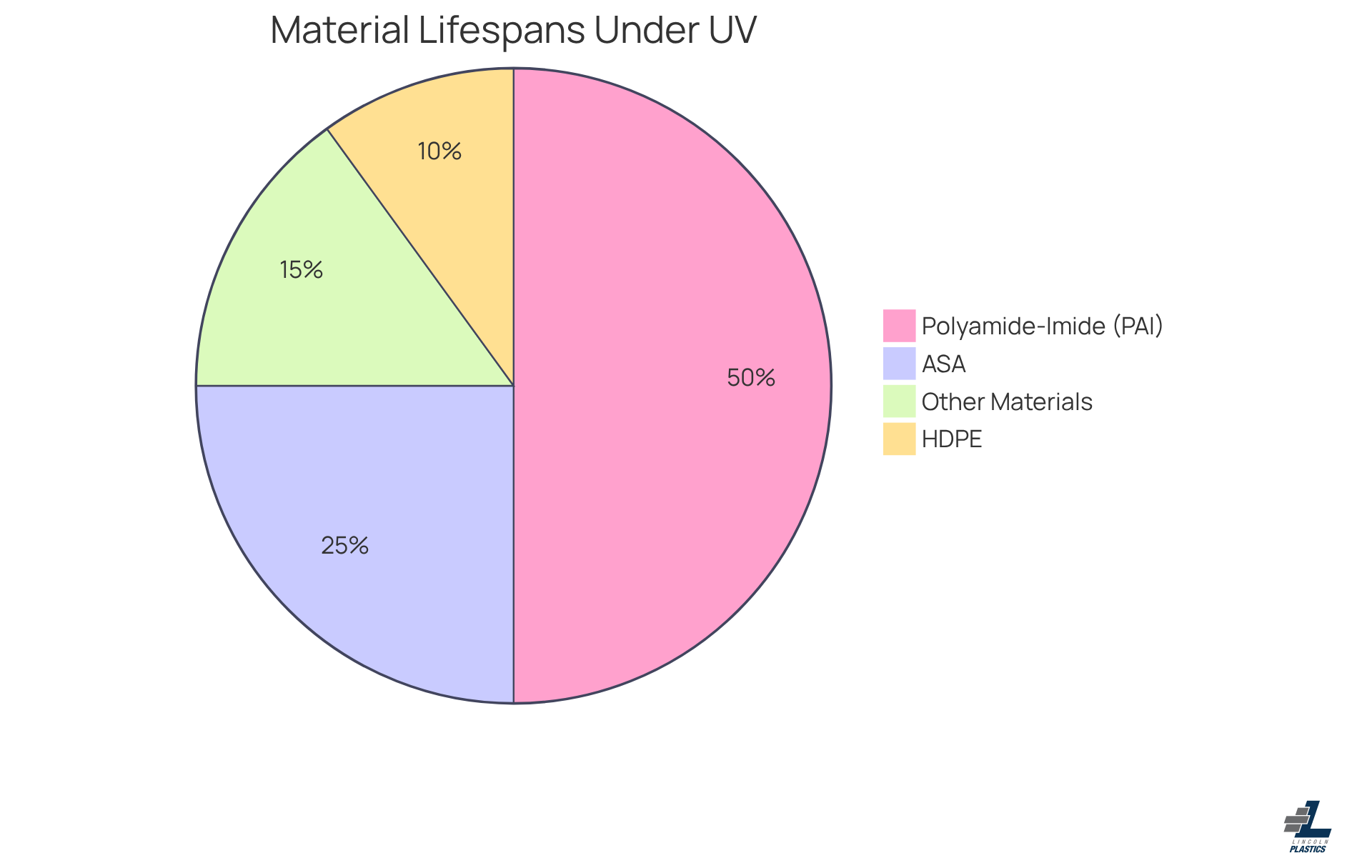
For manufacturers, understanding plastic UV resistance is crucial. Why? Because plastic UV resistance directly affects the durability and reliability of components in items such as garden furniture, car parts, and farming equipment. By adding UV stabilizers to plastics, we can significantly improve their plastic UV resistance and extend their lifespan. For instance, materials like Polyamide-Imide (PAI) and ASA are champions in this area, boasting lifespans of 8-12 years or more when exposed to the elements. On the flip side, materials like HDPE don’t fare as well, lasting only about 2-5 years.
Now, here’s something interesting: the market for products featuring plastic UV resistance is projected to grow at a rate of 6.3% from 2024 to 2030. That’s a clear sign that more and more folks are looking for materials that provide plastic UV resistance. Plus, with climate change ramping up UV exposure, the performance demands for outdoor products, particularly concerning plastic UV resistance, are only going to increase.
So, what can manufacturers do? By prioritizing UV stability in their material choices, they can build trust and loyalty with customers. After all, who doesn’t want products that stay functional and look great over time?
Explore Different Types of UV-Resistant Plastics and Their Applications
When it comes to plastics, you might be surprised to learn that many of them exhibit plastic UV resistance to withstand UV rays. Let’s break down a few types that are tailored for specific uses:
-
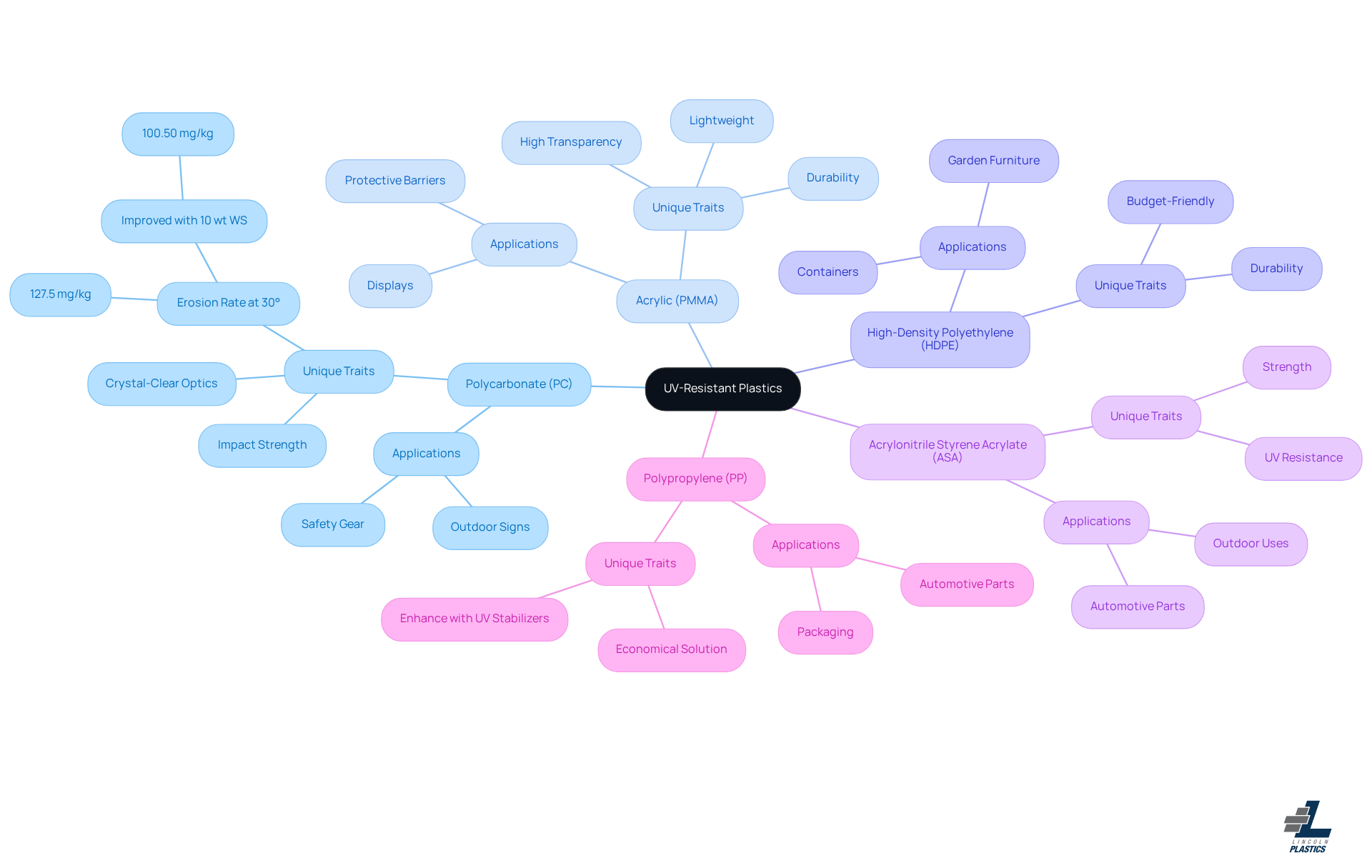
Polycarbonate (PC): This one’s a superstar! Known for its incredible impact strength and crystal-clear optics, polycarbonate is often found in safety gear and outdoor signs. Did you know that at a 30° angle, the erosion rate for a PC/ASA blend was 127.5 mg/kg? With just a sprinkle of 10 wt% walnut shell filler, that rate improved by 21% to 100.50 mg/kg. Pretty impressive, right? It’s a solid choice for tough environments.
-
Acrylic (PMMA): If you’re seeking plastic UV resistance, acrylic is your go-to. It’s widely used in displays and protective barriers. Plus, you can form acrylic sheets into different thicknesses, which boosts durability while keeping transparency high. Industry experts rave about its lightweight and sturdy nature, making it perfect for outdoor signage and displays.
-
High-Density Polyethylene (HDPE): This one’s all about durability! HDPE is a favorite for garden furniture and containers because of its plastic UV resistance, enabling it to stand strong against UV degradation. It’s lightweight and budget-friendly, making it a popular pick for all sorts of applications.
-
Acrylonitrile Styrene Acrylate (ASA): ASA is a fantastic blend of strength and plastic UV resistance, making it ideal for automotive parts and outdoor uses. It can handle long sun exposure without losing its integrity, which is a big plus in harsh conditions. Adding walnut shell filler to ASA really boosts its erosion resistance, giving you a sustainable material option.
-
Polypropylene (PP): While it’s not naturally UV resistant, you can enhance polypropylene with UV stabilizers for outdoor applications. You’ll often find it in packaging and automotive parts, providing an economical solution for various needs.
By understanding the unique traits and applications of these plastics, OEMs can pick the right polymer for their specific needs. This way, they ensure their products perform well and last longer. So, what do you think? Ready to dive into the world of UV-resistant plastics?
Evaluate Criteria for Selecting UV-Resistant Plastics for Your Projects
When it comes to picking plastics, OEMs face some important choices regarding plastic UV resistance to ensure they get the best performance and longevity. Let’s break it down together:
-
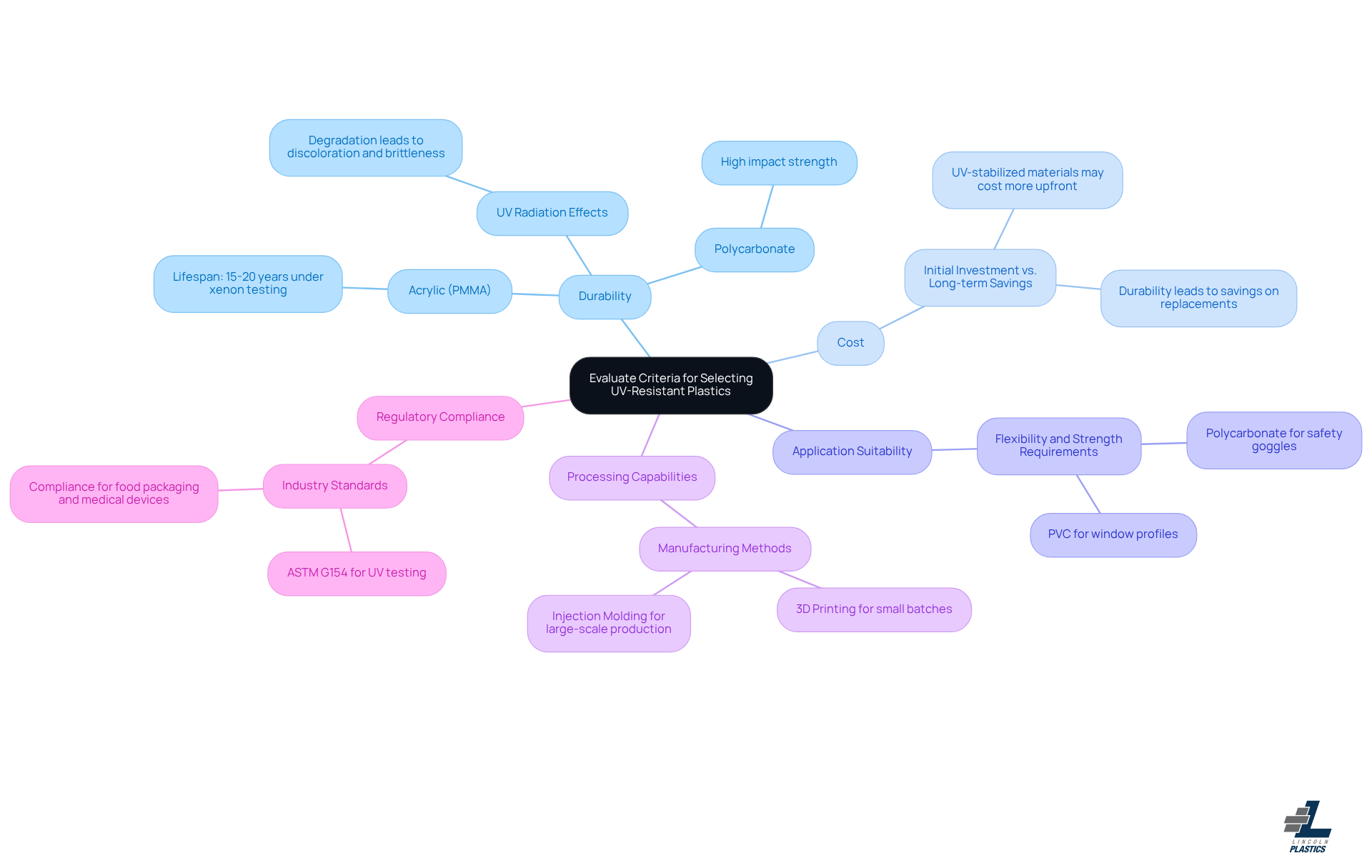
Durability: First off, think about how tough the material is against environmental challenges. This includes UV exposure, temperature swings, and mechanical impacts. For instance, acrylic (PMMA) can last about 15-20 years under xenon testing, making it a solid option for outdoor applications.
-
Cost: Next, let’s chat about cost. It’s all about balancing that initial investment with what you’ll spend on performance and maintenance down the line. Sure, some UV-stabilized materials might cost more upfront, but their durability can lead to big savings over time-especially for high-value items like automotive parts that need to last.
-
Application Suitability: Now, you’ll want to make sure the plastic fits the specific needs of your application. Think about flexibility, strength, and how it looks. For example, polycarbonate is a go-to for safety goggles because it offers great plastic UV resistance and impact strength, making it perfect for tough environments.
-
Processing Capabilities: Don’t forget about how the material works with your manufacturing processes. Whether it’s extrusion, injection molding, or thermoforming, some methods offer a wider range of UV-resistant materials. For example, injection molding is great for large-scale production, while 3D printing is better for smaller batches.
-
Regulatory Compliance: Lastly, make sure the material meets industry standards and regulations, especially for sensitive uses like food packaging or medical devices. Following standards like ASTM G154 for UV testing ensures that your materials will exhibit plastic UV resistance and perform reliably under expected conditions.
By taking a closer look at these criteria, OEMs can make smart choices that boost product performance and reliability. So, what do you think? Ready to dive into your next project with confidence?
Understand the Effects of UV Exposure on Plastic Materials
You know, UV exposure can significantly affect the plastic UV resistance of materials, impacting both their appearance and performance. Let’s break it down:
-
Discoloration: If plastics are out in the sun for too long, they can fade or turn yellow. This isn’t just a cosmetic issue; it can hurt how products sell, especially when consumers are involved. For example, a study by Xometry found that a white stereolithography (SLA) part turned yellow and became super brittle after just six months outside.
-
Brittleness: UV rays can break down polymer chains, making plastics more brittle. This is a big deal because it means they can crack more easily under stress, which is risky in situations where strength matters. Mechanical engineer Ryan Stevens puts it simply: "Ultraviolet (UV) radiation can significantly degrade synthetic materials, compromising both their appearance and structural integrity."
-
Surface Degradation: Extended sun exposure can leave a chalky residue on plastic surfaces. Not only does this change how they look, but it can also weaken their mechanical properties, leading to failures in tough environments. Standards like ASTM G154 and ISO 4892-2 are often used to test plastic UV resistance and mimic real-world conditions.
-
Loss of Mechanical Strength: Over time, UV rays can weaken materials, reducing their tensile strength and overall performance. This deterioration can really impact how long plastic components last when used outdoors. Take High-Density Polyethylene (HDPE), for instance; it doesn’t hold up well against UV, making it less ideal for long-term outdoor use.
So, why does this matter? Well, understanding these effects is crucial for OEMs. By choosing materials that offer plastic UV resistance or adding protective coatings, manufacturers can boost the durability and lifespan of their products, ensuring they stand up to the sun's harshness. Plus, spotting signs of UV damage-like uneven coloring or brittleness-means you can take action before it’s too late, keeping your products in top shape.

Conclusion
Understanding plastic UV resistance is super important for OEMs who want to boost product durability and keep customers happy. Let’s dive into why picking materials that can handle the harsh effects of UV radiation is key to making sure outdoor products stay functional and look great over time.
So, what types of UV-resistant plastics are out there? Well, you’ve got options like polycarbonate, acrylic, and ASA. Each one has its own strengths, making them perfect for different applications and environments. Plus, it’s crucial to think about factors like durability, cost, and how well they fit your specific needs when choosing materials. And don’t forget about the nasty effects of UV exposure - things like discoloration and brittleness really drive home the point that making smart choices is essential for performance and longevity.
Now, with market demands growing and UV exposure increasing thanks to climate change, focusing on plastic UV resistance isn’t just a passing trend; it’s a must for manufacturers. By investing in high-quality, UV-stabilized materials, OEMs can not only boost the reliability of their products but also foster lasting customer loyalty. Embracing these best practices will lead to more sustainable and successful manufacturing outcomes as we face evolving environmental challenges together.
Frequently Asked Questions
What is UV resistance in plastics?
UV resistance in plastics refers to how well synthetic materials can withstand the degradation caused by ultraviolet (UV) radiation from sunlight, which can lead to fading, brittleness, and loss of strength.
Why is UV resistance important for manufacturers?
UV resistance is crucial for manufacturers because it directly impacts the durability and reliability of outdoor products, such as garden furniture, car parts, and farming equipment. Understanding and improving plastic UV resistance can extend the lifespan of these products.
How can manufacturers improve the UV resistance of plastics?
Manufacturers can improve UV resistance by adding UV stabilizers to plastics, which significantly enhances their durability when exposed to the elements.
What are some examples of plastics with good UV resistance?
Materials like Polyamide-Imide (PAI) and ASA are known for their excellent UV resistance, with lifespans of 8-12 years or more when exposed to outdoor conditions.
How do different plastics compare in terms of UV resistance?
While materials like PAI and ASA have a long lifespan, others like HDPE have a shorter lifespan of about 2-5 years when exposed to UV radiation.
What is the market trend for products with plastic UV resistance?
The market for products featuring plastic UV resistance is projected to grow at a rate of 6.3% from 2024 to 2030, indicating an increasing demand for UV-resistant materials.
How does climate change affect the demand for UV resistance in plastics?
Climate change is expected to increase UV exposure, leading to higher performance demands for outdoor products, particularly regarding their plastic UV resistance.
How can prioritizing UV stability benefit manufacturers?
By prioritizing UV stability in their material choices, manufacturers can build trust and loyalty with customers, as consumers prefer products that remain functional and visually appealing over time.
List of Sources
- Define UV Resistance in Plastics and Its Importance for OEMs
- UV Resistance of Plastics & Elastomers | Xometry Pro (https://xometry.pro/en/articles/uv-resistance-of-plastics)
- the role of uv stabilizers in plastic manufacturing (https://vibrantcolortech.com/the-role-of-uv-stabilizers-in-plastic-manufacturing)
- UV Light Stabilizers Market Size ($1.95 Billion) 2030 (https://strategicmarketresearch.com/market-report/uv-light-stabilizers-market)
- North America Comprehensive Analysis of North America Uv Light Stabilizers Professional Market Size 2026 | Digital Trends, Smart Solutions & AI 2033 (https://linkedin.com/pulse/north-america-comprehensive-analysis-uv-light-7oj1f)
- Explore Different Types of UV-Resistant Plastics and Their Applications
- Take a Look At Our Case Studies - Empire Screen Printing (https://empirescreen.com/case_studies)
- How can the strength and durability of vacuum-formed parts be improved? – DitaiPlastic (https://ditaiplastic.com/how-can-the-strength-and-durability-of-vacuum-formed-parts-be-improved)
- Case Studies Archive - Danpal (https://danpal.com/case_studies)
- Solid Particle Erosion Behaviors of Walnut Shell‐Filled Acrylic‐Styrene‐Acrylate (ASA) and Polycarbonate/Acrylic‐Styrene‐Acrylate (PC/ASA) Thermoplastic Blend Biocomposites (https://4spepublications.onlinelibrary.wiley.com/doi/full/10.1002/pc.30102)
- Danpal Polycarbonate Roof & Façade for Indooroopilly State High School | Danpal (https://danpal.com.au/case_studies/danpalon-roof-facade-indooroopilly-state-high-school)
- Evaluate Criteria for Selecting UV-Resistant Plastics for Your Projects
- UV Resistance of Plastics & Elastomers | Xometry Pro (https://xometry.pro/en/articles/uv-resistance-of-plastics)
- Built-Rite Tool & Die (https://proto3000.com/resources/case_studies/built-rite-tool-die-2)
- Comparing UV Resistance of Plastics: Key Insights for OEMs (https://lincoln-plastics.com/news-post/comparing-uv-resistance-of-plastics-key-insights-for-oe-ms)
- UV Stabilizers Market Size, Growth Drivers, Demand & Forecast 2030 (https://mordorintelligence.com/industry-reports/uv-stabilizers-market)
- Which Plastics Are Most UV Resistant? | Piedmont Plastics (https://piedmontplastics.com/blog/a-guide-to-uv-resistant-plastics?srsltid=AfmBOooYe6utYel1aO98JtTo_-E41krd1Su8Nc4voRXGjvXjgMXEBC-n)
- Understand the Effects of UV Exposure on Plastic Materials
- Understanding the Effects of UV on Strap Colours: What You Need to Know - Gordian Strapping (https://gordianstrapping.co.uk/2025/08/28/understanding-the-effects-of-uv-on-strap-colours-what-you-need-to-know)
- UV Resistance of Plastics & Elastomers | Xometry Pro (https://xometry.pro/en/articles/uv-resistance-of-plastics)
- Why Car Interiors Fade: The Truth About UV Damage (https://coastalcoating.pro/why-car-interiors-fade-the-truth-about-uv-damage)
- What is UV Stabilized Plastic and Why It Matters for OEMs (https://lincoln-plastics.com/news-post/what-is-uv-stabilized-plastic-and-why-it-matters-for-oe-ms)
Related posts

Designing Custom Extrusions: How We Work with OEM Engineers
Lincoln Plastics partners with OEM engineers to design custom extrusion profiles — reducing modifications, improving performance, and lowering costs


Precision Matters: Tolerances and Quality Control in Extrusion
Lincoln Plastics ensures precision in every extrusion with tight tolerances, in-line checks, and strict quality control for OEM applications
Plastic Extrusion for Agricultural Equipment: Beyond Irrigation
Lincoln Plastics supports agriculture with custom plastic extrusions that go beyond irrigation, delivering durability and reliability in the field
