
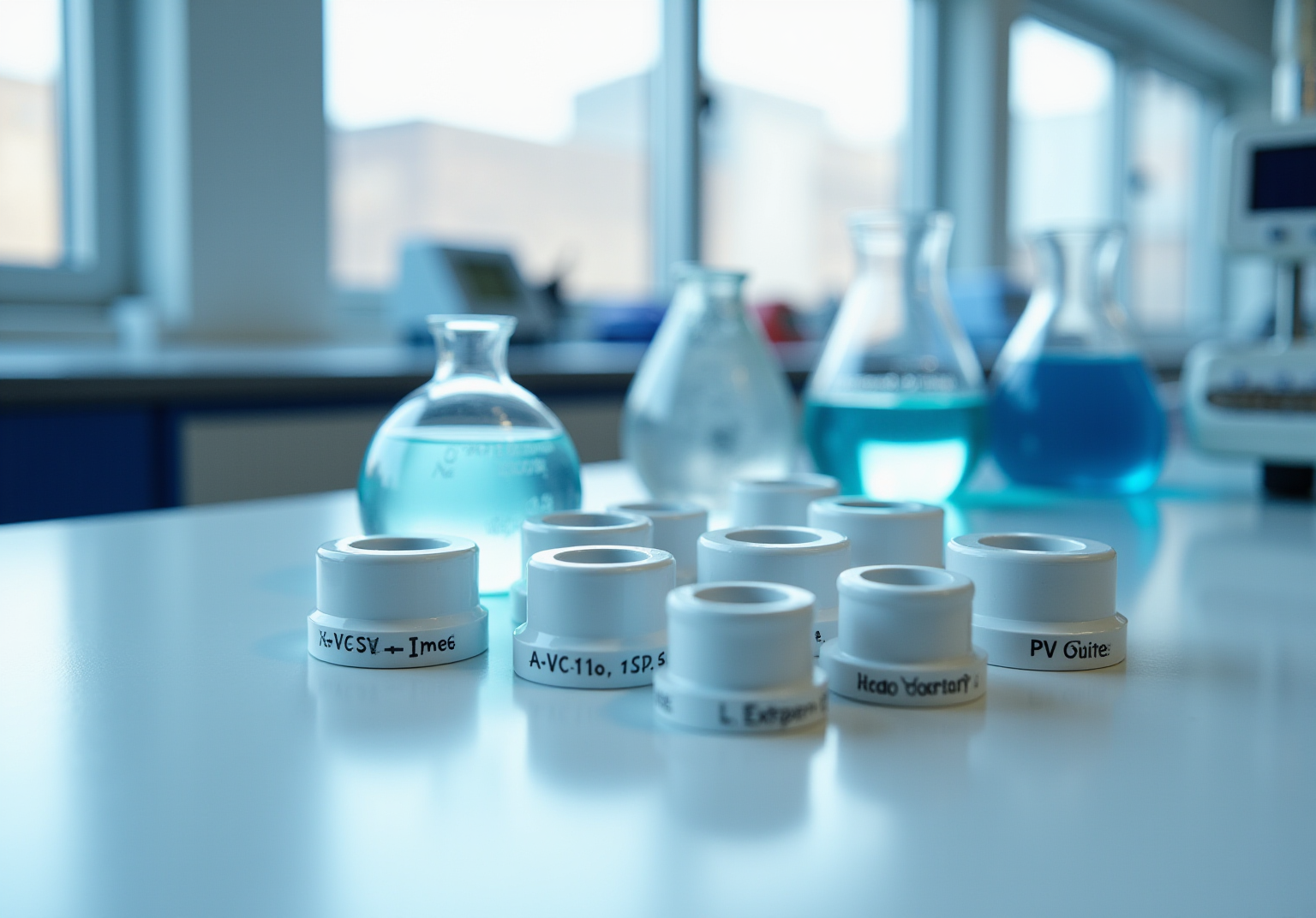
Is PVC Acid Resistant? A Step-by-Step Testing Guide
Introduction
PVC is a remarkable thermoplastic known for its exceptional durability and resistance to a wide range of chemicals, especially acids. As industries increasingly turn to this versatile material, grasping its acid resistance is crucial for ensuring effective application and longevity.
But how well does PVC truly hold up in acidic environments? What factors influence its performance? This article explores the essential properties of PVC, critical testing methods, and the implications of test results.
By delving into these aspects, we aim to equip you with the knowledge necessary to make informed decisions about utilizing PVC in your projects.
Understand PVC's Chemical Properties
PVC, or polyvinyl chloride, stands out as a thermoplastic known for its remarkable durability and versatility. Its chemical structure, characterized by a long chain of vinyl chloride monomers, plays a crucial role in its stability and resilience against various chemicals. Let's explore some key properties that make PVC a preferred choice in many applications:
- Chemical Resistance: PVC exhibits impressive resistance to a wide range of acids, bases, and salts, making it ideal for diverse uses. However, it's important to note that this resistance can vary significantly depending on the specific type and concentration of the solution. For instance, PVC shows exceptional resistance to hydrochloric and sulfuric solutions, although its effectiveness may diminish in the presence of stronger acids. Recent data reveals that PVC retains over 90% effectiveness against hydrochloric acid at concentrations up to 10%.
- Thermal Stability: With a melting point around 100°C (212°F), PVC's thermal stability is a critical factor in high-temperature environments. This characteristic requires careful consideration in applications where heat exposure is a concern.
- Mechanical Strength: PVC is inherently rigid and strong, which is beneficial for structural applications. However, this rigidity can limit flexibility in certain scenarios, necessitating modified formulations for applications that require enhanced flexibility.
Recent advancements in PVC durability are noteworthy, particularly through methods that chemically bond plasticizers directly to the polymer. This innovation not only boosts the material's resistance to chemical changes but also extends its lifespan, allowing for potential reuse of PVC materials multiple times before deterioration. As Dr. James Chen aptly states, "PVC remains a cornerstone material for modern infrastructure due to its performance and versatility." Such developments are essential in addressing environmental concerns related to microplastic release, contributing to a more sustainable lifecycle for PVC products.
Understanding these properties is crucial for predicting how PVC, which is PVC acid resistant, will react when exposed to acidic substances, thereby informing effective testing and application strategies. Are you ready to leverage the benefits of PVC in your next project?

Evaluate Factors Affecting Acid Resistance
Understanding that PVC is PVC acid resistant is crucial for accurate testing and application evaluation. Several critical factors influence this resistance, and recognizing them can significantly enhance your approach to using PVC in various environments.
- Concentration of Acid: The degradation of PVC is heavily influenced by the concentration of acid. For instance, while it is PVC acid resistant and can endure a 10% acetic solution, it becomes vulnerable when exposed to stronger acids like hydrochloric solution, leading to rapid deterioration. With the PVC market projected to grow by 8.5% year-over-year, it is more important than ever to understand that PVC is acid resistant in acidic conditions.
- Temperature: Elevated temperatures can speed up chemical reactions, resulting in quicker degradation of PVC. Conducting tests at controlled temperatures is essential for consistent and reliable results. Research indicates that testing should occur within the range of 80 °C to 120 °C to accurately assess PVC's chemical durability.
- Duration of Exposure: The length of time PVC is exposed to acidic conditions is vital for maintaining its integrity. Short-term exposure tests may not reveal long-term vulnerabilities, highlighting the need for prolonged testing durations to accurately evaluate effectiveness.
The interaction of acids with other chemicals in the environment can affect how well PVC is acid resistant. It's essential to evaluate the entire chemical context when assessing PVC functionality, as these interactions can significantly impact its durability. A case study comparing the US and Chinese PVC markets illustrates how external factors can influence material performance and market dynamics.
By thoroughly evaluating these factors, you can better predict how PVC will perform in specific applications and under various acidic conditions. This understanding not only enhances product reliability but also supports informed decision-making in your projects.

Conduct Acid Resistance Tests on PVC
To effectively test the acid resistance of PVC, follow these essential steps:
- Prepare Samples: Start by cutting PVC samples into uniform sizes. This ensures consistent testing results. Make sure the samples are clean and free from any contaminants.
- Select Substances for Testing: Choose a range of substances for testing, including both weak and strong options. Common choices include a 10% acetic solution, diluted hydrochloric solution, and sulfuric solution. These are frequently used in PVC testing due to their varying effects on the material. For instance, hydrochloric solution can cause significant degradation at higher concentrations, making it vital to consider the specific conditions of use.
- Set Up Testing Environment: Create a controlled environment to maintain consistent temperature and humidity levels. This can be achieved using a laboratory incubator or a temperature-controlled chamber. Recent advancements in automated systems have enhanced the accuracy and efficiency of maintaining these conditions, minimizing human error.
- Immersion Testing: Submerge the PVC samples in the selected solution for predetermined durations, such as 24, 48, and 72 hours. Ensure that the samples are fully immersed and not touching each other to prevent cross-contamination. This method aligns with best practices recommended by laboratory technicians, who stress the importance of consistent immersion conditions.
- Post-Test Evaluation: After the immersion period, remove the samples and rinse them with distilled water. Examine them for any noticeable signs of deterioration, such as discoloration, swelling, or brittleness, which indicate the material's reaction to the chemicals. For example, a study showed that PVC exposed to concentrated acetic solution exhibited significant swelling, highlighting the need for careful selection based on chemical compatibility.
- Mechanical Testing: Conduct mechanical tests, such as tensile strength and impact durability, on the samples before and after exposure. This will help assess any changes in performance and provide insight into the material's integrity post-testing. Utilizing advanced testing equipment, like hydrostatic pressure testers, can further ensure compliance with industry standards.
By adhering to these steps, professionals can systematically evaluate the corrosion tolerance of PVC, which is PVC acid resistant, gathering crucial data to inform material selection and application choices.

Interpret Test Results and Make Informed Decisions
Interpreting the results of acid resistance tests is crucial for confirming that PVC is acid resistant in specific applications.
- Assess Visual Changes: Begin by examining the PVC samples for any discoloration, swelling, or surface degradation. Notable changes may indicate insufficient acid durability.
- Evaluate Mechanical Properties: Next, compare the mechanical test results-such as tensile strength and impact resistance-before and after exposure. A significant decline in these properties suggests that the PVC is not acid resistant in acidic environments. Research shows that PVC can experience a reduction in tensile strength by up to 30% when exposed to hydrochloric solutions at concentrations above 10%.
- Consult Chemical Resistance Charts: Utilize chemical resistance charts to assess your findings against established data on PVC's behavior with specific substances. This step is vital for validating your results and guiding material selection.
- Consider Application Context: Finally, reflect on the specific application and environmental conditions where the PVC will be utilized. If the test results indicate marginal effectiveness, it may be wise to explore alternative materials or protective coatings. Recent studies highlight that PVC is acid resistant, but its performance can vary significantly based on the type of acid and its concentration, underscoring the importance of thorough evaluation.
By effectively interpreting these test results, you can make informed decisions regarding the use of PVC in your projects, ensuring that you select materials that align with your operational requirements. Given the current supply chain challenges and rising PVC prices driven by global demand, it is essential for OEM Purchasing Managers to consider these factors when making procurement decisions.

Conclusion
PVC, or polyvinyl chloride, stands out as a remarkably durable thermoplastic, renowned for its impressive resistance to a variety of acids. This quality makes it a preferred choice across numerous applications. Understanding the intricacies of PVC's chemical properties, particularly its acid resistance, is vital for ensuring effective use in environments where acidic exposure is a concern. This guide has illuminated the essential aspects of PVC's performance, underscoring the importance of evaluating factors such as acid concentration, temperature, and exposure duration.
Key insights from this article reveal that while PVC exhibits strong resistance to many acids, its effectiveness can vary significantly under specific conditions. The step-by-step testing procedure outlined here provides a systematic approach to assess PVC's acid resistance, empowering professionals to make informed decisions based on empirical data. By thoroughly interpreting test results, including visual assessments and mechanical property evaluations, users can better predict how PVC will perform in real-world applications.
In conclusion, the importance of understanding PVC's acid resistance cannot be overstated. As demand for PVC continues to rise, particularly in construction and infrastructure, leveraging its properties effectively becomes crucial. Professionals are encouraged to adopt the recommended testing methods and consider environmental factors when selecting materials for their projects. By doing so, they not only enhance the reliability of their applications but also contribute to a more sustainable approach in material selection and usage.
Frequently Asked Questions
What is PVC and what are its main characteristics?
PVC, or polyvinyl chloride, is a thermoplastic known for its remarkable durability and versatility. Its chemical structure consists of a long chain of vinyl chloride monomers, contributing to its stability and resilience against various chemicals.
How does PVC perform in terms of chemical resistance?
PVC exhibits impressive resistance to a wide range of acids, bases, and salts, making it suitable for various applications. Its resistance can vary based on the type and concentration of the solution; for example, it retains over 90% effectiveness against hydrochloric acid at concentrations up to 10%.
What is the thermal stability of PVC?
PVC has a melting point of around 100°C (212°F), which is crucial for its performance in high-temperature environments. This characteristic must be considered in applications where exposure to heat is a concern.
What is the mechanical strength of PVC?
PVC is inherently rigid and strong, making it beneficial for structural applications. However, this rigidity can limit flexibility, which may require modified formulations for applications that need enhanced flexibility.
What recent advancements have been made in PVC durability?
Recent advancements include methods that chemically bond plasticizers directly to the polymer, which increases the material's resistance to chemical changes and extends its lifespan, allowing for potential reuse multiple times before deterioration.
Why is PVC considered important for modern infrastructure?
PVC is regarded as a cornerstone material for modern infrastructure due to its performance and versatility, as highlighted by Dr. James Chen. Recent developments also address environmental concerns related to microplastic release, contributing to a more sustainable lifecycle for PVC products.
How does understanding PVC's properties help in its application?
Understanding PVC's chemical resistance, thermal stability, and mechanical strength is crucial for predicting how it will react when exposed to various substances, thus informing effective testing and application strategies.
List of Sources
- Understand PVC's Chemical Properties
- parchem.com (https://parchem.com/news/article/pvc-under-pressure-the-chemistry-utility-and-controversy-of-a-global-plastic-giant)
- Scientists develop novel method for strengthening PVC products (https://news.osu.edu/scientists-develop-novel-method-for-strengthening-pvc-products)
- norfolkdailynews.com (https://norfolkdailynews.com/online_features/press_releases/heat-stabilizers-market-accelerates-with-rising-pvc-demand-in-construction-sectors-with-lanxess-eastman-chemical/article_567d7eeb-2db4-5744-81a5-e0a35ad8d7f8.html)
- m.standard-chem.com (https://m.standard-chem.com/news/global-pvc-resin-sg5-market-shows-strong-growth-in-2026-amid-construction-boom)
- Evaluate Factors Affecting Acid Resistance
- chemanalyst.com (https://chemanalyst.com/NewsAndDeals/NewsDetails/supply-tightness-and-rising-global-reliance-on-us-pvc-drive-a-12-41665)
- PVC (https://spglobal.com/energy/en/news-research/special-reports/chemicals/chemical-trends-h1-2026/macroeconomic-woes/pvc)
- hzeyun.com (https://hzeyun.com/research/2611688.html)
- m.standard-chem.com (https://m.standard-chem.com/news/global-pvc-resin-sg5-market-shows-strong-growth-in-2026-amid-construction-boom)
- nature.com (https://nature.com/articles/s40494-025-01955-w)
- Conduct Acid Resistance Tests on PVC
- Scientists develop novel method for strengthening PVC products (https://news.osu.edu/scientists-develop-novel-method-for-strengthening-pvc-products)
- Breakthrough U.S. Demo Plant Advances Scalable PVC Recycling - Vinyl (https://vinylinfo.org/pressroom/breakthrough-u-s-demo-plant-advances-scalable-pvc-recycling)
- kaisertechnic.com (https://kaisertechnic.com/advancements-in-plastic-pipe-testing-what-you-need-to-know)
- PVC (Polyvinyl Chloride) – Chemical Resistance Chart (https://blog.darwin-microfluidics.com/pvc-polyvinyl-chloride-chemical-resistance-chart)
- calpaclab.com (https://calpaclab.com/pvc-polyvinyl-chloride-chemical-compatibility-chart?srsltid=AfmBOooO5UI0FeOHdj1QKL-D5FeZRaPxVPclhY1rsh5gmvrEtb-BqdCI)
- Interpret Test Results and Make Informed Decisions
- chemanalyst.com (https://chemanalyst.com/NewsAndDeals/NewsDetails/supply-tightness-and-rising-global-reliance-on-us-pvc-drive-a-12-41665)
- Industry Fights Back on Misleading Report on PVC Pipe (https://asa.net/industry-fights-back-on-misleading-report-on-pvc-pipe)
- atlasfibre.com (https://atlasfibre.com/essential-guide-to-pvc-chemical-compatibility-and-application-safety)
- eurofins.com (https://eurofins.com/consumer-product-testing/media-centre/news/chemicals-monthly-bulletin-january-2026)
- polypipenews.com.au (https://polypipenews.com.au/news/france-replaces-toxic-pvc)
Related posts

Designing Custom Extrusions: How We Work with OEM Engineers
Lincoln Plastics partners with OEM engineers to design custom extrusion profiles — reducing modifications, improving performance, and lowering costs


Precision Matters: Tolerances and Quality Control in Extrusion
Lincoln Plastics ensures precision in every extrusion with tight tolerances, in-line checks, and strict quality control for OEM applications
Plastic Extrusion for Agricultural Equipment: Beyond Irrigation
Lincoln Plastics supports agriculture with custom plastic extrusions that go beyond irrigation, delivering durability and reliability in the field
