
Enhance ABS Plastic UV Resistance: Key Steps for OEMs
Introduction
Understanding UV resistance in ABS plastic is super important for manufacturers who want their products to last and perform well. You know how sunlight can cause issues like yellowing and brittleness? Well, that’s a real challenge for OEMs trying to keep outdoor components in tip-top shape.
So, what can we do about it? This article dives into some effective strategies for boosting UV resistance in ABS plastic. We’ll explore key techniques and considerations that can really help extend product lifespan and meet those market demands.
Now, you might be wondering: what innovative methods can manufacturers adopt to tackle the relentless effects of UV radiation? Let’s keep our products looking great and performing their best!
Understand the Importance of UV Resistance in ABS Plastic
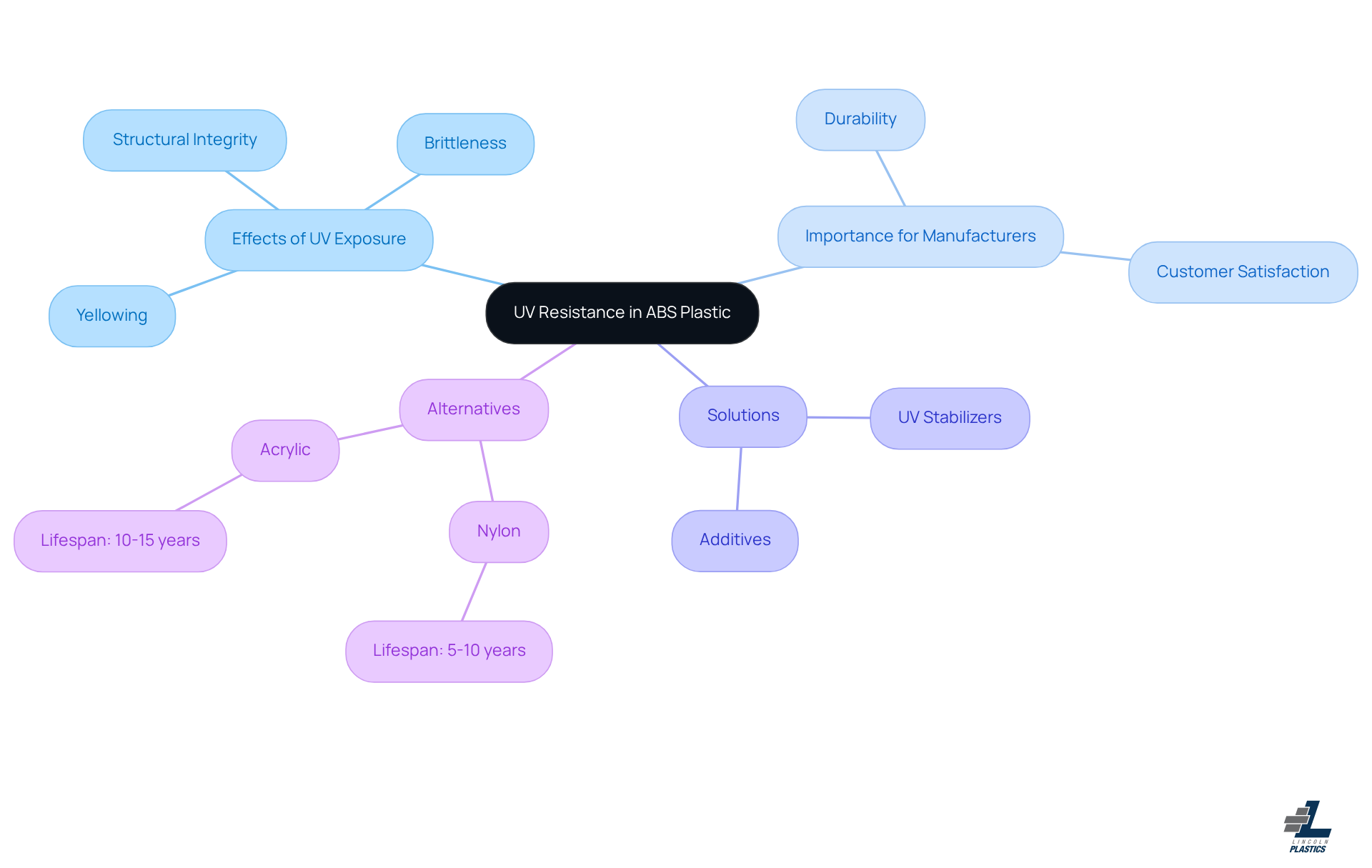
When considering ABS plastic, its UV resistance is crucial, particularly for items that will be exposed to sunlight. You see, if ABS is exposed to UV radiation for too long, it can really start to break down. We’re talking about yellowing, brittleness, and a drop in structural integrity. Research shows that ABS without any additives has a pretty short lifespan of just 1-3 years when used outdoors. Even the high-impact, flame-retardant, and high heat versions don’t perform much better regarding ABS plastic UV resistance. This degradation happens mainly due to photodegradation, which breaks down the chemical bonds in the polymer, leading to those visible changes and weaker mechanical properties.
Now, if you’re an OEM, understanding these risks is super important for keeping your products durable and your customers happy. Think about it: components used outside, like car parts or garden furniture, really need ABS plastic UV resistance to keep looking good and working well over time. Recent case studies have shown that UV stabilizers and absorbers, like HALS and cyanoacrylate-based additives, can significantly improve ABS plastic UV resistance against the negative effects of UV exposure. These treatments can make a huge difference, extending the lifespan of products by preventing discoloration and maintaining their strength.
So, what can manufacturers do? By choosing the right substances and treatments, and even considering alternatives like Nylon (which lasts 5-10 years) and Acrylic (10-15 years) under UV exposure, they can tackle the challenges posed by UV rays. This way, they can boost the durability and reliability of their ABS plastic components for outdoor use.
Implement Techniques to Enhance UV Resistance of ABS
If you're looking to boost the UV resistance of ABS plastic, there are some pretty effective techniques you can try out:
-
Add UV Stabilizers: By incorporating UV stabilizers during the extrusion process, you can really amp up the material's resistance to UV degradation. Common options like benzotriazole and hindered amine light stabilizers (HALS) do a great job of absorbing harmful UV rays, keeping the polymer from breaking down. As Helen G. points out, choosing UV-stabilized grades is key to making sure your ABS sheets stay reliable and good-looking for years to come.
-
Use Carbon Black: Adding carbon black not only gives you UV protection but also boosts the overall strength of the ABS material. It absorbs UV radiation, preventing it from penetrating the polymer matrix and extending the lifespan of your items. Research shows that carbon black is an effective UV stabilizer because it absorbs and scatters UV light, helping to mitigate the harmful effects of UV radiation on plastics.
-
Apply Protective Coatings: You can also apply surface coatings that contain UV absorbers to finished items. These coatings act as a barrier against UV rays, further protecting the ABS material from degradation and keeping its aesthetic qualities intact. Think of protective coatings like paints or laminates - they can really enhance the longevity of ABS items by shielding them from sunlight and environmental damage.
-
Consider Material Blending: Blending ABS with other polymers that have better UV resistance can really improve performance. For example, mixing ABS with ASA (Acrylonitrile Styrene Acrylate) creates a more UV-stable material, making it perfect for outdoor use. This strategy not only boosts UV resistance but also helps tackle the effects of high humidity and temperature swings on ABS degradation.
By using these techniques, OEMs can significantly enhance the ABS plastic UV resistance of their products, ensuring they perform well outdoors without compromising quality. And don’t forget to follow testing standards like ASTM D256 and ISO 4892 to confirm that your ABS sheets are ready for outdoor conditions, meeting all the specific application requirements.

Ensure Stable UV Performance in Injection Molded ABS
When it comes to ensuring stable UV performance in injection molded components, manufacturers should definitely keep in mind the importance of ABS plastic UV resistance. Let’s dive into them!
-
First up, optimize that injection temperature! Keeping the right temperature is super important. If it’s too high, it can break down UV stabilizers, and if it’s too low, the material might not melt properly, which can mess with its integrity. Did you know that the ABS plastic UV resistance rating is pretty poor without additives? It only lasts about 1-3 years! So, getting this right is crucial.
-
Next, let’s talk about cooling rates. Gradual cooling is the name of the game here. Rapid cooling can create internal stresses that hurt UV resistance. By controlling the cooling process, you help improve molecular alignment, which boosts the material's stability and contributes to its ABS plastic UV resistance against UV degradation. Plus, environmental factors like high temperatures and humidity can really affect how ABS performs, making this control even more important.
-
Now, don’t forget about pressure settings! Proper pressure during the injection molding process is key to achieving uniform density and ensuring even distribution of UV stabilizers throughout the ABS plastic with UV resistance. This uniformity can significantly enhance the overall ABS plastic UV resistance of the components.
-
And here’s a big one: conduct regular testing. Establishing a routine testing schedule for ABS plastic UV resistance is essential. It helps catch any degradation early on. Using standardized tests, like ASTM G154, gives you reliable info on how the material behaves under UV exposure. Regular testing can help you spot potential issues before they turn into product failures.
To really drive this home, let’s consider what Ryan Stevens said: "Ultraviolet (UV) radiation can significantly degrade plastics, compromising both their appearance and structural integrity." This just reinforces how important these practices are. By focusing on these critical aspects during the injection molding process, manufacturers can create ABS components that maintain their ABS plastic UV resistance over time. This means long-lasting quality and reliability, especially for outdoor applications. So, let’s make sure we’re all on the same page and implementing these practices!

Evaluate ABS UV Performance Across Different Environments
When it comes to evaluating how well ABS performs under UV exposure in different environments, there are a few key things to keep in mind:
-
Geographic Location: Have you ever noticed how the sun feels stronger in some places than others? That’s because UV radiation varies by location. If you’re closer to the equator, you’re getting hit with higher UV levels, which can speed up how quickly ABS materials break down. So, understanding where your products will be used is super important for boosting their performance.
-
Temperature Fluctuations: Let’s talk about heat. High temperatures can really ramp up UV degradation. It’s crucial to think about how extreme temperatures in specific environments might affect the lifespan and strength of ABS products. Research shows that when it’s hot, materials age faster, which means they might not last as long.
-
Humidity Levels: Now, what about humidity? High humidity can make UV radiation even more damaging. Moisture in the air can have a medium impact on how ABS holds up against UV rays, potentially leading to quicker deterioration. So, keeping an eye on humidity levels is key to understanding how they affect overall performance.
-
Exposure Duration: How long are your products exposed to UV light? This is a biggie when it comes to assessing material performance. Conducting accelerated aging tests can give you a clearer picture of how ABS will stand up over time in different conditions. This way, you can better predict how durable your products will be in real-world situations.
-
Mitigation Strategies: Here’s a tip: using UV additives can really boost the UV resistance of ABS. These additives soak up UV rays and turn them into heat, which helps reduce damage. By closely examining these factors and employing effective strategies, manufacturers can gain a better understanding of the ABS plastic UV resistance of their products, allowing them to make the necessary adjustments to enhance durability and maintain competitiveness.
-
Case Study Insights: Finally, let’s not forget about the importance of choosing the right material with ABS plastic UV resistance. For companies looking to up their game, selecting the right UV grades and stabilizers can make a huge difference. It’s all about finding that sweet spot between effectiveness and cost to meet market demands efficiently.

Choose the Right UV Resistant ABS for Your Applications
When it comes to picking UV resistant ABS for your projects, there are a few key things to keep in mind:
-
Material Grade: Not all ABS is created equal! Different grades provide varying levels of ABS plastic UV resistance. You’ll want to choose grades that offer ABS plastic UV resistance. These really boost outdoor durability. For example, weather-resistant ABS holds up better in terms of mechanical properties and color retention compared to standard grades. This makes it a great choice for those tough outdoor conditions.
-
Additive Compatibility: Now, let’s talk about additives. It’s super important to make sure any UV resistance additives you use are compatible with your application. Some, like Hindered Amine Light Stabilizers (HALS), can really help with UV damage, but they might also change the mechanical properties of the ABS. So, it’s a good idea to check how these additives interact with the base material to keep performance up to par.
-
Cost vs. Performance: Here’s the deal: you need to balance the cost of UV resistant ABS with what your application really needs. Sure, higher-grade materials might offer better ABS plastic UV resistance and longer life, but they often come with a higher price tag. Weighing the long-term benefits against those initial costs can help you make a smarter, more economical choice.
-
Supplier Reputation: Don’t forget about where you’re getting your materials! It’s wise to choose suppliers known for high-quality UV resistant ABS. For instance, Lincoln Plastics works closely with OEMs to ensure their products meet all quality standards, including special inspections for ‘fit and function’ using various check gauges. A little research into supplier certifications and customer reviews can go a long way in ensuring reliability. Plus, teaming up with reputable manufacturers like Lincoln Plastics can help you customize based on your specific project needs, like sourcing colors that match Pantone specifications, which can really boost your product’s performance.
By keeping these factors in mind, you can choose the right UV resistant ABS materials that fit your application perfectly. This way, you’ll enhance product durability and keep your customers happy!

Conclusion
When it comes to making ABS plastic that can stand the test of time, especially for outdoor products, enhancing UV resistance is a must for manufacturers. We all know how UV radiation can wreak havoc on materials, right? It can really cut down the lifespan and performance of ABS components. That’s why it’s so important for OEMs to have solid strategies in place to tackle these challenges.
In this guide, we’ve highlighted some key techniques to boost the UV resistance of ABS:
- Think about adding UV stabilizers
- Use carbon black
- Apply protective coatings
- Blend materials with more UV-stable polymers
- Optimize your injection molding processes
- Keep up with regular testing
These steps are crucial to ensure that your ABS stays UV resistant over time. By understanding the environmental factors that can influence UV degradation - like where you’re located, temperature changes, and humidity - you can really tailor your approach to enhance product performance.
Now, let’s not underestimate the importance of choosing the right UV-resistant ABS materials. It’s all about considering:
- Material grades
- How well additives work together
- Balancing cost with performance
- Checking out supplier reputations
By making informed choices, OEMs can not only extend the lifespan of their products but also meet customer expectations. Embracing these practices will elevate the quality of ABS products and help manufacturers thrive in a competitive market where durability and reliability are key.
Frequently Asked Questions
Why is UV resistance important for ABS plastic?
UV resistance is crucial for ABS plastic because prolonged exposure to UV radiation can lead to degradation, including yellowing, brittleness, and a decrease in structural integrity. Without additives, ABS has a short lifespan of 1-3 years when used outdoors.
What causes the degradation of ABS plastic under UV exposure?
The degradation occurs primarily due to photodegradation, which breaks down the chemical bonds in the polymer, resulting in visible changes and weaker mechanical properties.
How can manufacturers improve the UV resistance of ABS plastic?
Manufacturers can improve UV resistance by using UV stabilizers, adding carbon black, applying protective coatings, and considering material blending with other polymers that have better UV resistance.
What are some effective techniques to enhance the UV resistance of ABS?
Effective techniques include: - Adding UV stabilizers like benzotriazole and hindered amine light stabilizers (HALS) during the extrusion process. - Using carbon black to absorb UV radiation and enhance material strength. - Applying protective coatings that contain UV absorbers to finished items. - Blending ABS with other polymers, such as ASA, to improve UV stability.
What are UV stabilizers and how do they work?
UV stabilizers are additives that absorb harmful UV rays, preventing the polymer from breaking down. They are essential in maintaining the reliability and appearance of ABS sheets over time.
What role does carbon black play in enhancing UV resistance?
Carbon black absorbs and scatters UV light, preventing it from penetrating the polymer matrix, which extends the lifespan of ABS items and enhances their overall strength.
What types of protective coatings can be applied to ABS plastic?
Protective coatings such as paints or laminates that contain UV absorbers can be applied to finished items to act as a barrier against UV rays, protecting the ABS material from degradation.
What are the benefits of blending ABS with other polymers?
Blending ABS with polymers that have better UV resistance, like ASA, improves performance in outdoor conditions and helps mitigate the effects of high humidity and temperature fluctuations.
What testing standards should manufacturers follow to ensure UV resistance?
Manufacturers should follow testing standards such as ASTM D256 and ISO 4892 to confirm that their ABS sheets are suitable for outdoor conditions and meet specific application requirements.
List of Sources
- Understand the Importance of UV Resistance in ABS Plastic
- UV Resistance of Plastics & Elastomers | Xometry Pro (https://xometry.pro/en/articles/uv-resistance-of-plastics)
- UV light Resistance & Properties: Polymer Properties (https://specialchem.com/plastics/guide/uv-light-resistance)
- The Main Reasons for the Aging of ABS Plastic (https://resinsplastics.com/news/the-main-reasons-for-the-aging-of-abs-plastic-259614.html)
- Master Plastic UV Resistance: Key Insights for OEMs' Material Choices (https://lincoln-plastics.com/news-post/master-plastic-uv-resistance-key-insights-for-oe-ms-material-choices)
- Implement Techniques to Enhance UV Resistance of ABS
- How ABS Sheet Performs in Outdoor Environments: UV Resistance, Weatherability & Surface Treatments - Polyreflex (https://polyreflex.com/n1915899/How-ABS-Sheet-Performs-in-Outdoor-Environments-UV-Resistance-Weatherability-Surface-Treatments.htm)
- Influence of Different Stabilization Systems and Multiple Ultraviolet A (UVA) Aging/Recycling Steps on Physicochemical, Mechanical, Colorimetric, and Thermal-Oxidative Properties of ABS | MDPI (https://mdpi.com/1996-1944/13/1/212)
- News - How ABS realizes anti-UV (https://chinaruicheng.com/news/how-abs-realizes-anti-uv)
- Carbon Black in Plastics: Enhancing UV Resistance and Mechanical Properties (https://nbinno.com/article/other-organic-pigments/carbon-black-plastics-uv-resistance-mechanical-properties-sg)
- Ensure Stable UV Performance in Injection Molded ABS
- UV Resistance of Plastics & Elastomers | Xometry Pro (https://xometry.pro/en/articles/uv-resistance-of-plastics)
- News - How ABS realizes anti-UV (https://chinaruicheng.com/news/how-abs-realizes-anti-uv)
- Evaluate ABS UV Performance Across Different Environments
- UV Index Worldmap | GRID-Arendal (https://grida.no/resources/7130)
- Can ABS Sheets Be Used Outdoors? - Polyreflex (https://polyreflex.com/n1896858/Can-ABS-Sheets-Be-Used-Outdoors.htm)
- News - How ABS realizes anti-UV (https://chinaruicheng.com/news/how-abs-realizes-anti-uv)
- Sun Safety Monthly Average UV Index 2006-2023 | US EPA (https://epa.gov/sunsafety/sun-safety-monthly-average-uv-index-2006-2023)
- Choose the Right UV Resistant ABS for Your Applications
- How ABS Sheet Performs in Outdoor Environments: UV Resistance, Weatherability & Surface Treatments - Polyreflex (https://polyreflex.com/n1915899/How-ABS-Sheet-Performs-in-Outdoor-Environments-UV-Resistance-Weatherability-Surface-Treatments.htm)
- Outdoor Applications of ABS Plastic Sheets - Alfa Chemistry (https://alfa-chemistry.com/plastics/outdoor-applications-of-abs-plastic-sheets.html)
- News - What is weather-resistant ABS plastic? (https://chinaruicheng.com/news/what-is-weather-resistant-abs-plastic)
- UV Resistance of Plastics & Elastomers | Xometry Pro (https://xometry.pro/en/articles/uv-resistance-of-plastics)
- News - How ABS realizes anti-UV (https://chinaruicheng.com/news/how-abs-realizes-anti-uv)


