
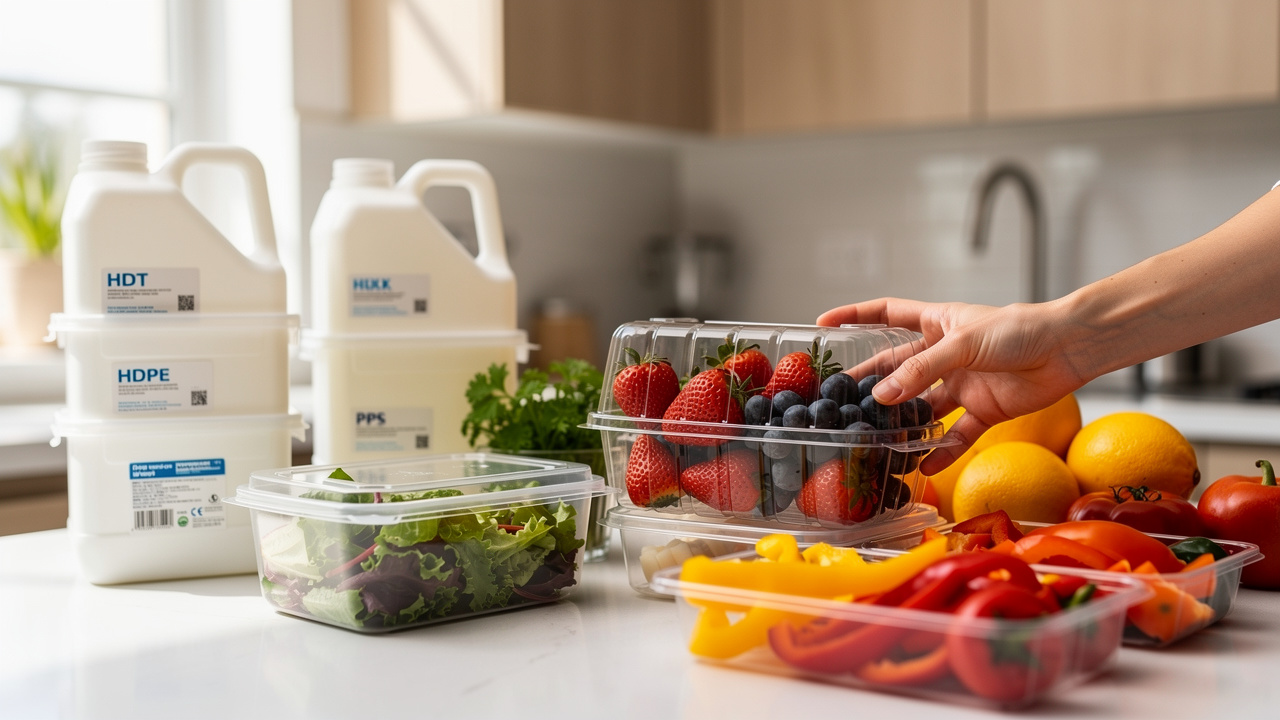
Comparing Plastic Food Container Manufacturers in the USA: Key Insights
Introduction
In the competitive landscape of food packaging, the right choice of plastic materials can make or break a brand's success. Manufacturers often struggle to meet the rising expectations for sustainability while maintaining product integrity and affordability. This balancing act can lead to significant implications for their market competitiveness and customer trust.
We'll explore the key players, pricing strategies, and quality assurance practices shaping the industry, providing insights for businesses aiming to make informed packaging decisions.
Overview of Plastic Food Container Materials and Applications
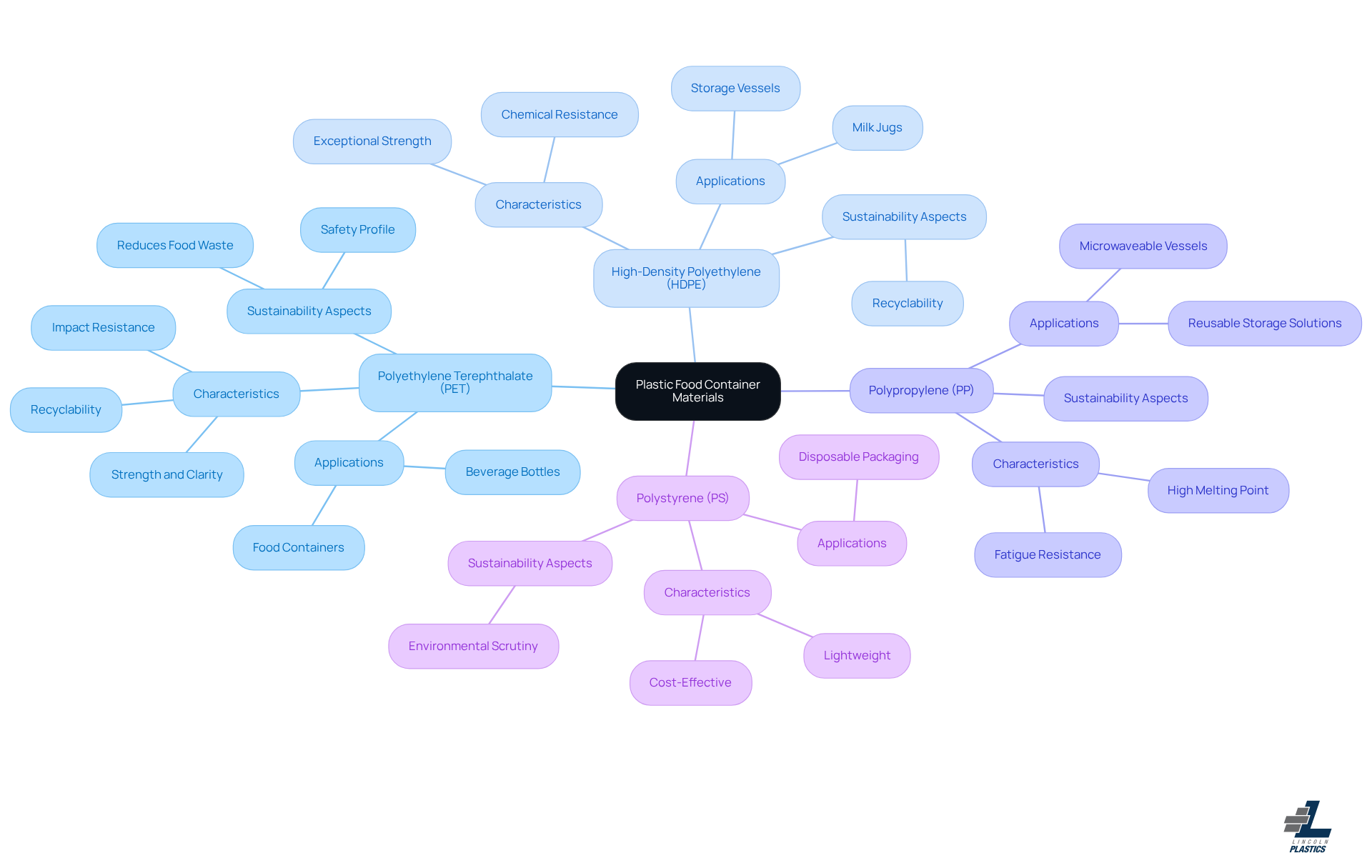
In the competitive packaging sector, the choice of plastic material can make or break a product's success. Plastic storage vessels are produced from various substances, each offering unique characteristics that cater to diverse needs in packaging. The most prevalent plastics include:
- Polyethylene Terephthalate (PET): Renowned for its strength, clarity, and recyclability, PET is extensively utilized for beverage bottles and food containers. Its impact resistance and ability to maintain freshness make it a preferred choice in the market. Recent studies emphasize PET's role in reducing waste by prolonging shelf life and preventing contamination, vital as around one-third of produce generated worldwide is discarded. Moreover, PET is acknowledged for its robust safety profile, backed by regulatory supervision, which strengthens its application in culinary containers.
- High-Density Polyethylene (HDPE): High-Density Polyethylene (HDPE) stands out for its exceptional strength and chemical resistance, making it a go-to choice for various applications. Frequently utilized for milk jugs and storage vessels, its recyclability further enhances its appeal, aligning with growing consumer demand for sustainable packaging solutions.
- Polypropylene (PP): Often used in microwaveable vessels, PP features a high melting point and fatigue resistance, making it perfect for reusable storage solutions. Its versatility allows it to cater to various food applications, from takeout to meal prep.
- Polystyrene (PS): Often found in disposable packaging, PS is lightweight and cost-effective, though it is less durable than other plastics. Its affordability makes it a popular choice for single-use applications, despite increasing scrutiny over environmental impacts.
How does the choice of material impact your production process and sustainability goals? The selection of material greatly affects the manufacturing process and the intended use of the containers, whether for takeout, storage, or wrapping of perishable goods. As the culinary container landscape evolves, manufacturers face the urgent need to innovate or risk falling behind in a competitive market. Innovations in materials like PET are driving advancements in functionality and sustainability, ensuring that manufacturers can meet the demands of a growing population projected to reach 9.7 billion by 2050. Furthermore, the worldwide culinary container sector is anticipated to expand from USD 446.5 billion in 2026 to USD 718.3 billion by 2034, emphasizing the rising need for robust culinary systems. Regulatory pressures are also driving investments in advanced recycling and waste reduction technologies, which are crucial for understanding the evolving landscape of consumable containers. Manufacturers must innovate and adapt to meet the demands of a rapidly evolving market, or risk being left behind.
Key Manufacturers in the Plastic Food Container Industry
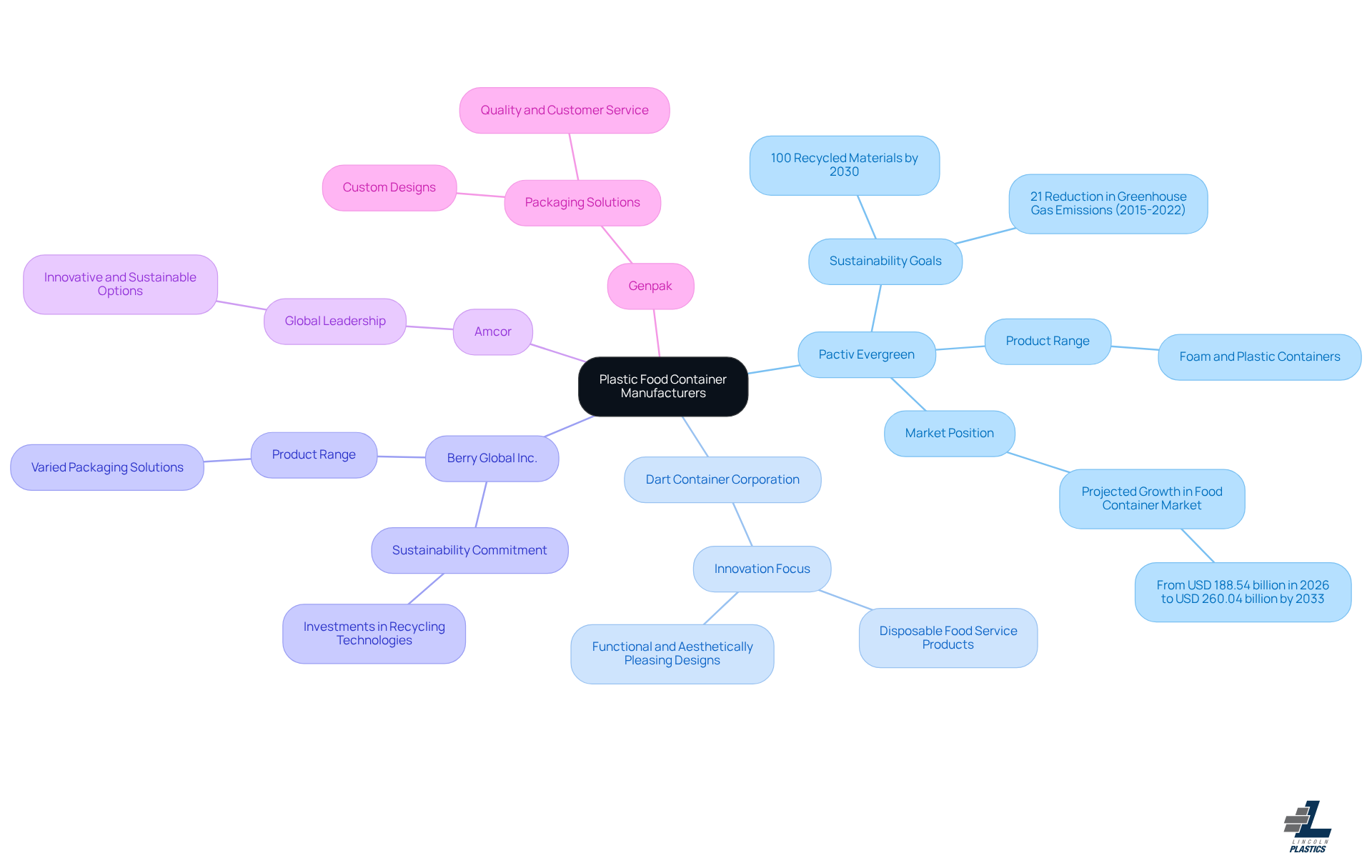
In a rapidly evolving market, the leading plastic food container manufacturers USA are setting the standard for innovation and sustainability. Each company brings unique strengths to the table, ensuring they meet the diverse needs of the culinary sector.
- Pactiv Evergreen stands out as a leading supplier, recognized for its extensive range of food packaging solutions, including foam and plastic containers. With a commitment to sustainability, the company aims for 100% of its products to be made with recycled, recyclable, or renewable materials by 2030. Notably, Pactiv Evergreen has achieved a 21% reduction in greenhouse gas emissions from 2015 to 2022, showcasing its dedication to environmental responsibility. As the Food Container Market is projected to grow from USD 188.54 billion in 2026 to USD 260.04 billion by 2033, Pactiv Evergreen is well-positioned to capitalize on this growth through its sustainable practices.
- Dart Container Corporation specializes in disposable food service products, offering a wide variety of containers that are both functional and aesthetically pleasing. Their emphasis on innovation helps them maintain a competitive edge in the industry.
- Berry Global Inc. is recognized for its varied product range and commitment to sustainability. The company has made substantial investments in recycling technologies, aligning with the increasing demand for eco-friendly container solutions.
- Amcor, a worldwide leader in container solutions, emphasizes creating innovative and sustainable options for edible products. Their responsible practices strengthen their position in the industry.
- Genpak provides a broad array of packaging solutions for edibles, including custom designs. They are acknowledged for their dedication to quality and customer service, establishing themselves as a dependable option for enterprises in the culinary sector.
As the demand for sustainable solutions grows, plastic food container manufacturers USA are not only responding but also leading the charge in shaping the future of food packaging.
Pricing Strategies Among Plastic Food Container Manufacturers
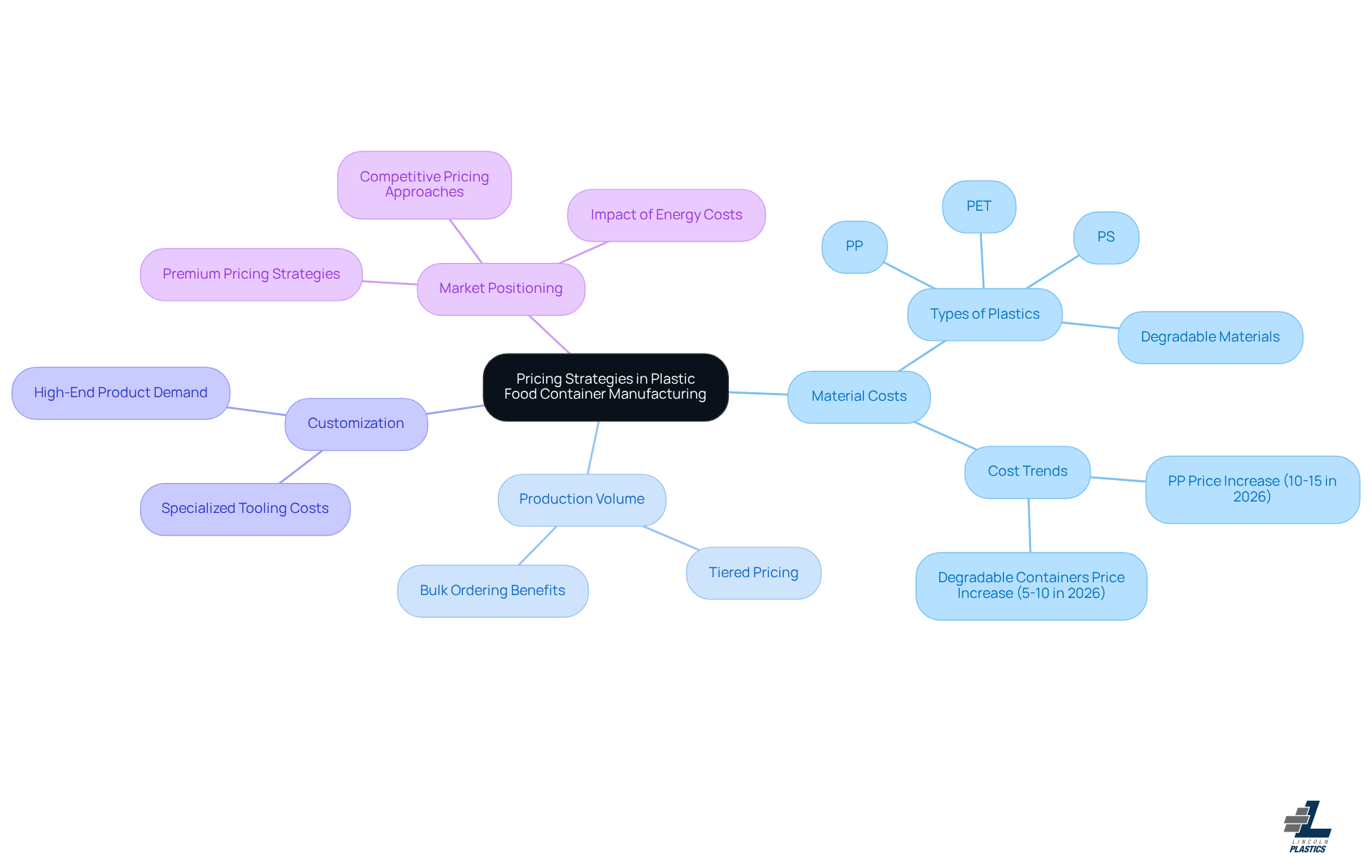
Understanding the intricacies of pricing in the plastic food container manufacturers USA industry is vital for businesses aiming to optimize their packaging costs. Several key factors influence these prices:
- Material Costs: The type of plastic used plays a significant role in determining prices. For instance, PET vessels are typically more costly than those produced from PS due to their enhanced characteristics and recyclability. In 2026, the cost of PP food vessels is anticipated to rise by 10%-15% because of variations in raw material expenses, as highlighted by recent market evaluations. Additionally, degradable vessels are expected to see a growth of 5%-10% in 2026, driven by increasing demand and environmental compliance standards.
- Production Volume: Many manufacturers use tiered pricing based on how much you order, which can make buying in bulk a smart move for your business. Larger orders often lead to reduced per-unit costs, making it economically advantageous for companies to consolidate their orders.
- Customization: Custom-designed containers can lead to higher costs, as they require specialized tooling and production processes. The demand for high-end, customized products has resulted in increased production costs, although specific percentage increases are not universally defined in the current economic context.
- Market Positioning: Plastic food container manufacturers USA, including companies like Pactiv Evergreen and Dart Container, may adopt premium pricing strategies to reflect their brand reputation and product quality. In contrast, other manufacturers may focus on competitive pricing to gain a share of the industry, particularly in a landscape where energy volatility and rising logistics costs are prevalent.
By mastering these strategies, companies can significantly reduce their packaging expenses while maintaining compliance with safety standards. Ultimately, a strategic approach to procurement can lead to substantial savings and enhanced compliance in a competitive market.
Quality Assurance Practices in Plastic Food Container Manufacturing
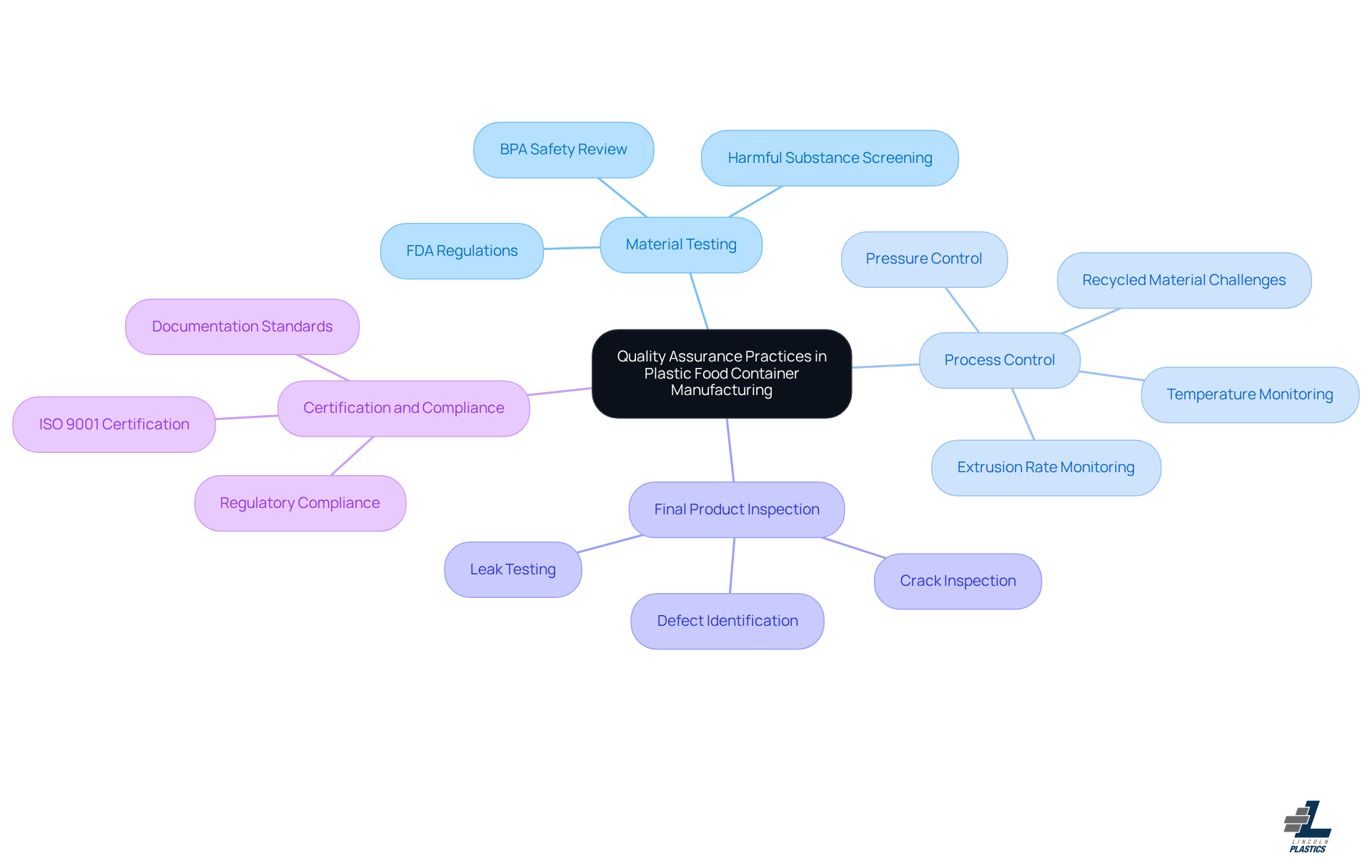
In the competitive landscape of plastic food container manufacturers USA, quality assurance is not just a requirement; it's a commitment to consumer safety and product excellence. Quality assurance in this field encompasses several essential practices that ensure safety and compliance:
- Material Testing: Rigorous testing of raw materials is vital to confirm they meet safety standards for food contact. This includes screening for harmful substances and ensuring adherence to FDA regulations, which are crucial for consumer safety. As the FDA continues its safety review of BPA, manufacturers must remain vigilant in their testing protocols to ensure compliance with evolving standards. At Lincoln Plastics, we work closely with OEMs to ensure their products meet all quality requirements, including special checks for ‘fit and function’ and sourcing colors that meet your Pantone specifications for consistency across manufacturers.
- Process Control: Implementing stringent process controls during production is necessary to maintain consistency and quality. Key parameters such as temperature, pressure, and extrusion rates are closely monitored to prevent deviations that could affect product integrity. As plastic food container manufacturers USA incorporate more recycled materials, they encounter new challenges in ensuring product safety and compliance. This complicates material testing and quality assurance processes. Our robust quality system includes a dedicated quality book for your plastic profile with drawings, critical in-process checks, and run documentation, ensuring that your rigid profiles are exactly as specified.
- Final Product Inspection: Thorough inspections of finished products are conducted to identify defects, ensuring that containers are free from leaks, cracks, or other issues that could compromise food safety. This step is critical in safeguarding consumer health. How do we ensure a perfect fit for your needs? By utilizing multiple types of check gauges, we reinforce our commitment to quality and safety.
- Certification and Compliance: Many manufacturers pursue certifications like ISO 9001 to showcase their commitment to quality management systems. Lincoln Plastics proudly holds ISO 9001:2015 certification, demonstrating our rigorous quality management plans. Compliance with industry standards not only builds customer trust but also meets regulatory requirements, which are increasingly stringent in the current landscape. For instance, from August 12, 2026, food-contact packaging must comply with the PPWR limit values, emphasizing the need for manufacturers to stay informed and compliant with regulatory changes.
These quality assurance practices not only enhance product quality but also play a pivotal role in protecting consumers, establishing a key differentiator among plastic food container manufacturers USA in a competitive market. By prioritizing quality assurance, manufacturers can differentiate themselves and foster lasting relationships with consumers who value safety and reliability. For tailored solutions and quotes, OEM purchasing managers are encouraged to contact Lincoln Plastics experts, who are dedicated to excellence and customer partnership.
Conclusion
In a rapidly evolving market, the plastic food container manufacturing industry stands at a crossroads, where quality and sustainability are no longer optional but essential. Navigating the competitive landscape of plastic food container manufacturing can be daunting, especially with so many players in the field. Quality, sustainability, and pricing strategies are key factors that shape this industry. As the demand for eco-friendly solutions continues to rise, this shift not only meets consumer expectations but also drives innovation in product development.
Material selection is crucial; plastics like PET and HDPE are at the forefront of sustainability and functionality in food packaging. How do pricing strategies impact your choices as a consumer? They reflect the complexities of material costs, production volume, and customization, influencing overall market dynamics. Robust quality assurance practices, including rigorous testing and ISO 9001:2015 compliance, are vital for consumer safety and product excellence.
Manufacturers must prioritize innovation and sustainability to thrive in the evolving plastic food container industry. Contact Lincoln Plastics today to discover how our tailored solutions can meet your food packaging needs and help you navigate market complexities.
Frequently Asked Questions
What are the most common types of plastic used for food containers?
The most common types of plastic used for food containers include Polyethylene Terephthalate (PET), High-Density Polyethylene (HDPE), Polypropylene (PP), and Polystyrene (PS).
What are the key characteristics of Polyethylene Terephthalate (PET)?
PET is known for its strength, clarity, recyclability, impact resistance, and ability to maintain freshness. It is widely used for beverage bottles and food containers and is recognized for its safety profile, supported by regulatory supervision.
Why is High-Density Polyethylene (HDPE) a popular choice for food packaging?
HDPE is favored for its exceptional strength, chemical resistance, and recyclability, making it ideal for applications like milk jugs and storage vessels, aligning with consumer demand for sustainable packaging solutions.
What advantages does Polypropylene (PP) offer for food storage?
PP has a high melting point and fatigue resistance, making it suitable for microwaveable and reusable storage solutions. Its versatility allows it to be used for various food applications, including takeout and meal prep.
What are the characteristics of Polystyrene (PS) in food packaging?
PS is lightweight and cost-effective, commonly used in disposable packaging. However, it is less durable than other plastics, making it more suitable for single-use applications, despite environmental concerns.
How does the choice of plastic material impact production processes and sustainability goals?
The choice of material significantly affects the manufacturing process and the intended use of containers. Innovations in materials like PET are essential for enhancing functionality and sustainability, helping manufacturers meet the demands of a growing population and regulatory pressures.
What is the projected growth of the culinary container sector?
The worldwide culinary container sector is expected to grow from USD 446.5 billion in 2026 to USD 718.3 billion by 2034, highlighting the increasing demand for robust culinary systems.
What challenges do manufacturers face in the evolving culinary container landscape?
Manufacturers must innovate to keep pace with market demands and regulatory pressures, particularly in advanced recycling and waste reduction technologies, to avoid falling behind in a competitive market.
List of Sources
- Overview of Plastic Food Container Materials and Applications
- Why PET Still Stands Out: A Food-Safety Expert Speaks Up - NAPCOR (https://napcor.com/blog/pet-food-safety)
- PET Under the Microscope—A Food Safety View You Can Use (https://food-safety.com/articles/10881-pet-under-the-microscopea-food-safety-view-you-can-use)
- Food Packaging & Processing: Top Trends for 2026 (https://dllgroup.com/en/blogs/blogsoverview/food-packaging-processing)
- News Articles | Food Packaging Forum (https://foodpackagingforum.org/news)
- Plastic Packaging Market Trends and Size 2026-35 (https://towardspackaging.com/insights/plastic-packaging-market)
- Key Manufacturers in the Plastic Food Container Industry
- Pactiv Evergreen : Packaging a Better Future | Manufacturing Outlook (https://mfg-outlook.com/packaging-containers-manufacturing/pactiv-evergreen-packaging-a-better-future)
- Pactiv Evergreen Commits to 100 Percent Recycled, Recyclable or Renewable Materials - Midland | Packaging, Paper, Performance (https://midlandco.com/pactiv-evergreen-commits-to-100-percent-recycled-recyclable-or-renewable-materials)
- Top Companies in North America Plastic Containers Market (https://6wresearch.com/market-takeaways-view/top-companies-in-north-america-plastic-containers-market)
- Pactiv Evergreen Releases Environmental Social Governance (ESG) Report (https://finance.yahoo.com/news/pactiv-evergreen-releases-environmental-social-142800765.html)
- Food Container Market Size, Share and Forecast, 2026-2033 (https://coherentmarketinsights.com/market-insight/food-container-market-5108)
- Pricing Strategies Among Plastic Food Container Manufacturers
- Materials Costs Are Rising—and Packaging Prices Are Following - Zenpack Blog (https://zenpack.us/blog/rising-materials-costs-effecting-packaging-prices)
- Plastic Food Packaging Market Size and Trends 2035 (https://towardspackaging.com/insights/plastic-food-packaging-market-sizing)
- Analysis Of 2026 Takeout Food Container Price Changes - News - Yangrui (https://packagingbag5.com/news/analysis-of-2026-takeout-food-container-price-85501534.html)
- Inside Plastic Food Packaging Pricing: Factors That Matter - Inline Plastics (https://inlineplastics.com/blog/inside-plastic-food-packaging-pricing-factors-that-matter)
- Quality Assurance Practices in Plastic Food Container Manufacturing
- PFAS-Free Food Packaging by August 2026 (https://food-safety.com/articles/11228-pfas-free-food-packaging-by-august-2026)
- How Food-Contact Plastics Are Regulated for Safety (https://plasticmakers.org/education/food-contact-plastics-regulations)
- FDA issues final rule to streamline food contact notification process | Food Packaging Forum (https://foodpackagingforum.org/news/fda-issues-final-rule-to-streamline-food-contact-notification-process)
- Government Regulation and Research on Safe Use of BPA in Food and Packaging - American Chemistry Council (https://americanchemistry.com/chemistry-in-america-industry-innovation-impact/news-trends/blog-post/2025/government-regulation-and-research-on-safe-use-of-bpa-in-food-and-packaging)
- Japan Mandates Total Migration Testing For Food Packaging - Foresight® (https://useforesight.io/news/japan-mandates-total-migration-testing-for-food-packaging)


