
Best Practices for Using Extruded Plastic Shapes in Manufacturing
Introduction
In manufacturing, mastering extruded plastic shapes is essential for driving innovation and achieving operational efficiency. These versatile components enhance product functionality while delivering exceptional design flexibility and cost-effectiveness. Manufacturers often struggle with the intricacies of extrusion processes, which can lead to inconsistent quality and inefficiencies.
How can manufacturers implement best practices to optimize extruded plastic shapes and tackle industry challenges head-on?
Understand the Plastic Extrusion Process
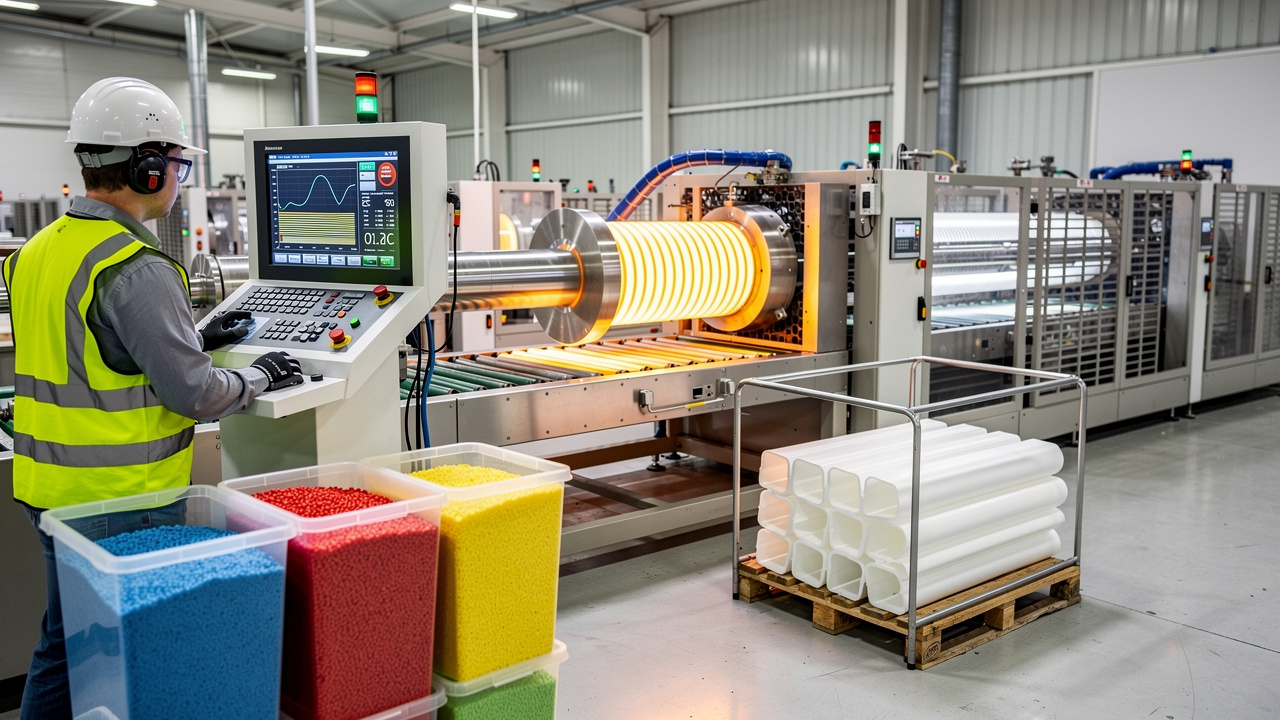
In the competitive landscape of manufacturing, the precision of plastic shaping can make or break your product's success. The vital manufacturing process of plastic shaping transforms raw plastic pellets into extruded plastic shapes by melting and forcing them through a die. The process begins with selecting appropriate thermoplastics, such as PVC, polyethylene, and polypropylene, which are heated in an extruder to achieve a uniform melt. Key factors influencing the quality of the extrusion include:
- Temperature Control: Precise temperature management is essential to ensure optimal melting without material degradation. Excessive heat can lead to degradation, while insufficient heat may result in inadequate flow, compromising the final item's quality.
- Pressure Management: Effective pressure control within the extruder is crucial for regulating the flow rate and ensuring that the substance fills the die completely. This prevents defects and ensures the integrity of the extruded plastic shapes. For example, case studies have demonstrated that manufacturers who adopted advanced pressure monitoring systems significantly reduced defects and enhanced consistency of their offerings.
- Cooling and Solidification: Once the material exits the die, it must be cooled to solidify properly. This cooling phase is critical for maintaining dimensional accuracy and preventing warping, which can occur if the cooling process is not carefully controlled.
We work hand-in-hand with OEMs to ensure their products meet every standard, including special checks for ‘fit and function’. Our strong management program, certified to ISO 9001:2015, includes dedicated plans and in-process checks, ensuring that your rigid profiles are precisely as specified for critical dimensions. We also focus on optimizing order sizes and maximizing machine run times per setup to enhance production efficiency. Comprehending and improving these components enables manufacturers to refine their processes, leading to superior items and minimized waste. Effective pressure management boosts the quality of extruded plastic shapes and enhances operational efficiency. Incorporating advanced measurement technologies is crucial in the shaping process. Don't let outdated processes hold you back; elevate your production standards with Lincoln Plastics today.

Explore Applications of Extruded Plastic Shapes
In a world where precision and reliability are paramount, extruded plastic shapes emerge as essential components across diverse industries. Their versatility and effectiveness are evident in several key applications:
- OEM Equipment: Custom extruded profiles are vital in original equipment manufacturing, supplying components that meet specific shapes and tolerances essential for machinery and equipment functionality.
- Cable Protection Systems: These shapes are integral to cable management solutions, such as cord covers and conduits, which safeguard electrical wiring in industrial environments. The market for cable protection systems has seen significant growth, driven by the increasing demand for efficient and reliable solutions involving extruded plastic shapes for cable management.
- Agricultural Irrigation: Durable extruded pipes are crucial in center pivot irrigation systems, designed to endure environmental stresses while ensuring efficient water delivery. These pipes play a significant role in enhancing irrigation efficiency and crop yield.
- Construction and Architecture: Profiles used in window frames, door seals, and other structural elements benefit from the durability and customization options offered by shaping processes, making them a preferred choice in construction projects.
Recognizing these applications is crucial for manufacturers. Failing to leverage these applications could mean missing out on significant market opportunities and innovation potential.

Implement Effective Design Strategies for Extruded Plastics
Achieving optimal performance in custom plastic extrusion requires meticulous design strategies that prioritize quality and manufacturability. Here are key strategies:
- Uniform Wall Thickness: Maintaining consistent wall thickness throughout the profile is essential for preventing defects such as warping and ensuring even material flow during extrusion. Variations in wall thickness can lead to dimensional instability and increased scrap rates. Are you facing challenges with your current extrusion processes? At Lincoln Plastics, our robust quality management program, including dedicated quality plans and in-process checks, ensures that these specifications are met consistently.
- Functional Features: Incorporating features like ribs or grooves can enhance the strength and functionality of the extruded product without significantly increasing production costs. Intelligent geometry, like these internal supports, provides equivalent strength to thicker designs while enhancing resource utilization.
- Avoiding Sharp Corners: Designing with rounded corners instead of sharp angles can reduce die wear and enhance substance flow, leading to a more efficient extrusion process. This design consideration not only enhances the manufacturing process but also contributes to the overall durability of the product.
- Material Selection: Choosing the appropriate substance based on application requirements is critical. For instance, flexible PVC may be ideal for applications requiring impact resistance, while rigid profiles may be better suited for structural components. At Lincoln Plastics, we work closely with you to ensure your material choices align perfectly with your project needs. We also have the capability to meet additional regulatory requirements beyond ISO 9001, ensuring comprehensive compliance for your projects.
By implementing these design strategies, manufacturers can enhance the quality and performance of their extruded plastic shapes. Consider how the right design choices can transform your production efficiency and product reliability, setting you apart in a competitive market. For tailored solutions and expert guidance, contact Lincoln Plastics to discuss your project needs.

Choose the Right Manufacturing Partner for Success
Choosing the right manufacturing partner for extruded plastic shapes is not just important; it’s essential for your project's success. Key considerations include:
- Experience and Expertise: Seek partners with a proven track record in the extrusion industry, particularly those experienced with similar applications and materials. Their familiarity with industry standards can significantly impact project outcomes.
- Quality Control Systems: Verify that the manufacturer implements robust control processes, such as ISO 9001:2015 certification, to ensure consistent product standards. Lincoln Plastics adheres to rigorous quality management plans, including dedicated quality books and in-process checks, which are vital in minimizing defects and maintaining high standards throughout production.
- Technical Capabilities: Evaluate the manufacturer's technical capabilities, including their proficiency in handling complex designs, co-extrusion options for multi-color or multi-material profiles, and custom tooling requirements. Advanced technical skills at Lincoln Plastics can facilitate innovative solutions tailored to specific project needs.
- Communication and Support: A responsive partner who offers clear communication and support throughout the project can effectively address challenges as they arise. Strong collaboration fosters a smoother workflow and enhances overall project efficiency.
When you take the time to assess potential partners based on these criteria, you can improve your chances of successful collaboration and achieve your production goals. Lincoln Plastics, located in Lincoln, Nebraska, offers quick order turnaround and efficient logistics, making it an ideal choice for OEMs seeking reliable solutions for extruded plastic shapes. With the right partner, you can transform your vision into reality, ensuring quality and efficiency every step of the way.

Conclusion
In manufacturing, the right approach to extruded plastic shapes can make or break product excellence. Understanding the intricacies of the plastic extrusion process allows manufacturers to fully harness these materials. This ensures their applications meet the highest quality and performance standards. These insights highlight just how crucial precision, effective design strategies, and choosing the right manufacturing partner are.
Key arguments highlighted include the critical factors influencing the extrusion process, such as:
- Temperature and pressure management
- The diverse applications of extruded plastic shapes across industries like OEM equipment, cable protection, and agriculture
Additionally, effective design strategies, including:
- Uniform wall thickness
- Material selection
play a significant role in enhancing product reliability. The emphasis on quality management, particularly through Lincoln Plastics' ISO 9001:2015 certification and rigorous quality control systems, reinforces the commitment to excellence that is essential in today’s competitive landscape.
This choice can either propel your project to success or hinder its potential. By prioritizing experience, technical capabilities, and robust quality control, manufacturers can ensure that their projects not only meet but exceed expectations. For those looking to elevate their production standards and explore tailored solutions, reaching out to Lincoln Plastics can provide the expertise and support needed to transform visions into reality. Choosing the right partner could be the difference between merely meeting standards and setting new benchmarks in your industry.
Frequently Asked Questions
What is the plastic extrusion process?
The plastic extrusion process transforms raw plastic pellets into extruded plastic shapes by melting and forcing them through a die. It involves selecting appropriate thermoplastics, heating them in an extruder, and managing various factors to ensure quality.
What thermoplastics are commonly used in the extrusion process?
Common thermoplastics used in the extrusion process include PVC, polyethylene, and polypropylene.
Why is temperature control important in plastic extrusion?
Temperature control is essential to achieve optimal melting without material degradation. Excessive heat can degrade the material, while insufficient heat may lead to inadequate flow, compromising the quality of the final product.
How does pressure management affect the extrusion process?
Effective pressure management regulates the flow rate and ensures that the material fills the die completely, preventing defects and maintaining the integrity of the extruded shapes.
What role does cooling and solidification play in the extrusion process?
Cooling and solidification are critical for maintaining dimensional accuracy and preventing warping of the extruded shapes. Proper control of the cooling phase is necessary to achieve the desired product quality.
How does Lincoln Plastics ensure quality in the extrusion process?
Lincoln Plastics employs a strong management program certified to ISO 9001:2015, which includes dedicated quality plans and in-process checks to ensure that rigid profiles meet specified critical dimensions.
What benefits does Lincoln Plastics offer to OEMs?
Lincoln Plastics works closely with OEMs to ensure their products meet every standard, including special checks for ‘fit and function’. They focus on optimizing order sizes and maximizing machine run times to enhance production efficiency.
How can manufacturers improve their extrusion processes?
Manufacturers can improve their extrusion processes by understanding and refining key components such as temperature control, pressure management, and cooling techniques, which lead to superior products and minimized waste.
What should manufacturers do to elevate their production standards?
Manufacturers should incorporate advanced measurement technologies and modernize their processes to enhance the quality of extruded plastic shapes and operational efficiency, as advocated by Lincoln Plastics.
List of Sources
- Understand the Plastic Extrusion Process
- Plastics Extrusion: 4 Critical Statistics to Track for Increased Quality & Plant Profit (https://gaugeadvisor.com/2025/05/26/plastics-extrusion-4-critical-statistics-to-track-for-increased-quality-plant-profit)
- Explore the Global Plastic Extrusion Machine Market — analysis of key trends, regional growth, top players, and a 10-year forecast from 2026 to 2036. (https://futuremarketinsights.com/reports/plastic-extrusion-machine-market)
- North America Plastic Extrusion Measurement and Control Technology Market, 2034 Report (https://gminsights.com/industry-analysis/north-america-plastic-extrusion-measurement-and-control-technology-market)
- U.S. Plastic Extrusion Machine Market to Hit Valuation of US$ 1,548.99 Million By 2033 | Rapid Innovation and Growing Collaboration Fueling Market Growth Says Astute Analytica (https://finance.yahoo.com/news/u-plastic-extrusion-machine-market-083000297.html)
- Explore Applications of Extruded Plastic Shapes
- How Does the Communications Industry Use Extruded Plastics? | Plextrusions Custom Solutions (https://plextrusions.com/markets/how-does-the-communications-industry-use-extruded-plastics)
- Plastic vs Metal Extrusions for OEMs by Amfas International (https://amfasinternational.com/newsroom/plastic-vs-metal-extrusions-key-differences-strategic-trade-offs-use-cases)
- 10 Essential Extrusion Plastic Profiles for OEM Efficiency (https://lincoln-plastics.com/news-post/10-essential-extrusion-plastic-profiles-for-oem-efficiency)
- News Feed | Custom Plastic Extrusion | Tubes, Containers & Profiles | Petro Packaging Co (https://petropackaging.com/blog)
- Top 5 Applications of Plastic Extrusion in Modern Manufacturing (https://rocalextrusions.co.uk/news/applications-of-plastic-extrusion)
- Implement Effective Design Strategies for Extruded Plastics
- Plastics Extrusion: 4 Critical Statistics to Track for Increased Quality & Plant Profit (https://gaugeadvisor.com/2025/05/26/plastics-extrusion-4-critical-statistics-to-track-for-increased-quality-plant-profit)
- Plastic Extrusion Wall Thickness | Gemini Group Blog (https://geminigroup.net/plastic-extrusion-wall-thickness)
- Why Wall Thickness Matters in Plastic Extrusion | Inplex (https://inplexllc.com/blog/why-wall-thickness-matters-in-plastic-extrusion)
- 5 Best Practices for High-Quality Extrusion Molding Solutions (https://lincoln-plastics.com/news-post/5-best-practices-for-high-quality-extrusion-molding-solutions)
- Industry News (https://paulmurphyplastics.com/industry-news-blog)
- Choose the Right Manufacturing Partner for Success
- Plastics Extrusion: 4 Critical Statistics to Track for Increased Quality & Plant Profit (https://gaugeadvisor.com/2025/05/26/plastics-extrusion-4-critical-statistics-to-track-for-increased-quality-plant-profit)
- North America Plastic Extrusion Measurement and Control Technology Market, 2034 Report (https://gminsights.com/industry-analysis/north-america-plastic-extrusion-measurement-and-control-technology-market)
- 4 Best Practices for Effective Process Control Quality in Extrusion (https://lincoln-plastics.com/news-post/4-best-practices-for-effective-process-control-quality-in-extrusion)
- Exploring the Extrusion Industry for Custom Plastic Solutions (https://plasticsengineering.org/2024/09/exploring-the-extrusion-industry-for-custom-plastic-solutions-006579)


