
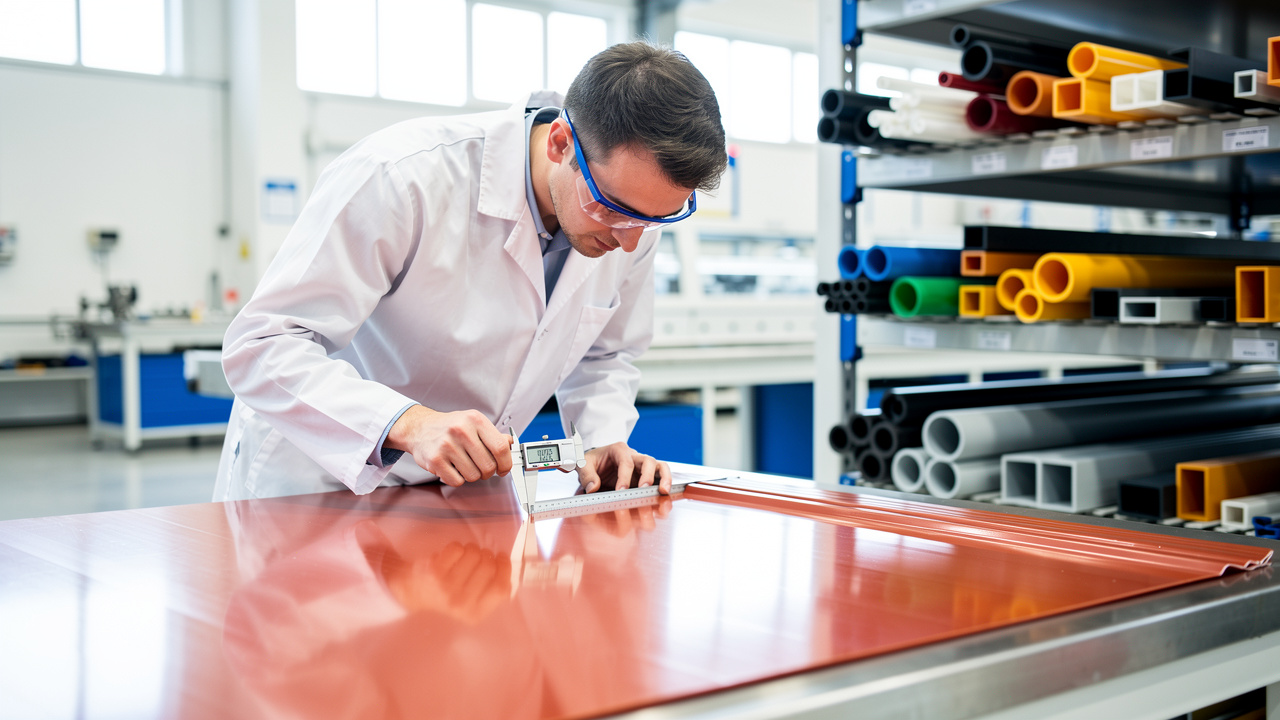
Best Practices for Sourcing and Using Extruded ABS Products
Introduction
In manufacturing, the right materials are not just important; they can make or break your product's success. Acrylonitrile Butadiene Styrene (ABS) has emerged as a favored thermoplastic, celebrated for its versatility and resilience across various applications, from automotive components to healthcare devices.
Let’s explore how to source and utilize extruded ABS products effectively, focusing on:
- Supplier selection
- Procurement strategies
- Quality assurance measures
But with the rising demand for high-performance plastics, are you equipped to navigate the sourcing complexities and uphold quality standards?
Understand Extruded ABS: Properties and Applications
In a world where material performance can make or break a product, Acrylonitrile Butadiene Styrene (ABS) stands out as a top choice for manufacturers. This versatile thermoplastic is renowned for its exceptional impact resistance, thermal stability, and ease of processing. These characteristics make ABS ideal for a diverse array of applications, including automotive parts, consumer electronics, and industrial components. Manufacturers can produce extruded ABS products in various forms, including sheets, rods, and tubes. This flexibility enhances design and functionality, while its chemical resistance and ability to endure fluctuating temperatures further enhance its suitability for demanding environments.
As of 2026, the market for ABS plastic is projected to continue its growth trajectory, reflecting its widespread use across key industries such as automotive, construction, and healthcare. In automotive applications, ABS is favored for its lightweight properties, making it perfect for interior trim, dashboard components, and bumpers, where durability and aesthetic appeal are paramount.
At Lincoln Plastics, we work hand-in-hand with OEMs to ensure their ABS products meet all standards, including special checks for ‘fit and function’. Our robust management program, certified to ISO 9001:2015, includes dedicated manuals that document critical dimensions, in-process checks, and the use of multiple check gauges to ensure a proper end-use fit. This dedication to excellence guarantees that our ABS profiles are produced to the precise specifications demanded by our clients.
Recent case studies illustrate the critical role of ABS in healthcare innovations, particularly in the development of portable patient care devices like auto-injectors and wearable insulin pumps. These applications require materials that are not only lightweight but also resilient, and ABS meets these performance criteria effectively. Furthermore, ABS's proven track record in regulatory compliance ensures that it adheres to stringent safety standards, making it a trusted choice for medical device manufacturers. For instance, Lustran 348, a regulatory-compliant ABS grade, is widely used in medical devices due to its high-gloss finish and impact strength, providing manufacturers with the necessary regulatory assurance.
As the demand for high-performance plastics continues to rise, neglecting to choose ABS could lead to product failures in a competitive market. Its ability to be molded, extruded, and 3D printed positions extruded ABS products as a key player in the evolving landscape of modern manufacturing. For customized solutions and estimates, we encourage OEMs to reach out to Plastics specialists to discuss their specific requirements.

Source Effectively: Best Practices for Procurement of Extruded ABS
In the competitive landscape of custom plastic extrusion, choosing the right ABS supplier can make or break your production efficiency. Manufacturers should prioritize suppliers like Plastics Company, known for their excellence and dependability. Clear specifications for the ABS grade are essential. They directly influence product performance and quality. Plastics Company is ISO 9001:2015 certified, which means they adhere to rigorous management plans, including dedicated manuals and in-process checks to meet all standards.
Furthermore, make sure to audit suppliers thoroughly and request samples for testing. This step is vital to confirm that the material meets your performance standards. Forming long-term collaborations with suppliers not only promotes better pricing but also ensures more reliable standards, which is crucial in today's fluctuating market. Utilizing a mix of local and international suppliers provides flexibility and mitigates risks associated with supply chain disruptions.
Recent trends indicate that regional supply chains enhance production reliability and reduce operational uncertainty, making them a strategic choice for manufacturers aiming to optimize their procurement processes. According to industry forecasts, the ABS plastic sheet and rod market is projected to grow at a CAGR of around 4.5% through 2030, highlighting the increasing demand for reliable sourcing strategies. Additionally, case studies have shown that manufacturers who implement regional supply chains can significantly improve their delivery predictability and reduce operational risks. As M. Holland notes, 'Using resin that requires fewer handoffs and shorter transit distances has real business benefits.'
By being aware of common pitfalls, such as overlooking supplier audits or failing to establish clear specifications, manufacturers can avoid missteps in their procurement processes. By prioritizing reliable sourcing strategies, manufacturers can not only enhance their operational efficiency but also secure their market position.

Utilize Efficiently: Integrating Extruded ABS in Manufacturing Processes
To achieve excellence in manufacturing with extruded ABS, precision in processing conditions is non-negotiable. Key factors include accurate temperature regulation during extrusion, which is essential for attaining the desired melt flowability and end result. Proper drying of the material is also vital to prevent moisture-related defects, such as bubbles and surface roughness, which can compromise the final item's integrity.
Selecting the right tooling tailored to the specific ABS profile being produced enhances efficiency and reduces the likelihood of mechanical property issues, such as insufficient strength or increased brittleness. Establishing a strong control system throughout the production process, as demonstrated by Plastics' ISO 9001:2015 certification and committed assurance plans, including process check sheets, enables early detection of potential issues, reducing waste and rework. Moreover, Lincoln Plastics' capability to obtain colors that align with Pantone standards guarantees uniformity among manufacturers, further improving the standard of the items.
Have you considered how training your team on ABS processing can elevate your production quality and efficiency? Understanding the unique characteristics of ABS and its processing requirements can significantly enhance overall efficiency and quality of the output. For example, comprehending the effect of extrusion parameters - such as screw speed and cooling rates - on the final result can lead to improved outcomes. By mastering these parameters, companies can not only enhance product quality but also significantly reduce operational costs. The company emphasizes this commitment to excellence through its engineering expertise and quality assurance practices, ensuring that every item meets stringent standards for performance and reliability.

Ensure Quality: Maintain Standards in Extruded ABS Utilization
Ensuring the highest quality in extruded ABS products is essential for success in today's competitive market. At Lincoln Plastics, we take quality seriously by implementing rigorous testing protocols to evaluate the material properties of our extruded ABS products, including:
- Tensile strength
- Bending tests
- Impact resistance
These tests are essential for assessing the durability and reliability of ABS items. We conduct regular inspections of extruded items, including the extrusion die and screw. This ensures they adhere to dimensional tolerances and surface finish requirements, meeting customer expectations.
Standardized testing methods play a crucial role in this process, providing valuable data that can inform production practices and improve product standards. For instance, how do you ensure your products meet the highest standards? Evaluating the physical properties of ABS materials through bending and impact tests helps manufacturers understand their strengths and limitations in various applications. Furthermore, keeping detailed records of control processes and outcomes is essential for recognizing trends and areas for enhancement, ultimately resulting in higher customer satisfaction and decreased return rates.
Collaboration with OEM engineers further enhances assurance efforts by tailoring extrusion profiles to specific applications, minimizing modifications, and improving overall performance. At Lincoln Plastics, we collaborate closely with OEMs to ensure their items meet all standards, including special checks for fit and function. Our ISO 9001:2015 certification highlights our commitment to rigorous management practices, which include dedicated assurance books and critical in-process checks. Without collaboration, manufacturers may face costly modifications and unsatisfactory product performance. This partnership not only lowers expenses but also guarantees that the final outputs satisfy the specific requirements of OEM applications. By prioritizing quality assurance, Lincoln Plastics not only meets but exceeds the expectations of industries that demand excellence.

Conclusion
Navigating the complexities of sourcing extruded ABS products can be daunting for manufacturers. Understanding best practices for sourcing and using extruded ABS products is crucial for manufacturers looking to boost production efficiency and product quality. When you prioritize reliable suppliers like Lincoln Plastics, committed to excellence and ISO 9001:2015 standards, you ensure your ABS products meet rigorous demands across various applications. The emphasis on quality management, including dedicated quality plans and in-process checks, reinforces the importance of selecting the right partner in the procurement process.
Key insights from this article highlight the significance of:
- Clear specifications
- Thorough supplier audits
- The integration of efficient manufacturing processes
Are you ready to enhance your production efficiency? By recognizing the properties and applications of extruded ABS, manufacturers can make informed decisions that lead to improved operational efficiency and reduced risks. Additionally, understanding the critical role of quality assurance and testing methods ensures that the final products not only meet but exceed industry standards.
In conclusion, choosing the right partner can redefine your manufacturing success and elevate your market position. Manufacturers are encouraged to leverage the expertise of Lincoln Plastics to navigate the complexities of ABS procurement and production. By fostering partnerships that prioritize quality and efficiency, businesses can secure their competitive edge in the market. For tailored solutions and quotes, reaching out to Lincoln Plastics experts can pave the way for successful outcomes in your manufacturing endeavors.
Frequently Asked Questions
What is Acrylonitrile Butadiene Styrene (ABS) and why is it popular among manufacturers?
ABS is a versatile thermoplastic known for its exceptional impact resistance, thermal stability, and ease of processing, making it ideal for various applications such as automotive parts, consumer electronics, and industrial components.
What forms can extruded ABS products take?
Manufacturers can produce extruded ABS products in various forms, including sheets, rods, and tubes, which enhances design flexibility and functionality.
What industries are projected to continue using ABS plastic?
The market for ABS plastic is expected to grow, particularly in key industries such as automotive, construction, and healthcare.
How is ABS utilized in the automotive industry?
In automotive applications, ABS is favored for its lightweight properties, making it suitable for interior trim, dashboard components, and bumpers, where durability and aesthetic appeal are important.
How does Lincoln Plastics ensure the quality of its ABS products?
Lincoln Plastics collaborates with OEMs to ensure ABS products meet all standards, utilizing a robust management program certified to ISO 9001:2015, which includes dedicated manuals, in-process checks, and multiple check gauges for precise specifications.
What role does ABS play in healthcare innovations?
ABS is critical in developing portable patient care devices, such as auto-injectors and wearable insulin pumps, due to its lightweight and resilient properties, as well as its compliance with stringent safety standards.
Can you provide an example of a regulatory-compliant ABS grade used in medical devices?
Lustran 348 is a regulatory-compliant ABS grade widely used in medical devices for its high-gloss finish and impact strength, providing manufacturers with necessary regulatory assurance.
Why is it important to choose ABS in modern manufacturing?
Choosing ABS is crucial as it can be molded, extruded, and 3D printed, positioning it as a key player in the evolving landscape of high-performance plastics, which helps prevent product failures in a competitive market.
How can OEMs get customized solutions or estimates for ABS products?
OEMs are encouraged to reach out to Lincoln Plastics specialists to discuss their specific requirements for customized solutions and estimates.
List of Sources
- Understand Extruded ABS: Properties and Applications
- The enduring role of ABS in advancing modern healthcare (https://todaysmedicaldevelopments.com/news/enduring-role-abs-advancing-modern-healthcare)
- New ‘green’ thermoplastic is 10 times tougher than ABS (https://plasticstoday.com/automotive-mobility/new-green-thermoplastic-is-10-times-tougher-than-abs)
- ABS Plastic Sheet Companies Expected to Grow Next 3 Years (https://polymershapes.com/abs-plastic-sheet-companies)
- Maximize Efficiency with Extruded ABS Plastic in Manufacturing (https://lincoln-plastics.com/news-post/maximize-efficiency-with-extruded-abs-plastic-in-manufacturing)
- ABS Plastic Raw Material: Properties, Applications, and Processing (https://chemdo.com/news/abs-plastic-raw-material-properties-applications-and-processing)
- Source Effectively: Best Practices for Procurement of Extruded ABS
- Best Practices for Sourcing ABS Plastic Raw Material Effectively (https://lincoln-plastics.com/news-post/best-practices-for-sourcing-abs-plastic-raw-material-effectively)
- 2026 Trend Breakdown: Plastics Supply Chain Regionalization (https://mholland.com/market-insights/2026-trend-breakdown-plastics-supply-chain-regionalization)
- Abs Plastic Sheet & Rod Market Insights, Supply Chain & Regional Drivers 2026-2033 (https://linkedin.com/pulse/abs-plastic-sheet-rod-market-insights-supply-chain-94x0c)
- Top 10 ABS Sheet Suppliers to Watch in 2026 (https://plasticsheet-china.com/Top-10-ABS-Sheet-Suppliers-to-Watch-in-2026.html)
- Utilize Efficiently: Integrating Extruded ABS in Manufacturing Processes
- HIPS, ABS Plastic Extrusion Capacity Expanded (https://toplastics.com/blog/to-plastics-expands-abs-hips-extruded-plastic-sheet-capacity)
- News - How to optimize the extrusion process of ABS plastics? (https://chinaruicheng.com/news/how-to-optimize-the-extrusion-process-of-abs-plastics)
- Maximize Efficiency with Extruded ABS Plastic in Manufacturing (https://lincoln-plastics.com/news-post/maximize-efficiency-with-extruded-abs-plastic-in-manufacturing)
- Material extrusion‐based additive manufacturing of sandwiched acrylonitrile butadiene styrene/glass fibers composites: Machine learning approach to model tensile stress (https://4spepublications.onlinelibrary.wiley.com/doi/10.1002/pc.28823)
- Ensure Quality: Maintain Standards in Extruded ABS Utilization
- 4 Best Practices for Effective Process Control Quality in Extrusion (https://lincoln-plastics.com/news-post/4-best-practices-for-effective-process-control-quality-in-extrusion?dcc2137a_page=3)
- Quality Control and Testing Procedures - Plastic Extrusion Technologies (https://plasticextrusiontech.net/quality-control-and-testing-procedures-in-plastic-extrusions)
- News - How to judge the quality of ABS materials? (https://chinaruicheng.com/news/how-to-judge-the-quality-of-abs-materials)
- Quality Control in Plastic Extrusion for Consistent Results | Rocal (https://rocalextrusions.co.uk/news/quality-control-in-plastic-extrusion-to-ensure-consistent-results)
Related posts

Discover the essential properties and applications of transparent PVC in various industries.


Discover the top 10 high temperature thermoplastics for reliable OEM solutions in various industries.
Discover the top 10 benefits of clear PVC plastic for OEM purchasing managers. Enhance efficiency today!
