
4 Reasons Plastic Products Manufacturers Are Key to Supply Chains
Introduction
You know, plastic products manufacturers are like the unsung heroes of our modern supply chains. They whip up essential components that really boost efficiency across all sorts of industries. And here’s the thing: their knack for crafting customized solutions doesn’t just tick the boxes for Original Equipment Manufacturers (OEMs); it also sparks innovation in logistics and operational efficiency.
But as the manufacturing landscape shifts, you might be wondering, how can these manufacturers keep up? How can they stay relevant while juggling the growing demands for sustainability and cost-effectiveness? Digging into this question reveals just how crucial they are in shaping the future of supply chain dynamics.
Establishing the Role of Plastic Products Manufacturers in Supply Chains
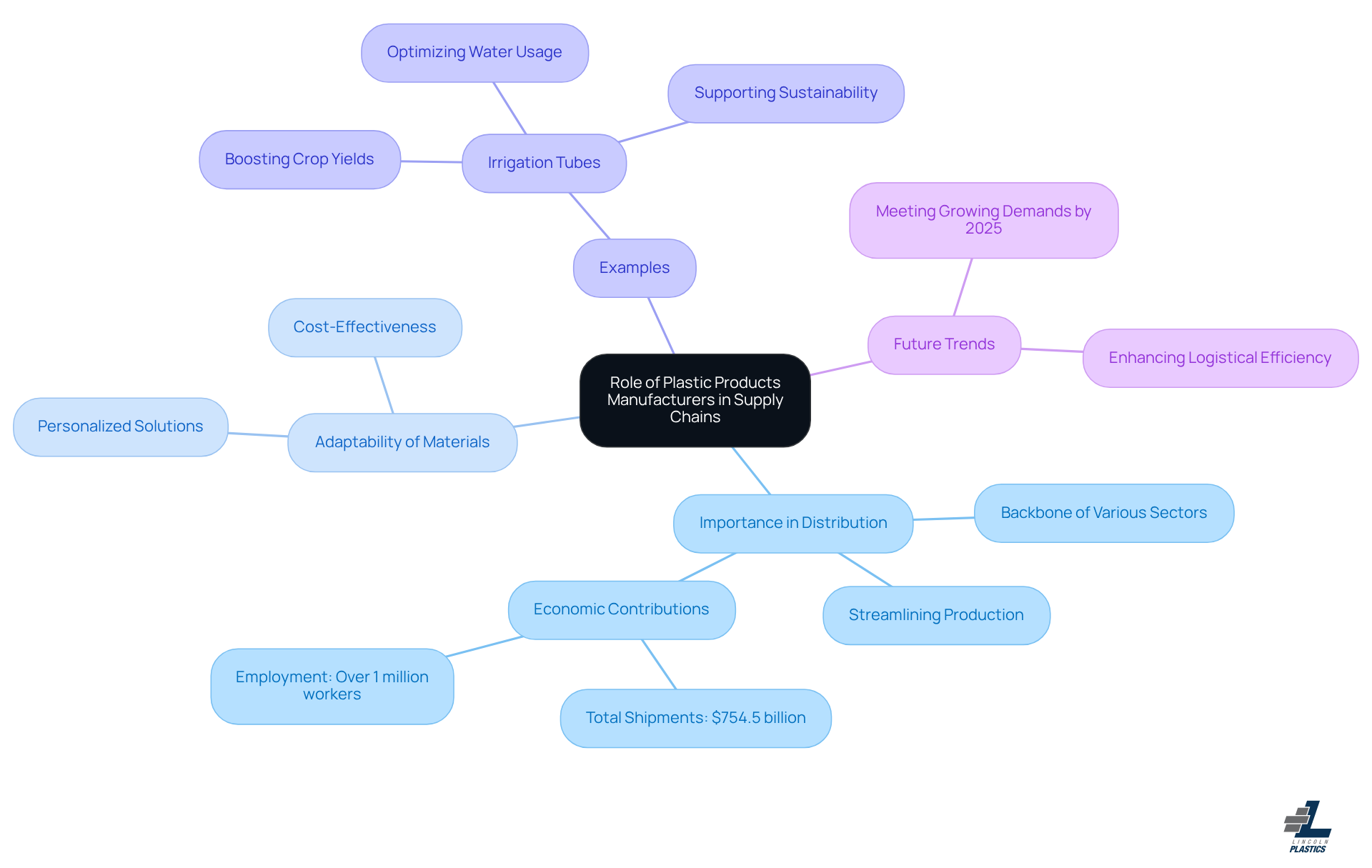
are essential in today’s economy. They’re like the backbone for various sectors, supplying materials across fields like agriculture, automotive, and consumer products. The cool thing about plastic products is their adaptability, allowing producers to whip up customized solutions. This means the items are not just practical but also cost-effective.
Take, for example, irrigation tubes. These tubes are designed for efficiency, optimizing water usage and reducing waste. Isn’t that impressive? This adaptability really highlights how important plastic manufacturers are in keeping the flow of goods and services moving smoothly in our economy.
As the industry evolves, it’s becoming clearer just how vital plastic manufacturers are for supply chain resilience. They’re stepping up to meet the growing demands we’ll see in 2025 and beyond. So, next time you think about plastic goods, remember the role they play in making our lives easier and more efficient!
Addressing OEM Needs: Customization and Reliability in Manufacturing
You know, Original Equipment Manufacturers (OEMs) are really leaning into customization these days, especially ones that meet tough standards. Take Lincoln Plastics, for example. They’re doing a fantastic job providing solutions that fit their clients' specific needs.
What’s their specialty? Well, they focus on manufacturing using materials like polyethylene, ridged PVC, flexible PVC, and polypropylene. This means the components they create fit right into production processes, boosting overall product performance. And let’s be honest, this level of customization builds reliability. OEMs can count on consistent quality and speed, which is a big deal.
As the manufacturing landscape shifts, suppliers who can adapt to the changing needs of OEMs become vital partners in the logistics network. They’re not just suppliers; they’re driving innovation and operational efficiency. Now, looking ahead to 2025, the demand for customization is huge. It’s key to keeping production timelines on track and minimizing downtime, which can seriously impact profits.
Reliable suppliers like Lincoln Plastics, who prioritize both quality and speed, help navigate the complexities of modern manufacturing. They ensure that products arrive on time and meet exact specifications. After all, every minute of downtime in manufacturing can hit profitability hard. That’s why strong partnerships are essential to guarantee that components are just right.
Impact on Supply Chain Dynamics: Cost Management and Operational Efficiency
Have you ever considered how truly plastic products shape the supply chain? They’re key players in optimizing costs and boosting efficiency. For instance, the lightweight nature of synthetic materials can really cut down on shipping costs and lessen the carbon footprint of transportation. Take synthetic pallets, for example. They’re not just durable; they’re lighter than traditional wooden ones, which means big savings in logistics expenses.
Now, let’s talk about Lincoln Plastics. Their knack for creating custom solutions quickly means manufacturers can adapt to market needs without missing a beat. This agility is super important in today’s fast-paced market, where even a small delay can lead to lost opportunities and rising costs. Plus, Lincoln Plastics collaborates closely with OEMs to ensure their products meet all quality standards, including special checks for ‘fit and function’. This attention to detail really enhances product reliability.
But that’s not all! Lincoln Plastics also offers various sizes for various applications, with widths ranging from 6” to 7”. They can ship in less-than-truckload (LTL) quantities, so customers get their orders promptly without needing a full truckload. Isn’t that convenient?
Case studies show that companies using lightweight polymers have seen significant drops in operational costs. For example, advancements in film manufacturing have led to fewer workers needed and less work-in-progress inventory. This highlights the operational efficiencies that come with using modern materials.
And here’s something to think about: industry experts say that using lightweight materials not only boosts logistics efficiency but also aligns with sustainability goals. This makes a compelling case for manufacturers. So, if you’re looking to enhance your operations, maybe it’s time to consider how plastic products can make a difference!
Future Trends: Innovations Shaping the Role of Plastic Manufacturers
The future of synthetic material manufacturing is about to change in a big way! With technology advancements leading the charge, we’re seeing some exciting trends. For instance, have you noticed how new materials are popping up everywhere? And let’s not forget about innovations - they’re reshaping the industry as we know it.
Manufacturers are really stepping up their game, adopting new strategies to keep up with what consumers want and what regulations demand. It’s all about sustainability these days! Plus, with automation and efficiency on the rise, production is getting a serious boost, and innovation is driving change.
Now, you might be wondering how all this affects manufacturers. Well, they’re going to be key players in adapting to be more resilient and sustainable. It’s crucial for them to stay relevant in this fast-changing market. So, as these trends evolve, let’s keep an eye on how they shape the future of manufacturing!

Conclusion
Plastic products manufacturers play a crucial role in supply chains, don’t they? They’re the ones making efficiency and innovation happen across various industries. By producing tailored solutions, they not only boost operational performance but also cater to the specific needs of Original Equipment Manufacturers (OEMs). As these manufacturers adapt to changing market demands, they really become indispensable partners in the logistics network.
Let’s think about it: how do plastic manufacturers optimize costs and enhance operational efficiency? It’s all about lightweight materials that cut down on shipping expenses and lessen environmental impact. Take Lincoln Plastics, for example. They showcase this adaptability by offering customized components that meet the performance standards OEMs require. Their dedication to quality and timely delivery keeps production processes running smoothly, which is key to maintaining profitability in today’s fast-paced market.
Looking ahead, the importance of plastic products manufacturers is only set to increase. Why? Because they’re embracing sustainability and technological advancements. The shift towards eco-friendly practices and innovations in recycling technologies is reshaping the manufacturing landscape. As industries aim for resilience and efficiency, the role of plastic manufacturers in supply chain management becomes even more critical. By embracing these changes, they not only enhance their operational capabilities but also contribute to a more sustainable future in manufacturing. So, what do you think? Are you ready to see how these manufacturers will shape the future?
Frequently Asked Questions
What is the role of plastic products manufacturers in supply chains?
Plastic products manufacturers are essential in distribution networks, supplying components that streamline production and distribution across various sectors such as agriculture, automotive, and consumer products.
How do synthetic materials benefit manufacturers?
Synthetic materials are adaptable, allowing producers to create personalized solutions tailored to specific needs, making the products both practical and cost-effective.
Can you provide an example of how plastic products are used in agriculture?
An example is irrigation tubes made by Lincoln Plastics, which optimize water usage, boost crop yields, and support sustainability in agriculture.
Why are plastic products manufacturers important for logistical efficiency?
They enhance logistical efficiency by meeting the growing demands of various industries, ensuring a smooth flow of goods and services in the economy.
What future trends are expected for plastic products manufacturers?
The industry is expected to evolve, with manufacturers stepping up to meet increasing demands projected for 2025 and beyond.
List of Sources
- Establishing the Role of Plastic Products Manufacturers in Supply Chains
- renoirgroup.com (https://renoirgroup.com/case_studies/plastics/redefining-success-in-plastic-film-manufacturing-a-strategic-approach-to-achieving-competitive-advantage)
- plasticsindustry.org (https://plasticsindustry.org/newsroom/2025-size-and-impact-report-u-s-plastics-industry-remains-robust-impactful-and-vital)
- earth.org (https://earth.org/plastic-pollution-quotes)
- industryselect.com (https://industryselect.com/blog/key-trends-in-the-us-rubber-plastics-industry)
- plasticsindustry.org (https://plasticsindustry.org/newsroom/plastics-economic-analysis-how-2025-trade-shifts-are-reshaping-us-plastics-imports)
- Addressing OEM Needs: Customization and Reliability in Manufacturing
- marneplastics.com (https://marneplastics.com/the-role-of-custom-plastics-in-modern-manufacturing)
- 50 Manufacturing Statistics That Will Shape the Industry in 2025 | E-Business International (https://e-bi.com/50-manufacturing-statistics-that-will-shape-the-industry-in-2025)
- plasticstoday.com (https://plasticstoday.com/plastics-processing/oems-and-suppliers-need-new-technologies-to-survive)
- hhxtdiecasting.com (https://hhxtdiecasting.com/news/why-is-supplier-reliability-critical-for-oems-in-the-pumps-and-compressors-market)
- Impact on Supply Chain Dynamics: Cost Management and Operational Efficiency
- renoirgroup.com (https://renoirgroup.com/case_studies/plastics/redefining-success-in-plastic-film-manufacturing-a-strategic-approach-to-achieving-competitive-advantage)
- plasticsindustry.org (https://plasticsindustry.org/articles/life-cycle-analysis-shows-plastic-packaging-advantages)
- packagingdigest.com (https://packagingdigest.com/careers-education-training/words-of-wisdom-from-your-packaging-peers-gallery)
- digitaldefynd.com (https://digitaldefynd.com/IQ/motivational-supply-chain-management-quotes)
- Best Supply Chain Quotes (https://linkedin.com/pulse/best-supply-chain-quotes-daniel-stanton)
- Future Trends: Innovations Shaping the Role of Plastic Manufacturers
- plasticsengineering.org (https://plasticsengineering.org/2025/07/k-2025-preview-game-changing-plastics-technologies-on-the-horizon-009327)
- plasticsindustry.org (https://plasticsindustry.org/newsroom/2025-size-and-impact-report-u-s-plastics-industry-remains-robust-impactful-and-vital)
- earth.org (https://earth.org/plastic-pollution-quotes)
- mdplastics.com (https://mdplastics.com/the-future-of-plastics-manufacturing-trends-and-innovations-for-2025-and-beyond)
- Breaking the Plastic Wave 2025 (https://pew.org/en/research-and-analysis/reports/2025/12/breaking-the-plastic-wave-2025)
Related posts

Designing Custom Extrusions: How We Work with OEM Engineers
Lincoln Plastics partners with OEM engineers to design custom extrusion profiles — reducing modifications, improving performance, and lowering costs


Precision Matters: Tolerances and Quality Control in Extrusion
Lincoln Plastics ensures precision in every extrusion with tight tolerances, in-line checks, and strict quality control for OEM applications
Plastic Extrusion for Agricultural Equipment: Beyond Irrigation
Lincoln Plastics supports agriculture with custom plastic extrusions that go beyond irrigation, delivering durability and reliability in the field
