
Why Plastic Tubing Industries Are Essential for Modern Manufacturing
Introduction
The plastic tubing industry is not just a component of modern manufacturing; it is a vital force driving efficiency across various sectors, from agriculture to automotive. With their lightweight, corrosion-resistant properties and cost-effectiveness, plastic tubes are essential for ensuring reliability in production processes.
Manufacturers face significant hurdles, including rising raw material costs and stringent regulations, that threaten their operational efficiency. How can they leverage advancements in plastic tubing technology to enhance operations while maintaining high quality?
Let’s explore why plastic tubing matters in manufacturing and how it’s evolving to meet today’s challenges, including its applications, innovations, and the hurdles that need addressing for sustained growth.
Establish the Importance of Plastic Tubing in Manufacturing
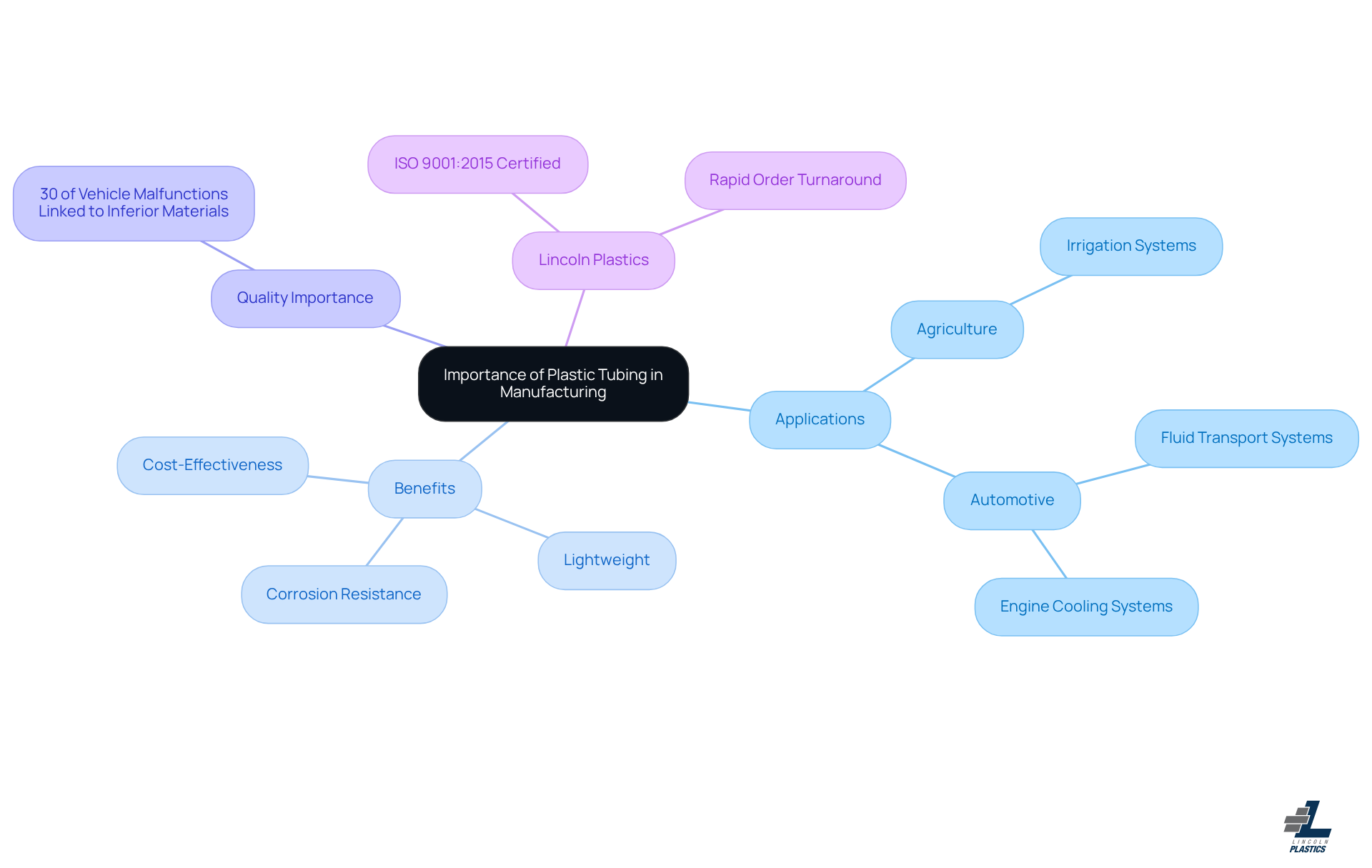
In an era where manufacturing quality is paramount, the plastic tubing industries recognize plastic pipes as a vital component across diverse industries. Their lightweight nature, resistance to corrosion, and cost-effectiveness make them invaluable assets. For instance, in agriculture, synthetic pipes are crucial for irrigation systems, ensuring effective water supply directly to plant roots. In the automotive sector, they play a key role in fluid transport systems, where flexibility and durability are essential for optimal performance. Ignoring material quality can lead to costly malfunctions and inefficiencies; a study revealed that approximately 30% of vehicle malfunctions are linked to inferior hose materials, underscoring the importance of high-quality synthetic conduits in ensuring vehicle reliability and safety. Flexible piping is versatile and can be tailored for specific applications. This adaptability enhances its effectiveness in production methods.
Since 1948, Lincoln Plastics has been your go-to for custom flexible profiles and co-extrusion solutions, ensuring that clients receive tailored products that meet their unique specifications. The capability to generate large quantities of uniform, high-quality materials through extrusion methods further highlights its significance in sustaining manufacturing efficiency and addressing various client requirements. As the global plastic tubing industries are projected to grow steadily through 2035, driven by infrastructure investment and material innovation, manufacturers must prioritize the selection of high-performance polymers to enhance product functionality and sustainability. By choosing Lincoln Plastics, you’re not just selecting a supplier; you’re investing in the reliability and performance of your products. Additionally, Lincoln Plastics is ISO 9001:2015 certified, reinforcing their commitment to quality through rigorous management plans, including dedicated quality books and in-process checks. Their strategic position in Lincoln, Nebraska, allows for rapid order turnaround and effective logistics, establishing them as a dependable partner for OEMs in agriculture, office management, and tradeshow sectors both nationally and globally.
Explore Diverse Applications of Plastic Tubing Across Industries
In an era where efficiency and compliance are paramount, plastic pipes are indispensable across various sectors. Each sector employs unique characteristics of synthetic pipes to tackle specific challenges.
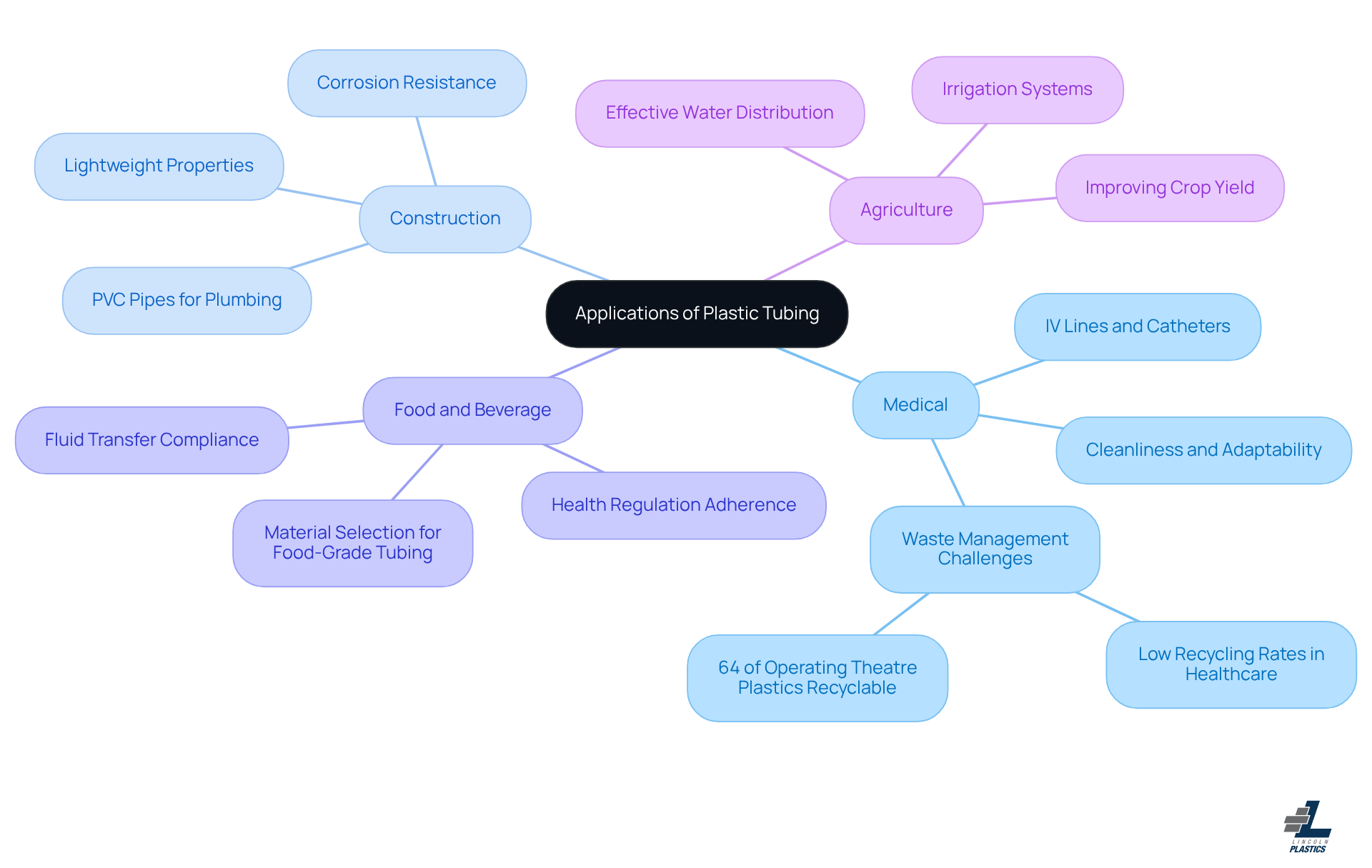
- In the medical sector, synthetic pipes are vital. They are used in instruments like IV lines and catheters, where cleanliness and adaptability are essential.
- The construction sector relies heavily on PVC pipes for plumbing and drainage systems, benefiting from their lightweight and corrosion-resistant properties.
- In the food and beverage industry, synthetic piping is crucial for fluid transfer, ensuring adherence to strict health regulations.
- Furthermore, the agricultural sector utilizes synthetic pipes in irrigation systems, promoting effective water distribution and improving crop yield.
These applications underscore the versatility of synthetic conduits, making them a preferred choice for manufacturers seeking reliable solutions.
Navigating the complexities of regulatory compliance can be daunting for manufacturers. For instance, the choice of materials for food-grade pipes is critical for manufacturability and regulatory compliance, as improper selections can lead to safety issues. Additionally, the healthcare sector generates significant waste from polymers, with research suggesting that 64% of operating theatre materials could potentially be recycled. This highlights the urgent need for sustainable practices in piping applications. Overall, the flexibility and efficiency of synthetic pipes make them a crucial element in contemporary manufacturing across various sectors.
At Lincoln Plastics, based in Lincoln, Nebraska, we focus on collaboration with OEMs to ensure our plastic hoses meet all standards, including specific assessments for fit and function. Our robust management program, certified to ISO 9001:2015, includes dedicated manuals and in-process checks to guarantee that our products comply with critical specifications. This commitment to excellence and customization ensures that our pipe solutions are not only efficient but also adhere to industry standards.
For tailored solutions, we invite you to contact Lincoln Plastics. Selecting the right partner in plastic extrusion can enhance your operational efficiency and sustainability initiatives.
Analyze Technological Innovations Driving Plastic Tubing Manufacturing
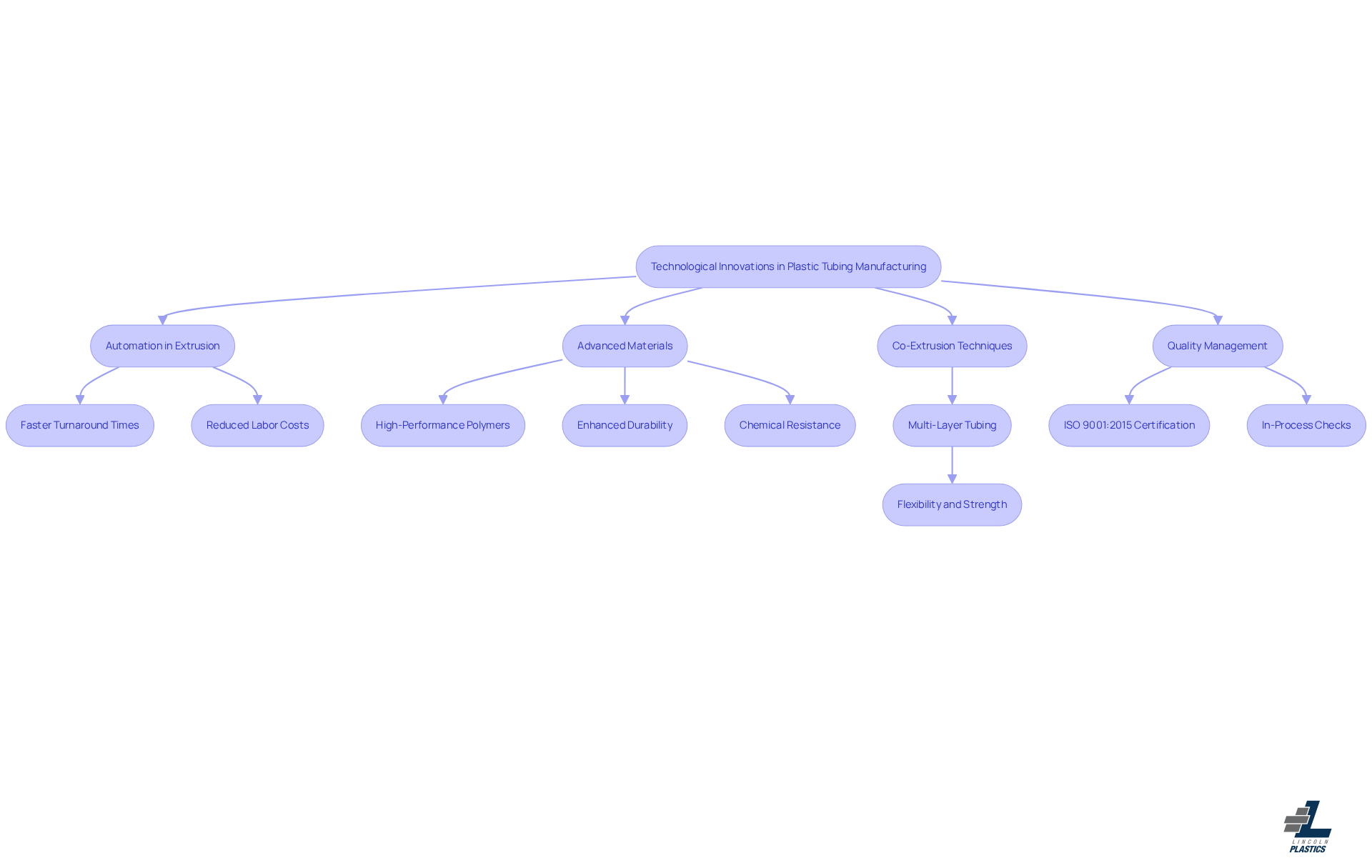
In an era where efficiency and quality are paramount, recent technological innovations are reshaping the plastic tubing industries in pipe manufacturing. Automation in extrusion processes has streamlined production, resulting in faster turnaround times and reduced labor costs. For instance, AI-driven systems optimize process parameters in real time, predicting ideal settings for temperature and pressure, which minimizes material waste and improves consistency.
Advanced materials, particularly high-performance polymers, are being developed to meet specific industry requirements, offering enhanced durability and chemical resistance. Furthermore, innovations in co-extrusion techniques facilitate the production of multi-layer tubing, allowing manufacturers to combine different materials to achieve desired properties such as flexibility and strength.
However, many manufacturers struggle to keep pace with these rapid advancements. At Lincoln Plastics, we take pride in ensuring our rigid profiles meet critical dimensions through a dedicated management system, which includes assurance books and in-process checks. Our ISO 9001:2015 certification underscores our commitment to rigorous quality management.
These advancements not only enhance the manufacturing process within the plastic tubing industries but also strengthen the sustainability of synthetic pipes by optimizing material usage and minimizing waste. How can these advancements enhance your manufacturing process while promoting sustainability? As the sector evolves, staying informed about these innovations is essential for sustaining competitiveness and addressing the increasing demand for high-quality, efficient solutions.
OEMs are encouraged to contact Lincoln Plastics experts for tailored solutions and quotes, leveraging our strategic Midwest location for quick order turnaround and efficient logistics. Ignoring these advancements could jeopardize your competitive edge in a rapidly evolving market.
Identify Challenges Impacting the Plastic Tubing Industry
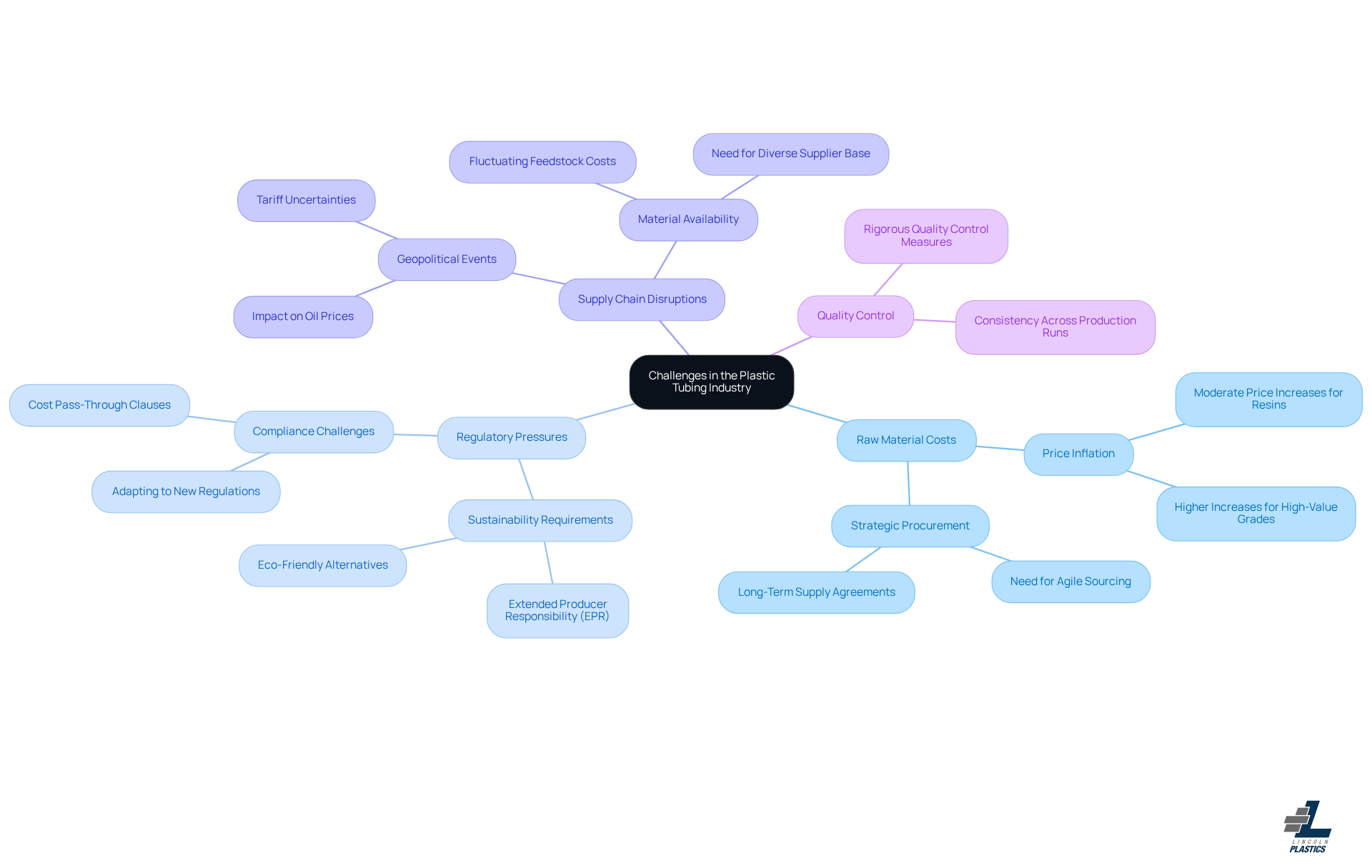
The plastic tubing industries are grappling with significant challenges that threaten production efficiency and product quality. A primary concern is the fluctuation in raw material costs, which jeopardize profitability for manufacturers. In 2026, moderate price inflation is anticipated for many resins, with sharper increases expected for high-value grades. This underscores the need for strategic procurement practices.
Moreover, regulatory pressures regarding sustainability and environmental impact are becoming increasingly significant for the plastic tubing industries. Companies are compelled to explore eco-friendly alternatives and enhance recycling processes. The adoption of Extended Producer Responsibility (EPR) legislation is seen as a potential driver for increased use of post-consumer recycled (PCR) materials in the plastic tubing industries, which could stabilize the market and encourage long-term supply contracts.
Supply chain disruptions, exacerbated by geopolitical events and fluctuating oil prices, further complicate the procurement of essential materials and components. These disruptions can lead to delays and increased costs, necessitating agile sourcing capabilities to mitigate risks. Furthermore, maintaining consistent quality across production runs remains a critical concern, requiring rigorous quality control measures to ensure that products meet the evolving demands of clients.
Addressing these multifaceted challenges demands innovation and adaptability. Without innovation and adaptability, manufacturers risk falling behind in a competitive market. Manufacturers who embrace innovation will not only survive but thrive in this evolving landscape.
Conclusion
In today's competitive landscape, the role of plastic tubing in manufacturing is more crucial than ever. As a critical component across various industries, plastic tubing offers lightweight, durable, and cost-effective solutions that enhance operational efficiency. From agriculture to automotive applications, the versatility of synthetic pipes ensures that manufacturers can meet specific needs while maintaining high standards of quality and performance.
Throughout this article, we've highlighted key insights, including the diverse applications of plastic tubing in sectors such as healthcare, construction, and food and beverage. We've also discussed the technological innovations driving advancements in plastic tubing manufacturing, such as automation and co-extrusion techniques, which improve production efficiency and sustainability. These challenges, including raw material cost fluctuations and regulatory pressures, highlight the friction manufacturers face in adapting and innovating continuously.
Given these insights, OEMs and manufacturers must prioritize quality and collaboration in choosing their plastic extrusion partners. By partnering with Lincoln Plastics, known for its ISO 9001:2015 certification and commitment to excellence, businesses can invest in reliable, high-performance solutions tailored to their needs. Engaging with Lincoln Plastics not only enhances operational efficiency but also supports sustainability initiatives in an ever-evolving market. Choosing the right partner in plastic extrusion can be the difference between stagnation and growth in your operations.
Frequently Asked Questions
Why is plastic tubing important in manufacturing?
Plastic tubing is vital in manufacturing due to its lightweight nature, resistance to corrosion, and cost-effectiveness. It is essential in various industries, such as agriculture for irrigation systems and in the automotive sector for fluid transport systems.
How does the quality of plastic tubing affect manufacturing?
Ignoring material quality can lead to costly malfunctions and inefficiencies. A study indicated that about 30% of vehicle malfunctions are linked to inferior hose materials, highlighting the importance of high-quality synthetic conduits for vehicle reliability and safety.
What are the advantages of flexible piping in manufacturing?
Flexible piping is versatile and can be tailored for specific applications, enhancing its effectiveness in production methods. This adaptability allows manufacturers to meet diverse client requirements.
What role does Lincoln Plastics play in the plastic tubing industry?
Since 1948, Lincoln Plastics has provided custom flexible profiles and co-extrusion solutions, ensuring clients receive tailored products that meet their unique specifications while maintaining high quality.
How does Lincoln Plastics ensure the quality of its products?
Lincoln Plastics is ISO 9001:2015 certified, which reinforces their commitment to quality through rigorous management plans, including dedicated quality books and in-process checks.
What logistics advantages does Lincoln Plastics offer?
Lincoln Plastics' strategic location in Lincoln, Nebraska, allows for rapid order turnaround and effective logistics, making them a dependable partner for OEMs in agriculture, office management, and tradeshow sectors both nationally and globally.
What is the projected growth of the plastic tubing industry?
The global plastic tubing industry is projected to grow steadily through 2035, driven by infrastructure investment and material innovation, emphasizing the need for manufacturers to prioritize high-performance polymers.
How can I contact Lincoln Plastics for tailored solutions?
Interested parties can contact Lincoln Plastics experts for quotes or tailor-made solutions to enhance the reliability and performance of their products.
List of Sources
- Establish the Importance of Plastic Tubing in Manufacturing
- The Role of Custom Plastic Tubing in the Automotive Industry (https://inplexllc.com/blog/the-role-of-custom-plastic-tubing-in-the-automotive-industry)
- Plastic Pipe & Parts Manufacturing in the US Employment Statistics for 2026 | IBISWorld (https://ibisworld.com/united-states/employment/plastic-pipe-parts-manufacturing/513)
- What is the Importance of Plastic and Rubber Tubes for Cars? (https://ntautoparts.com/blog/importance-of-plastic-and-rubber-tubes-for-cars)
- The Versatility of Plastic Tubing in Modern Industries (https://paulmurphyplastics.com/industry-news-blog/the-versatility-of-plastic-tubing-in-modern-industries)
- Plastic Tubing Market Analysis 2026-2035: Growth Drivers, Regional Outlook, and Key Players - News and Statistics - IndexBox (https://indexbox.io/blog/plastic-tubing-market-forecast-points-higher-toward-2035-on-infrastructure-and-industrial-demand)
- Explore Diverse Applications of Plastic Tubing Across Industries
- Plastic Tubing Market Analysis 2026-2035: Growth Drivers, Regional Outlook, and Key Players - News and Statistics - IndexBox (https://indexbox.io/blog/plastic-tubing-market-forecast-points-higher-toward-2035-on-infrastructure-and-industrial-demand)
- The Versatility of Plastic Tubing in Modern Industries (https://paulmurphyplastics.com/industry-news-blog/the-versatility-of-plastic-tubing-in-modern-industries)
- Plastics in healthcare: time for a re-evaluation - PMC (https://pmc.ncbi.nlm.nih.gov/articles/PMC7068768)
- Sourcing Food-Safe Tubing Systems for Food and Beverage Operations (https://foodengineeringmag.com/articles/103721-sourcing-food-safe-tubing-systems-for-food-and-beverage-operations)
- Medical Plastics Tubing Market worth $6.81 billion by 2031 - Exclusive Report by MarketsandMarkets™ (https://prnewswire.com/news-releases/medical-plastics-tubing-market-worth-6-81-billion-by-2031---exclusive-report-by-marketsandmarkets-302828352.html)
- Analyze Technological Innovations Driving Plastic Tubing Manufacturing
- Next-Gen Plastic Extrusion Driving Efficiency & Sustainability (https://plastics-technology.com/articles/next-gen-plastic-extrusion-innovations-powering-efficiency)
- Next-Gen Plastics: Innovations Transforming Processing Technologies (https://polynextconf.com/next-gen-plastics-innovations-transforming)
- Revolutionizing Polymer Processing: How AI & Automation Are Transforming Extrusion & Injection Molding (https://linkedin.com/pulse/revolutionizing-polymer-processing-how-ai-automation-extrusion-kk-xfgde)
- How Automation is Transforming the Plastic Extrusion Industry | Rayda Plastics (https://rayda.co.uk/blog/how-automation-is-transforming-the-plastic-extrusion-industry)
- Identify Challenges Impacting the Plastic Tubing Industry
- Plastics Industry Faces Cost and Policy Pressures (https://plasticstoday.com/industry-trends/plastics-industry-faces-mounting-challenges-in-2026)
- Adapting to Fluctuations in Raw Material Costs (https://paramountglobal.com/knowledge/raw-material-cost-fluctuations)
- Decoding Market Trends in Poly Tubing: 2026-2034 Analysis (https://datainsightsmarket.com/reports/poly-tubing-1128749)
- 2026 Plastics Recycling Conference: Challenges, solutions for reclaimers (https://recyclingtoday.com/news/2026-plastics-recycling-conference-challenges-and-solutions-for-reclaimers)
- 2026 Forecast for U.S. Plastics Procurement - Sterling Plastics (https://sterlingplasticsinc.com/insights/2026-forecast-for-plastics-procurement)


