
What You Need to Know About PVC Pipe Manufacture Today
Introduction
PVC pipes are pretty much everywhere these days, right? From plumbing to agriculture, they’ve become essential because of their amazing durability and versatility. As more people turn to these handy materials, it’s super important for those in the industry to get a grip on how PVC pipes are made.
But with technology advancing so quickly and competition from imports heating up, how can manufacturers stay ahead of the game while keeping quality and sustainability in check? Let’s dive into that!
Define PVC Pipe: Characteristics and Applications
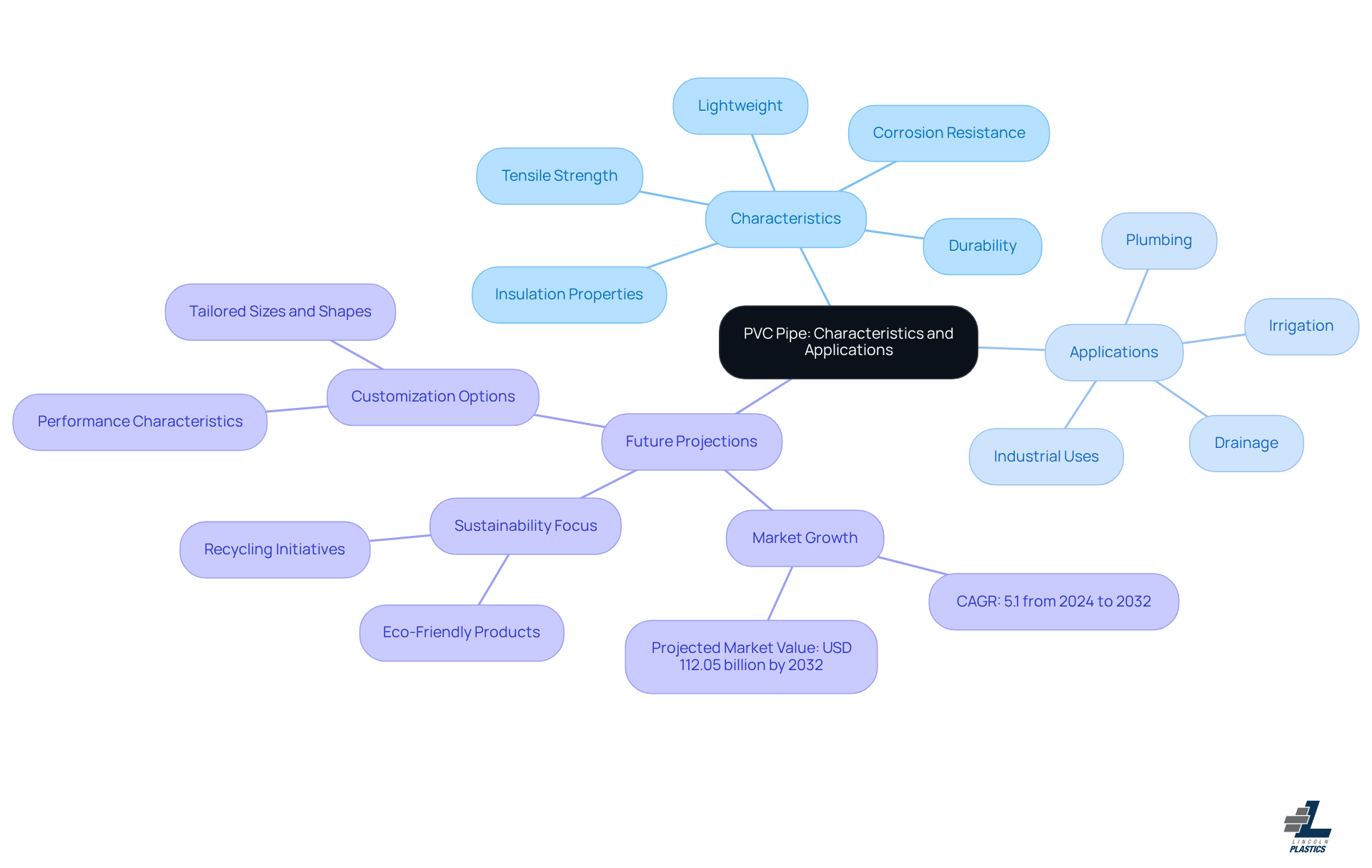
PVC (Polyvinyl Chloride) tubing is a go-to material in the piping world, essential for construction due to its durability, lightweight feel, and impressive resistance to corrosion and chemicals. These traits make it perfect for all sorts of applications—think plumbing, drainage, irrigation, and even various industrial uses. With high tensile strength, low thermal conductivity, and great insulation properties, the material is a solid choice for both homes and businesses, whether it’s for water supply, sewage systems, or electrical conduits.
Now, let’s talk about the future! By 2025, the market is set to keep growing, thanks to the increasing needs in agricultural irrigation and municipal water supplies. The agricultural sector is a big player here, with applications from groundwater harvesting to drip irrigation and water distribution channels. Did you know that more than three-fourths of newly installed sanitary sewer systems in the U.S. and Canada involve PVC pipes? That really shows how essential they are in our infrastructure. Plus, case studies like 'Growing Demand for Plastic Tubing' and 'NAPCO's Eco-Friendly PVC Tube Launch' highlight how well these products perform, proving their reliability and efficiency.
But wait, there’s more! The versatility of PVC tubing, from residential plumbing to industrial applications, shines through with its availability in different sizes and pressure ratings, making it easy to customize solutions for specific project needs. As the industry moves forward, the demand for PVC products and the use of advanced technologies in manufacturing are making PVC products even more appealing. It’s projected that the global PVC market will expand, with a CAGR of 5.1% from 2024 to 2032. This just goes to show how much these vital resources are in demand!
Explore the PVC Pipe Manufacturing Process: From Raw Materials to Production
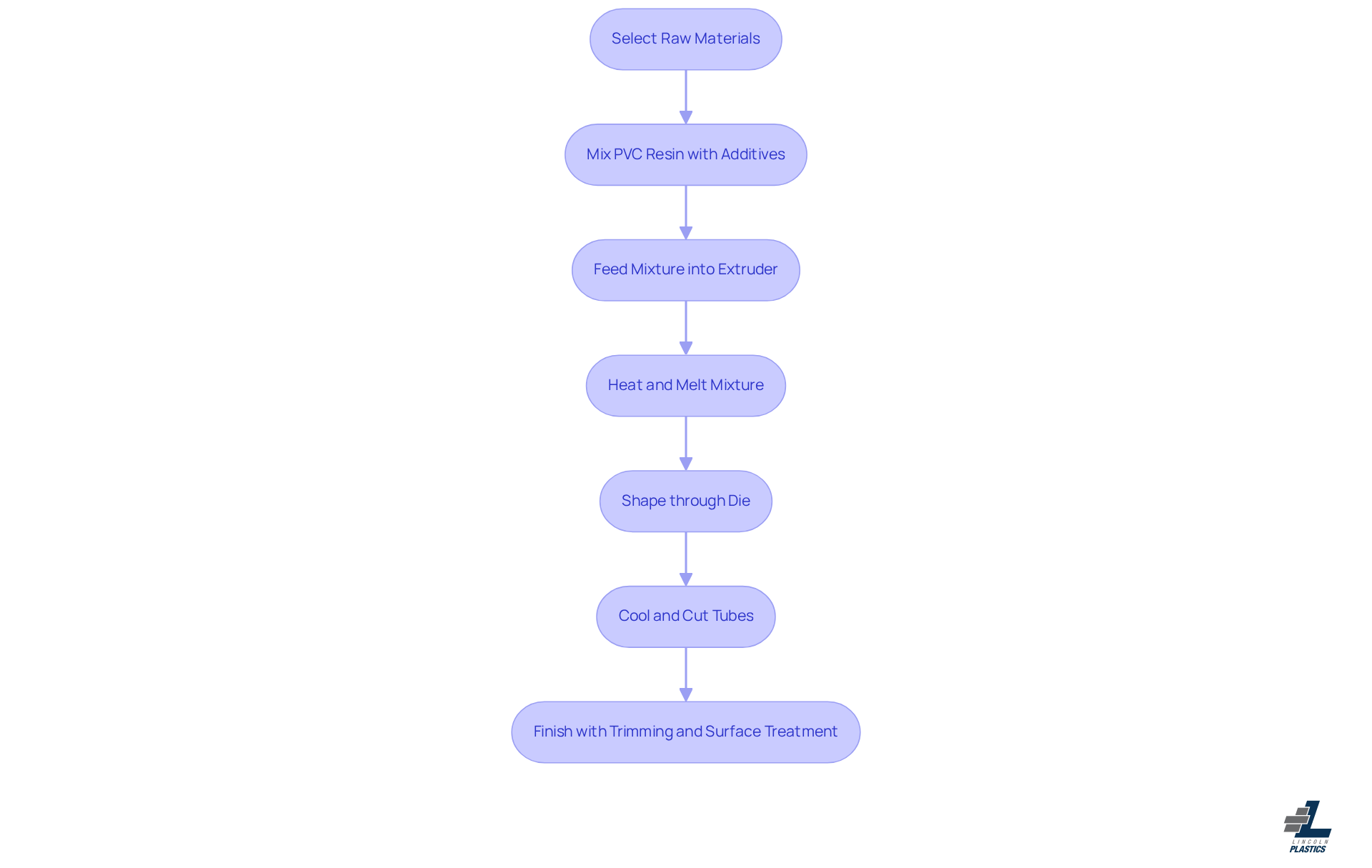
Let’s dive into the process of PVC pipe manufacturing. It all starts with picking the right resin. This resin gets mixed with various additives to boost its performance. Once that’s done, the mixture is fed into an extruder, where it’s heated and melted. When it reaches just the right viscosity, it’s pushed through a die to create the tubular shape. After shaping, the tubes are cooled and cut to the right lengths, with some extra finishing touches like trimming and surface treatment. These careful steps make sure the tubes meet strict size and performance standards, making them perfect for all sorts of uses.
Now, here’s something exciting: by 2025, advancements in PVC shaping technology are set to make this whole process even better! We’re talking about innovations that really ramp up production efficiency. Lincoln Plastics emphasizes how crucial customization is, allowing for tailored diameters, wall thicknesses, and finishes that help meet specific client needs. Plus, modern production lines are designed to cut down on waste and support sustainability goals. With advanced monitoring and control systems in place, manufacturers ensure that every batch maintains consistent integrity, which helps lower operational costs.
Statistics show that the PVC tubing market is expected to hit a whopping $15 billion by 2025, with a compound annual growth rate (CAGR) of 6% from 2025 to 2033. This growth is fueled by a rising demand for durable and reliable products, particularly as the industry innovates with sustainable and eco-friendly practices. But here’s a challenge: the influx of PVC imports is putting pressure on domestic producers. That’s why it’s so important for manufacturers to maintain a competitive edge in the industry. And let’s not forget Lincoln Plastics’ innovative and Flexiduct solutions—they really enhance safety and efficiency, addressing the pressing need for effective cord management in manufacturing settings.
Understand Quality Control in PVC Pipe Production: Ensuring Reliability and Compliance
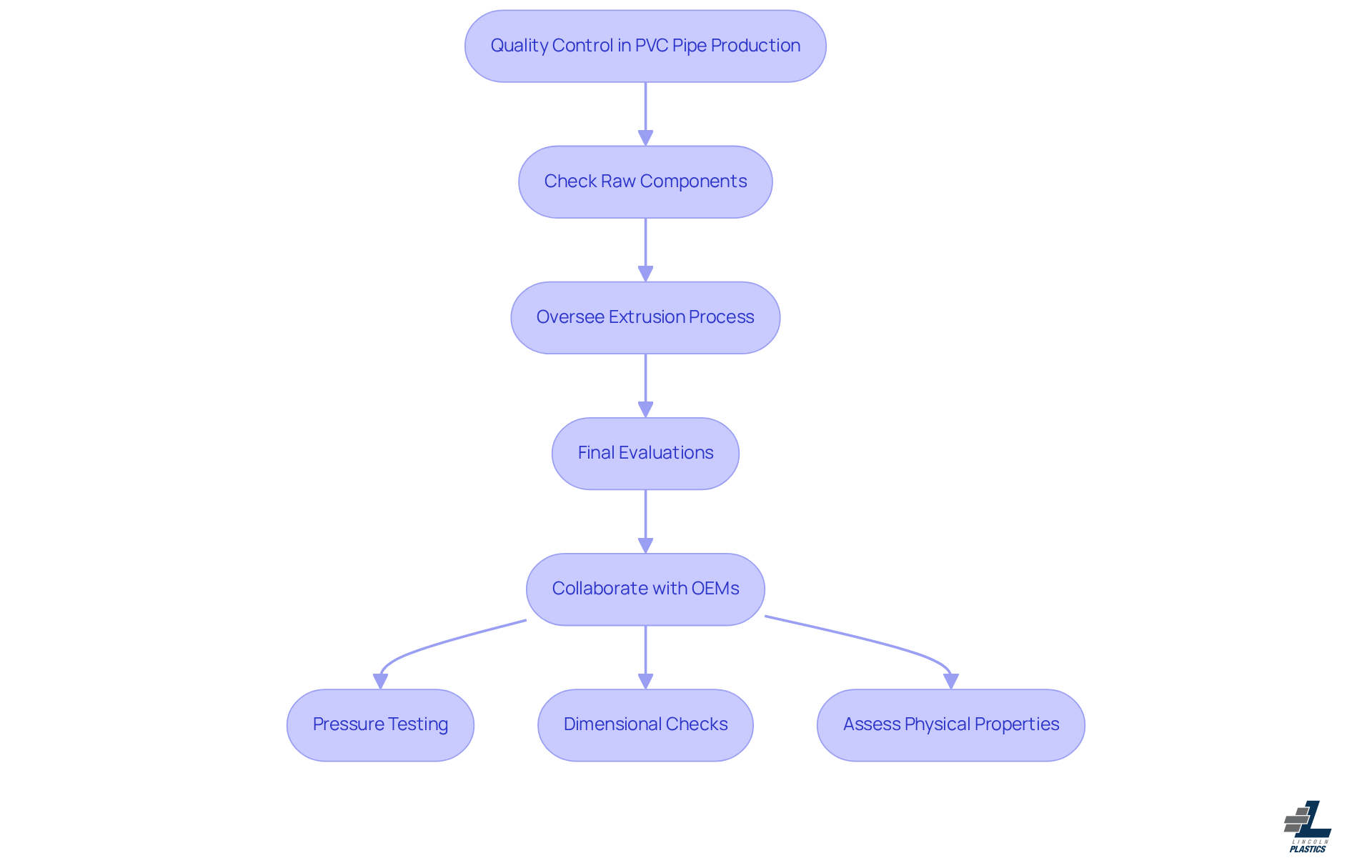
in the facility at Lincoln Plastics involves rigorous testing and inspection at different stages of the manufacturing process. We start by checking raw components to make sure they meet industry standards. Then, we oversee the extrusion process to ensure everything is uniform, followed by final evaluations of the completed products.
We collaborate closely with OEMs to ensure their products meet all quality requirements, including those special checks for ‘fit and function.’ You might be wondering what kinds of tests we perform? Well, they include:
- Assessments of physical properties like strength and flexibility.
Our quality control system is pretty robust! Each plastic profile has its own dedicated quality book, filled with drawings, critical in-process checks, and run documentation. By adhering to these protocols, Lincoln Plastics ensures that our production process is dependable, safe, and compliant with regulations. This builds trust with our customers and end-users.
And here’s the best part—we offer specialized assistance with design, resource selection, and troubleshooting. This way, our clients get personalized support throughout the production process. So, if you’re looking for quality and reliability, you’ve come to the right place!
Examine the Evolution of PVC Pipe Manufacturing: Technological Advances and Industry Trends
Have you ever thought about how PVC pipe manufacturing has really transformed over the years? It’s pretty fascinating! With all the cool and innovative changes in industry practices, things have come a long way. Innovations like better shaping methods, automation, and new materials have really boosted efficiency and product quality.
At Lincoln Plastics, we’ve been riding this wave of progress since 1948. We specialize in OEM irrigation products and solutions, thanks to our experienced team. Our commitment to quality means that every product we make meets those rigorous standards that OEMs need for precision.
Now, let’s talk about something that’s on everyone’s mind these days: sustainability. There’s a growing focus on environmental responsibility and recycling initiatives, which is great to see! Plus, industry trends are shifting towards customization. Manufacturers are increasingly offering tailored solutions.
As the market keeps evolving, it’s essential for businesses to stay on top of these trends to remain competitive in the industry. So, what do you think? How can we all adapt and thrive in this changing landscape?

Conclusion
The world of PVC pipe manufacturing is pretty fascinating, isn’t it? Its versatility and durability make it a go-to choice for everything from plumbing to irrigation. We’ve explored just how important PVC pipes are becoming in infrastructure and agriculture, along with the tech advancements that are shaping their future. The projected growth of the PVC market really highlights its critical role in meeting the demands of our modern society.
So, what’s behind this? The manufacturing process is quite intricate, starting with raw materials and using advanced shaping technologies that boost efficiency and sustainability. Quality control measures are in place to ensure these pipes meet strict standards, building trust between manufacturers and consumers. Plus, the industry's shift towards eco-friendly practices and customized solutions shows a real commitment to innovation and adaptability.
As the PVC pipe manufacturing sector evolves, it’s essential for everyone involved to embrace these changes and invest in sustainable practices. The future of PVC pipes depends not just on tech advancements but also on our collective responsibility to support local production and environmentally friendly methods. Engaging with these trends will help keep the industry strong and responsive to upcoming challenges, paving the way for a more sustainable and efficient future for PVC pipe applications. What do you think? Are you ready to be part of this exciting journey?
Frequently Asked Questions
What is PVC pipe and what are its key characteristics?
PVC (Polyvinyl Chloride) pipe is a durable and lightweight material known for its impressive resistance to corrosion and chemicals. It has high tensile strength, low thermal conductivity, and great insulation properties, making it suitable for various applications.
What are the common applications of PVC pipe?
PVC pipe is commonly used in plumbing, drainage, irrigation, and various industrial applications, including water supply systems, sewage systems, and electrical conduits.
How is the demand for PVC pipe expected to change in the future?
The demand for PVC pipe is projected to continue growing by 2025, driven by increasing needs in agricultural irrigation and municipal water supplies.
What role does the agricultural sector play in the demand for PVC pipe?
The agricultural sector significantly contributes to the demand for PVC pipe, using it for groundwater harvesting, drip irrigation, and water distribution channels.
What percentage of newly installed sanitary sewer systems in the U.S. and Canada use PVC pipe?
More than three-fourths of newly installed sanitary sewer systems in the U.S. and Canada involve PVC pipe.
How does the versatility of PVC tubing benefit project customization?
PVC tubing is available in different sizes and pressure ratings, allowing for easy customization to meet specific project needs.
What is the projected growth of the global PVC tubing market?
The global PVC tubing market is projected to reach USD 112.05 billion by 2032, with a compound annual growth rate (CAGR) of 5.1% from 2024 to 2032.
What factors are making PVC products more appealing in the industry?
The focus on sustainability and the use of advanced technologies in PVC pipe manufacture are making PVC products increasingly attractive.
List of Sources
- Define PVC Pipe: Characteristics and Applications
- Plastic pipe demand growing due to its ‘critical roles' (https://plasticsnews.com/news/us-plastic-pipe-market-hit-268b-2028-amid-infrastructure-surge)
- faygounion.com (https://faygounion.com/news/stay-ahead-of-the-curve-the-latest-trends-in-the-pvc-pipe-manufacturing-industry)
- statista.com (https://statista.com/statistics/1110156/market-value-pvc-pipes-globally?srsltid=AfmBOoo4-TbLLn6EED_KEtcT97o3OomML4tQF5OQigzmq8X0rrhxs5X_)
- fortunebusinessinsights.com (https://fortunebusinessinsights.com/polyvinyl-chloride-pvc-pipes-market-109549)
- PVC Pipe Market Trends, Opportunities and Competitive Analysis 2024-2030, Featuring Key Players China Lesso, Sekisui Chemicals, Supreme Industries, Finolex, Formosa Plastics and Astral Poly Technik (https://prnewswire.com/news-releases/pvc-pipe-market-trends-opportunities-and-competitive-analysis-2024-2030-featuring-key-players-china-lesso-sekisui-chemicals-supreme-industries-finolex-formosa-plastics-and-astral-poly-technik-302092730.html)
- Explore the PVC Pipe Manufacturing Process: From Raw Materials to Production
- bausano.com (https://bausano.com/en/press-and-news/pvc-pipe-manufacturing-how-does-it-work)
- archivemarketresearch.com (https://archivemarketresearch.com/reports/upvc-pipe-368947)
- ifanpro.com (https://ifanpro.com/innovations-in-pvc-pipes-manufacturing)
- prosperousamerica.org (https://prosperousamerica.org/pvc-pipe-import-surge-threatening-domestic-industry-and-essential-infrastructure)
- Elevating Your PVC Pipe Manufacturing: The Latest Innovations in Production Line Technology - ACC Machine (https://accextrusion.com/news/elevating-your-pvc-pipe-manufacturing)
- Understand Quality Control in PVC Pipe Production: Ensuring Reliability and Compliance
- ifanplus.com (https://ifanplus.com/knowledge/comprehensive-testing-protocols-for-pvc-flexible-pipes)
- ledestube.com (https://ledestube.com/astm-standards-for-pvc-cpvc-pipes-a-comprehensive-guide)
- 25 Quotes to Inspire Quality And Success - Pro QC Blog (https://proqc.com/blog/25-quotes-to-inspire-quality-success)
- team-mfg.com (https://team-mfg.com/blog/pvc-plastic.html)
- Examine the Evolution of PVC Pipe Manufacturing: Technological Advances and Industry Trends
- Plastic pipe demand growing due to its ‘critical roles' (https://plasticsnews.com/news/us-plastic-pipe-market-hit-268b-2028-amid-infrastructure-surge)
- openpr.com (https://openpr.com/news/4092510/pvc-pipes-market-is-going-to-booming-growth-2025-with-cagr-of-64-5)
- precedenceresearch.com (https://precedenceresearch.com/plastic-pipe-market)
- intellectualmarketinsights.com (https://intellectualmarketinsights.com/blog/top-companies-blog-global-pvc-pipes-market-2025)
- einpresswire.com (https://einpresswire.com/article/838973386/pvc-pipe-market-insights-and-forecast-2025-2032-emerging-trends-and-growth-factors)


