

What Temperature Does Plastic Melt? Key Factors and Applications
Introduction
Understanding the melting point of plastic is super important, especially since we’re all using these versatile materials more and more. Think about it: thermoplastics and thermosetting plastics are everywhere, right? Knowing the specific temperatures at which they change from solid to liquid can really make a difference in manufacturing processes, product quality, and overall efficiency.
But here’s the kicker: there are so many factors that can influence these melting points - from molecular structure to environmental conditions. So, how can manufacturers make sure they’re operating within the best parameters? You might be wondering about that!
This article dives into the nitty-gritty of plastic melting points. We’ll explore why they matter, the different types of plastics involved, and the practical applications that highlight their significance in today’s economy. Let’s get started!
Define Plastic Melting Point and Its Importance
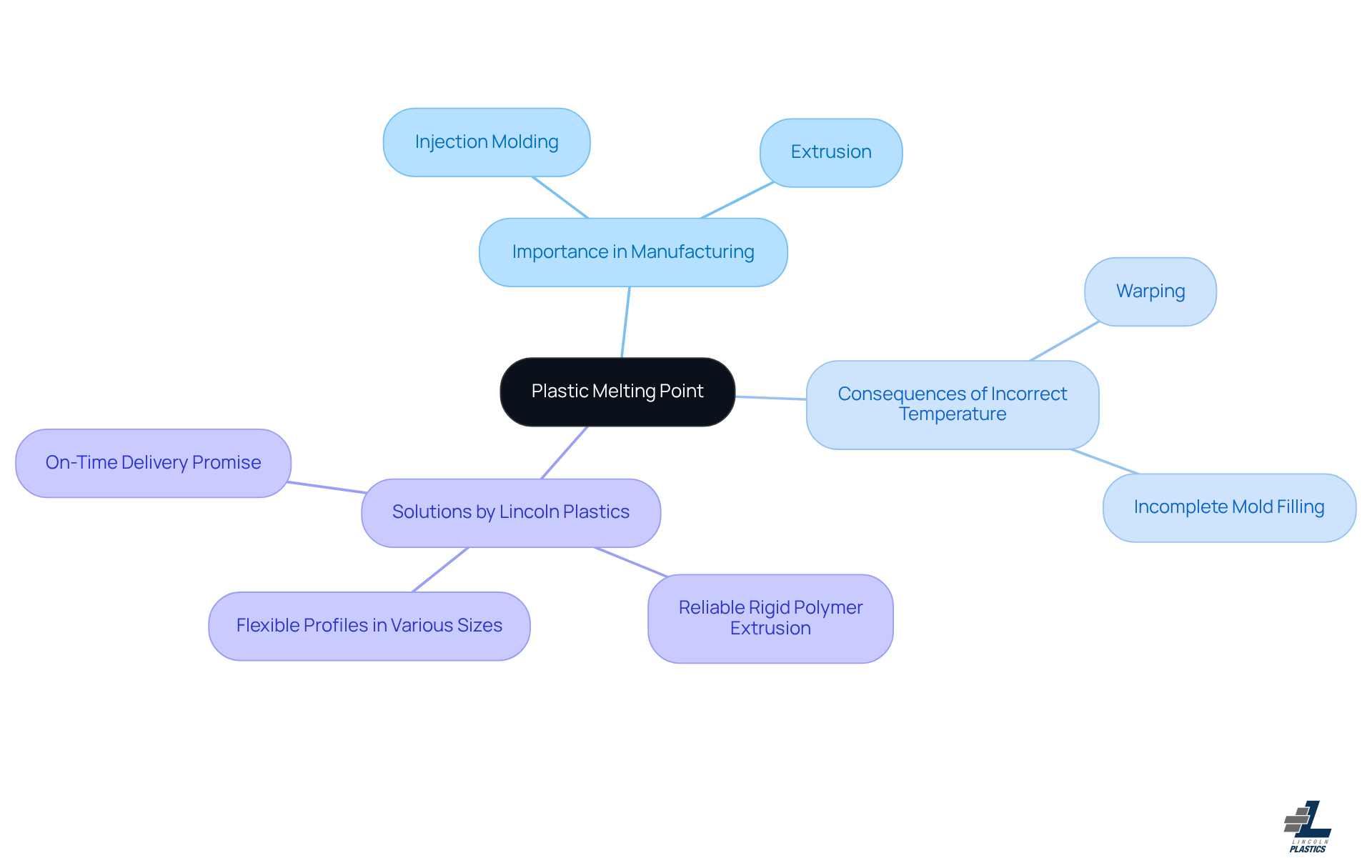
Have you ever wondered about the melting point of plastic? It’s that specific point, known as the melting point, where a thermoplastic goes from solid to liquid. This transition is super important in processes like molding and extrusion, where knowing the melting point is key to getting the product just right.
At Lincoln Plastics, we totally get how crucial it is to maintain the right fusion temperature. Why? Because it impacts everything from processing conditions to product quality and overall production efficiency. If the temperature isn’t accurate, it can cause problems such as warping or incomplete mold filling, which raises the question of what to do next. Nobody wants that!
But don’t worry, we’ve got your back with our reliable services. Plus, we offer a range of materials. Want to add color? We can co-extrude another color into your profile - think of it like a ‘yellow stripe’!
And here’s the best part: with our promise of quality, you can count on us to meet your mission-critical needs with high-quality, customized solutions. So, let’s chat about how we can help you achieve your goals!
Explore Types of Plastics and Their Thermal Properties
When it comes to plastics, you might be surprised to learn that they fall into two main categories: thermoplastics and thermosetting plastics. Let’s start with thermoplastics. These are the types that can be melted and reshaped repeatedly without losing their quality, highlighting the importance of knowing their melting points. Think of:
- Polyethylene (PE)
- Polypropylene (PP)
- Polyvinyl chloride (PVC)
For example, PE is widely used in packaging, while PVC is commonly found in construction materials, illustrating their diverse applications. PVC is pretty versatile too, with a temperature range of 100°C to 260°C, which relates to its ability to be used in various environments, making it suitable for all sorts of applications. And then there’s polypropylene (PP), which has a fusion temperature between 160°C and 175°C, providing insight into its thermal stability, making it perfect for when you need something durable. Thermoplastic Polyurethane (TPU) is another interesting one, softening between 170°C and 220°C, which raises the question of its applications in flexible products, known for its flexibility and resistance to wear.
Now, let’s talk about thermosetting plastics. These guys are a bit different. When you heat them, they undergo a permanent chemical change, resulting in a rigid structure that can’t be reshaped. They usually have higher fusion temperatures than their breakdown points, meaning they don’t melt but rather break down when exposed to too much heat. For instance, epoxy resin is a common thermosetting plastic, which relates to the question of its durability, with a glass transition temperature (Tg) of about 145°C.
Understanding these differences is crucial for a specific job. Each type of plastic has its own unique thermal characteristics and behaviors during phase changes, which can really affect how you process them for their final performance. Plus, it’s important to know about the thermal degradation point. Crystalline substances have fixed temperatures for changing states, while amorphous materials become pliable over a range of temperatures. And don’t forget about the decomposition temperature; this tells you when materials start to break down chemically, highlighting the importance of keeping processing temperatures safe.
So, next time you’re working with plastics, keep these insights in mind! They can really make a difference in your projects.

Analyze Factors Affecting Plastic Melting Points
When it comes to plastics, have you ever wondered what influences their melting points? Well, there are several factors at play, like molecular weight, crystallinity, and even additives. Generally, a higher molecular weight means higher solidification temperatures, thanks to stronger intermolecular forces. For instance, polypropylene can have a fusion temperature that varies quite a bit, usually falling between 160°C and 175°C. On the flip side, some polymers might average around 70°C, while others can soar past 200°C. It really shows how diverse the melting points are!
Now, let’s talk about thermal properties. Take polyethylene, for example; it tends to have clearer melting points compared to amorphous plastics, which can have wider ranges. And don’t forget about plasticizers! These handy substances can lower the temperature at which plastics soften, making processing a breeze. Understanding these factors is super important for manufacturers who want to optimize materials for specific applications and performance.
But there’s more to consider! The types of plastics can’t be overlooked, as they affect processing energy and recyclability. Plus, dealing with mixed plastics can complicate things due to the variability in thermal transitions. If you exceed the fusion temperature, you risk degradation and losing those desirable physical characteristics. That’s why it’s crucial for producers to keep a close eye on processing temperatures.
Lastly, let’s not forget about thermoforming. Uniform heating is key to ensuring consistent quality in the final products. So, whether you’re a manufacturer or just curious about the world of plastics, keeping these factors in mind can make a big difference!

Examine Practical Applications of Melting Point Knowledge
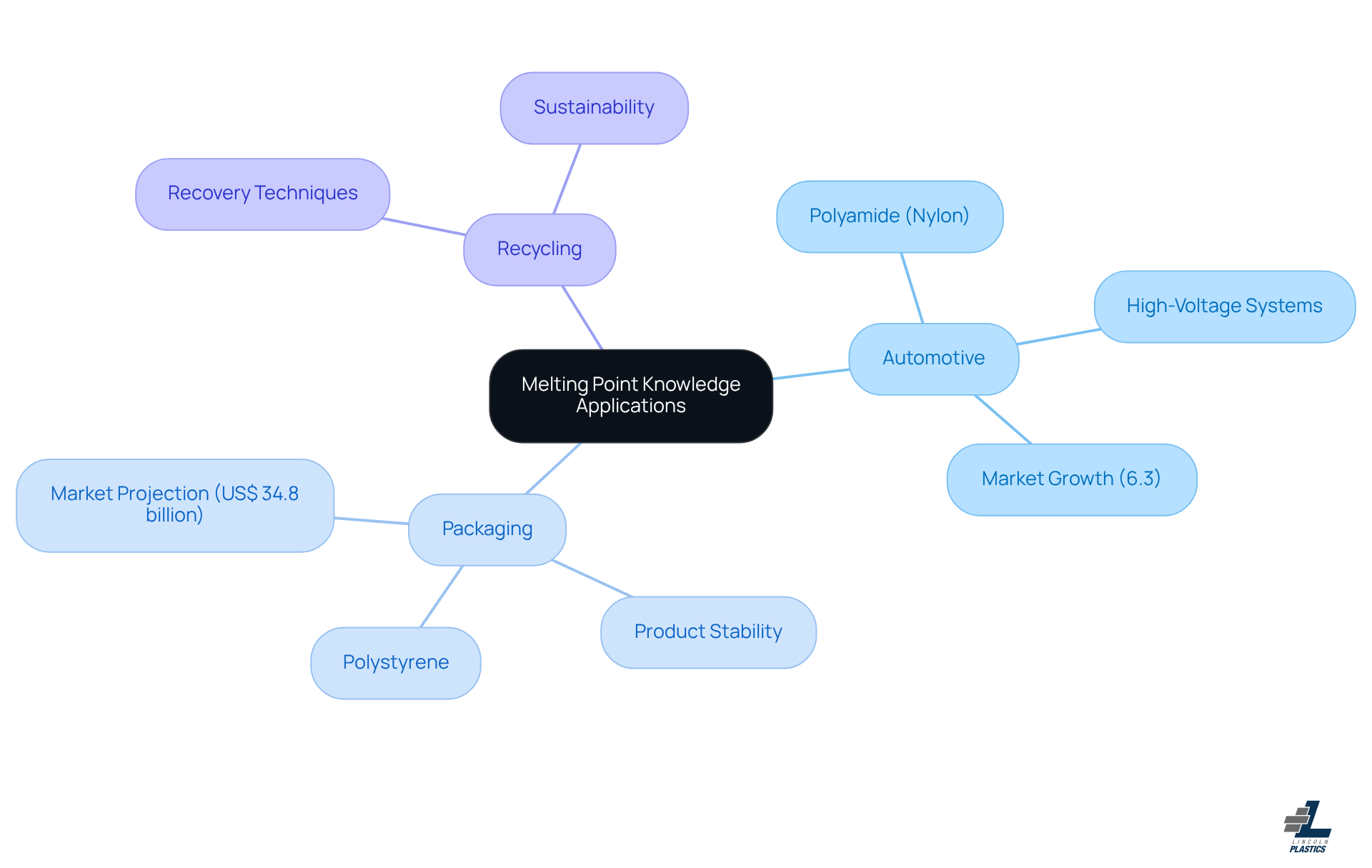
In industries like automotive, packaging, and consumer products, understanding plastic melting points is super important. For instance, in the automotive world, materials that can handle heat, like polyamide (nylon), are a go-to for parts that need to endure elevated temperatures. This choice ensures durability and performance. Did you know that polyamides are expected to grow at a compound annual growth rate of 6.3%, reaching a whopping US$ 5.2 billion by 2035? That really shows how crucial they are in automotive applications, especially when it comes to managing heat and thermal management in electric vehicles.
Now, let’s talk about packaging. Knowing the melting points for materials like polystyrene is key to keeping containers stable under heat. This knowledge not only helps prevent product degradation but also boosts consumer safety. The global packaging market is projected to hit US$ 34.8 billion by 2035, driven by the demand for materials that can withstand extreme conditions. This really highlights why understanding melting points is essential.
And what about recycling? Understanding melting points can guide us in selecting the right recovery techniques, which ultimately enhances recycling efficiency. By tapping into melting point knowledge, manufacturers can significantly improve product performance, cut down on waste, and boost overall production efficiency. This leads to more sustainable practices in their operations, which is something we can all get behind!
Conclusion
Understanding the melting point of plastics is super important for anyone working with these versatile materials. Why? Because the melting temperature not only sets the stage for processing conditions but also plays a big role in product quality and efficiency. When you get how different plastics react to heat, you can really optimize your operations and hit those desired outcomes in your products.
Now, let’s talk about some key points. We highlighted the difference between thermoplastics and thermosetting plastics, looked at factors that affect melting points like molecular weight and crystallinity, and explored how this knowledge applies across industries like automotive and packaging. It’s crucial to grasp these thermal properties since they directly influence everything from material selection to processing techniques.
Ultimately, understanding what temperature plastic melts at can lead to better product performance and sustainability in manufacturing. As industries keep evolving, staying in the loop about the melting points of different plastics will help you make smarter decisions, innovate more effectively, and contribute to a greener future. Embracing this knowledge isn’t just a nice-to-have; it’s essential for thriving in the ever-changing world of plastic applications.
Frequently Asked Questions
What is the plastic melting point?
The plastic melting point is the specific temperature at which a thermoplastic transitions from a solid state to a liquid state.
Why is the melting point of plastic important?
The melting point is crucial because it affects processing conditions, product quality, and overall production efficiency in manufacturing processes like injection molding and extrusion.
What problems can occur if the melting point is not accurate?
If the melting point is not accurate, it can lead to issues such as warping or incomplete mold filling.
What services does Lincoln Plastics offer related to plastic melting points?
Lincoln Plastics provides reliable rigid polymer extrusion solutions and offers a range of flexible profiles in different sizes and materials, including options for co-extruding different colors.
How does Lincoln Plastics ensure timely delivery of their products?
Lincoln Plastics promises on-time delivery to meet mission-critical needs with high-quality, customized solutions.
List of Sources
- Define Plastic Melting Point and Its Importance
- Plastic Melting Point Guide: Understanding Temperature Ranges (https://acomold.com/melting-point-of-plastic.html)
- hlc-metalparts.com (https://hlc-metalparts.com/news/plastic-melting-points-85139049.html)
- rapidaccu.com (https://rapidaccu.com/whats-is-the-plastic-melting-point)
- megaplast.com.vn (https://megaplast.com.vn/news/exploring-megaplasts-expertise-in-temperature-dynamics-for-plastic-materials)
- moldingdynamics.net (https://moldingdynamics.net/blog/plastic-melting-point-chart)
- Explore Types of Plastics and Their Thermal Properties
- firstmold.com (https://firstmold.com/tips/thermoplastics-and-thermosetting-plastics)
- hlc-metalparts.com (https://hlc-metalparts.com/news/plastic-melting-points-85139049.html)
- Melting Point of Plastics: Insights for Manufacturing and Application - Boyan Manufacturing Solutions (https://boyanmfg.com/melting-point-of-plastics-guide)
- boisestate.edu (https://boisestate.edu/news/2025/09/24/boise-state-scientist-commercializes-breakthrough-closed-loop-plastic-polymer)
- Analyze Factors Affecting Plastic Melting Points
- megaplast.com.vn (https://megaplast.com.vn/news/exploring-megaplasts-expertise-in-temperature-dynamics-for-plastic-materials)
- hlc-metalparts.com (https://hlc-metalparts.com/news/plastic-melting-points-85139049.html)
- Examine Practical Applications of Melting Point Knowledge
- ptonline.com (https://ptonline.com/news/novel-extruder-takes-unique-approach-to-feeding-melting)
- linkedin.com (https://linkedin.com/pulse/north-america-high-temperature-plastics-used-bymmc)
- fortunebusinessinsights.com (https://fortunebusinessinsights.com/high-temperature-plastic-market-103788)
- factmr.com (https://factmr.com/report/high-temperature-plastics-htp-market)
- einpresswire.com (https://einpresswire.com/article/785332731/high-temperature-plastics-htp-market-is-projected-to-reach-us-34-8-bn-by-2035-growing-at-a-5-8-fact-mr-report)


