
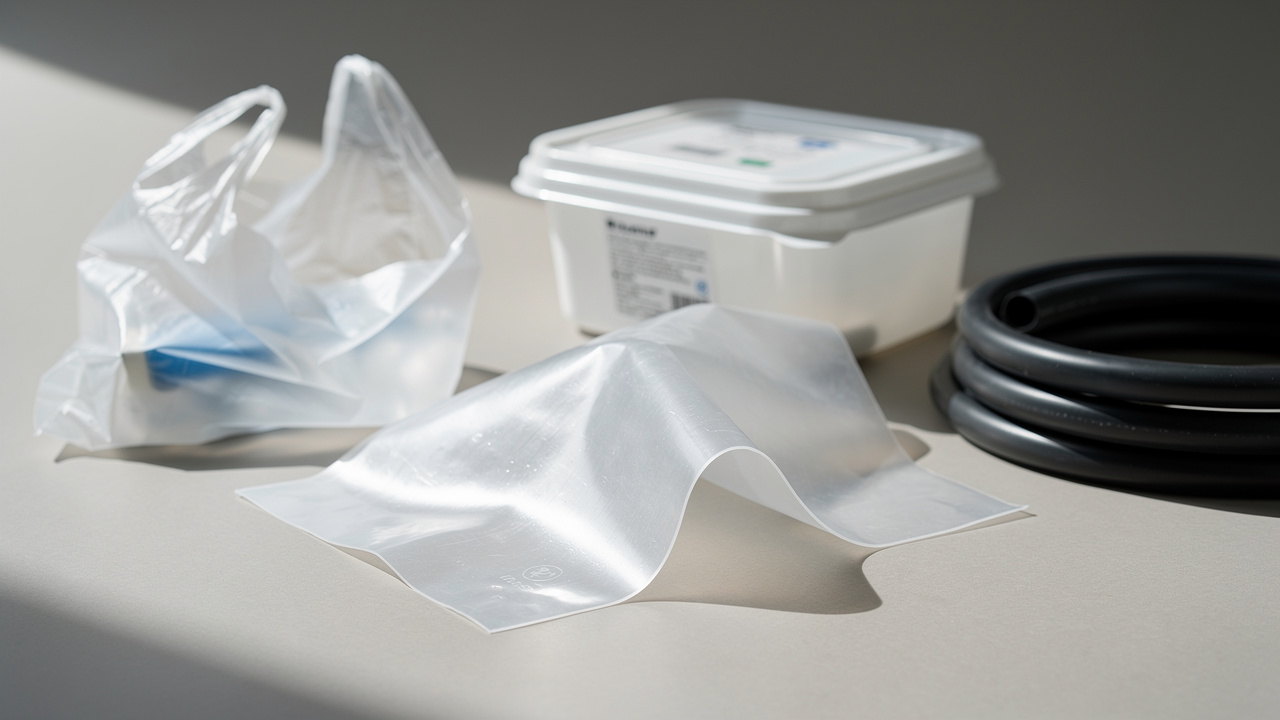
What Kind of Plastic is Polyethylene? Key Facts and Uses Explained
Introduction
Polyethylene is not just a material; it's a game-changer across various industries, yet many struggle to choose the right type for their needs. As a versatile thermoplastic polymer, it boasts a unique molecular structure that allows for a range of applications, from packaging to construction. But with so many types and properties, how do you know you're choosing the right polyethylene for your specific needs?
We'll explore the composition, history, and various applications of polyethylene, shedding light on its importance and helping you navigate its complexities.
Define Polyethylene: Composition and Structure
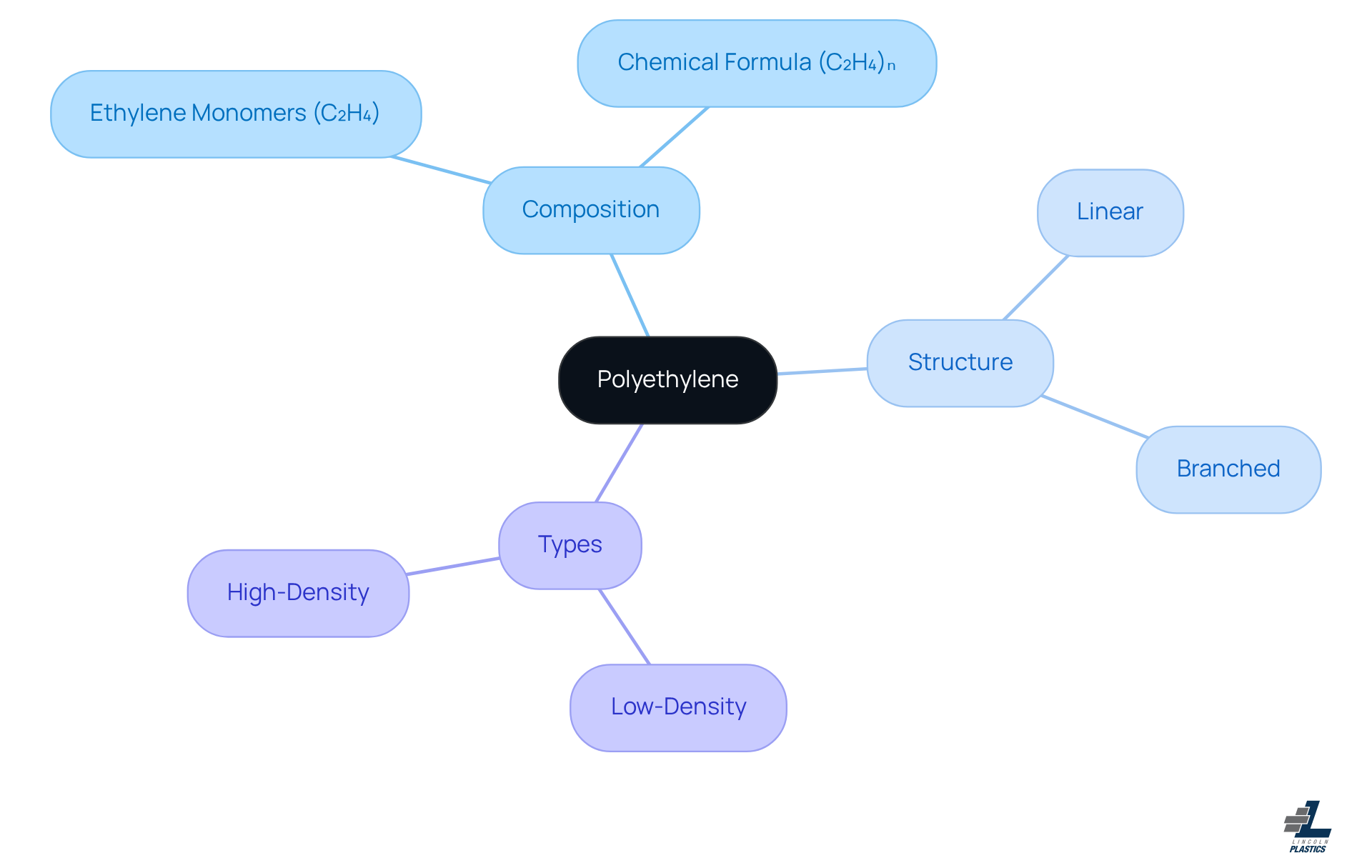
In a world where material performance is paramount, it is important to understand what kind of plastic is polyethylene, as it stands out as a versatile solution for countless applications. This thermoplastic polymer, which is created through the polymerization of ethylene monomers (C₂H₄), is commonly referred to as PE, answering the question of what kind of plastic is polyethylene. Defined by long chains of repeating units, what kind of plastic is polyethylene can be either linear or branched, leading to various types such as low-density and high-density forms.
The molecular configuration of polyethylene, which answers the question of what kind of plastic is polyethylene, enhances its adaptability, making it suitable for a broad spectrum of uses. This polymer's chemical formula, (C₂H₄)ₙ, reveals its composition of carbon and hydrogen, which together create a material that is both flexible and durable, ideal for various environments. Understanding what kind of plastic is polyethylene and its unique properties can significantly enhance your material selection process, ensuring reliability and performance in your projects.
Explore the History and Development of Polyethylene
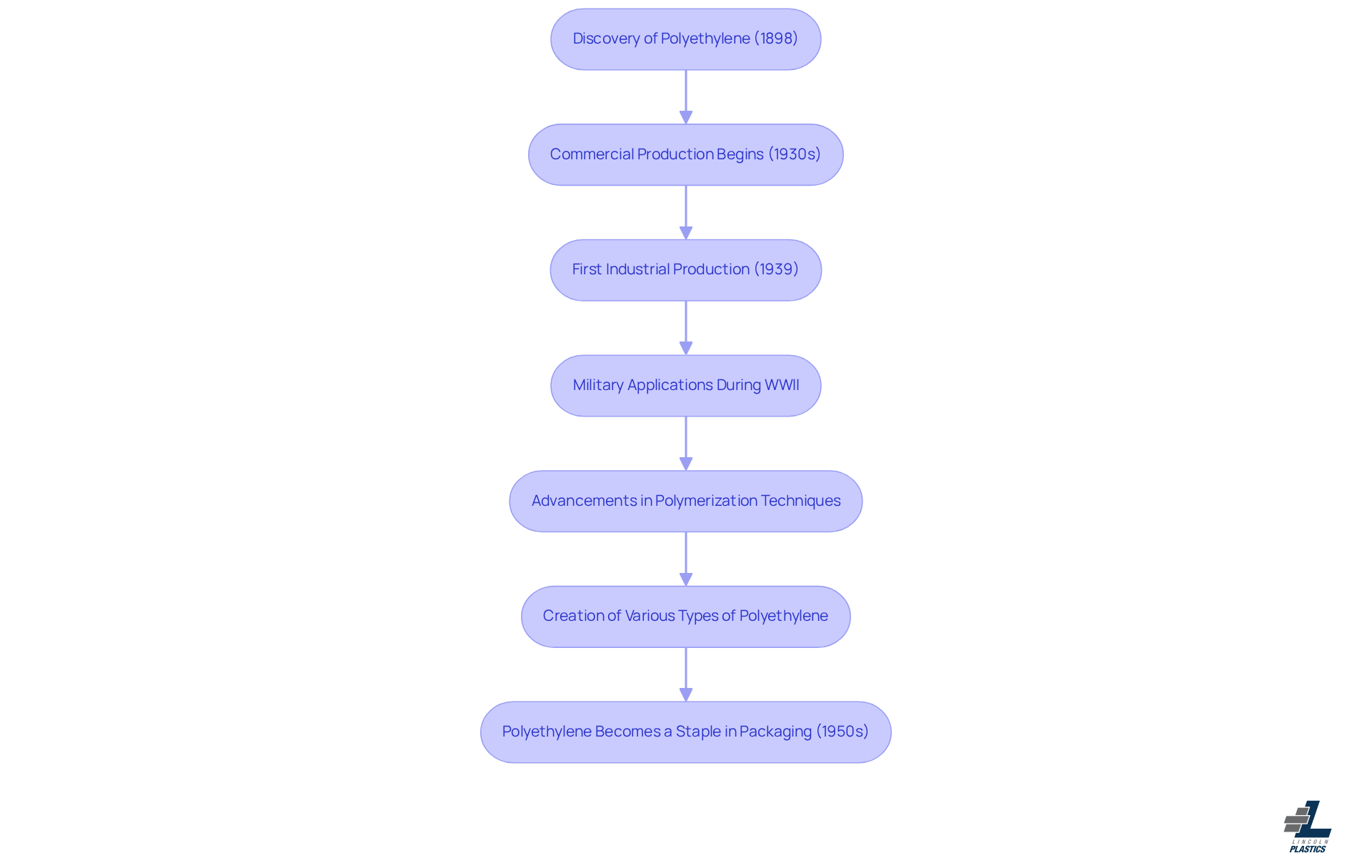
Polyethylene, a material that has transformed industries, was first synthesized in 1898 by German chemist Hans von Pechmann during an experiment gone awry. But have you ever wondered how a material born from an accident became a staple in our daily lives? It wasn't until the 1930s that this plastic started to be manufactured on a commercial scale. The first industrial production occurred in 1939, during World War II, when it was used for military applications such as radar insulation.
Despite its accidental creation, the journey to commercial production was fraught with challenges that delayed its widespread use. Over the decades, advancements in polymerization techniques, especially the introduction of high-pressure and low-pressure methods, have led to the creation of various types of this material, prompting the inquiry of what kind of plastic is polyethylene.
These advancements not only facilitated production but also transformed industries, making polyethylene a cornerstone of modern manufacturing. By the 1950s, polyethylene had become a staple in packaging and consumer goods, revolutionizing industries with its lightweight, durable, and versatile properties. Understanding its evolution underscores polyethylene's pivotal role in shaping the landscape of modern manufacturing and its ongoing significance in diverse applications.
Identify Key Characteristics and Variations of Polyethylene
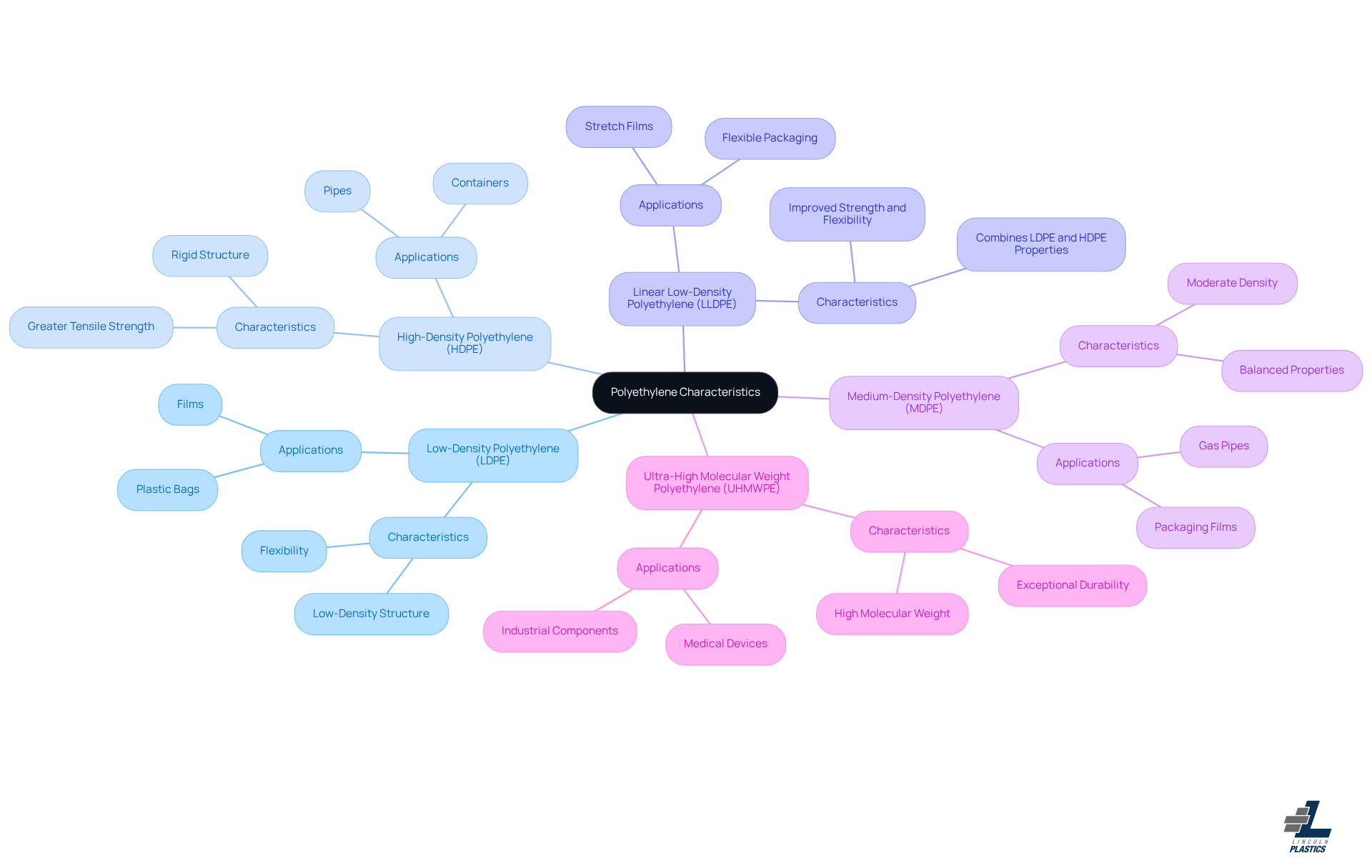
For manufacturers aiming to optimize their production processes and product quality, it is crucial to understand what kind of plastic is polyethylene. It is essential for manufacturers to understand what kind of plastic is polyethylene and the various types of plastic categorized by density and molecular structure.
- Low-Density Plastic (LDPE) is recognized for its flexibility and low-density structure, making it ideal for uses such as plastic bags and films.
- In contrast, High-Density Polyethylene (HDPE) is a type of what kind of plastic is polyethylene, as it has a more rigid structure, providing greater tensile strength and making it suitable for items such as containers and pipes.
- Additionally, Linear Low-Density Polyethylene (LLDPE) combines properties of both LDPE and HDPE, prompting the question of what kind of plastic is polyethylene, as it offers improved strength and flexibility.
- Other variations of polyethylene, including Medium-Density Polyethylene (MDPE) and Ultra-High Molecular Weight Polyethylene (UHMWPE), illustrate what kind of plastic is polyethylene, with each designed for specific industrial applications.
Manufacturers often struggle to navigate the complexities of plastic types, leading to potential inefficiencies in production. This lack of knowledge can result in suboptimal product performance and increased costs. By understanding these variations, manufacturers can significantly enhance their operational efficiency and product reliability.
Examine Applications of Polyethylene in Various Industries
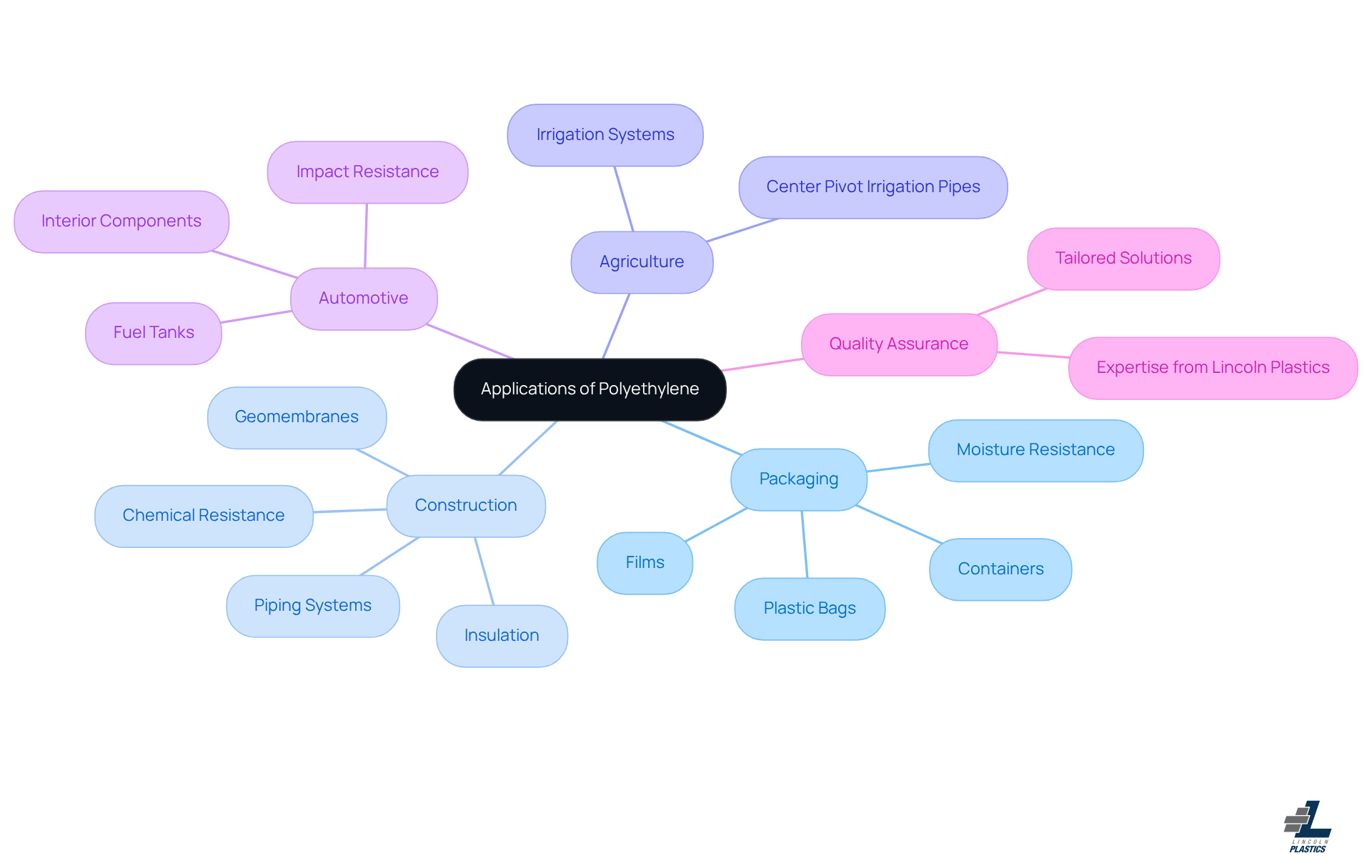
Polyethylene stands as a cornerstone material across diverse industries, but not all products deliver the same level of performance and reliability. Its favorable properties make it the material of choice in the packaging sector for plastic bags, films, and containers, thanks to its lightweight and moisture-resistant characteristics. Furthermore, in construction, polyethylene is utilized for geomembranes, insulation, and piping systems, providing durability and chemical resistance. In agriculture, it plays a crucial role in irrigation systems, including center pivot irrigation pipes, essential for efficient water management. Additionally, the automotive sector benefits from polyethylene's impact resistance and lightweight nature, using it for fuel tanks and interior components.
However, not all polyethylene products are created equal, and finding the right solution can be challenging. Lincoln Plastics, a leader in custom extrusion manufacturing since 1948, leverages these applications to provide tailored solutions for clients in irrigation and cable management. Their commitment to quality assurance ensures that products meet specific operational needs. By partnering with Lincoln Plastics, you ensure that your projects are backed by unmatched quality and expertise, setting you apart in a competitive market.
Conclusion
Polyethylene is not just a material; it's a game-changer in modern manufacturing. This remarkable thermoplastic polymer showcases versatility across a multitude of applications, making it crucial in various industries. Understanding polyethylene's composition, structure, and types allows manufacturers to make informed decisions. This enhances product performance and boosts operational efficiency.
The evolution of polyethylene, from its accidental discovery to its pivotal role in manufacturing, is fascinating. Key variations, such as low-density polyethylene (LDPE) and high-density polyethylene (HDPE), demonstrate the material's adaptability. Each serves distinct functions in packaging, construction, agriculture, and automotive sectors. Moreover, the historical context of polyethylene's development, along with its unique properties, underscores its significance in shaping contemporary industries.
It's clear that knowing polyethylene inside and out is key to optimizing its applications. As industries continue to evolve, embracing the potential of polyethylene can lead to innovative solutions that meet specific operational needs. Engaging with experts in the field, such as Lincoln Plastics, ensures that projects benefit from high-quality, tailored polyethylene solutions. The choice to leverage polyethylene could be the difference between leading the market and falling behind.
Frequently Asked Questions
What is polyethylene?
Polyethylene is a thermoplastic polymer created through the polymerization of ethylene monomers (C₂H₄). It is commonly referred to as PE and is known for its versatility in various applications.
What are the types of polyethylene?
Polyethylene can be either linear or branched, leading to different types such as low-density polyethylene (LDPE) and high-density polyethylene (HDPE).
What is the chemical formula of polyethylene?
The chemical formula of polyethylene is (C₂H₄)ₙ, indicating its composition of carbon and hydrogen.
What are the key properties of polyethylene?
Polyethylene is known for being flexible and durable, making it suitable for a wide range of environments and applications.
Why is understanding polyethylene important for material selection?
Understanding polyethylene and its unique properties can enhance the material selection process, ensuring reliability and performance in various projects.
Related posts

Why Custom Pipe Extrusion Matters More Than Ever
Standard pipe sizes don’t always work. Learn how Lincoln Plastics delivers custom diameters, wall thicknesses, and finishes in right-sized runs.


Reducing Trip Hazards with Custom Cord Management
Loose cords are more than messy — they’re a safety hazard. Lincoln Plastics’ custom cord covers and Flexiduct solutions improve safety and efficiency.
The Power of Custom Plastic Profiles for OEMs
Off-the-shelf profiles force compromises. Learn how Lincoln Plastics designs custom extruded profiles for OEMs with exact specs and right-sized runs.
