

What is the Strongest Plastic in the World and Why It Matters
Introduction
In the quest for superior materials, Polyether Ether Ketone (PEEK) stands out as a revolutionary solution, offering unmatched strength and resilience for diverse industries. Manufacturers often struggle to find materials that can endure harsh environments while maintaining high performance. By leveraging PEEK's unique properties, manufacturers can enhance their processes and applications significantly in sectors such as:
- Aerospace
- Automotive
- Medical
Define the Strongest Plastic: Characteristics and Significance
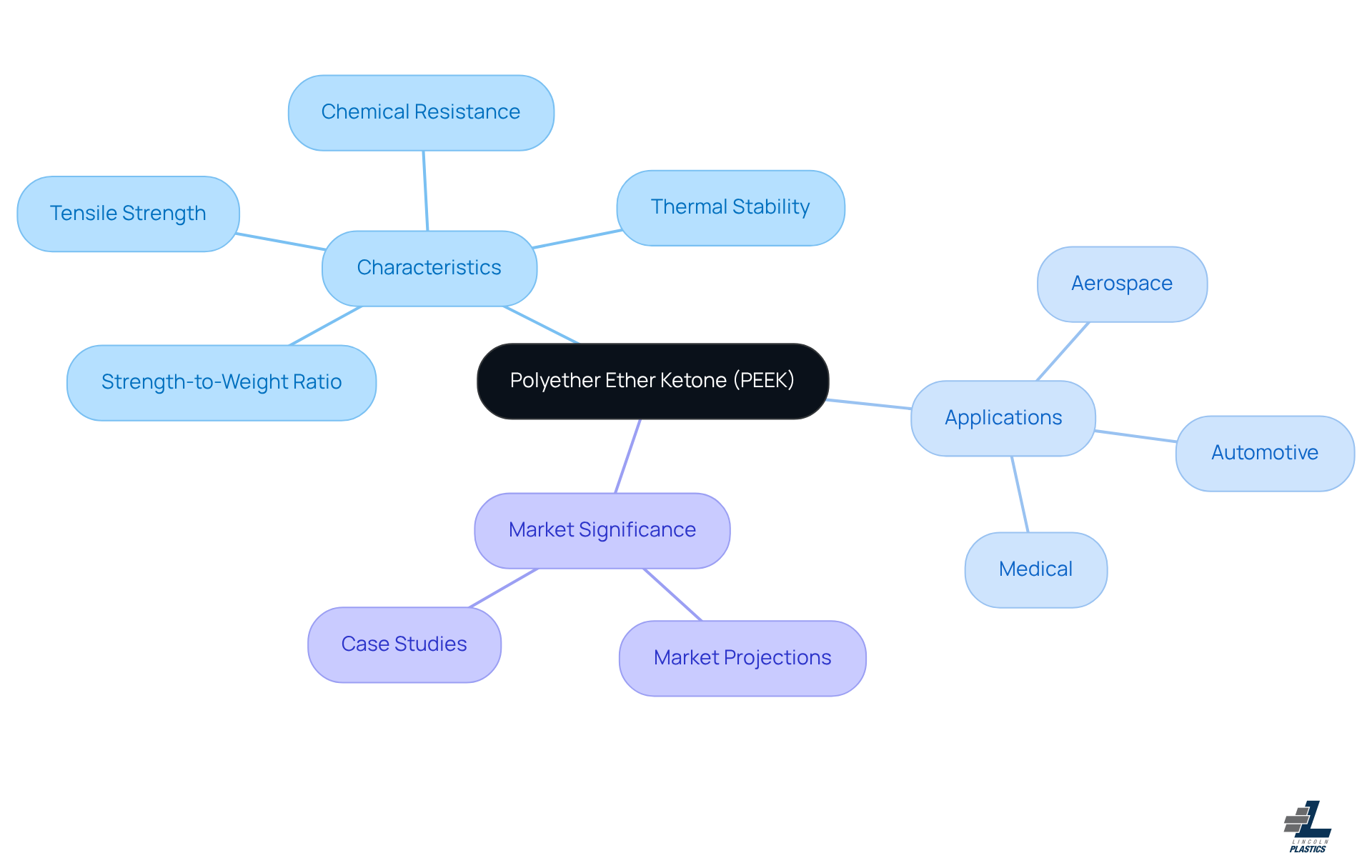
Polyether Ether Ketone stands out as one of the most robust plastics available, engineered to excel in extreme conditions. Its remarkable mechanical properties include high tensile strength, exceptional chemical resistance, and impressive thermal stability. With a melting point of 343°C and a continuous use temperature of up to 260°C, this material is designed to endure harsh environments, making it an ideal choice for demanding applications in aerospace, automotive, and medical sectors. Its strength-to-weight ratio exceeds that of metals. This allows for the creation of lightweight, durable components that enhance overall efficiency and performance.
You can't underestimate how crucial this material is across different industries. In aerospace, for instance, polyether ether ketone is used for essential parts that require resistance to temperature variations and minimal out-gassing, leading to weight reductions of up to 30% in aircraft designs. Similarly, in the automotive industry, this material is vital for transmission parts and thrust washers, where reliability and efficiency under elevated temperatures are paramount. The polymer's ability to withstand pressures up to 25,000 psi further underscores its suitability for high-stress applications.
Current statistics highlight the growing market presence of Polyether Ether Ketone, with projections indicating that the market will reach USD 1.2 trillion by 2028, driven by increasing demand across various sectors. Case studies illustrate the versatility of this material; for example, glass-filled variants are preferred in electrical connectors and industrial tooling due to their enhanced tensile strength and thermal conductivity, while carbon-filled types are favored for load-bearing components in aerospace applications because of their superior mechanical properties.
Understanding the properties of the strongest plastic in the world is vital for sectors requiring materials that maintain performance integrity in extreme conditions. As the demand for high-performance polymers continues to rise, Polyether Ether Ketone stands out as a substance that not only meets but exceeds the rigorous demands of modern engineering. Choosing Polyether Ether Ketone is not just a decision for today; it’s an investment in future-proofing your operations against the demands of modern engineering.
Examine the Composition: Materials and Manufacturing Processes
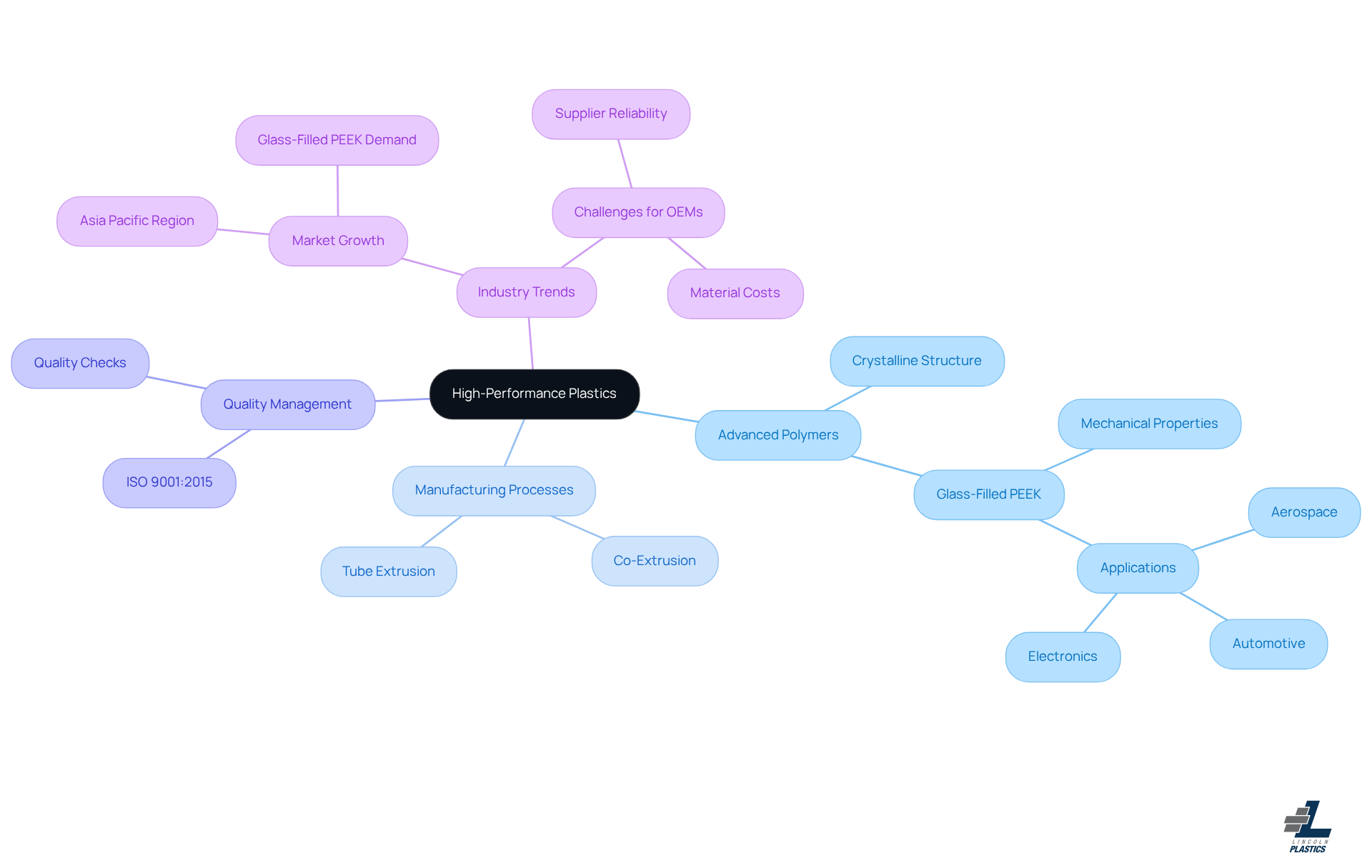
In the realm of high-performance plastics, understanding the capabilities of advanced polymers is crucial for achieving superior product outcomes. We engineer these high-performance polymers to deliver exceptional mechanical properties, ensuring they meet the rigorous demands of various applications.
For example, our polymers are synthesized to create a crystalline structure, enhancing their strength and thermal stability for demanding applications. Co-extrusion methods allow us to combine different materials, tailoring performance traits for specific uses.
At Lincoln Plastics, we adhere to best practices in the tube extrusion process, guided by our ISO 9001:2015 certification and rigorous quality management plans, including dedicated quality books and in-process checks.
Recent trends show that glass-filled PEEK is gaining traction due to its superior mechanical properties, making it ideal for challenging environments in sectors such as aerospace and automotive. Understanding these materials and their manufacturing processes is vital for producers aiming to deliver high-quality components that meet today’s stringent standards.
OEM Purchasing Managers often struggle with inconsistent supplier reliability and fluctuating material costs, which can hinder their production timelines. Staying informed about the latest innovations is essential for overcoming these challenges. By partnering with Lincoln Plastics, OEMs can navigate these challenges and secure the high-quality materials necessary for success in their industries.
Explore Applications: Industries Utilizing the Strongest Plastic
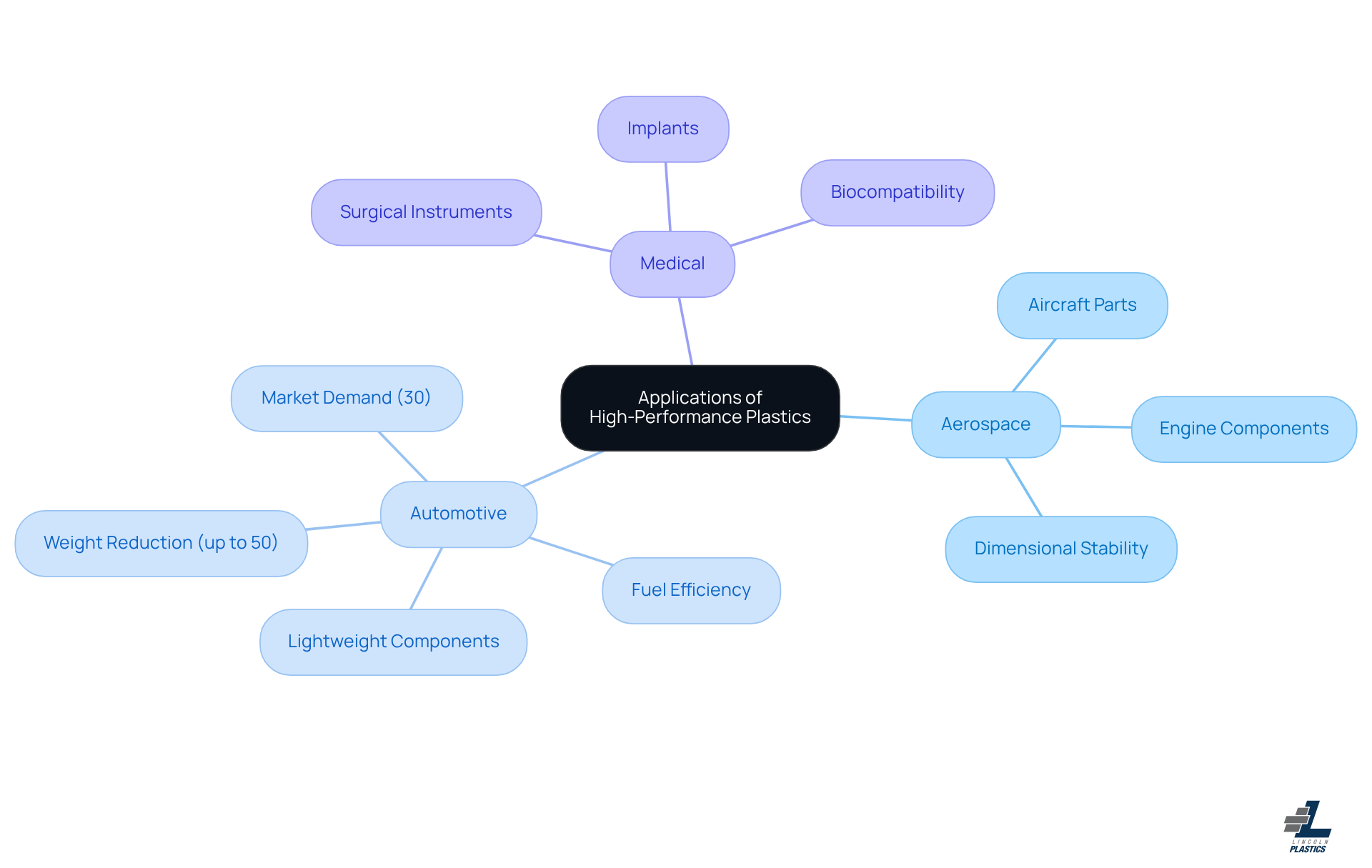
The demand for high-performance plastics like Polyether Ether Ketone and PAI is surging across critical industries, driven by their unmatched capabilities. In the aerospace sector, PEEK is favored for its exceptional strength and resistance to extreme temperatures, making it ideal for critical components such as aircraft parts and engine components. Its ability to maintain dimensional stability with minimal moisture absorption is essential for precision applications in variable humidity environments.
In automotive manufacturing, high-performance plastics are crucial for producing lightweight, durable components. This significantly enhances fuel efficiency and overall vehicle performance. For instance, automotive applications accounted for around 30% of global demand for this material in 2024, underscoring its growing importance in the sector. Notably, this material offers up to a 50% reduction in weight compared to aluminum, further emphasizing its advantages in automotive applications.
The medical field also benefits from the unique properties of this material. How do unique properties of materials like PEEK and PAI enhance surgical instruments and implants? Their biocompatibility and mechanical strength make them ideal choices in the medical field. This versatility highlights the importance of selecting appropriate materials tailored to specific operational requirements, especially in high-stakes environments where performance and reliability are paramount.
Recent advancements in processing techniques, including specialized co-extrusion and injection molding, have broadened the applications of PEEK and PAI. These methods enable the creation of complex geometries and multi-layer structures that meet rigorous industry demands. The global PEEK market achieved a significant valuation of USD 0.7 billion in 2024 and is projected to grow, reaching over USD 1.56 billion by 2034. As industries evolve, the strategic selection of materials will determine the success of innovations in performance and reliability.
Trace the Evolution: Historical Development of Strongest Plastics
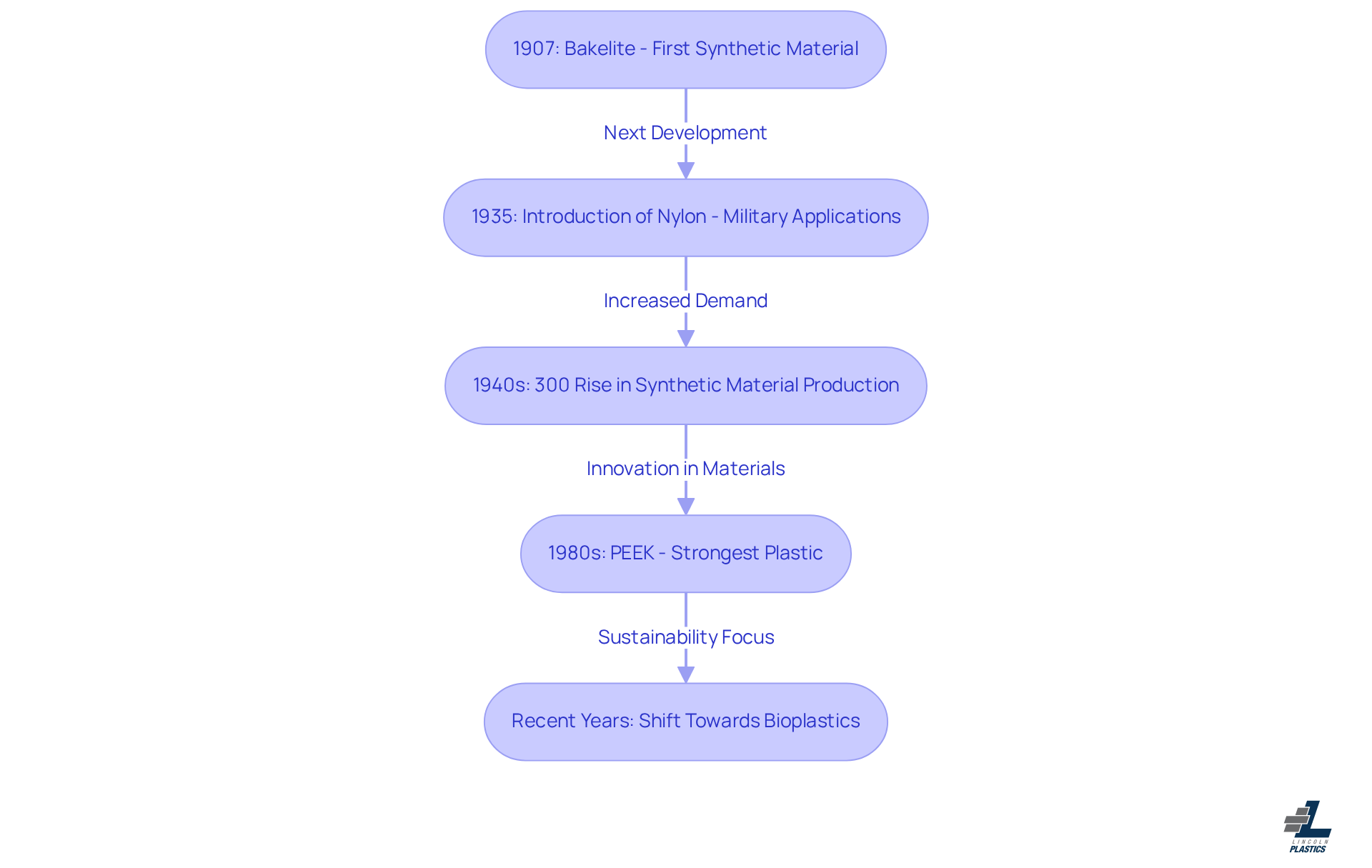
The journey of durable polymers began with Bakelite in 1907, a pivotal moment that transformed the landscape of synthetic materials. Bakelite was the first entirely synthetic material, developed to satisfy the electrical needs of a swiftly electrifying society. Its durability and mass production capabilities opened new paths for synthetic material uses, leading to significant investments in polymer research and development. Baekeland himself remarked, "In 1907, I created Bakelite, the first entirely synthetic material, meaning it contained no molecules found in nature."
As the decades progressed, polymer chemistry advanced significantly. In 1935, nylon was introduced, quickly finding extensive military applications during World War II. This period witnessed a remarkable 300% rise in synthetic material production in the U.S., as these substances became essential for various military needs. How have these advancements shaped the materials we rely on today? The versatility of synthetic materials solidified their role in consumer products post-war.
Did you know that the introduction of polyether ether ketone in the 1980s marked a significant milestone in the development of what is now considered the strongest plastic in the world? PEEK, recognized as the strongest plastic in the world, offered unprecedented strength and thermal stability, making it suitable for demanding applications in aerospace, medical devices, and automotive industries. Its ability to withstand high temperatures and harsh environments has established it as the strongest plastic in the world, making it a critical material in modern manufacturing.
In recent years, the industry has also seen a shift towards bioplastics as a response to environmental concerns, reflecting a growing awareness of sustainability. However, the rise of synthetic materials was not without its challenges, particularly as environmental concerns began to surface in the 1960s, emphasized by Rachel Carson's 'Silent Spring.' This shift in perception has led to a renewed focus on sustainability in material development.
Ongoing research and innovation have since broadened the variety of high-performance materials, allowing their application in progressively demanding uses. For instance, advancements in PEEK technology have led to the development of higher-heat grades, enhancing its usability in extreme conditions. To truly appreciate what the strongest plastic in the world can do for manufacturing today, it's important to understand their historical context.
Conclusion
In a landscape where material performance is paramount, Polyether Ether Ketone (PEEK) stands out as a game-changer in manufacturing. This high-performance plastic withstands extreme conditions. It also enhances efficiency across various industries, including aerospace, automotive, and medical sectors. The significance of PEEK lies in its ability to deliver reliable performance, making it an indispensable choice for applications that demand durability and precision.
Throughout the article, we've explored key insights into the characteristics and applications of PEEK. Its remarkable mechanical properties, such as high tensile strength and thermal stability, position it as a leader among plastics. The discussion highlighted the growing market for PEEK, driven by its increasing adoption in critical applications, and underscored the importance of advanced manufacturing processes like co-extrusion that allow for tailored solutions. Furthermore, Lincoln Plastics' commitment to quality, backed by ISO 9001:2015 certification, ensures that these high-performance materials meet the rigorous demands of today's industries.
Many manufacturers struggle to find materials that can withstand extreme conditions while maintaining efficiency. As industries evolve, have you considered how crucial strong plastics like PEEK will be for your future? Embracing these advanced materials is not merely a choice for immediate needs but a strategic investment in future-proofing operations. How can you enhance your manufacturing capabilities? Reach out to Lincoln Plastics experts for tailored solutions and quotes to pave the way for innovation and success.
Frequently Asked Questions
What is Polyether Ether Ketone (PEEK)?
Polyether Ether Ketone (PEEK) is one of the strongest plastics available, engineered to excel in extreme conditions with remarkable mechanical properties, including high tensile strength, exceptional chemical resistance, and impressive thermal stability.
What are the key characteristics of PEEK?
PEEK has a melting point of 343°C and a continuous use temperature of up to 260°C. It boasts a strength-to-weight ratio that exceeds that of metals, allowing for the creation of lightweight, durable components.
In which industries is PEEK commonly used?
PEEK is commonly used in aerospace, automotive, and medical sectors due to its ability to withstand extreme temperatures and pressures, making it ideal for demanding applications.
How does PEEK benefit the aerospace industry?
In aerospace, PEEK is used for essential parts that require resistance to temperature variations and minimal out-gassing, leading to weight reductions of up to 30% in aircraft designs.
What applications does PEEK have in the automotive industry?
In the automotive industry, PEEK is vital for transmission parts and thrust washers, where reliability and efficiency under elevated temperatures are crucial.
What are the pressure resistance capabilities of PEEK?
PEEK can withstand pressures up to 25,000 psi, underscoring its suitability for high-stress applications.
What is the projected market growth for PEEK?
The market for Polyether Ether Ketone is projected to reach USD 1.2 trillion by 2028, driven by increasing demand across various sectors.
What are the different variants of PEEK and their uses?
Glass-filled variants of PEEK are preferred in electrical connectors and industrial tooling due to their enhanced tensile strength and thermal conductivity, while carbon-filled types are favored for load-bearing components in aerospace applications because of their superior mechanical properties.
Why is understanding PEEK's properties important?
Understanding the properties of PEEK is vital for sectors requiring materials that maintain performance integrity in extreme conditions, ensuring that operations are future-proofed against modern engineering demands.
List of Sources
- Define the Strongest Plastic: Characteristics and Significance
- PEEK Market Report 2026-2031 [230 Pages & 100 Tables] (https://marketsandmarkets.com/Market-Reports/polyether-ether-ketone-market-928.html)
- What is Poly-ether-ether-ketone (PEEK) Polymer? Properties, Applications & Performance Guide (https://victrex.com/en/blog/2017/a-closer-peek-at-peek)
- Polyether ether ketone (PEEK Plastic): Properties, Processing, & Applications (https://specialchem.com/plastics/guide/polyetheretherketone-peek-thermoplastic)
- Polyether Ether Ketone (PEEK) Market Research Report 2026-2034 (https://24chemicalresearch.com/reports/316021/polyether-ether-ketone-market)
- Challenges and Opportunities in Polyether Ether Ketone (PEEK) Market: Sales Volume, Share, and Growth at a 5.1% CAGR Forecast from 2026 to 2033 (https://linkedin.com/pulse/challenges-opportunities-polyether-ether-ketone-peek-market-kihoe)
- Examine the Composition: Materials and Manufacturing Processes
- Polymer Points Live - March 2026 (https://plasticsnews.com/video/polymer-points-live-march-2026)
- PEEK Market Report 2026-2031 [230 Pages & 100 Tables] (https://marketsandmarkets.com/Market-Reports/polyether-ether-ketone-market-928.html)
- News & Blog | Plastic Manufacturing Insights - Pexco (https://pexco.com/news-and-events)
- High Performance Plastics (Nylon, PAI, PEEK) Industry Analysis 2025-2030 - Next-Generation Polymers with Enhanced Heat and Chemical Resistance Transform Industry Applications (https://globenewswire.com/news-release/2025/04/02/3053994/28124/en/high-performance-plastics-nylon-pai-peek-industry-analysis-2025-2030-next-generation-polymers-with-enhanced-heat-and-chemical-resistance-transform-industry-applications.html)
- Explore Applications: Industries Utilizing the Strongest Plastic
- Polyetheretherketone [PEEK] Market Size, Share Analysis and Industry Forecast (https://prismaneconsulting.com/report-details/polyetheretherketone-peek-market-size-share-analysis-and-industry-forecast)
- PEEK for Aerospace Applications: Aerospace Polymers (https://victrex.com/en/industries/aerospace)
- Comparative Study of PEEK Polymer vs Nylon in Automotive Uses (https://eureka.patsnap.com/report-comparative-study-of-peek-polymer-vs-nylon-in-automotive-uses)
- Trace the Evolution: Historical Development of Strongest Plastics
- Victrex showing PEEK, PAEK as it eyes growth (https://plasticsnews.com/news/victrex-showing-peek-paek-it-eyes-growth)
- History and Future of Plastics (https://sciencehistory.org/education/classroom-activities/role-playing-games/case-of-plastics/history-and-future-of-plastics)
- PEEK transforms into engineered material platform (https://plasticstoday.com/industry-trends/the-peek-2-0-era-high-heat-grades-new-alliances-and-a-changing-regulatory-reality)
- Bakelite® First Synthetic Plastic - National Historic Chemical Landmark - American Chemical Society (https://acs.org/education/whatischemistry/landmarks/bakelite.html)
- History of plastics • Plastics Europe (https://plasticseurope.org/plastics-explained/history-of-plastics)


