
What is Semi-Rigid Tubing? Key Features and Applications Explained
Introduction
In today's fast-paced industrial landscape, the need for reliable and adaptable materials has never been more pressing. Semi-rigid tubing emerges as a crucial solution, striking a balance between flexibility and durability, making it ideal for a variety of uses across sectors such as automotive, agriculture, and HVAC systems.
As industries evolve, how can semi-rigid tubing provide the innovative solutions needed to meet these challenges? This article explores the characteristics, applications, and advancements of semi-rigid tubing, showcasing its critical role in boosting operational efficiency and reliability.
Define Semi-Rigid Tubing: Characteristics and Composition
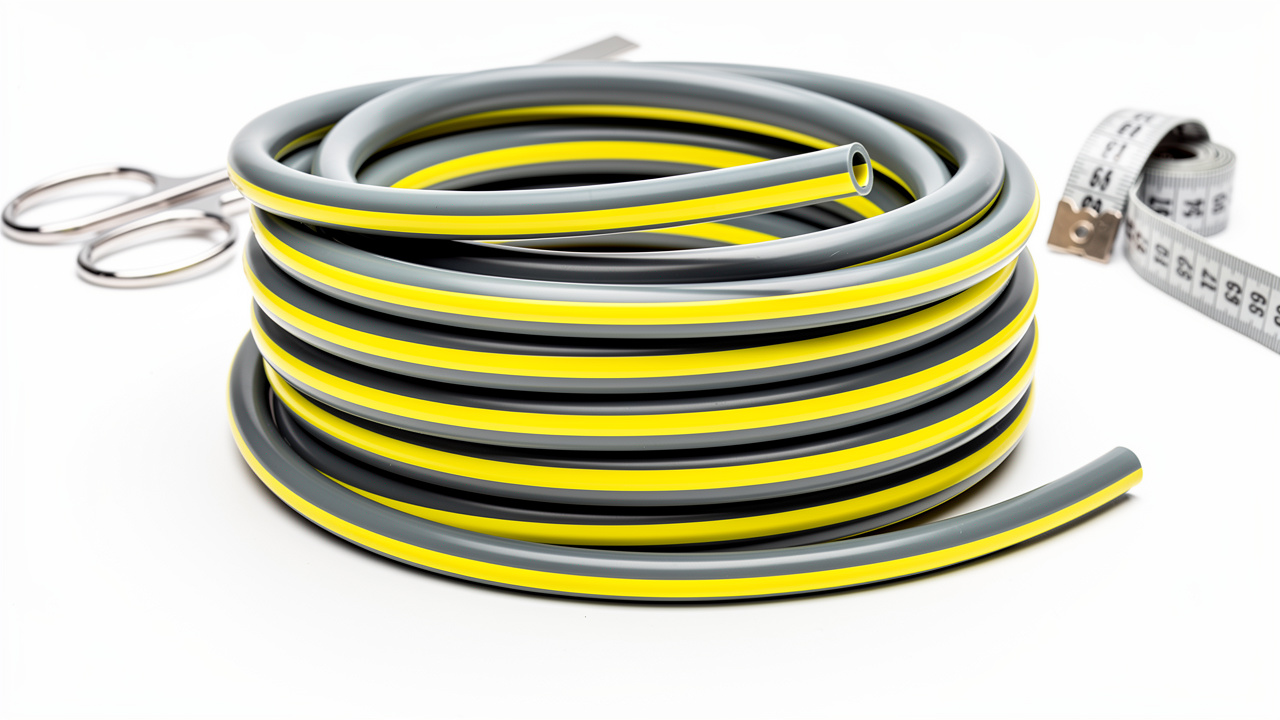
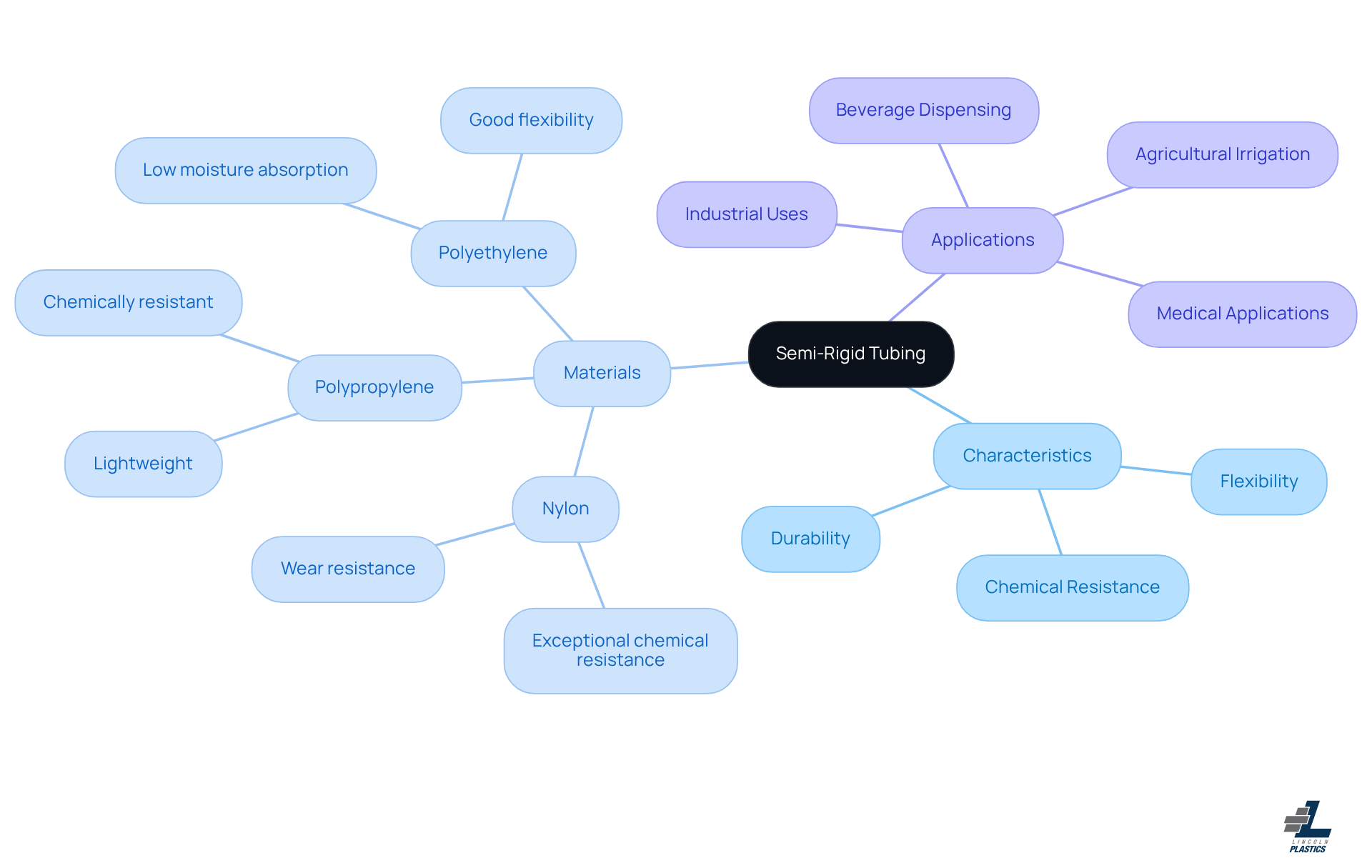
In a world where flexibility and durability are paramount, semi rigid tubing stands out as the ideal solution for a variety of applications. These versatile plastic conduits effectively balance adaptability and stiffness, making them suitable for a wide range of uses. Typically produced from materials like nylon, polypropylene, and polyethylene, semi-flexible pipes offer moderate flexibility while maintaining structural integrity. This unique blend allows them to bend and twist without kinking, ensuring they maintain their shape and stability when you need it most.
The structure of flexible piping often includes additives that enhance chemical resistance, UV stability, and overall durability, ensuring reliable performance in challenging environments. For instance, nylon semi-flexible pipes are particularly known for their exceptional resistance to chemicals and wear, making them a preferred choice in various industrial applications.
At Lincoln Plastics, we manufacture custom and standard round plastic profiles, including options for semi rigid tubing, with the ability to co-extrude multiple colors or materials into your profiles - think of a vibrant yellow stripe alongside your primary color. This flexibility in manufacturing ensures that we can meet the specific needs of our clients while adhering to our rigorous quality management standards, including our ISO 9001:2015 certification. By partnering with Lincoln Plastics, you’re not just choosing a supplier; you’re investing in the success and longevity of your projects.
Explore Applications of Semi-Rigid Tubing Across Industries
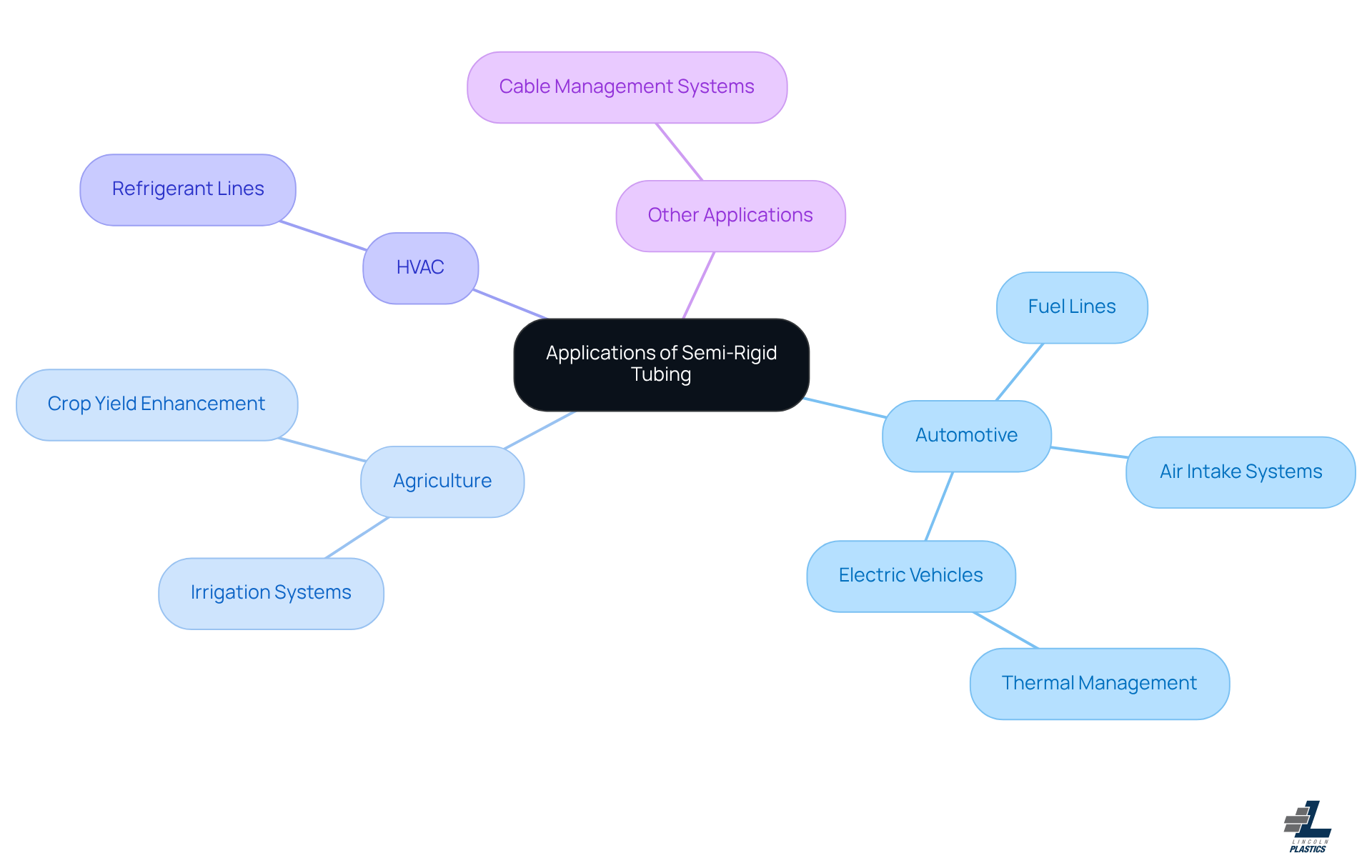
Semi-rigid piping is not just a solution; it's a game-changer across industries, enhancing performance and reliability. In the automotive sector, semi-rigid tubing is essential for applications like fuel lines and air intake systems. It offers resistance to chemicals and temperature fluctuations. With the rise of electric vehicles, the demand for specialized conduit designs for thermal management is set to surge. This shift not only demands innovation but also presents opportunities for growth in the semi-rigid tubing market, with electric vehicle-specific semi-rigid tubing expected to reach 2.3 million units annually by 2026.
In agriculture, semi-rigid tubing is essential for irrigation systems, ensuring reliable fluid transfer while maintaining structural integrity under pressure. This approach is vital for making the most of water resources and boosting crop yields, especially in regions where efficient irrigation is critical. The agricultural sector is further supported by advancements in piping materials that enhance durability and resistance to environmental factors.
Case studies demonstrate the efficiency of flexible pipes in these applications. For instance, Amanco's recent launch of bio-based polyethylene tubes targets urban construction and agricultural irrigation markets, addressing environmental concerns while maintaining performance standards. Similarly, Tigre S.A. has reported a 15% rise in sales revenue due to robust demand for electrical conduit solutions, highlighting the versatility of semi-flexible pipes across various applications.
Flexible piping is adaptable beyond automotive and agricultural uses. It’s also used in HVAC systems for refrigerant lines and in cable management systems to organize and protect wiring. This wide applicability makes flexible piping a favored option for many OEMs seeking dependable and effective solutions that meet diverse operational requirements.
At Lincoln Plastics, we ensure that our semi-flexible pipes meet all quality standards through our rigorous quality management program, which includes:
- ISO 9001:2015 certification
- Dedicated quality documentation
- Critical in-process inspections
- Collaboration with OEMs to guarantee precision and compliance
Our strategic location in Lincoln, Nebraska, further enhances our logistical advantages, enabling quick order turnaround and efficient shipping solutions. As industries evolve, the demand for innovative piping solutions will only grow, making it essential to stay ahead of the curve.
Trace the Evolution of Semi-Rigid Tubing: From Concept to Production
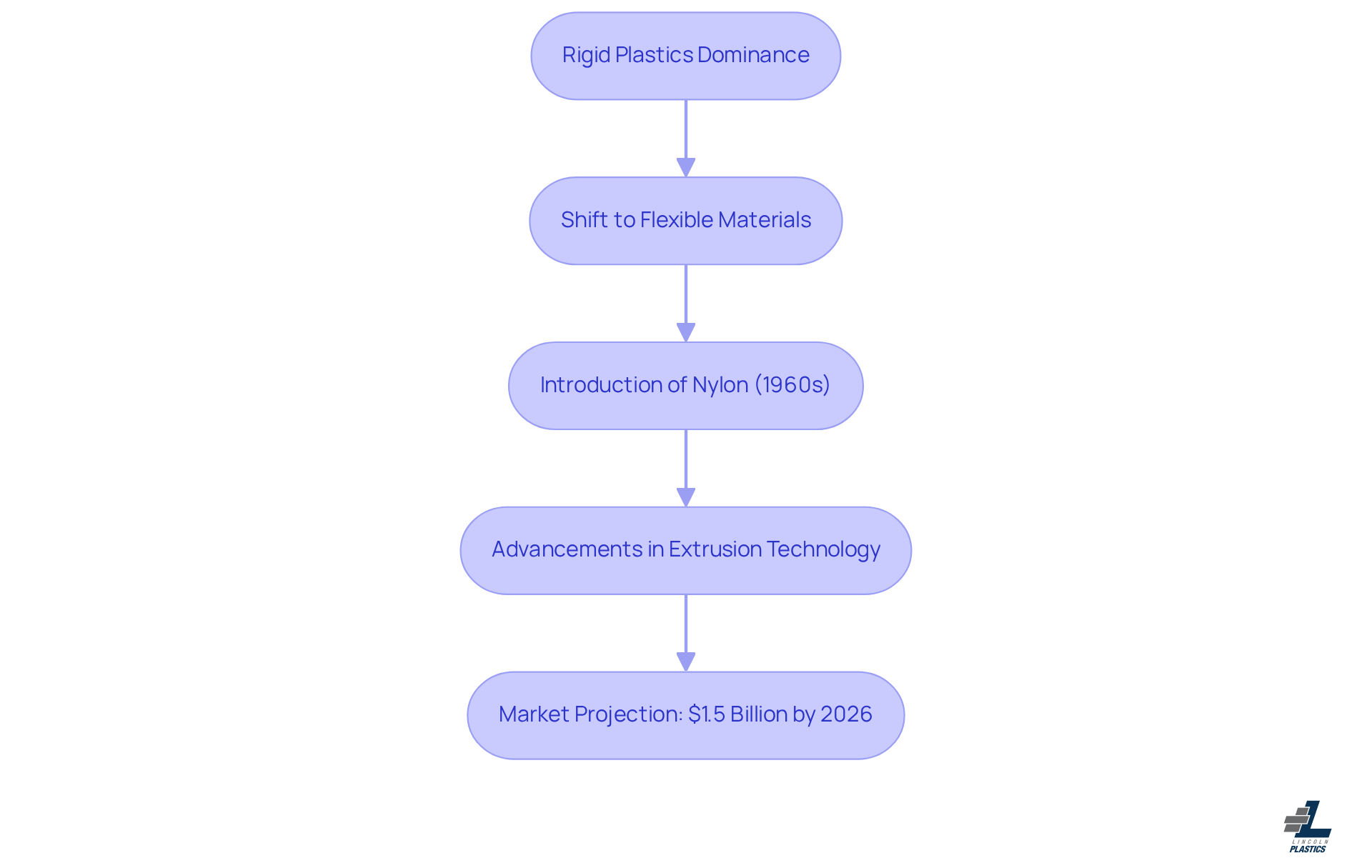
In an era where adaptability is key, the evolution of flexible tubing stands as a testament to innovation in plastic technology. Initially dominated by rigid plastics, the market began shifting in the mid-20th century as the demand for more flexible and durable materials grew. Manufacturers started experimenting with blends and additives, leading to the development of semi rigid tubing alternatives. The introduction of nylon in the 1960s marked a significant milestone, offering enhanced flexibility and chemical resistance compared to traditional materials.
Furthermore, advancements in extrusion technology have enabled precise control over pipe properties, resulting in innovations like co-extrusion, which allows for the production of multi-layered pipes with diverse characteristics. As industries increasingly recognize the value of flexible piping, the market is projected to reach $1.5 billion by 2026, underscoring its critical role in enhancing efficiency across various sectors, from agriculture to office management and tradeshow arrangements.
Lincoln Plastics is leading the way with custom cord covers made from semi rigid tubing, which are designed to boost safety and efficiency in diverse environments. Committed to quality, Lincoln Plastics follows strict quality management protocols, including ISO 9001:2015 certification, guaranteeing that every product meets top-tier standards. Their ability to source colors that meet Pantone specifications further exemplifies their dedication to customization, making them a trusted partner for OEMs seeking precision and compliance in their plastic extrusion needs.
Choosing Lincoln Plastics means investing in a future where quality and customization drive success in your operations.
Identify Key Features and Benefits of Semi-Rigid Tubing
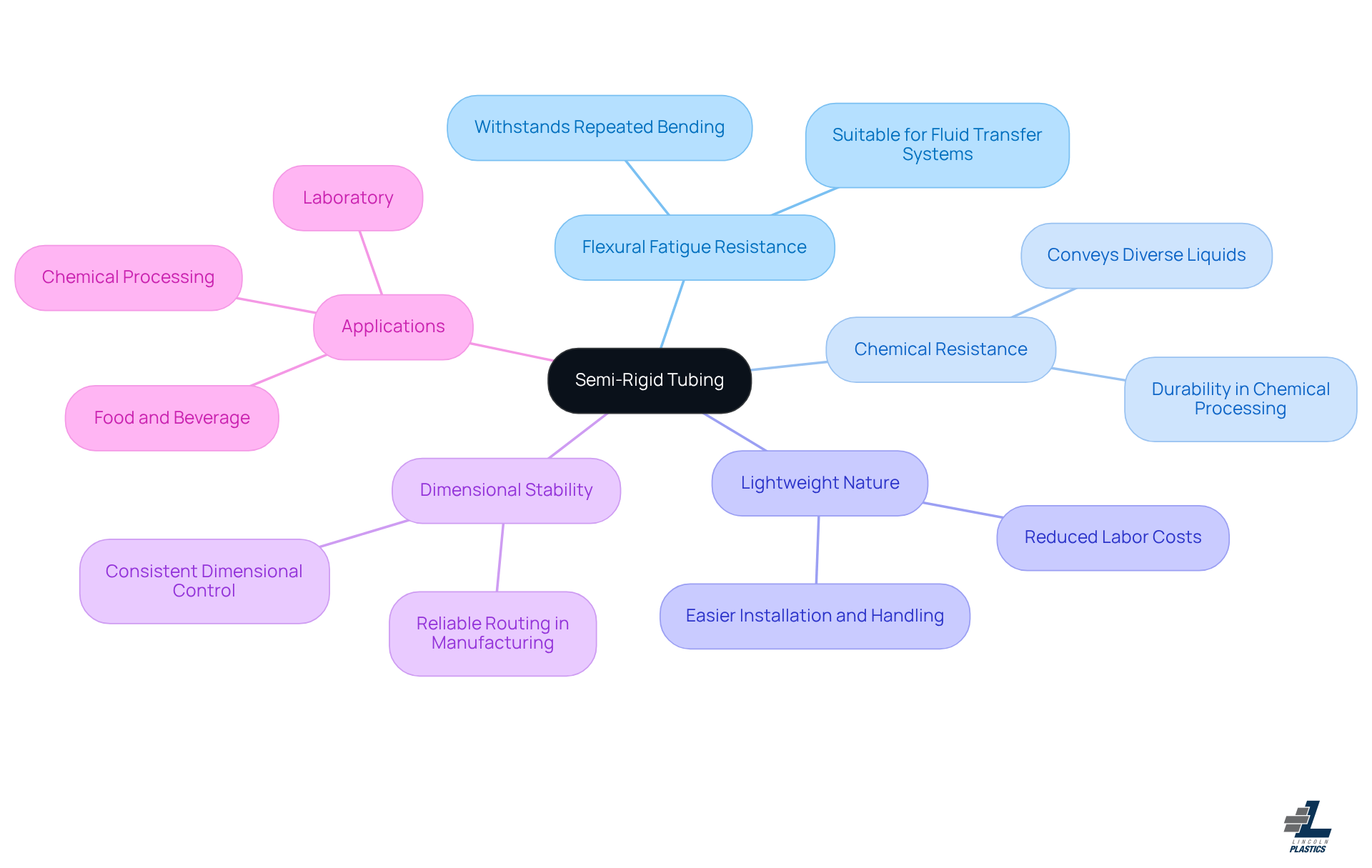
Semi-rigid pipes are not just another option; they are a game-changer for various applications. One of their standout benefits is exceptional resistance to flexural fatigue, allowing them to withstand repeated bending without losing integrity. This characteristic is vital in environments with movement and vibration, like fluid transfer systems in medical devices and automotive applications. Statistics show that flexible piping can manage flexural fatigue efficiently, with a significant bend radius of up to 3.9 (10E5 psi) that reduces kinking, making it suitable for pneumatic systems and instrumentation.
Moreover, flexible piping boasts remarkable chemical resistance, enabling it to convey a diverse range of liquids without deterioration. Its lightweight nature makes installation and handling easier, cutting down on labor costs and boosting operational efficiency.
The ability of flexible pipes to retain their form under pressure ensures dependable performance in critical applications. In manufacturing settings, their consistent dimensional control and reliable routing are key to maintaining system efficiency. This is especially crucial in applications requiring shape retention and dimensional stability, as highlighted in various case studies.
Additionally, case studies underscore the effective use of flexible piping in industries like food and beverage, laboratory, and chemical processing. For instance, its application in food and beverage settings demonstrates durability and performance, reinforcing its status as a preferred solution for manufacturers seeking reliable and efficient products. Investing in semi-rigid tubing signifies investing in the reliability and efficiency that your operations can depend on.
Conclusion
In a landscape where reliability and performance are paramount, semi-rigid tubing stands out as a game-changer for industrial applications. It maintains structural integrity and offers moderate flexibility, making it ideal for applications like automotive fuel lines and agricultural irrigation systems. Understanding the benefits of semi-rigid tubing can help industries enhance their performance and reliability.
Throughout this article, we’ve explored key insights into the composition, applications, and evolution of semi-rigid tubing. Its resistance to chemicals, temperature fluctuations, and flexural fatigue positions it as a preferred solution across multiple industries. Furthermore, advancements in manufacturing processes, such as co-extrusion capabilities at Lincoln Plastics, allow for tailored solutions that meet specific client needs while adhering to rigorous quality management standards, including ISO 9001:2015 certification.
Without innovative and reliable piping solutions, industries risk falling behind in performance and efficiency. Choosing semi-rigid tubing could be the decisive factor that sets your business apart in an increasingly competitive market. For those seeking customized solutions or quotes, reaching out to Lincoln Plastics experts can pave the way for successful project outcomes, ensuring that quality and performance remain at the forefront of operations.
Frequently Asked Questions
What is semi-rigid tubing?
Semi-rigid tubing is a type of plastic conduit that balances flexibility and stiffness, making it suitable for various applications. It is typically made from materials like nylon, polypropylene, and polyethylene.
What are the characteristics of semi-rigid tubing?
Semi-rigid tubing offers moderate flexibility while maintaining structural integrity, allowing it to bend and twist without kinking. It often includes additives that enhance chemical resistance, UV stability, and overall durability.
What materials are commonly used to produce semi-rigid tubing?
Common materials for semi-rigid tubing include nylon, polypropylene, and polyethylene.
Why is nylon semi-flexible tubing preferred in industrial applications?
Nylon semi-flexible tubing is known for its exceptional resistance to chemicals and wear, making it a preferred choice for various industrial applications.
How does Lincoln Plastics contribute to the production of semi-rigid tubing?
Lincoln Plastics manufactures custom and standard round plastic profiles, including semi-rigid tubing, with the capability to co-extrude multiple colors or materials into the profiles.
What quality management standards does Lincoln Plastics adhere to?
Lincoln Plastics adheres to rigorous quality management standards, including ISO 9001:2015 certification, ensuring high-quality products and services.
How can partnering with Lincoln Plastics benefit my projects?
By partnering with Lincoln Plastics, you are investing in the success and longevity of your projects, as they provide tailored solutions and maintain a commitment to quality and customer partnership.
List of Sources
- Define Semi-Rigid Tubing: Characteristics and Composition
- Semi-Rigid Tubing | PharmEquip (https://pharmequip.com.au/tubing/semi-rigid-tubing)
- 24 Chemical Research (https://24chemicalresearch.com/blog/24470/unseen-revolution-pioneering-the-future-of-semi-rigid)
- The Unseen Guardian: How ZYfire's Semi-Rigid Hose Technology is Redefining Indoor Fire Protection - ZYfire Hose Corporation (https://zyfire.com/news/the-unseen-guardian-how-zyfires-semi-rigid-hose-technology-is-redefining-indoor-fire-protection)
- Rigid and Semi-Rigid Plastic Tubing (https://genplex.com/rigid-and-semi-Rigid-plastic-tubing)
- Polymeric Flexible Hose and Tubing (https://prnewswire.com/news-releases/polymeric-flexible-hose-and-tubing-300340979.html)
- Explore Applications of Semi-Rigid Tubing Across Industries
- 10 Benefits of Semi Rigid Plastic Tubes for OEMs (https://lincoln-plastics.com/news-post/10-benefits-of-semi-rigid-plastic-tubes-for-oems)
- Automotive Tubes and Pipes Market Research Report 2033 (https://dataintelo.com/report/global-automotive-tubes-and-pipes-market)
- Automotive Fluid Transfer Tubing Industry Report: Market Share, Growth Trends, and 7.6% CAGR Forecast 2026–2033 (https://linkedin.com/pulse/automotive-fluid-transfer-tubing-industry-report-market-lhgde)
- Plastic Corrugated Tube Market to See Incredible Expansion (https://htfmarketinsights.com/report/4445518-south-america-plastic-corrugated-tube-market)
- Trace the Evolution of Semi-Rigid Tubing: From Concept to Production
- News in Medical Tubing & Materials (https://ptonline.com/articles/news-in-medical-tubing-materials)
- 10 Benefits of Semi Rigid Plastic Tubes for OEMs (https://lincoln-plastics.com/news-post/10-benefits-of-semi-rigid-plastic-tubes-for-oems)
- Rigid & Semirigid Polymer Product Manufacturing in New Zealand Industry Analysis, 2026 (https://ibisworld.com/new-zealand/industry/rigid-semirigid-polymer-product-manufacturing/701)
- Identify Key Features and Benefits of Semi-Rigid Tubing
- Understanding the Benefits of Industrial Tubing in Fluid Handling Systems (https://lessoamerica.com/news/industry-news/634.html)
- Rigid and Semi-Rigid Plastic Tubing (https://genplex.com/rigid-and-semi-Rigid-plastic-tubing)
- Semi-Rigid Tubing | PharmEquip (https://pharmequip.com.au/tubing/semi-rigid-tubing)
Related posts

Discover key plastic extrusion process steps that ensure quality and efficiency for OEM managers.


Discover essential FDA compliant plastics for safe and sustainable food packaging solutions.
Discover the essential properties, types, and applications of high temp plastic in various industries.
