
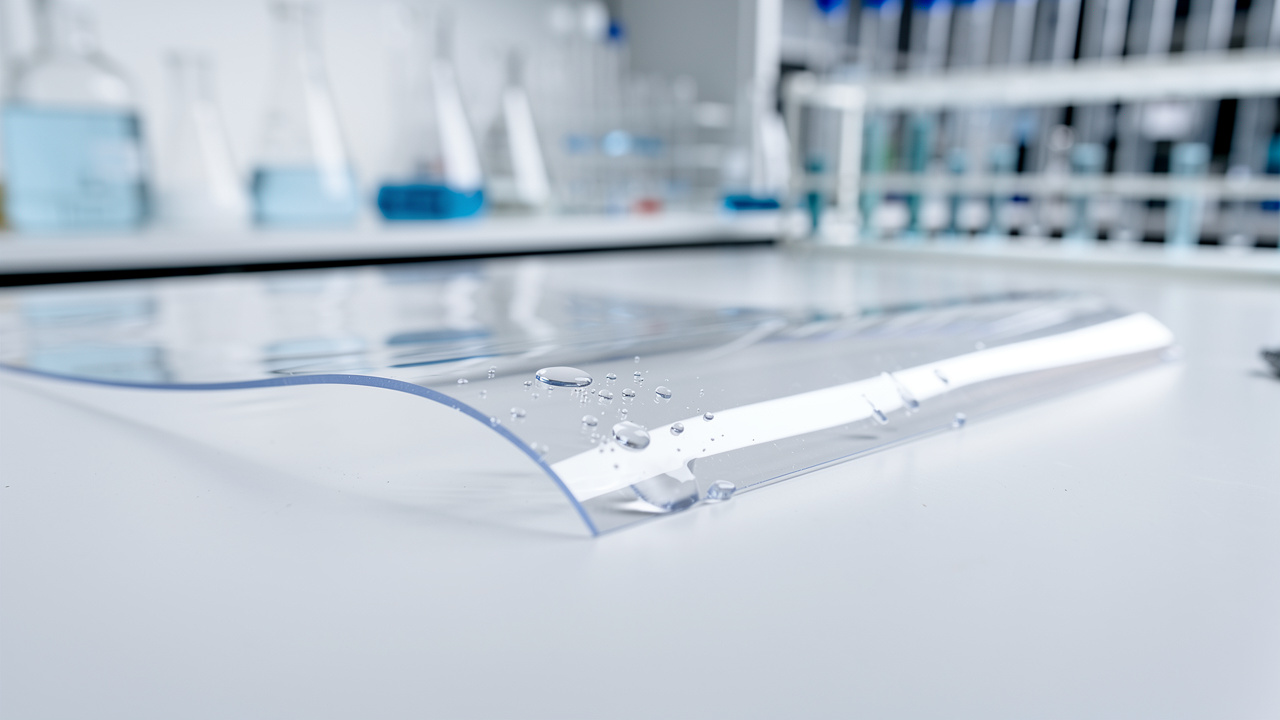
What is PVC Clear Plastic? Definition, Origins, and Applications
Introduction
Imagine a material that combines clarity, durability, and versatility - PVC clear plastic is revolutionizing industries with its unmatched properties. This thermoplastic is lightweight and boasts exceptional chemical resistance, making it essential in packaging, construction, food safety, and laboratory environments.
As sustainability becomes a priority, how can your business adapt to meet new regulations and embrace recycling initiatives? By examining the origins, properties, and applications of PVC clear plastic, we uncover its significance and the challenges and opportunities that await us.
Define PVC Clear Plastic: Composition and Characteristics
Imagine a material that combines clarity, lightweight characteristics, and versatility - PVC clear plastic is that innovative solution, revolutionizing various industries. This thermoplastic, also known as polyvinyl chloride, is made from vinyl chloride monomers. Its lightweight nature and versatility make it suitable for a wide range of applications. Unlike opaque PVC, which is often used for structural elements, transparent PVC is designed for situations where visibility and light transmission are crucial.
How does its clarity enhance monitoring in settings like laboratories and food processing? Its transparency allows for effective observation of contents, ensuring safety and integrity in diverse environments. Furthermore, PVC transparent exhibits excellent chemical resistance, making it durable and reliable under various conditions. Its ease of processing and shaping further enhances its appeal in manufacturing, particularly in custom extrusion applications.
As industries face increasing pressure for sustainable practices, recent advancements in PVC transparent material production focus on improving recycling methods. For instance, programs like VinylPlus have successfully recycled over 724,638 tonnes of PVC waste in 2024, contributing to a circular economy and reducing environmental impact. VinylPlus aims for at least 900,000 tonnes/year of recycled PVC used in new products by 2025, highlighting the industry's commitment to sustainability. If the industry fails to adapt to these regulatory changes, it could face significant challenges in maintaining compliance and market relevance. Moreover, the continuous assessment of PVC safety by the EPA, which started in December 2023, may lead to substantial regulatory modifications, affecting the future landscape of PVC applications.
A pertinent case study involves the use of PVC clear plastic in the food processing sector, where its transparency and chemical resistance are essential for preserving product integrity and safety. Expert opinions emphasize that the formulation of PVC transparent material not only offers clarity but also guarantees long-term performance in various applications. The material's properties make it a preferred choice in industries ranging from agriculture to office management, where both functionality and aesthetics are paramount. Without embracing advancements in PVC production and recycling, industries risk falling behind in sustainability and innovation, jeopardizing their future success.

Trace the Origins of PVC Clear Plastic: Historical Development and Milestones
The journey of PVC transparent material is a testament to innovation, beginning with its synthesis by German chemist Eugen Baumann in 1872. How did a material initially overlooked for its potential become a cornerstone of modern manufacturing? PVC's commercial viability began to emerge in the early 20th century. The first significant industrial production occurred in the 1930s, largely driven by the demand for durable materials during World War II, where PVC was adopted as an insulator for wiring on military ships.
As economies recovered after the war, advancements in polymer chemistry enabled the creation of formulations using PVC clear plastic. This breakthrough not only enhanced its appeal but also opened doors to new applications across various sectors, including packaging, construction, and medical devices, utilizing PVC clear plastic.
By the 1980s, PVC had become a household name, with thousands of American homes incorporating it into plumbing systems, a true testament to its versatility and reliability. The late 20th century also marked important advancements in PVC production, resulting in the development of specialized grades designed for particular uses, further boosting its market presence across various industries.
As we look ahead, the ongoing innovations in PVC production will undoubtedly redefine its role in modern manufacturing, making it an essential material for the future.

Examine Key Properties of PVC Clear Plastic: Mechanical, Thermal, and Chemical Attributes
PVC clear plastic is distinguished by its remarkable attributes, making it a top choice across diverse applications. PVC is known for its impressive tensile strength. Rigid PVC, for instance, has a yield strength of about 50 MPa, while flexible PVC is around 20 MPa. This strength makes it perfect for applications that demand durability, even in tough conditions.
Thermally, PVC transparent material has a softening point ranging from 80 to 84°C, facilitating easy processing through extrusion and molding techniques. This thermal stability is crucial for maintaining product integrity during manufacturing. However, operating conditions must be carefully monitored to prevent distortion at elevated temperatures.
Chemically, PVC clear plastic demonstrates excellent resistance to a wide array of acids, alkalis, and other corrosive substances, making it ideal for environments where chemical exposure is a concern. Its UV resistance further enhances its applicability in outdoor settings, as it helps maintain clarity and structural integrity when exposed to sunlight, thereby extending the lifespan of products used outdoors.
Case studies have demonstrated that PVC's mechanical characteristics, especially its impact resistance, are crucial in uses like electrical insulation and construction materials. For instance, PVC coated wire rope is widely used across various industries due to its enhanced durability and visibility. Additionally, the use of PVC in musical instruments, such as wind instruments, underscores its versatility and affordability.
Statistically, PVC is known for its density, with rigid PVC having a density of 1.3 to 1.45 g/cm, which contributes to its strength and durability. The global market for PVC continues to grow, with significant production capacities concentrated in regions like China, despite environmental regulation challenges. This ongoing demand highlights the material's importance across multiple sectors, including agriculture and manufacturing. Investing in PVC not only guarantees performance but also enhances the sustainability of your projects.

Explore Applications of PVC Clear Plastic: From Packaging to Construction
PVC clear plastic is recognized as a cornerstone material across multiple industries due to its remarkable properties and versatility. In the packaging sector, it is a popular choice for clamshell packaging, which not only provides visibility but also protects products from damage. Why is this important? PVC is commonly used in packaging for electronics, toys, and small household items, ensuring product integrity while allowing consumers to see the contents. Furthermore, PVC is utilized in food packaging, including meat, cheese, and bakery items, upholding hygiene standards while permitting visual examination of contents.
In construction, transparent PVC serves as an effective safety glazing solution, allowing natural light to flood in while acting as a protective barrier against environmental elements. This application is essential for improving energy efficiency in structures, as around 75% of all vinyl manufactured is utilized in building and construction uses. Notably, vinyl windows offer three times the heat insulation of aluminum windows, aiding in energy conservation.
Laboratory environments also benefit from transparent PVC, where it is used for pipes and containers that require monitoring of fluid flow. Additionally, PVC transparent material is utilized in medical instruments, signage, and protective barriers, demonstrating its versatility and adaptability in fulfilling various operational requirements. The material's durability and resistance to environmental stress further enhance its appeal across these sectors. As a result, it has become a trusted choice for OEMs seeking reliable solutions. Moreover, PVC's low greenhouse gas emissions and resource conservation make it an environmentally friendly option, aligning with the sustainability goals of many organizations. As noted by the EPA, PVC manufacturing has significantly decreased dioxin levels in the environment, alleviating concerns about its impact. Choosing PVC clear plastic not only meets operational needs but also aligns with a commitment to sustainability, making it a strategic choice for OEM purchasing managers.

Conclusion
Are you looking for a material that combines clarity, durability, and versatility to elevate your projects? PVC clear plastic stands out as a transformative choice, meeting the demands of various industries. Its unique properties not only enhance functionality but also ensure safety and sustainability, making it essential for applications ranging from packaging to construction.
Throughout this article, we've explored key insights into the composition, historical development, and mechanical properties of PVC clear plastic. The material's impressive tensile strength, thermal stability, and chemical resistance highlight its suitability for diverse environments. Furthermore, ongoing advancements in recycling and sustainability efforts underscore the industry's commitment to reducing environmental impact while maintaining compliance with evolving regulations.
Are you struggling to find a material that balances performance with environmental responsibility? By choosing PVC clear plastic, you can not only meet your operational goals but also contribute to a more sustainable future. Organizations are encouraged to consider the benefits of this material in their projects, aligning with sustainability goals and ensuring long-term success. Choosing PVC clear plastic isn't just a decision for today; it's a strategic move for a sustainable tomorrow.
Frequently Asked Questions
What is PVC clear plastic and what are its main characteristics?
PVC clear plastic, also known as polyvinyl chloride, is a thermoplastic made from vinyl chloride monomers. It is characterized by its clarity, lightweight nature, versatility, and excellent chemical resistance, making it suitable for a wide range of applications.
How does the clarity of PVC clear plastic benefit industries like laboratories and food processing?
The transparency of PVC clear plastic allows for effective observation of contents, ensuring safety and integrity in environments such as laboratories and food processing, where visibility and light transmission are crucial.
What advancements are being made in the recycling of PVC clear plastic?
Recent advancements focus on improving recycling methods, with initiatives like VinylPlus successfully recycling over 724,638 tonnes of PVC waste in 2024. The goal is to use at least 900,000 tonnes of recycled PVC in new products by 2025, contributing to a circular economy.
What challenges might the PVC industry face regarding regulatory compliance?
The industry may face significant challenges in maintaining compliance and market relevance if it fails to adapt to regulatory changes, especially with the continuous assessment of PVC safety by the EPA, which began in December 2023.
Can you provide an example of PVC clear plastic's application in a specific industry?
A pertinent case study involves the use of PVC clear plastic in the food processing sector, where its transparency and chemical resistance are essential for preserving product integrity and safety.
Why is the formulation of PVC transparent material important for its performance?
The formulation of PVC transparent material not only offers clarity but also guarantees long-term performance in various applications, making it a preferred choice in industries where both functionality and aesthetics are important.
List of Sources
- Define PVC Clear Plastic: Composition and Characteristics
- PVC — News Stories About Plastic Pollution — Beyond Plastics - Working To End Single-Use Plastic Pollution (https://beyondplastics.org/news-stories/tag/PVC)
- PVC Production and Recycling Statistics (https://energycle.com/global-pvc-production-and-disposal-statistics)
- oil-and-gas-watch-news (https://news.oilandgaswatch.org/template/brief/u-s-plastics-industry-that-boomed-over-past-decade-is-beginning-to-cool-new-research-shows)
- News & Blog | Plastic Manufacturing Insights - Pexco (https://pexco.com/news-and-events)
- Statistics on the Plastic Resins Industry - American Chemistry Council (https://americanchemistry.com/chemistry-in-america-industry-innovation-impact/chemical-industry-statistics-u.s.-jobs-economic-impact/statistics-on-the-plastic-resins-industry)
- Trace the Origins of PVC Clear Plastic: Historical Development and Milestones
- The history of plastic in 15 key dates | CARBIOS Active (https://carbios-active.com/en/news/the-history-of-plastic-in-15-key-dates-2)
- What is the history of Flexible Polyvinyl Chloride? (https://plextrusions.com/materials/polyvinyl-chloride/flexible-polyvinyl-chloride/what-is-the-history-of-flexible-polyvinyl-chloride)
- A Brief History of PVC - Piper Plastics Corp. (https://piper-plastics.com/2017/03/27/a-brief-history-of-pvc)
- What is PVC Clear? Key Properties and Applications Explained (https://lincoln-plastics.com/news-post/what-is-pvc-clear-key-properties-and-applications-explained)
- The Evolution of PVC: From Discovery to Modern Applications - Vinyl (https://vinylinfo.org/news/the-evolution-of-pvc-from-discovery-to-modern-applications)
- Examine Key Properties of PVC Clear Plastic: Mechanical, Thermal, and Chemical Attributes
- Understanding the Chemical Properties of PVC and Their Importance (https://lincoln-plastics.com/news-post/understanding-the-chemical-properties-of-pvc-and-their-importance?dcc2137a_page=8)
- Polyvinyl chloride - Wikipedia (https://en.wikipedia.org/wiki/Polyvinyl_chloride)
- Everything You Need To Know About PVC Plastic (https://paulmurphyplastics.com/industry-news-blog/everything-you-need-to-know-about-pvc-plastic)
- Explore Applications of PVC Clear Plastic: From Packaging to Construction
- What is PVC Clear? Key Properties and Applications Explained (https://lincoln-plastics.com/news-post/what-is-pvc-clear-key-properties-and-applications-explained)
- Vinyl and PVC Uses in Everyday Life | Vinyl Institute (https://vinylinfo.org/news/pvc-uses-in-everyday-life)
- Polyvinyl Chloride (https://paulmurphyplastics.com/industry-news-blog/polyvinyl-chloride)
- #3 PVC - Packaging Polymer Series (https://plasticingenuity.com/blog/3-pvc-packaging-polymer-series)
- Polyvinyl chloride applications along with methods for managing its end-of-life items: A review - Jabulani I Mnyango, Shanganyane P Hlangothi, 2026 (https://journals.sagepub.com/doi/10.1177/14777606241308652)
Related posts

Why Custom Pipe Extrusion Matters More Than Ever
Standard pipe sizes don’t always work. Learn how Lincoln Plastics delivers custom diameters, wall thicknesses, and finishes in right-sized runs.


Reducing Trip Hazards with Custom Cord Management
Loose cords are more than messy — they’re a safety hazard. Lincoln Plastics’ custom cord covers and Flexiduct solutions improve safety and efficiency.
The Power of Custom Plastic Profiles for OEMs
Off-the-shelf profiles force compromises. Learn how Lincoln Plastics designs custom extruded profiles for OEMs with exact specs and right-sized runs.
