

What is High Density Polyethylene Plastic and Why It Matters
Introduction
In a landscape where sustainability and efficiency are paramount, high density polyethylene (HDPE) stands out as a game-changing material for manufacturers. Celebrated for its exceptional strength and versatility, HDPE is increasingly recognized as a pivotal component in modern manufacturing.
Have you ever wondered why HDPE is the go-to choice for so many manufacturers? Its unique chemical structure plays a crucial role in its versatility across industries like agriculture and automotive. This shift towards HDPE not only meets industry demands but also paves the way for innovative manufacturing solutions.
Define High Density Polyethylene (HDPE)
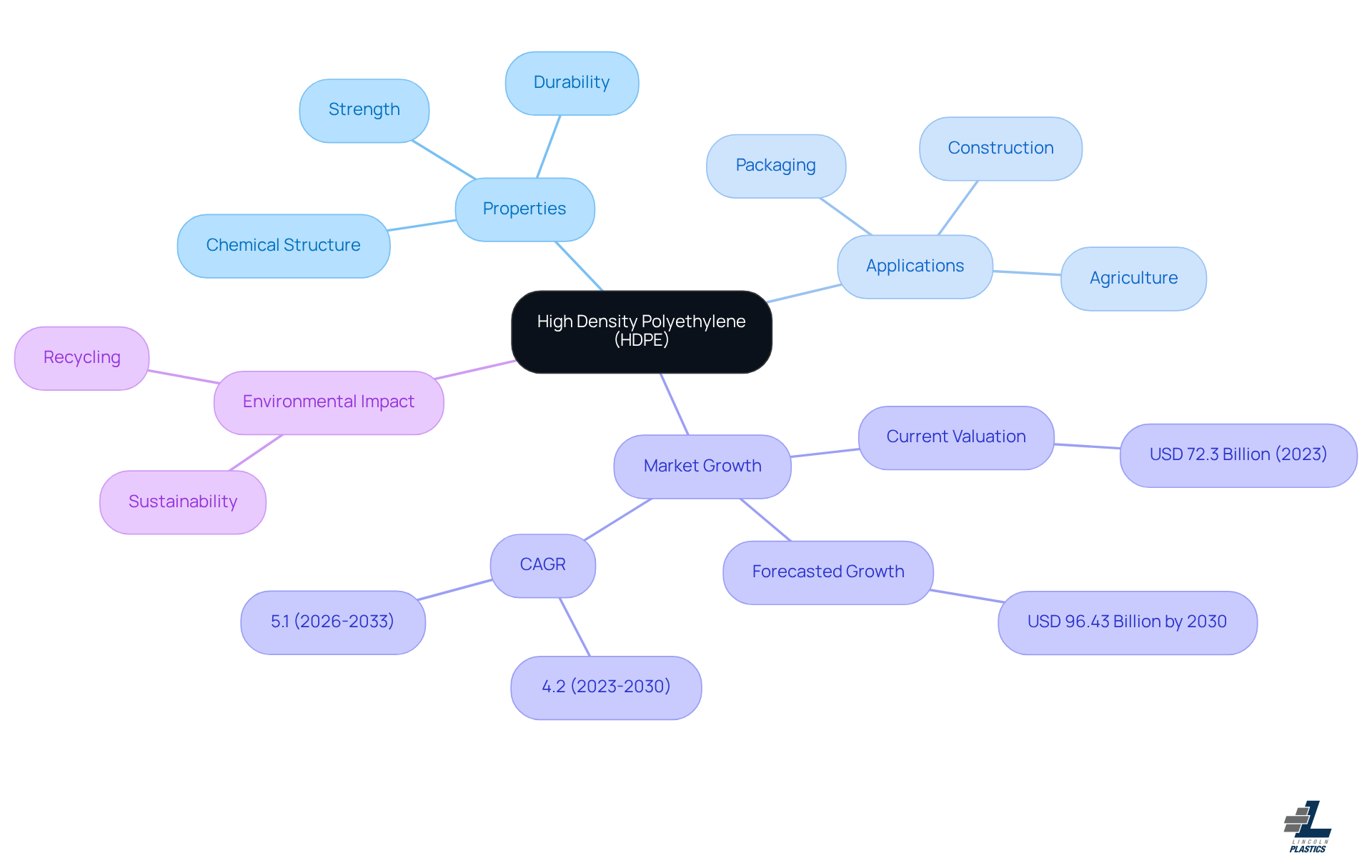
High density polyethylene plastic stands as a cornerstone in modern manufacturing, offering unmatched strength and versatility for a variety of applications. This thermoplastic polymer, derived from petroleum, is renowned for its high strength-to-density ratio, providing remarkable durability and impact protection. Have you considered how the chemical structure of high-density polyethylene contributes to its rigidity and environmental resistance? Created through the polymerization of ethylene, it displays a lightweight yet strong characteristic, making it a preferred choice across industries. Commonly classified as a Type 2 plastic, high density polyethylene plastic is extensively utilized in packaging, construction, and agricultural components due to its reliability.
Furthermore, the worldwide high-density polyethylene market was valued at approximately USD 72.3 billion in 2023, with forecasts suggesting an increase to nearly USD 96.43 billion by 2030. This growth is fueled by rising demand in sectors such as food and beverage packaging, pharmaceuticals, and construction. The market is anticipated to expand at a compound annual growth rate (CAGR) of 4.2% from 2023 to 2030, with a forecasted CAGR of 5.1% from 2026 to 2033, indicating the increasing use of high-density polyethylene in eco-friendly packaging solutions.
In addition, case studies emphasize the important role of high density polyethylene plastic in agriculture, particularly in the production of irrigation pipes and geomembranes. Its corrosion resistance and lightweight characteristics significantly enhance operational efficiency. As environmental regulations encourage sustainability, the demand for recycled high-density polyethylene is also on the rise, further reinforcing its significance across various sectors. According to industry experts, the increasing use of high density polyethylene plastic in the production of bottles, containers, carboys, and bags in the food and beverage sector is driving the demand for this essential product. As industries pivot towards sustainability, high-density polyethylene is not just a choice; it's becoming a necessity for future-focused solutions.
Trace the History and Development of HDPE
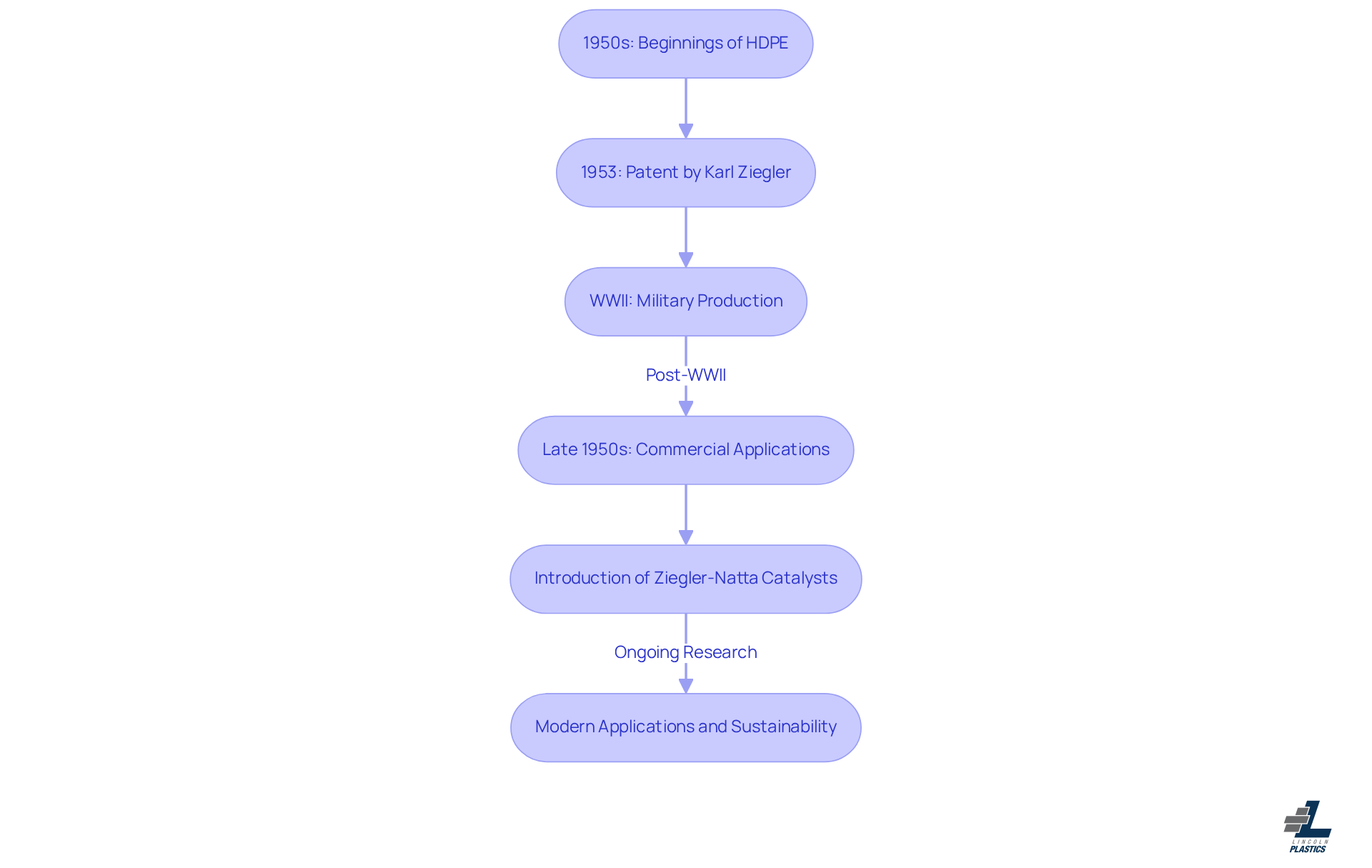
The journey of high density polyethylene plastic began in the 1950s, driven by groundbreaking research that transformed materials science forever. German chemist Karl Ziegler and his team at the Max Planck Institute pioneered the synthesis of high density polyethylene plastic, leading to its patenting in 1953. This marked a significant milestone in materials science, as high density polyethylene plastic quickly established its presence in applications like piping and containers, thanks to its exceptional strength and chemical resistance. Interestingly, during World War II, the production of polyethylene was designated for military purposes, delaying its commercial use until after the war.
Improvements in manufacturing methods and a deeper understanding of polymer chemistry further drove the creation of high density polyethylene plastic. The introduction of Ziegler-Natta catalysts revolutionized the production process, enabling the creation of stronger and more versatile materials. By the late 1950s, high density polyethylene plastic was being employed in a range of applications, including packaging and consumer goods, as its popularity soared.
Have you considered how products like plastic lumber made from high density polyethylene plastic showcase the material's potential for innovative applications? Over the years, the adaptability of high density polyethylene plastic has grown, resulting in its use across various sectors like construction, agriculture, and medical devices. The durability and recyclability of high density polyethylene plastic have made it a preferred choice for manufacturers looking for sustainable solutions.
As the industry evolves, ongoing research into biodegradable and bio-based polyethylene alternatives highlights a commitment to sustainability that could redefine manufacturing practices. The historical journey of high density polyethylene plastic not only underscores significant scientific advancements but also emphasizes its critical role in modern manufacturing and environmental considerations. As we look to the future, the evolution of high density polyethylene plastic will undoubtedly shape sustainable practices in manufacturing and beyond.
Examine the Key Properties and Characteristics of HDPE
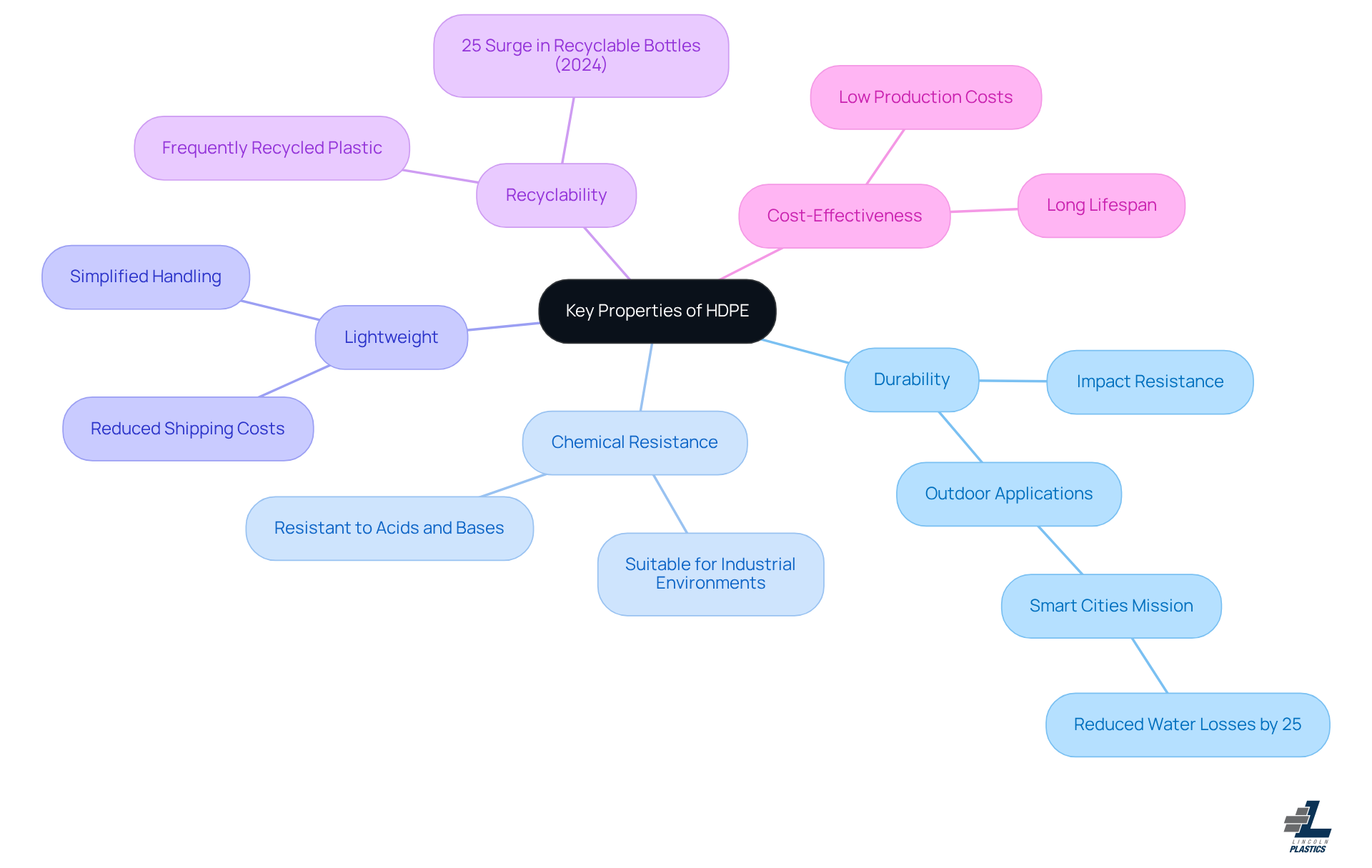
High density polyethylene plastic stands out as a top choice for industries demanding reliability and performance in their materials. Its key characteristics include:
- Durability: HDPE exhibits remarkable impact resistance and can endure harsh environmental conditions, making it particularly suitable for outdoor applications. For instance, under India’s Smart Cities Mission, high density polyethylene plastic pipes enabled by IoT were deployed, significantly reducing water losses by up to 25%, showcasing how such innovations can lead to cost savings and efficiency in operations.
- Chemical Resistance: This material is resistant to a wide range of chemicals, including acids and bases, allowing its use in industrial environments without risk of degradation.
- Lightweight: Despite its robust nature, high-density polyethylene is lightweight, which not only reduces shipping costs but also simplifies handling during installation.
- Recyclability: As one of the most frequently recycled plastics, high density polyethylene plastic plays a vital role in sustainability initiatives within manufacturing. The worldwide trend towards recyclable plastic bottles surged by 25% in 2024, reflecting a growing consumer preference for eco-friendly packaging solutions, which is increasingly important for manufacturers focused on sustainability and cost-effectiveness.
- Cost-Effectiveness: With low production costs and a long lifespan, high density polyethylene plastic presents a cost-effective option for manufacturers, contributing to overall operational efficiency.
With these impressive properties, how can high density polyethylene plastic not be a go-to choice for industries prioritizing durability and efficiency? Furthermore, the high density polyethylene plastic market is projected to grow significantly, reaching USD 88,776.2 million by 2033, highlighting its importance in purchasing decisions.
Explore Applications of HDPE in Various Industries
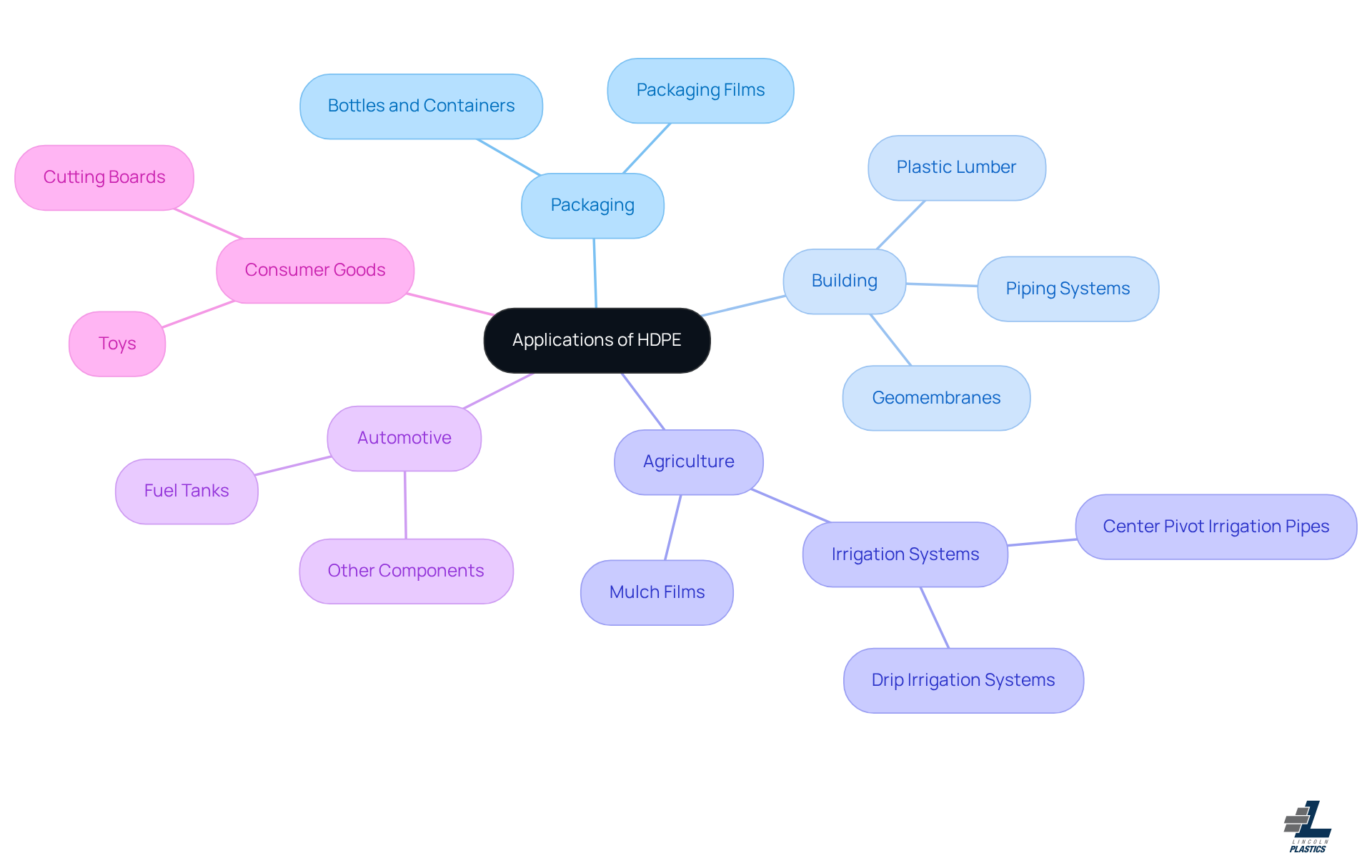
High density polyethylene plastic stands as a cornerstone material across diverse industries, known for its unmatched strength and versatility. Its applications are vast, including:
- Packaging: HDPE is widely used for manufacturing bottles, containers, and packaging films due to its strength and lightweight nature.
- Building: In the building sector, high density polyethylene plastic is utilized for piping systems, geomembranes, and plastic lumber, offering durability and protection against environmental factors.
- Agriculture: High density polyethylene plastic is utilized in irrigation systems, including center pivot irrigation pipes, because of its resistance to chemicals and UV light. At Lincoln Plastics, we collaborate closely with OEMs, ensuring our products not only meet but exceed quality standards through rigorous checks and balances.
- Automotive: The automotive sector utilizes high density polyethylene plastic for fuel tanks and other components, benefiting from its lightweight and durable properties.
- Consumer Goods: From toys to cutting boards, high density polyethylene plastic showcases its versatility in everyday products, making it a preferred choice for manufacturers. Furthermore, Lincoln Plastics' robust quality system ensures that every item meets critical specifications, with a dedicated quality book for each plastic profile, documenting essential dimensions throughout the manufacturing process.
With Lincoln Plastics' unwavering commitment to quality, you can trust that your high density polyethylene plastic products will meet the highest standards of performance and reliability.
Conclusion
High density polyethylene (HDPE) is more than just a material; it’s a game-changer for industries striving for innovation and efficiency. Its unique properties - durability, chemical resistance, and recyclability - make it essential for manufacturers aiming to boost operations and meet sustainability goals. As industries shift towards eco-friendly solutions, the significance of HDPE continues to grow, establishing it as a cornerstone in modern manufacturing.
Throughout this exploration, key insights have emerged regarding the historical development of HDPE, its remarkable characteristics, and its diverse applications. From its inception in the 1950s to its current role in sectors such as agriculture, automotive, and packaging, HDPE has proven its worth time and again. The ongoing advancements in manufacturing processes and the rising demand for sustainable materials further underscore the importance of high density polyethylene in today’s market.
As the landscape of manufacturing evolves, embracing high density polyethylene plastic is not merely a choice but a strategic necessity. Are you struggling to meet sustainability goals while maintaining efficiency? Industries are encouraged to leverage the advantages of HDPE, particularly through partnerships with experts like Lincoln Plastics, who are committed to quality and customer satisfaction. By prioritizing HDPE in production processes, businesses can not only enhance their operational efficiency but also contribute to a more sustainable future. Choosing HDPE isn’t just about materials; it’s about positioning your business for success in a sustainable future.
Frequently Asked Questions
What is high density polyethylene (HDPE)?
High density polyethylene (HDPE) is a thermoplastic polymer derived from petroleum, known for its high strength-to-density ratio, durability, and impact protection. It is lightweight yet strong, making it suitable for various applications.
What are the common uses of HDPE?
HDPE is extensively used in packaging, construction, and agricultural components due to its reliability. It is commonly found in products such as bottles, containers, carboys, and bags, particularly in the food and beverage sector.
How is HDPE produced?
HDPE is created through the polymerization of ethylene, which contributes to its rigidity and environmental resistance.
What is the market outlook for HDPE?
The worldwide HDPE market was valued at approximately USD 72.3 billion in 2023 and is expected to grow to nearly USD 96.43 billion by 2030, with a compound annual growth rate (CAGR) of 4.2% from 2023 to 2030.
What factors are driving the demand for HDPE?
The demand for HDPE is driven by its applications in food and beverage packaging, pharmaceuticals, and construction, as well as the increasing focus on eco-friendly packaging solutions and sustainability.
What role does HDPE play in agriculture?
In agriculture, HDPE is important for the production of irrigation pipes and geomembranes, enhancing operational efficiency due to its corrosion resistance and lightweight characteristics.
How is the trend towards sustainability affecting HDPE?
As environmental regulations promote sustainability, the demand for recycled HDPE is rising, reinforcing its significance across various sectors and making it a necessity for future-focused solutions.
List of Sources
- Define High Density Polyethylene (HDPE)
- High Density Polyethylene (HDPE) Market Size & Trends, 2033 (https://coherentmarketinsights.com/industry-reports/high-density-polyethylene-hdpe-market)
- Growth Potential of the High-density Polyethylene Market: Trend Analysis and Forecasted CAGR of 12%, 2026-2033 (https://linkedin.com/pulse/growth-potential-high-density-polyethylene-aydae)
- High Density Polyethylene Market: Global Industry Analysis and Forecast (2024-2030) Trends, Statistics, Dynamics, Segmentation by Application, End-user Industry, and Regions (https://maximizemarketresearch.com/market-report/global-high-density-polyethylene-market/22353)
- Global High Density Polyethylene (HDPE) Market to Reach USD 119.7 Billion by 2034 (https://imarcgroup.com/global-high-density-polythylene-market)
- Worldwide High Density Polyethylene (HDPE) Industry to 2026 - Players Include Braskem, Reliance Industries & Formosa Plastics Among Others (https://finance.yahoo.com/news/worldwide-high-density-polyethylene-hdpe-104800577.html)
- Trace the History and Development of HDPE
- Virgin resin disruptions lead to higher prices for recycled HDPE (https://plasticsnews.com/resin-prices/pn-2026-recycled-resin-may-wrapup)
- What is the history of Polyethylene? (https://plextrusions.com/materials/polyethylene/what-is-the-history-of-polyethylene)
- HDPE History: It Started With Hula Hoops (https://tedium.co/2024/05/26/hdpe-plastics-history)
- HDPE’s History, Background and Supporting Organizations (https://blog.unitedpolysystems.com/blog/hdpe-history-background-and-supporting-organizations?hs_amp=true)
- Regarding the history and development process of HDPE pipes - Haode (https://haodehdpe.com/news/regarding-the-history-and-development-process-of-hdpe-pipes)
- Examine the Key Properties and Characteristics of HDPE
- High Density Polyethylene (HDPE) Market Size & Trends, 2033 (https://coherentmarketinsights.com/industry-reports/high-density-polyethylene-hdpe-market)
- Highdensity Polyethylene HDPE Market 2026 to 2034 (https://intelmarketresearch.com/global-high-density-polyethylene-forecast-market-26272)
- HDPE Pipe Industry 2026: Market Expansion, Strategic Consolidation, And The Drive Toward Century-Span Infrastructure - News - Huajin (https://huajinwelder.com/news/hdpe-pipe-industry-2026-market-expansion-str-85570776.html)
- Explore Applications of HDPE in Various Industries
- HDPE in Agriculture: Boosting Crop Yields with High-Tech Plastics (https://beeplastic.com/blogs/plastic-insights/hdpe-in-agriculture-boosting-crop-yields-with-high-tech-plastics?srsltid=AfmBOorC2us4KlAA6kL4rygQqXHnAwBB87g4WHc-hLRC4u12pIQlFyLO)
- High Density Polyethylene (HDPE) Market Size & Trends, 2033 (https://coherentmarketinsights.com/industry-reports/high-density-polyethylene-hdpe-market)
- High-density Polyethylene (HDPE) Market Size, Growth Trends 2035 (https://researchnester.com/reports/high-density-polyethylene-hdpe-market/8353)
Related posts

Discover the key benefits of ISO certified plastic extrusion services for reliability and efficiency.


Discover the diverse applications of plastic tubing PVC across industries, enhancing efficiency and safety.
Master the installation and benefits of strain relief clamps for range cords to enhance safety and reliability.
