

What is Extruded Tubing? Definition, Types, and Applications
Introduction
Extruded tubing might not be the first thing that comes to mind, but it’s actually a pretty fascinating component that plays a crucial role in a bunch of industries. This versatile product, made through the extrusion process, packs a unique punch with its strength, customization, and adaptability. It’s indispensable in everything from automotive applications to medical devices.
But with so many types and uses out there, how do you figure out which one is right for your specific needs? Exploring the ins and outs of extruded tubing not only reveals its manufacturing secrets but also shows just how significant it is across multiple sectors. So, let’s dive in and uncover what makes this product so essential!
Define Extruded Tubing: Understanding Its Core Concept
Have you ever thought about how those products are made? Well, that’s where extruded tubing comes in! It’s produced through a process called extrusion, where raw materials - mostly plastics - are heated up and pushed through a die to create a continuous profile. This method results in tubing that has strength and can be made to any length you need, making it super versatile for all sorts of applications.
But it gets better! The extrusion process increases the strength of the material while also allowing for customization. This means they can meet the specific requirements of various industries. Understanding this basic concept is key, as it sets the stage for exploring the applications that come next. So, let’s dive in and see what’s out there!

Explore the Manufacturing Process of Extruded Tubing
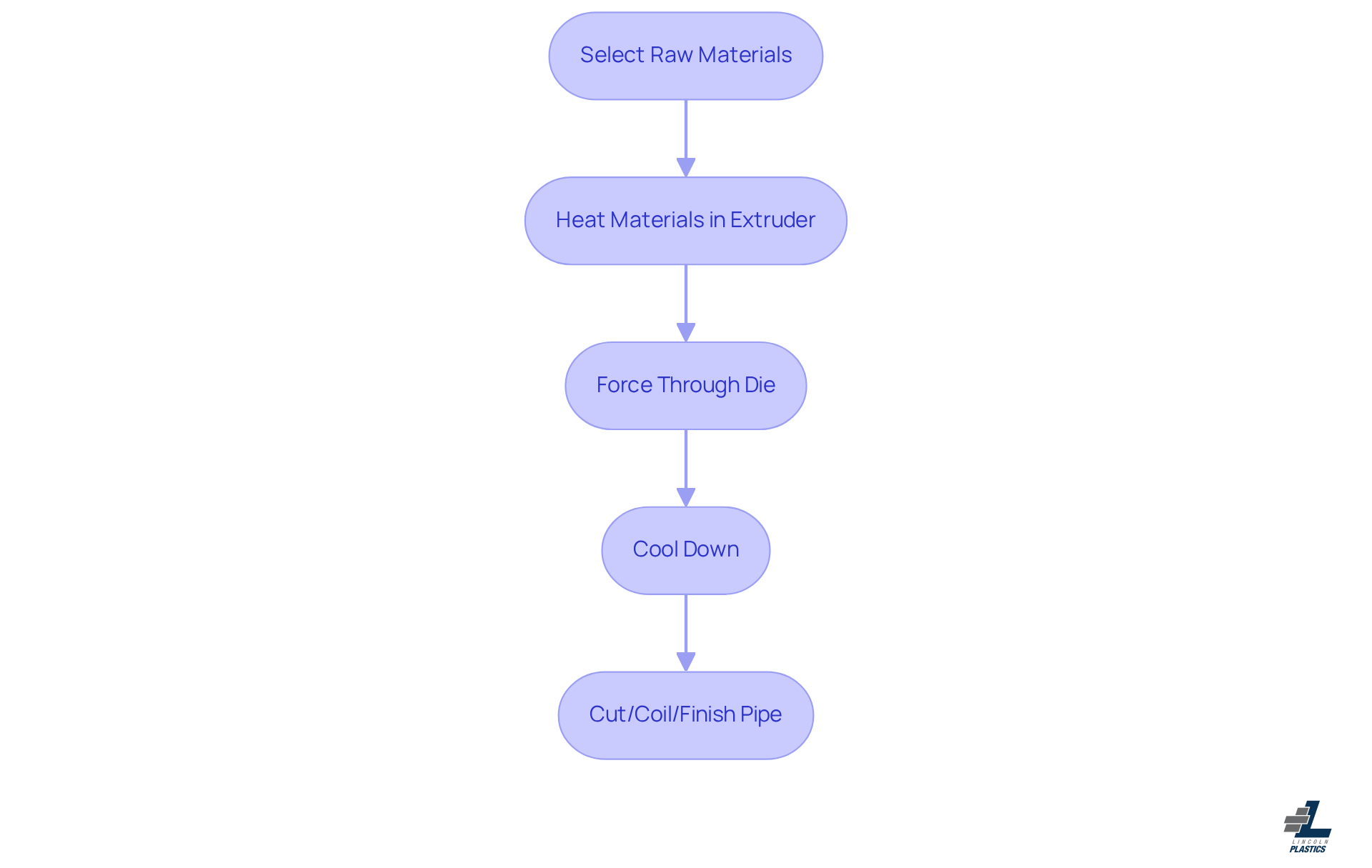
At Lincoln Plastics, we kick off the manufacturing process of our extruded tubing by carefully selecting raw materials, usually in the form of pellets or granules. You might be surprised to learn that these materials can include a variety of plastics. Once we have our materials ready, they go into an extruder, where they’re heated up to a molten state - think temperatures between 200 and 275°C, depending on the polymer we’re using.
Now, when the material hits that sweet spot of viscosity, it’s forced through a die that shapes it into the tube profile you need. After it exits the die, the newly formed pipe cools down, often with the help of water baths or air cooling systems. This step is super important for solidifying its shape and ensuring it’s dimensionally accurate. Why is that crucial? Well, plastics don’t conduct heat very well, so cooling is essential.
Once cooled, we might cut, coil, or finish the surface of the pipe to meet your specific requirements. This detailed approach guarantees that our product complies with strict control standards, making it perfect for a wide range of applications - think plumbing, irrigation, and electrical conduit systems.
And hey, if you’re looking for something custom, we’ve got you covered! At Lincoln Plastics, we offer expert guidance on design specifications, ensuring your specifications are optimized for manufacturing. Our commitment to quality and collaboration with OEMs means that every product we create meets the highest standards. So, let’s chat about how we can help you with your next project!
Examine Applications of Extruded Tubing in Diverse Industries
Extruded pipe is a big deal in a bunch of industries, and it really shows how adaptable and effective it can be. Take the automotive industry, for instance. It’s crucial for making fuel lines, air conditioning systems, and protective covers. The resistance to environmental factors make them a go-to choice for these applications, ensuring safety and efficiency in how vehicles operate.
You might be surprised to learn that extruded tubing is used in cooling systems. This little tweak can really enhance vehicle performance and longevity. And speaking of quality, Lincoln Plastics works closely with OEMs to make sure that every hose they produce meets strict standards. They even use various check gauges to ensure everything fits just right for its intended use.
Now, let’s talk about material factors. Strength, weight, and corrosion resistance are super important when choosing tubing. But it doesn’t stop there! Tubing is also used in the medical field, where they’re used for catheters, drug delivery systems, and various medical device components. Precision and reliability are key here.
In construction, these pipes are essential too, serving various purposes. This really enhances safety and operational efficiency. And let’s not forget other sectors like food and beverage, aerospace, and telecommunications. They all benefit from the unique characteristics of shaped pipes, solidifying their status as a crucial component across diverse applications.
As industries increasingly focus on personalization and regulatory compliance, the demand for extruded tubing is on the rise. This is driving innovation and assurance in manufacturing processes. Lincoln Plastics is committed to ensuring that their products meet critical dimensions through a solid quality system, complete with dedicated quality documentation and in-process checks.

Identify Types of Extruded Tubing: Rigid vs. Flexible
When it comes to extruded tubing, you’ve got two main types: rigid and flexible. Rigid pipes are all about strength and durability, making them perfect for plumbing and structural components. Think of materials like PVC - they’re tough and can handle a lot of wear and tear from the environment.
Now, let’s talk about flexible tubing. These are designed to bend and twist, which makes them great for things like electrical wiring, medical devices, and pneumatic systems. Companies like Lincoln Plastics create these from materials like polyethylene or rubber, giving you the adaptability you need for installation and use.
Lincoln Plastics really shines when it comes to custom solutions, like flexible cord covers and protective options. They ensure that the extrusions are tailored to protect your business needs. Understanding the differences between these types of pipes is key when selecting the right type for your specific applications. And don’t forget about the expertise and innovation that Lincoln Plastics brings to the table! So, what are you waiting for? Dive into the world of extruded pipes and find the perfect fit for your project!

Conclusion
Extruded tubing is pretty amazing, right? It’s a game-changer in manufacturing, offering a flexible solution for all sorts of applications across different industries. Thanks to the extrusion process, manufacturers can whip up hollow tubes that not only keep their dimensions consistent but also meet specific needs, boosting their functionality and durability. This adaptability makes extruded tubing a must-have in fields like automotive, medical, construction, and so much more.
Now, let’s talk about how it’s made. The article dives into the manufacturing process, highlighting how crucial material selection, temperature control, and quality assurance are. It also breaks down the two main types of extruded tubing - rigid and flexible - each designed for unique purposes based on their material properties and intended uses. Plus, the discussion on the various applications of extruded tubing really shows how it plays a vital role in improving operational efficiency and safety across different sectors.
As industries keep evolving and looking for more tailored solutions, the importance of extruded tubing becomes even clearer. By embracing innovation in manufacturing and understanding what each sector needs, we can drive growth and ensure products meet top-notch quality and performance standards. Exploring the world of extruded tubing opens up endless possibilities for enhancing designs and boosting functionality in countless applications. So, why not dive in and see how it can work for you?
Frequently Asked Questions
What is extruded tubing?
Extruded tubing is a hollow tube produced through a process called extrusion, where raw materials, primarily plastics, are heated and pushed through a die to create a continuous profile.
How is extruded tubing made?
It is made by heating raw materials and pushing them through a die, which shapes the material into a continuous tube with consistent cross-sections.
What are the advantages of the extrusion process for tubing?
The extrusion process increases the strength of the tubing and allows for customization in dimensions, colors, and material properties.
What applications can extruded tubing be used for?
Extruded tubing is versatile and can be used for a variety of applications across different industries due to its customizable features.
Why is understanding extruded tubing important?
Understanding extruded tubing is key to exploring its various uses and forms in different industries.
List of Sources
- Define Extruded Tubing: Understanding Its Core Concept
- rocalextrusions.co.uk (https://rocalextrusions.co.uk/news/everything-you-need-to-know-about-extruded-tubing)
- Understanding the Extrusion Process in Manufacturing: Key Insights (https://lincoln-plastics.com/news-post/understanding-the-extrusion-process-in-manufacturing-key-insights)
- Plastics Extrusion: 4 Critical Statistics to Track for Increased Quality & Plant Profit (https://gaugeadvisor.com/2025/05/26/plastics-extrusion-4-critical-statistics-to-track-for-increased-quality-plant-profit)
- How to Collect & Interpret Process Data in Extrusion (https://ptonline.com/articles/how-to-collect-interpret-process-data-in-extrusion-part-1(2))
- mymicrotube.com (https://mymicrotube.com/news/what-is-extrusion-tubing.html)
- Explore the Manufacturing Process of Extruded Tubing
- Understanding the Extrusion Process in Manufacturing: Key Insights (https://lincoln-plastics.com/news-post/understanding-the-extrusion-process-in-manufacturing-key-insights)
- Plastic Extrusion Explained | Fictiv (https://fictiv.com/articles/plastic-extrusion-explained)
- rocalextrusions.co.uk (https://rocalextrusions.co.uk/news/everything-you-need-to-know-about-extruded-tubing)
- aptyx.com (https://aptyx.com/case-studies)
- Case Studies (https://hitechextrusions.com/case-studies)
- Examine Applications of Extruded Tubing in Diverse Industries
- paulmurphyplastics.com (https://paulmurphyplastics.com/extruded-plastic-case-studies)
- linkedin.com (https://linkedin.com/pulse/extruded-tubes-real-world-5-uses-youll-actually-see-2025-quick-dohie)
- Identify Types of Extruded Tubing: Rigid vs. Flexible
- rocalextrusions.co.uk (https://rocalextrusions.co.uk/news/everything-you-need-to-know-about-extruded-tubing)
- The Complete Guide to Extruded Tubing | High-Volume Plastic Profile Extrusion with In-House Tooling|Custom Profile (https://custom-profile.com/blog/the-complete-guide-to-extruded-tubing)
- The Extrusion Industry in 2025: Innovations, Trends, and Opportunities (https://plextrusions.com/extrusion-blog/the-extrusion-industry-in-2025-innovations-trends-and-opportunities)
- Exploring Modern Applications of Plastic Extrusion (https://paulmurphyplastics.com/industry-news-blog/exploring-modern-applications-of-plastic-extrusion)
Related posts

Right-Sized Production Runs: Flexibility Without the Waste
Lincoln Plastics offers right-sized production runs with a 10-hour minimum — balancing efficiency with flexibility so OEMs avoid oversized orders.


Co-Extrusion: Combining Two Materials for Better Performance
Lincoln Plastics offers co-extrusion, combining two plastics into a single profile for greater design freedom, performance, and cost savings.
Beyond Extrusion: Value-Added Services That Simplify Production
Beyond Extrusion: Value-Added Services That Simplify Production
