
What Are the Types of Plastic Tubing and Their Key Features?
Introduction
Choosing the right plastic tubing is crucial for industries that depend on efficient fluid transport and electrical protection. With so many options available, selecting the right tubing can be overwhelming. Let’s explore the key features of different plastic tubing types together, focusing on their applications and the critical role they play in enhancing operational efficiency and safety in your industry.
Define Plastic Tubing: Understanding Its Purpose and Importance
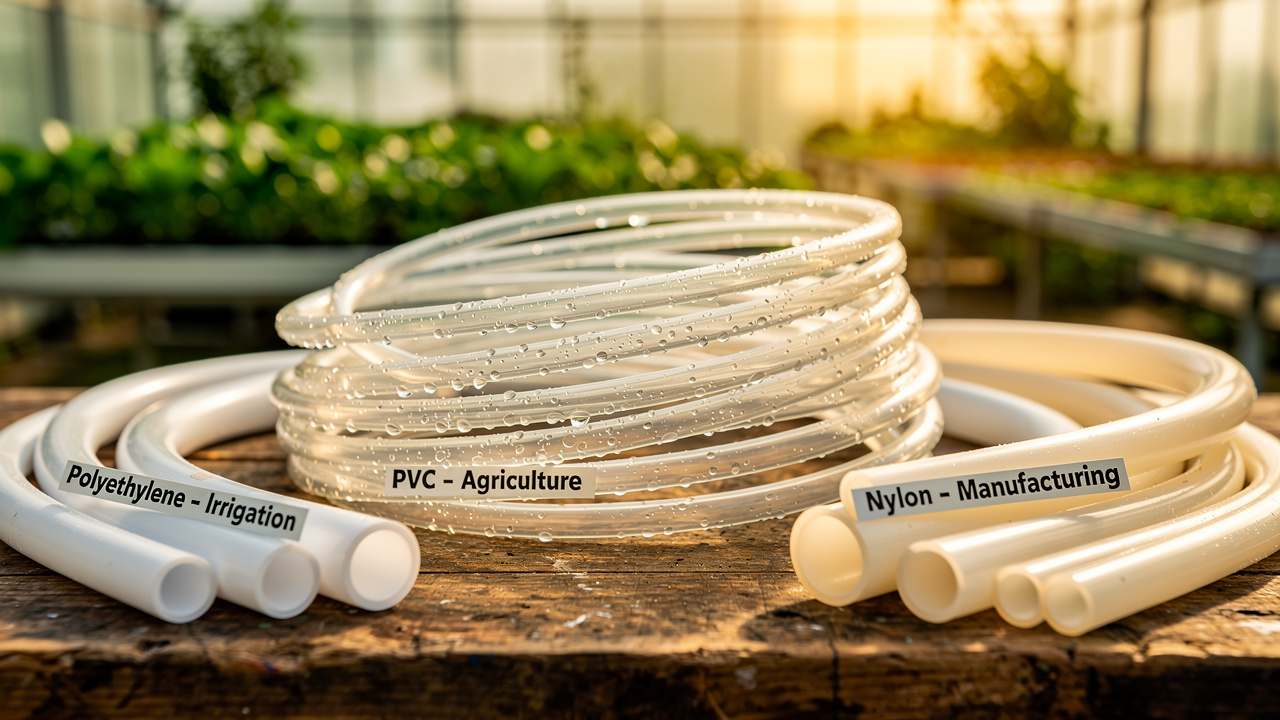
In an era where efficiency and sustainability are paramount, synthetic piping emerges as a game-changer for industries reliant on fluid transport. These hollow cylindrical forms, which are types of plastic tubing made from various polymer substances, are designed to convey liquids and gases or protect electrical wires. Lightweight, corrosion-resistant, and customizable, synthetic piping is essential for various industries, especially in agriculture and manufacturing.
In farming, types of plastic tubing play a vital role in irrigation systems, delivering fluids directly to plant roots. This method not only conserves resources but also boosts crop yields, addressing the pressing challenges of scarcity and climate change. Have you considered how much water you could save? Farmers using these systems report savings of up to 50%, highlighting both economic and environmental advantages. Specialized plastic components, like subsurface drip irrigation systems, provide liquid precisely where needed, significantly reducing evaporation and weed growth. Lincoln Plastics' co-extrusion capabilities allow for the creation of multi-color or multi-material profiles, enhancing customization options for specific agricultural applications.
In manufacturing, types of plastic tubing serve as channels for pneumatic systems, ensuring the safe and efficient transport of air and gases. The adaptability of synthetic conduits enables tailored solutions that meet specific operational needs, improving safety and efficiency in production processes. Our robust quality management program, certified to ISO 9001:2015, includes dedicated quality plans and in-process checks to guarantee precision and compliance.
Case studies illustrate the importance of synthetic pipes in agriculture. For instance, custom extruded polymer pipes have been utilized for automated crop irrigation, allowing farmers to optimize water delivery based on environmental conditions. This innovation not only enhances resource management but also leads to increased harvests.
Understanding the types of plastic tubing and their purpose is crucial for recognizing how synthetic conduits enhance efficiency and safety in different industries. As industries continue to evolve, the demand for reliable and efficient plastic conduit solutions will only grow. Lincoln Plastics stands ready to lead the charge in delivering exceptional synthetic piping tailored to your needs.

Explore Types of Plastic Tubing: Categories and Applications
In the world of custom plastic extrusion, understanding the diverse types of plastic tubing is crucial for optimizing performance and safety. Plastic pipes can be categorized into various types of plastic tubing based on material and use, each fulfilling unique roles vital for different industries. Key types include:
- Polyethylene (PE) Tubing: Renowned for its flexibility and durability, PE tubing is extensively utilized in agricultural irrigation systems and fluid transport, ensuring efficient water delivery and management.
- Polyvinyl Chloride (PVC) Tubing: This type is favored for its chemical resistance, making it a common choice in plumbing and electrical uses, where reliability and safety are paramount.
- Nylon Hose: Recognized for its durability and resistance to wear, nylon hose is often utilized in pneumatic systems and automotive uses, delivering strong performance in challenging environments.
- Silicone Hose: With its flexibility and heat resistance, silicone hose is perfect for medical uses and food processing, ensuring safety and adherence to health standards.
- Polyurethane Tubing: This type provides outstanding flexibility and is frequently utilized in scenarios demanding high abrasion resistance, such as robotics and automation, improving operational efficiency.
Choosing the right pipe material can be daunting, especially with so many options available. Making the right choice not only enhances performance but also ensures safety in your projects.

Examine Manufacturing Processes: How Plastic Tubing is Made
The extrusion process stands as a cornerstone in the production of synthetic materials, enabling the creation of high-quality, customized types of plastic tubing. Understanding the extrusion process involves several critical steps that ensure the production of reliable and high-quality tubing:
- Material Selection: Choosing the right resin, such as PVC, PE, or nylon, is essential as it directly influences the tubing's properties, including flexibility, durability, and resistance to environmental factors.
- Melting: The chosen material is heated until it attains a molten state, allowing it to be molded into the desired shape.
- Extrusion: The molten plastic is then pushed through a die, forming the tube's specific shape and diameter. Advanced extrusion technologies allow for precise control over the dimensions and properties of the final product, ensuring optimal production efficiency and quality.
- Cooling: After extrusion, the pipe is cooled using water baths or air cooling systems, solidifying its shape and ensuring dimensional stability.
- Cutting and Finishing: Once cooled, the pipe is cut to specified lengths. Additional processes, such as printing or surface treatment, may be applied to enhance functionality and aesthetics.
What makes the extrusion process truly remarkable is its efficiency and ability to produce high-quality pipes, which include different types of plastic tubing tailored to specific applications. For instance, modern extrusion lines can achieve output rates of up to 2000 kg/hour for large-diameter products, significantly improving manufacturing efficiency. Quality control measures are implemented throughout the process to ensure that the final products meet stringent industry standards for strength, durability, and appearance. Without a thorough understanding of these manufacturing methods, companies risk compromising the quality and reliability of their piping solutions.

Identify Key Characteristics: Properties of Plastic Tubing
Choosing the right types of plastic tubing is crucial for ensuring optimal performance across diverse applications, yet many face challenges in making the best selection. Plastic tubing is characterized by several essential properties that significantly influence its performance:
- Flexibility: Tubing types such as polyethylene and silicone are renowned for their high flexibility, making them ideal for applications that require bending and maneuverability. This flexibility is particularly beneficial in medical devices, where precise routing is necessary. For example, the adaptability of polyethylene pipes has been shown in various irrigation systems, enabling effective water distribution while reducing breakage.
- Chemical Resistance: Types of plastic tubing, including materials like PVC and nylon, exhibit excellent resistance to a wide range of chemicals, making them suitable for use in industrial and laboratory environments. This characteristic ensures that the pipe can withstand exposure to harsh substances without degrading.
- Temperature Tolerance: Different types of plastic tubing can endure varying temperature ranges. For instance, silicone hoses can endure extreme temperatures, which is essential for medical uses that involve sterilization processes. This temperature tolerance has proven essential in medical devices, where maintaining integrity under heat is paramount.
- Durability: The types of plastic tubing made from nylon and polyurethane offer outstanding abrasion resistance, ensuring longevity even in demanding conditions. This durability is essential for uses in automotive and industrial environments where wear and tear are frequent.
- Lightweight: Compared to metal alternatives, types of plastic tubing are generally lighter, facilitating easier handling and installation. This property is particularly advantageous in sectors such as agriculture and office management, where efficiency is key.
When it comes to selecting types of plastic tubing for specific applications, understanding these traits is vital for achieving optimal performance and reliability. At Lincoln Plastics, we’re here to guide you through custom pipe and tube design, ensuring you make informed choices that fit your needs perfectly. We can assist in material selection based on application needs and provide material specification sheets to support informed decisions. Our commitment to quality is underscored by our ISO 9001:2015 certification and rigorous quality management program, which includes dedicated quality plans and in-process checks. Furthermore, our co-extrusion capabilities allow for the creation of multi-color or multi-material profiles, enhancing product offerings. Our Vendor Managed Inventory (VMI) solutions enable clients to maintain optimal inventory levels, ensuring they stay within their required min-max ranges. The adaptable synthetic conduit market is anticipated to attain around USD 25 billion by 2033, expanding at a CAGR of 6.5%. The healthcare industry's expansion, driven by the increasing demand for medical devices, further underscores the importance of these properties in meeting market needs. Sustainability concerns are also driving demand for eco-friendly plastic tubing solutions, aligning with current market dynamics and customer preferences. Additionally, manufacturers face challenges such as rising raw material costs and supply chain disruptions, which are critical considerations for OEM Purchasing Managers. As the market evolves, understanding these properties will be key to staying competitive and meeting the demands of your industry.

Conclusion
Selecting the right plastic tubing is not just important; it’s essential for optimizing performance across various industries. These synthetic conduits play a critical role in fluid transport and protection, making them indispensable in sectors such as agriculture and manufacturing. Choosing the right tubing based on its properties - like flexibility, chemical resistance, and durability - is crucial for ensuring that applications are not only efficient but also safe.
Throughout this article, we’ve explored the diverse categories of plastic tubing, highlighting materials such as polyethylene, PVC, nylon, silicone, and polyurethane. Each type serves unique functions tailored to specific industrial needs, from irrigation systems that conserve water to pneumatic systems that enhance operational efficiency. The extrusion process, a cornerstone of plastic tubing production, guarantees that these products meet rigorous quality standards, supported by Lincoln Plastics' ISO 9001:2015 certification and comprehensive quality management plans.
As industries continue to evolve, this growing demand necessitates proactive measures to ensure quality and reliability in plastic tubing solutions. Why settle for less? Contact Lincoln Plastics experts for tailored solutions that meet your specific requirements, ensuring your projects benefit from the highest quality standards and innovative designs. By choosing Lincoln Plastics, you’re not just meeting industry standards; you’re setting them.
Frequently Asked Questions
What is plastic tubing and what is its purpose?
Plastic tubing is a hollow cylindrical form made from various polymer substances, designed to convey liquids and gases or protect electrical wires. It is essential for industries reliant on fluid transport, particularly in agriculture and manufacturing.
How does plastic tubing benefit the agriculture industry?
In agriculture, plastic tubing is crucial for irrigation systems, delivering fluids directly to plant roots. This method conserves resources and boosts crop yields, with farmers reporting water savings of up to 50%. Specialized components like subsurface drip irrigation systems reduce evaporation and weed growth.
What are the advantages of using synthetic piping in manufacturing?
In manufacturing, synthetic piping serves as channels for pneumatic systems, ensuring safe and efficient transport of air and gases. Its adaptability allows for tailored solutions that improve safety and efficiency in production processes.
How does Lincoln Plastics enhance customization for agricultural applications?
Lincoln Plastics' co-extrusion capabilities allow for the creation of multi-color or multi-material profiles, providing enhanced customization options for specific agricultural applications.
What quality management practices does Lincoln Plastics implement?
Lincoln Plastics has a robust quality management program certified to ISO 9001:2015, which includes dedicated quality plans and in-process checks to ensure precision and compliance.
Can you provide an example of how plastic tubing is used in agriculture?
Custom extruded polymer pipes have been utilized for automated crop irrigation, allowing farmers to optimize water delivery based on environmental conditions, enhancing resource management and increasing harvests.
Why is understanding plastic tubing important for industries?
Understanding the types of plastic tubing and their purposes is crucial for recognizing how synthetic conduits enhance efficiency and safety across different industries, as the demand for reliable plastic conduit solutions continues to grow.
How can I get in touch with Lincoln Plastics for tailored solutions?
Interested parties can contact Lincoln Plastics experts for quotes or tailor-made solutions to meet their specific needs in synthetic piping.
List of Sources
- Define Plastic Tubing: Understanding Its Purpose and Importance
- Agriculture and Extruded Plastic Tubing | Inplex Custom Extruders (https://inplexllc.com/blog/inplex-for-agriculture)
- The Versatility of Plastic Tubing in Modern Industries (https://paulmurphyplastics.com/industry-news-blog/the-versatility-of-plastic-tubing-in-modern-industries)
- Maximize Growth Using Custom Plastic Greenhouse Solutions (https://hansenplastics.com/revolutionizing-farm-irrigation-advancements-in-plastic-system-components)
- Why Plastic Tubing Industries Are Essential for Modern Manufacturing (https://lincoln-plastics.com/news-post/why-plastic-tubing-industries-are-essential-for-modern-manufacturing)
- Proper use of polytubing can save billions of gallons of water (https://farmprogress.com/management/proper-use-of-polytubing-can-save-billions-of-gallons-of-water)
- Explore Types of Plastic Tubing: Categories and Applications
- Built to Last and Evolve: The Trends, Challenges and Opportunities for PVC Piping Solutions (https://pipelife.com/service/news-and-projects/2023/built-to-last-and-evolve-the-trends-challenges-and-opportunities-for-pvc-piping-solutions.html)
- Plastics can be used more sustainably in agriculture - Communications Earth & Environment (https://nature.com/articles/s43247-023-00982-4)
- Why Plastic Tubing Industries Are Essential for Modern Manufacturing (https://lincoln-plastics.com/news-post/why-plastic-tubing-industries-are-essential-for-modern-manufacturing)
- Plastic Tubing, Extrusions, and Profiles for Agriculture- Inline Plastics, Inc. (https://inlineplasticsinc.com/industries/agriculture)
- Examine Manufacturing Processes: How Plastic Tubing is Made
- Why Plastic Tubing Industries Are Essential for Modern Manufacturing (https://lincoln-plastics.com/news-post/why-plastic-tubing-industries-are-essential-for-modern-manufacturing)
- The Manufacturing Process Behind Plastic Tubing (https://paulmurphyplastics.com/industry-news-blog/the-manufacturing-process-behind-plastic-tubing)
- Shaping the Future: Innovations in Plastic Extrusion Techniques - SeaGate Plastics Company (https://seagateplastics.com/shaping-the-future-innovations-in-plastic-extrusion-techniques)
- Leading Innovation: Top Plastic Pipe Extrusion Line Manufacturer Advances Industry Standards (https://news-journalonline.com/press-release/story/25158/leading-innovation-top-plastic-pipe-extrusion-line-manufacturer-advances-industry-standards)
- Identify Key Characteristics: Properties of Plastic Tubing
- Flexible Plastic Tubing an Hoses Market Size, Key Forecast Trends, Players & Segments 2033 (https://linkedin.com/pulse/flexible-plastic-tubing-hoses-market-size-key-forecast-7ztte)
- Flexible Plastic Tubing Market Size, Future Growth and Forecast 2033 (https://strategicrevenueinsights.com/industry/flexible-plastic-tubing-market)
- Why Plastic Tubing Industries Are Essential for Modern Manufacturing (https://lincoln-plastics.com/news-post/why-plastic-tubing-industries-are-essential-for-modern-manufacturing)
- Plastic Tubing (https://paulmurphyplastics.com/industry-news-blog/plastic-tubing)
Related posts

Discover the key benefits of ISO certified plastic extrusion services for reliability and efficiency.


Discover the diverse applications of plastic tubing PVC across industries, enhancing efficiency and safety.
Master the installation and benefits of strain relief clamps for range cords to enhance safety and reliability.
