
What Are the Key Properties of Plastic That Enhance Its Utility?
Introduction
Plastic's versatility is revolutionizing modern manufacturing, making it essential across diverse industries. Its unique properties - durability, flexibility, and chemical resistance - enhance OEM machinery and equipment functionality. This drives innovation in agriculture and construction. However, manufacturers face the challenge of balancing plastic's advantages with the need for eco-friendly solutions. We will explore the key properties of plastic that elevate its utility, examining their implications for industrial applications and the future of manufacturing.
Define Plastic: Composition and Structure
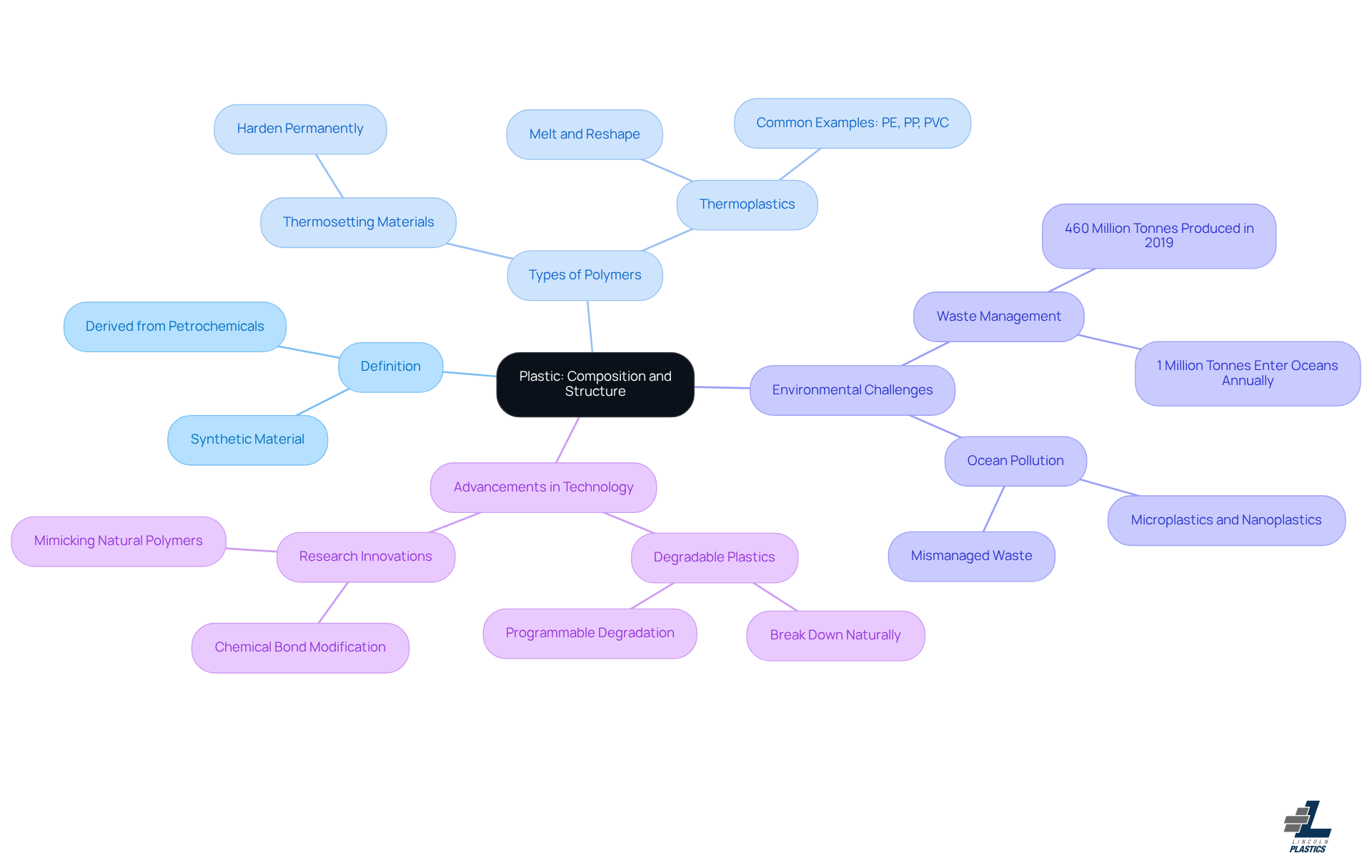
The evolution of plastic technology has revolutionized industries, but it also presents pressing environmental challenges that demand our attention. Plastic is a synthetic material made from polymers-long chains of molecules typically derived from petrochemicals. The two primary types of polymers are thermoplastics and thermosetting materials. Thermoplastics can be melted and reshaped multiple times, while thermosetting materials harden permanently after being formed. Common varieties of polymers include polyethylene (PE), polypropylene (PP), and polyvinyl chloride (PVC). Understanding the composition and structure of synthetic materials is crucial for addressing their environmental impact and enhancing their utility in modern manufacturing.
Recent advancements in polymer technology have led to the creation of materials that can break down naturally under everyday conditions, addressing environmental concerns associated with conventional materials. Researchers have developed materials that can decompose within days under certain conditions, sharply contrasting with traditional substances that simply break into microfragments. Yuwei Gu, an assistant professor at Rutgers University, highlights, "We aimed to find a new chemical method that allows materials to decompose naturally under everyday conditions, without needing special treatments."
Furthermore, the production of synthetic materials has surged over the last two decades, exceeding 460 million tonnes in 2019, underscoring the urgent need for effective waste management strategies. It is estimated that around 1 million tonnes of synthetic materials enter the oceans annually, emphasizing the critical need for recycling and waste management solutions. Addressing these challenges is not just an option; it’s a necessity for a sustainable future in manufacturing and beyond.
Contextual Importance of Plastic in Modern Applications
In an era where efficiency and sustainability are paramount, the role of plastic in automotive and construction applications cannot be overstated. When considering what are 3 properties of plastic that make it a useful material, its lightweight nature, durability, and resistance to corrosion stand out as key factors that make it a top choice across many applications.
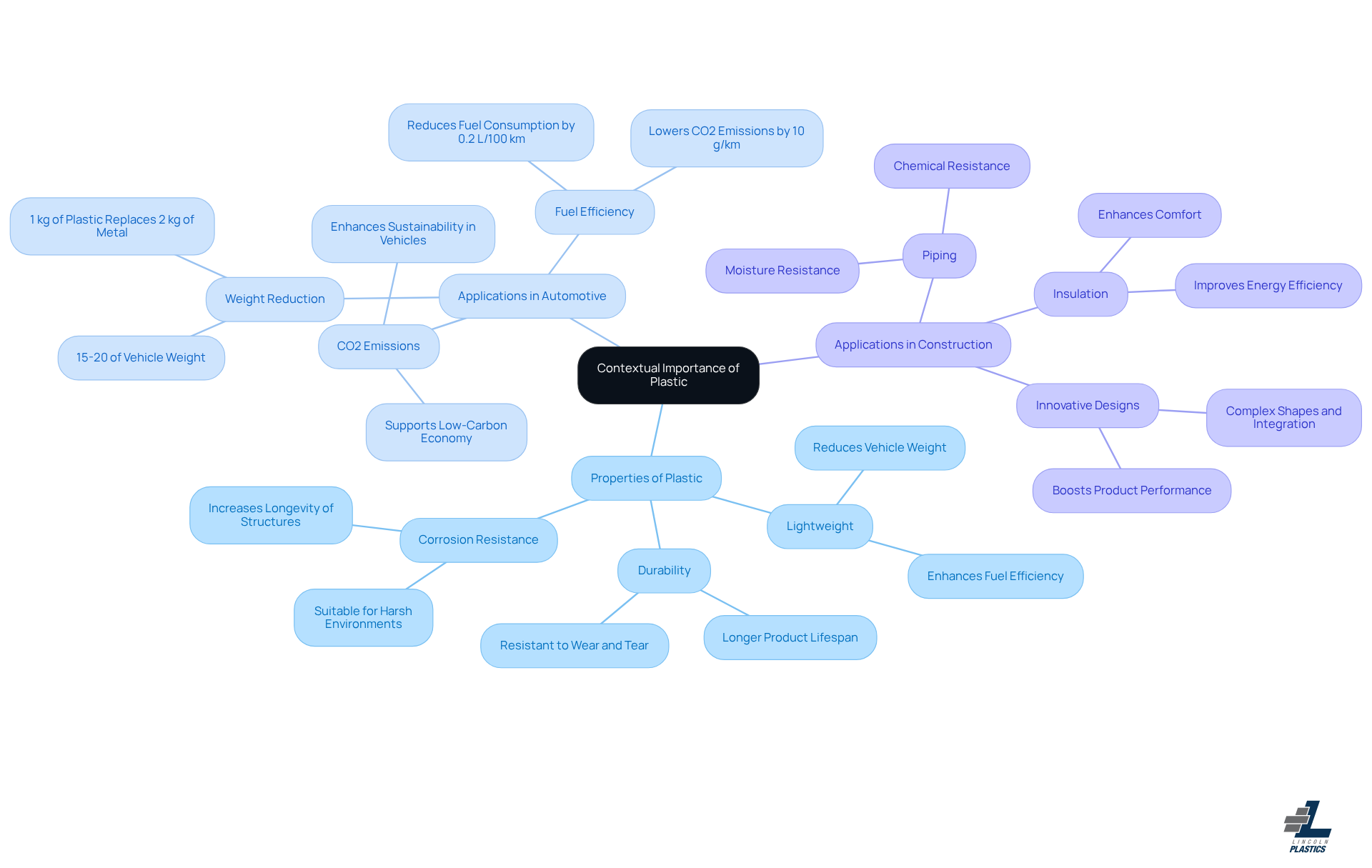
In the automotive sector, synthetic materials account for roughly 15-20% of a vehicle's weight, translating to over 300 kilograms per car. This significant presence aids in reducing overall vehicle weight, enhancing fuel efficiency and lowering CO2 emissions. For instance, every kilogram of synthetic material can replace up to two kilograms of metal, resulting in substantial energy savings during operation.
In construction, synthetic materials are essential for piping and insulation. Their moisture and chemical resistance significantly enhance the longevity and reliability of structures. Have you considered how the adaptability of synthetic materials allows for intricate shapes and parts? This not only boosts product performance but also sparks innovative designs.
As the automotive industry increasingly depends on synthetic materials, advancements in material technology are propelling the creation of new, sustainable solutions, such as biodegradable substances and advanced recycling techniques.
At Lincoln Plastics, located in Lincoln, Nebraska, we work closely with OEMs to ensure that our products meet all quality requirements, including special checks for ‘fit and function’. Our robust quality management program includes dedicated quality plans, critical in-process checks, and comprehensive documentation, ensuring that our rigid profiles meet specified critical dimensions.
As regulations evolve, manufacturers face the challenge of integrating sustainable practices into their production processes. The introduction of regulations such as the EU's End-of-Life Vehicles Directive, which mandates that by 2030, 25% of materials in new vehicles must originate from post-consumer recyclates, highlights this continuous development. This shift not only meets regulatory demands but also positions companies as leaders in sustainability.
Overall, the integration of plastics into modern manufacturing processes highlights what are 3 properties of plastic that make it a useful material, as it has streamlined production, reduced costs, and enhanced product durability, making them indispensable in today's economy.
Reach out to Lincoln Plastics today to discover how our innovative solutions can elevate your projects and meet your sustainability goals.
Key Properties of Plastic: Durability, Flexibility, and Chemical Resistance
In a world where material performance is paramount, the unique properties of plastics, particularly high-density polyethylene, stand out as game-changers in various industries. When considering what are 3 properties of plastic that make it a useful material, its durability, flexibility, and chemical resistance significantly enhance its utility across numerous applications.
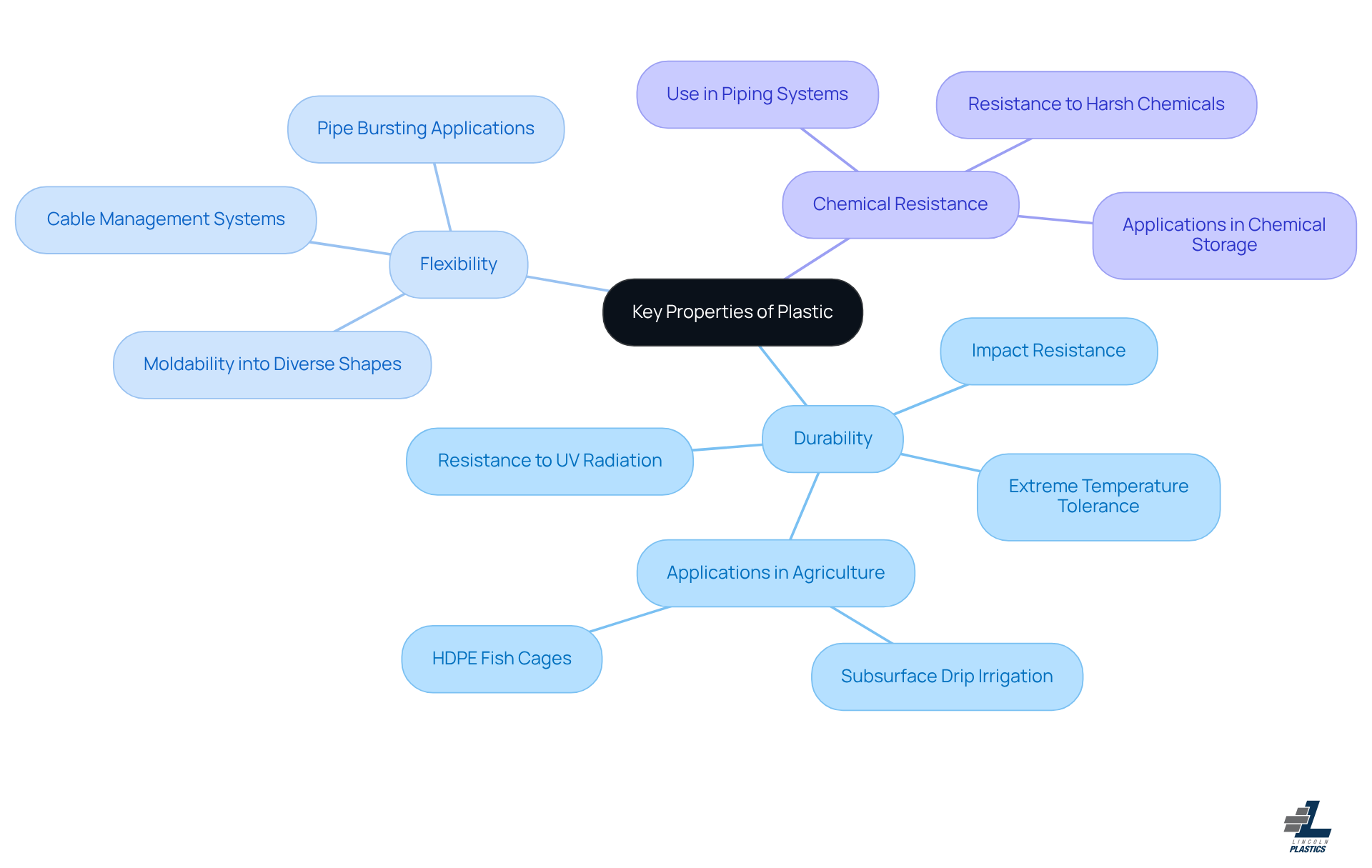
When considering what are 3 properties of plastic that make it a useful material, durability stands out as a critical attribute, allowing plastic products to withstand wear and tear, making them suitable for long-term use in challenging environments. High-density polyethylene, for instance, is renowned for its remarkable resistance to UV radiation and impact, ensuring durability even in severe conditions. High-density polyethylene is known for its exceptional durability, able to withstand extreme temperatures and environmental factors, making it a top choice for agricultural and industrial applications.
One of the key aspects to consider when discussing what are 3 properties of plastic that make it a useful material is its flexibility, which allows it to be molded into diverse shapes without breaking. This property is especially beneficial in scenarios that require bending or movement, such as cable management systems, where its flexibility allows for effective organization and protection of cords and cables. Additionally, HDPE is utilized in subsurface drip irrigation systems, which can reduce water usage by up to 50%, showcasing its flexibility in agricultural applications. Lincoln Plastics specializes in custom extrusion solutions, ensuring that their products meet the specific needs of OEMs in these sectors.
Chemical resistance is equally important, as it allows plastics to resist degradation when exposed to harsh chemicals, highlighting what are 3 properties of plastic that make it a useful material. This makes high-density polyethylene ideal for industrial environments, where it is utilized in applications ranging from chemical storage to piping systems. The capability of high-density polyethylene to maintain its integrity in the presence of corrosive materials highlights its importance in industries that require dependable performance. Lincoln Plastics employs rigorous quality management practices, including ISO 9001:2015 certification, dedicated quality books, and in-process checks, to ensure that their products meet all quality requirements.
Recent advancements in high-density polyethylene technology, including the creation of self-lubricating rollers for conveyor systems, further enhance its durability and efficiency, reducing maintenance needs and improving operational effectiveness. Case studies illustrate that high-density polyethylene's use in various sectors, such as aquaculture and agriculture, highlights its adaptability and durability, reinforcing its position as an essential material in contemporary manufacturing. The HDPE market is projected to be valued at USD 62,672.6 million in 2026 and is expected to reach USD 88,776.2 million by 2033, reflecting its growing significance in the industry. With Lincoln Plastics' strategic Midwest location in Lincoln, Nebraska, they are well-positioned to provide quick order turnaround and efficient logistics for OEMs nationwide. In demanding applications, the right material can make all the difference, and high-density polyethylene has proven to be the dependable choice time and again.
Conclusion
The key properties of plastic are not just features; they are essential drivers of innovation in manufacturing and OEM applications. Understanding these properties - durability, flexibility, and chemical resistance - highlights why plastics are indispensable in modern production processes. As industries grapple with rising demands for efficiency and sustainability, the role of plastics becomes even more critical, demonstrating how plastics are pivotal in achieving efficiency and sustainability goals.
We’ve seen how plastics, particularly high-density polyethylene, bring remarkable advantages - like lightweight construction, corrosion resistance, and the ability to endure extreme conditions. These characteristics not only streamline production but also contribute to cost savings and improved product longevity. Lincoln Plastics, with its commitment to quality and strategic location in Lincoln, Nebraska, exemplifies how these properties can be harnessed to deliver tailored solutions for OEMs in agriculture, office management, and tradeshow industries.
As you navigate the evolving landscape of manufacturing towards sustainability, the role of plastic will only grow in importance. Embracing innovative materials and processes is essential for companies looking to stay competitive. Engaging with experts at Lincoln Plastics can provide valuable insights and solutions tailored to specific needs, ensuring that projects not only meet current standards but also pave the way for a sustainable future. By partnering with Lincoln Plastics, you’re not just choosing a supplier; you’re investing in a sustainable future for your business.
Frequently Asked Questions
What is plastic made of?
Plastic is a synthetic material made from polymers, which are long chains of molecules typically derived from petrochemicals.
What are the two primary types of polymers?
The two primary types of polymers are thermoplastics, which can be melted and reshaped multiple times, and thermosetting materials, which harden permanently after being formed.
Can you name some common varieties of polymers?
Common varieties of polymers include polyethylene (PE), polypropylene (PP), and polyvinyl chloride (PVC).
Why is understanding the composition and structure of synthetic materials important?
Understanding the composition and structure of synthetic materials is crucial for addressing their environmental impact and enhancing their utility in modern manufacturing.
What advancements have been made in polymer technology regarding environmental concerns?
Recent advancements have led to the creation of materials that can break down naturally under everyday conditions, contrasting with traditional materials that break into microfragments.
How quickly can some newly developed materials decompose?
Some newly developed materials can decompose within days under certain conditions.
What is the significance of the production surge of synthetic materials?
The production of synthetic materials has surged, exceeding 460 million tonnes in 2019, highlighting the urgent need for effective waste management strategies.
How much synthetic material is estimated to enter the oceans annually?
It is estimated that around 1 million tonnes of synthetic materials enter the oceans annually.
What is the overall necessity for addressing plastic waste?
Addressing the challenges of plastic waste is not just an option; it is a necessity for a sustainable future in manufacturing and beyond.
List of Sources
- Define Plastic: Composition and Structure
- Promising breakthrough creates plastics that self-deconstruct on cue: Study (https://news.mongabay.com/2026/03/promising-breakthrough-creates-plastics-that-self-deconstruct-on-cue-study/amp)
- Plastic Pollution (https://ourworldindata.org/plastic-pollution)
- New plastic material fully degrades in the ocean - Advanced Science News (https://advancedsciencenews.com/new-plastic-material-fully-degrades-in-the-ocean)
- Scientists Develop Plastics That Can Break Down, Tackling Pollution (https://rutgers.edu/news/scientists-develop-plastics-can-break-down-tackling-pollution)
- Plastics: Material-Specific Data | US EPA (https://epa.gov/facts-and-figures-about-materials-waste-and-recycling/plastics-material-specific-data)
- Contextual Importance of Plastic in Modern Applications
- Why are plastics critical for the automotive industry? • Plastics Europe (https://plasticseurope.org/sustainability/sustainable-use/sustainable-mobility-transport/why-are-plastics-critical-for-the-automotive-industry)
- Five Sustainability Trends Reshaping Plastic in 2026 (https://plasticsindustry.org/articles/five-sustainability-trends-reshaping-plastic-in-2026)
- Plastics in the Automotive Industry: All-rounders for Tomorrow's Mobility (https://k-online.com/en/media_news/k-mag/plastics-in-practice/mobility/automotive-part-1)
- Key Properties of Plastic: Durability, Flexibility, and Chemical Resistance
- Innovative Applications of High-Density Polyethylene (HDPE) in Construction, Agriculture, and Industry|News|POLYPVC (https://polypvc.com/news/Innovative-Applications-of-HighDensity-Polyethylene-HDPE-in-Construction-Agriculture-and-Industry.html)
- High Density Polyethylene (HDPE) Market Size & Trends, 2033 (https://coherentmarketinsights.com/industry-reports/high-density-polyethylene-hdpe-market)
- Durable plastic gets a sustainability makeover | Cornell Chronicle (https://news.cornell.edu/stories/2025/01/durable-plastic-gets-sustainability-makeover)
- ulprospector.com (https://ulprospector.com/knowledge/20120/pe-hdpe-the-workhorse-material-driving-innovation-in-plastics)
Related posts

Discover why OEMs trust Lincoln Plastics for innovative custom extrusion solutions across industries.


Discover how L shape plastic enhances manufacturing efficiency through custom solutions and safety improvements.
Discover the characteristics and applications of l shape PVC for construction and manufacturing projects.
