
What Are the Key Properties of HIPS Plastic and Why They Matter?
Introduction
In a landscape where manufacturers grapple with performance and sustainability, High Impact Polystyrene (HIPS) stands out as a game-changing thermoplastic. This remarkable material has carved a niche in various industries due to its unique combination of strength, versatility, and cost-effectiveness.
Manufacturers often struggle to find materials that balance performance with sustainability. It's crucial to grasp what makes HIPS tick.
What makes HIPS a preferred choice for applications ranging from packaging to automotive components? How do its advantages stack up against its limitations?
Exploring these questions reveals the critical role HIPS plays in modern manufacturing and understanding HIPS is not just beneficial; it’s essential for staying competitive in today’s evolving manufacturing landscape.
Define High Impact Polystyrene (HIPS) and Its Importance
High Impact Polystyrene stands at the forefront of thermoplastic innovation, combining rigidity with enhanced toughness to meet diverse industry needs. This tweak really boosts its impact resistance, making it a go-to choice for many applications. Its importance lies in its balance of strength, ease of processing, and cost-effectiveness, which makes it a popular choice in industries such as packaging, automotive, and consumer goods. This material is particularly valued for its ability to be easily thermoformed, molded, and printed on, allowing for a wide range of product designs and functionalities.
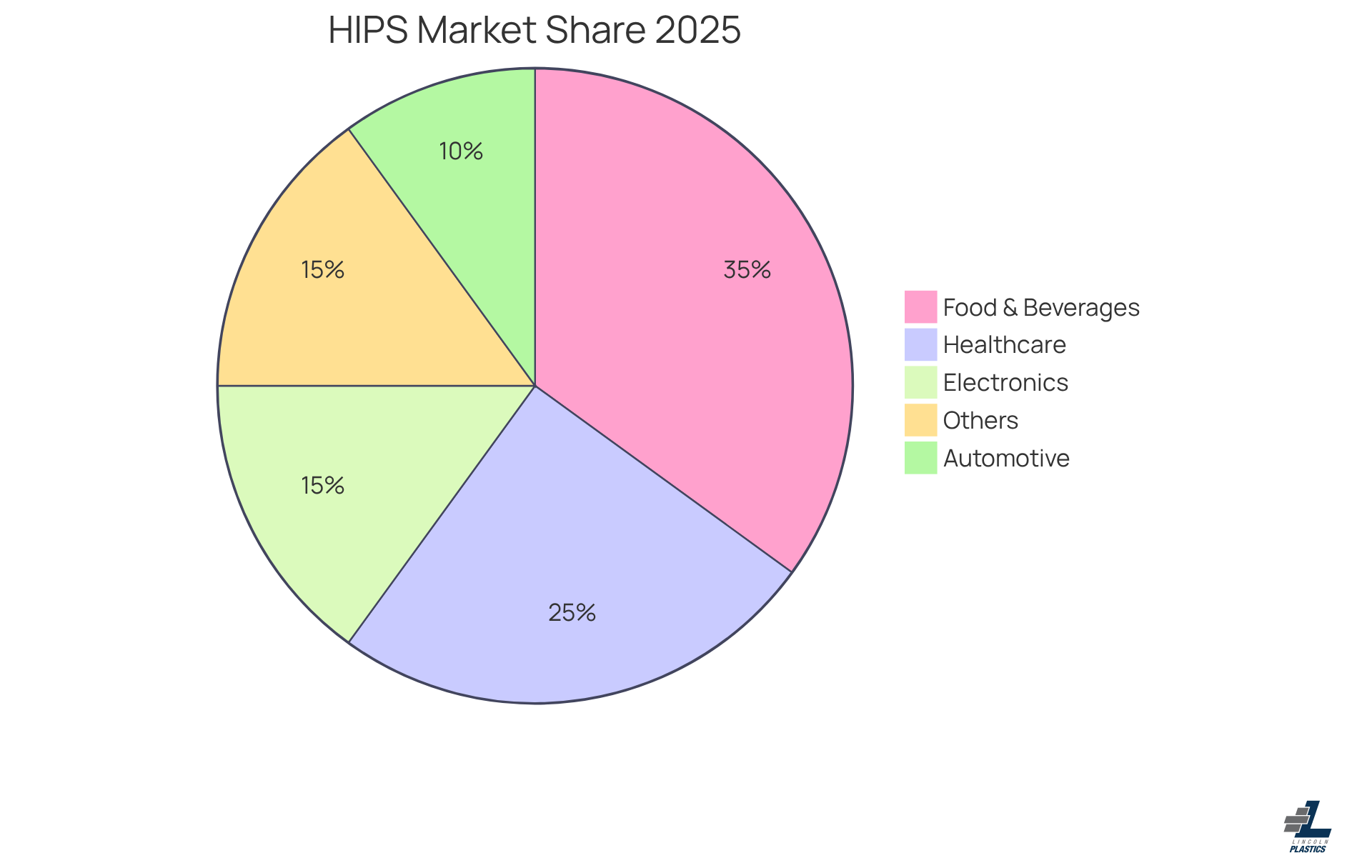
The sector is anticipated to attain USD 89.89 billion by 2035, growing at a compound annual growth rate (CAGR) of 5.1% from 2026 to 2035. In 2025, the food and beverages segment alone comprised 35% of the share, while the automotive sector represented 10%, and the healthcare segment held 25%. Additionally, extrusion high-impact polystyrene is anticipated to secure a substantial 45% market share in 2025, emphasizing its dominance in the industry. The electronics segment also holds a notable 15% share, underscoring its relevance in high-demand industries.
Recent trends indicate a growing emphasis on lightweight materials in automotive manufacturing, driven by stricter fuel-efficiency standards. However, as industries evolve, the challenge of sustainability looms large, pushing for innovative solutions in material sourcing. This shift is driving the demand for high-impact polystyrene, particularly in applications such as interior panels and components. Furthermore, the growth of e-commerce is boosting the demand for sturdy packaging solutions, further strengthening the company's market position.
As producers aim to achieve sustainability objectives, the demand for recycled high-impact polystyrene is increasing, in line with closed-loop recycling efforts that lessen dependence on petrochemical feedstocks. This shift not only meets environmental goals but also enhances the competitive edge of high-impact polystyrene in the market. Major producers such as Trinseo, INEOS Styrolution, and TotalEnergies are leading the industry, leveraging their extensive distribution networks and advanced production capabilities to maintain stability and meet growing demand. As the industry adapts to sustainability demands, high-impact polystyrene is poised to redefine its role in manufacturing, ensuring both performance and environmental responsibility.
Explore the Key Properties of HIPS Plastic
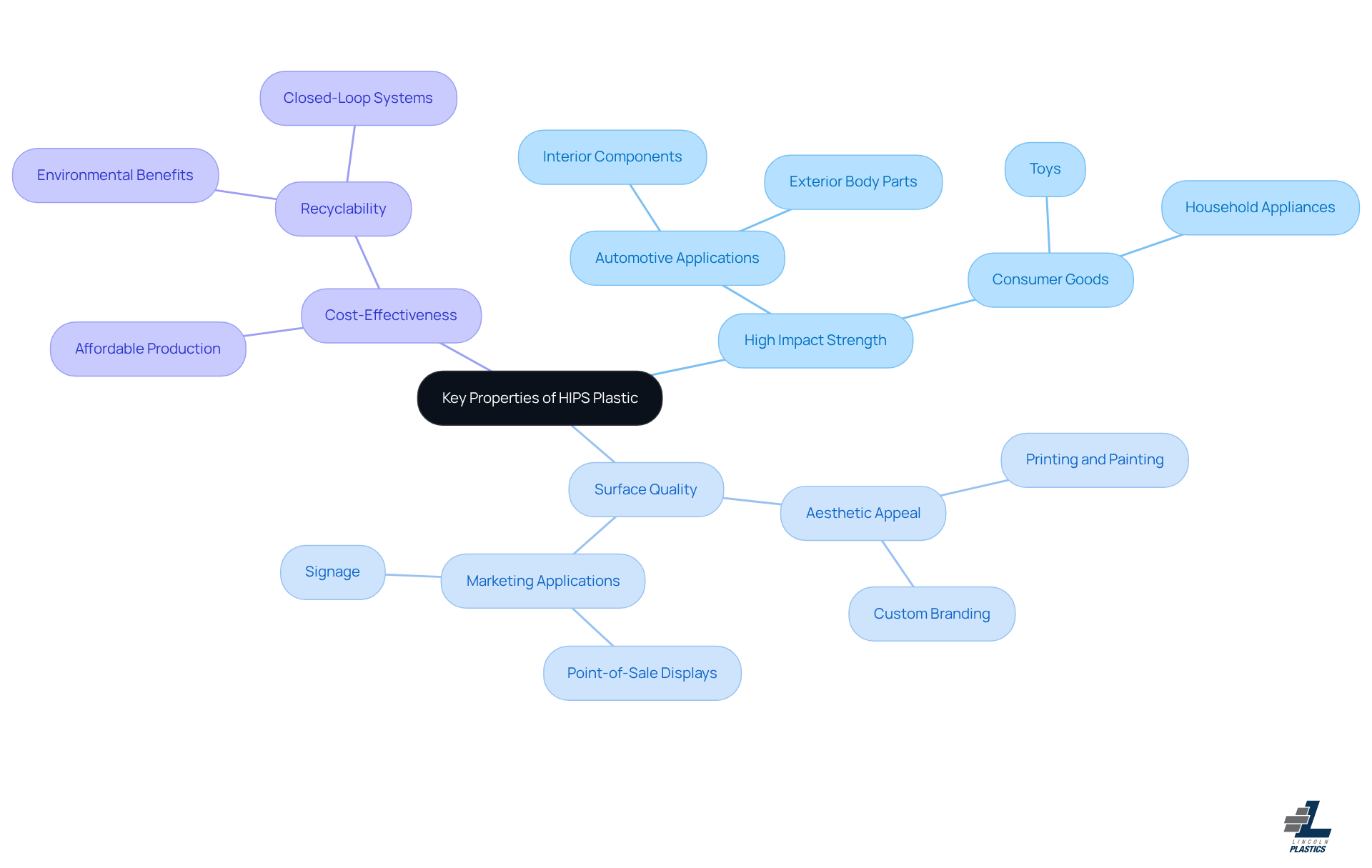
High Impact Polystyrene (HIPS) stands out as a versatile material, offering unmatched durability and adaptability for various applications. Its key properties significantly enhance usability:
- High Impact Strength: HIPS can absorb substantial energy without cracking, making it ideal for applications that demand durability. This makes it especially valuable in industries like automotive and consumer goods, where durability is a must. Notably, the automotive sector accounts for approximately 30% of global HIPS demand in 2023, underscoring its market significance. The properties of HIPS plastic include good machinability, allowing the material to be easily cut, shaped, and fabricated, which is essential for efficient manufacturing processes. Its versatility allows for a wide range of applications, from intricate designs to straightforward components. The properties of HIPS plastic, such as its thermoformability, allow it to be heated and molded into complex shapes, facilitating versatile product designs. This property is advantageous in packaging and consumer products, where unique shapes can enhance functionality and appeal. Additionally, this material is FDA compliant, making it suitable for food containers and packaging solutions.
- Surface Quality: This material offers a smooth finish that is suitable for printing and painting, enhancing aesthetic appeal. This quality is particularly important in marketing applications, where visual presentation can influence consumer choice.
- Cost-Effectiveness: Compared to other engineering plastics, this material is relatively inexpensive, making it an economical choice for high-volume production. Its affordability, along with its performance traits, positions this material as a preferred choice in various industries. Furthermore, this material is fully recyclable, aligning with the growing emphasis on sustainability and environmental responsibility.
The properties of HIPS plastic collectively contribute to its widespread use in sectors such as packaging, signage, and consumer products, underscoring its importance in modern manufacturing. As industries evolve, HIPS continues to adapt, proving its relevance and importance in a sustainable future.
Identify Common Applications of HIPS Plastic
High-impact polystyrene (HIPS) is a game-changer across multiple industries, thanks to its unique properties that cater to diverse applications. Common applications include:
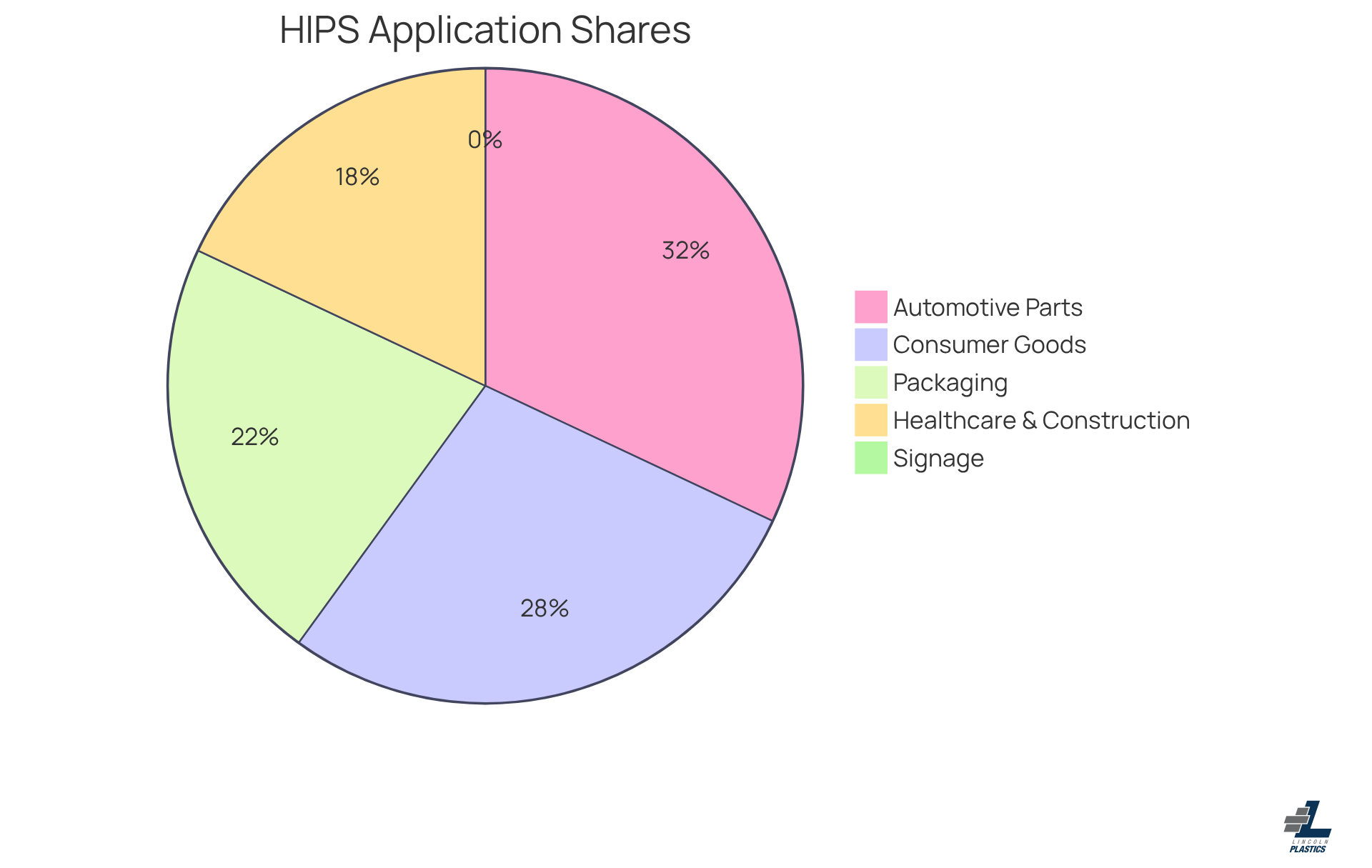
- Packaging: HIPS is frequently employed in food packaging, such as yogurt cups and clamshell containers, owing to its safety and durability. The packaging segment alone is projected to account for 22% of the market share by 2025, reflecting its critical role in meeting consumer demands for reliable and effective packaging solutions.
- Signage: Its excellent printability and impact resistance make this material a popular choice for indoor signs and point-of-purchase displays, ensuring visibility and durability in retail environments.
- Consumer Goods: This material is used in the production of toys, appliance housings, and electronic components, where lightweight and robust materials are essential. The electronics sector is anticipated to secure 28% of the industry share by 2025, propelled by the demand for sturdy yet lightweight casings.
- Automotive Parts: This material is utilized for interior components like dashboards and door panels, benefiting from its toughness and ease of fabrication. The automotive industry is expected to possess a 32% share in high-impact polystyrene uses, emphasizing the substance's significance in attaining lightweight designs and cost savings in vehicle production.
- Healthcare and Construction: Furthermore, the healthcare and construction industries are expected to represent an 18% portion, underscoring the urgent need for better recycling solutions in creating vital products like medical equipment housings and building materials.
These applications highlight the system's versatility and its essential role in manufacturing processes across various sectors. The global high-impact polystyrene sector is projected to reach USD 17,180.70 million by 2033. This growth, at a CAGR of 6.80% from 2026 to 2033, indicates substantial potential in the market. However, despite its widespread use, the recycling of high-impact polystyrene remains a significant hurdle, with only 15% currently recycled. Overall, the lightweight and impact-resistant characteristics of this material make it a favored option in numerous uses, especially in the automotive industry, where the need for such substances is rising. As the demand for lightweight and durable materials continues to rise, addressing recycling challenges will be crucial for sustainable growth in the high-impact polystyrene market.
Assess the Advantages and Limitations of HIPS Plastic
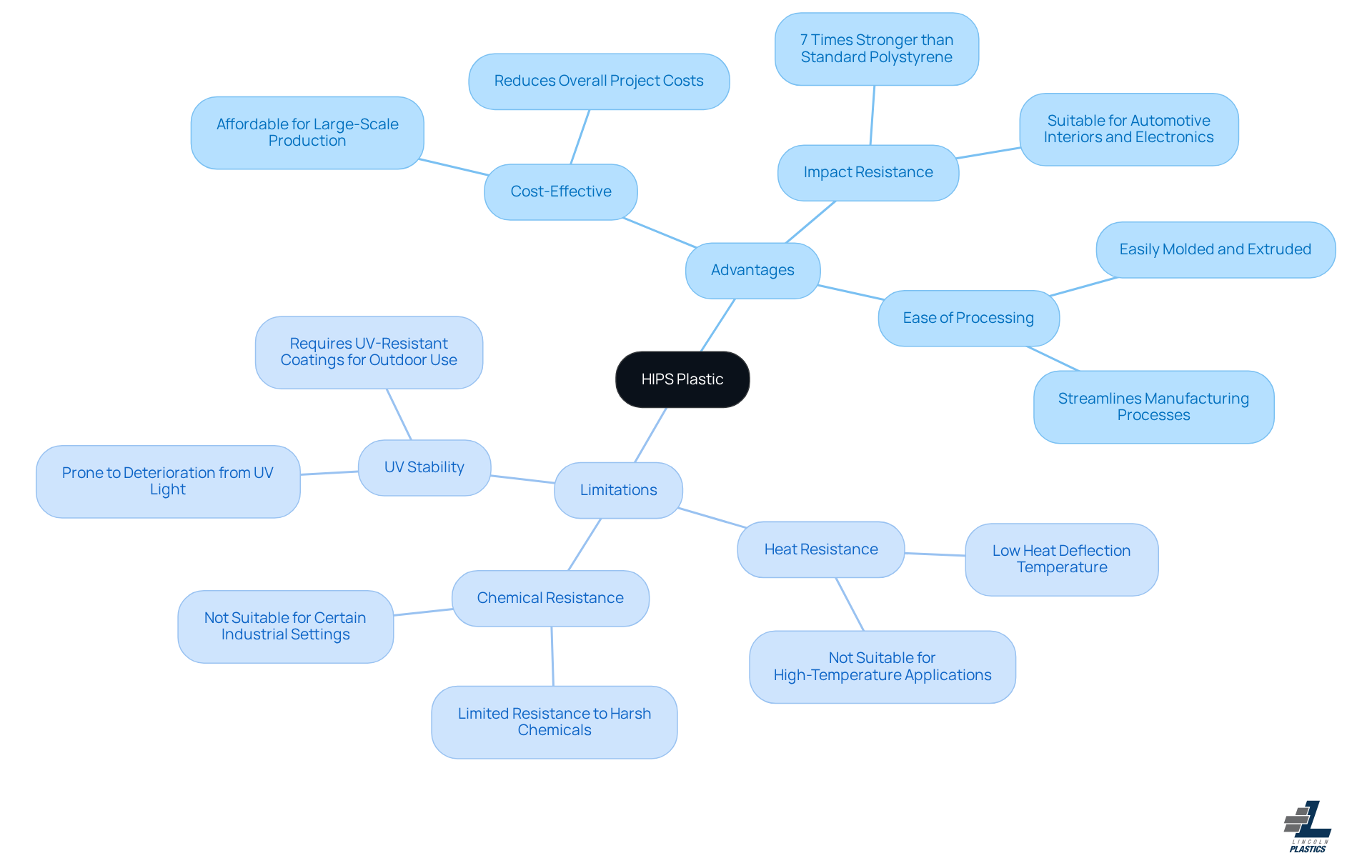
The properties of HIPS plastic make it a leading choice in engineering materials, offering a blend of affordability and performance that meets diverse manufacturing needs. Here are some key advantages that make HIPS a favored option across various applications:
- Cost-Effective: As one of the most affordable engineering plastics, HIPS is ideal for large-scale production, helping manufacturers reduce overall project costs.
- Impact Resistance: With an impact strength seven times greater than standard polystyrene, high-impact polystyrene can endure significant shocks without breaking, making it suitable for challenging uses such as automotive interiors and consumer electronics.
- Ease of Processing: High Impact Polystyrene can be easily molded, extruded, and thermoformed, streamlining manufacturing processes and allowing for quick production of complex shapes. Mastering the tube extrusion process is essential for optimizing production efficiency and quality, particularly for OEMs looking to enhance their manufacturing capabilities.
Despite its advantages, HIPS also presents notable limitations that manufacturers must consider:
- Heat Resistance: HIPS has a relatively low heat deflection temperature, with a melting point around 240°C, making it unsuitable for high-temperature applications. Continuous use should be kept below 185°F (85°C) to maintain structural integrity.
- Chemical Resistance: While this material resists some chemicals, it is not suitable for environments with harsh chemical exposure, limiting its use in certain industrial settings.
- UV Stability: This material is prone to deterioration when subjected to UV light, which limits its use in outdoor settings unless treated with UV-resistant coatings.
Have you considered how HIPS's advantages and limitations could impact your material selection? For example, this material is extensively utilized in automotive interior components because of its durability and cost-effectiveness, while its limitations require careful consideration in outdoor or high-heat environments. The versatility of this material continues to grow as innovations in formulation and processing techniques enhance the properties of HIPS plastic, making it a dependable option for various manufacturing requirements. By applying best practices in the extrusion process, including Lincoln Plastics' dedication to quality management through ISO 9001:2015 certification and focused quality plans, OEMs can further enhance the performance and use of this type of plastic. Additionally, Lincoln Plastics' co-extrusion capabilities allow for the creation of multi-color or multi-material profiles, enhancing the versatility of HIPS in various applications. By understanding both the strengths and weaknesses of HIPS, manufacturers can make informed decisions that enhance product quality and operational efficiency.
Conclusion
In the competitive landscape of modern manufacturing, High Impact Polystyrene (HIPS) stands out as a game-changing material that combines strength, versatility, and cost-effectiveness. Its properties, such as high impact resistance and excellent machinability, make it an ideal choice for a wide range of applications across various industries, including packaging, automotive, and consumer goods. However, many manufacturers struggle to find materials that balance performance with sustainability. HIPS is well-positioned to meet these demands while maintaining its performance standards.
Key attributes of HIPS include:
- Remarkable energy absorption
- Smooth surface quality for enhanced aesthetics
- Affordability compared to other engineering plastics
These characteristics not only facilitate efficient manufacturing processes but also cater to the evolving needs of sectors like healthcare and construction. In addition, the growing emphasis on recycling and sustainability underscores the material's relevance in today's market, as producers seek to innovate while adhering to environmental standards.
Embracing HIPS not only elevates product quality but also aligns your business with the future of sustainable manufacturing. By leveraging the advantages of HIPS, such as its durability and ease of processing, while being mindful of its limitations, businesses can make informed decisions that enhance both product quality and operational efficiency. For tailored solutions and expert guidance on utilizing HIPS in your projects, reaching out to Lincoln Plastics can provide valuable insights and support, ensuring that your manufacturing needs are met with excellence and precision.
Frequently Asked Questions
What is High Impact Polystyrene (HIPS)?
High Impact Polystyrene (HIPS) is a thermoplastic material known for its combination of rigidity and enhanced toughness, making it suitable for various applications across multiple industries.
Why is HIPS important in manufacturing?
HIPS is important due to its balance of strength, ease of processing, and cost-effectiveness. It is widely used in industries such as packaging, automotive, and consumer goods, valued for its ability to be easily thermoformed, molded, and printed on.
What is the projected market growth for HIPS?
The HIPS market is anticipated to reach USD 89.89 billion by 2035, growing at a compound annual growth rate (CAGR) of 5.1% from 2026 to 2035.
Which industries are the largest consumers of HIPS?
In 2025, the food and beverages segment is expected to comprise 35% of the market share, followed by the healthcare segment at 25%, and the automotive sector at 10%. The electronics segment is also significant, holding a 15% share.
What trends are influencing the demand for HIPS?
Trends such as the emphasis on lightweight materials in automotive manufacturing due to stricter fuel-efficiency standards and the growth of e-commerce, which increases the need for sturdy packaging solutions, are driving demand for HIPS.
How is sustainability impacting the HIPS market?
There is a growing demand for recycled high-impact polystyrene as industries aim to meet sustainability objectives. This shift supports closed-loop recycling efforts and reduces reliance on petrochemical feedstocks, enhancing HIPS's competitive edge.
Who are the major producers of HIPS?
Major producers in the HIPS industry include Trinseo, INEOS Styrolution, and TotalEnergies, which leverage their extensive distribution networks and advanced production capabilities to meet the growing demand.
How is HIPS expected to evolve in response to sustainability demands?
As the industry adapts to sustainability challenges, HIPS is expected to redefine its role in manufacturing by ensuring both performance and environmental responsibility, aligning with the increasing focus on sustainable materials.
List of Sources
- Define High Impact Polystyrene (HIPS) and Its Importance
- High Impact Polystyrene (HIPS) Film and Sheet Market Trends & Size 2026-2035 (https://towardspackaging.com/insights/high-impact-polystyrene-hips-film-and-sheet-market-sizing)
- High Impact Polystyrene Market Size, Trends & Growth 2035 (https://expertmarketresearch.com/reports/high-impact-polystyrene-hips-market)
- High Impact Polystyrene (HIPS) Market Research Report 2026-2034 (https://24chemicalresearch.com/reports/317328/high-impact-polystyrene-market)
- Explore the Key Properties of HIPS Plastic
- Six Important Facts About HIPS Plastic - News (https://polychemer.com/news/six-important-facts-about-hips-plastic-85030153.html)
- High Impact Polystyrene Market Size, Trends & Growth 2035 (https://expertmarketresearch.com/reports/high-impact-polystyrene-hips-market)
- High Impact Polystyrene (HIPS) Market Research Report 2026-2034 (https://24chemicalresearch.com/reports/316789/high-impact-polystyrene-market)
- Learn About Your Packaging Materials: 8 Facts About High Impact Polystyrene (https://blog.impactplastics.co/blog/learn-about-your-plastic-sheet-7-facts-about-high-impact-polystyrene)
- Identify Common Applications of HIPS Plastic
- Six Important Facts About HIPS Plastic - News (https://polychemer.com/news/six-important-facts-about-hips-plastic-85030153.html)
- High Impact PolyStyrene (HIPS) Market (2026 - 2033) (https://futuremarketreport.com/industry-report/high-impact-polystyrene-hips-market)
- High-Impact Polystyrene (HIPS) Market Report 2026: Resilient Growth Driven By Automotive And Electronics Innovation - News - Bright Rubber Plastic (https://rubberplasticparts.com/news/high-impact-polystyrene-hips-market-report-85476627.html)
- High Impact Polystyrene (HIPS) Film and Sheet Market Company Statistics for 2026 (https://globenewswire.com/news-release/2026/01/30/3229559/0/en/high-impact-polystyrene-hips-film-and-sheet-market-company-statistics-for-2026.html)
- Assess the Advantages and Limitations of HIPS Plastic
- High Impact Polystyrene (HIPS) Market Research Report 2026-2034 (https://24chemicalresearch.com/reports/317328/high-impact-polystyrene-market)
- Six Important Facts About HIPS Plastic - News (https://polychemer.com/news/six-important-facts-about-hips-plastic-85030153.html)
- High Impact Polystyrene Products: What You Need to Know in 2026 (https://cbrhkglobal.com/high-impact-polystyrene-products-what-you-need-to-know-in-2026)
- What Makes HIPS Plastic a Popular Choice in Manufacturing? (https://eureka.patsnap.com/blog/tech-seek/hips-plastic)
- High Impact Polystyrene (HIPS) - Goodfish (https://goodfishgroup.com/high-impact-polystyrene-hips)
Related posts

Custom Colors & Branding in Extrusion
Lincoln Plastics delivers Pantone-matched colors, striping, and finishes in extrusion for OEMs — combining performance with branding.


How We Solve Problems When Standard Parts Don’t Work
Lincoln Plastics solves challenges OEMs face when standard parts don’t work — delivering custom extrusions that improve fit, cost, and reliability.
Cable & Cord Protection in High-Traffic Environments
Lincoln Plastics manufactures durable cord covers and management solutions to keep high-traffic environments safe, organized, and compliant.
