

What Are Standard Plastics? Key Types and Their Importance
Introduction
You know those standard plastics we see everywhere? They’re often taken for granted, but they really are the backbone of so many industries—think packaging, automotive, and even healthcare. Materials like polyethylene, polypropylene, and polyvinyl chloride are not just budget-friendly; they’re crucial for driving innovation and efficiency in manufacturing.
But here’s the kicker: as we all start to care more about sustainability, we face a real challenge. How do we balance the benefits of these handy materials with the growing environmental concerns? It’s a tough question, and it makes you wonder—what does the future hold for standard plastics in a world that’s increasingly focused on being eco-friendly?
Let’s dive into this together!
Define Standard Plastics: Characteristics and Importance
Standard plastics, often referred to as commodity substances, are produced in large quantities because they are cost-effective and versatile. They’re easy to process, durable, and adaptable, which makes them perfect for all sorts of applications. Think about polyethylene (PE), polypropylene (PP), and polyvinyl chloride (PVC) — these are some of the big players in this space.
Now, why are these materials so important? Let’s take packaging as an example. PE is a go-to choice because it’s lightweight and moisture-resistant, making it ideal for food packaging and consumer goods. In the automotive sector, PP shines with its high chemical resistance, helping create durable car parts. And PVC? It’s known for its strength and durability, making it a staple in construction for pipes and window frames. Pretty essential for building infrastructure, right?
Understanding standard plastics is essential, especially when performance and safety are at stake. The global plastics market is set to grow significantly, reaching $45.6 billion by 2025, with a growth rate of 3.28% from 2025 to 2034. This surge is fueled by rising demand in packaging, automotive, and healthcare sectors. Did you know that the packaging segment is expected to hold a whopping 41% market share in 2024? Plus, the medical and pharmaceutical segment is likely to see the fastest growth due to the increasing need for medical devices.
However, it’s not all smooth sailing. The market faces challenges from shifting consumer preferences and environmental concerns, which are reshaping the landscape of commodity materials. Overall, standard plastics are essential materials in modern manufacturing and consumer products. So, next time you see a package or a car part, you might just appreciate the role these commodities play in our everyday lives!

Explore Types of Standard Plastics: Categories and Applications
Let’s dive into the world of plastics! You might not realize it, but there are several types of plastics, each with its own unique properties and uses. Here’s a quick rundown:
- Polyethylene: You’ve probably seen this one everywhere! It’s commonly used in wrapping, plastic bags, and containers because it’s super flexible and durable.
- Polypropylene: This guy is known for its resistance to heat and chemicals, making it perfect for automotive parts and food containers. Pretty handy, right?
- Polyvinyl Chloride: If you’ve ever noticed pipes, siding, or flooring in construction, you’ve encountered PVC. It’s strong and weather-resistant, which is why it’s so popular.
- Polystyrene: Think disposable cutlery and insulation. PS is lightweight and great for wrapping materials, making it a favorite for many.
- PET: This one’s a star in the beverage world! You’ll find it in bottles and food packaging, and it’s recognized for being recyclable and having excellent barrier properties.
These classifications really show how adaptable plastics are as everyday materials. They play a crucial role in various sectors and our daily lives. So, next time you use a plastic item, think about the type of plastic it is and how it fits into your world!
Trace the History of Standard Plastics: Evolution and Milestones
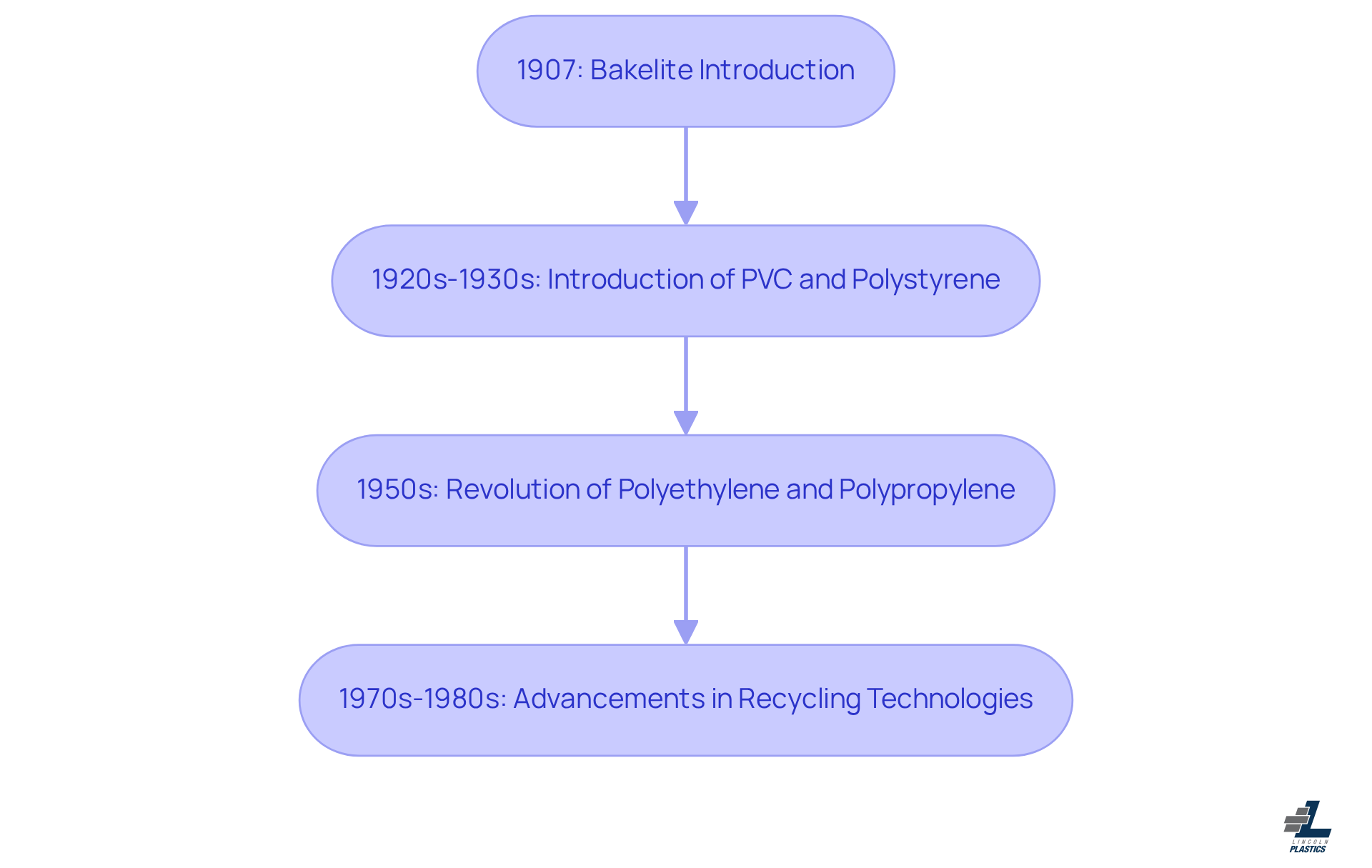
Let’s take a stroll down memory lane and explore the history of plastics. It all kicks off in the early 20th century, where we see some pretty important materials we use today.
- 1907: This is when Bakelite made its debut, thanks to Leo Baekeland. It was the first fully synthetic plastic, and it really set the stage for everything that followed.
- 1920s-1930s: Fast forward a couple of decades, and we see the introduction of materials like PVC and polystyrene. These guys opened up a whole new world of possibilities, especially in construction and consumer goods.
- 1950s: Then came polyethylene and polypropylene, which totally revolutionized packaging and consumer products. Suddenly, these materials were everywhere!
- 1970s-1980s: As we became more aware of environmental issues, regulations began to emerge. This was a game changer for the industry.
These milestones really show how quickly the field of plastics, particularly standard plastics, has evolved and how it’s become a part of our everyday lives. It’s all about adapting to what the market needs and being mindful of our environment. So, what do you think about the journey of plastics? It’s pretty wild, right?
Examine Applications of Standard Plastics: Industries and Innovations
Standard plastics are everywhere, right? They play a huge role in so many industries, with standard plastics being tapped into for their unique properties to boost performance. Let’s break it down a bit:
- Packaging: Think about food storage. Plastics like PET and PE are must-haves here, thanks to their durability and ability to keep things fresh. There’s even some cool innovation happening with biodegradable materials, which makes recycling a breeze and is better for the planet.
- Construction: Now, when it comes to building, think of pipes, siding, and flooring. It’s strong, durable, and can handle the elements like a champ. The PVC market is pretty significant in construction, helping projects last longer and work better. Plus, there’s a push to use recycled materials, which is a win for sustainability.
- Automotive: Ever noticed how car interiors are getting lighter? That’s thanks to materials like polypropylene (PP) and polystyrene (PS). They help reduce weight and improve fuel efficiency. The automotive industry is really stepping up, using cutting-edge materials to meet strict environmental rules and what consumers want.
- Healthcare: In healthcare, plastics are crucial for medical devices. They keep things safe and hygienic. The industry is also looking into alternatives for non-critical uses, showing a real commitment to sustainability. Did you know the U.S. generates about 1.7 million metric tons of medical waste? That’s a big deal and highlights the need for change.
As we look ahead, new materials, including biodegradable options and advanced recycling techniques, demonstrate the industry's dedication to being environmentally responsible. These developments not only boost product performance but also meet the growing demand for sustainable solutions. So, what do you think? Isn’t it exciting to see how far we’ve come?

Conclusion
Standard plastics are everywhere, right? They’re super versatile and cost-effective, playing a huge role in our daily lives. Just think about how often you encounter them in packaging, automotive parts, construction materials, and even healthcare products. By getting to know key types like polyethylene, polypropylene, and PVC, you can really appreciate how essential these materials are in the stuff we use every day.
Now, let’s talk about the different categories of standard plastics. Each one has its own unique properties and serves various industries. For instance, lightweight and moisture-resistant polyethylene is a go-to for food packaging, while durable polyvinyl chloride is a staple in construction. It’s fascinating to see how these materials have evolved over time, isn’t it? The history of plastic development is a story of innovation and adaptability, especially as we become more aware of environmental challenges.
Looking ahead, the future of standard plastics seems bright. With the rising demand for sustainable solutions, innovations in biodegradable options and advanced recycling techniques are paving the way for a more eco-friendly approach to manufacturing. Understanding the importance of standard plastics not only helps us grasp their applications but also highlights the need for responsible consumption and development. So, let’s embrace these materials with sustainability in mind. Together, we can work towards a more efficient and environmentally conscious future!
Frequently Asked Questions
What are standard plastics?
Standard plastics, also known as commodity substances, are materials produced in large quantities due to their cost-effectiveness and versatility. They are easy to process, durable, and adaptable for various applications.
What are some examples of standard plastics?
Examples of standard plastics include polyethylene (PE), polypropylene (PP), and polyvinyl chloride (PVC).
Why are standard plastics important?
Standard plastics are important because they are widely used in various industries. For instance, PE is lightweight and moisture-resistant, making it ideal for food packaging. PP has high chemical resistance, which is beneficial for automotive parts, while PVC is rigid and durable, commonly used in construction for pipes and window frames.
What is the projected growth of the global commodity polymers market?
The global commodity polymers market is projected to grow significantly, reaching $45.6 billion by 2025, with a growth rate of 3.28% from 2025 to 2034.
What factors are driving the growth of the commodity polymers market?
The growth is driven by rising demand in packaging, automotive, and healthcare sectors, with the packaging segment expected to hold 41% market share in 2024. The medical and pharmaceutical segment is anticipated to see the fastest growth due to increasing needs for medical devices.
What challenges does the standard plastics market face?
The standard plastics market faces challenges from shifting consumer preferences and environmental concerns, which are reshaping the landscape of commodity materials.
How do standard plastics impact everyday life?
Standard plastics play a crucial role in modern manufacturing and consumer products, being integral to items such as packaging and car parts that are commonly encountered in daily life.
List of Sources
- Define Standard Plastics: Characteristics and Importance
- precedenceresearch.com (https://precedenceresearch.com/commodity-plastics-market)
- statista.com (https://statista.com/topics/5266/plastics-industry?srsltid=AfmBOopLzUy2z7zl5pRq4deg7DQhIeAN7lA4WipNalw0b7YYYzrvZicB)
- Commodity Plastics Market Sees USD 692.12 Bn by 2035 (https://towardspackaging.com/insights/commodity-plastics-market-sizing)
- Explore Types of Standard Plastics: Categories and Applications
- dimensionmarketresearch.com (https://dimensionmarketresearch.com/report/polyethylene-market)
- statifacts.com (https://statifacts.com/outlook/north-america-polyethylene-market)
- c-macc.com (https://c-macc.com/2024/11/24/polyethylene-2025-and-beyond-possibly-years-of-dramatic-change-global-insights-become-important)
- globenewswire.com (https://globenewswire.com/news-release/2025/11/03/3179478/0/en/Polypropylene-Packaging-Films-Market-Growth-Key-Segments-and-Regional-Dynamics-with-Manufacturers-and-Suppliers-Data.html)
- Trace the History of Standard Plastics: Evolution and Milestones
- The history of plastic in 15 key dates | CARBIOS Active (https://carbios-active.com/en/news/the-history-of-plastic-in-15-key-dates-2)
- The History of Plastic | Invention & Evolution | Timeline (https://thesustainableagency.com/blog/the-history-of-plastic)
- fitt.com (https://fitt.com/news/history-of-plastics-anecdotes-and-developments-from-discovery-to-the-present-day)
- plasticreimagined.org (https://plasticreimagined.org/articles/the-history-of-plastic-the-invention-and-its-future)
- History and Future of Plastics (https://sciencehistory.org/education/classroom-activities/role-playing-games/case-of-plastics/history-and-future-of-plastics)
- Examine Applications of Standard Plastics: Industries and Innovations
- global.noharm.org (https://global.noharm.org/news/healthcare-can-lead-way-out-plastic-crisis)
- market-prospects.com (https://market-prospects.com/articles/plastics-in-healthcare)
- ptonline.com (https://ptonline.com/articles/navigating-medical-plastics-trends-in-2025)
- healthmanagement.org (https://healthmanagement.org/c/hospital/News/healthcare-plastics-a-prescription-for-system-change)
- plasticsengineering.org (https://plasticsengineering.org/2025/09/sustainable-healthcare-plastics-rethinking-design-use-and-recovery-009694)
Related posts

Custom Colors & Branding in Extrusion
Lincoln Plastics delivers Pantone-matched colors, striping, and finishes in extrusion for OEMs — combining performance with branding.


How We Solve Problems When Standard Parts Don’t Work
Lincoln Plastics solves challenges OEMs face when standard parts don’t work — delivering custom extrusions that improve fit, cost, and reliability.
Cable & Cord Protection in High-Traffic Environments
Lincoln Plastics manufactures durable cord covers and management solutions to keep high-traffic environments safe, organized, and compliant.
