
What Are General Plastic Extrusions and Why They Matter
Introduction
In today's competitive manufacturing landscape, mastering plastic extrusions is not just beneficial; it's essential for success. Let’s explore how plastic extrusions play a crucial role in various industries, highlighting their benefits, applications, and the innovative advancements that have shaped their evolution.
As manufacturing demands grow more intricate, businesses face the challenge of ensuring quality in their extrusion processes. Failing to adapt could mean falling behind in a competitive market.
Define General Plastic Extrusions
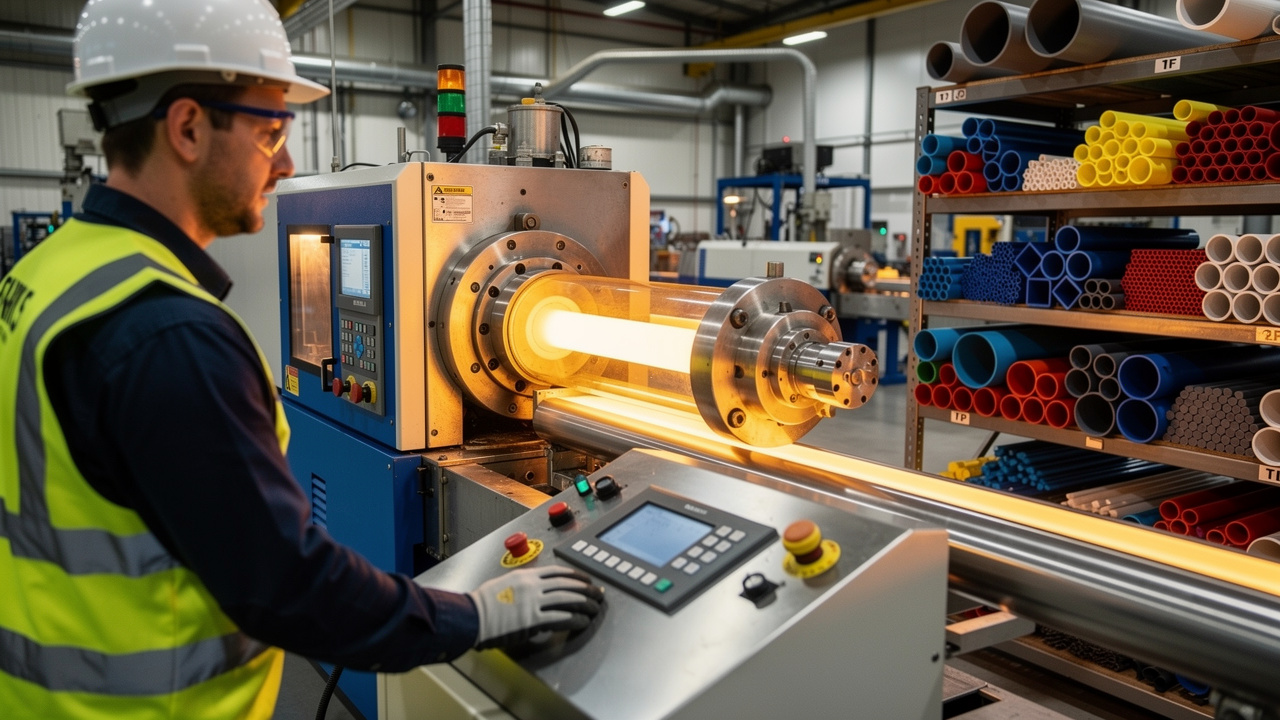
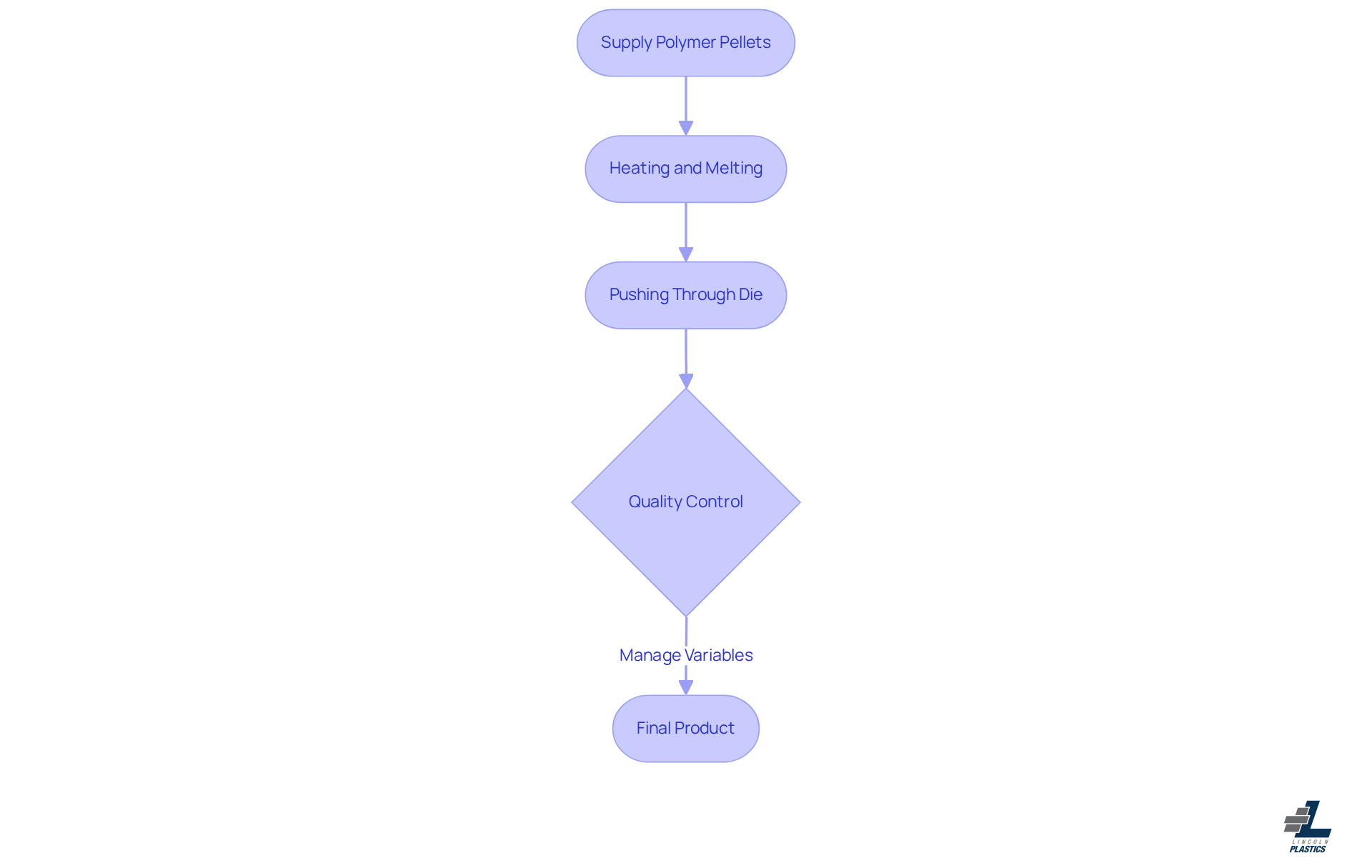
In the realm of manufacturing, the shaping of synthetic materials stands as a cornerstone of innovation and efficiency. General synthetic material shaping involves a manufacturing method where raw substances are melted and formed into continuous profiles of various dimensions. This technique is essential for creating various products, such as pipes, tubes, and custom profiles used in multiple industries. The shaping method starts with supplying polymer pellets or granules into a machine, where they are heated and pushed through a die to obtain a particular cross-sectional form. This method is particularly valued for its efficiency and capability to produce long lengths of uniform products, establishing it as a fundamental aspect of modern manufacturing.
Recent advancements in polymer shaping technology have significantly improved customization capabilities, enabling manufacturers like Lincoln Plastics to adjust material properties, forms, and dimensions to satisfy specific design needs. For example, Lincoln Plastics' co-creation techniques allow the simultaneous shaping of multiple layers, enhancing barrier characteristics and visual attributes. How can these advancements impact your specific needs? This capability means manufacturers can create flexible profiles tailored to meet a wide range of application needs, which is especially advantageous in industries such as aerospace and medical device production.
The advantages of plastic shaping are numerous. It offers cost-effectiveness for producing long, continuous profiles and the ability to create complex shapes that are challenging to manufacture through other methods. Furthermore, the method guarantees uniform standards and repeatability, rendering it perfect for large-scale manufacturing in diverse sectors. As producers increasingly embrace eco-friendly practices, the advancement of shaping techniques also aids sustainability efforts within the industry.
However, achieving consistent quality in plastic extrusion remains a challenge. Variables such as temperature, speed, and pressure can significantly influence the outcome. Not managing these variables can result in defects that compromise product reliability, necessitating strict process controls and high-quality raw materials to ensure product integrity. As noted by Lincoln Plastics, "Loose cords are more than messy - they’re a safety hazard," highlighting the importance of precision in manufacturing. Lincoln Plastics is dedicated to assurance, supported by their ISO 9001:2015 certification, which underscores their commitment to upholding high standards in production.
In summary, general plastic extrusions play a vital role in modern manufacturing, providing essential components for numerous applications while offering flexibility, precision, and enhanced performance. As the industry advances, the commitment to quality and customization will define the future of manufacturing.
Explore Applications of Plastic Extrusions in Manufacturing
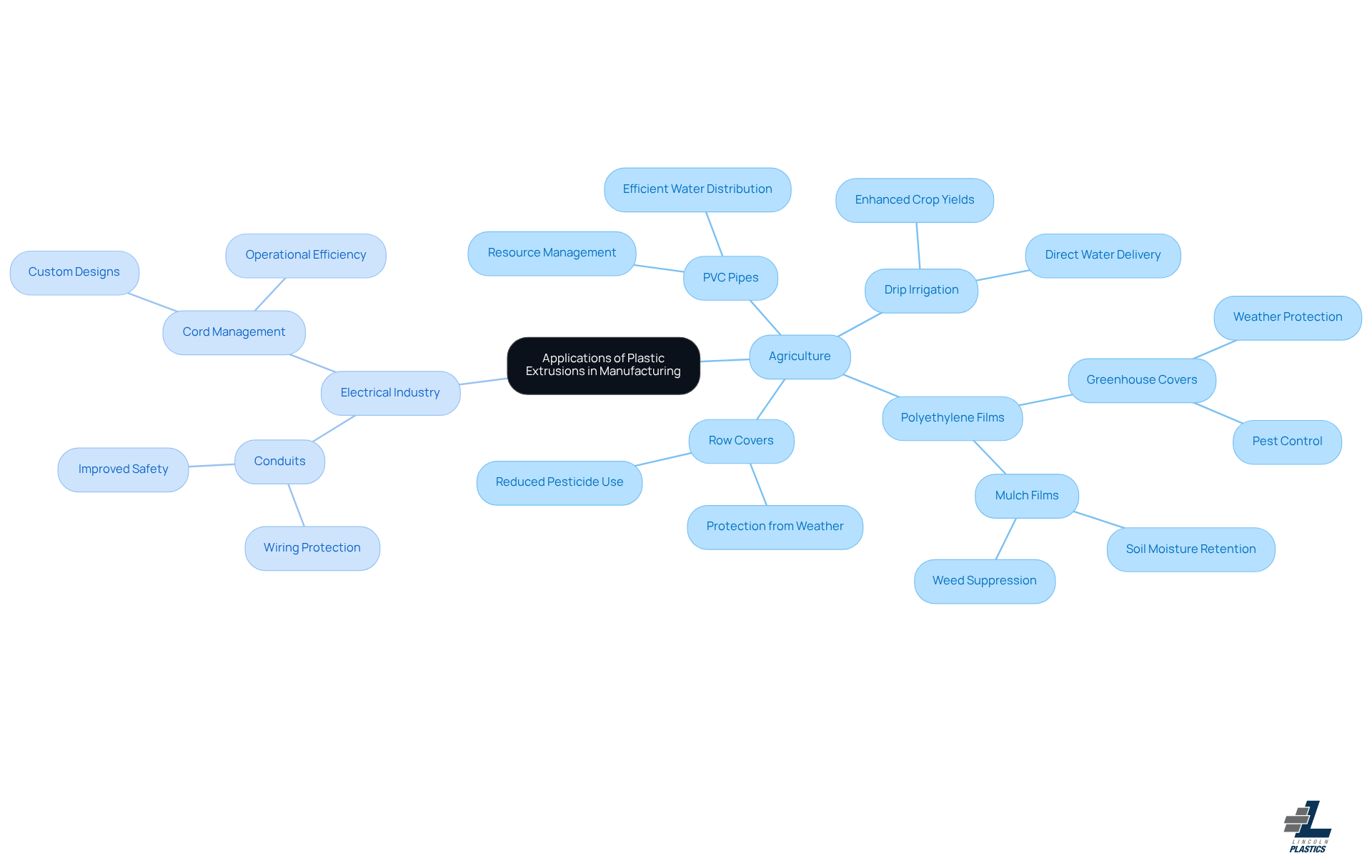
Are you aware of the critical role plastic profiles play in enhancing efficiency across various manufacturing sectors? Plastic profiles are essential in agriculture and industrial OEM machinery. In agriculture, extruded PVC pipes are vital for center pivot irrigation systems. They facilitate efficient water distribution and improve resource management, significantly reducing water wastage and promoting sustainable farming practices. Additionally, extruded synthetic tubing is commonly used in drip irrigation systems, delivering water directly to plant roots and enhancing crop yields.
In the electrical industry, extruded conduits provide essential protection for wiring and cables, improving safety and durability. The versatility of synthetic profiles is further illustrated by custom designs for cord management, such as those provided by Lincoln Plastics under the Flexiduct brand. These designs address specific operational requirements across different sectors. Furthermore, Lincoln Plastics can easily source colors that meet your Pantone specifications, ensuring consistency across manufacturers.
Case studies demonstrate the effectiveness of polymer extrusions in agriculture. For instance, the use of extruded polyethylene films as greenhouse covers creates a controlled environment that protects crops from adverse weather and pests, promoting optimal growth conditions. Likewise, synthetic row covers protect crops from severe weather, decreasing dependence on chemical pesticides and promoting sustainable farming methods.
With the global extruded materials market projected to grow from USD 268.51 billion in 2025 to USD 525.8 billion by 2035, how can your operations benefit from these advancements? This growth means now is the time to invest in innovative solutions that can elevate your operations. At Lincoln Plastics, we’re dedicated to crafting solutions that fit your unique needs, ensuring that you receive the highest quality products backed by our ISO 9001:2015 certification. This certification underscores our rigorous quality management plans, including dedicated quality books and in-process checks. Investing in these advanced solutions today could redefine your operational capabilities tomorrow.
Trace the Evolution of Plastic Extrusion Technology
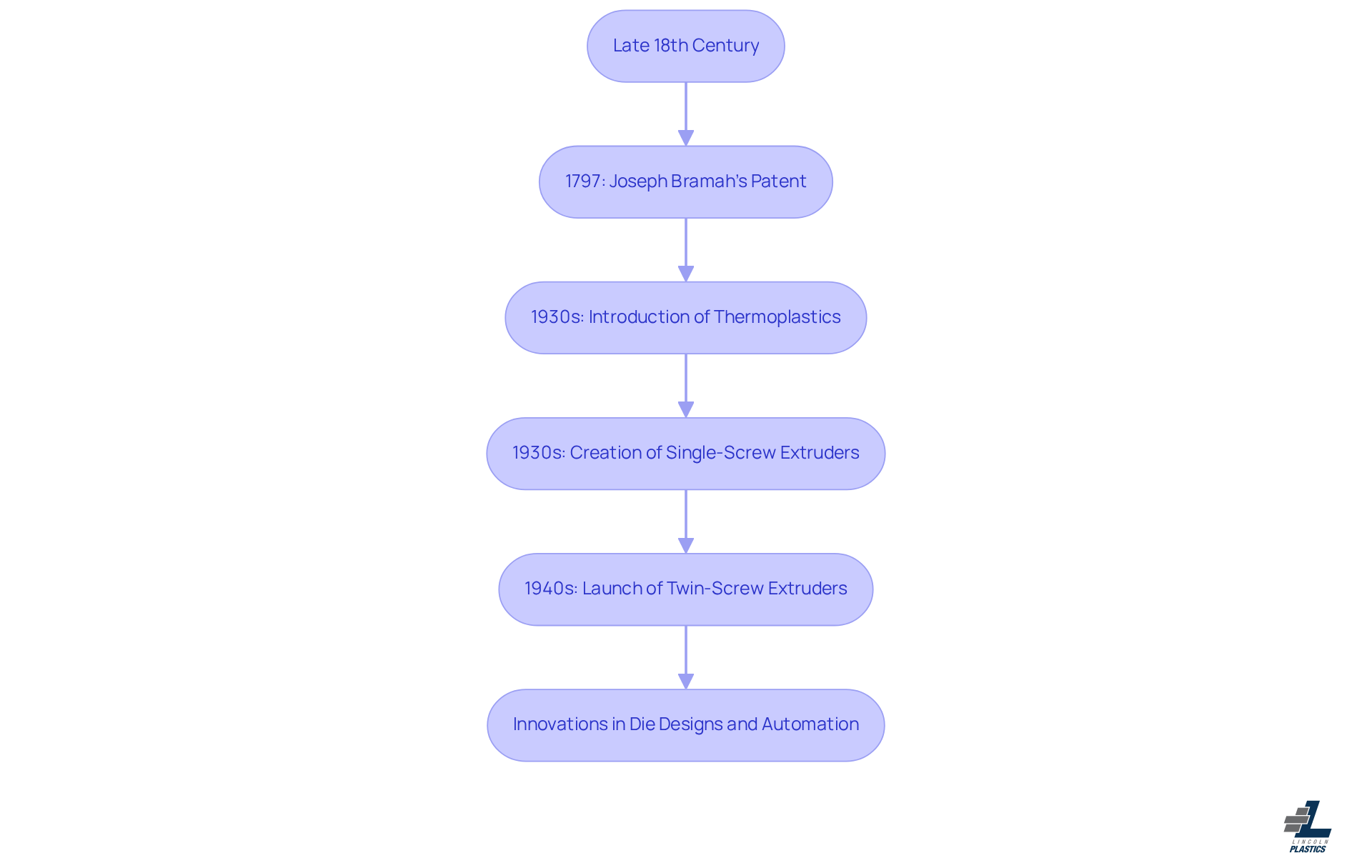
The evolution of synthetic material shaping technology has been a game-changer for the manufacturing industry, paving the way for innovations that enhance efficiency and sustainability. The development of this technology dates back to the late 18th century, with significant progress occurring throughout the 19th and 20th centuries.
- In 1797, Joseph Bramah received the first patent for a shaping method, which was initially designed for soft metals.
- However, the introduction of thermoplastics in the 1930s marked a transformative moment for the industry, enabling the mass production of plastic products.
- Notable achievements include the creation of single-screw extruders in the 1930s, which improved the blending and uniformity of materials.
- This was followed by the launch of twin-screw extruders in the 1940s, which significantly boosted the effectiveness of the shaping method.
- Furthermore, innovations in die designs and automation have refined production capabilities, allowing for greater precision and reduced waste.
As the industry progressed, this advancement has led to a significant shift towards sustainability, with manufacturers increasingly adopting closed-loop systems to recycle materials and integrating smart technologies to optimize production processes.
Today, Lincoln Plastics is at the forefront of plastic shaping, committed to high management standards, as demonstrated by its ISO 9001:2015 certification and stringent assurance practices, including specialized documentation and in-process evaluations. The company collaborates closely with OEMs, ensuring that all products meet stringent quality requirements, including special checks for fit and function. Additionally, Lincoln Plastics can source colors that meet your Pantone specifications, enhancing customization for various applications.
As we commemorate National Manufacturing Day, Lincoln Plastics continues to focus on utilizing technology and innovation to improve its products, guaranteeing accuracy and personalization in every output, backed by the logistical benefits of its Midwest location. As Lincoln Plastics leads the charge in this technological evolution, the future of plastic shaping promises not just efficiency but a commitment to sustainability that will redefine industry standards.
Identify Key Characteristics of the Plastic Extrusion Process
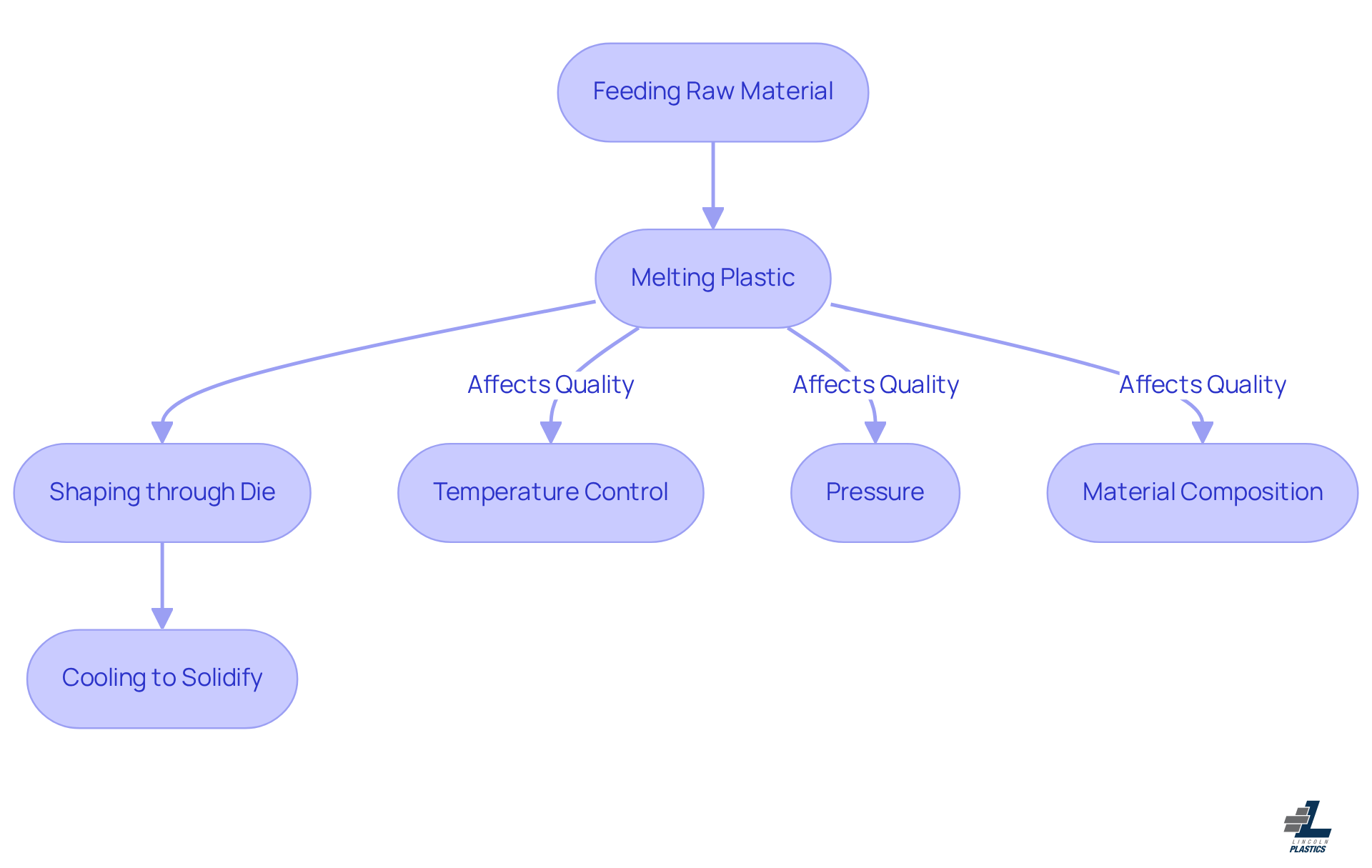
In the world of custom plastic extrusion, precision and quality are non-negotiable standards that define success. Key features of the extrusion method include its capability to create continuous lengths of items with uniform cross-sectional shapes, high production efficiency, and flexibility in material choice. The procedure typically involves several stages:
- Feeding the raw material into the extruder
- Melting the plastic
- Shaping it through a die
- Cooling it to solidify
Have you considered how factors like temperature control, pressure, and material composition can impact the quality of your final product? These elements play critical roles in determining the standard of the final product.
At Lincoln Plastics, we adhere to strict management practices, backed by our ISO 9001:2015 certification, ensuring our processes meet the highest standards. Additionally, our dedicated quality plans and in-process checks guarantee that the rigid profiles we manufacture align with your specifications. The use of co-extrusion techniques allows for the combination of different materials, enhancing the functionality and aesthetic appeal of extruded products, making them ideal for various OEM applications. When you choose Lincoln Plastics, you're not just selecting a supplier; you're investing in a partner committed to excellence in every aspect of production.
Conclusion
In the competitive landscape of manufacturing, general plastic extrusions are not just components; they are essential drivers of innovation and efficiency. This method enhances efficiency. It also allows for the creation of customized profiles that meet specific design requirements. With advancements in technology, manufacturers like Lincoln Plastics are equipped to deliver tailored solutions that cater to the unique needs of sectors such as agriculture, electrical, and OEM machinery.
Throughout this article, we've highlighted key insights into the plastic extrusion process, including its cost-effectiveness, versatility, and the importance of maintaining stringent quality controls. The evolution of this technology has paved the way for innovations that not only improve production capabilities but also promote sustainability within the industry. Lincoln Plastics stands out with its ISO 9001:2015 certification, ensuring that every product meets rigorous quality standards through dedicated quality plans and in-process checks.
Many businesses struggle to keep up with the evolving demands of efficiency and sustainability. As the demand for plastic extrusions continues to grow, leveraging these advancements is crucial. Talking to the experts at Lincoln Plastics can give you the insights and tailored solutions you need for your manufacturing challenges. The choice to embrace plastic extrusions today could be the key to unlocking unprecedented growth and sustainability in your manufacturing processes.
Frequently Asked Questions
What is general plastic extrusion?
General plastic extrusion is a manufacturing method where raw synthetic materials are melted and formed into continuous profiles of various dimensions. This technique is essential for creating products like pipes, tubes, and custom profiles used across multiple industries.
How does the plastic extrusion process work?
The process begins by supplying polymer pellets or granules into a machine, where they are heated and pushed through a die to obtain a specific cross-sectional shape. This method is valued for its efficiency and ability to produce long lengths of uniform products.
What are the advantages of plastic extrusion?
Plastic extrusion offers cost-effectiveness for producing long, continuous profiles, the ability to create complex shapes, and guarantees uniform standards and repeatability, making it ideal for large-scale manufacturing. It also supports eco-friendly practices within the industry.
How has technology improved plastic extrusion capabilities?
Recent advancements in polymer shaping technology have enhanced customization capabilities, allowing manufacturers like Lincoln Plastics to adjust material properties, forms, and dimensions to meet specific design needs. This includes co-extrusion techniques that enable the simultaneous shaping of multiple layers.
What challenges are associated with achieving quality in plastic extrusion?
Achieving consistent quality in plastic extrusion can be challenging due to variables such as temperature, speed, and pressure, which can affect the final product. Strict process controls and high-quality raw materials are necessary to ensure product integrity.
What quality standards does Lincoln Plastics adhere to?
Lincoln Plastics is ISO 9001:2015 certified, which underscores their commitment to maintaining high standards in production and ensuring product reliability through rigorous quality management plans.
In which industries is plastic extrusion particularly advantageous?
Plastic extrusion is especially beneficial in industries such as aerospace and medical device production, where flexible profiles tailored to specific application needs are required.
How does Lincoln Plastics support sustainability in plastic extrusion?
The advancement of shaping techniques in plastic extrusion aids sustainability efforts by enabling the production of eco-friendly products and reducing waste in manufacturing processes.
List of Sources
- Define General Plastic Extrusions
- EXTRUSION: The Online Magazine for Plastics Processing Industry Professionals (https://extrusion-info.com)
- Benefits of Plastic Extrusion Manufacturing (https://paulmurphyplastics.com/industry-news-blog/benefits-of-plastic-extrusion-manufacturing)
- What Are High-Performance Polymers? (https://pexco.com/news-and-events/custom-plastic-extrusion-basics-benefits-and-future-explained)
- Shaping the Future: Innovations in Plastic Extrusion Techniques - SeaGate Plastics Company (https://seagateplastics.com/shaping-the-future-innovations-in-plastic-extrusion-techniques)
- 10 Ways Extrusion Technology Transforms Manufacturing Efficiency (https://lincoln-plastics.com/news-post/10-ways-extrusion-technology-transforms-manufacturing-efficiency)
- Explore Applications of Plastic Extrusions in Manufacturing
- Plastic Extrusions in Agricultural Equipment: Beyond Irrigation (https://lincoln-plastics.com/news-post/plastic-extrusions-in-agricultural-equipment-beyond-irrigation?dcc2137a_page=9)
- What is North America Plastic Extrusion For Agriculture? Uses, How It Works & Top Companies (2025) (https://linkedin.com/pulse/what-north-america-plastic-extrusion-agriculture-pmhjc)
- At Plastindia 2026, BASF showcases how light stabilizers extend the durability of plastics across industries (https://basf.com/global/en/media/news-releases/2026/02/p-26-017)
- How Does the Agricultural Industry Use Extruded Plastics? | Plextrusions (https://plextrusions.com/markets/how-does-the-agricultural-industry-use-extruded-plastics)
- Top 30 Companies in Global Extruded Plastics Market (https://sphericalinsights.com/blogs/top-30-companies-in-global-extruded-plastics-market-2026-2035-expert-view-by-spherical-insights)
- Trace the Evolution of Plastic Extrusion Technology
- Interplas Insights | Latest Plastics Extrusion Machinery News (https://interplasinsights.com/plastics-machinery/plastics-extrusion-machinery-news)
- Plastic Extrusion News and Press Releases | Bausano (https://bausano.com/en/press-and-news?q=NEWS)
- Innovations in Plastic Extrusion: Meeting Industry Demands (https://paulmurphyplastics.com/industry-news-blog/innovations-in-plastic-extrusion-meeting-industry-demands)
- The History & Evolution of Plastic Extrusion (https://lakelandplastics.com/history-of-plastic-extrusion)
- Identify Key Characteristics of the Plastic Extrusion Process
- Shaping the Future: Innovations in Plastic Extrusion Techniques - SeaGate Plastics Company (https://seagateplastics.com/shaping-the-future-innovations-in-plastic-extrusion-techniques)
- Mastering Plastic Extrusion Temperature for Optimal Production (https://lincoln-plastics.com/news-post/mastering-plastic-extrusion-temperature-for-optimal-production)
- How Temperature Impacts Plastic Extrusion (https://paulmurphyplastics.com/industry-news-blog/how-temperature-impacts-plastic-extrusion)
- How Plastic Extrusion Works: A Comprehensive Technical Guide for 2026 - JURRY (https://jurryextrusion.com/news/how-plastic-extrusion-works-a-comprehensive-technical-guide-for-2026)


