

Understanding Types of Plastic Materials: A Guide for OEMs
Introduction
Navigating the diverse world of plastic materials can feel like a maze for original equipment manufacturers (OEMs). With so many options out there, it’s crucial to understand how to choose the right plastic for your needs. Plastics like PVC, polyethylene, and polypropylene are super versatile and play a key role in everything from automotive parts to packaging. But here’s the kicker: picking the right type isn’t just about performance; it’s also about sustainability.
So, how do OEMs tackle this challenge? It’s all about making informed choices that boost product quality and efficiency. You might be wondering where to start. Let’s dive into the essentials of selecting the right plastic and how it can make a difference in your manufacturing process.
Define Plastic Materials and Their Importance in Manufacturing
Plastic compounds, like those synthetic or semi-synthetic substances we often hear about, are super important in manufacturing. Why? Well, they have some pretty unique properties! For starters, they’re malleable, which means they can be shaped into all sorts of forms when heated. This makes them perfect for a ton of different uses. In the world of OEM manufacturing, materials like PVC, polyethylene, and polypropylene really shine because they’re versatile.
Now, let’s talk about how these materials fit into the bigger picture. They’re essential for a wide range of applications, from packaging solutions to parts in machinery. For example, polypropylene is often chosen for its strength, while polyethylene is often chosen for its flexibility. And then there’s durability and resistance to chemicals - perfect for automotive parts and industrial equipment.
Understanding the properties helps producers choose the right materials for their specific needs. This way, they can ensure their products perform well and last longer. Plus, recent advancements in technology have opened up even more possibilities, leading to innovations that enhance manufacturing processes and cut costs. As OEMs look for efficient and effective solutions, the smart use of plastics continues to be a key player in modern manufacturing.

Classify Major Types of Plastics: Thermoplastics vs. Thermosetting Plastics
When it comes to plastic materials, you might be surprised to learn that they are divided into two main categories: thermoplastics and thermosetting plastics. Let’s start with thermoplastics. Think of materials like polyethylene (PE), polypropylene (PP), and polyvinyl chloride (PVC). These guys can be melted down and reshaped over and over again, which makes them perfect for processes like extrusion. They’re flexible, tough against impacts, stick well to metal, and can be recycled. You’ll find applications for thermoplastics, from industrial components to piping systems and protective covers. They really show off their versatility in industries like construction, automotive, and medical. At Lincoln Plastics, we take pride in our product quality, ensuring our products meet industry standards and Pantone color specs for consistency. Our robust quality system includes inspections and thorough documentation, which are key for manufacturers who need accuracy in their components.
Now, let’s talk about thermosetting plastics. These materials, like epoxy and phenolic resins, undergo a chemical change when they’re cured, turning into a hard, rigid form that can’t be melted again. This distinction is super important for manufacturers because it influences their choice of materials based on the desired characteristics of the final product. Thermosetting plastics are often the go-to for applications that require durability, making them ideal for parts in heavy machinery and construction equipment. Understanding the differences between these two types of plastics is crucial for OEMs, as the choice of material directly impacts the performance and longevity of the end product.

Explore Common Plastic Types: Properties and Applications
Polypropylene (PP) is quite the versatile material! It’s known for its strength, lightweight nature, and resistance to impact and heat, which makes it a go-to choice in various industrial applications. In the automotive world, polypropylene plays a big role, especially because it’s cost-effective and performs well. You’ll often find it in bumpers, gas cans, and seat panels - places where durability and weight reduction really matter. By 2026, it’s expected to hold a significant share of the automotive materials market, underscoring its importance in crafting components that need to be tough yet light.
At Lincoln Plastics, we’re all about quality to ensure our products hit all the quality marks, including those special checks for ‘fit and function.’ Our quality system is pretty robust, featuring a dedicated quality book for each polymer profile. This includes drawings, critical in-process checks, and run documentation, so you can be sure that the components are exactly what you specified for those critical dimensions. We use various check gauges, like calipers and micrometers, to guarantee a proper end-use fit.
Now, let’s talk about market trends! Polypropylene is on a growth trajectory, with the market expanding rapidly. That’s a compound annual growth rate (CAGR) of 5.40% from 2026 to 2034! This growth is fueled by rising demand from the automotive sector, where lightweight and efficient materials are essential.
And here’s something exciting: in August 2025, ABB announced a partnership to develop the world’s first full commercial-scale facility producing 100% bio-based polypropylene in Nebraska, using corn-based ethanol feedstock. This initiative aims to cut down greenhouse gas emissions and bolster domestic supply chains, marking a significant milestone in sustainable manufacturing.
As original equipment manufacturers look for materials that boost product performance while meeting sustainability goals, polypropylene stands out. Its applications go beyond automotive components to consumer products, where its moisture barrier characteristics and adaptability make it perfect for packaging solutions. Understanding the properties of polypropylene can really help manufacturers enhance their product designs and meet the evolving market needs.

Select the Right Plastic: Key Considerations for OEMs
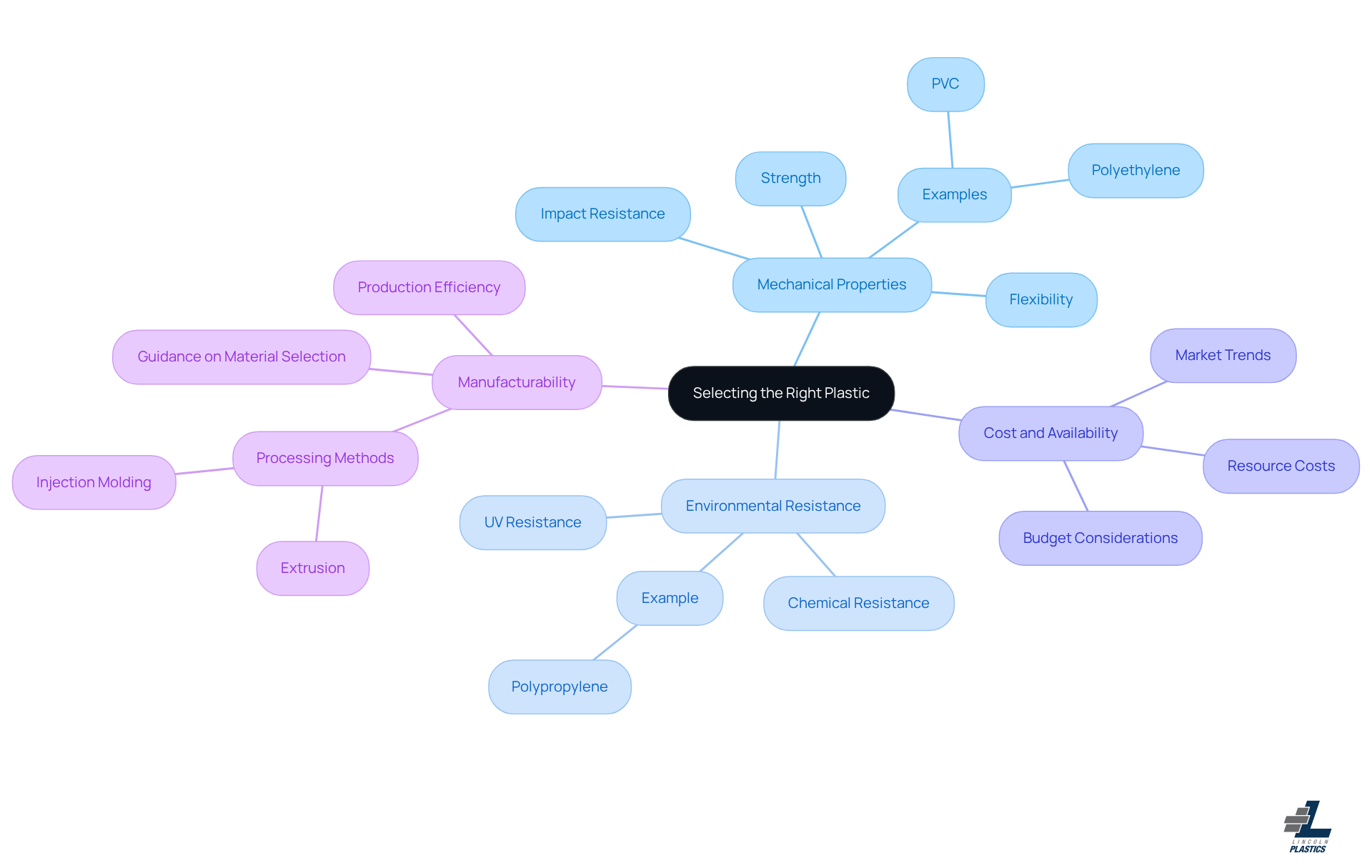
When it comes to picking the right plastic material for manufacturing, OEMs need to consider a few key factors. Let’s break it down together!
- Mechanical Properties: First off, you’ll want to evaluate the strength, flexibility, and impact resistance that your application needs. For instance, materials such as PVC and polyethylene are often chosen for their durability and ability to handle stress. This makes them a solid choice for various industrial applications. Remember, the mechanical properties are super important to ensure that components can handle the demands of operation without failing.
- Environmental Resistance: Now, let’s talk about how the material will perform in different environments. Will it be exposed to chemicals or UV light? Polypropylene is a great example of a plastic type, known for its resilience and often used in situations where harsh substances are involved. It keeps its integrity even in tough conditions, which is a big plus!
- Cost and Availability: Next up, consider your budget and how easy it is to get the materials you need. Understanding market trends can really help manufacturers anticipate changes in resource costs. With rising costs—thanks to factors like fuel prices—it’s crucial to be strategic about your resource choices to avoid shortages.
- Manufacturability: Lastly, make sure the plastic you choose can be processed with your intended manufacturing methods. For example, Lincoln Plastics has expertise that can enhance product features and streamline production. Their know-how in manufacturability is key to optimizing processes and ensuring that the final products meet quality standards. Plus, they offer guidance on material selection based on application needs, helping OEMs make informed choices that fit their specific requirements.
By carefully considering these factors, OEMs can select materials that not only meet performance criteria but also enhance product quality. This thoughtful approach to material selection is essential for optimizing manufacturability and ensuring the longevity of final products, especially as the plastics industry faces new challenges in 2026. So, what do you think? Ready to dive into your material selection process?
Conclusion
Understanding the different types of plastic materials is super important for original equipment manufacturers (OEMs) who want to optimize their production processes. You see, picking the right plastics doesn’t just boost product performance; it also helps with sustainability and keeping costs down. By getting a handle on the unique properties of materials like PVC, polyethylene, and polypropylene, OEMs can make smart choices that fit their operational needs and what the market demands.
Now, let’s talk about how plastics are classified. They fall into two main categories: thermoplastics and thermosetting plastics. Thermoplastics are versatile and recyclable, making them perfect for a variety of industrial uses. On the flip side, thermosetting plastics are known for their durability, especially in heavy-duty applications. It’s also crucial to think about mechanical properties, environmental resistance, cost, and manufacturability when choosing materials. These factors are key to ensuring that the plastics you select meet both performance and budget needs.
As manufacturing keeps evolving, embracing the right types of plastic materials is going to be essential for OEMs who want to stay competitive. By focusing on thoughtful material selection, manufacturers can boost product longevity, enhance operational efficiency, and support sustainability initiatives. The insights in this guide are here to help you navigate the complexities of plastic materials, empowering you to make choices that drive innovation and success in your industry.
Frequently Asked Questions
What are plastic materials and why are they important in manufacturing?
Plastic materials are synthetic or semi-synthetic substances that are essential in manufacturing due to their unique properties, such as malleability, which allows them to be shaped into various forms when heated.
What are some common types of plastic materials used in manufacturing?
Common types of plastic materials include PVC (polyvinyl chloride), polyethylene, and polypropylene, which are known for being lightweight, durable, and versatile.
How are plastic materials utilized in industrial applications?
Plastic materials are used in a wide range of industrial applications, including packaging solutions and parts in machinery. For instance, PVC is commonly used for pipe and tube profiles, while polyethylene is favored for its flexibility in protective coverings.
What are the specific advantages of polypropylene in manufacturing?
Polypropylene is known for its strength and resistance to chemicals, making it ideal for automotive parts and industrial equipment.
Why is it important for producers to understand the characteristics of plastic materials?
Understanding the characteristics of plastic materials helps producers select the right materials for their specific needs, ensuring that their products perform well and have a longer lifespan.
How have recent advancements in synthetic materials impacted manufacturing?
Recent advancements in synthetic materials have led to innovations that enhance manufacturing processes and reduce costs, making the smart use of these materials a key factor in modern manufacturing efficiency.
List of Sources
- Define Plastic Materials and Their Importance in Manufacturing
- M. Holland's 2026 Plastics Industry Trends & Predictions (https://mholland.com/market-insights/plastics-industry-trends)
- Plastics Industry Faces Cost and Policy Pressures (https://plasticstoday.com/industry-trends/plastics-industry-faces-mounting-challenges-in-2026)
- ptonline.com (https://ptonline.com/articles/2026-outlook-for-advanced-manufacturing)
- cornerstone-ms.com (https://cornerstone-ms.com/us-tariffs-affect-plastic-manufacturing)
- Classify Major Types of Plastics: Thermoplastics vs. Thermosetting Plastics
- linkedin.com (https://linkedin.com/pulse/in-depth-market-analysis-thermosetting-thermoplastics-trends-iywpf)
- Thermoplastic vs. Thermosetting Plastic: Key Differences, Properties, and Applications (https://osborneindustries.com/news/difference-between-thermoplastic-thermosetting-plastic)
- linkedin.com (https://linkedin.com/pulse/thermosetting-thermoplastics-market-growth-expected-9-h8qgf)
- recyclingtoday.org (https://recyclingtoday.org/blogs/news/thermoplastics-vs-thermosetting-plastic-understanding-the-differences)
- Explore Common Plastic Types: Properties and Applications
- Plastics Industry Faces Cost and Policy Pressures (https://plasticstoday.com/industry-trends/plastics-industry-faces-mounting-challenges-in-2026)
- openpr.com (https://openpr.com/news/4427065/high-performance-polyethylene-market-2026-2030-revealing)
- fortunebusinessinsights.com (https://fortunebusinessinsights.com/industry-reports/polypropylene-pp-market-101583)
- Polypropylene Market Size And Share Report, 2026-2033 (https://grandviewresearch.com/industry-analysis/polypropylene-market)
- Select the Right Plastic: Key Considerations for OEMs
- Master the Plastic Selection Guide: Best Practices for OEM Managers (https://lincoln-plastics.com/news-post/master-the-plastic-selection-guide-best-practices-for-oem-managers)
- The Ultimate Guide to Plastic Injection Molding for Industrial OEMs (https://worldclassplastics.com/ultimate-guide-to-plastic-injection-molding-for-industrial-oems)
- ideal-pro.com (https://ideal-pro.com/the-ultimate-guide-to-choosing-injection-molding-plastics-in-2026)
- Plastics Industry Faces Cost and Policy Pressures (https://plasticstoday.com/industry-trends/plastics-industry-faces-mounting-challenges-in-2026)
- Plastic Manufacturing Outlook 2026: Growth, Risks, Talent (https://cornerstone-ms.com/outlook-for-plastic-manufacturing)
Related posts

Right-Sized Production Runs: Flexibility Without the Waste
Lincoln Plastics offers right-sized production runs with a 10-hour minimum — balancing efficiency with flexibility so OEMs avoid oversized orders.


Co-Extrusion: Combining Two Materials for Better Performance
Lincoln Plastics offers co-extrusion, combining two plastics into a single profile for greater design freedom, performance, and cost savings.
Beyond Extrusion: Value-Added Services That Simplify Production
Beyond Extrusion: Value-Added Services That Simplify Production
