
Understanding the Tubing Extrusion Process and Its Importance
Introduction
The tubing extrusion process stands as a cornerstone of modern manufacturing, adeptly transforming raw plastic into versatile hollow profiles that serve a multitude of industries. This intricate technique not only enhances product quality and operational efficiency but also meets the specific demands of sectors ranging from agriculture to healthcare.
What challenges arise in ensuring precision and sustainability in this evolving landscape? Furthermore, how can manufacturers leverage the latest advancements to stay competitive? By understanding these dynamics, industry players can navigate the complexities of production while maintaining high standards of reliability and quality.
In addition, embracing innovative technologies can lead to significant improvements in both efficiency and environmental impact. As a result, manufacturers who adapt to these changes will not only meet current market demands but also position themselves as leaders in the field.
Define the Tubing Extrusion Process
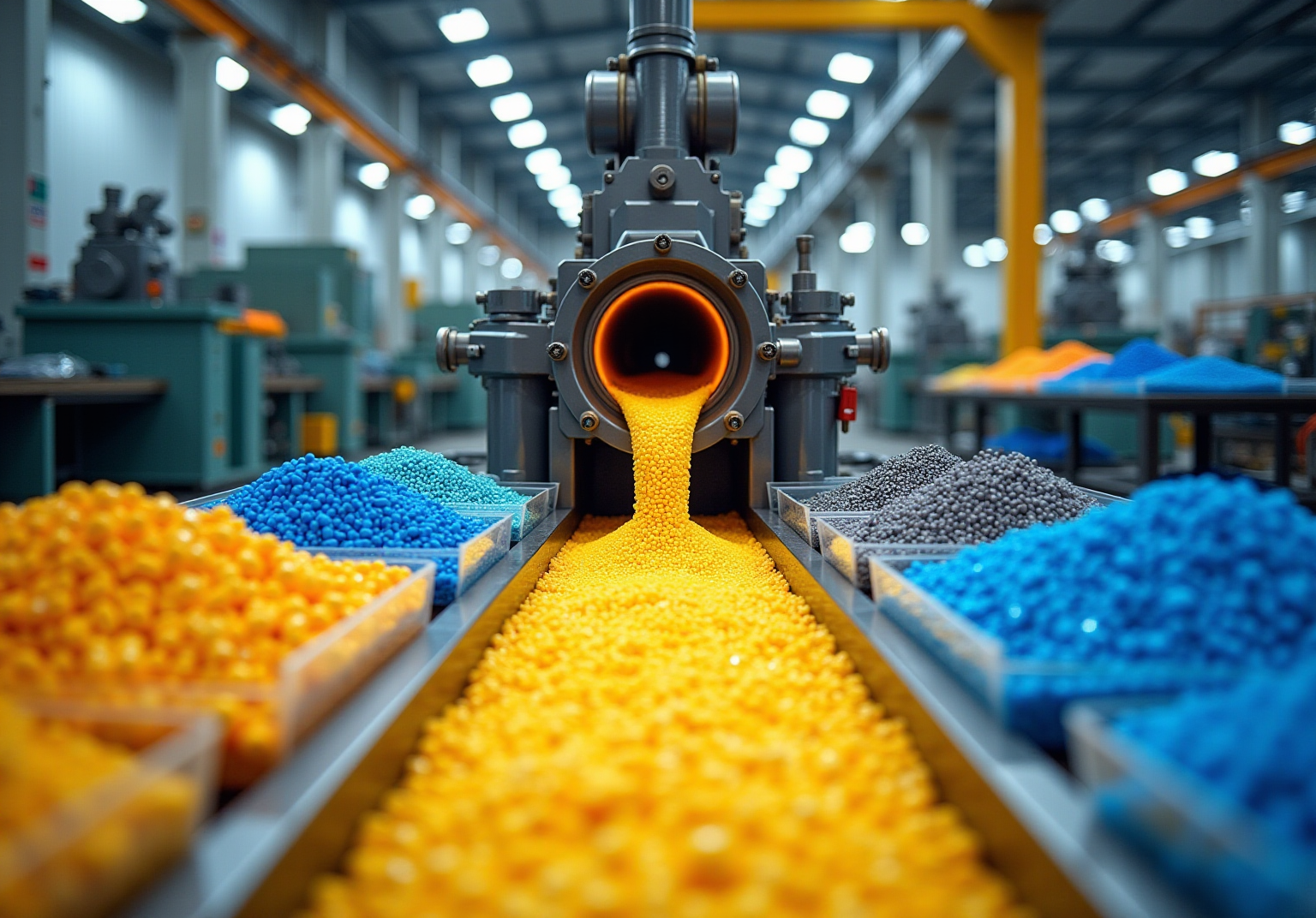
Lincoln Plastics stands at the forefront of the tubing extrusion process, which is an advanced manufacturing technique that produces hollow plastic profiles by pushing heated plastic material through a precisely designed die. The tubing extrusion process begins with raw plastic pellets, which are melted and extruded through the die, resulting in continuous tubes available in various diameters, wall thicknesses, colors, and lengths.
Specializing in both standard and custom round plastic profiles, Lincoln Plastics offers flexible manufacturing solutions tailored to meet specific needs. The extruded pipe is cooled and cut to specified lengths, making it versatile for numerous applications, including irrigation systems and medical devices. Recent advancements in the tubing extrusion process emphasize precision, enabling the production of tubes with consistent dimensions and properties, which is essential for ensuring optimal functionality in their intended applications.
Mastering accuracy in shaping not only enhances product quality but also significantly reduces waste and operational expenses. This highlights the crucial role of the tubing extrusion process in modern manufacturing. Furthermore, managing essential inputs such as skilled workers, materials, and equipment is vital for achieving high-quality production results. Metrics like the Process Capability Index (Cpk) and Process Performance Index (Ppk) are indispensable for understanding efficiency and quality control in shaping.
Emerging trends in the industry, including sustainability and the adoption of smart automated factories, are shaping the future of the tubing extrusion process in manufacturing technology. Lincoln Plastics also provides expert guidance on custom pipe and tube design, material selection, and vendor managed inventory (VMI) solutions. This ensures that clients receive the best possible support throughout the manufacturing process. Are you ready to elevate your production capabilities with Lincoln Plastics?

Explore Applications and Importance of Tubing Extrusion
Tubing manufacturing stands as a cornerstone across various industries, including agriculture, medical, automotive, and construction. In agriculture, extruded pipes are indispensable for center pivot irrigation systems, ensuring efficient water distribution that is vital for crop health and yield. Lincoln Plastics, a leader in OEM irrigation products and cable management solutions since 1948, excels in delivering custom solutions that utilize the tubing extrusion process to enhance irrigation efficiency. This not only boosts crop yield but also solidifies its role as a critical component in agricultural practices.
The medical sector relies heavily on precision pipes for manufacturing catheters and IV lines, where reliability is non-negotiable. The North American medical pipe market was valued at USD 4.99 billion in 2025 and is projected to soar to USD 9.79 billion by 2033. This growth is fueled by a robust healthcare infrastructure and an increasing demand for high-quality medical devices. In the automotive sector, extruded pipes are essential for fuel lines and cooling systems, ensuring optimal performance and safety.
Construction also benefits from pipe shaping for plumbing and electrical conduits, where tailored solutions are crucial to meet specific project needs. Furthermore, the rising demand for enhanced barrier characteristics in food and beverage packaging underscores the adaptability of pipe formation. The significance of the tubing extrusion process lies in its ability to provide high-quality, customized solutions that enhance operational efficiency and performance across diverse applications.

Detail the Steps and Materials in Tubing Extrusion
The tubing extrusion process is a sophisticated operation that encompasses several critical steps: substance preparation, melting, extrusion, cooling, and cutting. It begins with the introduction of raw plastic pellets - typically made from materials like PVC, polyethylene, or polypropylene - into a hopper. These pellets are then heated within a barrel, transforming them into a molten state. In the tubing extrusion process, this viscous plastic is subsequently forced through a die, shaping it into the desired tube profile. Upon exiting the die, the pipe undergoes cooling, usually via air or water, solidifying its form. Finally, the cooled pipes are cut to specified lengths.
Material selection plays a pivotal role in this procedure. Different plastics exhibit unique characteristics such as flexibility, strength, and chemical resistance, all of which must align with the intended application. For example:
- PVC is often favored for its durability and cost-effectiveness.
- Polyethylene is selected for its flexibility and impact resistance.
Recent research underscores the necessity of using only USP Class VI or ISO 10993 compliant resins in medical applications to ensure biocompatibility. As noted by materials researchers, "The appropriate substance can greatly improve the effectiveness and safety of the end product, especially in crucial applications such as medical hoses." Understanding these material characteristics and their implications is essential for refining the tubing extrusion process and achieving high-quality results.

Identify Variations in Tubing Extrusion Techniques
The pipe shaping process showcases a range of methods, each designed to fulfill specific production needs. The most common technique, the tubing extrusion process, stands out by producing single-layer tubes that cater to a diverse array of applications. In contrast, the tubing extrusion process allows for the simultaneous processing of multiple substances, resulting in multi-layered tubing that boasts enhanced characteristics, such as improved barrier performance and flexibility. This method proves particularly advantageous in sectors like medical devices, where the tubing extrusion process allows for a significant boost in functionality and safety through the combination of materials. The tubing extrusion process takes this concept further by integrating three distinct substances, which provides even greater customization options for specialized applications.
Recent advancements in the tubing extrusion process have led to remarkable improvements in manufacturing efficiency and product quality. For example, the latest Series 900 inline tubing dies facilitate the concurrent operation of multiple layers, effectively reducing material waste and minimizing operator error during assembly. This innovation exemplifies how the tubing extrusion process can streamline production while enhancing the performance characteristics of the final product.
Industry leaders are increasingly recognizing the transformative potential of the tubing extrusion process and its advanced techniques. The capability to blend diverse resins not only elevates product performance but also addresses the evolving demands of various sectors, including automotive and medical industries. As manufacturers delve deeper into the advantages of multi-layered tubing, the emphasis on the tubing extrusion process for customization and efficiency remains crucial, driving the development of innovative solutions tailored to specific operational needs.

Conclusion
The tubing extrusion process stands as a cornerstone in manufacturing, essential for producing high-quality plastic profiles across diverse industries. By converting raw plastic into tailored tubes, this technique not only boosts product functionality but also enhances operational efficiency. Grasping the complexities of tubing extrusion enables manufacturers to harness its potential for customized solutions, ensuring precise alignment with industry demands.
This article delves into the tubing extrusion process, covering its definition and applications in sectors like agriculture, medical, automotive, and construction. It outlines the production steps while emphasizing the critical role of material selection and technological advancements, such as co-extrusion techniques. These elements are pivotal in improving product characteristics and minimizing waste.
In conclusion, the tubing extrusion process is undeniably significant. As industries evolve, the need for high-quality, customized tubing solutions will escalate. By embracing advancements in this field and prioritizing sustainability and efficiency, manufacturers can elevate their production capabilities to meet the ever-changing market demands. Investing in the tubing extrusion process is not merely a choice; it is a strategic necessity for maintaining competitiveness in a challenging landscape.
Frequently Asked Questions
What is the tubing extrusion process?
The tubing extrusion process is an advanced manufacturing technique that produces hollow plastic profiles by pushing heated plastic material through a precisely designed die, resulting in continuous tubes of various diameters, wall thicknesses, colors, and lengths.
What materials are used in the tubing extrusion process?
The process begins with raw plastic pellets, which are melted and extruded through the die to create the tubes.
What types of plastic profiles does Lincoln Plastics specialize in?
Lincoln Plastics specializes in both standard and custom round plastic profiles.
What applications can the extruded tubes be used for?
The extruded tubes are versatile and can be used in various applications, including irrigation systems and medical devices.
How does precision impact the tubing extrusion process?
Recent advancements in precision allow for the production of tubes with consistent dimensions and properties, which is essential for ensuring optimal functionality in their intended applications and enhances product quality while reducing waste and operational expenses.
What metrics are important for quality control in the tubing extrusion process?
Metrics such as the Process Capability Index (Cpk) and Process Performance Index (Ppk) are important for understanding efficiency and quality control in the shaping process.
What emerging trends are influencing the tubing extrusion process?
Emerging trends include sustainability and the adoption of smart automated factories, which are shaping the future of the tubing extrusion process in manufacturing technology.
What support does Lincoln Plastics offer to clients?
Lincoln Plastics provides expert guidance on custom pipe and tube design, material selection, and vendor managed inventory (VMI) solutions to ensure clients receive optimal support throughout the manufacturing process.
List of Sources
- Define the Tubing Extrusion Process
- pressconnects.com (https://pressconnects.com/press-release/story/23821/leading-innovation-top-plastic-pipe-extrusion-line-manufacturer-advances-industry-standards)
- Plastics Extrusion: 4 Critical Statistics to Track for Increased Quality & Plant Profit (https://gaugeadvisor.com/2025/05/26/plastics-extrusion-4-critical-statistics-to-track-for-increased-quality-plant-profit)
- plastics-technology.com (https://plastics-technology.com/articles/plastics-extrusion-innovations-applications)
- freudenbergmedical.com (https://freudenbergmedical.com/technologies/medical-extrusions)
- North American Extruders Remain Resilient Amid Challenging Market - Light Metal Age Magazine (https://lightmetalage.com/news/industry-news/extrusion/north-american-extruders-remain-resilient-amid-challenging-market)
- Explore Applications and Importance of Tubing Extrusion
- openpr.com (https://openpr.com/news/4438104/agricultural-plastics-market-2026-irrigation-pipes-mulch)
- plastics-technology.com (https://plastics-technology.com/articles/plastics-extrusion-innovations-applications)
- 10 Essential Insights on Extrusion Tubing for OEMs (https://lincoln-plastics.com/news-post/10-essential-insights-on-extrusion-tubing-for-oems)
- mpo-mag.com (https://mpo-mag.com/pushing-the-limit-of-medical-device-extrusion)
- marksparksolutions.com (https://marksparksolutions.com/reports/medical-tubing-market)
- Detail the Steps and Materials in Tubing Extrusion
- Plastics Extrusion: 4 Critical Statistics to Track for Increased Quality & Plant Profit (https://gaugeadvisor.com/2025/05/26/plastics-extrusion-4-critical-statistics-to-track-for-increased-quality-plant-profit)
- jiantaimachine.com (https://jiantaimachine.com/plastic-extrusion-process-step-by-step-guide-2026)
- china-greetmed.com (https://china-greetmed.com/medical-tubing-extrusion-process)
- How Plastic Extrusion Works: A Comprehensive Technical Guide for 2026 - JURRY (https://jurryextrusion.com/news/how-plastic-extrusion-works-a-comprehensive-technical-guide-for-2026)
- Identify Variations in Tubing Extrusion Techniques
- todaysmedicaldevelopments.com (https://todaysmedicaldevelopments.com/news/guill-tool-engineering-extrusion-takes-new-turns-drain-tubes)
- biomerics.com (https://biomerics.com/center-of-excellence/next-generation-catheters-look-to-advanced-bump-tubing)
- raumedic.com (https://raumedic.com/competences/manufacturing/extrusion/co-extrusion)
- craftedplastics.com (https://craftedplastics.com/blog/co-extrusion-vs-traditional-extrusion-a-comparative-analysis)
- 10 Essential Insights on Extrusion Tubing for OEMs (https://lincoln-plastics.com/news-post/10-essential-insights-on-extrusion-tubing-for-oems)
Related posts

Why Custom Pipe Extrusion Matters More Than Ever
Standard pipe sizes don’t always work. Learn how Lincoln Plastics delivers custom diameters, wall thicknesses, and finishes in right-sized runs.


Reducing Trip Hazards with Custom Cord Management
Loose cords are more than messy — they’re a safety hazard. Lincoln Plastics’ custom cord covers and Flexiduct solutions improve safety and efficiency.
The Power of Custom Plastic Profiles for OEMs
Off-the-shelf profiles force compromises. Learn how Lincoln Plastics designs custom extruded profiles for OEMs with exact specs and right-sized runs.
