
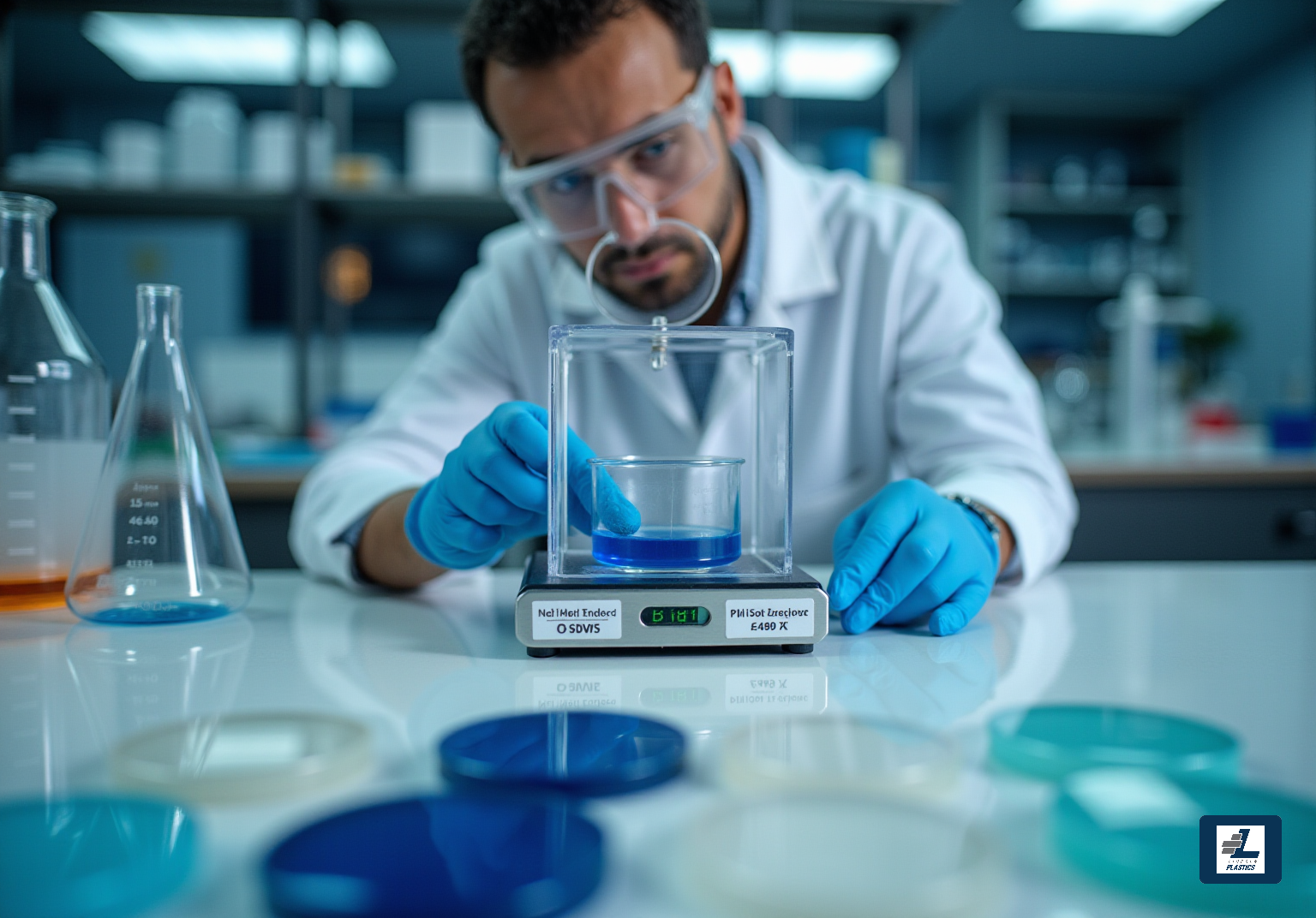
Understanding the Melting Temp of Plastic: Key Factors and Importance
Introduction
Understanding the melting temperature of plastic is super important for anyone in the synthetic materials game. This key property not only shapes how plastics are processed and molded but also plays a huge role in the quality and efficiency of the final products. But here’s the kicker: with so many factors influencing melting temperatures - from molecular structure to additives - manufacturers often find themselves juggling conditions to avoid costly defects.
So, what happens when that perfect balance isn’t achieved? And how can knowing this stuff really boost production outcomes? Let’s dive in and explore!
Define Melting Temperature of Plastic
Have you ever wondered what happens when synthetic materials start to change? Well, the melting temperature of these materials is that key moment when a thermoplastic goes from solid to liquid. This shift is crucial because it opens the door to processing, molding, or extrusion. Understanding the melting temperature is vital since it sets the stage for how we handle materials during the manufacturing process.
Different plastics have their own melting temperatures, which is influenced by their molecular structure and composition. For instance, polyethylene typically melts at a lower range, while polypropylene softens at a higher range of 160°C to 170°C. Knowing the melting temperature is crucial for producers. Why? Because it ensures that processing conditions are just right, which helps maintain product quality.
Now, let’s talk about the importance of melting temperature. Case studies show that incorrect heat settings can lead to defects in the final product. This really highlights how crucial the melting temperature is in production. Plus, industry experts often stress that understanding melting temperature can help prevent overheating and ensure proper flow. And why does that matter? It’s essential for achieving optimal performance. So, next time you’re working with synthetic materials, keep these points in mind!

Explain Importance of Melting Temperature in Manufacturing
Let’s discuss the melting temperature. It’s a key player in making synthetic items, and it really impacts how we process materials, the quality of the products, and how efficiently we produce them. At Lincoln Plastics, we know that if we don’t get the liquefaction degree just right, we could end up with issues like warping, a rough surface finish, or even incomplete molding.
For example, in manufacturing, keeping the melting temperature is crucial to achieve the desired results. It ensures that the plastic flows smoothly into the mold, capturing all those intricate details and giving us the finish we want. When we work with OEMs, we emphasize the importance of melting temperature control. This helps us optimize production processes, cut down on waste, and boost the durability of the final product. In the end, it leads to higher quality products and makes us more competitive in the market.
As ACOMold points out, "Understanding the melting temperature assists manufacturers in selecting the most suitable materials for their products." Take Polyethylene Terephthalate (PET), for instance; the melting temperature is between 250°C and 260°C. This really highlights how important it is to monitor temperatures to achieve high-quality production.
At Lincoln Plastics, we’re all about quality assurance. We use various check gauges to ensure everything fits and functions just right. Plus, we make sure to source colors that match your Pantone specifications for consistency across manufacturers. If heating levels aren’t adequate, we can run into problems like mold warpage and sink marks, which can compromise the integrity of the molded components.
By mastering the fusion point and leveraging our engineering skills, we’re committed to delivering high-quality production that meets the specific needs of our clients. So, let’s work together to ensure your products are the best they can be!

Identify Factors Influencing Plastic Melting Temperatures
When it comes to plastics, have you ever wondered what factors influence the melting temperature? Well, several factors come into play, like temperature, polymer chain length, crystallinity, and even additives. Generally, a higher molecular weight corresponds to a higher melting temperature because of stronger intermolecular forces. Take PEEK and PTFE, for instance. These materials, known for their hefty molecular weights, have a melting temperature that is much higher, making them perfect for those extreme heat applications. On the flip side, lighter plastics, such as PLA, are better suited for low-heat uses, like disposable packaging, because the melting temperature is lower for these materials.
Now, let’s talk about crystallinity. This factor significantly influences how plastics behave when they melt. Crystalline polymers usually have sharp melting points, while amorphous ones soften over a broader thermal range. This distinction is super important for manufacturers looking to optimize their processing conditions with respect to the melting temperature. For example, the processing temperatures such as injection molding, highlighting the need to choose materials based on their thermal characteristics, especially for specific applications.
But wait, there’s more! Additives can alter properties during phase transitions. Plasticizers might lower melting transition points, while fillers and reinforcements can boost thermal resistance. Understanding the melting behavior is crucial for manufacturers. It helps them pick the right materials and fine-tune processing conditions, ultimately enhancing product performance and efficiency in everything from automotive to electronics. As António Guterres pointed out, getting a grip on the melting temperature is key to addressing the environmental challenges posed by waste materials.
And don’t forget about testing methods! Methods like Melt Flow Index Testing and Thermomechanical Analysis provide valuable insights into the melting characteristics and processability of various plastics. This way, producers can make informed choices that lead to better outcomes.

Categorize Plastics by Melting Points and Thermal Behavior
When it comes to plastics, you might be surprised to learn that they can be grouped based on the type of plastic and how they behave when heated. Let’s break it down!
First up, we have thermoplastics. These are the types of plastics that you can heat up, reshape, and then heat again without any issues. Think about polyethylene. Then there’s polystyrene. Pretty neat, right?
On the flip side, we have thermosetting plastics. These guys are a bit different. Once you heat them and they harden, there’s no going back! Epoxy resins are a classic example. They don’t melt when you heat them; instead, they become permanently solid after curing.
So, why does all this matter? Well, the melting temperature is crucial. The melting point, the performance of the plastic, and its practical applications in the real world.
Now, next time you think about plastics, you’ll have a better idea of what’s going on behind the scenes!

Conclusion
Understanding the melting temperature of plastic is super important for manufacturers and producers. It really shapes the quality and performance of synthetic materials. So, let’s dive into how this melting temperature acts as a key player in the processing of plastics, affecting everything from how efficiently we produce to the integrity of the final product.
You might be curious about the melting points of different plastics and what influences these temperatures. Factors like molecular weight and crystallinity come into play, and let’s not forget about the need for precise thermal control during manufacturing processes like injection molding. Plus, knowing the difference between thermoplastics and thermosetting plastics is crucial. It helps manufacturers choose the right materials for their specific applications and processing methods.
Now, here’s the thing: understanding melting temperatures isn’t just a technical detail; it’s a game-changer. It can really drive innovation and efficiency in plastic manufacturing. By focusing on this knowledge, manufacturers can boost product quality, cut down on waste, and ultimately stay competitive in a fast-paced market. Embracing these principles can lead to exciting advancements in material science and sustainable practices within the industry. So, let’s keep this conversation going and explore how we can all contribute to a better future in plastic manufacturing!
Frequently Asked Questions
What is the melting temperature of plastic?
The melting temperature of plastic is the point at which a thermoplastic transitions from a solid to a liquid state, which is crucial for processing, molding, or extrusion.
Why is understanding the melting temperature of plastic important?
Understanding the melting temperature is vital for ensuring appropriate processing conditions, which helps maintain product quality during manufacturing.
How does the molecular structure of plastics affect their melting temperatures?
Different plastics have unique melting temperatures influenced by their molecular structure and composition. For example, polyethylene melts between 105°C and 135°C, while polypropylene softens at a higher range of 160°C to 170°C.
What are the consequences of incorrect heat settings during plastic processing?
Incorrect heat settings can lead to defects in the final product, emphasizing the importance of precise thermal control in production.
How does knowledge of melting temperatures help in preventing overheating?
Understanding the melting temperature of plastic helps in preventing overheating, ensuring proper flow, and achieving dimensional precision in the final product.
List of Sources
- Define Melting Temperature of Plastic
- Melt Temperature of 12 Popular Plastics You Need to Know (https://sogaworks.com/blogs/melt-point-of-plastics)
- moldingdynamics.net (https://moldingdynamics.net/blog/plastic-melting-point-chart)
- hlc-metalparts.com (https://hlc-metalparts.com/news/plastic-melting-points-85139049.html)
- Plastic Material Melt & Mould Temperature Chart | PlastikCity (https://plastikcity.co.uk/useful-stuff/material-melt-mould-temperatures)
- Melting Temperature of Plastic | Bausano (https://bausano.com/en/glossary/melting-temperature-of-plastic)
- Explain Importance of Melting Temperature in Manufacturing
- lincoln-plastics.com (https://lincoln-plastics.com/news-post/what-temperature-does-plastic-melt-key-factors-and-applications)
- hlc-metalparts.com (https://hlc-metalparts.com/news/plastic-melting-points-85139049.html)
- pmcplastics.com (https://pmcplastics.com/pmc-blog/blog-plastic-molding-manufacturing-melt-mold-temperature-importance)
- Plastic Melting Point Guide: Understanding Temperature Ranges (https://acomold.com/melting-point-of-plastic.html)
- Identify Factors Influencing Plastic Melting Temperatures
- lincoln-plastics.com (https://lincoln-plastics.com/news-post/what-temperature-does-plastic-melt-key-factors-and-applications)
- hlc-metalparts.com (https://hlc-metalparts.com/news/plastic-melting-points-85139049.html)
- Plastic Melting Point Guide: Understanding Temperature Ranges (https://acomold.com/melting-point-of-plastic.html)
- earth.org (https://earth.org/plastic-pollution-quotes)
- goodreads.com (https://goodreads.com/quotes/tag/plastics)
- Categorize Plastics by Melting Points and Thermal Behavior
- Plastic Material Melt & Mould Temperature Chart | PlastikCity (https://plastikcity.co.uk/useful-stuff/material-melt-mould-temperatures)
- Melt Temperature of 12 Popular Plastics You Need to Know (https://sogaworks.com/blogs/melt-point-of-plastics)
- hlc-metalparts.com (https://hlc-metalparts.com/news/plastic-melting-points-85139049.html)
- Plastic Melting Point Guide: Understanding Temperature Ranges (https://acomold.com/melting-point-of-plastic.html)


