

Understanding PVC Plastic Density: Key Properties and Measurement Techniques
Introduction
Have you ever thought about the role of PVC plastic density in our everyday lives? It’s pretty fascinating! This synthetic polymer isn’t just a technical term; it’s a game-changer in construction and manufacturing. Why? Well, it’s cost-effective and boasts impressive mechanical strength. But here’s the kicker: the relationship between density and performance isn’t always straightforward. You might be wondering how things like molecular structure, additives, and processing conditions come into play.
In this article, we’ll dive into the essential properties of PVC plastic density, explore measurement techniques, and discuss what all this means for real-world applications. So, let’s embark on this journey together and uncover the intriguing world of this versatile material!
Define PVC Plastic and Its Importance
Hey there! Have you ever thought about how versatile materials can be? Take PVC, which is short for Polyvinyl Chloride. It’s a synthetic polymer that’s made from vinyl chloride monomers, and it comes in both rigid and flexible forms. Rigid PVC is used for things like pipes, doors, and windows. On the flip side, flexible PVC is perfect for electrical insulation and flooring.
Now, let’s talk about Lincoln Plastics. They’re experts in crafting a variety of PVC products, including custom profiles. What’s really cool is that they can even tailor these profiles, so you get exactly what you need. Isn’t that neat?
One of the reasons PVC is so popular is its cost-effectiveness, durability, and versatility. It’s a favorite across different sectors, especially in construction and manufacturing. And speaking of quality, Lincoln Plastics takes it seriously. They have strict quality control measures, using multiple types of check gauges to ensure everything fits just right.
As the market changes, PVC keeps up with new applications and regulatory demands, making it a reliable choice. So, next time you see PVC in action, you’ll know just how much thought and expertise goes into making it work for you!

Explore PVC Properties Affecting Density
Did you know that the density of PVC typically falls between 1.3 and 1.45 g/cm³? This range is influenced by a few key factors that are pretty interesting to consider.
- First up, let’s talk about molecular structure. The arrangement of atoms in PVC affects the density significantly. A more compact structure tends to lead to a higher density, which is something to keep in mind.
- Next, we have additives. When you add things like plasticizers, fillers, or stabilizers, you can actually change the density. For example, adding plasticizers can lighten the material, making it more flexible. Isn’t that cool?
- And don’t forget about processing conditions! The methods used during manufacturing can also play a big role in how compact the final product is. Density is super important if you want to optimize PVC for specific uses.
So, what do you think? Ready to dive deeper into the world of PVC?

Analyze the Role of Density in PVC Applications
When determining if PVC is suitable for various applications, understanding density is crucial.
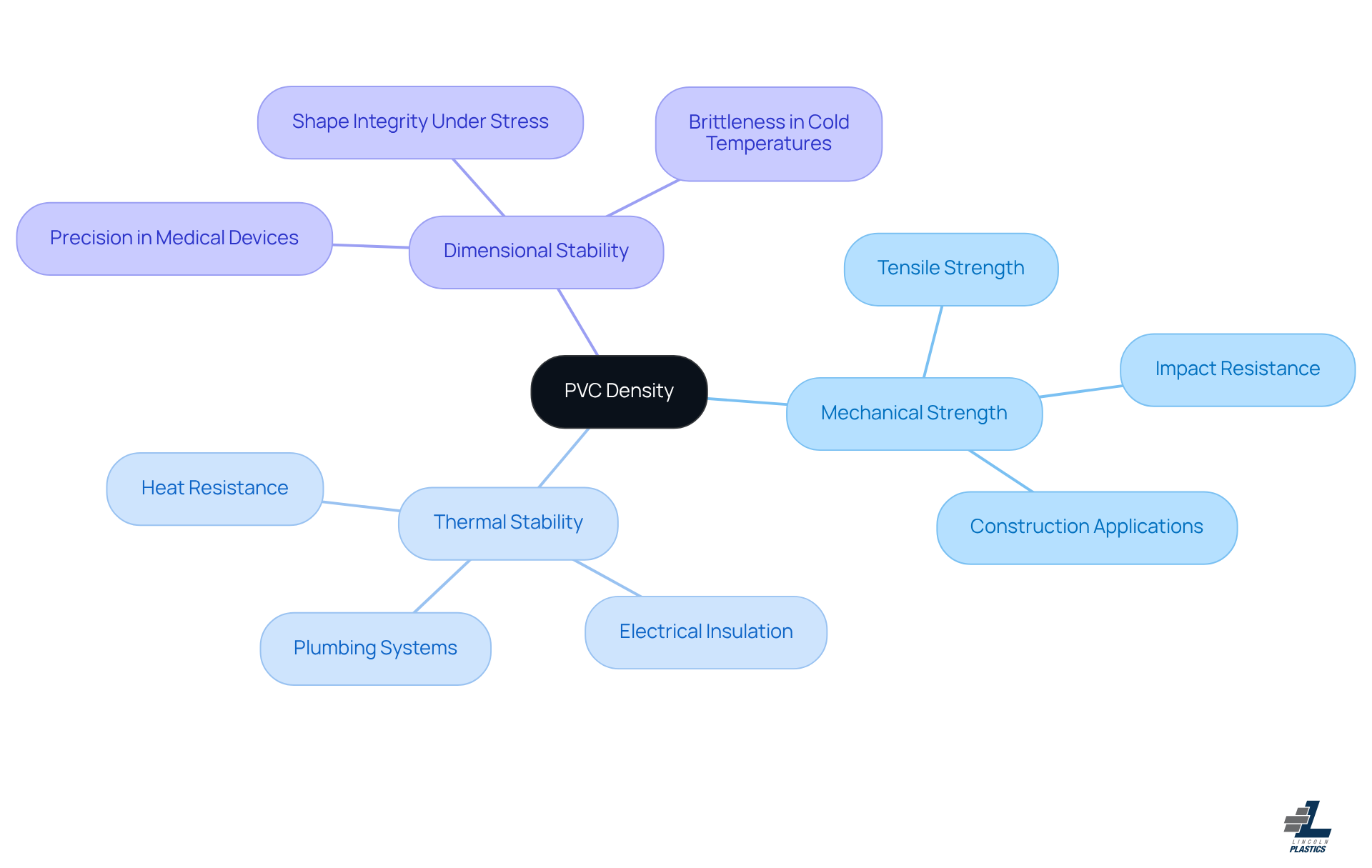
- Mechanical Strength: You know, mechanical strength. This makes it a go-to choice for construction materials like pipes and fittings. It’s crucial for these components to handle the tough conditions they face out there.
- Density: Now, let’s talk about density. The mass per unit volume of PVC can really influence how it reacts to heat. Heavier materials often show better heat resistance, which is super important for applications. Think about electrical insulation and plumbing systems - those guys need to stand up to heat. And hey, as Gordon Pollock pointed out, the PVC market is expected to bounce back in 2026, which might just put PVC in the spotlight as demand grows.
- Weight: In situations where precision is key, like in medical devices, the weight of PVC helps products keep their shape and integrity under stress. Knowing how these factors play out can really help manufacturers pick the right type of PVC for their needs. But, just a heads up - while PVC is generally reliable, it can get a bit brittle in cold temperatures, which might affect performance. So, careful selection is a must!
As we look ahead, the demand for PVC is increasing. This makes understanding density even more crucial for industry experts when assessing material suitability.
Measure PVC Density: Techniques and Tools
Are you measuring the density of PVC? It’s easier than you might think! Let’s explore a few methods that can help you get accurate results.
First up, we have the mass method. This one’s pretty straightforward: you weigh a known mass of PVC. From there, you can calculate the density using the formula: Density = Mass/Volume. Simple, right?
Next, there’s the water displacement method. This nifty tool gives you precise measurements of the volume per unit volume. You just compare the weight of your PVC sample in air and then in water. It’s a great way to get reliable measurements!
And don’t forget about Densitometers! These electronic devices measure density directly and are perfect for laboratory use. Each method has its perks, so the choice really depends on how accurate you need to be and what you’re using the PVC for.
So, which method will you try? Each has its own advantages, and knowing your options can make all the difference!

Conclusion
When it comes to PVC plastic density, it’s a game changer for understanding how versatile this material really is. You see, PVC, with its rigid and flexible forms, is a go-to in construction and manufacturing. Why? Because it’s cost-effective, strong, and resistant to chemicals. By diving into the details of PVC's density, we not only see its importance but also appreciate the skill that goes into making and using it.
So, what’s the scoop on PVC plastic density? Typically, it ranges from 1.3 to 1.45 g/cm³. This variation is influenced by things like molecular structure, additives, and how it’s processed. These factors play a big role in the material's strength, thermal stability, and overall integrity. For manufacturers, understanding these properties is key when choosing the right type of PVC for specific applications, especially in areas where precision and reliability are a must.
As we see the demand for PVC grow - especially with all those infrastructure projects popping up - recognizing the importance of PVC plastic density is crucial. Being able to measure density accurately using methods like water displacement, pycnometer, or densitometers can really boost material selection and application effectiveness. Embracing these insights not only helps industry pros but also sparks innovation and sustainability in how we use PVC across different sectors.
So, next time you think about PVC, remember its density isn’t just a number; it’s a vital part of what makes this material so useful. Let’s keep exploring and pushing the boundaries of what PVC can do!
Frequently Asked Questions
What is PVC plastic and what does it stand for?
PVC plastic stands for Polyvinyl Chloride. It is a synthetic polymer made from vinyl chloride monomers and is available in both rigid and flexible forms.
What are the main uses of rigid and flexible PVC?
Rigid PVC is commonly used in construction for applications such as pipes, doors, and windows. Flexible PVC is ideal for electrical insulation and flooring.
Who is Lincoln Plastics and what do they specialize in?
Lincoln Plastics is a company that specializes in crafting a variety of flexible profiles, including custom shapes and sizes, and can co-extrude colors into these profiles.
Why is PVC plastic density popular in various sectors?
PVC plastic density is popular due to its cost-effectiveness, chemical resistance, and mechanical strength, making it a favored material in construction and manufacturing.
How does Lincoln Plastics ensure the quality of their products?
Lincoln Plastics ensures quality through rigorous checks for fit and function, using multiple types of check gauges to confirm that everything fits correctly.
How does PVC adapt to market changes?
PVC adapts to market changes by keeping up with new applications and regulatory demands, solidifying its status as a cornerstone material in construction and manufacturing.
List of Sources
- Define PVC Plastic and Its Importance
- COMMODITIES 2026: Global 2026 PVC on the edge of production cuts and trade flow twists (https://spglobal.com/energy/en/news-research/latest-news/chemicals/122325-commodities-2026-global-2026-pvc-on-the-edge-of-production-cuts-and-trade-flow-twists)
- argusmedia.com (https://argusmedia.com/en/news-and-insights/latest-market-news/2748322-westlake-sees-rebounding-pvc-demand-in-2026)
- prm-taiwan.com (https://prm-taiwan.com/blog/case-studies-in-pvc-medical-tube-production-realworld-examples-success_518)
- plastech.biz (https://plastech.biz/en/news/Quality-innovation-and-sustainability-in-cables-and-PVC-21688)
- odr.chalmers.se (https://odr.chalmers.se/bitstreams/be83aa63-f40a-4671-99f5-c33fa24e83ec/download)
- Explore PVC Properties Affecting Density
- COMMODITIES 2026: Global 2026 PVC on the edge of production cuts and trade flow twists (https://spglobal.com/energy/en/news-research/latest-news/chemicals/122325-commodities-2026-global-2026-pvc-on-the-edge-of-production-cuts-and-trade-flow-twists)
- argusmedia.com (https://argusmedia.com/en/news-and-insights/latest-market-news/2748322-westlake-sees-rebounding-pvc-demand-in-2026)
- Polyvinyl Chloride (PVC) Plastic: Uses, Properties, Benefits & Toxicity (https://specialchem.com/plastics/guide/polyvinyl-chloride-pvc-plastic)
- US PVC Prices Rise in Early January 2026 on Supply Cut Expectations | ChemAnalyst (https://chemanalyst.com/NewsAndDeals/NewsDetails/us-pvc-prices-rise-in-early-january-2026-on-supply-cut-40680)
- Analyze the Role of Density in PVC Applications
- COMMODITIES 2026: Global 2026 PVC on the edge of production cuts and trade flow twists (https://spglobal.com/energy/en/news-research/latest-news/chemicals/122325-commodities-2026-global-2026-pvc-on-the-edge-of-production-cuts-and-trade-flow-twists)
- Plastic pipe demand growing due to its ‘critical roles' (https://plasticsnews.com/news/us-plastic-pipe-market-hit-268b-2028-amid-infrastructure-surge)
- idealbelltechnology.com (https://idealbelltechnology.com/is-pvc-or-pe-stronger)
- argusmedia.com (https://argusmedia.com/en/news-and-insights/latest-market-news/2748322-westlake-sees-rebounding-pvc-demand-in-2026)
- rroij.com (https://rroij.com/open-access/thermal-and-mechanical-properties-of-pvc-and-pvchdpe-blends-.php?aid=34069)
Related posts

Discover best practices for sourcing polycarbonate plastic products effectively and efficiently.


Explore the diverse applications of PVC across industries, showcasing its versatility and benefits.
Explore 10 innovative applications of co-extruded plastics for enhanced performance across industries.
