
Understanding PVC Pipe Manufacturing: Importance and Process Explained
Introduction
You might not think about it much, but PVC pipes are a big deal in plumbing and construction. These handy tubes, made from polyvinyl chloride, are crucial for everything from irrigation systems to municipal water supply networks. With the growing need for durable, cost-effective, and corrosion-resistant solutions, it’s important to understand how PVC pipes are made and why they’re so popular.
So, what’s driving this increasing reliance on PVC? And how have advancements in manufacturing changed the game? By exploring these questions, we can see just how much PVC pipes impact modern infrastructure and why they’re essential in various industries. Let’s dive in!
Define PVC Pipe Manufacturing and Its Significance
Have you ever thought about the pipes that keep our homes and businesses running smoothly? The process of PVC involves producing pipes, which is a highly versatile thermoplastic polymer. This process is crucial because PVC is everywhere—in plumbing, drainage, irrigation, and construction.
Why do we love PVC tubes? Well, they’re durable, resistant to corrosion, and easy on the wallet. That’s why you’ll find them in both homes and industries. For instance, did you know that over three-fourths of the new sanitary sewer systems in the U.S. and Canada use PVC pipes? That’s a testament to their reliability in our vital infrastructure.
And it doesn’t stop there! PVC is used for water distribution too. Its resistance to decay and abrasion means it lasts longer and works effectively for water distribution. Plus, manufacturers can create tubes in various sizes and specifications, which helps meet different client needs and boosts efficiency across many industries.
Looking ahead, the global PVC market is expected to hit around USD 71.90 billion by 2025. That’s a clear sign of strong demand, driven by ongoing construction and urban development initiatives. So, next time you see a PVC tube, you’ll know just how important it is!
Trace the History and Evolution of PVC Pipe Manufacturing
Did you know that the journey of PVC pipe manufacturing began back in 1872 with the synthesis of PVC? It wasn’t until the 1930s, though, that Germany started producing the first PVC tubes. This was a game-changer for the plumbing industry! It was superior to traditional materials and boasted durability. But, early on, there were some hiccups with flexibility and connecting those tubes.
Fast forward to the 1930s, and PVC began to replace iron conduits for transporting clean drinking water and sewage. This shift not only improved water quality but also reduced the need for extensive testing. Pretty cool, right?
Now, let’s talk about how advancements in technology really took PVC tubing to the next level. The 1950s brought the extruder method, which made PVC production more cost-effective and efficient. With the introduction of unplasticized PVC (PVC-U) and chlorinated PVC (CPVC), the range of applications expanded, allowing for better performance in various environments. By the 1960s and 1970s, PVC was becoming a household name in plumbing, especially with the launch of new products. These innovations not only cut down on labor costs and installation time but also offered fantastic resistance to scale and biological growth.
By the 1980s, PVC was widely used in both new constructions and retrofitting projects. Municipalities started recognizing their benefits in drainage systems and supply lines. PVC’s properties outshone metal for water applications since it didn’t rust or corrode, making it perfect for transporting clean drinking water and sewage.
Today, PVC tubing is celebrated for its versatility. It has solidified its essential role in modern infrastructure. So, next time you think about plumbing, remember the incredible journey of PVC tubing and its impact on our lives!

Outline the Key Stages in the PVC Pipe Manufacturing Process
When it comes to PVC pipe manufacturing, there’s a whole process behind it that ensures you get high-quality pipes. Let’s break it down into some key stages:
- Sourcing: It all starts with sourcing top-notch PVC resin, usually in powder form. This step is super important because the quality of the resin directly affects how the final product turns out.
- Blending: Next up, we blend that PVC resin with various additives like stabilizers and plasticizers. Why? To boost properties like UV resistance, flexibility, and chemical stability. Mixing it well is crucial to get a uniform chemical composition, which helps avoid any inconsistencies that could compromise the tubing's quality.
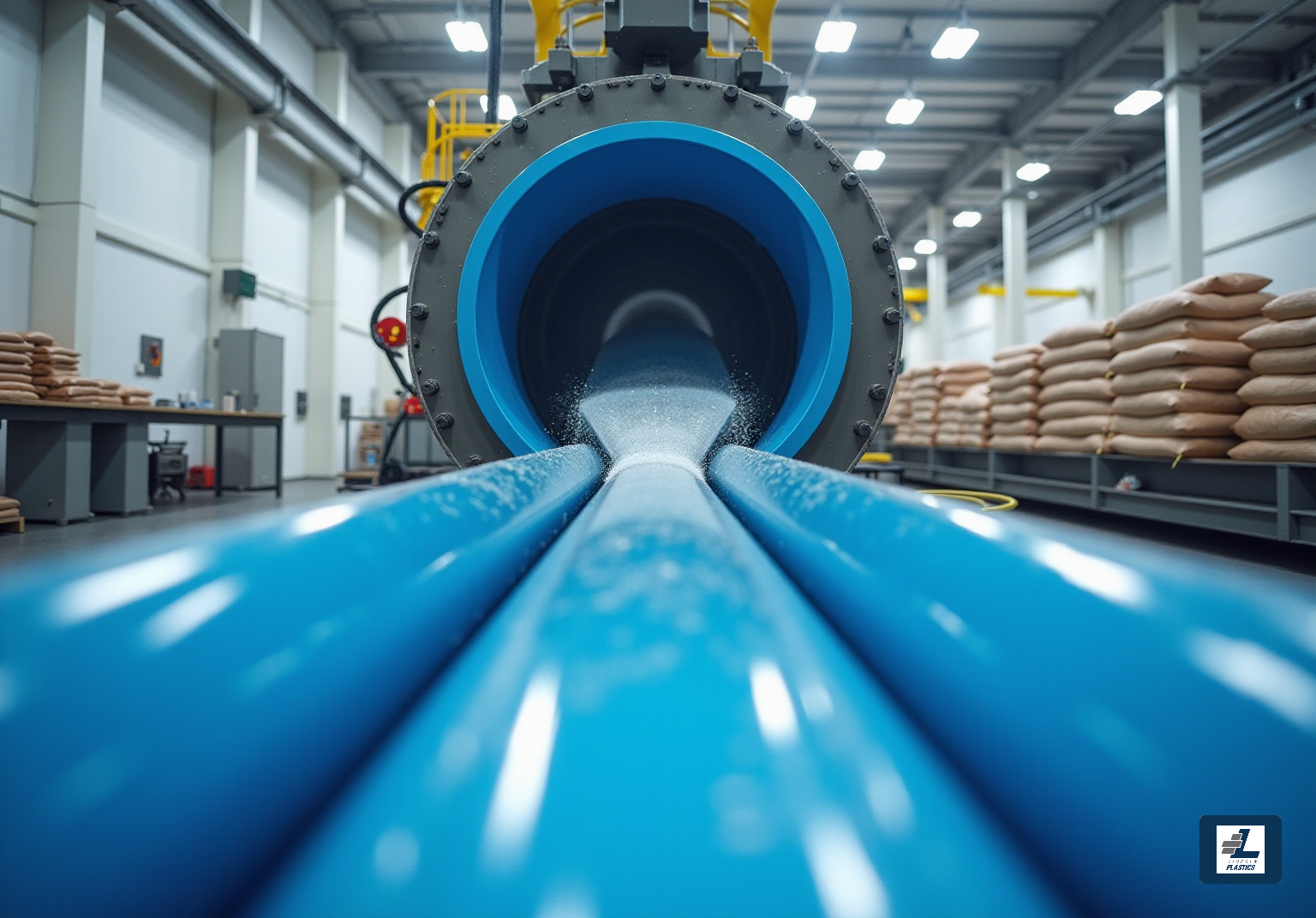
- Extrusion: Now, the compounded material goes into an extruder. Here, it’s heated to a controlled temperature, usually between 180°C and 220°C. This melting process allows the PVC to be shaped as it’s pushed through a die to form the tube. Getting the temperature just right is key to meeting industry standards.
- Cooling: After extrusion, the tubes need to cool down and be sized properly. They’re slowly cooled in a water bath and passed through sizing rings. This step is vital to keep the dimensions accurate and prevent any warping, ensuring they meet the required specifications.
- Cutting: Finally, the cooled tubes are cut to the desired lengths and packaged up for distribution. This isn’t just about getting them ready for shipment; it also makes sure they’re moisture-proof and resistant to damage.
Each of these stages plays a crucial role in the process, contributing to the durability and reliability of PVC tubes. You’ll find these tubes widely used in construction and plumbing. So, next time you see a PVC tube, you’ll know just how much work goes into making it!
Examine Types of PVC Pipes and Their Applications
In the realm of PVC pipe manufacturing, there’s a whole range of types, each designed for specific uses. Let’s break it down:
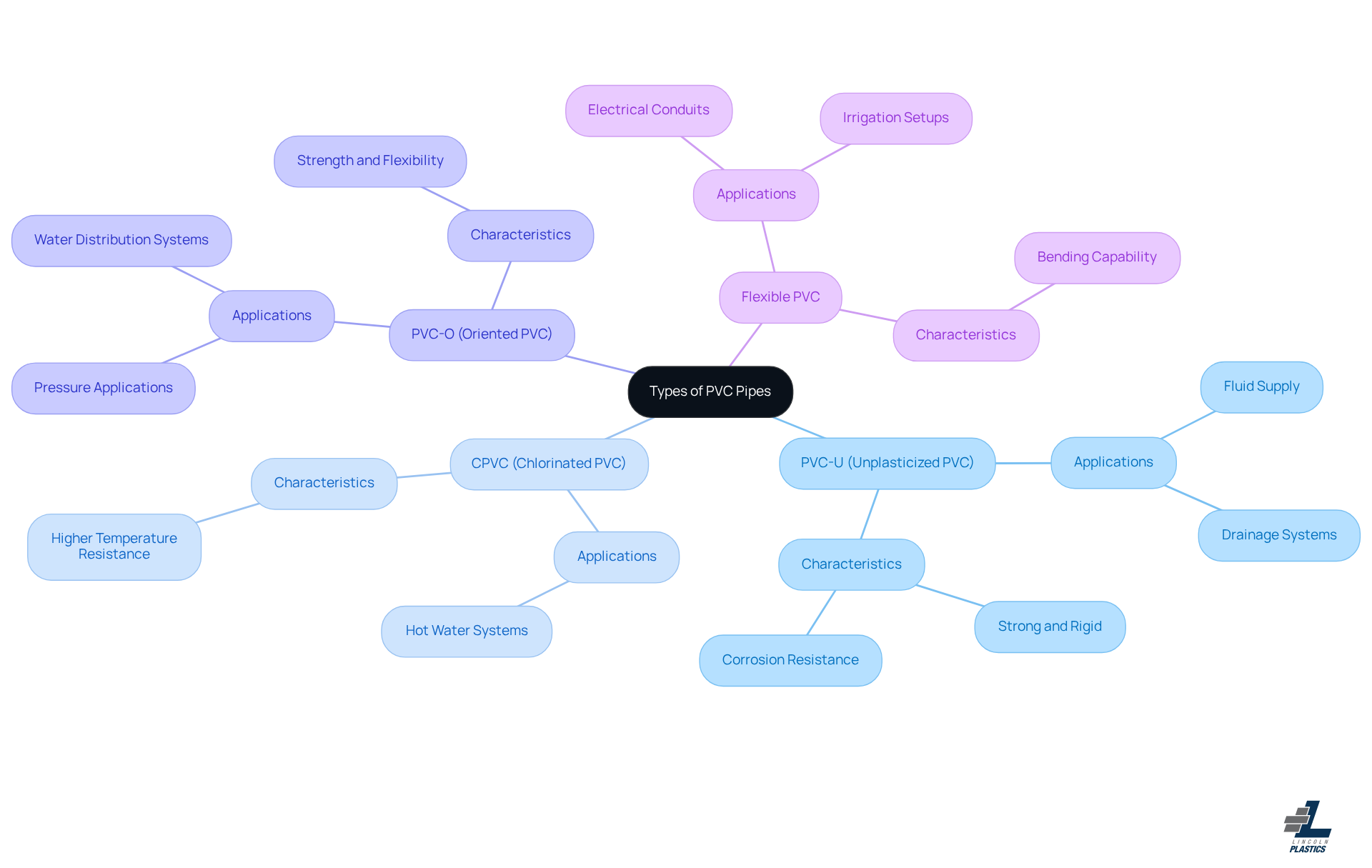
- PVC: This one’s a go-to for fluid supply and drainage systems. It’s strong and rigid, making it a reliable choice for both municipal and residential plumbing. Plus, its resistance to corrosion is a big win for contractors.
- CPVC: If you need something for heated liquids, CPVC is your friend. It can handle higher temperatures than regular PVC, so it’s perfect for hot water systems in homes and businesses.
- PVC-O: Known for its strength and flexibility, PVC-O is ideal for pressure applications. You’ll often find it in pipelines where durability is key.
- Flexible PVC: This type shines in situations where bending is necessary, like electrical conduits and certain irrigation setups.
These different kinds of PVC pipes are essential in plumbing, irrigation, construction, and industrial applications, which are all products of PVC technology. They really showcase the versatility and effectiveness of the material. For example, in agriculture, PVC has become a favorite due to its lightweight nature and corrosion resistance, which boosts its durability and performance in various environments.
You might be curious about the trends in PVC pipe usage. Well, the growing use of PVC-U and CPVC reflects a shift towards materials that are both cost-effective and reliable. Experts are pointing out how vital these materials are for modern infrastructure. In fact, the PVC pipe market is expected to hit a whopping USD 112.05 billion by 2032! That’s a clear sign of how important these materials are across different applications.
Conclusion
When you think about modern infrastructure, PVC pipes probably don’t come to mind right away. But they’re actually a key player in plumbing, irrigation, and construction. It’s fascinating how polyvinyl chloride not only shows off its versatility but also plays a crucial role in keeping our systems running smoothly, whether at home or in industrial settings.
Now, let’s talk about what we’ve covered in this article. We’ve explored the journey of PVC pipe manufacturing, from its historical roots to the advanced production techniques we see today. It’s been quite a ride! The evolution of PVC pipes highlights some impressive innovation and adaptability. Plus, the benefits of PVC—like its durability, cost-effectiveness, and resistance to corrosion—really emphasize why it’s becoming a go-to material for infrastructure projects around the globe.
You might be wondering, why is this important? Well, as urban development and infrastructure projects continue to grow, understanding the value of PVC pipes is more crucial than ever. Embracing their versatility and efficiency not only improves construction practices but also supports sustainable development. The future of PVC pipe manufacturing looks bright, and it’s an exciting opportunity for all of us to recognize and tap into its potential for building resilient infrastructure for generations to come.
Frequently Asked Questions
What is PVC pipe manufacturing?
PVC pipe manufacturing is the process of producing tubes from polyvinyl chloride (PVC), a versatile thermoplastic polymer. This manufacturing process is essential for creating pipes used in various applications such as plumbing, drainage, irrigation, and construction.
Why is PVC tubing significant?
PVC tubing is significant due to its durability, corrosion resistance, and cost-effectiveness. It is widely used in both residential and industrial settings, making it a critical component of infrastructure, especially in sanitary sewer systems and agricultural irrigation.
Where is PVC tubing commonly used?
PVC tubing is commonly used in plumbing, drainage systems, irrigation, and construction. It is particularly prevalent in new sanitary sewer systems in the U.S. and Canada, where over three-fourths of these systems utilize PVC materials.
What are the advantages of using PVC pipes?
The advantages of using PVC pipes include their durability, resistance to decay and abrasion, and affordability. These properties contribute to their effectiveness for water distribution and their long lifespan in various applications.
What is the expected growth of the PVC pipe manufacturing market?
The global PVC pipe manufacturing market is expected to reach around USD 71.90 billion by 2025, indicating strong demand driven by ongoing infrastructure projects and urban development initiatives.
List of Sources
- Define PVC Pipe Manufacturing and Its Significance
- Plastic pipe demand growing due to its ‘critical roles' (https://plasticsnews.com/news/us-plastic-pipe-market-hit-268b-2028-amid-infrastructure-surge)
- fortunebusinessinsights.com (https://fortunebusinessinsights.com/polyvinyl-chloride-pvc-pipes-market-109549)
- globenewswire.com (https://globenewswire.com/news-release/2025/11/03/3179120/0/en/Saudi-Arabia-PVC-Pipes-Industry-Report-2025-A-1-82-Billion-Market-by-2033-Driven-by-Infrastructure-Expansion-Water-Management-Investments-and-Rising-Residential-Industrial-Demand.html)
- m.economictimes.com (https://m.economictimes.com/industry/indl-goods/svs/paper-/-wood-/-glass/-plastic/-marbles/pvc-pipes-fittings-manufacturing-companies-to-see-recovery-this-fiscal-crisil-ratings/articleshow/122879187.cms)
- faygounion.com (https://faygounion.com/news/stay-ahead-of-the-curve-the-latest-trends-in-the-pvc-pipe-manufacturing-industry)
- Trace the History and Evolution of PVC Pipe Manufacturing
- millerplastics.com (https://millerplastics.com/the-history-and-development-of-pvc-piping)
- horonpipe.com (https://horonpipe.com/news/history-of-pvc-pipe-in-plumbing-and-its-evolution-over-time.html)
- The Early History of PVC Pipe (https://jmeagle.com/early-history-pvc-pipe)
- The Evolution of PVC: From Discovery to Modern Applications - Vinyl (https://vinylinfo.org/news/the-evolution-of-pvc-from-discovery-to-modern-applications)
- Outline the Key Stages in the PVC Pipe Manufacturing Process
- bausano.com (https://bausano.com/en/press-and-news/pvc-pipe-manufacturing-how-does-it-work)
- News - The Complete Guide to PVC Pipe Manufacturing (https://qiangshengplas.com/news/the-complete-guide-to-pvc-pipe-manufacturing-understanding-each-step-and-optimizing-production)
- tldvietnam.com (https://tldvietnam.com/products/pvc-pipe-manufacturing-process)
- dulet.in (https://dulet.in/pvc-pipe-manufacturing-process)
- eupegypt.com (https://eupegypt.com/blog/pvc-pipe-manufacturing-process)
- Examine Types of PVC Pipes and Their Applications
- statista.com (https://statista.com/statistics/1110156/market-value-pvc-pipes-globally?srsltid=AfmBOop6mm_GuDR3YYcuzBOw0OA3zgX8axJXplkQbKyx6Hx_Vh-OsQ-a)
- fortunebusinessinsights.com (https://fortunebusinessinsights.com/polyvinyl-chloride-pvc-pipes-market-109549)
- Pvc Pipes Market Size, Opportunities & YoY Growth Rate, 2033 (https://coherentmarketinsights.com/market-insight/pvc-pipes-market-5109)
- phtopindustry.com (https://phtopindustry.com/what-are-the-different-types-of-pvc-pipes)
- sintexonline.com (https://sintexonline.com/blog/unlocking-the-versatility-of-pvc-pipes-top-applications-you-should-know?srsltid=AfmBOoqOTeIEYhR-soKQhtwVBQfbh1DEeNdxmV5sEFLtPreRX1vmDNU4)
Related posts

Why Custom Pipe Extrusion Matters More Than Ever
Standard pipe sizes don’t always work. Learn how Lincoln Plastics delivers custom diameters, wall thicknesses, and finishes in right-sized runs.


Reducing Trip Hazards with Custom Cord Management
Loose cords are more than messy — they’re a safety hazard. Lincoln Plastics’ custom cord covers and Flexiduct solutions improve safety and efficiency.
The Power of Custom Plastic Profiles for OEMs
Off-the-shelf profiles force compromises. Learn how Lincoln Plastics designs custom extruded profiles for OEMs with exact specs and right-sized runs.
