
Understanding PVC Extrusion Profiles: Importance and Applications
Introduction
You know, the world of manufacturing is often shaped by those unseen materials that form the backbone of countless products. Take PVC extrusion profiles, for instance. These custom plastic shapes are created by pushing molten polyvinyl chloride through a die, and they’re not just versatile - they’re essential in industries like construction, automotive, and electrical.
As the demand for these profiles keeps climbing, you might be wondering: how do manufacturers tackle the challenges of production while making the most of this indispensable material? Well, exploring the significance, applications, and future trends of PVC extrusion profiles opens up a landscape brimming with opportunity and innovation. So, let’s dive in!
Defining PVC Extrusion Profiles: Key Concepts and Significance
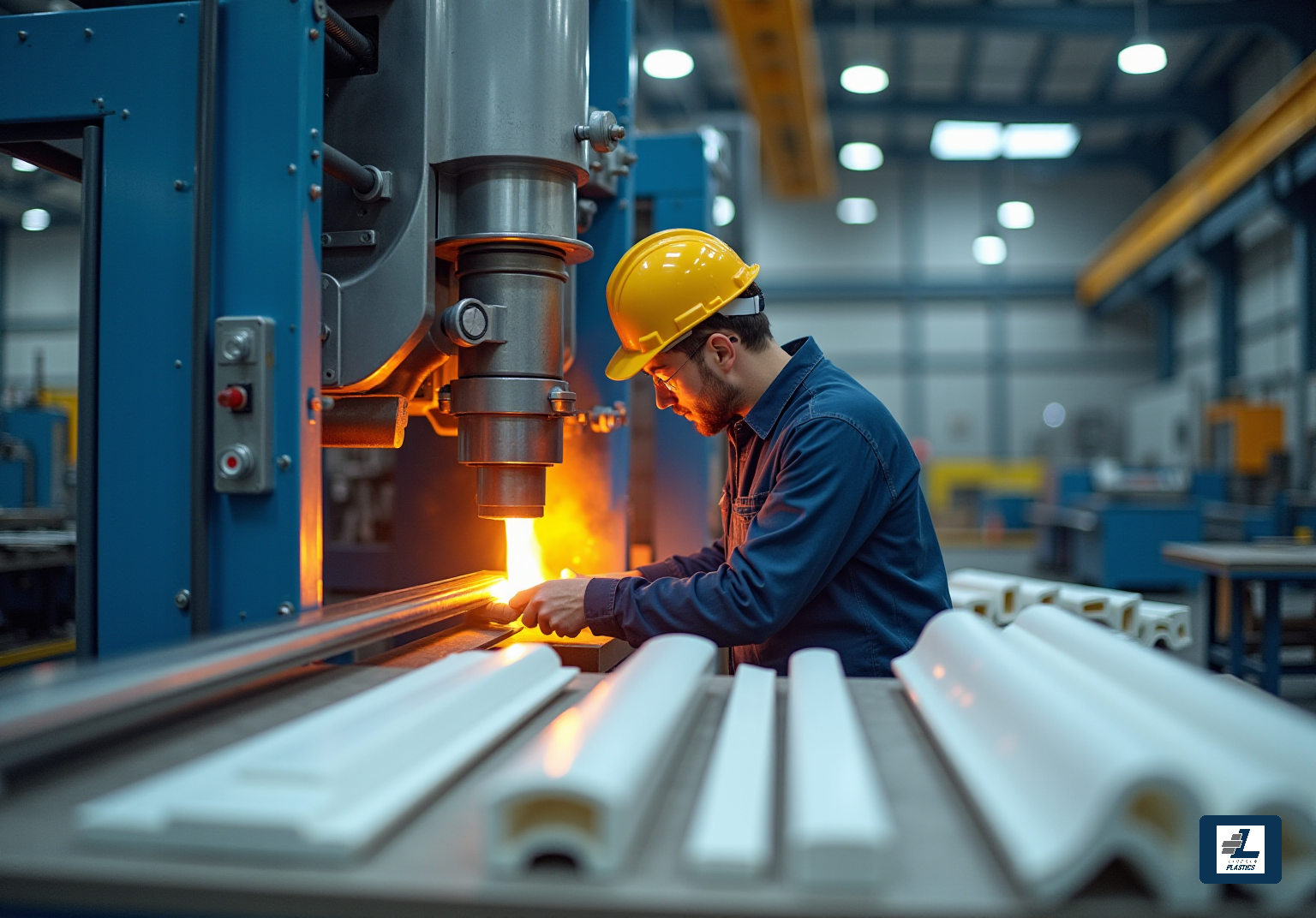
Have you ever thought about how those custom plastic shapes are made? Well, the fascinating aspect of PVC extrusion profiles is quite remarkable! They’re created by pushing molten polyvinyl chloride (PVC) through a precision die, resulting in continuous forms with uniform cross-sections. What makes them so important in manufacturing? Their versatility and durability! You’ll find them in all sorts of industries, from construction to automotive and electrical.
For instance, in the electrical world, PVC structures play crucial roles as conduit and PCB rail supports. They protect wiring and provide stable support for circuit boards. Pretty essential, right?
Now, let’s talk about Lincoln Plastics. They specialize in producing a variety of profiles, including co-extrusion options. This means they can integrate different colors into their designs - like a cool 'yellow stripe.' Customizing profiles to specific dimensions, shapes, and surface finishes really boosts their functionality, especially in piping systems and structural components. This customization not only meets the exact needs of Original Equipment Manufacturers (OEMs) but also helps improve operational efficiency and cut down on maintenance costs.
And here’s a fun fact: PVC materials are super durable! They resist cracking, warping, and corrosion, which means you won’t have to replace them often. That’s a win for preventing production downtime!
Lincoln Plastics also takes quality seriously. They ensure their products meet essential dimensions through a solid quality assurance process. This includes:
- Dedicated quality plans
- A quality book with drawings
- Critical in-process checks
- Run documentation
As more sectors recognize the importance of PVC extrusion profiles, the demand for these products is increasing. It’s clear they play a vital role in modern manufacturing.
Plus, with advancements in technology, PVC processing is getting even better. This allows for the creation of intricate and high-performance shapes that meet the ever-changing market demands. And let’s not forget, PVC is cost-effective to produce, which aligns perfectly with the industry’s move towards sustainable manufacturing practices. So, what do you think? Isn’t it exciting to see how PVC shapes are shaping our world?

Historical Context and Evolution of PVC Extrusion Profiles
Have you ever wondered about the journey of PVC extrusion profiles? Well, it all started back in the early 20th century, with some significant strides made in the 1930s when the first real thermoplastic molding methods came into play. Initially, PVC was mainly used for things like electrical insulation and plumbing. But as the years rolled on, technology took a leap forward. We saw the introduction of more efficient machines and co-shaping techniques, which really opened up the possibilities for PVC structures.
Fast forward to today, and PVC shaping has become a vital manufacturing method. It allows us to create intricate forms and multi-layered designs that meet a variety of industry needs. At Lincoln Plastics, we’re all about collaboration. We work closely with OEMs to ensure our products not only meet but exceed expectations.
Our process includes special checks for 'fit and function.' We use various types of check gauges to make sure everything fits just right for its intended use. Plus, if you have specific requirements, we can source colors that match your Pantone specifications. This way, you get consistency across manufacturers.
This commitment to accuracy and personalization really highlights our dedication to providing solutions that are tailored to your needs. So, if you’re looking for reliable products, let’s chat about how we can help!

Characteristics and Types of PVC Extrusion Profiles: Applications Across Industries
There are three main types of PVC extrusion profiles: rigid, flexible, and foamed. Each type of PVC extrusion profile has its own applications, particularly in construction and manufacturing.
Rigid profiles are a go-to for their strength and durability. Think window frames, doors, and piping systems - these are built to last! On the flip side, flexible profiles are all about bendability. They’re perfect for seals and gaskets, which are essential for keeping products airtight and watertight in various products. And let’s not forget about foamed PVC shapes. They’re lightweight and great for insulation, making them popular for decorative components and interior finishes. Plus, they help boost energy efficiency and add a nice touch to aesthetics.
Now, the construction sector really leans on products made of rigid PVC. It’s a big player in the market, particularly with all the infrastructure modernization occurring and the demand for durable materials like window frames. In 2024, the rigid segment held the largest market share in the PVC field. Why? Because there’s a growing need for reliable and long-lasting materials.
Flexible profiles are also making waves in manufacturing, particularly in the automotive and appliance sectors. They enhance product functionality and performance, which is a win-win!
You might be wondering how this all ties into sustainability. Well, the adaptability of these designs not only sparks innovation but also aligns with the industry's shift towards greener practices. Producers are increasingly on the lookout for materials that reduce environmental impact while still delivering high performance. So, whether you’re in construction or manufacturing, there’s a lot to consider when it comes to PVC shapes!

Benefits and Challenges of PVC Extrusion Profiles in Manufacturing
offer some pretty great perks, such as being cost-effective, versatile, and super easy to customize. Manufacturers can whip up designs in all sorts of shapes, sizes, and colors, which means they can adapt to fit specific client needs. Plus, PVC has some fantastic qualities - think moisture resistance, chemical resistance, and durability - that really boost the longevity of these structures, making them ideal for outdoor use.
But, let’s be real: producing PVC profiles isn’t always a walk in the park. There are challenges, like maintaining processing temperatures, and ensuring die design precision. For instance, if there are pressure variations during shaping, you might end up with issues like uneven wall thickness or stress concentration areas. Not exactly what you want if you're aiming for high-quality products!
And don’t forget about overheating. If things get too hot during processing, you could face discoloration or even degradation of the material. So, how do manufacturers tackle these hurdles? Well, proper training and a solid understanding of the shaping process are key. Regularly monitoring processing conditions and providing thorough training for staff on best practices can really boost product quality.
For example, addressing the root causes of common defects, like not enough UV stabilization or the wrong material formulation, can lead to better durability and performance of PVC profiles. By focusing on these areas, companies can achieve optimal results and keep their production standards high. So, what do you think? Ready to dive into improving your PVC production processes?
Future Trends in PVC Extrusion Profiles
You know, the future of PVC shapes is really gearing up for some exciting changes, thanks to innovation and technology. Think about it: sustainable materials are on the rise, and they’re set to boost production in a big way.
Now, let’s talk about automation. The industry is really focusing on this aspect, with a noticeable shift towards advanced manufacturing techniques. This isn’t just a trend; it’s reshaping the market landscape and responding to the increasing demand for efficiency across various industries.
As businesses prioritize efficiency and sustainability, the use of PVC extrusion profiles is becoming essential in meeting these evolving needs. They’re positioning themselves as leaders in the market. So, what do you think? Isn’t it great to see how innovation is paving the way for a more sustainable future?

Conclusion
You know, the importance of PVC extrusion profiles in today’s manufacturing scene is huge. These flexible plastic shapes, made from polyvinyl chloride, play a key role across various industries. From providing insulation in electrical setups to serving as structural components in construction, they’re everywhere! Plus, the fact that they can be customized in shape, size, and color makes them even more valuable for manufacturers looking to meet specific needs while boosting performance and efficiency.
Now, let’s talk about some key insights we’ve covered. We’ve looked at how PVC technology has evolved over time, explored the different types of profiles - rigid, flexible, and foamed - and highlighted the benefits they bring, like durability and cost-effectiveness. We also touched on some production challenges, such as keeping material consistency and managing processing conditions. It’s clear that strategic planning and quality control are essential for achieving top-notch results. And looking ahead, there’s a growing focus on sustainability and automation, which aligns perfectly with the industry’s shift towards greener practices.
As the demand for PVC extrusion profiles keeps climbing, it’s vital for manufacturers to embrace innovation and adapt to the ever-changing market. By focusing on quality, sustainability, and efficiency, businesses can not only improve their production processes but also play a part in creating a more sustainable future. Engaging with the latest advancements in PVC technology will help manufacturers stay competitive and responsive to the diverse needs of various industries. After all, PVC extrusion profiles are shaping the manufacturing landscape in a big way!
Frequently Asked Questions
What are PVC extrusion profiles and how are they made?
PVC extrusion profiles are custom plastic shapes created by pushing molten polyvinyl chloride (PVC) through a precision die, resulting in continuous forms with uniform cross-sections.
Why are PVC extrusion profiles important in manufacturing?
They are important due to their versatility and durability, making them suitable for various industries, including construction, automotive, and electrical applications.
What are some specific applications of PVC profiles in the electrical industry?
In the electrical industry, PVC profiles are used as insulation channels and PCB rail supports, protecting wiring and providing stable support for circuit boards.
What customization options are available for PVC extrusion profiles?
Customization options include different dimensions, shapes, surface finishes, and co-extrusion options, which allow for integrating different colors into the designs.
How does Lincoln Plastics ensure the quality of their PVC products?
Lincoln Plastics ensures quality through dedicated quality plans, a quality book with drawings, critical in-process checks, and run documentation.
What are the durability benefits of PVC materials?
PVC materials are durable, resisting cracking, warping, and corrosion, which reduces the need for frequent replacements and helps prevent production downtime.
How has the technology for PVC extrusion profiles evolved over time?
The technology has evolved from early 20th-century methods to advanced machines and co-shaping techniques, enabling the creation of intricate forms and multi-layered designs.
How does Lincoln Plastics collaborate with Original Equipment Manufacturers (OEMs)?
Lincoln Plastics collaborates closely with OEMs to ensure that their PVC products meet and exceed quality standards and specific requirements, including color matching to Pantone specifications.
What are the environmental benefits of PVC?
PVC is recyclable and energy-efficient to produce, aligning with the industry's move towards sustainable manufacturing practices.
List of Sources
- Defining PVC Extrusion Profiles: Key Concepts and Significance
- 10 Benefits of Plastic PVC Extrusion Profiles for OEMs (https://lincoln-plastics.com/news-post/10-benefits-of-plastic-pvc-extrusion-profiles-for-oe-ms)
- Unlocking the Versatility of Plastic Profile Extrusion (https://lakelandplastics.com/understanding-the-versatility-of-plastic-profile-extrusion)
- m3extrusion.com (https://m3extrusion.com/how-pvc-extrusion-profiles-solve-common-industrial-manufacturing-challenges-in-the-usa)
- Understanding PVC Extrusion Profiles and Their Applications | Petro Extrusion - Plastic Extrusion Specialists (https://petroextrusion.com/understanding-pvc-extrusion-profiles-and-their-applications)
- accextrusion.com (https://accextrusion.com/news/the-importance-of-pvc-profile-extrusion-machines)
- Historical Context and Evolution of PVC Extrusion Profiles
- midtech-mc.com (https://midtech-mc.com/how-will-plastic-extrusion-technology-revolutionize-the-next-decade-deep-dive-into-global-trends-sustainable-solutions)
- condaleplastics.com (https://condaleplastics.com/company-news/celebrating-50-years-plastic-extrusions)
- jwellplasticextruder.com (https://jwellplasticextruder.com/blog/pvc-extrusion-machine-innovations-china-import-export-fair)
- dachangplastic.com (https://dachangplastic.com/info/how-the-pvc-extrusion-process-changed-103159590.html)
- sheet-extrusionline.com (https://sheet-extrusionline.com/news/advancements-in-plastic-extrusion-technology-a-look-at-the-future-224319.html)
- Characteristics and Types of PVC Extrusion Profiles: Applications Across Industries
- The Extrusion Industry in 2025: Innovations, Trends, and Opportunities (https://plextrusions.com/extrusion-blog/the-extrusion-industry-in-2025-innovations-trends-and-opportunities)
- Polyvinyl Chloride Market Size, Growth 2026-2034 (https://polarismarketresearch.com/industry-analysis/polyvinyl-chloride-pvc-market)
- nexizo.ai (https://nexizo.ai/blogs/5-benefits-of-using-rigid-pvc-profiles-for-industrial-applications?srsltid=AfmBOooHNBp7mF3VB1hCTbypW3ml5n8jPv9KdNvZBoL72B7Hki_oeefn)
- paulmurphyplastics.com (https://paulmurphyplastics.com/industry-news-blog/why-plastic-profile-extrusion-is-key-to-product-innovation)
- mordorintelligence.com (https://mordorintelligence.com/industry-reports/north-america-polyvinyl-chloride-pvc-market)
- Benefits and Challenges of PVC Extrusion Profiles in Manufacturing
- Problems that may be encountered during plastic extrusion processing - SHARC (https://sharcpm.com/news/plastic-extrusion-processing-problems)
- Overcoming Challenges and Misconceptions of Extrusion - Alexandria Industries (https://alexandriaindustries.com/industry-news/overcoming-challenges-misconceptions-extrusion)
- lincoln-plastics.com (https://lincoln-plastics.com/news-post/10-benefits-of-plastic-pvc-extrusion-profiles-for-oe-ms?dcc2137a_page=14)
- PVC extrusion in transition: overcoming challenges and tapping potential (https://inoex.com/news/detail/pvc-extrusion-in-transition-overcoming-challenges-and-tapping-potential)
- qiangshengplas.com (https://qiangshengplas.com/news/combating-common-defects-in-pvc-profile-extrusion-a-comprehensive-guide-for-manufacturers)
- Future Trends in PVC Extrusion Profiles
- plasticsnews.com (https://plasticsnews.com/sponsored-content/future-extrusion-kraussmaffei-extrusion-tecdays-inspire-industry)
- The Extrusion Industry in 2025: Innovations, Trends, and Opportunities (https://plextrusions.com/extrusion-blog/the-extrusion-industry-in-2025-innovations-trends-and-opportunities)
- transamshop.co.uk (https://transamshop.co.uk/blogs/news/future-plastic-extrusion-trends-2024)
Related posts

Discover key plastic extrusion process steps that ensure quality and efficiency for OEM managers.


Discover essential FDA compliant plastics for safe and sustainable food packaging solutions.
Discover the essential properties, types, and applications of high temp plastic in various industries.
