

Understanding Plastic Thermal Conductivity for OEM Applications
Introduction
Navigating the world of thermal conductivity in plastics can feel a bit overwhelming, right? For Original Equipment Manufacturers (OEMs), understanding these intricacies is crucial, especially with the complexities of modern materials at play. You see, plastic thermal conductivity can vary quite a bit depending on its composition and structure. This variation has some serious implications for performance in critical applications - think electronics and automotive components.
As industries lean more on these materials to manage heat effectively, a big question arises: how can manufacturers use this knowledge to boost product reliability while keeping up with changing market demands? It’s a challenge, but one that’s worth tackling. So, let’s dive into this together and explore how we can turn these insights into action!
Define Thermal Conductivity in Plastics
Let’s chat about thermal transmission for a moment. It’s basically how well a substance can conduct heat, and you’ll often see it represented as 'k' in watts per meter-kelvin (W/m·K). Now, when it comes to polymers, the thermal conductivity can really vary - think anywhere from 0.1 to over 10 W/m·K! This difference usually depends on what the material is made of and how it’s structured.
So, why should you care about this? Well, if you’re an engineer, thermal conductivity is super important. It plays a big role in product design, especially in situations where heat management is crucial for managing heat. For instance, thermally conductive plastics are specifically designed to help with heat dissipation. This makes them perfect for things like electronic enclosures and automotive parts, where overheating can lead to some serious failures.
By getting a grip on thermal conductivity and its implications, you can make smarter choices about the materials you select for your specific applications. It’s all about making informed decisions that keep everything running smoothly!

Explore Properties of Thermally Conductive Plastics
Thermally conductive materials are pretty fascinating, right? They stand out from your typical substances because they have some unique properties. Often, these materials include fillers, which really boost their heat transfer abilities. You might be surprised to learn that their thermal conductivity can range from 1 to 10 W/m·K, which is much higher than that of standard polymers.
But that’s not all! Plastics with thermal conductivity also come with other great perks, like being lightweight. This makes them perfect for electronic devices, where managing heat efficiently is super important.
So, understanding these characteristics can really help engineers pick the right materials for their specific applications. It’s all about finding the best fit for the job!

Apply Thermal Conductivity Knowledge in Manufacturing
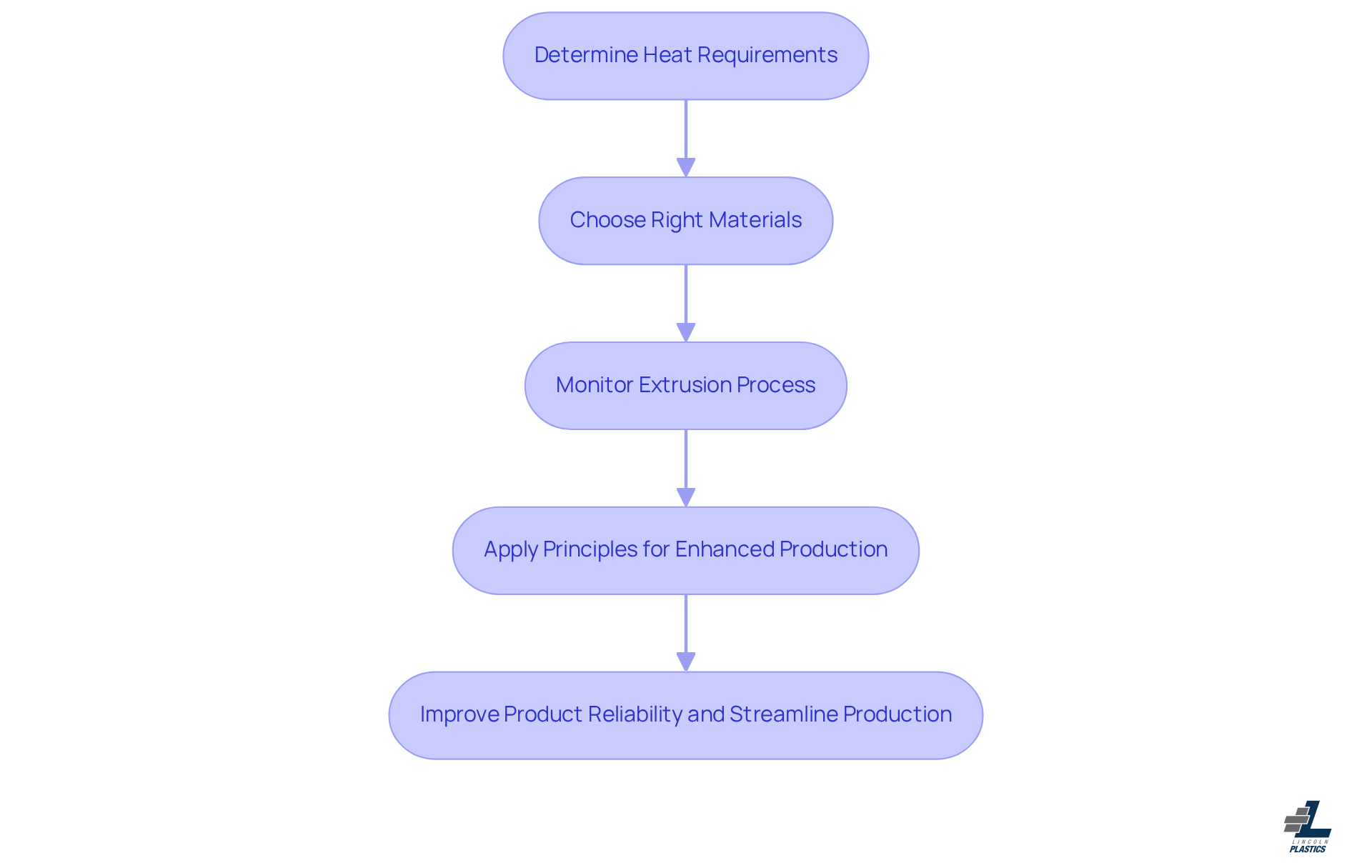
Integrating heat transfer understanding into production methods can feel a bit daunting, right? But don’t worry, it’s all about breaking it down into a few key steps. First off, producers need to figure out the heat requirements for their applications. This helps in determining the essential materials needed.
Now, let’s talk about materials. Choosing the right plastic with optimal thermal conductivity is crucial. For example, if you’re working with electronic devices, you’ll want to choose materials that exhibit higher conductivity, such as Thermodur 2383 or Moldmax HH. These choices can really help in improving thermal management.
During the manufacturing process, keeping a close eye on temperature and cooling rates can make a big difference too. Substances with high thermal conductivity allow for quicker cooling, which means shorter cycle times and better overall manufacturing effectiveness. Who wouldn’t want that?
By applying these principles, manufacturers can really enhance their production efficiency. This leads to components that perform better. It’s a win-win! Not only does this improve product reliability, but it also streamlines production processes, which is great news for manufacturers.
If you’re eager to dive deeper into heat conduction, there are plenty of educational resources out there. They can help manufacturers like you choose and use these materials effectively. So, why not take a look?
Identify Applications of Thermally Conductive Plastics
Thermally conductive plastics are really making waves in various applications, especially in the automotive world. Have you noticed how these materials are being used more and more in vehicles and electronics? They play a crucial role in keeping components cool and efficient.
Take DSM Engineering Plastics, for example. They’ve rolled out Xytron G4080HR, a glass-reinforced PPS that’s tailor-made for thermal management in automotive applications. This stuff is impressive! It boasts superior heat-aging and chemical resistance, all while holding strong at temperatures over 130°C for long stretches. Pretty cool, right?
But it doesn’t stop there. Thermally conductive plastics are also key players in LED lighting systems. They help with heat dissipation, which boosts efficiency and extends lifespan. As the automotive sector shifts towards lighter materials, the demand for these polymers with enhanced thermal properties is set to skyrocket. Why? Because thermally conductive plastics are becoming a must-have.
In fact, the market for thermally conductive plastics is projected to hit USD 407.57 Million by 2029, with a CAGR of 16.22% during the forecast period. That’s a significant growth trend! The automotive industry is increasingly leaning on materials with thermal conductivity to replace traditional metals, which helps reduce weight and enhance performance.
So, what does this mean for manufacturers? By recognizing these applications, they can strategically position themselves to meet the changing market demands and spark innovation in their product offerings. It’s an exciting time to be involved in this field!

Conclusion
Understanding plastic thermal conductivity is super important for OEMs looking to boost product performance and reliability. When you get how different plastics handle heat, you can make smarter choices that really optimize your applications - especially in industries where managing heat is a big deal.
Let’s break it down: the article points out that there’s a huge range of thermal conductivity values in plastics. It also dives into the unique properties of thermally conductive materials and why picking the right ones for specific applications matters. Plus, integrating this knowledge into your manufacturing processes can really ramp up production efficiency and make your products last longer.
As the need for advanced thermal management solutions keeps growing - especially in fields like automotive and electronics - OEMs need to stay ahead of the game. Embracing the latest in thermally conductive plastics not only sets your company up for success but also sparks innovation in product development. So, why not engage with educational resources and keep an eye on industry trends? This way, you can leverage these materials effectively and meet the ever-changing needs of your market.
Frequently Asked Questions
What is thermal conductivity in plastics?
Thermal conductivity in plastics refers to how well a plastic material can conduct heat, typically represented as 'k' in watts per meter-kelvin (W/m·K).
What is the range of thermal conductivity values for plastics?
The thermal conductivity of plastics can vary widely, ranging from 0.1 to over 10 W/m·K, depending on the material composition and structure.
Why is understanding plastic thermal conductivity important for OEMs?
Understanding plastic thermal conductivity is crucial for OEMs because it affects the performance of synthetic components, particularly in applications where heat management is essential.
What are thermally conductive materials used for?
Thermally conductive materials are designed to aid in heat dissipation, making them suitable for applications such as electronic enclosures and automotive parts, where overheating can cause failures.
How can knowledge of plastic thermal conductivity influence material selection?
By understanding plastic thermal conductivity and its implications, manufacturers can make informed decisions about material selection for specific applications, ensuring optimal performance and reliability.
List of Sources
- Define Thermal Conductivity in Plastics
- themacs-engineering.com (https://themacs-engineering.com/en/measuring-thermal-conductivity)
- sciencedirect.com (https://sciencedirect.com/topics/materials-science/thermal-conductivity)
- pmc.ncbi.nlm.nih.gov (https://pmc.ncbi.nlm.nih.gov/articles/PMC11661673)
- Plastic Thermal Conductivity Reference Table - Alfa Chemistry (https://alfa-chemistry.com/plastics/resources/plastic-thermal-conductivity-reference-table.html)
- Explore Properties of Thermally Conductive Plastics
- bpf.co.uk (https://bpf.co.uk/rotational_moulding/case_studies/pushing-the-boundary-of-the-rotomoulding-process.aspx)
- Makrolon® TC thermally conductive plastics (https://solutions.covestro.com/en/highlights/articles/theme/product-technology/makrolon-tc-thermal-conductive-plastics-next-generation-heat-management)
- blog.lehvoss.de (https://blog.lehvoss.de/en/compounds/thermally-conductive-compounds-good-reasons-to-help-you-make-the-switch-get-started)
- ptonline.com (https://ptonline.com/articles/a-bright-future-for-thermally-conductive-plastics)
- Apply Thermal Conductivity Knowledge in Manufacturing
- hydromx.com (https://hydromx.com/case_studies/heat-transfer-nanofluid-hennepin-county-building)
- plasticsengineering.org (https://plasticsengineering.org/2024/11/how-thermal-conductivity-drives-mold-efficiency-007309)
- Identify Applications of Thermally Conductive Plastics
- Thermally conductive plastics beat the heat (https://designnews.com/plastics/thermally-conductive-plastics-beat-the-heat)
- ptonline.com (https://ptonline.com/articles/a-bright-future-for-thermally-conductive-plastics)
- plasticstoday.com (https://plasticstoday.com/automotive-mobility/hard-soft-composite-concept-developed-for-conductive-battery-components)
- coe.northeastern.edu (https://coe.northeastern.edu/news/innovative-heat-conductive-plastic-prevents-overheating-of-electronics)
- One moment, please... (https://maximizemarketresearch.com/market-report/global-thermally-conductive-plastics-market/60546)
Related posts

Why Custom Pipe Extrusion Matters More Than Ever
Standard pipe sizes don’t always work. Learn how Lincoln Plastics delivers custom diameters, wall thicknesses, and finishes in right-sized runs.


Reducing Trip Hazards with Custom Cord Management
Loose cords are more than messy — they’re a safety hazard. Lincoln Plastics’ custom cord covers and Flexiduct solutions improve safety and efficiency.
The Power of Custom Plastic Profiles for OEMs
Off-the-shelf profiles force compromises. Learn how Lincoln Plastics designs custom extruded profiles for OEMs with exact specs and right-sized runs.
