

Understanding Plastic Heat Conductivity: Key Factors and Applications
Introduction
In the competitive landscape of manufacturing, mastering plastic heat conductivity is not just an option - it's a necessity for success. As industries increasingly depend on polymers for critical applications, optimizing thermal conductivity becomes crucial for ensuring product longevity and reliability. Manufacturers often struggle to balance thermal efficiency with product performance, leading to potential reliability issues.
So, how can manufacturers tackle these complexities to enhance their offerings and meet evolving market demands? Failing to optimize thermal conductivity could result in decreased product lifespan and customer dissatisfaction.
Define Thermal Conductivity in Plastics
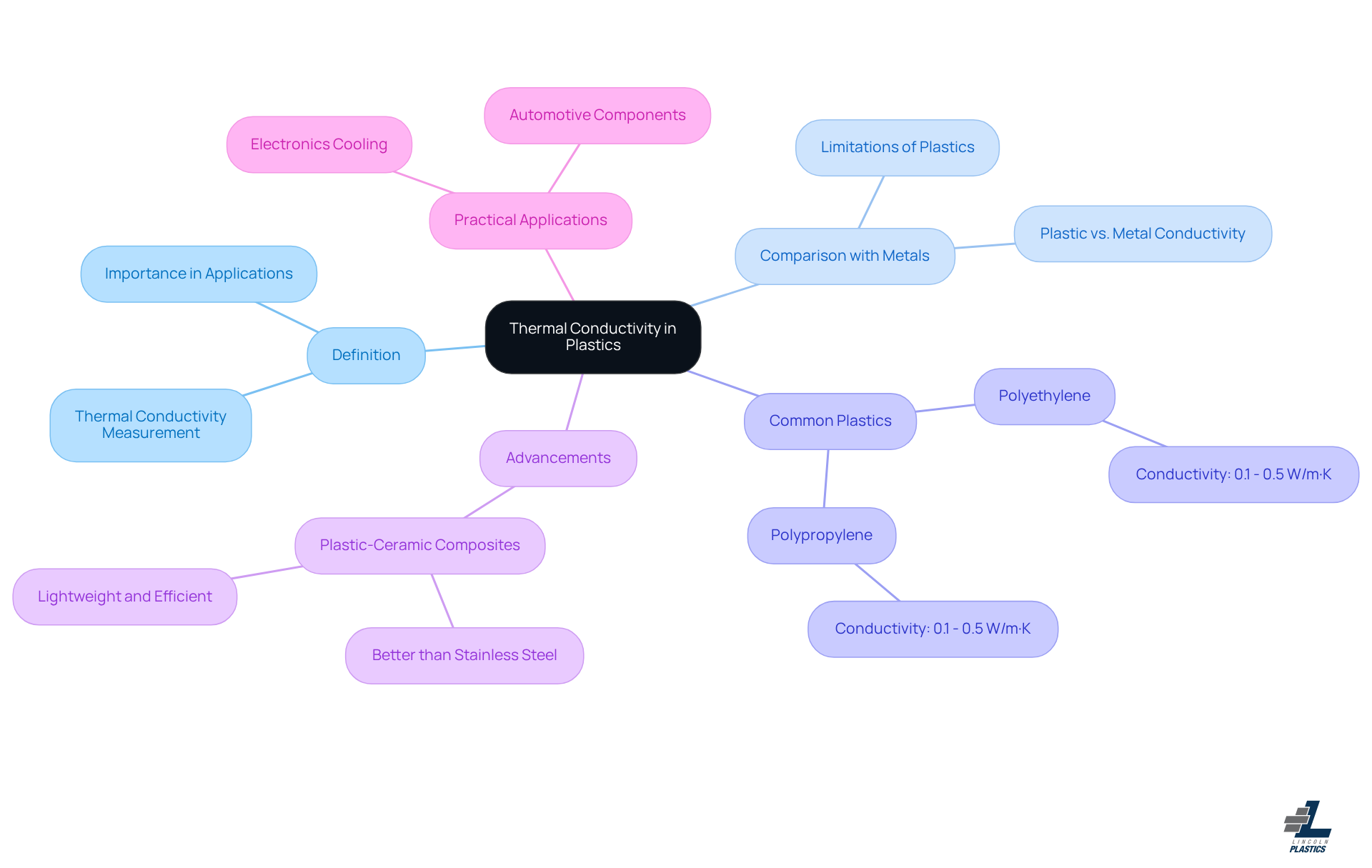
Understanding plastic heat conductivity is crucial for optimizing material performance in demanding applications. Thermal conductivity measures a material's capacity to transfer thermal energy, and in the realm of polymers, plastic heat conductivity is typically less than that of metals. Common plastics like polyethylene and polypropylene typically have a plastic heat conductivity ranging between 0.1 and 0.5 W/m·K, measured in watts per meter-kelvin (W/m·K). This limitation can lead to inefficiencies in critical applications, making it essential to understand this for applications that require effective thermal dissipation, such as electronic housings and automotive components.
Significantly, advancements in material science have led to the development of lightweight plastic-ceramic composites that conduct heat more effectively than stainless steel. These innovations open new avenues for high-performance applications. MIE Professor Randall Erb highlights, "Innovative heat-conductive substances prevent overheating of electronics." This underscores their critical role in today's technology.
In extrusion processes, selecting materials with the right plastic heat conductivity is crucial; it can significantly impact the performance and longevity of the final products. Daniel Braconnier, a scholar in mechanical engineering, emphasizes the importance of understanding conductivity coefficients for choosing suitable materials, especially in situations where temperature regulation is essential. Choosing the right materials based on plastic heat conductivity can be the difference between success and failure in your projects.
Explore Factors Affecting Thermal Conductivity
Understanding the intricacies of plastic heat conductivity is vital for manufacturers aiming to optimize their plastic products. Several factors significantly influence the thermal conductivity of plastics:
- Material Composition: The specific type of polymer, along with any additives or fillers, plays a crucial role in determining thermal conductivity. For instance, incorporating thermally conductive additives like graphite or metal oxides can significantly enhance the plastic heat conductivity of materials.
- Temperature: Thermal conductivity typically increases with temperature due to enhanced molecular mobility. This characteristic is particularly important in applications that experience fluctuating temperatures, where materials must maintain performance under varying conditions.
- Density and Structure: The density and structure of the plastic, whether crystalline or amorphous, impact its plastic heat conductivity. Crystalline materials generally demonstrate greater plastic heat conductivity compared to their amorphous counterparts, as the organized arrangement of molecules enables more effective energy transfer.
- Filler Type and Content: The selection and concentration of fillers can dramatically alter the plastic heat conductivity of the materials. For example, fillers like boron nitride and aluminum oxide are known to significantly improve heat dissipation capabilities. Recent research indicates that polymers with flawed fillers can outperform those with perfect fillers by up to 160%, suggesting that the arrangement and characteristics of fillers are critical in optimizing plastic heat conductivity.
Navigating the complexities of thermal conductivity can be challenging for manufacturers. By mastering these elements, producers can significantly enhance the efficiency and effectiveness of their products. Mastering these factors not only enhances product performance but also positions manufacturers as leaders in the competitive landscape of custom plastic extrusion.

Examine Applications of Heat-Conductive Plastics
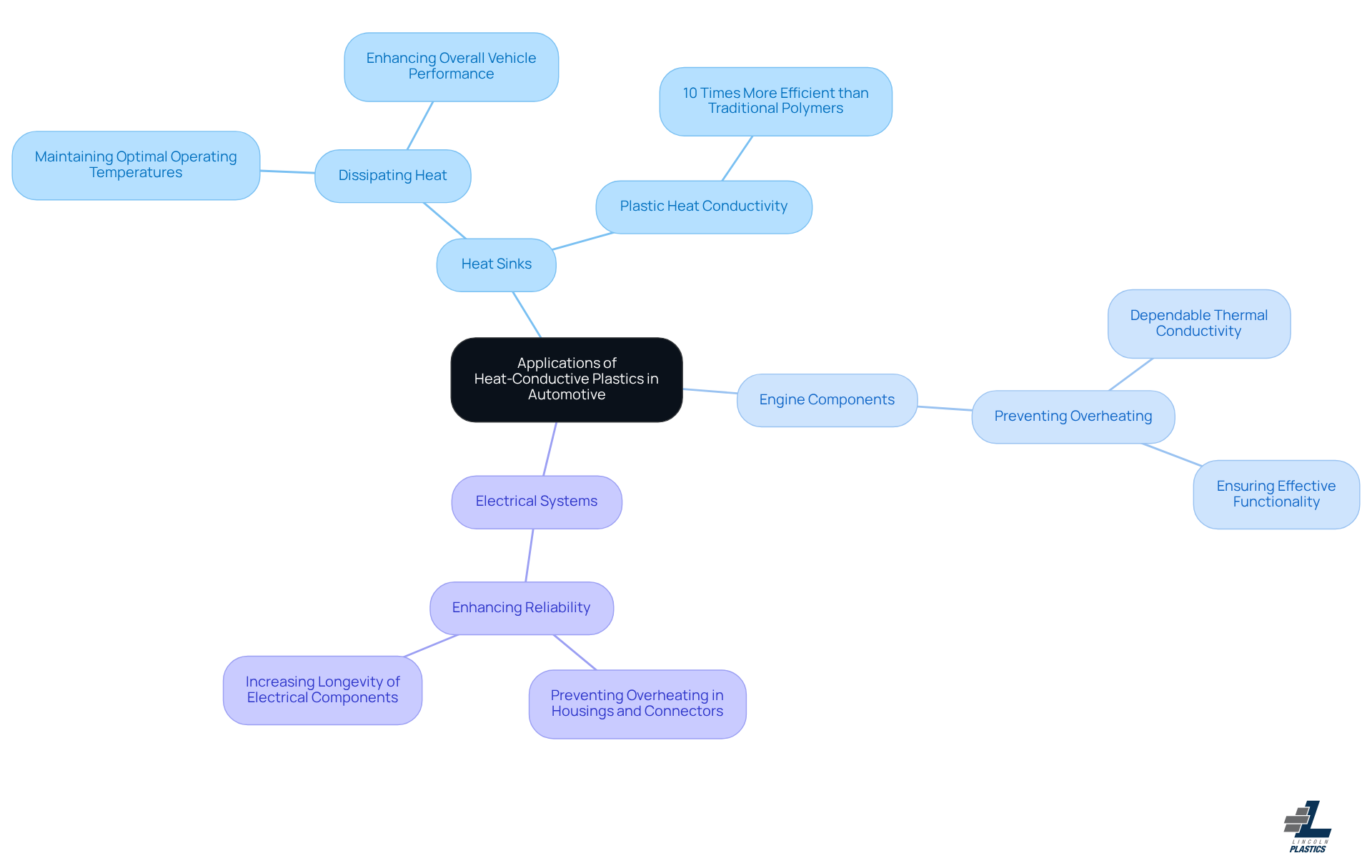
In 2026, thermally conductive materials are set to revolutionize the automotive sector, becoming indispensable for performance and safety. These materials find applications in key automotive components, such as:
- Heat Sinks: Essential for dissipating heat generated by engines and electronic systems, thermally conductive plastics help maintain optimal operating temperatures, thereby enhancing overall vehicle performance. Significantly, the new polymer demonstrates excellent plastic heat conductivity, enabling it to transfer warmth 10 times more efficiently than traditional polymers, making it a superior option for temperature management.
- Engine Components: In critical areas where heat management is vital, these materials offer dependable thermal conductivity, leveraging plastic heat conductivity to ensure that engine parts function effectively without overheating.
- Electrical Systems: As vehicles become more reliant on electronic components, materials with plastic heat conductivity are utilized in housings and connectors to prevent overheating, thereby enhancing the longevity and reliability of electrical systems.
Consider how real-world examples showcase the effectiveness of plastic heat conductivity in automotive applications. For instance, lightweight plastic-ceramic composites have been developed to effectively manage temperature in advanced electronics, showcasing their potential in automotive settings. Furthermore, the inventive application of polythiophene, a polymer designed to improve plastic heat conductivity in every direction, demonstrates how these substances can transform heat management in vehicles. As Professor Randall Erb remarked, 'The creation of these substances is vital for tackling the overheating problems in advanced electronics, which are becoming more common in contemporary vehicles.'
This understanding not only empowers producers but also positions them to meet the automotive industry's stringent demands. However, navigating supplier reliability and fluctuating material costs remains a challenge for producers. By embracing these innovations, producers can not only enhance their product offerings but also secure a competitive edge in a rapidly evolving market.
Highlight Innovations in Heat-Conductive Plastics
As industries grapple with the complexities of temperature control, recent advancements in heat-conducting materials are revolutionizing solutions. Key advancements include:
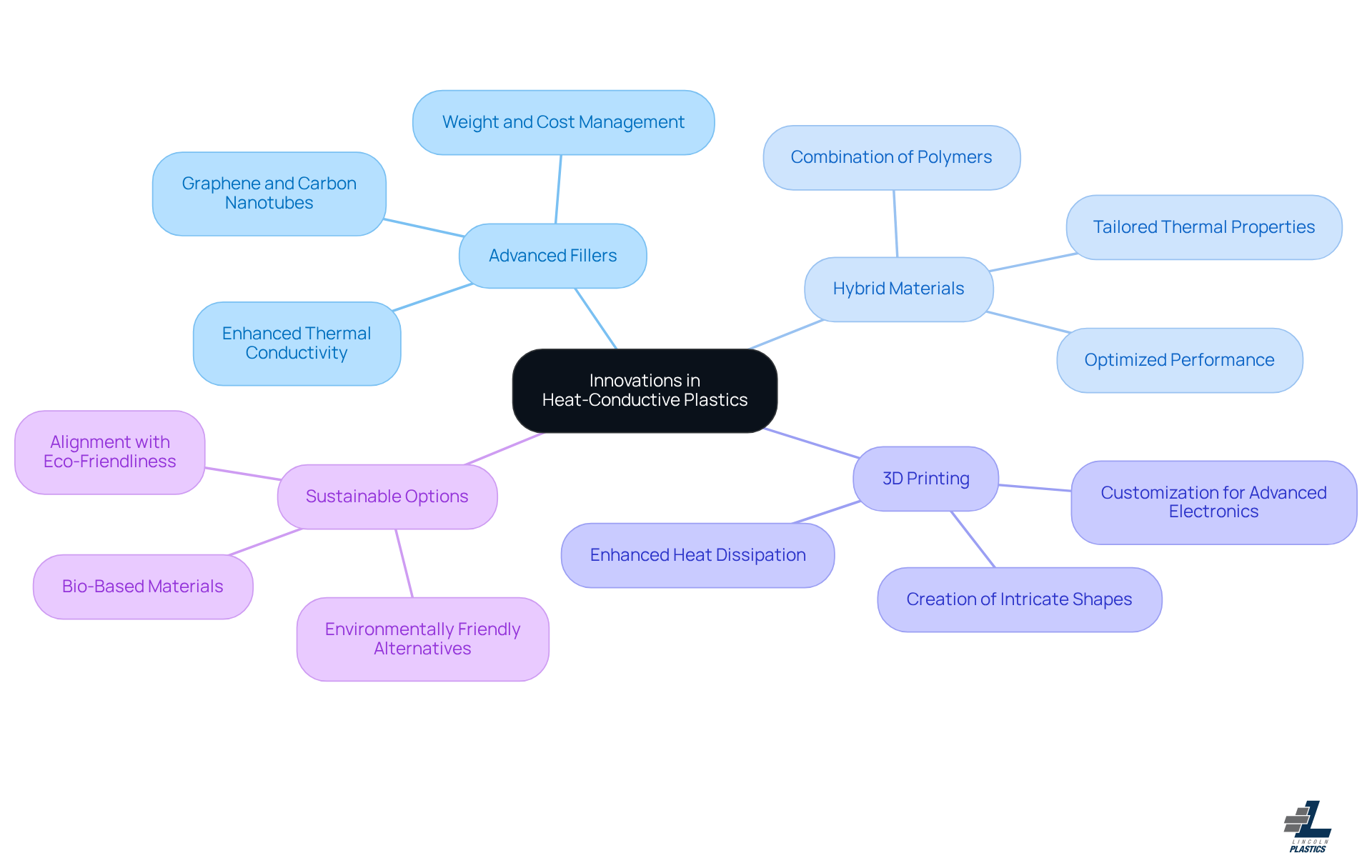
- Advanced Fillers: The development of fillers such as graphene and carbon nanotubes significantly enhances thermal conductivity while keeping weight and costs manageable. These substances are crucial in enhancing the performance of polymers in heat-sensitive applications. How can your operations benefit from these innovations?
- Hybrid Materials: By combining various polymers with distinct thermal properties, manufacturers can create hybrid materials tailored for specific thermal management needs. This approach allows for optimized performance in diverse environments, ensuring that your products meet the highest standards.
- 3D Printing: The emergence of 3D printing technology enables the creation of intricate shapes utilizing thermally conductive materials. This capability enhances heat dissipation, making it easier to meet the demands of advanced electronic applications. Are you ready to explore these innovative designs?
- Sustainable Options: Ongoing research into bio-based thermally conductive materials aims to deliver environmentally friendly alternatives without compromising performance. Studies indicate that these substances are gaining traction as industries seek sustainable solutions, aligning with the growing emphasis on eco-friendliness.
The thermally conductive polymers market is anticipated to expand at a CAGR of 13.2% by 2033, indicating rising demand for thermally conductive substances across multiple sectors. These innovations not only enhance the functionality of plastics with heat conductivity but also expand their applications across various sectors, particularly in extrusion processes where precise plastic heat conductivity is essential. The future of thermally conductive polymers is bright, promising enhanced performance and sustainability across diverse applications.
Conclusion
To thrive in today's competitive landscape, understanding plastic heat conductivity is not just beneficial - it's essential. The insights presented highlight the significance of thermal conductivity in plastics, emphasizing its role in enhancing product effectiveness and innovation in manufacturing processes. Recognizing the limitations of traditional polymers alongside the advancements in material science is key for manufacturers to strategically select materials that meet the demands of modern technology.
Key factors influencing thermal conductivity include:
- Material composition
- Temperature
- Density
- The type and content of fillers
Innovations such as advanced fillers, hybrid materials, and 3D printing are transforming the landscape of heat-conductive plastics. These developments not only improve thermal management in critical applications, such as automotive components and electronics but also pave the way for sustainable solutions that align with industry trends.
As industries continue to evolve, failing to adapt to these innovations could lead to decreased market relevance and lost opportunities. The future promises further innovations, making it imperative for manufacturers to stay informed and adaptable. By leveraging the knowledge of plastic heat conductivity, producers can enhance their offerings, meet stringent performance standards, and contribute to a more efficient and sustainable industrial landscape. Manufacturers who ignore these advancements may find themselves outpaced by competitors who embrace innovation.
Frequently Asked Questions
What is thermal conductivity in plastics?
Thermal conductivity in plastics measures a material's capacity to transfer thermal energy. It is crucial for optimizing material performance in applications that require effective thermal dissipation.
How does the thermal conductivity of plastics compare to metals?
The thermal conductivity of plastics is typically less than that of metals, making them less efficient in transferring heat.
What is the range of thermal conductivity for common plastics like polyethylene and polypropylene?
Common plastics like polyethylene and polypropylene have a thermal conductivity ranging between 0.1 and 0.5 W/m·K, measured in watts per meter-kelvin (W/m·K).
Why is understanding plastic heat conductivity important in certain applications?
Understanding plastic heat conductivity is essential in applications requiring effective thermal dissipation, such as electronic housings and automotive components, to prevent inefficiencies and overheating.
What advancements have been made in materials to improve thermal conductivity?
Advancements in material science have led to the development of lightweight plastic-ceramic composites that conduct heat more effectively than stainless steel, opening new avenues for high-performance applications.
What role do innovative heat-conductive substances play in technology?
Innovative heat-conductive substances are critical in preventing overheating of electronics, highlighting their importance in modern technology.
How does thermal conductivity affect extrusion processes?
Selecting materials with the right plastic heat conductivity is crucial in extrusion processes, as it can significantly impact the performance and longevity of the final products.
What should be considered when choosing materials based on thermal conductivity?
It's important to understand conductivity coefficients for selecting suitable materials, especially in situations where temperature regulation is essential, as this can determine the success or failure of projects.
List of Sources
- Define Thermal Conductivity in Plastics
- openpr.com (https://openpr.com/news/4476006/what-will-be-the-future-growth-of-the-thermally-conductive)
- news.northeastern.edu (https://news.northeastern.edu/2025/07/11/heat-conductive-plastic-research)
- Plastic Thermal Conductivity Reference Table - Alfa Chemistry (https://alfa-chemistry.com/plastics/resources/plastic-thermal-conductivity-reference-table.html)
- Innovative Heat-Conductive Plastic Prevents Overheating of Electronics - Northeastern University College of Engineering (https://coe.northeastern.edu/news/innovative-heat-conductive-plastic-prevents-overheating-of-electronics)
- Explore Factors Affecting Thermal Conductivity
- Plastic Thermal Conductivity Reference Table - Alfa Chemistry (https://alfa-chemistry.com/plastics/resources/plastic-thermal-conductivity-reference-table.html)
- eureka.patsnap.com (https://eureka.patsnap.com/article/how-fillers-affect-mechanical-and-thermal-properties-of-plastics)
- umass.edu (https://umass.edu/engineering/news/polymers-xu)
- openpr.com (https://openpr.com/news/4476006/what-will-be-the-future-growth-of-the-thermally-conductive)
- Examine Applications of Heat-Conductive Plastics
- Innovative Heat-Conductive Plastic Prevents Overheating of Electronics - Northeastern University College of Engineering (https://coe.northeastern.edu/news/innovative-heat-conductive-plastic-prevents-overheating-of-electronics)
- Engineers turn plastic insulator into heat conductor (https://news.mit.edu/2018/engineers-turn-plastic-insulator-heat-conductor-0330)
- news.northeastern.edu (https://news.northeastern.edu/2025/07/11/heat-conductive-plastic-research)
- Highlight Innovations in Heat-Conductive Plastics
- openpr.com (https://openpr.com/news/4476006/what-will-be-the-future-growth-of-the-thermally-conductive)
- Innovative Heat-Conductive Plastic Prevents Overheating of Electronics - Northeastern University College of Engineering (https://coe.northeastern.edu/news/innovative-heat-conductive-plastic-prevents-overheating-of-electronics)
Related posts

Custom Colors & Branding in Extrusion
Lincoln Plastics delivers Pantone-matched colors, striping, and finishes in extrusion for OEMs — combining performance with branding.


How We Solve Problems When Standard Parts Don’t Work
Lincoln Plastics solves challenges OEMs face when standard parts don’t work — delivering custom extrusions that improve fit, cost, and reliability.
Cable & Cord Protection in High-Traffic Environments
Lincoln Plastics manufactures durable cord covers and management solutions to keep high-traffic environments safe, organized, and compliant.
