

Understanding Density in Plastics: The Case of High-Density Polyethylene
Introduction
You know, understanding density in plastics can be a bit tricky, especially when we’re talking about high-density polyethylene, or HDPE for short. This material is pretty fascinating! With its tightly packed molecular structure, it brings some unique properties to the table that really affect its strength, rigidity, and how it’s used across different industries.
But here’s the real kicker: how does density shape not just the effectiveness of HDPE, but also its sustainability and performance in a market that’s always changing? It’s worth diving into these aspects because they reveal not just the science behind HDPE, but also how it plays a crucial role in modern manufacturing and environmental practices. So, let’s explore this together!
Define Density in Plastics: Focus on High-Density Polyethylene (HDPE)
When we talk about density, we're really discussing how much mass is packed into a certain volume. You’ll usually see this in grams per cubic centimeter (g/cm³) or kilograms per cubic meter (kg/m³). For instance, high-density polyethylene (HDPE) has a higher density. This higher density compared to low-density polyethylene (LDPE) comes from its molecular structure, which is more linear and tightly packed.
Now, why should you care about density? Well, because it affects the performance of the material in various applications. So, next time you’re selecting a plastic, think about how density influences your choice!

Examine Properties of High-Density Polyethylene (HDPE)
is pretty amazing, right? Let’s dive into what makes it stand out:
- Strength and Durability: HDPE has some serious strength. This makes it perfect for tough jobs like construction and plumbing. It can take heavy hits and won’t crack under pressure, which means it lasts a long time.
- Chemical Resistance: You know how some materials just can’t handle certain chemicals? Not HDPE! It’s highly resistant to acids, bases, and solvents, making it a safe choice for industrial settings and applications. Its durability in harsh conditions really makes it a go-to for manufacturers.
- Low Moisture Absorption: One of the cool things about HDPE is that it doesn’t soak up water. This non-absorbent quality is a game-changer for outdoor applications, like playground equipment and outdoor furniture, where moisture is a constant.
- Lightweight: Even with all its strength, HDPE is surprisingly lightweight. This makes it easier to handle and transport, which can save you money on shipping and boost efficiency in manufacturing and logistics.
- Recyclability: Did you know HDPE is one of the most recycled plastics out there? It’s labeled with the '2', and most waste management programs accept it. This not only helps reduce environmental impact but also supports a circular economy, making it a smart choice for both manufacturers and consumers.
Now, let’s talk about how HDPE is evolving. Recent advancements have made it even better! For instance, adding things like carbon black boosts its UV resistance and thermal stability, extending its life outdoors. You can see HDPE in action with pipes and geomembranes in landfill leachate ponds. It really shows off its strength and durability, solidifying its reputation as a flexible and trustworthy material in today’s manufacturing world.

Explore Applications of HDPE in Various Industries
High-Density Polyethylene, or HDPE, is a pretty versatile material that you’ll find in all sorts of industries, and it’s all thanks to its amazing properties. Let’s dive into some of its key applications:
- Packaging: HDPE is a go-to choice for bottles, containers, and packaging materials. Why? Well, it’s strong, resistant to chemicals, and recyclable! The packaging industry, which made up 38.7% of the HDPE market in 2025, really relies on this material. It helps them stick to strict safety regulations that keep products safe and sound for consumers.
- Construction: Now, in the construction sector, HDPE is becoming a favorite for pipes, geomembranes, and structural components. Its durability and resistance to the elements make it perfect for things like water management systems and drainage solutions. Did you know the construction segment is expected to grow at a CAGR of 6.07% through 2031? That’s driven by infrastructure upgrades and the perks of trenchless installation methods, which can cut civil works costs by 30-40%!
- Automotive: In the automotive industry, HDPE is used for fuel tanks and various parts. Its lightweight and impact-resistant qualities really boost overall vehicle efficiency.
- Consumer Goods: You’ll also find HDPE in everyday items like toys, household containers, and outdoor furniture. It’s safe, durable, and easy to mold into all sorts of shapes.
- Medical: In healthcare, HDPE plays a crucial role in devices and packaging. Its tamper-evident features are especially handy for pharmaceutical packaging, where regulatory authorities are increasingly backing HDPE for moisture-sensitive medications.
Looking ahead, there’s a noticeable shift towards lightweight yet sturdy plastic designs, all in response to environmental concerns. Producers are stepping up their game by enhancing resource use through advanced molding methods. This trend aligns perfectly with sustainability efforts, solidifying HDPE’s status as a key material across various sectors.

Analyze Advantages and Disadvantages of HDPE
High-density polyethylene (HDPE) is pretty popular, and for good reason! It’s got a bunch of advantages that make it a go-to choice in many industries.
- Durability: HDPE is tough as nails! It can handle impacts and stress, which means it lasts a long time in places like construction sites. In fact, some studies show that HDPE pipes can withstand high pressure. That’s a solid investment, right?
- Chemical Resistance: This material doesn’t corrode or break down easily when it meets harsh substances like acids and solvents. So, it’s perfect for things like chemical storage and sewage treatment. You can count on it even in the toughest environments.
- Lightweight: One of the best things about HDPE is how light it is. This makes transportation cheaper and handling easier, especially for big projects. Plus, it helps keep installation simple and costs down.
- Recyclability: HDPE is recyclable, and it can be recycled multiple times! This is a big win for sustainability, as it helps reduce the need for new materials. It’s even labeled as number 2 in recycling standards, which means it can go through the recycling process again and again.
But, like anything, HDPE has its downsides too:
- Flammability: Being a thermoplastic, HDPE can catch fire, which is something to think about in certain situations. Fire safety is key, so you’ll want to be careful where you use it.
- Stress Cracking: In some cases, HDPE can crack under stress, especially when it’s cold. This can limit its effectiveness in freezing conditions. Studies suggest that it gets more brittle, so you might need to consider other materials for those chilly uses.
- Restricted Temperature Endurance: HDPE has a melting point around 120-130°C (248-266°F). So, if you’re dealing with high temperatures, its performance might take a hit, and you may need to look for alternatives.
In a nutshell, while HDPE offers fantastic performance and reliability, it’s important to keep its limitations in mind when choosing materials. What do you think? Are you ready to dive into the world of HDPE?

Understand Production Processes of High-Density Polyethylene (HDPE)
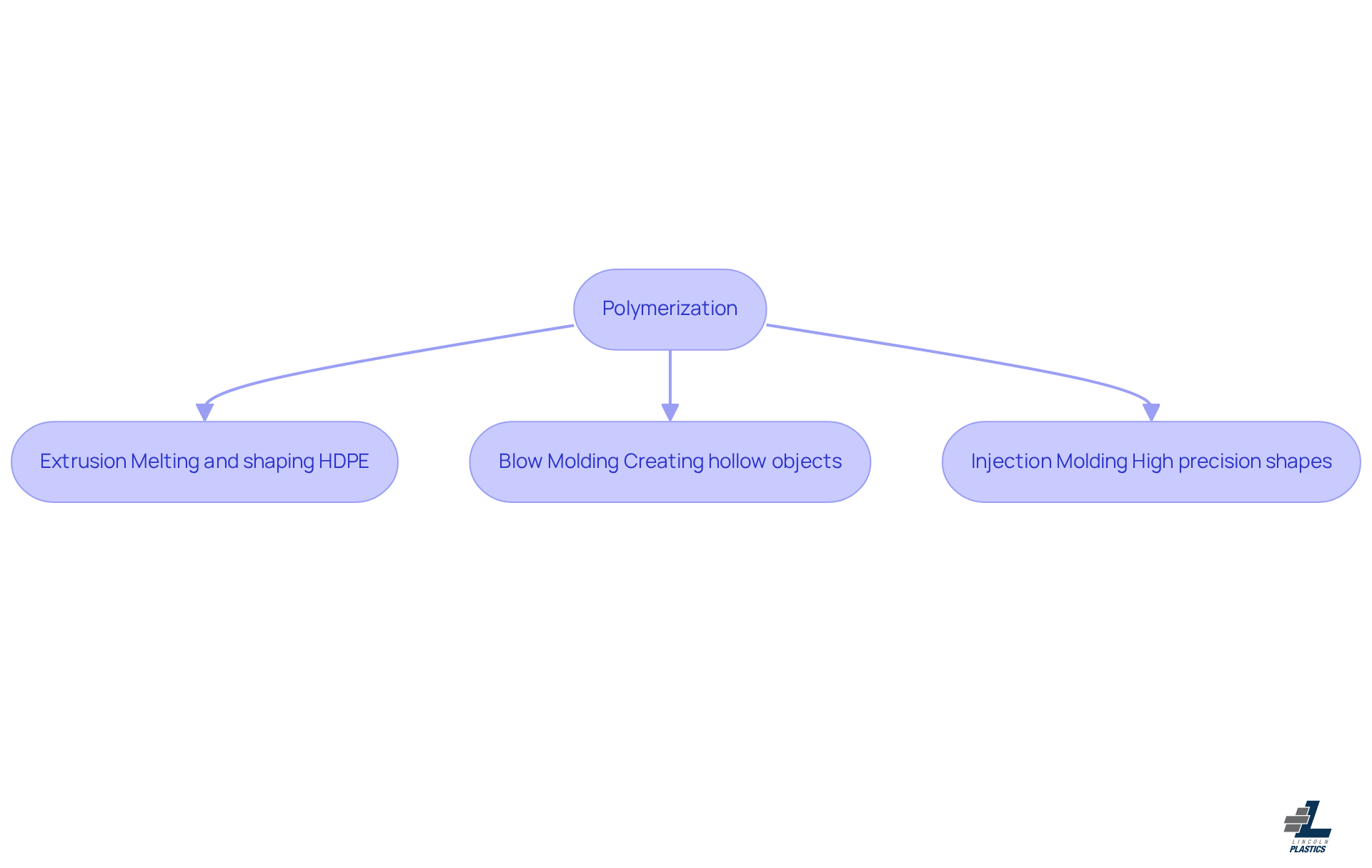
When it comes to production processes, there’s a lot going on behind the scenes that shapes its properties and applications. Let’s dive into the key processes, especially through the lens of Lincoln Plastics’ expertise in high-density polyethylene.
First up is polymerization. This is where HDPE is born, through the polymerization of ethylene. Techniques like Ziegler-Natta and Phillips catalyst processes are commonly used, resulting in a linear polymer structure that’s crucial for achieving the right density and mechanical strength. Did you know that the molecular weight of HDPE usually falls between 50,000 and 250,000 g/mol? This range contributes to its robust characteristics. The magic happens in reactors at temperatures between 60 and 115 °C, which influences chain growth and branching, ultimately affecting the material’s properties.
Now, let’s talk about extrusion. In this process, the polymer is melted and pushed through a die, allowing for the creation of various shapes, like pipes and sheets. Lincoln Plastics shines in custom extrusion, which not only allows for tailored dimensions but also boosts the material’s properties. For instance, the tensile strength ranges from 20 to 35 MPa. Plus, the flexural modulus is between 800 and 1,400 MPa, showcasing its mechanical strength.
Next, we have blow molding. This technique is fantastic for making hollow objects, such as bottles. During blow molding, molten polyethylene is inflated into a mold, resulting in lightweight and durable containers. The ISBM (Injection Stretch Blow Molding) process can even cut bottle weight by over 25% compared to traditional methods, all while enhancing recyclability. Just a heads up, though: UV exposure can degrade the material, which is why UV stabilizers are often added for outdoor applications.
Then there’s injection molding. This method allows HDPE to be injected into molds, creating intricate shapes with high precision. It’s perfect for producing complex components that need to meet exact specifications. The Melt Flow Index (MFI) for HDPE typically ranges from 0.2 to 20 g/10 min, which is key for understanding how it processes.
Understanding these production processes is vital for improving the performance and use of density plastic, especially HDPE, across various sectors, from packaging to construction. With Lincoln Plastics’ expertise and innovative technologies, the efficiency and sustainability of HDPE production are continually on the rise. So, what do you think? Ready to explore the possibilities of HDPE in your projects?
Conclusion
Understanding density in plastics, especially high-density polyethylene (HDPE), opens up some important insights for anyone looking to choose the right materials. Did you know that the density of HDPE ranges from 0.93 to 0.97 g/cm³? This range is key to its strength, durability, and effectiveness across various industries. By getting a handle on density, you can make smarter choices that boost performance and sustainability in plastic applications.
Now, let’s talk about what makes HDPE so remarkable. Its strength, chemical resistance, and recyclability are just a few reasons why it’s a go-to choice in:
- Packaging
- Construction
- Automotive
- Consumer goods
- Medical sectors
But while the perks of HDPE are pretty compelling - like its long lifespan and lightweight nature - it’s also important to recognize its downsides, such as flammability and susceptibility to stress cracking. Understanding these pros and cons can really help you make better material choices.
In conclusion, we can’t overlook how significant HDPE is in today’s manufacturing landscape. As industries push for sustainability and efficiency, the ongoing evolution of HDPE production processes and its applications will be crucial. By embracing the insights shared here, you can empower yourself and others to leverage HDPE's unique characteristics, ultimately fostering innovation and responsible use of materials in our ever-changing world.
Frequently Asked Questions
What is density in the context of plastics?
Density in plastics refers to how much mass is packed into a certain volume, typically measured in grams per cubic centimeter (g/cm³) or kilograms per cubic meter (kg/m³).
What is the density range of high-density polyethylene (HDPE)?
The density of high-density polyethylene (HDPE) ranges from about 0.93 to 0.97 g/cm³.
How does the density of HDPE compare to low-density polyethylene (LDPE)?
HDPE has a higher density compared to low-density polyethylene (LDPE) due to its more linear and tightly packed molecular structure.
Why is understanding density important in selecting plastic materials?
Understanding density is important because it affects the strength, rigidity, and overall effectiveness of the material in various applications.
What are some key properties of high-density polyethylene (HDPE)?
Key properties of HDPE include strength and durability, chemical resistance, low moisture absorption, lightweight nature, and recyclability.
How does HDPE perform in terms of strength and durability?
HDPE has high tensile strength, making it suitable for tough jobs such as construction and plumbing. It can withstand heavy impacts and does not crack under pressure.
Is HDPE resistant to chemicals?
Yes, HDPE is highly resistant to acids, bases, and solvents, making it a reliable choice for industrial settings and chemical storage.
What is the moisture absorption characteristic of HDPE?
HDPE has low moisture absorption, meaning it does not soak up water, which is beneficial for outdoor applications like irrigation tubing and outdoor furniture.
Is HDPE lightweight?
Yes, despite its strength, HDPE is surprisingly lightweight, making it easier to handle and transport, thus saving money on shipping and improving manufacturing efficiency.
How recyclable is HDPE?
HDPE is one of the most recycled plastics and is labeled with the recycling code '2'. Most waste management programs accept it, contributing to reduced environmental impact and supporting a circular economy.
What advancements have been made in HDPE recently?
Recent advancements include the addition of carbon black to boost its UV resistance and thermal stability, extending its lifespan outdoors.
Where can HDPE commonly be found in use?
HDPE is commonly used in applications such as pipes in water distribution systems and geomembranes in landfill leachate ponds, showcasing its strength and durability.
List of Sources
- Define Density in Plastics: Focus on High-Density Polyethylene (HDPE)
- High-density polyethylene - Wikipedia (https://en.wikipedia.org/wiki/High-density_polyethylene)
- High-Density Polyethylene (HDPE) and Its Advantages (https://recyclingtoday.org/blogs/news/high-density-polyethylene-hdpe-and-its-advantages)
- wyzant.com (https://wyzant.com/resources/answers/948107/what-is-high-density-polyethylene-hdpe-plastic-and-what-are-its-key-propert)
- sybridge.com (https://sybridge.com/know-your-materials-ldpe-and-hdpe)
- usmasterbatch.com (https://usmasterbatch.com/news/hdpe-plastics-key-technical-parameters-and-practical-applications.html)
- Examine Properties of High-Density Polyethylene (HDPE)
- wyzant.com (https://wyzant.com/resources/answers/948107/what-is-high-density-polyethylene-hdpe-plastic-and-what-are-its-key-propert)
- waterpipefactory.com (https://waterpipefactory.com/knowledge/high-density-polyethylene-hdpe-an-overview-of-its-benefits)
- mdpi.com (https://mdpi.com/2071-1050/12/20/8682)
- Explore Applications of HDPE in Various Industries
- globenewswire.com (https://globenewswire.com/news-release/2026/02/11/3235925/0/en/HDPE-Packaging-Solutions-Market-Trends-and-Companies-Revenue-Share.html)
- intelmarketresearch.com (https://intelmarketresearch.com/hdpe-containers-market-34373)
- finance.yahoo.com (https://finance.yahoo.com/news/certified-circular-polyethylene-pe-market-150000554.html)
- mordorintelligence.com (https://mordorintelligence.com/industry-reports/high-density-polyethylene-hdpe-market)
- Analyze Advantages and Disadvantages of HDPE
- phtopindustry.com (https://phtopindustry.com/hdpe-pipe-advantages-and-disadvantages)
- shobeirshimi.com (https://shobeirshimi.com/high-density-polyethylene-pros-and-cons)
- High-Density Polyethylene (HDPE) and Its Advantages (https://recyclingtoday.org/blogs/news/high-density-polyethylene-hdpe-and-its-advantages)
- Understand Production Processes of High-Density Polyethylene (HDPE)
- lairdplastics.com (https://lairdplastics.com/resources/hdpe-guide-properties-uses-applications-2025-update?srsltid=AfmBOorIE3Bd_ZdP8jwztgqKidxTjXhDFbgc2JqhnFeDGiVgN5w4jUT0)
- shobeirshimi.com (https://shobeirshimi.com/hdpe-manufacturing)
- plasticstoday.com (https://plasticstoday.com/packaging/isbm-method-enhances-hdpe-bottle-production-efficiency)
- amsaxum.com (https://amsaxum.com/us/case-studies/reducing-scrap-and-cost-of-poor-quality-in-hdpe-pipe-manufacturing-through-lean-six-sigma)
- onepointpartitions.com (https://onepointpartitions.com/blog/2020/05/11/how-is-hdpe-made?srsltid=AfmBOor3t1Jw1f60cXiKDAxV4DisHUpd3PVi-xM_GZpGV4FnO0MDB30z)
Related posts

Discover essential strategies on how to improve quality in manufacturing effectively.


Discover the top 10 benefits of plastic angles for enhancing manufacturing efficiency and safety.
Optimize your manufacturing process with coextrusion for efficiency, quality, and design flexibility.
