
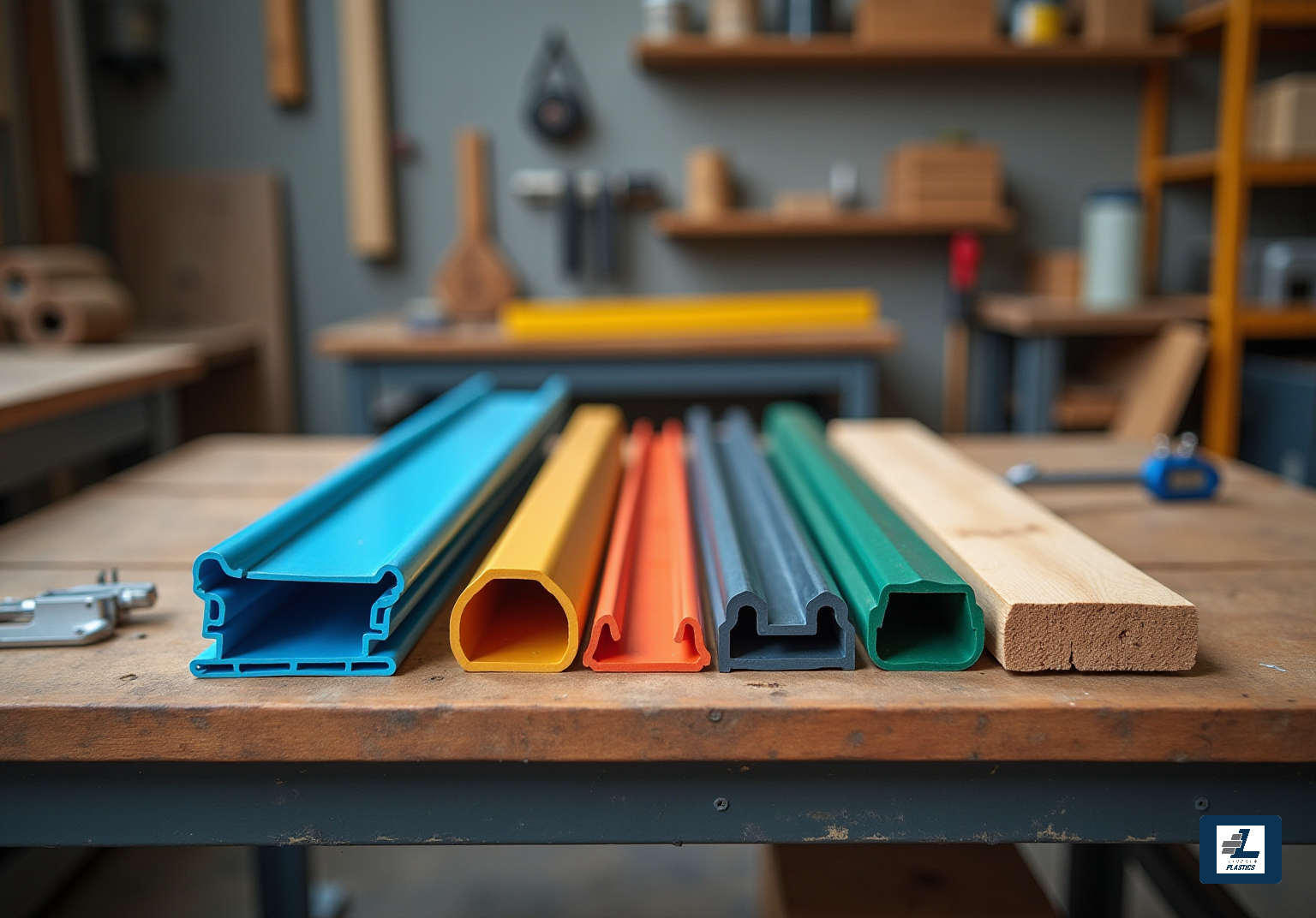
Plastic Profiles vs. Traditional Materials: Key Comparisons for OEMs
Introduction
The debate between plastic profiles and traditional materials like wood, metal, and glass is more relevant than ever. Industries are on the lookout for innovative solutions to tackle manufacturing challenges. So, let’s dive into the distinct advantages and limitations of plastic profiles. This comparison is designed to help OEMs see the potential for cost savings, customization, and sustainability.
But here’s the kicker: with all these benefits, there are challenges too. Can plastic profiles really stack up against the strength and durability of traditional materials in high-demand applications? That’s a question worth exploring!
Compare Material Properties: Plastic Profiles vs. Traditional Materials
When you think about plastic profiles compared to traditional materials like wood, metal, and glass, a few important things come to mind:
-
Weight: Have you ever noticed how much lighter plastic profiles are? They can be a game changer, especially when it comes to transportation and installation costs. For example, a PVC pipe can weigh up to 50% less than a similar metal pipe. That’s a big difference!
-
Durability: Plastics really shine here. They resist corrosion, moisture, and UV damage, making them ideal for outdoor use. On the flip side, metals can rust, and wood? Well, it can rot over time.
-
Versatility: Plastic forms can be designed to be flexible, allowing for all sorts of shapes and uses. Traditional materials often require more rigid designs, which can limit creativity.
-
Thermal and Electrical Properties: Did you know that plastics usually have lower thermal conductivity than metals? This makes them better insulators, which is super important when you want to keep heat transfer to a minimum.
-
Expense: Let’s talk about money. The upfront cost of synthetic products is often lower than that of traditional materials. Plus, when you factor in long-term savings from reduced maintenance and replacement costs, it’s a win-win!
So, next time you’re considering materials for your project, think about how choosing plastic profiles might just be the smarter choice!

Evaluate Advantages of Plastic Profiles for OEM Applications
When it comes to OEM applications, plastic profiles truly shine with numerous advantages. Let’s dive into a few key points that might just make you rethink your material choices.
-
Customization is a biggie! The flexibility of plastic profiles allows for customization in unique shapes, sizes, and colors that traditional materials often can't accommodate. This is super important for manufacturers who want to stand out in a crowded market. At Lincoln Plastics, we’re all about working closely with OEMs to ensure their products hit all the quality marks, including special checks for ‘fit and function’ using various check gauges.
-
Now, let’s talk about Cost Efficiency. Using extrusion processes can really cut down on material and labor costs, leading to some serious savings for manufacturers. Plus, the lightweight nature of polymers helps lower shipping costs, which is a win for your bottom line. Custom polymer extrusion is known for being cost-effective, particularly for producing plastic profiles, especially when you compare it to methods like injection molding and thermoforming, which can be pricier due to tooling and setup costs. For example, extrusion dies are cheaper and quicker to make than specialized molds for injection molding, making it a more budget-friendly choice.
-
What about Speed of Production? The extrusion process allows for rapid production of long runs, which is perfect for OEMs facing tight deadlines. This efficiency not only speeds up your time-to-market but also lets you adjust production runs quickly based on demand. Our robust quality system includes a dedicated quality book for your synthetic design, complete with drawings, critical in-process checks, and run documentation, ensuring everything meets the highest standards.
-
Let’s not forget the environmental impact of plastic profiles. Many synthetic profiles are recyclable, and with ongoing advancements in biodegradable materials, they’re becoming more sustainable compared to traditional options. However, it’s worth noting that annual emissions from plastic manufacturing in the EU hit over 13.4 million tonnes of CO2, making up about 20% of emissions from the EU's chemical industry. As manufacturers, it’s crucial to embrace eco-friendly practices as the pressure to go green continues to grow.
-
Finally, there’s Performance. Plastics can be engineered to have specific performance traits, like better impact resistance and thermal stability, making them suitable for a wide range of applications. For instance, specialized additives can boost UV and flame resistance, broadening their usability across different sectors. At Lincoln Plastics, we ensure your rigid shapes meet your specifications for critical dimensions, giving you peace of mind in performance and reliability.
In summary, integrating plastic profiles and customized synthetic shapes into your manufacturing processes not only optimizes resource use but also aligns with the growing demand for efficiency and sustainability in the industry. So, why not explore how you can benefit from using plastic profiles?

Assess Limitations of Plastic Profiles in Comparison to Traditional Materials
When it comes to materials, while plastic profiles have their perks, they also come with some drawbacks compared to traditional options. Let’s break it down a bit.
-
Strength is a biggie. In high-load situations, metals usually take the cake when it comes to tensile strength and rigidity. Think about it: metal frames are often the go-to in construction because they can handle heavy loads, which is crucial for keeping structures safe. As one expert pointed out, 'PPSU's mechanical properties may not satisfy the requirements of high-stress uses, where metals such as lead-free brass are favored.' So, if you’re looking for something to bear a lot of weight, metals might be your best bet.
-
Now, let’s talk about Temperature Resistance. Plastics can get a bit wobbly when the heat is on, which limits where you can use them. On the flip side, metals hold their ground even in high temperatures, making them a more reliable choice in those hot spots. Just keep in mind that "PPSU's heat resistance is not unlimited, and prolonged exposure to extreme temperatures may cause deformation."
-
Next up is Chemical Resistance. Some harsh chemicals can really mess with synthetic materials, making them a no-go for industrial settings where exposure is a given. Metals, however, generally stand strong against chemical degradation, so they might be the safer option in those scenarios.
-
And what about Long-term Durability? Sure, synthetic materials can handle a lot, but they might wear down over time, especially in rough environments. Metals, on the other hand, often last longer under similar conditions, making them a more resilient choice for tough jobs. Plus, let’s not forget about the environmental impact of our material choices. Recycling methods for synthetics often don’t stack up against metal repurposing, which is something to consider.
So, what’s the takeaway here? While plastic profiles have their advantages, it’s essential to weigh these factors when selecting materials for your projects. What do you think? Are you leaning more towards metals or plastics for your next venture?

Determine Application Suitability: When to Choose Plastic Profiles
Choosing between plastic profiles and traditional materials really comes down to a few key factors that you might encounter in your projects:
-
Application Environment: If you’re working outdoors, plastic profiles are a fantastic choice. They naturally resist moisture and UV exposure, which is a big deal in environments where these elements can cause problems. Plus, don’t forget to think about other environmental factors like humidity and thermal cycling to ensure everything performs at its best.
-
Weight Considerations: In industries like automotive and aerospace, every ounce counts. That’s where synthetic profiles shine! They can help you cut weight by 7% to 10% compared to traditional materials, which can really boost fuel efficiency and performance. And guess what? The aerospace polymer market is expected to grow at a solid 7.66% CAGR, driven by the demand for lightweight materials.
-
Customization Needs: Got a project that requires unique shapes or colors? Synthetic profiles have you covered! They offer way more design flexibility than traditional materials. Lincoln Plastics collaborates closely with OEMs to meet specific needs, even sourcing colors that match Pantone specifications for that perfect consistency across manufacturers.
-
Cost Constraints: Let’s face it, budgets can be tight. That’s why the lower initial costs and minimal maintenance of synthetic materials make them super appealing for many projects. Lincoln Plastics is all about quality assurance, so you can rest easy knowing that even with cost in mind, their products deliver on performance and durability.
-
Performance Requirements: Sure, traditional materials might be necessary for applications that need high strength and temperature resistance. But plastics often steal the show with their insulation properties and corrosion resistance. This is especially true in automotive applications where you want to shed weight without compromising durability. Lincoln Plastics has a solid quality system in place, including in-process checks and comprehensive documentation, to ensure that their plastic profiles meet all the specified dimensions and performance standards.

Conclusion
When it comes to choosing between plastic profiles and traditional materials, it’s a decision that can really shape how efficiently things get made. Think about it: plastic profiles are lightweight, durable, and cost-effective, making them super appealing for OEMs eager to innovate and streamline their production. On the flip side, traditional materials like metal and wood bring unmatched strength and temperature resistance to the table, which is crucial for certain applications.
Now, let’s talk about the key comparisons between these two material types. Plastic profiles shine when it comes to:
- Customization
- Speed of production
- Environmental sustainability
But, it’s important to keep in mind their limitations, like strength and chemical resistance, when figuring out if they’re the right fit for your specific needs.
Ultimately, the choice between plastic profiles and traditional materials should really depend on what each project requires. As industries keep evolving, bringing plastic profiles into manufacturing processes not only helps with efficiency and cost savings but also opens up exciting new avenues for innovation. Embracing these materials could lead us to a more sustainable and adaptable future in manufacturing. So, what do you think? Are you ready to explore the possibilities?
Frequently Asked Questions
What are the weight advantages of plastic profiles compared to traditional materials?
Plastic profiles are significantly lighter than traditional materials like wood, metal, and glass. For instance, a PVC pipe can weigh up to 50% less than a similar metal pipe, which can reduce transportation and installation costs.
How do the durability properties of plastic profiles compare to traditional materials?
Plastics are highly durable as they resist corrosion, moisture, and UV damage, making them suitable for outdoor use. In contrast, metals can rust, and wood can rot over time.
What is the versatility of plastic profiles in design?
Plastic profiles can be designed to be flexible, allowing for a wide range of shapes and uses. Traditional materials often require more rigid designs, which can limit creativity in projects.
How do the thermal and electrical properties of plastics compare to metals?
Plastics typically have lower thermal conductivity than metals, making them better insulators. This characteristic is important for minimizing heat transfer in various applications.
What are the cost implications of using plastic profiles versus traditional materials?
The upfront cost of synthetic products is often lower than that of traditional materials. Additionally, considering long-term savings from reduced maintenance and replacement costs, plastic profiles can be a more economical choice overall.
List of Sources
- Evaluate Advantages of Plastic Profiles for OEM Applications
- Cost Savings in Custom Plastic Extrusion: How It Compares to Alternative Methods | Crafted Plastics Inc (https://craftedplastics.com/blog/cost-savings-in-custom-plastic-extrusion-how-it-compares-to-alternative-methods)
- Plastic Profiles vs. Traditional Materials: Key Insights for OEMs (https://lincoln-plastics.com/news-post/plastic-profiles-vs-traditional-materials-key-insights-for-oe-ms)
- Custom Plastic Profiles Explained - Petro Packaging | Custom Plastic Tube Manufacturing & Clear Profile Extrusions (https://petropackaging.com/custom-plastic-profiles-explained)
- Plastics extrusion Market is Growing at CAGR of 6.72% between 2023 and 2030 (https://cognitivemarketresearch.com/plastics-extrusion-market-report)
- Plastics Extrusion Market Report | Global Forecast From 2025 To 2033 (https://dataintelo.com/report/plastics-extrusion-market)
- Assess Limitations of Plastic Profiles in Comparison to Traditional Materials
- Analyzing the Application of Metal and PPSU Plastic Products in Various Sectors (https://pipelife.com/service/news-and-projects/2024/analyzing-the-application-of-metal-and-ppsu-plastic-products-in-various-sectors.html)
- Tensile Strength Statistics of High-Performance Mono- and Multifilament Polymeric Materials: On the Validity of Normality (https://mdpi.com/2073-4360/15/11/2529)
- Determine Application Suitability: When to Choose Plastic Profiles
- Polymer Selection: Identifying the Ideal Material for an Outdoor Application (https://ptonline.com/articles/polymer-selection-identifying-the-ideal-material-for-an-outdoor-application)
- Aerospace Plastics Industry Market Drivers and Challenges: Trends 2025-2033 (https://marketreportanalytics.com/reports/aerospace-plastics-industry-398480)
- 10 Essential Extrusion Plastic Profiles for OEM Efficiency (https://lincoln-plastics.com/news-post/10-essential-extrusion-plastic-profiles-for-oem-efficiency?dcc2137a_page=11)
- Making Parts Lightweight & Strong with New Technologies (https://ptonline.com/articles/making-parts-lightweight-strong-with-new-technologies)
- Plastics for Outdoor Applications (https://curbellplastics.com/materials/operating-environments/plastics-for-outdoor-applications?srsltid=AfmBOopbkaiDbd3ISfsxrajxPZxLmVNcbygxdtBCkGe73VkCEPdQGz8o)
Related posts

Why Custom Pipe Extrusion Matters More Than Ever
Standard pipe sizes don’t always work. Learn how Lincoln Plastics delivers custom diameters, wall thicknesses, and finishes in right-sized runs.


Reducing Trip Hazards with Custom Cord Management
Loose cords are more than messy — they’re a safety hazard. Lincoln Plastics’ custom cord covers and Flexiduct solutions improve safety and efficiency.
The Power of Custom Plastic Profiles for OEMs
Off-the-shelf profiles force compromises. Learn how Lincoln Plastics designs custom extruded profiles for OEMs with exact specs and right-sized runs.
