
Plastic Extrusion Line vs. Injection Molding: Key Comparisons for OEMs
Introduction
The manufacturing landscape is really shaped by the choice between plastic extrusion and injection molding. These two processes cater to different needs across various industries. So, what’s the deal with these methods? Understanding their nuances can help OEMs make smart decisions that boost production efficiency and product quality.
But here’s the kicker: each technique has its own perks and drawbacks. How can manufacturers figure out which process fits their specific project requirements? Let’s dive into the key differences between plastic extrusion and injection molding. This exploration could offer insights that might just redefine your operational strategies in the race for innovation and competitiveness.
Define Plastic Extrusion and Injection Molding
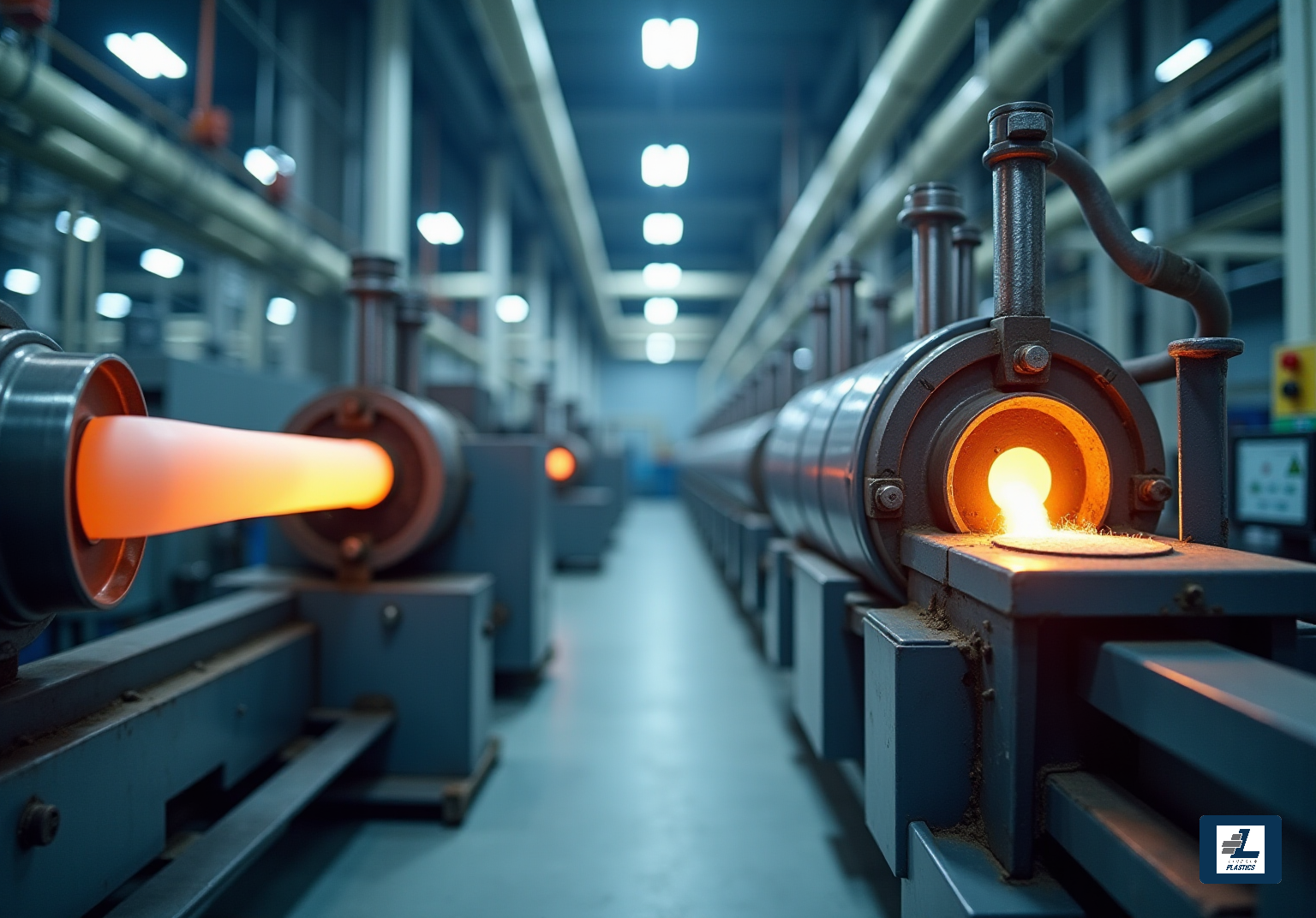
The plastic extrusion line is a manufacturing technique that melts raw material and forces it through a die to create continuous shapes like pipes, tubes, and profiles. The plastic extrusion line is a preferred method for producing long, uniform products in high volumes, making it popular in construction, automotive, and packaging industries. At Lincoln Plastics, we work closely with OEMs to ensure our products meet all standards, including special checks for fit and function. Our commitment to excellence shines through our robust quality system, which includes specific quality plans and documentation for each profile we produce. And guess what? The global market for synthetic materials in the plastic extrusion line sector is expected to grow significantly, driven by the rising demand for lightweight and durable materials across various sectors.
Now, let’s talk about injection shaping. This technique involves forcing molten plastic into a mold cavity under high pressure, allowing for the creation of intricate three-dimensional shapes. It’s perfect for producing detailed parts in large quantities, making it suitable for everything from automotive components to consumer goods. The global injection shaping market was estimated at USD 298,717.5 million in 2024 and is projected to hit USD 312,660.6 million in 2025. That’s a clear sign of the increasing demand for high-performance, precision components.
So, what are the key differences between these processes? Here’s a quick rundown:
- Production Volume: Extrusion is great for high-volume, continuous production, while injection molding excels at creating detailed parts in large quantities.
- Complexity of Shapes: Injection shaping can craft more intricate designs compared to extrusion, which tends to stick to simpler profiles.
Material waste is minimized in a plastic extrusion line, as this process usually generates continuous lengths, whereas injection forming might have higher scrap rates due to the need for molds.
At Lincoln Plastics, we also optimize order sizes to maximize machine run times per setup, ensuring our production processes are efficient. Recent advancements in injection shaping technology, like automation and precision forming, are boosting efficiency and product standards, solidifying its role in modern manufacturing. Plus, competitive factors such as product quality, technological advancements, and sustainability initiatives are increasingly shaping both markets. As industries continue to evolve, understanding the benefits and applications of both extrusion and injection molding will be crucial for OEMs looking to enhance their manufacturing methods.

Compare the Processes: Steps and Mechanisms
Let’s dive into the world of the plastic extrusion line! It all kicks off with raw polymer materials that get fed into a hopper and heated until they turn into a liquid. Once molten, this plastic is pushed through a die, creating a continuous profile that’s cooled and cut to the right length. This whole process runs continuously on the plastic extrusion line, allowing us to produce uniform shapes at high speed.
At Lincoln Plastics, we take pride in the quality of our plastic extrusion line methods. We stick to strict performance standards, using various check gauges to ensure everything fits perfectly for OEM specifications. Plus, we keep a dedicated quality book for each polymer profile. This book includes drawings, essential in-process checks, and run documentation to make sure we’re always on point with our specifications.
Now, you might be wondering about injection forming. This method involves several steps:
- Clamping the mold
- Injecting molten plastic into the mold cavity
- Letting it cool and solidify
- Ejecting the finished part
While this batch method is a bit more complex and time-consuming than extrusion, it offers greater design flexibility and precision for crafting intricate shapes.
And here’s the cherry on top: Lincoln Plastics also provides a range of value-added services! We’re talking co-extrusion, laser etching, fitting insertion, and specialized packaging. These services really enhance our customization capabilities to meet your specific needs. So, if you’re looking for tailored solutions, you know where to find us!

Evaluate Advantages and Disadvantages
Let’s dive into the world of the plastic extrusion line and injection molding! You might be wondering why these two processes are so popular in manufacturing. Well, the plastic extrusion line has some pretty cool advantages. For starters, the plastic extrusion line offers lower tooling costs and faster production speeds, which makes it a go-to for high-volume runs. Plus, it’s fantastic at creating long, continuous profiles with a plastic extrusion line - think piping and tubing.
But here’s the catch: when it comes to complex shapes, extrusion can fall short. It’s not the best choice for intricate designs, which can limit its use in certain projects. Now, let’s talk about injection molding. This method shines when it comes to producing detailed and complex components with high precision. If you need intricate geometries, injection molding is your best friend!
However, it does come with its own set of challenges. The initial tooling costs are higher, and the cycle times can be longer, which might not be ideal for low-volume production runs. So, for OEMs, the choice between these two processes really depends on what the project needs. It’s all about balancing cost-effectiveness with the complexity of the components you want to create.
As we’ve seen in various case studies, injection molding offers amazing detail and finish. But don’t forget, it can be energy-intensive and has longer setup times - definitely something to consider in fast-paced production environments. Ultimately, understanding these dynamics is key to making smart decisions in the manufacturing landscape. So, what’s your take on these processes?

Assess Application Suitability for Production Needs
A plastic extrusion line is a fantastic way to create long, uniform shapes like pipes, tubing, and profiles, especially in the construction and automotive industries. It’s super efficient for high-volume production, which means you can save a lot of money and time. Did you know that in 2022, the construction sector made up 31.8% of global revenue? That really shows how much demand there is for extruded products like window frames and plumbing systems.
At Lincoln Plastics, we work hand-in-hand with OEMs to make sure our extruded products meet all the necessary standards. We even have special checks for fit and function! Our quality system is pretty robust, featuring a dedicated quality book for each polymer profile. This includes detailed drawings, critical in-process checks, and run documentation, ensuring that the rigid profiles are exactly what you need for those important dimensions.
Now, let’s talk about injection molding. This method is the go-to for creating complex parts with intricate shapes, like electronic housings and medical device components. It’s crucial in industries where precision and detail really matter, even though it can be pricier due to tooling and production costs. The automotive sector is a great example, as it increasingly relies on specialized plastic components. The market for automotive plastics is projected to grow significantly, highlighting the importance of the plastic extrusion line as well as injection molding.
So, how do you decide between extrusion and injection molding? It really comes down to your specific project needs, like design complexity, production volume, and budget. As the industry keeps evolving, understanding these differences will help OEMs make informed choices that fit their operational needs and market demands. What do you think? Ready to dive into your next project with this knowledge?

Conclusion
When you compare plastic extrusion lines and injection molding, it’s clear that each process has its own unique perks and uses. Think about it: extrusion is perfect for making long, uniform shapes in bulk, while injection molding shines when it comes to crafting those intricate, detailed parts. Knowing these differences is key for OEMs who want to fine-tune their production strategies and keep up with the ever-changing demands of different industries.
So, what’s the takeaway? Well, plastic extrusion tends to have lower tooling costs and faster production speeds, making it a go-to for simpler profiles. On the flip side, injection molding offers more design flexibility and precision, but it does come with higher initial costs and longer cycle times. As industries keep evolving, the choice between these two methods should really hinge on what each project needs - think design complexity, production volume, and budget.
Ultimately, deciding between plastic extrusion and injection molding isn’t just a technical choice; it’s a strategic one for OEMs. By tapping into the strengths of each process and being aware of their limitations, manufacturers can boost their operational efficiency and product quality. Embracing this knowledge will empower OEMs to make smart choices, helping them stay competitive in a fast-paced market.
Frequently Asked Questions
What is plastic extrusion?
Plastic extrusion is a manufacturing technique that melts raw material and forces it through a die to create continuous shapes like pipes, tubes, and profiles. It is favored for producing long, uniform products in high volumes.
In which industries is plastic extrusion commonly used?
Plastic extrusion is popular in the construction, automotive, and packaging industries.
How does Lincoln Plastics ensure product quality in plastic extrusion?
Lincoln Plastics works closely with OEMs to ensure products meet all standards, utilizing a robust quality system that includes specific quality plans and documentation for each profile produced.
What is the expected growth of the global market for synthetic materials in the plastic extrusion sector?
The global market for synthetic materials in the plastic extrusion line sector is expected to grow significantly, driven by the rising demand for lightweight and durable materials across various sectors.
What is injection molding?
Injection molding is a technique that involves forcing molten plastic into a mold cavity under high pressure to create intricate three-dimensional shapes.
What are the applications of injection molding?
Injection molding is suitable for producing detailed parts in large quantities, including automotive components and consumer goods.
What was the estimated market size for injection molding in 2024?
The global injection molding market was estimated at USD 298,717.5 million in 2024 and is projected to reach USD 312,660.6 million in 2025.
What are the key differences between plastic extrusion and injection molding?
The key differences include: - Production Volume: Extrusion is ideal for high-volume, continuous production, while injection molding excels at creating detailed parts in large quantities. - Complexity of Shapes: Injection molding can create more intricate designs compared to extrusion, which typically produces simpler profiles.
How does material waste compare between plastic extrusion and injection molding?
Material waste is minimized in plastic extrusion since it generally generates continuous lengths, whereas injection molding may have higher scrap rates due to the need for molds.
What recent advancements in injection molding technology are mentioned?
Recent advancements include automation and precision forming, which are boosting efficiency and product standards in injection molding.
What competitive factors are shaping the markets for extrusion and injection molding?
Competitive factors include product quality, technological advancements, and sustainability initiatives.
List of Sources
- Define Plastic Extrusion and Injection Molding
- Extrusion (https://plasticsnews.com/processors/extrusion)
- Injection Molding Market Size, Share | Industry Report, 2033 (https://grandviewresearch.com/industry-analysis/injection-molding-market-report)
- Plastics Extrusion Market Report | Global Forecast From 2025 To 2033 (https://dataintelo.com/report/plastics-extrusion-market)
- Injection Molded Plastics Market Size, Share | Growth [2032] (https://fortunebusinessinsights.com/injection-molded-plastics-market-101970)
- Compare the Processes: Steps and Mechanisms
- Plastics Extrusion: 4 Critical Statistics to Track for Increased Quality & Plant Profit (https://gaugeadvisor.com/2025/05/26/plastics-extrusion-4-critical-statistics-to-track-for-increased-quality-plant-profit)
- The Extrusion Industry in 2025: Innovations, Trends, and Opportunities (https://plextrusions.com/extrusion-blog/the-extrusion-industry-in-2025-innovations-trends-and-opportunities)
- The Plastic Extrusion Process Explained in 5 Steps (https://paulmurphyplastics.com/industry-news-blog/the-plastic-extrusion-process-explained-in-5-steps)
- Custom Plastic Extrusion Case Studies | SFR Industries (https://sfrindustries.com/case_studies)
- How to Collect & Interpret Process Data in Extrusion (https://ptonline.com/articles/how-to-collect-interpret-process-data-in-extrusion-part-1(2))
- Evaluate Advantages and Disadvantages
- Injection molding outlook: Cautious optimism for 2026 (https://plasticsnews.com/suppliers/machinery/pn-machinery-outlook-injection-molding-2025)
- Plastics Extrusion: 4 Critical Statistics to Track for Increased Quality & Plant Profit (https://gaugeadvisor.com/2025/05/26/plastics-extrusion-4-critical-statistics-to-track-for-increased-quality-plant-profit)
- Injection molding vs Extrusion: Differences and Comparison (https://3erp.com/blog/injection-molding-vs-extrusion-differences-and-comparison)
- The State of Plastics Manufacturing: Challenges, Shifts and Opportunities Ahead » Plastics Decorating (https://plasticsdecorating.com/articles/2025/the-state-of-plastics-manufacturing-challenges-shifts-and-opportunities-ahead)
- Assess Application Suitability for Production Needs
- Plastic Extrusion Machine Market Size & Share Report, 2030 (https://grandviewresearch.com/industry-analysis/plastic-extrusion-machine-market-report)
- Extruded Plastics Market Size to Hit USD 260.43 Bn by 2034 (https://precedenceresearch.com/extruded-plastics-market)
- The Extrusion Industry in 2025: Innovations, Trends, and Opportunities (https://plextrusions.com/extrusion-blog/the-extrusion-industry-in-2025-innovations-trends-and-opportunities)
- Emerging Trends Shaping Plastic Extruders in 2026 (https://audop.com/c/emerging-trends-shaping-plastic-extruders-in-2026.htm)
- Plastics extrusion Market is Growing at CAGR of 6.72% between 2023 and 2030 (https://cognitivemarketresearch.com/plastics-extrusion-market-report)
Related posts

Discover the key benefits of ISO certified plastic extrusion services for reliability and efficiency.


Discover the diverse applications of plastic tubing PVC across industries, enhancing efficiency and safety.
Master the installation and benefits of strain relief clamps for range cords to enhance safety and reliability.
