
Optimize Your Use of Plastic Extrusion Dies for Better Efficiency
Introduction
Understanding the crucial role of plastic extrusion dies in manufacturing can really change the game for production efficiency. These specialized tools don’t just shape molten plastic into precise profiles; they also have a big impact on the quality of the final product. As manufacturers look to boost their operations, a key question arises: how can you optimize the use of these dies to cut down on waste, improve flow, and keep quality high?
In this article, we’ll explore some best practices, key considerations, and innovative solutions to help elevate the performance of plastic extrusion dies. Let’s make sure you stay ahead in this competitive landscape!
Define Plastic Extrusion Dies and Their Role in Manufacturing
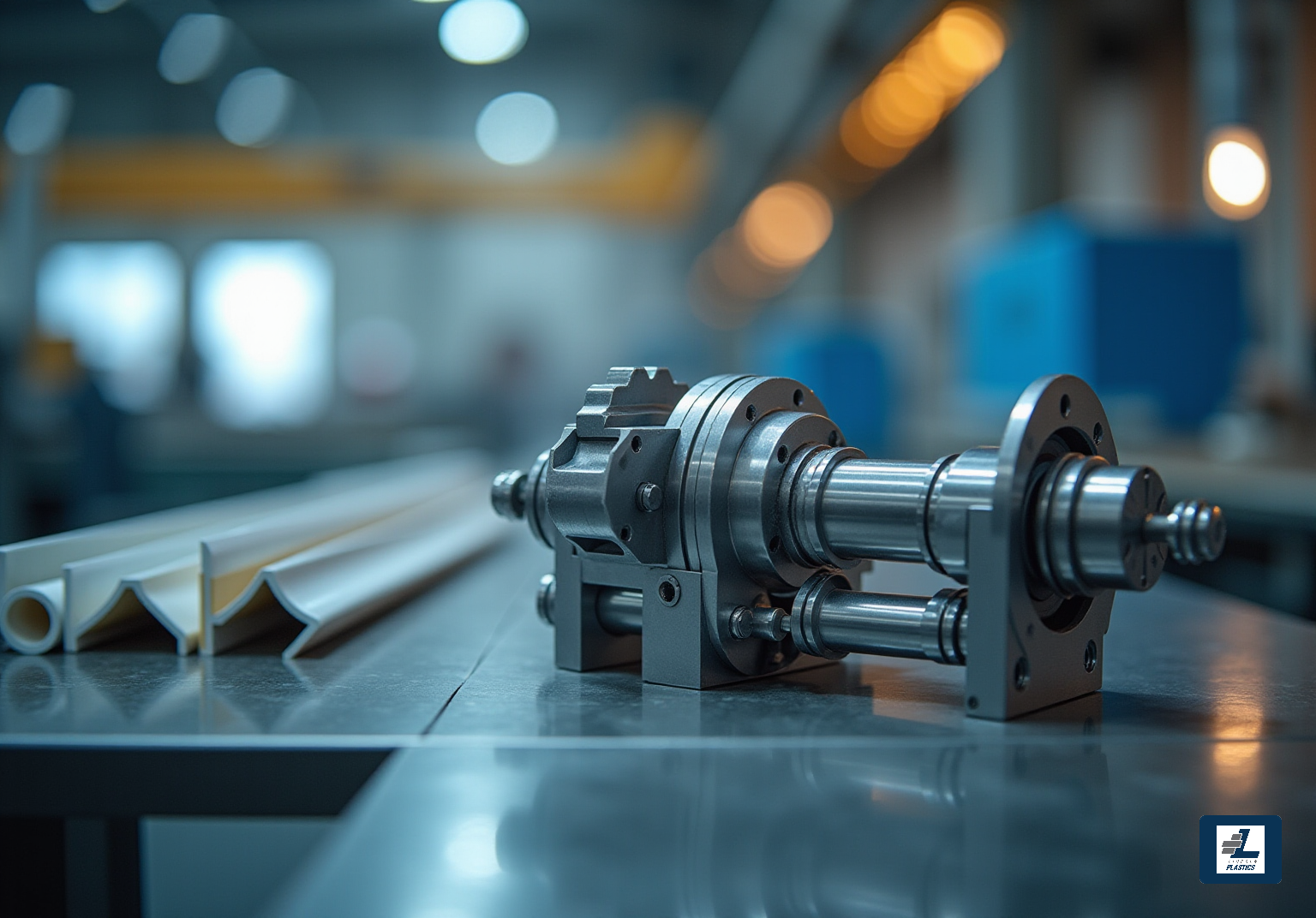
In the extrusion process, dies are quite essential. They shape molten plastic into specific profiles with the help of a die head, which consists of several parts, including the die body. These tools play a big role in determining how the final product looks, and they come with adjusting systems that help control the width and thickness of the extrudate.
Now, let’s talk about why the design of the die is so important. It directly affects how the molten plastic flows, which is key to making sure everything is uniform and accurate in the end. For manufacturers looking to boost efficiency, understanding the role of the die is crucial. Did you know that the shape of the die can significantly influence how the substance flows and cools? This, in turn, impacts the overall quality of the extruded items.
You might be wondering about the latest trends. Innovations like advanced die designs are becoming more popular. These changes not only enhance performance but also help reduce waste. As industry leaders often point out, die design isn’t just about shaping materials; it’s about improving efficiency and ensuring that the products meet those standards.
, then explore the branches to see their components, why design matters, current trends, and how they affect product quality.
Identify Key Factors for Selecting the Right Plastic Extrusion Die
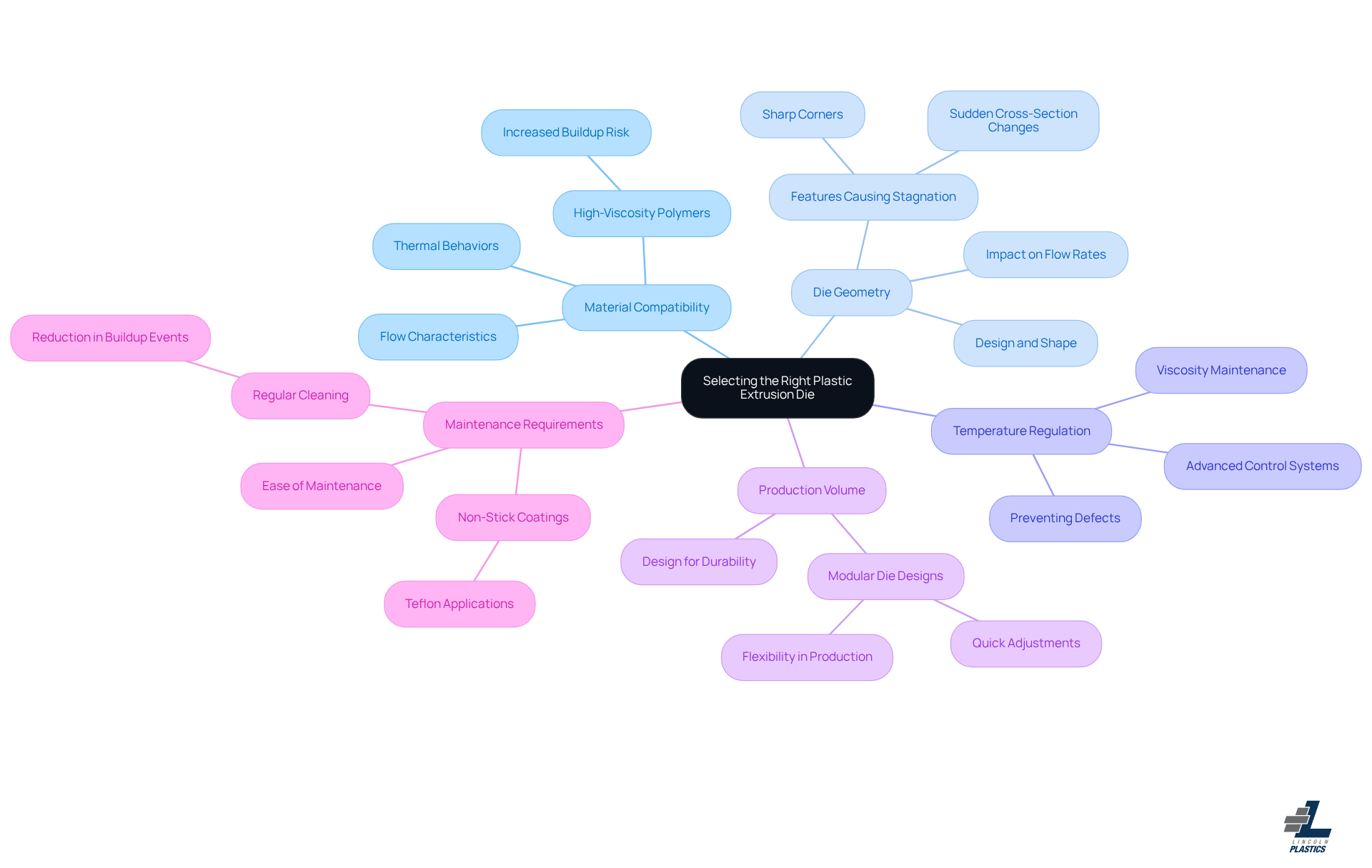
Choosing the right plastic extrusion die is not merely a technical decision; it involves finding the perfect fit for your needs. Let’s break down some key factors to consider:
- Compatibility: First off, you want to make sure the die matches the type of plastic you’re working with. Different polymers have unique flow characteristics and thermal behaviors. For example, high-viscosity polymers can lead to defects, so choosing the right die is crucial to avoid production hiccups.
- Design: Next, think about the die’s design and shape. This is super important for getting the profile you want. Features like sharp corners or sudden changes in cross-section can cause material stagnation and defects. Nowadays, there’s a focus on optimizing the plastic extrusion process to improve flow rates and reduce buildup, which can really boost your production efficiency and quality.
- Temperature control: Now, let’s talk about temperature. Keeping the right temperature is key to maintaining the viscosity of molten plastic, which directly impacts flow rates and the quality of your final product. Many die heads are now equipped with advanced temperature control systems to ensure consistent processing conditions, helping to minimize defects. As industry expert Lydia points out, "Advancements in die technology are also notable, aimed at ensuring optimal processing conditions and preventing defects."
- Production volume: You’ll also want to consider how much you plan to produce. The design of the die should accommodate your expected production volume while balancing durability and cost. Modular dies are becoming popular because they allow for quick adjustments to meet changing production demands without causing extensive downtime. This trend really highlights the industry’s need for flexibility.
- Maintenance: Finally, don’t overlook maintenance. The maintenance schedule can significantly impact long-term efficiency. Regular cleaning and non-stick coatings can cut down on buildup. In fact, companies that stick to strict maintenance schedules see up to a 40% reduction in buildup events! That’s a big deal when it comes to optimizing die performance.
By keeping these factors in mind, you can select dies that not only enhance your shaping processes but also improve overall product quality. So, what are you waiting for? Dive into the world of die selection and see how it can elevate your production game!
Implement Best Practices for Maintaining and Optimizing Plastic Extrusion Dies
To keep your dies in top shape, let’s chat about some best practices that can really make a difference:
- Regular Cleaning: First off, setting up a routine cleaning schedule is key. You want to get rid of any residue and buildup that could mess with die performance. Make sure to use the right tools you’re extruding. For example, a good cleaning solution can cut your cleaning time by up to 85%! That’s a win for die integrity and efficiency.
- Temperature Management: Now, let’s talk about temperature. Temperature control is super important. Overheating can lead to degradation and inconsistent flow, which nobody wants. By managing temperatures effectively in the extrusion process, you can maintain optimal material levels, reduce thermal degradation, and minimize adhesion. This all contributes to better performance of the dies.
- Inspection and Repair: Don’t forget about regular inspections! Spotting wear and damage early can save you a lot of headaches down the line. Addressing issues promptly helps keep production quality consistent.
- Lubrication: A little lubrication goes a long way. Applying the right lubricants to moving parts can cut down on friction and wear, thereby boosting the efficiency and lifespan of the dies.
- Documentation: Lastly, keep track of everything! Maintaining detailed records of maintenance and performance metrics is crucial. This documentation helps you spot trends and areas for improvement, making it easier to proactively address issues.
By following these practices, you’ll ensure your dies run smoothly, leading to higher quality outputs and less downtime. So, why not give them a try?

Address Common Challenges in Using Plastic Extrusion Dies and Their Solutions
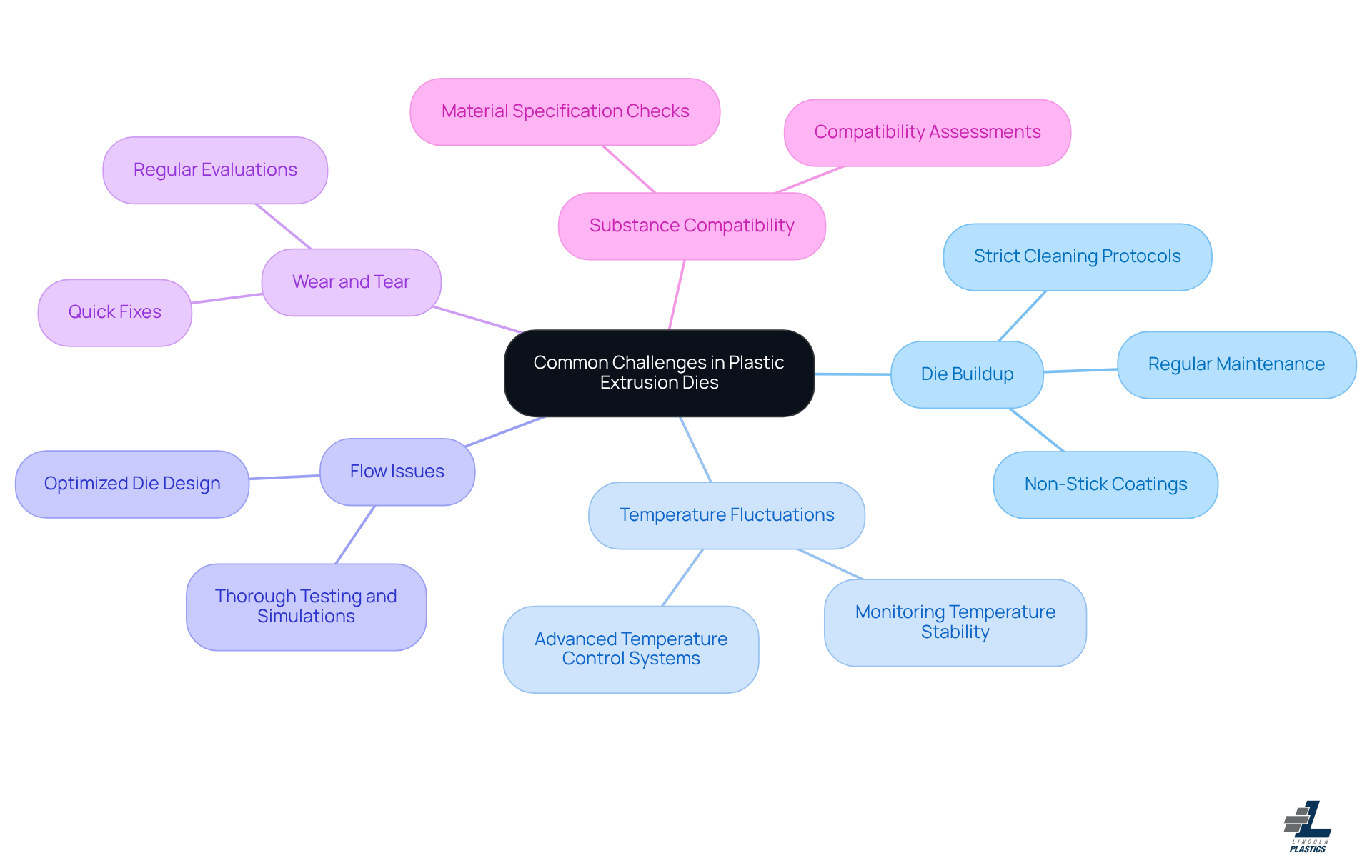
Common challenges in using a die can really throw a wrench in the works. Let’s break down a few of them:
- Material Buildup: Ever noticed how material can pile up and block the flow? It’s a real headache and can mess with the quality of your items. To tackle this, consider applying non-stick coatings to the surface of the die. Sticking to strict cleaning protocols can cut down buildup occurrences by nearly 40%! That’s a game changer, right?
- Temperature Control: Inconsistent temperatures can lead to some pretty serious defects in your final product. So, what can you do? Implementing advanced temperature control systems can help maintain stability in the material throughout the extrusion process. Just a 10-degree Celsius increase beyond the substance's degradation point can ramp up the risk of issues. It’s all about managing that temperature precisely!
- Flow Issues: Uneven flow can pop up due to a not-so-great die design or material inconsistencies. To avoid this, thorough testing and simulations during the design phase of the die are key. This ensures optimal flow characteristics, which can really boost precision and consistency in your final products.
- Die Wear: Over time, dies can wear down, affecting performance. Regular evaluations and quick fixes are essential to keep the dies in optimal condition. Maintenance practices can really help keep operations running smoothly in the shaping process.
- Substance Compatibility: Using materials that don’t get along can lead to processing headaches. It’s super important to check compatibility before diving into production. Did you know that almost 30% of defects can be traced back to material incompatibility? By addressing these challenges proactively, you can really enhance your extrusion processes and boost efficiency.
Conclusion
When it comes to manufacturing, optimizing plastic extrusion dies is a game changer for boosting production efficiency and product quality. Think about it: these tools are crucial in shaping molten plastic, and understanding their role can really help manufacturers make smarter choices that lead to better results. The design, selection, and maintenance of these dies aren’t just technical details; they’re key to achieving consistency and cutting down on waste in the production process.
Now, let’s talk about some key factors to keep in mind. Material compatibility, die geometry, temperature regulation, production volume, and maintenance needs are all vital considerations when picking the right plastic extrusion die. By implementing best practices for:
- Cleaning
- Temperature management
- Inspection
- Lubrication
- Documentation
you can significantly boost die performance and longevity. Plus, tackling common challenges like die buildup, temperature swings, and flow issues head-on can lead to smoother operations and higher quality outputs.
Ultimately, we can’t underestimate the importance of optimizing plastic extrusion dies. By embracing these strategies, manufacturers can enhance their production capabilities and contribute to sustainability by minimizing waste. So, why wait? Taking action now to refine your die selection and maintenance practices can lead to substantial improvements in efficiency and product quality, paving the way for long-term success in the competitive world of plastic manufacturing.
Frequently Asked Questions
What are plastic extrusion dies?
Plastic extrusion dies are essential tools in the extrusion process that shape molten plastic into specific profiles. They consist of several parts, including the die body, and are crucial for determining the appearance of the final product.
How do plastic extrusion dies affect the manufacturing process?
The design of plastic extrusion dies directly influences the flow of molten plastic, which is vital for ensuring uniformity and accuracy in the final products.
Why is the design of the die important?
The die design is important because it affects how the molten plastic flows and cools, which ultimately impacts the quality of the extruded items.
What are some recent trends in plastic extrusion die design?
Recent trends in die design include modular configurations and the use of advanced materials, which enhance performance and help reduce waste.
How does effective die design contribute to manufacturing?
Effective die design improves operational efficiency and ensures that the final products meet strict quality standards, making it a key focus for manufacturers aiming to boost production efficiency and quality.
List of Sources
- Define Plastic Extrusion Dies and Their Role in Manufacturing
- 10 Innovative Extrusion Plastic Products for OEM Needs (https://lincoln-plastics.com/news-post/10-innovative-extrusion-plastic-products-for-oem-needs)
- jurryextrusion.com (https://jurryextrusion.com/blog/extrusion-die-head-technology-trends-2025)
- Plastics Extrusion Market Research Report 2034 (https://dataintelo.com/report/plastics-extrusion-market)
- Plastics Extruded Market Size to Worth USD 259.21 Billion by 2034 (https://finance.yahoo.com/news/plastics-extruded-market-size-worth-142300951.html)
- jurryextrusion.com (https://jurryextrusion.com/blog/extrusion-die-head-tech-trends-2025)
- Identify Key Factors for Selecting the Right Plastic Extrusion Die
- precisiondiesystems.com (https://precisiondiesystems.com/post/understanding-and-addressing-die-buildup-in-plastic-extrusion-effective-strategies-for-industry-pro)
- jurryextrusion.com (https://jurryextrusion.com/blog/extrusion-die-head-technology-trends-2025)
- Implement Best Practices for Maintaining and Optimizing Plastic Extrusion Dies
- precisiondiesystems.com (https://precisiondiesystems.com/post/understanding-and-addressing-die-buildup-in-plastic-extrusion-effective-strategies-for-industry-pro)
- asaclean.com (https://asaclean.com/blog/efficient-die-cleaning-to-save-time-and-boost-productivity)
- Address Common Challenges in Using Plastic Extrusion Dies and Their Solutions
- precisiondiesystems.com (https://precisiondiesystems.com/post/understanding-and-addressing-die-buildup-in-plastic-extrusion-effective-strategies-for-industry-pro)
- Overcoming Challenges and Misconceptions of Extrusion - Alexandria Industries (https://alexandriaindustries.com/industry-news/overcoming-challenges-misconceptions-extrusion)
- Common problems in the plastic extrusion process | Bausano (https://bausano.com/en/press-and-news/common-problems-in-the-plastic-extrusion-process)
Related posts

Why Custom Pipe Extrusion Matters More Than Ever
Standard pipe sizes don’t always work. Learn how Lincoln Plastics delivers custom diameters, wall thicknesses, and finishes in right-sized runs.


Reducing Trip Hazards with Custom Cord Management
Loose cords are more than messy — they’re a safety hazard. Lincoln Plastics’ custom cord covers and Flexiduct solutions improve safety and efficiency.
The Power of Custom Plastic Profiles for OEMs
Off-the-shelf profiles force compromises. Learn how Lincoln Plastics designs custom extruded profiles for OEMs with exact specs and right-sized runs.
