
Optimize HDPE Extrusion: 4 Steps to Enhance Efficiency
Introduction
In the competitive landscape of manufacturing, mastering High-Density Polyethylene (HDPE) extrusion is not just an option; it's a necessity for success. As the demand for durable and versatile materials rises, it's crucial for manufacturers to grasp how to optimize HDPE extrusion effectively to boost productivity and cut costs.
So, what key steps can manufacturers take to ensure their extrusion process not only meets but exceeds industry standards? This guide delves into four essential strategies that can transform HDPE extrusion operations, ensuring that quality and efficiency go hand in hand. Embracing these strategies will empower manufacturers to elevate their HDPE extrusion operations, ensuring they remain at the forefront of industry standards.
Understand the Basics of HDPE Extrusion
In a world where material selection can make or break your project, High-Density Polyethylene stands out as a top choice for its unmatched strength and versatility. This thermoplastic polymer, known for its remarkable durability and resistance to impact and chemicals, is essential to understand for optimizing the hdpe extrusion process. Here are the key aspects:
-
Material Properties: High-density polyethylene boasts a high strength-to-density ratio, making it suitable for applications such as pipes, containers, and various industrial components. Its low moisture absorption (less than 0.01%) and excellent chemical resistance enhance its usability across diverse environments, ensuring longevity and reliability.
-
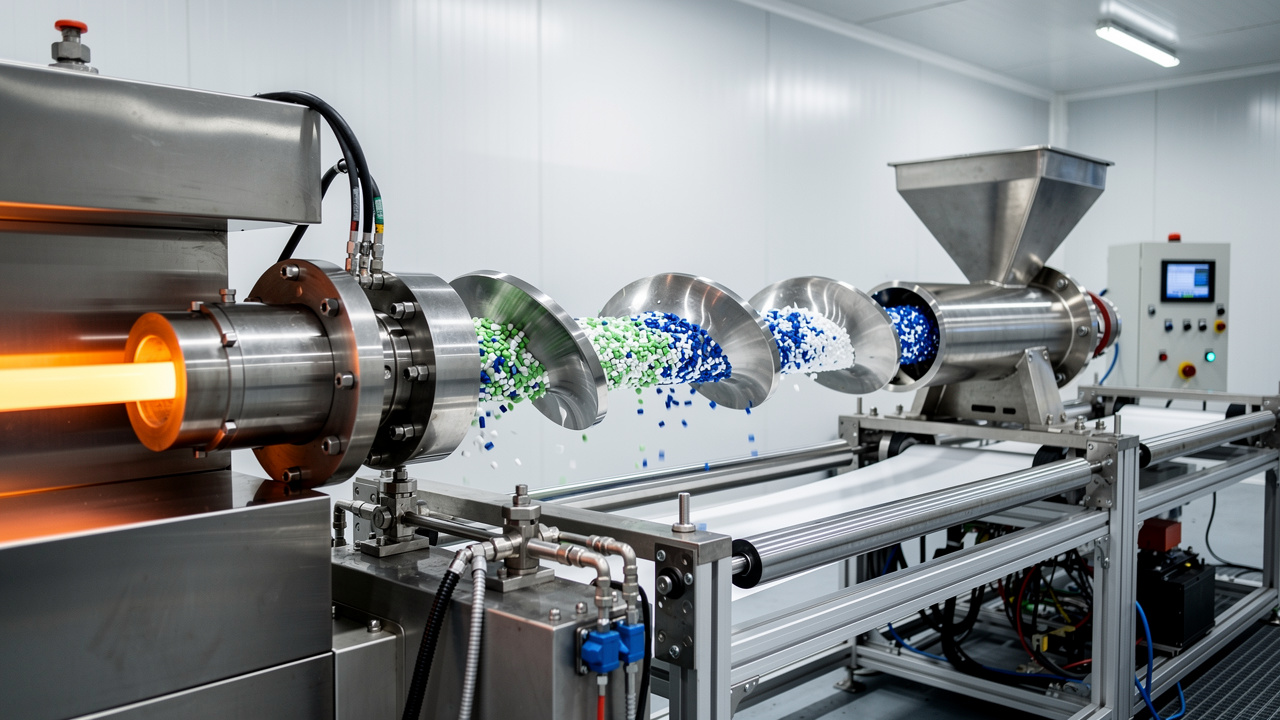
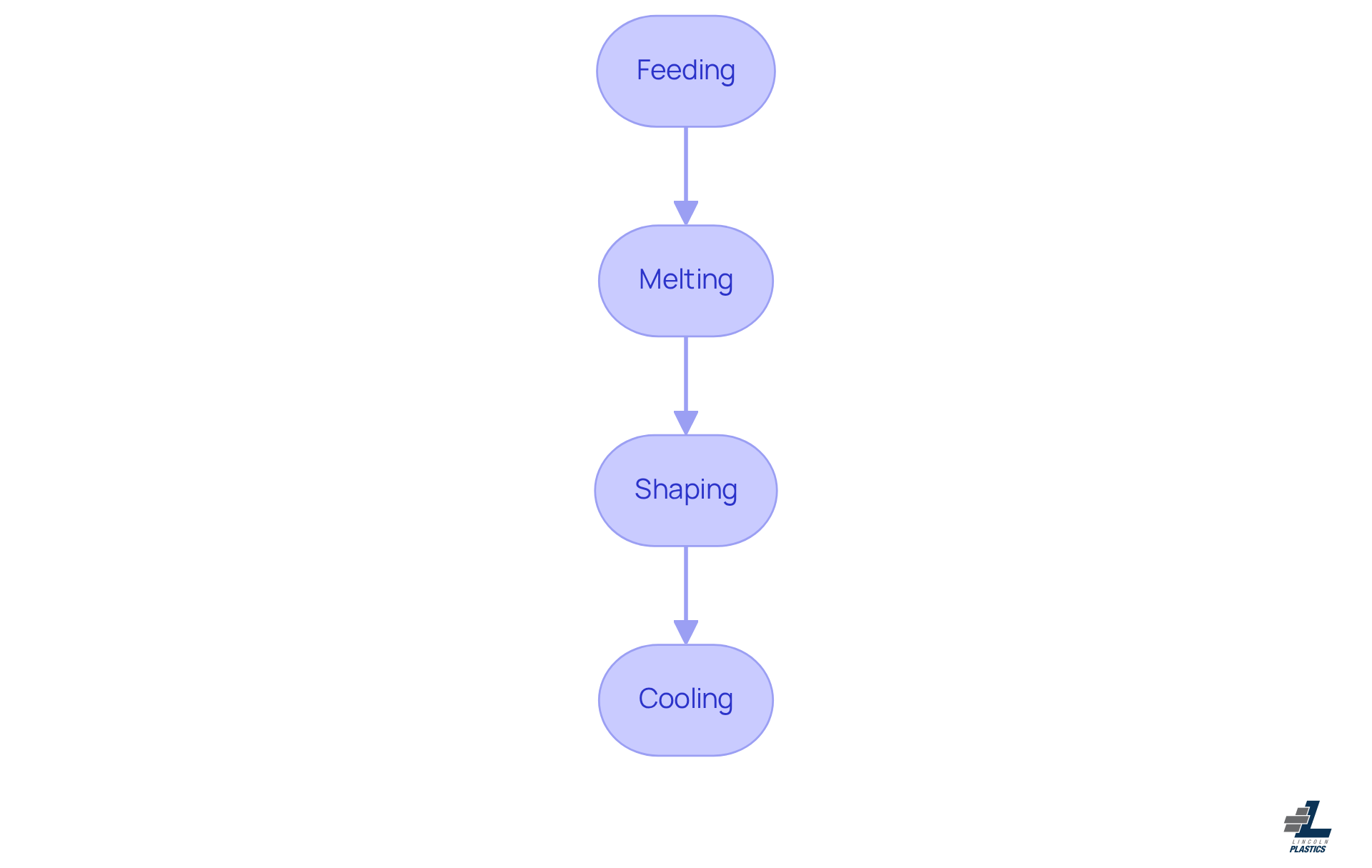
The hdpe extrusion process entails feeding polyethylene pellets into an extruder, where they are melted and pushed through a die to form continuous profiles. Key stages include:
- Feeding: Pellets are loaded into the hopper.
- Melting: The material is heated in the barrel, where a rotating screw mixes and melts it.
- Shaping: The molten plastic is pushed through a die to form the desired shape.
- Cooling: The extruded product is cooled to solidify its shape.
-
Applications: High-density polyethylene is widely utilized in manufacturing pipes for water and gas distribution, as well as in packaging, automotive parts, and construction materials. By recognizing these applications, you can tailor your HDPE extrusion process to meet the unique demands of industries like agriculture, where HDPE pipes are prized for their durability and efficiency in irrigation systems.
-
Quality Assurance: At Lincoln Plastics, we prioritize excellence in our extrusion processes. Our ISO 9001:2015 certification underscores our commitment to rigorous quality management plans, including dedicated quality books and in-process checks. This guarantees that each product fulfills the exact specifications demanded by OEMs, improving safety and performance in applications like irrigation and cable management.
-
Recent developments in 2026 have concentrated on enhancing energy conservation and lowering production expenses in hdpe extrusion technology. Innovations such as automatic welding machines enhance precision and reduce human error, contributing to overall efficiency in the manufacturing process. As the demand for sustainable solutions grows, mastering hdpe extrusion will place your business at the forefront of innovation and efficiency.
Identify Key Equipment and Components for HDPE Extrusion
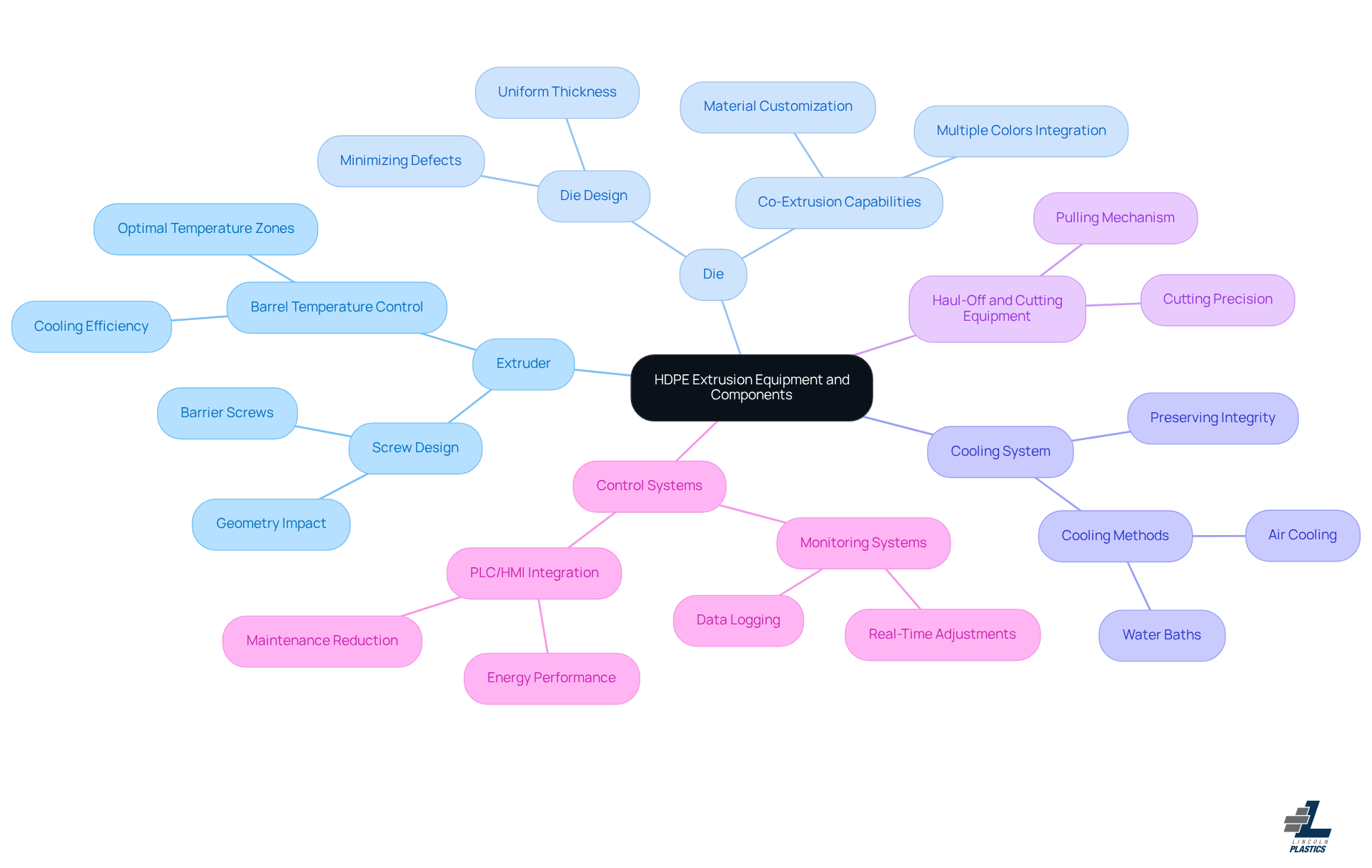
To truly excel in HDPE extrusion, one must grasp the critical equipment and components that drive the process:
-
Extruder: The heart of the extrusion process, usually a single-screw extruder, is tasked with melting and forming the high-density polyethylene. Key features include:
- Screw Design: The geometry of the screw significantly impacts material flow and melting efficiency. Barrier screws are often favored for their superior mixing and thermal control capabilities.
- Barrel Temperature Control: Maintaining optimal temperature zones is crucial for consistent melting and processing. Without efficient cooling, your products risk warping and losing integrity.
-
The die shapes the molten material during the HDPE extrusion process into the desired profile. Proper die design is essential for achieving uniform thickness and minimizing defects, which can influence the overall quality of the final item. Lincoln Plastics also offers co-extrusion capabilities, allowing for the integration of multiple colors or materials into profiles, enhancing customization options for OEMs.
-
Cooling System: After leaving the die, the extruded item must be cooled to solidify its shape. Efficient cooling systems, such as water baths or air cooling, are essential for preserving item integrity and preventing warping.
-
Haul-Off and Cutting Equipment: These components pull the extruded material away from the die and cut it to the desired length. Precision in these operations is essential for ensuring consistent product dimensions, which is crucial for meeting client specifications. Streamlining these processes can further improve productivity.
-
Control Systems: Advanced monitoring and control systems help maintain optimal processing conditions. They allow for real-time adjustments to temperature, pressure, and speed. Failing to adopt these systems could lead to increased downtime and reduced productivity.
Recent advancements in extruder technology, such as the integration of PLC/HMI control systems, enable real-time monitoring and data logging, which are essential for high-throughput polyethylene pipe production lines. These systems not only improve energy performance but also lessen maintenance requirements, ensuring consistent output. For example, the output capacities of contemporary high-density polyethylene pipe machines can vary from 150 to 800 kg/h, accommodating different pipe diameters from 4 mm to 400 mm, making them appropriate for various uses including drinking water supply and agricultural irrigation.
Integrating these crucial elements and utilizing the latest technology can greatly enhance the efficiency and standard of processes in HDPE extrusion. At Lincoln Plastics, we’re dedicated to excellence, backed by our rigorous quality management plans, including ISO 9001:2015 certification and dedicated quality checks. By embracing these advancements, manufacturers can not only meet but exceed the rising expectations for high-performance plastic products. For tailored solutions or quotes, contact Lincoln Plastics today.
Implement Optimization Techniques for Enhanced Efficiency
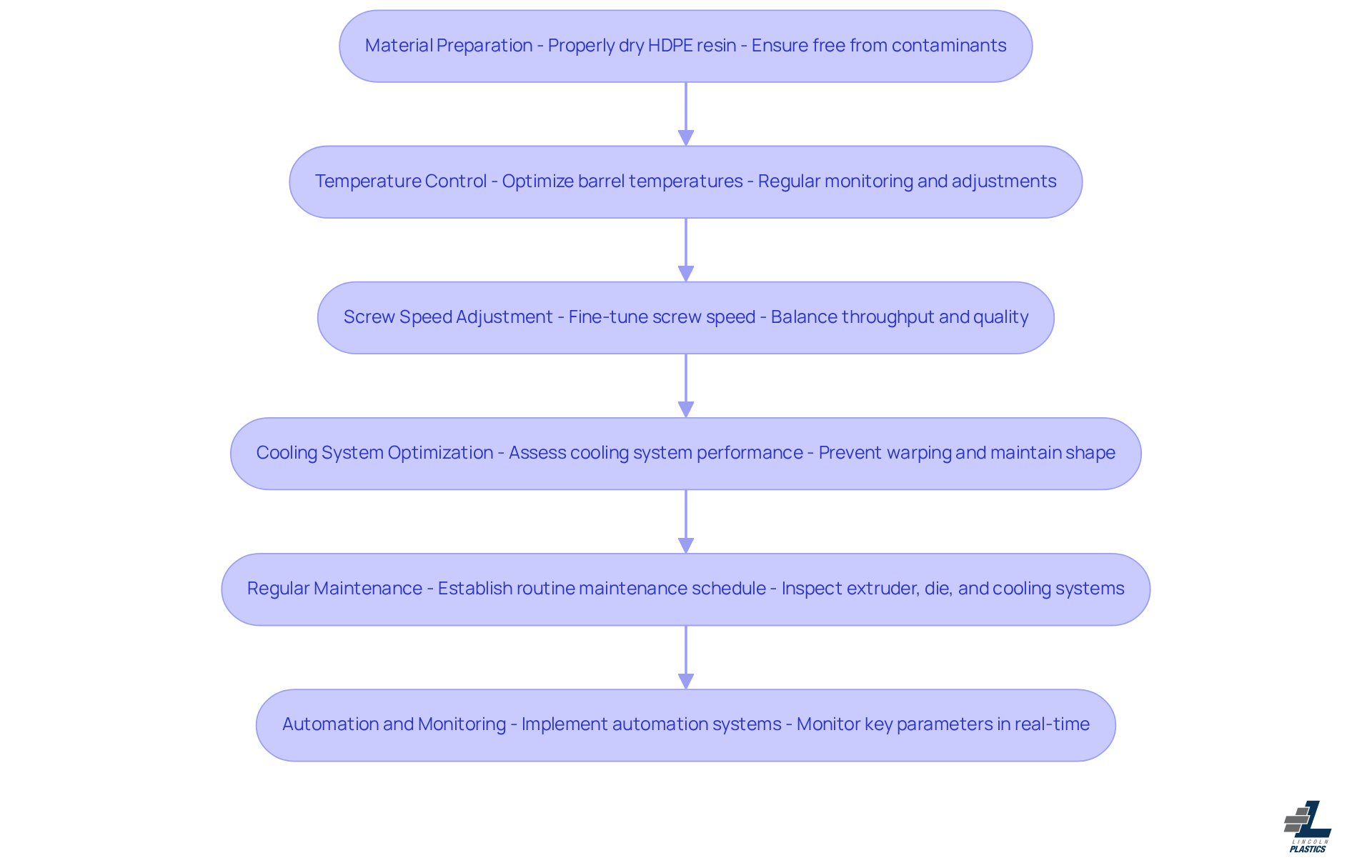
In the competitive landscape of plastic extrusion, optimizing HDPE extrusion processes is essential for maintaining product quality and operational efficiency. To enhance the efficiency of HDPE extrusion, consider the following optimization techniques:
- Material Preparation: Properly drying high-density polyethylene resin and ensuring it is free from contaminants is essential. Pre-drying can significantly reduce moisture content, which is crucial for preventing defects during the extrusion process.
- Temperature Control: Temperature control is crucial to optimize barrel temperatures for the specific HDPE extrusion grade being processed. Regular monitoring and adjustments are necessary to maintain consistent melting and flow rates, which directly affect the standard of the output.
- Screw Speed Adjustment: Fine-tuning the screw speed is vital for balancing throughput and item quality. While higher speeds can increase output, they may also lead to defects if not managed properly, necessitating careful adjustments based on real-time data.
- Cooling System Optimization: Assess the arrangement and performance of the cooling system. Effective cooling is essential for preserving the shape of the item and preventing warping, which can undermine the integrity of the final result.
- Regular Maintenance: Establish a routine maintenance schedule for all equipment involved in the extrusion process. Regular inspections of the extruder, die, and cooling systems can prevent unexpected breakdowns and ensure consistent performance.
- Automation and Monitoring: Implement automation systems to monitor key parameters in real-time. This capability enables rapid modifications to sustain ideal processing conditions, improving overall performance and decreasing the chances of defects.
By neglecting these methods, producers risk compromising product quality and increasing operational costs associated with HDPE extrusion. Lincoln Plastics highlights its dedication to excellence through stringent management plans, including ISO 9001:2015 certification, ensuring that all processes meet the highest standards of performance and effectiveness. Additionally, Lincoln Plastics offers co-extrusion capabilities for multi-color or multi-material profiles, providing tailored solutions for OEMs. For expert guidance and to explore how these optimization techniques can be effectively implemented, OEMs are encouraged to contact Lincoln Plastics. Ignoring these optimization techniques could lead to costly defects and inefficiencies that undermine your competitive edge in the market.
Establish Quality Control Protocols to Maintain Efficiency
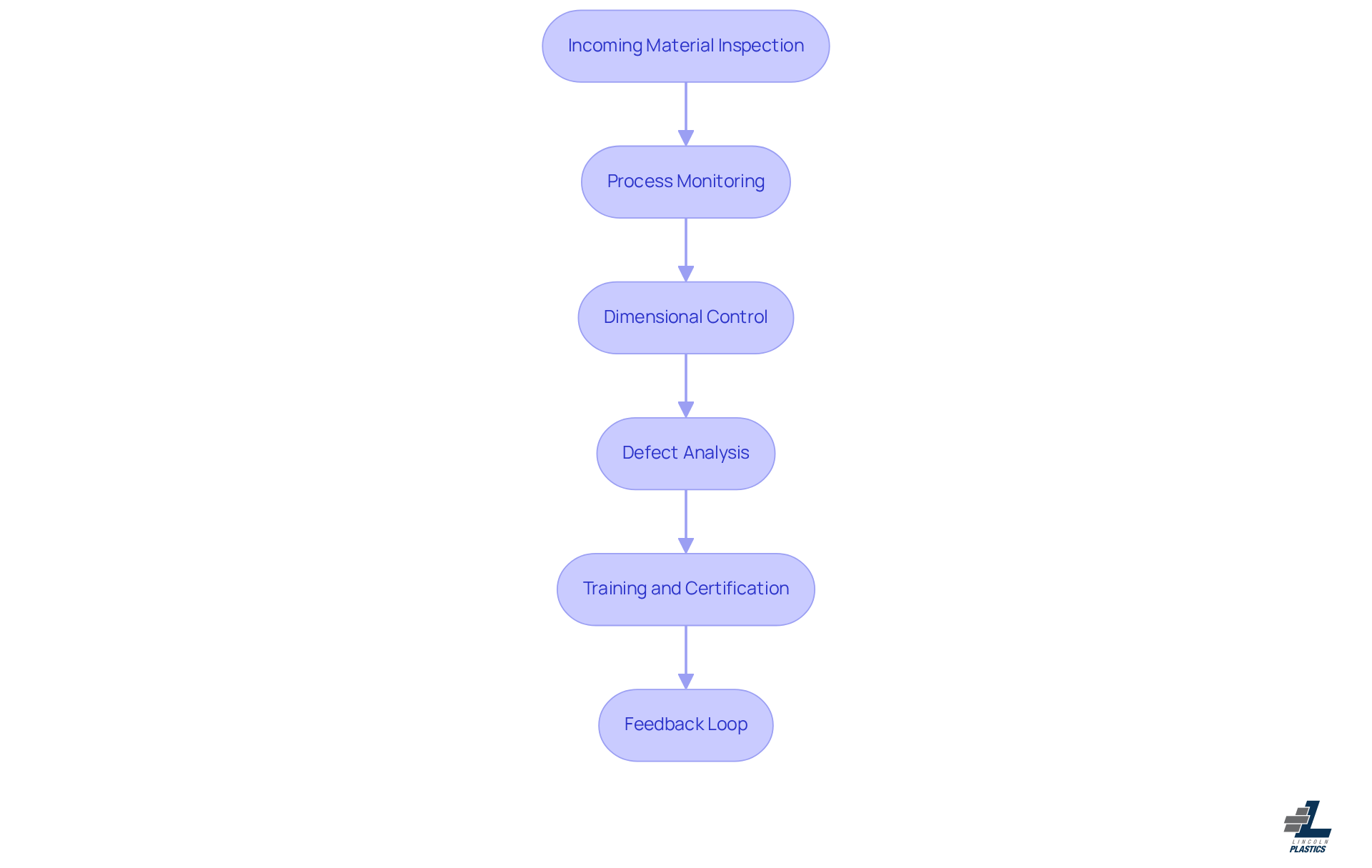
To achieve excellence in HDPE extrusion, robust quality control protocols are non-negotiable:
- Incoming Material Inspection: Conduct thorough testing of incoming HDPE resin for contaminants, moisture content, and melt flow rate. This guarantees that only high-quality materials are used in production, essential for attaining the desired performance of the item.
- Process Monitoring: Implement control checkpoints throughout the extrusion process. Continuously monitor key parameters such as temperature, pressure, and screw speed to ensure they remain within specified limits. Without stringent quality control, the risk of defects increases, jeopardizing product reliability.
- Dimensional Control: Regularly measure the extruded items to verify compliance with dimensional tolerances. Utilizing calipers or automated measurement systems facilitates accurate assessments, ensuring that products meet the required specifications. Lincoln Plastics employs multiple types of check gauges to ensure a proper end-use fit, reinforcing our commitment to precision.
- Defect Analysis: Establish a systematic approach for identifying and analyzing defects. Recording problems and applying corrective measures is essential for avoiding repetition and enhancing production standards. Our strong assurance system includes a dedicated manual for each plastic profile, complete with drawings and essential in-process checks.
- Training and Certification: Ensure that personnel are well-trained in control procedures and understand the significance of maintaining high standards. Regular training sessions ensure the team stays updated on best practices, promoting a culture of excellence within the organization.
- Feedback Loop: Establish a feedback system to collect insights from production personnel concerning issues related to standards. This information is invaluable for continuous improvement efforts, allowing for timely adjustments to processes and protocols.
Lincoln Plastics is proud to hold ISO 9001:2015 certification, underscoring our rigorous management plans.
Incorporating these protocols not only enhances the efficiency of HDPE extrusion but also improves the overall quality and reliability of the final products, aligning with industry standards and customer expectations. Reach out to Lincoln Plastics today to discover how we can elevate your production standards.
Conclusion
Optimizing HDPE extrusion is not just beneficial; it's essential for manufacturers aiming to thrive in a competitive landscape. By understanding HDPE fundamentals, identifying key equipment, implementing optimization techniques, and establishing robust quality control protocols, manufacturers can significantly improve their operational performance. Lincoln Plastics shows us that a commitment to excellence is key to achieving superior results through quality management and innovation.
Key insights from this guide highlight the critical role of:
- Material preparation
- Temperature control
- Regular maintenance in optimizing the HDPE extrusion process
Additionally, the integration of advanced monitoring systems and the adoption of co-extrusion capabilities can further enhance customization and efficiency. Lincoln Plastics’ ISO 9001:2015 certification and dedicated quality plans ensure that every product meets stringent standards, reinforcing the importance of quality in the extrusion process.
Without embracing these optimization techniques, manufacturers risk falling behind in a competitive market. Are you ready to elevate your production standards? Reach out to Lincoln Plastics for expert guidance and tailored solutions. By taking action now, manufacturers can secure their place at the forefront of the HDPE extrusion industry.
Frequently Asked Questions
What is High-Density Polyethylene (HDPE)?
High-Density Polyethylene (HDPE) is a thermoplastic polymer known for its unmatched strength, versatility, durability, and resistance to impact and chemicals. It has a high strength-to-density ratio, making it suitable for various applications.
What are the key properties of HDPE?
HDPE has a low moisture absorption rate (less than 0.01%) and excellent chemical resistance, enhancing its usability across diverse environments. These properties ensure longevity and reliability in applications such as pipes, containers, and industrial components.
What are the main stages of the HDPE extrusion process?
The HDPE extrusion process involves four key stages: 1. Feeding: Pellets are loaded into the hopper. 2. Melting: The material is heated in the barrel, where a rotating screw mixes and melts it. 3. Shaping: The molten plastic is pushed through a die to form the desired shape. 4. Cooling: The extruded product is cooled to solidify its shape.
What are the common applications of HDPE?
HDPE is widely used in manufacturing pipes for water and gas distribution, packaging, automotive parts, and construction materials. It is particularly valued in agriculture for irrigation systems due to its durability and efficiency.
How does Lincoln Plastics ensure quality in HDPE extrusion?
Lincoln Plastics prioritizes excellence in its extrusion processes, supported by ISO 9001:2015 certification. This includes rigorous quality management plans, dedicated quality books, and in-process checks to ensure that each product meets the exact specifications required by OEMs.
What recent developments have been made in HDPE extrusion technology?
Recent developments have focused on enhancing energy conservation and lowering production costs in HDPE extrusion technology. Innovations such as automatic welding machines have improved precision and reduced human error, contributing to overall manufacturing efficiency.
Why is mastering HDPE extrusion important for businesses?
Mastering HDPE extrusion is crucial for businesses as it positions them at the forefront of innovation and efficiency, especially as the demand for sustainable solutions continues to grow.
List of Sources
- Understand the Basics of HDPE Extrusion
- GLOBAL HDPE PIPELINE MARKET SURGES IN 2026 NEW BUTT FUSION WELDING TECHNOLOGIES AND MEGA-PROJECTS DRIVE GROWTH - News - Huajin (https://huajinwelder.com/news/global-hdpe-pipeline-market-surges-in-2026-new-85613403.html)
- Innovative Applications of High-Density Polyethylene (HDPE) in Construction, Agriculture, and Industry|News|POLYPVC (https://polypvc.com/news/Innovative-Applications-of-HighDensity-Polyethylene-HDPE-in-Construction-Agriculture-and-Industry.html)
- Discover the environmental benefits of HDPE (https://wlplastics.com/environmental-benefits-of-hdpe)
- HDPE Guide: Properties, Uses & Applications [2025 Update] (https://lairdplastics.com/resources/hdpe-guide-properties-uses-applications-2025-update?srsltid=AfmBOorvLiCsLr7lOIoqz-Nh_rCII43oVyj4I7otfz5W-YB5ot2nFaET)
- Evaluating Profitability: The HDPE Extrusion Line Market Report and Its Projected CAGR of 6.5% from 2026 to 2033 (https://linkedin.com/pulse/evaluating-profitability-hdpe-extrusion-line-74hhe)
- Identify Key Equipment and Components for HDPE Extrusion
- Tubi Launches Mobile Extrusion System for HDPE Pipe Production - Tubi Group - HDPE Mobile Modular Extrusion Plant Technology (https://tubigroup.com/2020/11/05/tubi-launches-mobile-extrusion-system-for-hdpe-pipe-production)
- 10 new extrusion technologies reshaping plastics processing in 2026 (https://plasticsmachinerymanufacturing.com/extrusion/article/55395844/10-new-extrusion-technologies-reshaping-plastics-processing-in-2026)
- The Extrusion Industry in 2026-2027: Innovations, Trends, and Opportunities (https://plextrusions.com/extrusion-blog/the-extrusion-industry-in-2026-2027-innovations-trends-and-opportunities)
- News (https://gneuss.com/en/news)
- HDPE Pipe Extrusion Machines for Infrastructure Boom: Features, Applications & Buying Guide - TwinScrew (https://twinscrew.net/en/article/HDPE-and-Plastic-Pipe-Extrusion-Machine-Demand.html)
- Implement Optimization Techniques for Enhanced Efficiency
- HDPE Extrusion Blow Molding Process Optimization Tips - MAIWEI (https://maiwei-machine.com/hdpe-extrusion-blow-molding-process-optimization-tips)
- Paul Murphy Plastics: Elevating Efficiency for Increased Single-Screw Extruder Output (https://paulmurphyplastics.com/industry-news-blog/paul-murphy-plastics-elevating-efficiency-for-increased-single-screw-extruder-output)
- Heating Methods to Boost HDPE Molding Efficiency (https://eureka.patsnap.com/report-research-on-heating-methods-to-boost-hdpe-molding-efficiency)
- 5 Best Practices for the Manufacturing Process of Extrusion (https://lincoln-plastics.com/news-post/5-best-practices-for-the-manufacturing-process-of-extrusion)
- Modernization: Ways to Increase Energy Efficiency in Extrusion – Coperion (https://coperion.com/en/news-media/newsletter/2021/plastics-in-focus-edition-042021/energy-efficiency-in-extrusion)
- Establish Quality Control Protocols to Maintain Efficiency
- 4 Best Practices for Effective Process Control Quality in Extrusion (https://lincoln-plastics.com/news-post/4-best-practices-for-effective-process-control-quality-in-extrusion)
- Plastics Extrusion: 4 Critical Statistics to Track for Increased Quality & Plant Profit (https://gaugeadvisor.com/plastics-extrusion-4-critical-statistics-to-track-for-increased-quality-plant-profit)
- One moment, please... (https://condaleplastics.com/extrusion-advice/plastic-extrusion-a-guide-to-quality-control)
- Quality Control and Testing Procedures - Plastic Extrusion Technologies (https://plasticextrusiontech.net/quality-control-and-testing-procedures-in-plastic-extrusions)
- The Importance of Quality Control in Plastic Extrusion Manufacturing - Craftedplastics (https://craftedplastics.com/blog/the-importance-of-quality-control-in-plastic-extrusion-manufacturing)
Related posts

Discover the key benefits of plastic PVC extrusion profiles for OEMs, enhancing efficiency and cost savings.


Discover top PVC extrusion manufacturers providing custom solutions for diverse industrial needs.
Discover how to select the best extruded plastics manufacturers for your project needs.
