
Optimize Extruder Crosshead Performance with These Best Practices
Introduction
Optimizing extruder crosshead performance is super important for manufacturers who want to boost efficiency and product quality in their extrusion processes. Think about it: by diving into best practices around material selection, precision engineering, and maintenance protocols, companies can see some serious improvements. We're talking about less waste and a more effective operation!
But here’s the thing - navigating these optimization strategies can feel a bit overwhelming. You might be wondering: what specific practices can we put into action to make sure extruder crossheads are running at their best? Let’s explore this together!
Select Optimal Materials for Extruder Crossheads
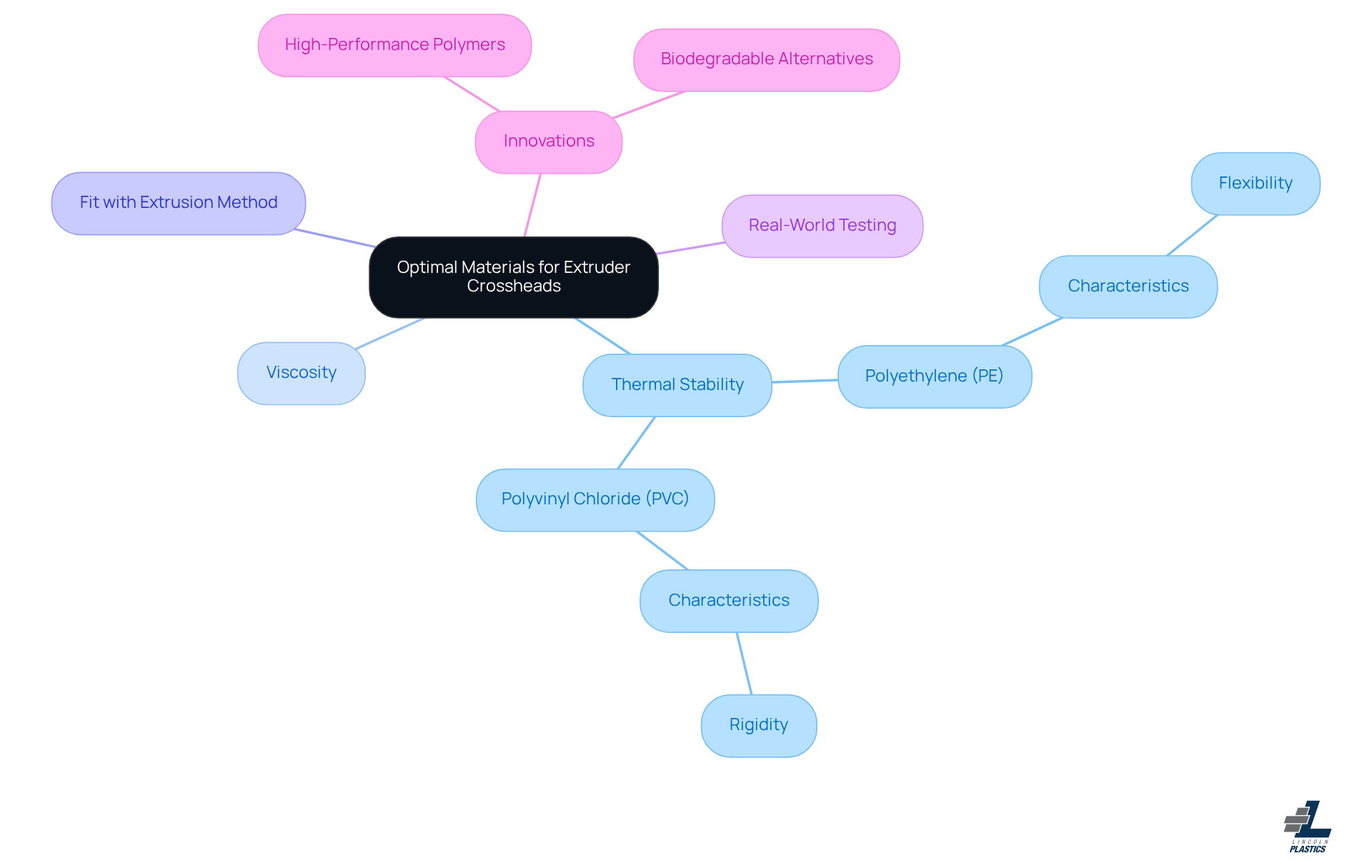
Selecting the appropriate components for extruder crossheads is crucial to ensure everything operates smoothly. Think about it: materials are all key factors. You’ll often see polyethylene on the list because they have great processing characteristics. PE is flexible, while PVC is more rigid, so you can really tailor your products to what you need.
Now, let’s talk about real-world testing. Assessing these materials under actual conditions can give you some valuable insights into how they perform. This way, you can spot the best options for your specific applications. And don’t forget about the innovations! New materials are stepping up the game, helping to transform the industry while keeping efficiency and sustainability in check. So, what are you waiting for? Dive into these options and see how they can work for you!
Implement Precision Engineering in Crosshead Design
When it comes to precision in crosshead design, paying close attention to dimensions and tolerances is key. Why? Because these factors are crucial for ensuring that substances flow smoothly and turbulence is kept to a minimum. At Lincoln Plastics, we’re all about quality control to make sure their products hit all the quality marks, including those special checks for ‘fit and function.’
Now, let’s talk about the tools that make this possible. CAD software is a game changer. These programs allow designers to whip up intricate models that feature adjustable flow channels and interchangeable die heads. This flexibility means we can quickly adapt to different operational demands. For example, a team using Fusion 360 was able to simulate various flow channel designs, which led to a whopping 20% reduction in material waste during production. How cool is that?
Our quality assurance process is pretty robust, too. We’ve got a dedicated quality book for your plastic profile that includes drawings, critical in-process checks, and run documentation. This ensures that your specifications are just as specified for those critical dimensions. Plus, we’re all about continuous improvement. By regularly reviewing and updating design specifications based on effectiveness data, we keep enhancing efficiency and product quality.
Looking ahead to 2026, the latest CAD tools are set to come with even better simulation capabilities. This means engineers will be able to visualize and optimize designs before any physical production kicks off. It’s a proactive approach that not only reduces material waste but also accelerates the production of high-quality products. The result? Better outcomes in manufacturing applications.
But here’s a word of caution: it’s super important to maintain precision. Neglecting this step can lead to performance discrepancies that we definitely want to avoid.

Establish Regular Maintenance Protocols for Crossheads
Regular maintenance is key to keeping equipment in tip-top shape. Think about it: inspection, cleaning, and lubrication of those moving parts can save you a lot of headaches down the line. Have you ever considered creating a checklist? It’s a simple way to make sure all the components get the attention they need on a regular basis.
For instance, checking for wear and tear on seals and bearings can really help prevent issues that nobody wants to deal with. Now, let’s talk about scheduling. Implementing a maintenance plan that syncs up with your production cycles can minimize disruptions and ensure the extruder crosshead keeps everything running smoothly.
And don’t forget about your team! Training on maintenance procedures can really boost the effectiveness of these protocols. After all, when everyone knows what to do, your equipment stays in optimal condition. So, why not start today? A little effort goes a long way!

Adopt Continuous Improvement Strategies in Extrusion
When it comes to extrusion, implementing best practices is key to boosting both operational efficiency and product quality. You know, approaches like Lean Manufacturing and Six Sigma really help in spotting inefficiencies and cutting out waste throughout the production cycle. Regularly assessing processes is super important for identifying areas that need improvement. For instance, making real-time adjustments to production parameters can really enhance product quality and cut down on scrap rates.
Now, let’s talk about what John Danes, President of Kent Elastomer Products, has to say: "Ongoing enhancement initiatives and principles concentrate on continuous improvement; executing solutions that decrease waste; increasing overall response time." Pretty insightful, right? Plus, collaboration among your team can lead to fresh ideas for process improvements, ultimately ramping up overall performance and competitiveness in the market.
But here’s the thing: it’s crucial to watch out for common pitfalls when rolling out these strategies. For example, overlooking the need for standardization can be a big mistake. Taiichi Ohno once said, 'where there is no standard, there can be no progress.' So, by tackling these challenges head-on and learning from successful case studies - like the Toyota Production System - organizations can navigate their continuous improvement journeys much more effectively.

Conclusion
Optimizing extruder crosshead performance is key to boosting efficiency and quality in the extrusion process. Think about it: when you focus on the right materials, precision engineering, regular maintenance, and continuous improvement, you can really ramp up your production capabilities. By implementing these best practices, you ensure that every part of the crosshead operation is fine-tuned for the best results.
Now, let’s talk about some key points:
- Choosing the right materials, like polyethylene and polyvinyl chloride, is crucial because they cater to specific processing needs.
- Precision in design helps minimize turbulence and enhances flow.
- Regular maintenance is vital to prevent costly breakdowns, including inspections and team training.
- Adopting continuous improvement methodologies like Lean Manufacturing can drive efficiency and spark a culture of innovation.
So, what’s the takeaway? The journey to optimizing extruder crosshead performance is all about ongoing commitment and adaptation. By embracing these best practices, you’re not just improving operational efficiency; you’re also enhancing product quality and sustainability. Taking proactive steps today will set you up for a more competitive and resilient future in the extrusion industry. Ready to make those changes?
Frequently Asked Questions
Why is selecting the right materials for extruder crossheads important?
Selecting the appropriate materials for extruder crossheads is crucial to ensure smooth operation, as factors like thermal stability, viscosity, and compatibility with the extrusion method significantly impact performance.
What are some commonly used materials for extruder crossheads?
Commonly used materials include polyethylene (PE) and polyvinyl chloride (PVC), as they have excellent processing characteristics. PE is flexible, while PVC is more rigid, allowing for tailored product designs.
How can real-world testing benefit material selection for extruder crossheads?
Real-world testing allows for the assessment of materials under actual processing conditions, providing valuable insights into their performance and helping to identify the best options for specific applications.
What innovations are influencing material selection for extruder crossheads?
Innovations such as high-performance polymers and biodegradable alternatives are emerging, helping manufacturers meet industry demands while enhancing efficiency and sustainability.
List of Sources
- Select Optimal Materials for Extruder Crossheads
- The Extrusion Industry in 2025: Innovations, Trends, and Opportunities (https://plextrusions.com/extrusion-blog/the-extrusion-industry-in-2025-innovations-trends-and-opportunities)
- Choosing the Right Materials for Plastic Extrusion - Rocal Extrusions (https://rocalextrusions.co.uk/news/choosing-the-right-materials-for-plastic-extrusion)
- plasticstoday.com (https://plasticstoday.com/extrusion-pipe-profile/guill-tool-releases-unicam-crosshead-combining-single-point-adjustment-with-cam-lock-assembly-system)
- Plastic Extrusion Explained | Fictiv (https://fictiv.com/articles/plastic-extrusion-explained)
- Shaping the Future: Innovations in Plastic Extrusion Techniques - SeaGate Plastics Company (https://seagateplastics.com/shaping-the-future-innovations-in-plastic-extrusion-techniques)
- Implement Precision Engineering in Crosshead Design
- schgo.com (https://schgo.com/the-role-of-precision-engineering-in-modern-manufacturing)
- formlabs.com (https://formlabs.com/blog/cad-software?srsltid=AfmBOopF0ZtWPBe1Z198Qb6HOgpp-_XFdOWDsxxN-J2rzHpTIv62Gsbv)
- 51 Engineering Quotes from the Minds of Innovators (https://medium.com/@jasonhamiltonm/51-engineering-quotes-from-the-minds-of-innovators-98b8b4d58476)
- precisionengineering.com (https://precisionengineering.com/case-studies)
- Establish Regular Maintenance Protocols for Crossheads
- grahamengineering.com (https://grahamengineering.com/about/ge-connect/proper-extruder-maintenance-a-key-to-success)
- 10 Compelling Statistics About Manufacturing Maintenance (https://worktrek.com/blog/manufacturing-maintenance-statistics)
- vertexcs.com (https://vertexcs.com/casestudy/equipment-maintenance-problems)
- Manufacturing Maintenance Statistics & Data You Need to Know (https://caisoft.com/resources/manufacturing-maintenance-statistics)
- Adopt Continuous Improvement Strategies in Extrusion
- Leanscape | Business Transformation & Operational Excellence (https://leanscape.io/lean-quotes-continuous-improvement-inspiration)
- plasticstoday.com (https://plasticstoday.com/medical/made-in-the-usa-the-domestic-advantage-of-elastomer-extrusion)
- ad-esse.com (https://ad-esse.com/top-15-quotes-for-lean-and-continuous-improvement)
- sixsigmadaily.com (https://sixsigmadaily.com/case-study-tire-manufacturer-dmaic)
- Continuous Improvement in the Plastic Molding and Extrusion Process Industry - Plastic Resources, Inc. (https://plastic-resources.com/posts/continuous-improvement-in-the-plastic-molding-and-extrusion-process-industry)
Related posts

Plastic Extrusion for Energy & Infrastructure Projects
Lincoln Plastics provides durable, custom extrusion solutions for energy and infrastructure projects, from conduit to tubing to protective profiles.


Made in the Midwest: Why Location Matters
Lincoln Plastics’ Midwest location provides faster shipping, lower freight costs, and the reliability OEMs need in a manufacturing partner.
How Extrusion Supports OEM Supply Chains
Lincoln Plastics helps OEMs strengthen supply chains with flexible production runs, reliable delivery, and custom extrusion solutions.
