
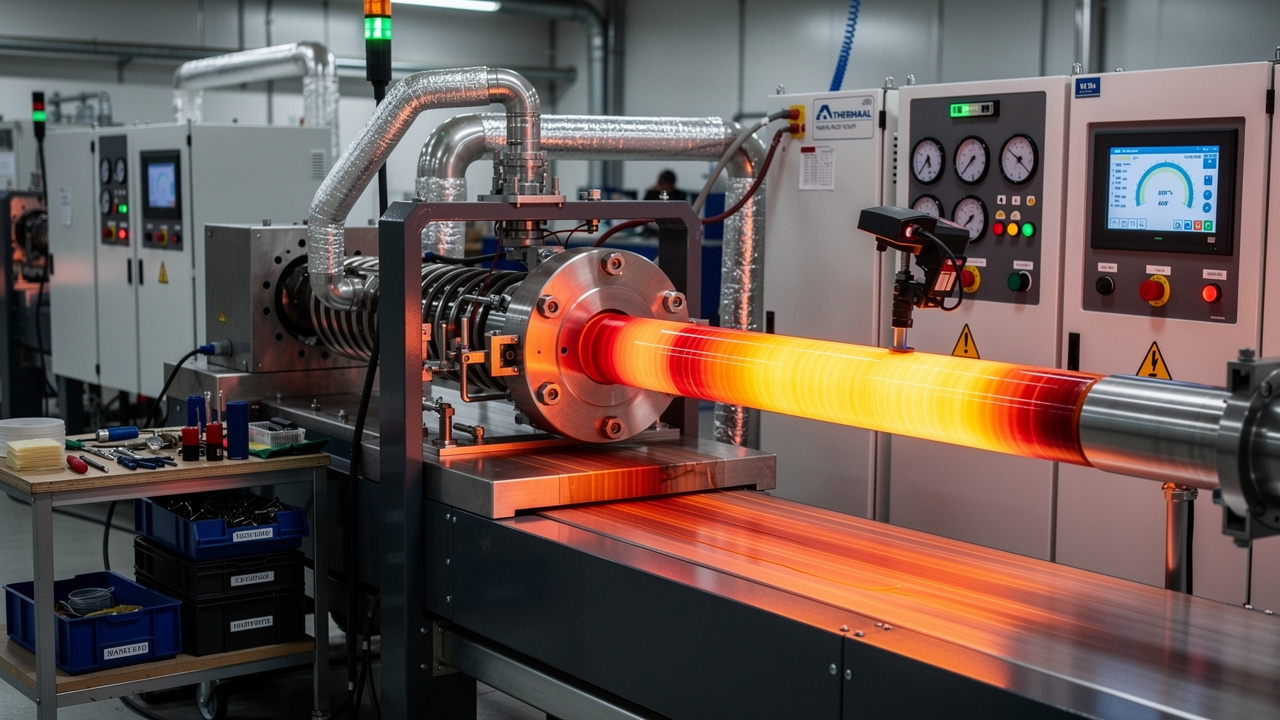
Mastering Plastic Extrusion Temperature for Optimal Production
Introduction
In the competitive landscape of plastic extrusion, mastering temperature control is not just beneficial - it's essential for maintaining production quality and efficiency. Understanding optimal temperature settings is crucial for manufacturers. It enhances product integrity and minimizes waste, ensuring efficient production processes.
What are the consequences of temperature fluctuations on production processes? This article will explore the best practices for mastering temperature management in plastic extrusion. We’ll look at effective techniques and advanced technologies that safeguard quality and streamline operations, helping you maintain a competitive edge in the industry.
Understand the Importance of Temperature Control in Plastic Extrusion
Temperature control is not just important; it's the backbone of quality in maintaining the plastic extrusion temperature during the process. Each type of plastic has a specific optimal melt heat range that corresponds to the plastic extrusion temperature, typically between 300°F and 600°F (150°C to 315°C). Keeping this range is vital for proper flow and shaping. Deviations can cause material degradation, poor surface finishes, and dimensional inaccuracies.
For instance, when extruding PVC, sustaining the appropriate plastic extrusion temperature is crucial to prevent degradation that could compromise the material's properties. A well-regulated thermal profile, particularly the plastic extrusion temperature, not only improves quality but also increases production efficiency by minimizing scrap rates and decreasing downtime.
Have you considered how deviations from the necessary heat range can lead to item flaws and production delays? This highlights the critical need for dependable heat management systems to effectively control plastic extrusion temperature. Industrial chillers, like those provided by top suppliers, are crucial for maintaining the plastic extrusion temperature during the extrusion process, ensuring high-quality production and operational efficiency.
Manufacturers need to grasp these dynamics to truly optimize their extrusion processes and achieve top-notch outputs. By implementing efficient climate regulation solutions, manufacturers can not only enhance product quality but also streamline their operations. Investing in reliable temperature management is not merely an option; it's a necessity for maintaining competitive advantage in the industry.

Implement Effective Temperature Management Techniques
Effective heat management is not just a technical requirement; maintaining the correct plastic extrusion temperature is a critical factor that can make or break your production efficiency. Several techniques can be employed to achieve optimal temperature control:
- Zone Climate Control: Implement multi-zone climate control systems that allow for precise regulation across different sections of the extruder. Each area should be adjusted based on the particular needs of the material being processed, enabling a gradual rise in heat that corresponds with the plastic extrusion temperature and the material's melting properties.
- Real-Time Monitoring: Utilize real-time heat monitoring systems to provide continuous feedback on readings at various points along the extrusion line. This capability enables immediate adjustments, preventing issues related to overheating or underheating, which can compromise product integrity.
- PID Control Systems: Employ Proportional-Integral-Derivative (PID) controllers to sustain stable heat levels. These systems automatically modify heating and cooling components based on real-time data, effectively reducing fluctuations in warmth that could impact the plastic extrusion temperature.
- Material Preconditioning: Prepare materials prior to their entry into the extruder by heating or cooling them to reach their ideal processing level. This practice reduces the load on the extruder and enhances flow characteristics, leading to improved product quality.
What happens when temperature control fails? The importance of effective thermal management, especially in relation to plastic extrusion temperature, is underscored by case studies clearly showing that it is crucial for enhancing production efficiency. For example, investing in advanced thermal management systems has been demonstrated to improve overall plant efficiency and competitiveness in the market. Conversely, neglecting thermal management can lead to costly production delays and quality issues, resulting in increased downtime and higher maintenance costs.
By implementing these techniques, manufacturers can boost the consistency and quality of their extruded products, ultimately leading to improved performance and reduced waste. Lincoln Plastics showcases its commitment to excellence through its ISO 9001:2015 certification and rigorous management plans, which encompass specialized documentation and in-process evaluations. Additionally, Lincoln Plastics' co-extrusion capabilities allow for the production of multi-color or multi-material profiles, providing OEMs with versatile solutions tailored to their specific needs. Without proper thermal management, manufacturers risk not only their product quality but also their competitive edge in the market.

Utilize Advanced Equipment for Temperature Regulation
Investing in advanced heat control equipment is essential for manufacturers aiming to enhance efficiency and product quality by optimizing the plastic extrusion temperature in the extrusion process. To achieve this, manufacturers must leverage key technologies that enhance thermal management. Key technologies include:
- Thermal Fluid Heat Control Units (TCUs): These units provide accurate thermal regulation for both heating and cooling applications, maintaining stable levels within ±0.1°C. This level of precision is vital for maintaining consistent melt quality, which in turn affects how well the final product performs.
- Infrared Temperature Sensors: Non-contact infrared sensors monitor the warmth of the extruded material in real-time, allowing for immediate adjustments. This capability ensures that the material stays within the ideal plastic extrusion temperature range throughout the extrusion process, which decreases the chances of defects.
- Automated Management Systems: Modern extrusion lines are equipped with integrated automated management systems that oversee multiple thermal zones. These systems dynamically adjust the plastic extrusion temperature based on real-time feedback, significantly minimizing the risk of defects related to temperature and enhancing overall production reliability. Moreover, it's noteworthy that 39% of U.S. manufacturing plants have integrated such advanced control systems into their extruders, showcasing a growing trend towards automation and precision in the industry.
- Cooling Systems: Effective cooling systems are vital for rapidly solidifying the extruded item. Using air or water sprays aids in attaining the desired cooling rates, preventing warping and ensuring dimensional stability, which is crucial for preserving item integrity.
Without these technologies, manufacturers risk costly defects and inefficiencies in their extrusion processes. Furthermore, 64% of new extruder orders in 2024 are focusing on low-energy heating components, showcasing a commitment to sustainability and efficiency in heat management.
By utilizing these advanced technologies, manufacturers can greatly improve their thermal management abilities, resulting in enhanced product standards and operational efficiency. For example, a worldwide conveyor belting producer reported significant cost reductions and decreased downtime after enhancing their heat regulation systems, highlighting the necessity of investing in contemporary solutions. Neglecting to invest in these advanced technologies could ultimately hinder your competitive edge in the market.

Address Challenges in Temperature Control and Their Solutions
Plastic extrusion temperature regulation is a critical factor that directly influences production quality and efficiency. Addressing these issues proactively is essential for maintaining optimal conditions:
- Fluctuating conditions in plastic extrusion temperature can lead to inconsistent product quality, resulting in defects such as warping or uneven thickness. Implementing robust monitoring systems with digital sensors at critical points provides instant feedback for quick adjustments during production. This allows for immediate corrective actions when deviations occur. How can manufacturers ensure consistent quality in their products?
- Material Variability: Various polymers display distinct thermal characteristics, complicating heat management. For instance, semi-crystalline materials like PEEK and nylon require gradual, uniform cooling to maintain their crystal structure. Performing comprehensive material testing to determine specific heat profiles for each resin guarantees that the plastic extrusion temperature aligns with the material's characteristics.
- Equipment Malfunctions: Equipment failures can interfere with heat regulation, resulting in production delays. Routine upkeep and adjustment of climate control units (TCUs) are crucial to avoid failures. Furthermore, routine cleaning and examination of equipment can assist in preserving production quality, decreasing the chances of malfunctions and ensuring consistent management of heat.
- Operator Training: Without proper training, operators may struggle with heat management, worsening production problems. Offering thorough training for operators on the significance of heat control and efficient use of monitoring systems improves overall process reliability and reduces the risk of defects.
By tackling these challenges, manufacturers can enhance their extrusion processes by controlling the plastic extrusion temperature, ensuring high-quality items and efficient operations. Ultimately, the commitment to proactive heat management can set manufacturers apart in a competitive market. Case studies show that implementing preventive maintenance schedules and monitoring key variables such as temperature and pressure can significantly improve production outcomes, reducing waste and enhancing product quality.

Conclusion
Mastering temperature control in plastic extrusion is not just important; it’s critical for achieving high-quality production and operational efficiency. Without precise temperature management, achieving high-quality production becomes a daunting challenge. By understanding and implementing effective temperature control techniques, manufacturers can ensure that extrusion processes yield consistent, reliable results.
We’ve explored key strategies for effective temperature management throughout this article, including the use of advanced equipment, real-time monitoring systems, and proactive maintenance practices. Techniques such as zone climate control and PID control systems play a crucial role in stabilizing the plastic extrusion temperature. Furthermore, thorough operator training ensures that personnel are equipped to handle potential challenges. Additionally, Lincoln Plastics exemplifies a commitment to quality through its ISO 9001:2015 certification and rigorous quality management plans, which further enhance production reliability.
In conclusion, the importance of mastering temperature control in plastic extrusion extends beyond mere compliance; it is a vital component of maintaining a competitive edge in the industry. Manufacturers are encouraged to invest in advanced technologies and adopt best practices to optimize their processes. By prioritizing effective temperature management, manufacturers can redefine their production standards and secure their place in a competitive market. For tailored solutions and expert guidance, reaching out to Lincoln Plastics can provide valuable insights and support in achieving optimal production outcomes.
Frequently Asked Questions
Why is temperature control important in plastic extrusion?
Temperature control is crucial in plastic extrusion as it maintains the optimal melt heat range for different types of plastics, typically between 300°F and 600°F (150°C to 315°C). This ensures proper flow and shaping, preventing material degradation, poor surface finishes, and dimensional inaccuracies.
What can happen if the plastic extrusion temperature deviates from the optimal range?
Deviations from the optimal temperature range can lead to material degradation, item flaws, production delays, and increased scrap rates, ultimately compromising the quality of the final product.
How does maintaining the correct plastic extrusion temperature affect production efficiency?
A well-regulated thermal profile improves production efficiency by minimizing scrap rates and decreasing downtime, which contributes to a more streamlined operation and higher quality outputs.
What role do industrial chillers play in temperature control during plastic extrusion?
Industrial chillers are essential for maintaining the plastic extrusion temperature during the extrusion process. They help ensure high-quality production and operational efficiency by effectively managing heat.
What should manufacturers consider to optimize their extrusion processes?
Manufacturers should implement efficient climate regulation solutions to enhance product quality and streamline operations. Investing in reliable temperature management systems is necessary for maintaining a competitive advantage in the industry.
List of Sources
- Understand the Importance of Temperature Control in Plastic Extrusion
- Plastics Extrusion: 4 Critical Statistics to Track for Increased Quality & Plant Profit (https://gaugeadvisor.com/plastics-extrusion-4-critical-statistics-to-track-for-increased-quality-plant-profit)
- Why are Temperature Control Units Important for Plastic Processing? | Wensui (https://wensuimachinery.com/news/why-are-temperature-control-units-important-for-plastic-processing)
- Latest Plastic Extrusion News | Bausano (https://bausano.com/en/press-and-news?q=NEWS)
- Master Extrusion Control: 4 Steps to Optimize Your Process (https://lincoln-plastics.com/news-post/master-extrusion-control-4-steps-to-optimize-your-process)
- How Temperature Impacts Plastic Extrusion (https://paulmurphyplastics.com/industry-news-blog/how-temperature-impacts-plastic-extrusion)
- Implement Effective Temperature Management Techniques
- Paul Murphy Plastics: Takes Control Over Melt Temperature for Superior Extrusions (https://paulmurphyplastics.com/industry-news-blog/paul-murphy-plastics-takes-control-over-melt-temperature-for-superior-extrusions)
- Temperature Control in Extrusion: Why It’s Critical | Bausano (https://bausano.com/en/press-and-news/temperature-control-in-extrusion)
- Engineering Realities Defining Plastic Extrusion Manufacturing in 2026 - SANTA FE MACHINE WORKS, INC. (https://santafemachine.com/extrusion/engineering-realities-defining-plastic-extrusion-manufacturing-in-2026)
- New Siemens Temperature Controller Simplifies Extrusion Process (https://packagingstrategies.com/articles/98820-new-siemens-temperature-controller-simplifies-extrusion-process)
- Davis-Standard’s New Barrel Temperature Control Simplifies Energy Efficiency - Davis-Standard (https://davis-standard.com/news/davis-standards-new-barrel-temperature-control-simplifies-energy-efficiency)
- Utilize Advanced Equipment for Temperature Regulation
- Conair | Guaranteed plastics auxiliary equipment, designed by the experts (https://conairgroup.com/resources/resource/what-are-temperature-control-units-and-how-do-they-work)
- Extruder Control Systems - Integrated Control Technologies (https://integratedcontroltech.com/solutions/extruder-control-systems)
- U.S. Plastic Extrusion Machine Market to Hit Valuation of US$ 1,548.99 Million By 2033 | Rapid Innovation and Growing Collaboration Fueling Market Growth Says Astute Analytica (https://finance.yahoo.com/news/u-plastic-extrusion-machine-market-083000297.html)
- Temperature Control Equipment for Extrusion Processes | Delta T Systems (https://deltatsys.com/applications/extrusion)
- North America Plastic Extrusion Measurement and Control Technology Market, 2034 Report (https://gminsights.com/industry-analysis/north-america-plastic-extrusion-measurement-and-control-technology-market)
- Address Challenges in Temperature Control and Their Solutions
- How Temperature Impacts Plastic Extrusion (https://paulmurphyplastics.com/industry-news-blog/how-temperature-impacts-plastic-extrusion)
- Temperature Control Challenges in Plastic Processing | How to Solve Them (https://deltatsys.com/industry-expertise/temperature-control-challenges-plastic-processing-how-to-solve-them)
- Extrusion Troubleshooting: Root Causes & Expert Engineering Solutions (https://jwellanhui.com/extrusion-troubleshooting-root-causes-expert-engineering-solutions)
- Read The Most Recent News About AEC | AEC (https://aecinternet.com/news)
- Temperature Control in Extrusion: Why It’s Critical | Bausano (https://bausano.com/en/press-and-news/temperature-control-in-extrusion)
Related posts

Discover the key benefits of plastic PVC extrusion profiles for OEMs, enhancing efficiency and cost savings.


Discover top PVC extrusion manufacturers providing custom solutions for diverse industrial needs.
Discover how to select the best extruded plastics manufacturers for your project needs.
