
Master Thermoplastic Extrusion: Steps to Optimize Your Process
Introduction
In the competitive landscape of manufacturing, mastering thermoplastic extrusion is not just beneficial; it's essential for survival and success. This intricate process transforms plastic pellets into continuous shapes, presenting numerous opportunities for optimization that can significantly enhance operational success. As demand for high-quality thermoplastic solutions surges in agriculture and construction, manufacturers must ask: how can they pinpoint and implement the adjustments needed to remain competitive? By exploring the fundamental principles and key parameters of thermoplastic extrusion, manufacturers can uncover actionable strategies that drive efficiency and profitability - essential for thriving in today's market.
Understand Thermoplastic Extrusion Fundamentals
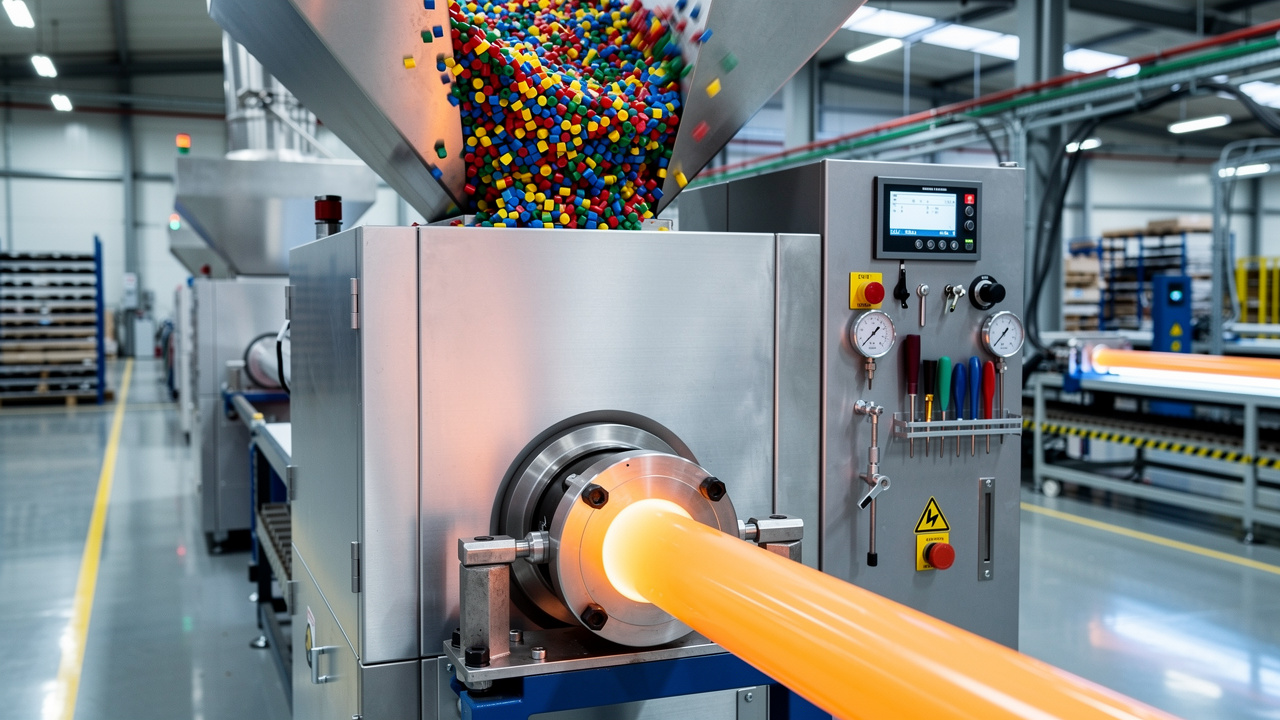
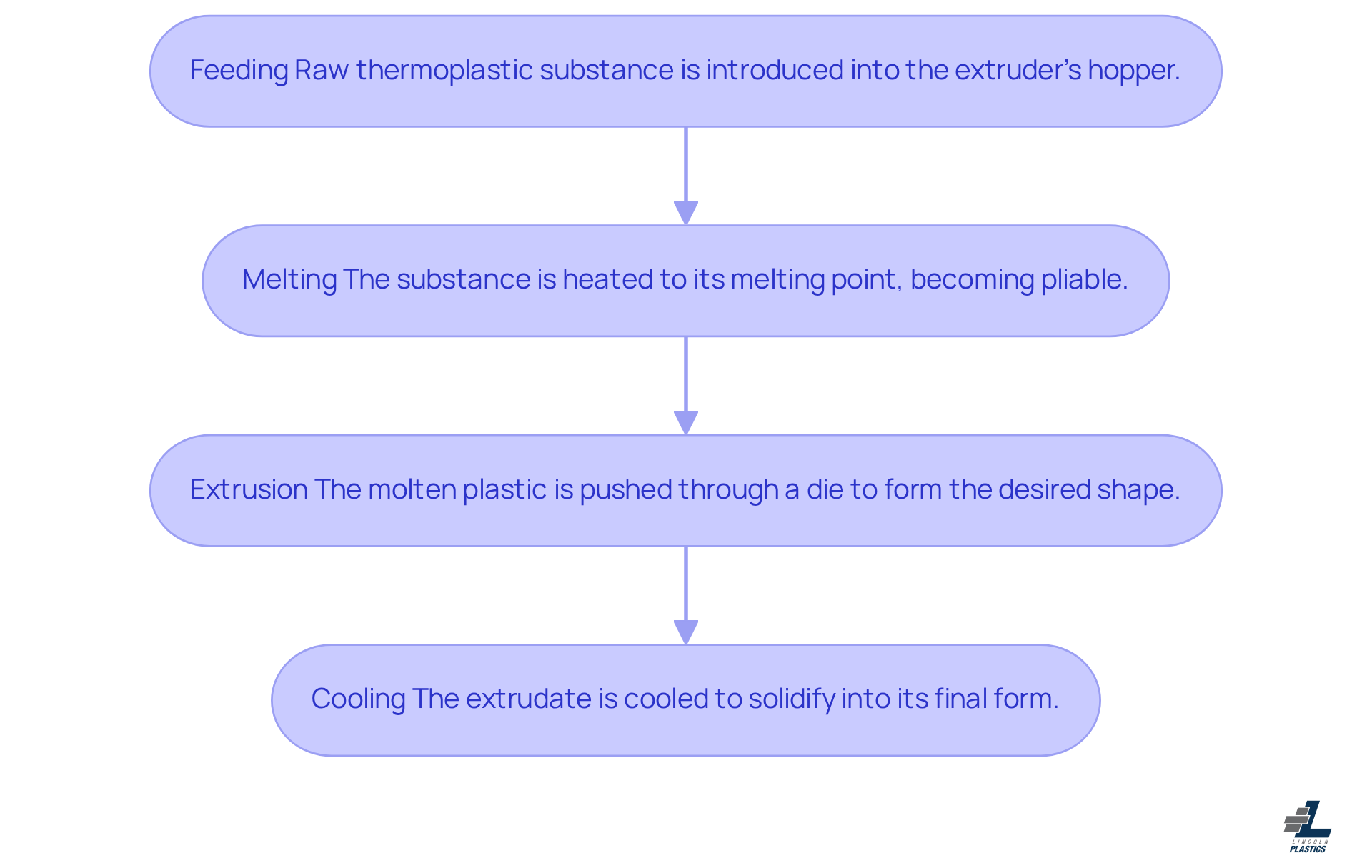
Thermoplastic extrusion is not merely a manufacturing method; it is a crucial process that influences the future of production efficiency. This vital technique of thermoplastic extrusion involves converting plastic pellets into continuous shapes by melting and pushing them through a die. The process consists of several key stages:
- Feeding: Raw thermoplastic substance is introduced into the extruder's hopper, ensuring a consistent supply for processing.
- Melting: The substance is heated to its melting point, becoming pliable and ready for shaping.
- Extrusion: The molten plastic is pushed through a die, forming it into the desired profile or shape.
- Cooling: The extrudate is cooled to solidify it into its final form, ensuring dimensional accuracy and stability.
Have you considered how understanding these stages can reveal optimization opportunities? For example, adjusting temperature settings can enhance the melting procedure, while modifying die designs can improve flow characteristics, leading to better product quality. This growth presents an opportunity for manufacturers to enhance their processes and meet market demands effectively. In the Midwest, particularly within the agricultural sector, the demand for efficient thermoplastic extrusion solutions is growing, driven by innovations in materials and processes that support sustainable practices. The shaping industry is anticipated to undergo substantial expansion, with a worldwide market valued at over $12 billion in 2025, indicating the rising significance of thermoplastic extrusion in diverse applications, including agriculture and construction.
At Lincoln Plastics, our strategic Midwest location allows us to deliver quick order turnaround and efficient logistics, ensuring you get what you need when you need it. Our commitment to quality is supported by rigorous quality management plans, including our ISO 9001:2015 certification, dedicated quality books, and in-process checks. We also offer co-extrusion capabilities for multi-color or multi-material profiles, enhancing the versatility of our products. For tailored solutions and personalized assistance, we invite you to contact our experts today. By embracing these advancements, you position your business to thrive in an evolving market landscape.
Identify Key Parameters for Optimization
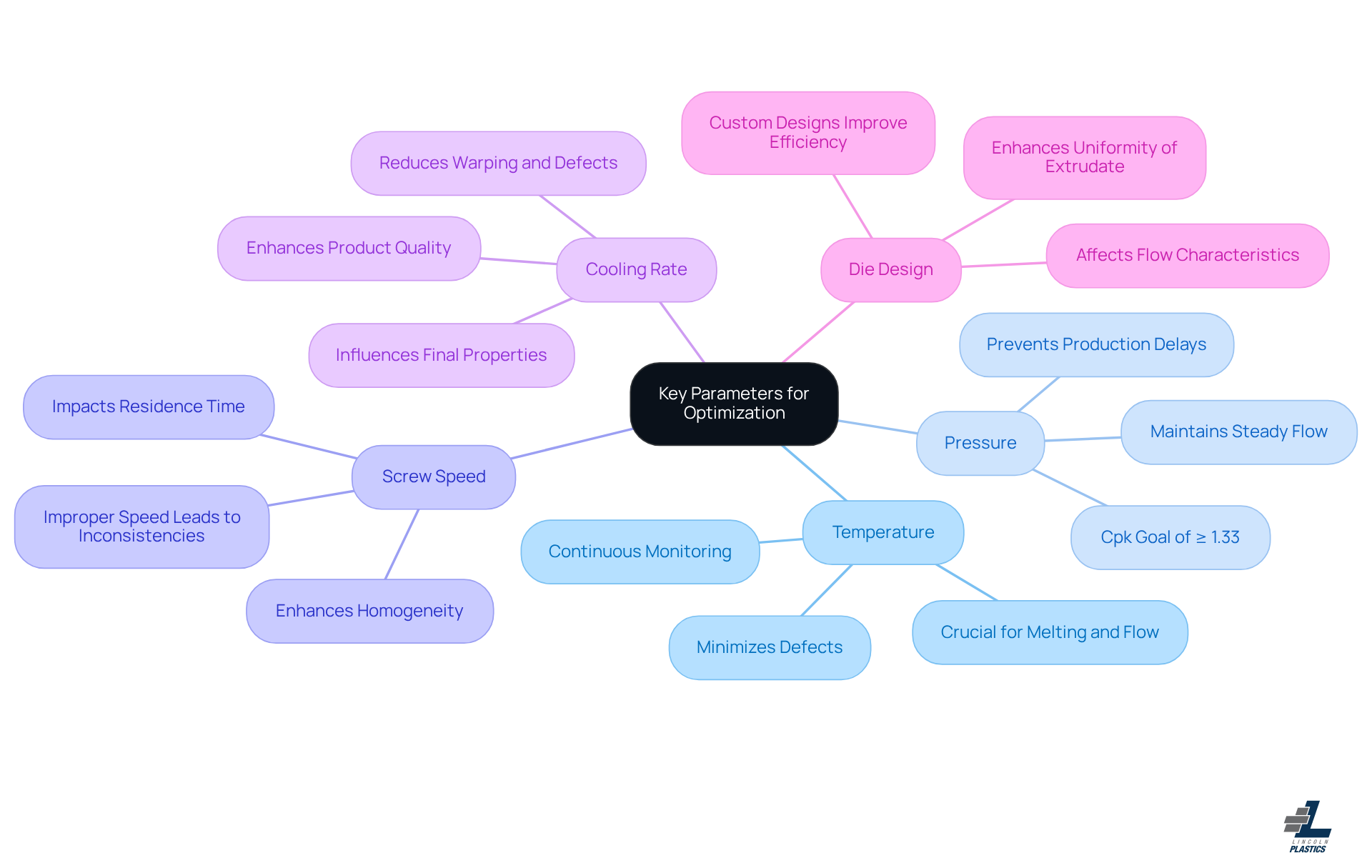
To elevate your thermoplastic extrusion process, focus on these critical parameters that drive efficiency and quality:
- Temperature: The temperature of the extruder barrel and die is crucial for the melting and flow of the substance. Setting the temperature according to the specific thermoplastic extrusion being used ensures optimal processing conditions and minimizes defects. Continuous temperature monitoring is essential to quickly identify heating zone issues, enabling targeted regulation and uniform melt viscosity.
- Pressure: Monitoring pressure consistently is vital for maintaining a steady flow and preventing defects in your extrudate. Inconsistent pressure can lead to costly production delays and increased waste, as sensor errors can interrupt substance flow, causing line disturbances and productivity declines. Maintaining a Cpk goal of ≥ 1.33 for capable, well-tuned lines is critical for ensuring efficient operation.
- Screw Speed: Have you considered how adjusting screw speed can impact the residence time of your material and, consequently, the homogeneity of your melt? Finding the right balance can enhance production efficiency, as improper screw speed can lead to inconsistencies in the extrudate.
- Cooling Rate: The cooling rate is a critical factor that significantly influences the final properties of your extrudate. Optimizing this rate ensures that the product maintains its shape and standard, reducing the likelihood of warping or defects. This optimization not only enhances product quality but also reduces the need for costly rework.
- Die Design: The design of the die affects the flow characteristics of the material. Changes to the die can enhance the uniformity of the extrudate, resulting in improved overall product standards. Custom die designs tailored to specific applications can further enhance efficiency and reduce waste.
By concentrating on these factors, manufacturers can refine their production methods, including thermoplastic extrusion, minimize waste, and boost product performance, ultimately resulting in greater profitability. As Matthew Baker from Gauge Advisor notes, "If you’re serious about resin savings and quality gains, these tools are your best investment." By mastering these parameters, you position your operation for enhanced efficiency and profitability, setting a new standard in the industry.
Implement Changes to Enhance Efficiency
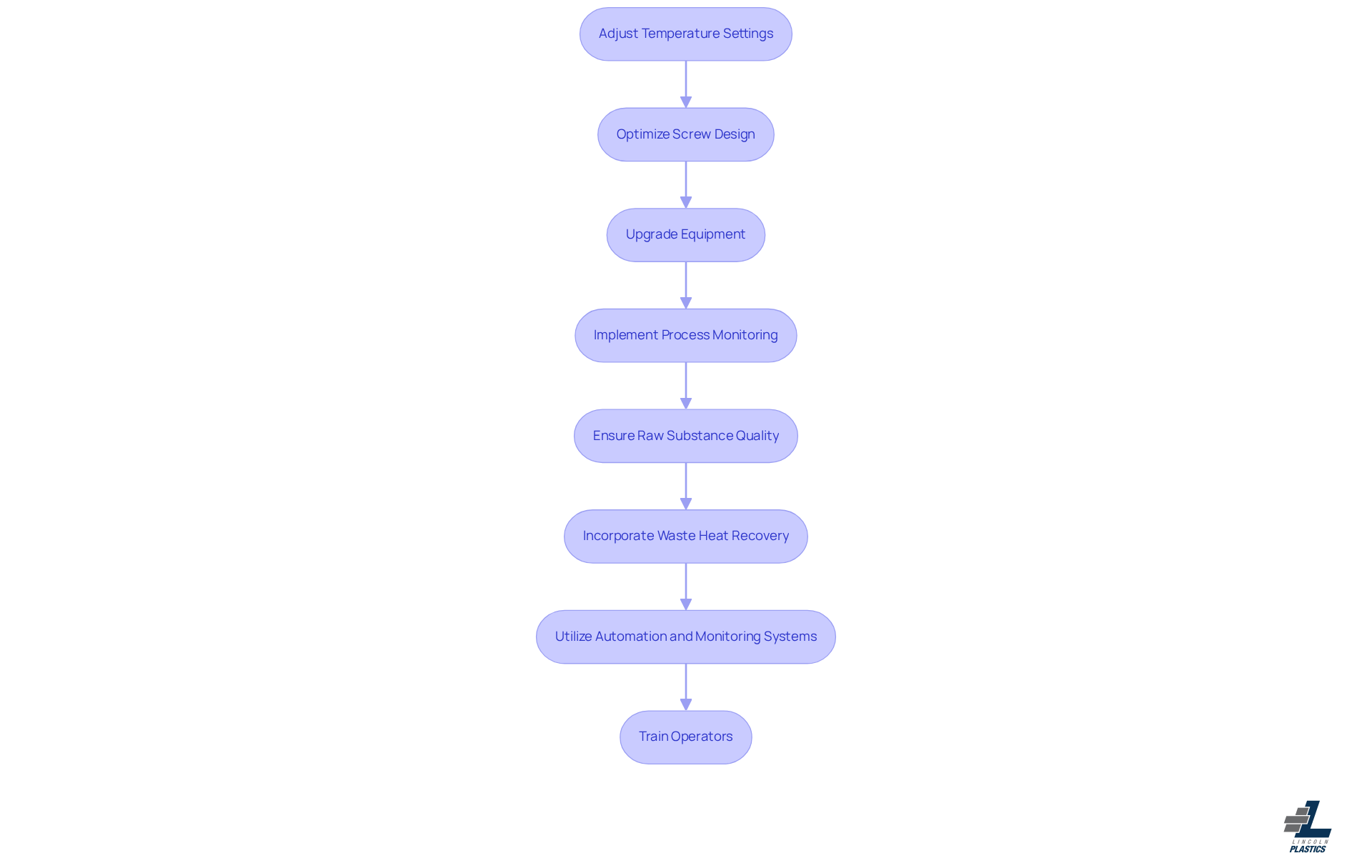
Are you looking to enhance the efficiency of your thermoplastic extrusion process? Implementing the following strategies can make a significant difference:
- Adjust Temperature Settings: Regular calibration of temperature settings is crucial based on the specific substance being processed. Utilizing thermocouples for accurate temperature monitoring can significantly improve consistency and reduce defects.
- Optimize Screw Design: Modifying the screw design can lead to improved material flow and mixing. A well-engineered screw enhances the melting procedure, reducing energy consumption and boosting throughput.
- Upgrade Equipment: Investing in modern machinery that gives you better control over temperature and pressure is crucial for success. Sophisticated systems featuring real-time data functionalities enable accurate modifications, enhancing the manufacturing technique.
- Implement Process Monitoring: How often do you track key parameters in your production? Continuous monitoring is vital for success. This information aids in recognizing trends and highlighting areas for enhancement, enabling proactive modifications to the manufacturing method.
- Ensure Raw Substance Quality: The quality and consistency of raw substances directly affect efficiency in thermoplastic extrusion processes. Collaborating with trusted suppliers to ensure high-quality materials can minimize waste and enhance production reliability.
- Incorporate Waste Heat Recovery: Implementing waste heat recovery systems can capture and recycle surplus thermal energy, potentially reclaiming up to 15% of lost energy, thus improving overall energy efficiency.
- Utilize Automation and Monitoring Systems: Integrating automation and real-time monitoring systems into production lines can significantly enhance both efficiency and precision. Automated systems can control various parameters such as temperature, pressure, and speed, optimizing production and reducing the need for manual intervention.
- Train Operators: Ensuring that operators are well-trained in the complexities of the shaping method is critical. Knowledgeable staff can make timely adjustments and effectively troubleshoot issues, leading to smoother operations and reduced downtime.
By adopting these strategies, you can not only enhance efficiency but also secure a competitive edge in the industry.
Monitor and Adjust for Continuous Improvement
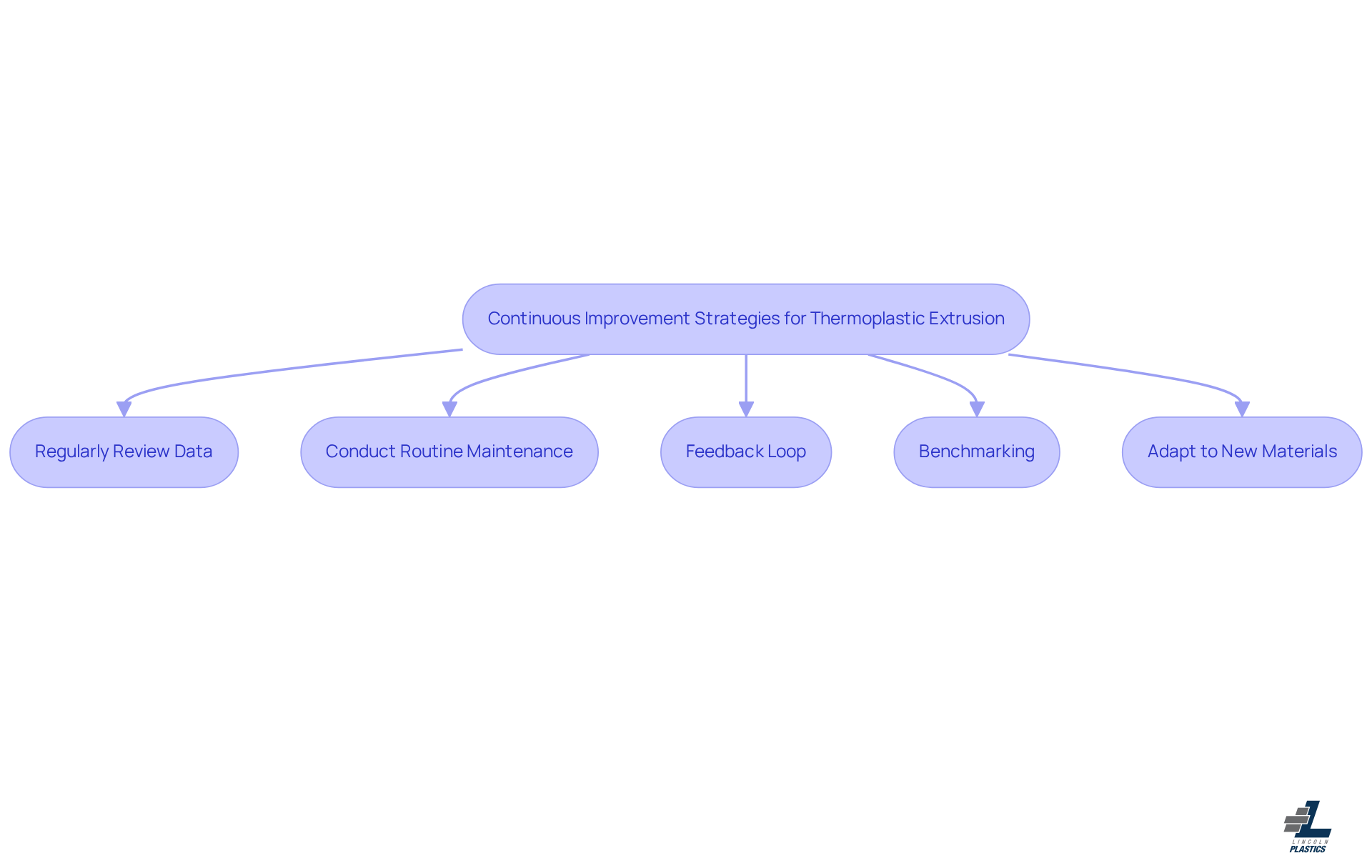
To optimize your thermoplastic extrusion process, consider implementing these essential strategies that drive efficiency and quality:
- Regularly Review Data: Analyze data from monitoring systems to identify patterns and areas for improvement. Look for correlations between parameters and product quality. Understanding these relationships can lead to significant enhancements in production efficiency. As Greg Graham, Senior Director of Extrusion Operations, emphasizes, "Excellent organization can also help prevent material contamination or cross-mixing from poor housekeeping."
- Conduct Routine Maintenance: Schedule regular maintenance for extrusion equipment to prevent breakdowns. This proactive approach helps prevent downtime. It also ensures the integrity of your production process.
- Feedback Loop: Establish a feedback loop with operators and quality control teams to discuss issues and potential improvements. When you encourage open communication, you create a culture where continuous improvement thrives, allowing for real-time adjustments that enhance operational efficiency.
- Benchmarking: Compare your extrusion performance against industry standards or competitors to identify gaps and opportunities for enhancement. This practice emphasizes areas for improvement and inspires teams to aim for excellence in their methods. For instance, the case study on "Continuous Improvement in Extrusion Manufacturing" illustrates how companies have successfully implemented these strategies to enhance production efficiency.
- Adapt to new materials by staying informed about new thermoplastic extrusion materials and their processing requirements. Modify your methods as necessary to accommodate these changes, ensuring that your operations stay competitive and able to meet evolving market demands. Following industry standards, like ISO 13485, is vital for preserving excellence in manufacturing methods, which is important for supplier dependability.
By embracing these strategies, you position your company not just to meet but to exceed industry standards.
Conclusion
In a competitive manufacturing landscape, mastering thermoplastic extrusion is not just beneficial; it's imperative for success. Understanding the key stages of thermoplastic extrusion - temperature, pressure, screw speed, cooling rate, and die design - allows businesses to pinpoint optimization opportunities. Strategic changes and continuous monitoring enhance operational efficiency, enabling companies to adapt to market demands effectively.
This guide has provided critical insights on refining the thermoplastic extrusion process. Regular data review and routine maintenance are crucial. Fostering a culture of continuous improvement highlights the importance of proactive management for achieving excellence.
Embracing these best practices is essential for maintaining a competitive edge in the evolving thermoplastic extrusion landscape. Partnering with Lincoln Plastics can unlock new levels of efficiency and product excellence. Don't let your business fall behind; partner with Lincoln Plastics to elevate your extrusion process and secure your market position.
Frequently Asked Questions
What is thermoplastic extrusion?
Thermoplastic extrusion is a manufacturing process that converts plastic pellets into continuous shapes by melting and pushing them through a die.
What are the key stages of the thermoplastic extrusion process?
The key stages of thermoplastic extrusion include feeding raw thermoplastic into the extruder, melting the substance, extrusion through a die to form the desired shape, and cooling the extrudate to solidify it.
How can understanding the stages of thermoplastic extrusion lead to optimization?
Understanding the stages can reveal optimization opportunities, such as adjusting temperature settings to enhance melting or modifying die designs to improve flow characteristics, which can lead to better product quality.
What is the market outlook for thermoplastic extrusion?
The thermoplastic extrusion market is anticipated to undergo substantial expansion, with a worldwide market valued at over $12 billion by 2025, indicating its rising significance in various applications, including agriculture and construction.
How does Lincoln Plastics benefit from its location?
Lincoln Plastics' strategic Midwest location allows for quick order turnaround and efficient logistics, ensuring timely delivery of products.
What quality management practices does Lincoln Plastics implement?
Lincoln Plastics is committed to quality, supported by rigorous quality management plans, including ISO 9001:2015 certification, dedicated quality books, and in-process checks.
Does Lincoln Plastics offer co-extrusion capabilities?
Yes, Lincoln Plastics offers co-extrusion capabilities for multi-color or multi-material profiles, enhancing the versatility of their products.
How can I get tailored solutions from Lincoln Plastics?
For tailored solutions and personalized assistance, you can contact Lincoln Plastics' experts directly.
List of Sources
- Understand Thermoplastic Extrusion Fundamentals
- Interplas Insights | Latest Plastics Extrusion Machinery News (https://interplasinsights.com/plastics-machinery/plastics-extrusion-machinery-news)
- Latest Plastic Extrusion News | Bausano (https://bausano.com/en/press-and-news?q=NEWS)
- The Extrusion Industry in 2025: Innovations, Trends, and Opportunities (https://plextrusions.com/extrusion-blog/the-extrusion-industry-in-2025-innovations-trends-and-opportunities)
- Identify Key Parameters for Optimization
- Plastics Extrusion: 4 Critical Statistics to Track for Increased Quality & Plant Profit (https://gaugeadvisor.com/plastics-extrusion-4-critical-statistics-to-track-for-increased-quality-plant-profit)
- Master Extrusion Control: 4 Steps to Optimize Your Process (https://lincoln-plastics.com/news-post/master-extrusion-control-4-steps-to-optimize-your-process)
- Druck- und Temperaturinstabilität in der Kunststoffextrusion – ein häufiger Fehler mit großen Folgen - ICS Schneider Messtechnik GmbH (https://ics-schneider.de/pressure-and-temperature-instability-in-plastic-extrusion-a-common-error-with-serious-consequences?lang=en)
- Implement Changes to Enhance Efficiency
- Condale Plastics Introduces New Plastic Extrusion Line (https://condaleplastics.com/company-news/condale-plastics-introduces-new-extrusion-line)
- How to Get Peak Performance & Efficiency Out of Your Extrusion Line, Part I (https://ptonline.com/articles/how-to-get-peak-performance-efficiency-out-of-your-extrusion-line---part-i)
- News - 5 Ways to Improve Efficiency in Plastic Extrusion Lines (https://faygounion.com/news/5-ways-to-improve-efficiency-in-plastic-extrusion-lines)
- Enhancing Energy Efficiency in Polymer Extrusion (https://plasticsengineering.org/2025/04/enhancing-energy-efficiency-in-polymer-extrusion-008684/amp)
- Monitor and Adjust for Continuous Improvement
- Latest Plastic Extrusion News | Bausano (https://bausano.com/en/press-and-news?q=NEWS)
- Master Extrusion Control: 4 Steps to Optimize Your Process (https://lincoln-plastics.com/news-post/master-extrusion-control-4-steps-to-optimize-your-process)
- How to maintain production efficiency in high-stakes extrusion (https://plasticsmachinerymanufacturing.com/extrusion/article/55307269/how-to-maintain-production-efficiency-in-high-stakes-extrusion)
- Continuous Improvement in the Plastic Molding and Extrusion Process Industry - Plastic Resources, Inc. (https://plastic-resources.com/posts/continuous-improvement-in-the-plastic-molding-and-extrusion-process-industry)
Related posts

Discover the essential uses for PVC across various industries, highlighting its versatility and benefits.


Discover the significance of FDA approved plastic for safety and compliance in manufacturing.
Discover effective strategies to improve manufacturing quality in OEMs with these 7 essential steps.
