
Master Thermal Properties of Plastic for Informed Material Selection
Introduction
Mastering the thermal properties of plastics is essential for manufacturers aiming to optimize performance in custom plastic extrusion. By understanding key factors like:
- Thermal conductivity
- Heat deflection temperature
- Thermal stability
engineers can make informed material selections that enhance product quality and prevent costly production setbacks. Manufacturers often struggle with the complexities of material selection, leading to costly mistakes. Are you confident in your ability to choose the right plastic for your needs? Without a clear understanding of these properties, manufacturers risk costly production setbacks and compromised product quality.
Define Thermal Properties of Plastics
Understanding the thermal properties of plastic is essential for ensuring optimal performance in various applications. Key thermal properties include:
- Thermal Conductivity: This measures a material's ability to conduct heat. The thermal properties of plastic are characterized by low thermal conductivity, making them excellent insulators.
- Heat Deflection Temperature (HDT): This is the level at which a plastic deforms under a specified load. Understanding the thermal properties of plastic is crucial for applications where plastics will be exposed to heat.
- Coefficient of Thermal Expansion (CTE): This characteristic shows how much a material expands or shrinks with variations in heat. A high CTE can lead to warping or dimensional changes in extruded products.
- Glass Transition Temperature (Tg): This is the range at which a plastic shifts from a rigid, glassy condition to a softer, rubbery state, influencing its mechanical characteristics.
Choosing the right plastic can be daunting without a clear understanding of the thermal properties of plastic. Understanding these characteristics is crucial for selecting the right plastic for your specific needs. Failure to consider these properties can result in costly mistakes in production.

Explore Key Thermal Properties: Conductivity, Distortion, and More
Selecting the right plastics for extrusion is critical, as the thermal properties of plastic directly impact product quality and performance. Here are several key thermal properties to consider:
- Heat Conductivity: Plastics typically display low heat conductivity, which can be beneficial for insulation. However, engineers often grapple with the challenge of ensuring uniform cooling to prevent overheating and maintain consistent quality during processing.
- Distortion: Non-uniform cooling during the extrusion process can lead to distortion in the final product. Engineers must understand the thermal properties of plastic to design profiles that minimize these effects. Distortion can compromise both functionality and aesthetic appeal, with common issues like warping and bowing arising from uneven cooling or high internal tensions in the material.
- Melting Point: Have you considered how the melting point of a plastic can impact its performance during processing? Knowledge of the melting point is crucial for ensuring that a plastic can endure processing temperatures without degradation. For instance, Polyvinyl Chloride (PVC) has a melting point ranging from 75°C to 105°C, while ABS is processed between 200°C and 240°C, and PLA is typically extruded between 170°C and 210°C. Additionally, PETG (Polyethylene Terephthalate Glycol-modified) is generally processed between 220°C and 250°C, making it suitable for various applications.
- Thermal Stability: Thermal stability is all about how well a plastic can hold up when the heat is on. Polypropylene, known for its thermal stability, is ideal for high-temperature applications, ensuring that products retain their integrity even in demanding environments.
- Heat Deflection Temperature: Particularly important for applications exposed to heat, this characteristic indicates the temperature at which a substance begins to deform. Understanding this can guide material selection for automotive or industrial settings where heat exposure is a concern.
Recent advancements in distortion management have concentrated on enhancing cooling methods and temperature monitoring systems. For instance, contemporary extrusion lines employ integrated heating and cooling systems that control temperature zones through sensors and regulators, enhancing production efficiency and product quality. As Bausano states, "Temperature control is one of the key factors in ensuring efficient extrusion and high-quality plastic products." Understanding the thermal properties of plastic not only enhances product quality but also safeguards against costly production errors.

Understand Testing Methods for Thermal Properties
Manufacturers face significant challenges in ensuring that their plastics meet stringent thermal properties of plastic specifications, but advanced testing methods can provide the necessary assurance. To ensure that plastics meet necessary thermal specifications, several testing methods are employed:
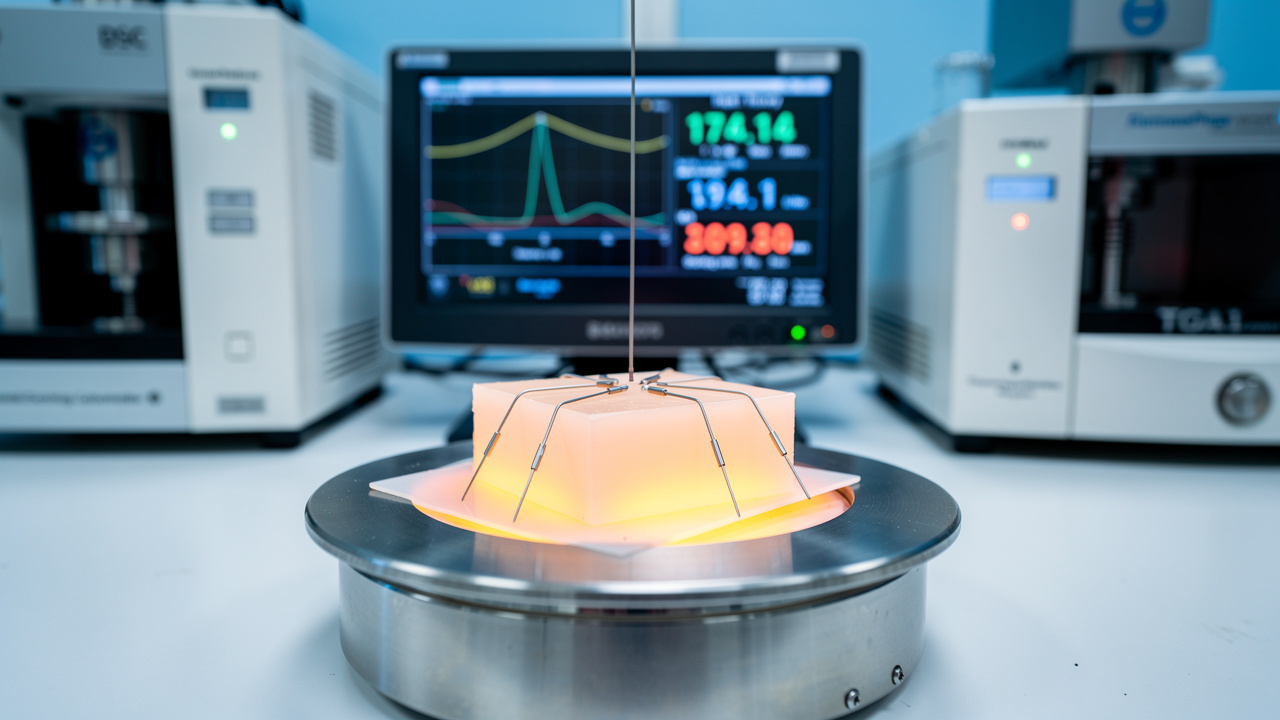
- Differential Scanning Calorimetry (DSC): How do we know if a plastic will perform under heat? DSC provides the answer by assessing heat flow linked to phase changes, revealing crucial insights into melting points and glass transition values. Recent advancements in DSC technology have enhanced the accuracy and speed of property measurements, making it an essential tool for manufacturers.
- Thermogravimetric Analysis (TGA): TGA evaluates the stability of materials by measuring weight alterations as heat rises. This method assists in identifying decomposition heat levels, with research indicating that the thermal properties of plastic, particularly polypropylene (PP), demonstrate a peak weight reduction rate of 16.4% per minute at specific heat levels, emphasizing its thermal behavior under pressure.
- Heat Deflection Temperature (HDT) Testing: This standardized examination assesses the point at which a plastic deforms under a specified load, crucial for applications involving heat exposure. Adhering to ASTM D648 guarantees that the thermal properties of plastic substances can withstand operating conditions without jeopardizing structural integrity.
- Dynamic Mechanical Analysis (DMA): DMA assesses the mechanical characteristics of substances as a function of temperature, frequency, and time. This thorough examination offers insights into the thermal properties of plastic and how substances react under heat stress, which is crucial for applications requiring durability and performance reliability.
- Heat Conductivity Testing: This involves assessing how well a substance conducts heat, which is essential for applications requiring effective heat management. Understanding the thermal properties of plastic is essential for selecting materials that will function reliably in high-temperature environments.
By employing these testing methods, manufacturers can confidently select materials that will perform reliably under heat stress. Ultimately, these testing techniques empower manufacturers to make informed decisions, ensuring their products perform reliably in demanding applications.

Apply Thermal Properties in Design and Material Selection
In the world of custom plastic extrusion, understanding the thermal properties of plastic is not just beneficial; it's essential for product success.
- Material Selection: Choose materials based on their heat characteristics to match the application's requirements. For example, PVC is frequently chosen for its balance of temperature stability and cost-effectiveness in irrigation systems.
- Design Considerations: Include heat expansion in design calculations to avoid warping or misalignment. If a profile is expected to undergo substantial temperature variations, considering its coefficient of expansion is crucial.
- Cooling Strategies: Implement effective cooling strategies during the extrusion process to minimize distortion. This might mean using controlled cooling systems or adjusting the cooling rate based on the thermal properties of plastic.
- Testing and Validation: Regularly evaluate materials for their heat characteristics to ensure they meet the necessary specifications. This can involve using the testing methods discussed earlier to validate performance.
- Collaboration with suppliers: Work closely with resin suppliers to understand the thermal properties of plastic materials and how they can be best utilized in specific applications. This collaboration can lead to innovative solutions tailored to client needs.
By prioritizing these thermal considerations, engineers can ensure their extruded products not only perform but excel in their applications.

Conclusion
Understanding thermal properties is not just important; it’s the cornerstone of effective material selection in custom plastic extrusion. These properties, including thermal conductivity, heat deflection temperature, coefficient of thermal expansion, and glass transition temperature, significantly influence how well a plastic performs under specific conditions. Without a clear understanding of these properties, selecting the right plastic can lead to performance issues. Mastering these characteristics helps manufacturers avoid costly production errors. It also enhances the overall quality of their products.
Throughout this article, we’ve explored how thermal properties affect the performance of plastics in extrusion processes. We discussed the importance of selecting materials based on their heat characteristics, the impact of distortion due to non-uniform cooling, and the significance of testing methods such as Differential Scanning Calorimetry and Thermogravimetric Analysis. These elements are vital for ensuring that plastics meet the necessary specifications and perform reliably in demanding applications. This knowledge not only prevents costly errors but also enhances product reliability.
In conclusion, prioritizing thermal properties can be the difference between success and failure in your projects. For tailored solutions and expert guidance, reaching out to Lincoln Plastics can provide invaluable support in navigating the complexities of material selection and design, ultimately leading to enhanced product performance and customer satisfaction.
Frequently Asked Questions
What are the key thermal properties of plastics?
The key thermal properties of plastics include thermal conductivity, heat deflection temperature (HDT), coefficient of thermal expansion (CTE), and glass transition temperature (Tg).
What does thermal conductivity measure in plastics?
Thermal conductivity measures a material's ability to conduct heat. Plastics typically have low thermal conductivity, making them excellent insulators.
What is heat deflection temperature (HDT)?
Heat deflection temperature (HDT) is the temperature at which a plastic deforms under a specified load, which is important for applications exposed to heat.
What is the coefficient of thermal expansion (CTE)?
The coefficient of thermal expansion (CTE) indicates how much a material expands or shrinks with temperature changes. A high CTE can lead to warping or dimensional changes in products.
What is the glass transition temperature (Tg)?
The glass transition temperature (Tg) is the range at which a plastic transitions from a rigid, glassy state to a softer, rubbery state, affecting its mechanical properties.
Why is it important to understand the thermal properties of plastics?
Understanding thermal properties is crucial for selecting the right plastic for specific applications, as neglecting these properties can lead to costly production mistakes.
List of Sources
- Define Thermal Properties of Plastics
- Heat-conducting plastic developed (https://phys.org/news/2014-11-heat-conducting-plastic.html)
- Plastic Thermal Conductivity Reference Table - Alfa Chemistry (https://alfa-chemistry.com/plastics/resources/plastic-thermal-conductivity-reference-table.html)
- The Thermal Conductivity of Unfilled Plastics – C-Therm Technologies Ltd. (https://ctherm.com/resources/newsroom/blog/the-thermal-conductivity-of-unfilled-plastics)
- Heat-conducting plastic could lead to lighter electronics, cars (https://news.umich.edu/heat-conducting-plastic-could-lead-to-lighter-electronics-cars)
- Explore Key Thermal Properties: Conductivity, Distortion, and More
- Temperature Control in Extrusion: Why It’s Critical | Bausano (https://bausano.com/en/press-and-news/temperature-control-in-extrusion)
- How Temperature Impacts Plastic Extrusion (https://paulmurphyplastics.com/industry-news-blog/how-temperature-impacts-plastic-extrusion)
- The Extrusion Industry in 2025: Innovations, Trends, and Opportunities (https://plextrusions.com/extrusion-blog/the-extrusion-industry-in-2025-innovations-trends-and-opportunities)
- Common Extrusion Defects & Effective Solutions for Manufactu (https://in.chemtrend.com/news/common-extrusion-defects-how-to-resolve-them)
- Understand Testing Methods for Thermal Properties
- infinitalab.com (https://infinitalab.com/blog/plastic-material-properties-testing-applications?srsltid=AfmBOorx7Ky16P3J1T5qK7YBdGwyKKQ7eyCUDYZqOHCQqukbjScbGWid)
- alttran.com (https://alttran.com/what-is-plastic-testing)
- pacorr.com (https://pacorr.com/blog/heat-deformation-testing-of-plastics-methods-standards-importance)
- Thermal Analysis of Plastics Used in the Food Industry - PMC (https://pmc.ncbi.nlm.nih.gov/articles/PMC8746179)
- spectroscopyonline.com (https://spectroscopyonline.com/view/simultaneous-thermal-analyzer-for-recycled-plastic-feb-2026)
- Apply Thermal Properties in Design and Material Selection
- designnews.com (https://designnews.com/assembly/turning-up-the-heat-considerations-for-high-temperature-applications)
- thermalprocessing.com (https://thermalprocessing.com/exploring-the-impact-of-thermal-conductivity-in-material-choice)
- thermtest.com (https://thermtest.com/thermal-resources/materials-database)
- lincoln-plastics.com (https://lincoln-plastics.com/news-post/does-plastic-expand-in-heat-key-insights-for-oe-ms-on-thermal-expansion?dcc2137a_page=4)
- tstar.com (https://tstar.com/blog/thermal-expansion-a-key-consideration-in-plane-bearing-design)
Related posts

Why Custom Pipe Extrusion Matters More Than Ever
Standard pipe sizes don’t always work. Learn how Lincoln Plastics delivers custom diameters, wall thicknesses, and finishes in right-sized runs.


Reducing Trip Hazards with Custom Cord Management
Loose cords are more than messy — they’re a safety hazard. Lincoln Plastics’ custom cord covers and Flexiduct solutions improve safety and efficiency.
The Power of Custom Plastic Profiles for OEMs
Off-the-shelf profiles force compromises. Learn how Lincoln Plastics designs custom extruded profiles for OEMs with exact specs and right-sized runs.
