

Master the Tube Extrusion Process: A Step-by-Step Guide for OEMs
Introduction
The tube extrusion process is a cornerstone of modern manufacturing, transforming raw thermoplastics into versatile hollow tubes that cater to a myriad of applications. This method not only streamlines production but also enhances product quality, making it essential for businesses aiming to thrive in a competitive landscape. As the demand for sustainable and high-quality products rises, OEMs must consider how to keep their extrusion processes efficient and effective in a rapidly evolving market.
By exploring the intricacies of tube extrusion, readers will uncover the essential steps involved-from material selection to quality control. Each phase plays a crucial role in ensuring that the final product meets industry standards and customer expectations. Furthermore, understanding the challenges that can arise during production is vital for maintaining operational excellence.
How can OEMs navigate these complexities? By implementing best practices and leveraging advanced technologies, they can enhance their extrusion processes. This proactive approach not only mitigates risks but also positions companies to respond swiftly to market demands. In addition, staying informed about industry trends and innovations can provide a competitive edge.
In summary, the tube extrusion process is not just about manufacturing; it's about delivering quality and reliability in every product. As the landscape continues to evolve, embracing these principles will be key to success.
Understand Tube Extrusion Basics
The tube extrusion process serves as a pivotal manufacturing method, expertly molding heated plastic substances into hollow tubes with a consistent cross-sectional profile. It all begins with the meticulous selection of raw materials, primarily thermoplastics like PVC, polyethylene, or polypropylene, each chosen for their unique mechanical properties and application requirements. A comprehensive understanding of the core components of the tube extrusion process - the extruder, die, and cooling system - is vital for effective operation.
The tube extrusion process relies on the extruder as the heart of the operation, melting plastic pellets that are then pushed through the die to achieve the desired pipe shape. Once extruded, cooling systems solidify the material, ensuring it retains its form as it exits the die. This foundational knowledge is crucial for navigating the complexities of the tube extrusion process, particularly as the industry adapts to trends like energy-efficient systems and bioplastics.
Recent advancements underscore the necessity of adopting circular production models and utilizing recycled materials. These practices not only reduce costs but also align with increasing environmental regulations. For example, bioplastics such as PLA and TPS are gaining popularity due to their strength and eco-friendliness, making them ideal for various applications, including sustainable packaging.
Industry leaders emphasize the importance of understanding shaping systems to enhance operational efficiency and product quality. As the market expands, particularly in North America, staying informed about these developments empowers OEMs to make strategic decisions that optimize their manufacturing processes. Are you ready to elevate your production capabilities? Embrace the future of tube forming with confidence.
Navigate the Tube Extrusion Process
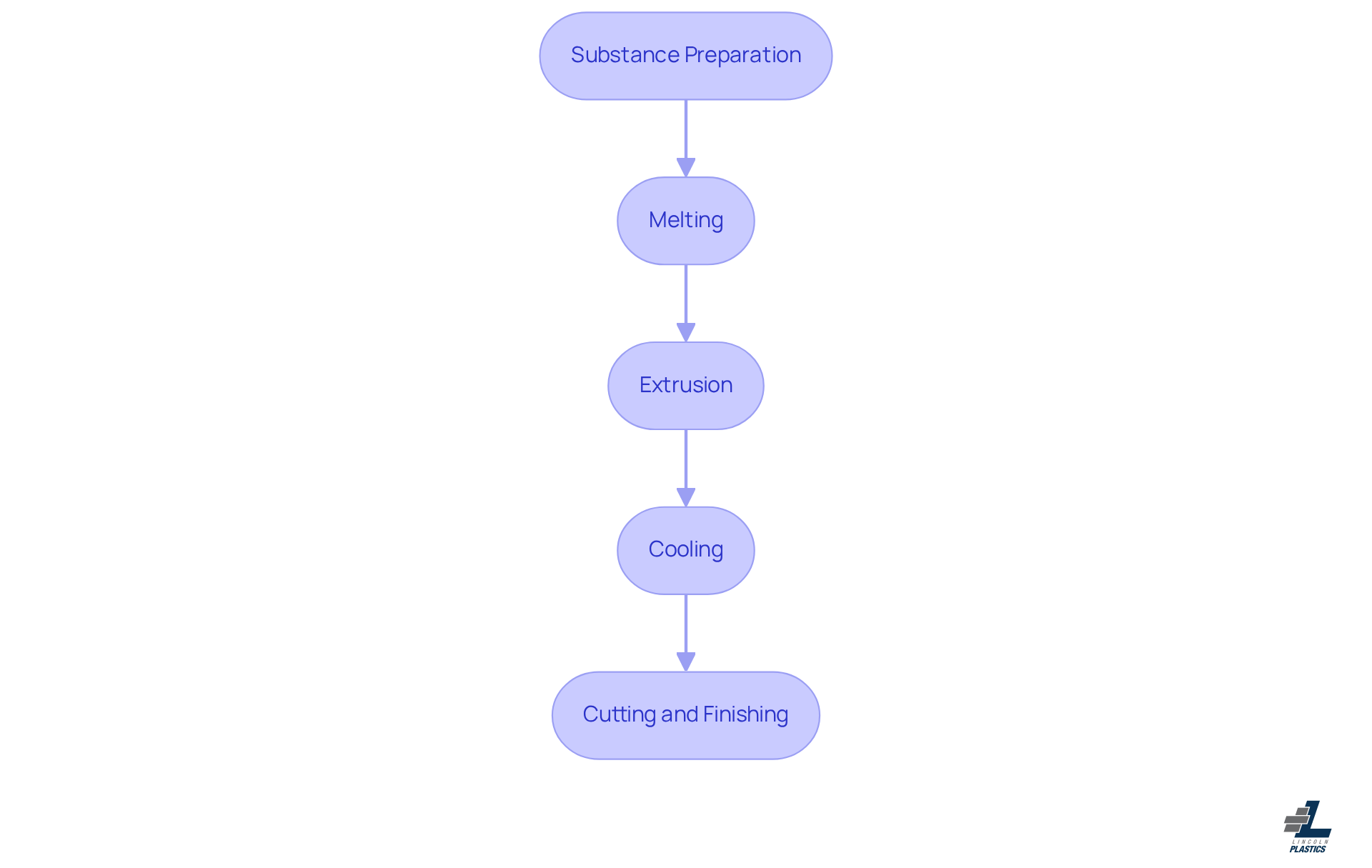
The tube extrusion process is a critical operation that involves several essential stages:
- Substance Preparation: Selecting the right thermoplastic material is crucial, as it directly influences the final product's characteristics. Common materials like PVC, PE, and ABS must be clean and free from contaminants to ensure optimal performance.
- Melting: In this stage, plastic pellets are fed into the extruder and heated to their melting point, which varies by material - typically around 160-220°C for PVC, 200-260°C for PE, and 230-260°C for ABS. Accurate temperature regulation is vital; incorrect settings can lead to degradation and flaws in the final product.
- Extrusion: Once melted, the material is forced through a die, shaping it into a cylinder. The design of the die is critical, as it dictates the dimensions and wall thickness of the cylinder, ensuring uniformity and high quality.
- Cooling: After exiting the die, the pipe is cooled using air or water baths, solidifying its shape and properties. Effective cooling methods are essential to prevent warping and maintain dimensional accuracy.
- Cutting and Finishing: The final stage involves cutting the extruded tube to the desired length and applying any necessary finishing processes, such as trimming or surface treatment. Each stage of the tube extrusion process requires careful monitoring to ensure product quality and consistency, often employing advanced sensors to detect any deviations in wall thickness or size during production.
The extruded plastics market is projected to reach $184.41 billion by 2026, underscoring the significance of the shaping process in meeting industry demands. At Lincoln Plastics, we are dedicated to providing expert guidance on custom pipe and conduit design, material selection, and vendor-managed inventory solutions to enhance your manufacturing capabilities.
Select Materials and Customization Options
When selecting substances for the tube extrusion process, it's crucial to consider several key factors that can significantly impact your project's success.
- Substance Characteristics: Choose materials based on their mechanical properties, such as tensile strength, flexibility, and chemical resistance. For instance, PVC is renowned for its durability, polyethylene offers excellent flexibility, and polypropylene is favored for its lightweight nature. These characteristics are essential in ensuring the final product meets your specific needs.
- Application Requirements: Evaluate the unique demands of your application, including temperature resistance, UV stability, and adherence to industry standards. At Lincoln Plastics, we collaborate closely with OEMs to guarantee that all products fulfill rigorous quality benchmarks. This includes specialized checks for fit and function using various check gauges, ensuring that every detail is accounted for.
- Customization Options: Don't overlook the potential for customization. We provide options for color, diameter, and wall thickness, allowing you to achieve the exact specifications you require. Our ability to source colors that match your Pantone specifications ensures consistency across manufacturers. Additionally, the tube extrusion process can utilize co-extrusion methods to combine different materials, enhancing the functionality of the tube.
- Supplier Recommendations: It's wise to consult with resin providers for insights on material compatibility and performance. This partnership can help ensure that the chosen materials align perfectly with your intended application and manufacturing capabilities. Our robust assurance system includes a comprehensive manual for your plastic profile, complete with detailed drawings, critical in-process checks, and run documentation, all designed to guarantee precision and compliance.

Implement Quality Control Measures
Implementing robust quality control measures is non-negotiable in the tube extrusion process to produce high-quality extruded tubes.
- In-Process Monitoring: Regularly monitoring key parameters-like temperature, pressure, and extrusion speed-during production is essential. This real-time tracking helps identify deviations that could lead to defects, ultimately enhancing product reliability and reducing waste.
- Dimensional Inspection: Conducting dimensional checks on the tubes made during the tube extrusion process ensures compliance with specified tolerances. By utilizing calipers or advanced laser measurement systems, manufacturers can guarantee accuracy and consistency in product dimensions during the tube extrusion process.
- Substance Evaluation: Thorough testing of both raw materials and finished products is crucial for evaluating essential characteristics such as tensile strength, flexibility, and chemical resistance. Specific tests, including tensile tests, impact resistance evaluations, and thermal analysis, ensure that the materials meet necessary performance standards.
- Feedback loops: Establishing continuous feedback mechanisms refines the tube extrusion process. By examining control data, manufacturers can recognize trends and areas for enhancement, fostering a culture of continuous improvement in production methods.
- Documentation: Maintaining thorough records of control inspections and test results is vital for adhering to industry standards and enabling traceability. This documentation is crucial for addressing any issues that may arise. Our strong assurance system includes a dedicated reference book for your plastic profile, featuring drawings, critical in-process checks, and run documentation.
Implementing these measures not only enhances product quality but also builds consumer trust and strengthens the industry reputation of manufacturers. Are you ready to elevate your production standards?
Troubleshoot Common Extrusion Challenges
In the realm of the tube extrusion process, several common challenges can impede production efficiency and product quality. Addressing these issues head-on not only enhances reliability but also ensures superior outcomes for your projects.
- Melt Fracture: This defect arises when the material is not heated adequately, leading to unsightly surface imperfections. To combat this, it's crucial to adjust temperature settings and ensure uniform heating throughout the process. A systematic approach to troubleshooting melt fracture involves optimizing die design and closely monitoring extrusion rates to maintain a consistent flow.
- Dimensional Inaccuracy: Variations in tube dimensions often stem from improper die design or inconsistent material flow. Regular inspection and calibration of the die, along with vigilant monitoring of feed rates, are essential for achieving the desired dimensional precision. By implementing a systematic strategy that includes adjusting screw speed and utilizing consistent raw materials, you can significantly enhance accuracy.
- Surface Defects: Issues like sharkskin or rough surfaces typically result from incorrect processing conditions. Optimizing extrusion speed and temperature is vital for achieving a smooth finish. Furthermore, maintaining proper die maintenance and cooling procedures can further improve surface quality.
- Blockages: Material blockages within the extruder can disrupt production. To prevent this, routine cleaning of the extruder is essential, along with vigilance for signs of material degradation. Implementing preventive maintenance schedules can help identify potential issues before they escalate, ensuring uninterrupted operations.
- Color Variability: Inconsistent color in extruded products can occur due to improper mixing of colorants. Ensuring thorough mixing and utilizing high-quality colorants are critical steps to maintain color consistency. Regular calibration of equipment and monitoring of material properties can also help mitigate color discrepancies.
By proactively addressing these challenges, you can enhance the quality and reliability of your tube extrusion process, ultimately leading to superior products that meet your exact specifications.
Conclusion
Mastering the tube extrusion process is not just beneficial; it’s essential for OEMs aiming for peak efficiency and superior product quality in manufacturing. By delving into the intricacies of this process - from selecting the right materials to implementing rigorous quality control measures - manufacturers can guarantee the production of high-quality extruded tubes that meet both industry demands and application requirements.
Key insights reveal the significance of:
- Material selection based on mechanical properties
- The critical stages of the extrusion process
- The necessity for robust quality assurance protocols
Addressing common challenges such as:
- Melt fractures
- Dimensional inaccuracies
- Surface defects
is vital for maintaining production efficiency and achieving the desired product specifications. Furthermore, the integration of advanced monitoring systems and feedback loops enhances the overall reliability of the extrusion process.
As the extruded plastics market continues to expand, embracing these practices positions manufacturers not only for success but also aligns with evolving sustainability standards. By committing to continuous improvement and innovation in tube extrusion, OEMs can elevate their production capabilities and contribute to a more efficient, eco-friendly industry. Are you ready to take your manufacturing process to the next level?
Frequently Asked Questions
What is tube extrusion?
Tube extrusion is a manufacturing process that molds heated plastic substances into hollow tubes with a consistent cross-sectional profile, primarily using thermoplastics like PVC, polyethylene, or polypropylene.
What are the core components of the tube extrusion process?
The core components include the extruder, die, and cooling system, all of which are essential for effective operation.
How does the extrusion process work?
The process begins with the extruder melting plastic pellets, which are then pushed through a die to shape them into tubes. After extrusion, cooling systems solidify the material to retain its form.
What role do raw materials play in tube extrusion?
The selection of thermoplastic materials is crucial as it directly influences the final product's characteristics. Materials must be clean and free from contaminants for optimal performance.
What are the temperature requirements for melting different thermoplastics?
The melting point varies by material: approximately 160-220°C for PVC, 200-260°C for polyethylene, and 230-260°C for ABS.
Why is accurate temperature regulation important in tube extrusion?
Incorrect temperature settings can lead to degradation and flaws in the final product, affecting quality and performance.
What happens during the cooling stage of tube extrusion?
After exiting the die, the extruded pipe is cooled using air or water baths, which solidify its shape and properties, preventing warping and maintaining dimensional accuracy.
What is involved in the cutting and finishing stage of tube extrusion?
This stage involves cutting the extruded tube to the desired length and applying finishing processes, such as trimming or surface treatment, to ensure product quality and consistency.
What are the current trends in the tube extrusion industry?
Trends include the adoption of circular production models, the use of recycled materials, and the increasing popularity of bioplastics for their strength and eco-friendliness.
What is the projected growth of the extruded plastics market?
The extruded plastics market is projected to reach $184.41 billion by 2026, highlighting the significance of the shaping process in meeting industry demands.
List of Sources
- Understand Tube Extrusion Basics
- plasticstoday.com (https://plasticstoday.com/plastics-processing/extrusion-pipe-profile)
- thefabricator.com (https://thefabricator.com/tubepipejournal/article/tubepipefabrication/tube-2026-focuses-on-new-tech-sustainable-industry)
- Emerging Trends Shaping Plastic Extruders in 2026 (https://audop.com/c/emerging-trends-shaping-plastic-extruders-in-2026.htm)
- 10 Essential Insights on Extrusion Tubing for OEMs (https://lincoln-plastics.com/news-post/10-essential-insights-on-extrusion-tubing-for-oems)
- Navigate the Tube Extrusion Process
- Emerging Trends Shaping Plastic Extruders in 2026 (https://audop.com/c/emerging-trends-shaping-plastic-extruders-in-2026.htm)
- transamshop.co.uk (https://transamshop.co.uk/blogs/news/a-comprehensive-guide-to-the-extrusion-manufacturing-process)
- How to Collect & Interpret Process Data in Extrusion (https://ptonline.com/articles/how-to-collect-interpret-process-data-in-extrusion-part-1(2))
- plasticstoday.com (https://plasticstoday.com/plastics-processing/extrusion-pipe-profile)
- plastics-technology.com (https://plastics-technology.com/articles/plastics-extrusion-innovations-applications)
- Select Materials and Customization Options
- jwellplasticextruder.com (https://jwellplasticextruder.com/blog/2026-top-tube-extrusion-machine-trends-for-buyers)
- wifitalents.com (https://wifitalents.com/extrusion-industry-statistics)
- 10 Essential Insights on Extrusion Tubing for OEMs (https://lincoln-plastics.com/news-post/10-essential-insights-on-extrusion-tubing-for-oems)
- alphaext.com (https://alphaext.com/custom-plastic-extrusion-fabrication-news)
- Plastics Extrusion: 4 Critical Statistics to Track for Increased Quality & Plant Profit (https://gaugeadvisor.com/2025/05/26/plastics-extrusion-4-critical-statistics-to-track-for-increased-quality-plant-profit)
- Implement Quality Control Measures
- Plastics Extrusion: 4 Critical Statistics to Track for Increased Quality & Plant Profit (https://gaugeadvisor.com/2025/05/26/plastics-extrusion-4-critical-statistics-to-track-for-increased-quality-plant-profit)
- bmsvision.com (https://bmsvision.com/solutions/quality-efficiency-in-the-plastics-and-packaging-industry)
- One moment, please... (https://condaleplastics.com/extrusion-advice/plastic-extrusion-a-guide-to-quality-control)
- The Importance of Quality Control in Plastic Extrusion Manufacturing - Craftedplastics (https://craftedplastics.com/blog/the-importance-of-quality-control-in-plastic-extrusion-manufacturing)
- Troubleshoot Common Extrusion Challenges
- extruder.dekuma.com (https://extruder.dekuma.com/common-plastic-pipe-extrusion-defects-and-their-solutions)
- uplastech.com (https://uplastech.com/troubleshoot-melt-fracture-extrusion)
- Plastics Extrusion: 4 Critical Statistics to Track for Increased Quality & Plant Profit (https://gaugeadvisor.com/2025/05/26/plastics-extrusion-4-critical-statistics-to-track-for-increased-quality-plant-profit)
- Common Extrusion Defects & Effective Solutions for Manufactu (https://in.chemtrend.com/news/common-extrusion-defects-how-to-resolve-them)
- Common problems in the plastic extrusion process - SHARC (https://sharcpm.com/news/common-problems-in-the-plastic-extrusion-process)
Related posts

Why Custom Pipe Extrusion Matters More Than Ever
Standard pipe sizes don’t always work. Learn how Lincoln Plastics delivers custom diameters, wall thicknesses, and finishes in right-sized runs.


Reducing Trip Hazards with Custom Cord Management
Loose cords are more than messy — they’re a safety hazard. Lincoln Plastics’ custom cord covers and Flexiduct solutions improve safety and efficiency.
The Power of Custom Plastic Profiles for OEMs
Off-the-shelf profiles force compromises. Learn how Lincoln Plastics designs custom extruded profiles for OEMs with exact specs and right-sized runs.
