
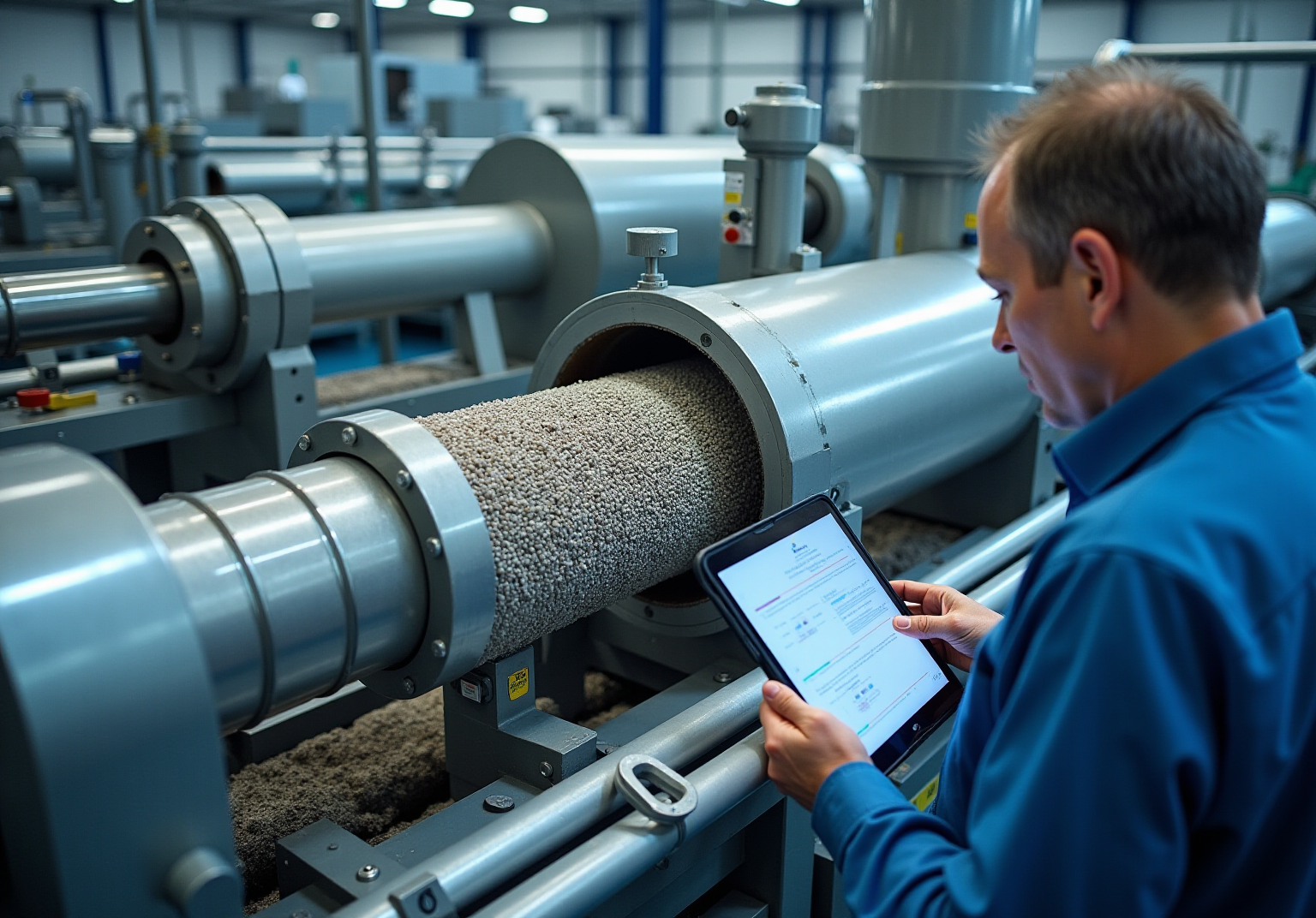
Master the PVC Pipe Extrusion Process: Steps, Tools, and Solutions
Introduction
The PVC pipe extrusion process is a key player in modern manufacturing, turning raw PVC resin into all sorts of useful profiles for countless applications. By getting a handle on this process, manufacturers can really boost their production efficiency and product quality. But let’s be real - navigating the ins and outs of extrusion, from prepping materials to fixing common hiccups, can be quite the challenge.
So, what are the essential steps and best practices that can help you succeed in this crucial process?
Understand PVC Extrusion Basics
The PVC extrusion process is a very important manufacturing technique. It turns raw PVC resin into continuous profiles, which are super useful for making pipes, fittings, and other products. If you want to optimize production and ensure top-notch product quality, it’s essential to understand the process. So, let’s break it down into key steps:
- Material Preparation: First off, we’ve got the PVC resin, usually in pellet form. It needs to be thoroughly dried to get rid of any moisture. Why? Because moisture can mess with the integrity of the final product, leading to defects during extrusion. So, this step is crucial!
- Melting: Next, the dried PVC goes into an extruder, where it’s heated up to its melting point. This is where the magic happens! The PVC becomes a smooth-flowing substance, ready to be shaped.
- Shaping: Now, the molten PVC is forced through a die, shaping it into the desired profile. This is where the specific design requirements for OEM applications come into play, allowing for tailored solutions that meet precise specifications.
- Cooling: After it exits the die, the extruded material cools down and gets calibrated to ensure it meets the specified dimensions. This stage is key for keeping things consistent and excellent across production runs.
- Cutting and Finishing: Finally, the extruded profiles are cut to length and might get some extra finishing touches, like surface treatments or coatings, to boost performance and aesthetics.
Understanding these steps is super important for anyone involved in the industry. It helps guide decisions about material selection, machinery setup, and control measures. For instance, case studies show that companies focusing on strict and innovative resource preparation techniques can really cut down on defects and boost overall production efficiency.
And here’s something interesting: recent trends in the industry are all about incorporating new technologies. This aligns with sustainability goals while still keeping performance high. By using best practices and sticking to them, manufacturers can really optimize their operations and deliver high-quality products that meet the ever-changing demands of the market. So, what do you think? Ready to dive into the world of PVC extrusion?

Follow the PVC Extrusion Process Steps
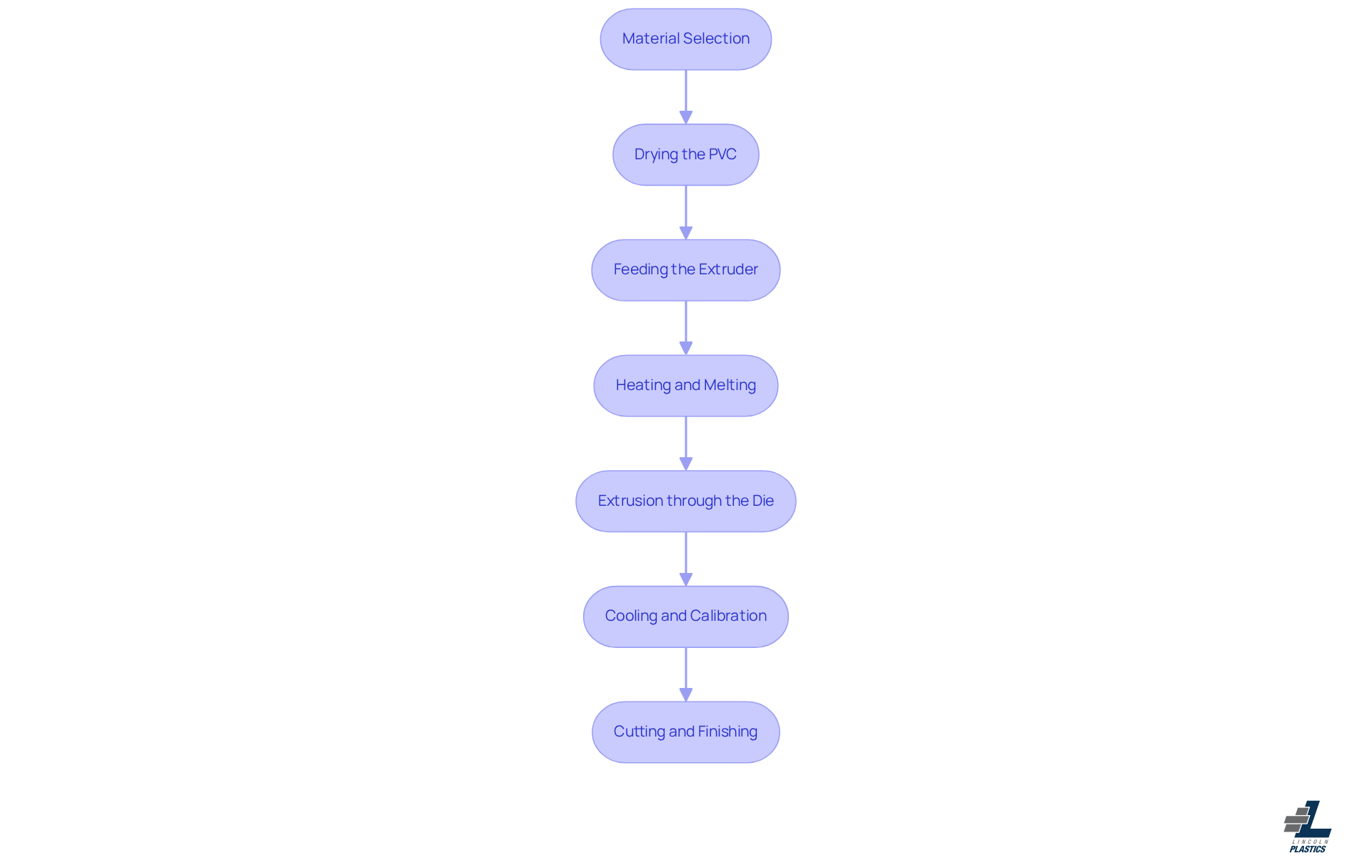
To successfully execute the PVC extrusion process, let’s break it down into some easy steps:
- Material Selection: First things first, you need to choose a material that fits your application. It’s a good idea to chat with the specialists at Lincoln Plastics for suggestions on the right grades. Choosing the right material is crucial as it can significantly impact the efficiency and quality of your final product.
- Drying the PVC: Before you get started, make sure to dry those PVC pellets in a dehumidifying dryer. This step is super important to get rid of moisture. Why? Because moisture can cause defects in your final product, like bubbles or uneven thickness, which can lead to more waste and higher production costs.
- Feeding the Extruder: Next up, load those dried PVC pellets into the extruder’s hopper. Keep a steady feed rate to ensure a smooth flow of material. This consistency is key for achieving uniform extrusion results.
- Heating and Melting: Now, let’s talk about temperature. Set the extruder to the right temperature based on the resin specs. The PVC will go through several heating zones, melting and becoming viscous, ready for shaping. Proper temperature control is vital here to avoid degrading the material.
- Extrusion through the Die: Once it’s melted, the PVC gets pushed through a die that shapes it into the desired profile. Make sure the die is designed for your specific application to avoid any flow issues. Using monitoring tools can help you monitor and maintain those dimensional specs. This reflects Lincoln Plastics' commitment to quality, sticking to standards.
- Cooling and Calibration: After it exits the die, the extruded profile enters a cooling system, often using water baths or air cooling. This step solidifies the material and keeps its shape, which is crucial for accuracy. Calibration during this phase is essential to ensure the final product meets specifications, following Lincoln Plastics' guidelines, including a dedicated quality book for documentation.
- Cutting and Finishing: Finally, cut those extruded shapes to the lengths you need using precision cutting tools. You might also want to consider additional finishing processes, like surface treatments or coatings, to enhance the final product. Using gravimetric blenders can help with recipe precision and reduce waste.
By following these steps, you can create high-standard products, leveraging Lincoln Plastics' expertise in the extrusion process to enhance both production efficiency and product excellence.
Identify Essential Extrusion Machinery and Tools
When it comes to extrusion, having the right machinery and tools is key to getting the job done right. Let’s break down some essentials you’ll need:
- Extruder: Think of the extruder as the heart of the operation. It’s made up of a barrel and a screw that melt and move the PVC along. Depending on what you’re producing, you might go for a single-screw or a twin-screw extruder. Twin-screw extruders are pretty popular these days because they can handle a variety of materials and mix them efficiently. At Lincoln Plastics, we make sure our extruders are top-notch, so you can count on us for reliable performance and timely delivery.
- Now, let’s talk about the die. This little piece is crucial for shaping that molten PVC into whatever form you need. Choosing the right die is super important - it can really affect the flow and accuracy of your final product. We at Lincoln Plastics believe that investing in the right die is essential, especially for our production lines. We offer various shapes and sizes tailored to fit your specific needs.
- Cooling system: You can’t forget about a solid cooling system! Whether it’s a water bath or air cooling, it’s vital for solidifying the product and keeping it intact. Efficient cooling helps prevent issues like warping or uneven thickness, which can really mess with product quality. At Lincoln Plastics, we have a robust quality assurance system in place to ensure our cooling processes meet high standards.
- Cutting equipment: Precision is everything when it comes to cutting the extruded profiles to length. You’ve got options like saws, guillotines, or even automated cutting systems, all designed to boost accuracy and minimize waste. We use advanced cutting technologies at Lincoln Plastics to ensure our products meet the exact specs required by OEMs.
- Auxiliary Equipment: Don’t overlook the extra gear! Things like feeders, conveyors, and calibration units can really help streamline your production process. These tools keep everything running smoothly and ensure materials transition seamlessly through the extrusion line. At Lincoln Plastics, we work closely with OEMs to customize all auxiliary equipment to meet their specific needs, enhancing our quality assurance efforts.
Investing in machinery is crucial for the efficient and reliable PVC pipe extrusion process, which leads to superior product standards. And with the market expected to grow significantly - projected at a CAGR of 4.3% from 2025 to 2034 - Lincoln Plastics is all in on adopting new technologies to stay ahead in this ever-evolving landscape.

Troubleshoot Common PVC Extrusion Issues
can really throw a wrench in the works, leading to defects and production delays. Let’s dive into some typical problems you might face and how to tackle them:
- Warping: Ever noticed this happening? It often crops up due to incorrect temperature settings or fluctuations in material quality. Solution: Keep an eye on those temperature settings! Regular monitoring and adjustments can help maintain that all-important consistency in melt pressure.
- Surface defects: Rough surfaces or discoloration can be a real headache, often caused by overheating or contamination during the extrusion process. Solution: Make sure to maintain strict hygiene and give both the extruder and die a good clean to keep contamination at bay.
- Dimensional variation: If your final product dimensions are all over the place, it might be due to improper die design or cooling issues. Solution: Regularly calibrate your cooling system and ensure that the die is designed specifically for the profile you’re aiming for. Accurate dimensions are key!
- Incomplete melting: Inadequate melting of PVC can lead to weak spots in your extruded product. Solution: Double-check those settings and ensure the material is properly dried before processing. This will help achieve optimal plasticization.
- Air pockets: These pesky defects can pop up due to trapped air or moisture in the material. Solution: Thoroughly dry the PVC and keep a consistent feed rate to minimize the risk of air getting trapped.
By proactively addressing these common issues, you can really enhance the production process. This way, you’ll be on your way to producing high-quality PVC profiles that meet industry standards!

Conclusion
Mastering the PVC pipe extrusion process can feel a bit daunting, right? But don’t worry! It’s all about understanding the key steps, from prepping your materials to putting on those final finishing touches. When you get these techniques down, you’ll not only boost your production efficiency but also deliver top-notch PVC products that fit just right for your specific needs.
Let’s dive into some important insights. First off, picking the right materials is crucial. You also want to keep a close eye on temperature controls and make the most of advanced machinery and tools. Each step, whether it’s drying the PVC or cutting and finishing, is vital for getting the best results. And hey, if you tackle common extrusion challenges head-on, you can cut down on defects and really raise the bar for your products.
Now, embracing best practices in PVC extrusion isn’t just about meeting industry demands. It’s also a great way to align with sustainability goals by incorporating recycled materials. By investing in quality machinery and sticking to precise operational protocols, you’re setting yourself up for success in the ever-changing world of PVC production. So, why not take that next step? Your future in PVC could be brighter than ever!
Frequently Asked Questions
What is PVC extrusion?
PVC extrusion is a manufacturing technique that transforms raw PVC resin into continuous profiles, which are used to create pipes, fittings, and custom profiles for OEM machinery.
What are the key steps in the PVC extrusion process?
The key steps in the PVC extrusion process include material preparation, heating and melting, shaping, cooling and calibration, and cutting and finishing.
Why is material preparation important in PVC extrusion?
Material preparation is crucial because the PVC resin must be thoroughly dried to eliminate moisture, which can compromise the integrity of the final product and lead to defects during extrusion.
What happens during the heating and melting stage of PVC extrusion?
During this stage, the dried PVC resin is heated in an extruder to its melting point, transforming it into a smooth-flowing substance ready to be shaped.
How is the PVC shaped into its final profile?
The molten PVC is forced through a die, which shapes it into the desired profile according to specific design requirements for OEM applications.
What occurs during the cooling and calibration phase?
After exiting the die, the extruded material cools down and is calibrated to ensure it meets specified dimensions, maintaining consistency and quality across production runs.
What does the cutting and finishing step involve?
In this step, the extruded profiles are cut to length and may receive additional finishing touches, such as surface treatments or coatings, to enhance performance and aesthetics.
Why is understanding the PVC extrusion process important for manufacturers?
Understanding the process helps manufacturers make informed decisions about material selection, machinery setup, and control measures, ultimately reducing defects and improving production efficiency.
What recent trends are influencing the PVC extrusion industry?
Recent trends include incorporating recycled materials into PVC products, aligning with sustainability goals while maintaining high performance.
How can manufacturers optimize their PVC extrusion operations?
Manufacturers can optimize operations by using advanced extrusion technologies and adhering to best practices, which can help deliver high-quality products that meet market demands.
List of Sources
- Understand PVC Extrusion Basics
- PVC Plastic Extrusion: Examining the Process and its Benefits - Port Erie Plastics | Solutions in Plastics Processing (https://porterie.com/blog/pvc-plastic-extrusion-examining-the-process-and-its-benefits)
- jwellplasticextruder.com (https://jwellplasticextruder.com/blog/2026-best-pvc-profile-extrusion-techniques-trends)
- vinylplus.eu (https://vinylplus.eu/news/future-of-pvc-2026-highlights-innovation)
- Plastics Extrusion: 4 Critical Statistics to Track for Increased Quality & Plant Profit (https://gaugeadvisor.com/2025/05/26/plastics-extrusion-4-critical-statistics-to-track-for-increased-quality-plant-profit)
- datainsightsmarket.com (https://datainsightsmarket.com/reports/pvc-pipe-extruder-60114)
- Follow the PVC Extrusion Process Steps
- Revolutionising Plastic Extrusion: The Role of Chemical Recycling - Condale Plastics (https://condaleplastics.com/company-news/revolutionising-plastic-extrusion-the-role-of-chemical-recycling)
- Plastics Extrusion: 4 Critical Statistics to Track for Increased Quality & Plant Profit (https://gaugeadvisor.com/2025/05/26/plastics-extrusion-4-critical-statistics-to-track-for-increased-quality-plant-profit)
- financialmodelslab.com (https://financialmodelslab.com/blogs/profitability/pvc-extrusion-plant?srsltid=AfmBOoqH250XD0b7FaPbxi7h_hfnfvxLheb7bIxbvlqwboq1vSWMpux-)
- PVC extrusion in transition: overcoming challenges and tapping potential (https://inoex.com/news/detail/pvc-extrusion-in-transition-overcoming-challenges-and-tapping-potential)
- Identify Essential Extrusion Machinery and Tools
- jwellplasticextruder.com (https://jwellplasticextruder.com/blog/2026-best-pvc-profile-extrusion-techniques-trends)
- PVC extrusion in transition: overcoming challenges and tapping potential (https://inoex.com/news/detail/pvc-extrusion-in-transition-overcoming-challenges-and-tapping-potential)
- desmoinesregister.com (https://desmoinesregister.com/press-release/story/41449/new-selection-criteria-established-for-identifying-a-reliable-china-pvc-twin-screw-extruder-manufacturer)
- polarismarketresearch.com (https://polarismarketresearch.com/industry-analysis/plastic-extrusion-machine-market)
- Emerging Trends Shaping Plastic Extruders in 2026 (https://audop.com/c/emerging-trends-shaping-plastic-extruders-in-2026.htm)
- Troubleshoot Common PVC Extrusion Issues
- Plastics Extrusion: 4 Critical Statistics to Track for Increased Quality & Plant Profit (https://gaugeadvisor.com/2025/05/26/plastics-extrusion-4-critical-statistics-to-track-for-increased-quality-plant-profit)
- jwextrusion.com (https://jwextrusion.com/news/common-defects-in-plastic-extrusion-and-how-to-solve-them)
- PVC extrusion in transition: overcoming challenges and tapping potential (https://inoex.com/news/detail/pvc-extrusion-in-transition-overcoming-challenges-and-tapping-potential)
- extruder.dekuma.com (https://extruder.dekuma.com/common-pvc-pipe-extrusion-defects-and-how-to-fix-them)
- wanplas.com (https://wanplas.com/industry-blogs/how-to-solve-bubble-problem-in-extruded-plastic-pipe)
Related posts

Why Custom Pipe Extrusion Matters More Than Ever
Standard pipe sizes don’t always work. Learn how Lincoln Plastics delivers custom diameters, wall thicknesses, and finishes in right-sized runs.


Reducing Trip Hazards with Custom Cord Management
Loose cords are more than messy — they’re a safety hazard. Lincoln Plastics’ custom cord covers and Flexiduct solutions improve safety and efficiency.
The Power of Custom Plastic Profiles for OEMs
Off-the-shelf profiles force compromises. Learn how Lincoln Plastics designs custom extruded profiles for OEMs with exact specs and right-sized runs.
