
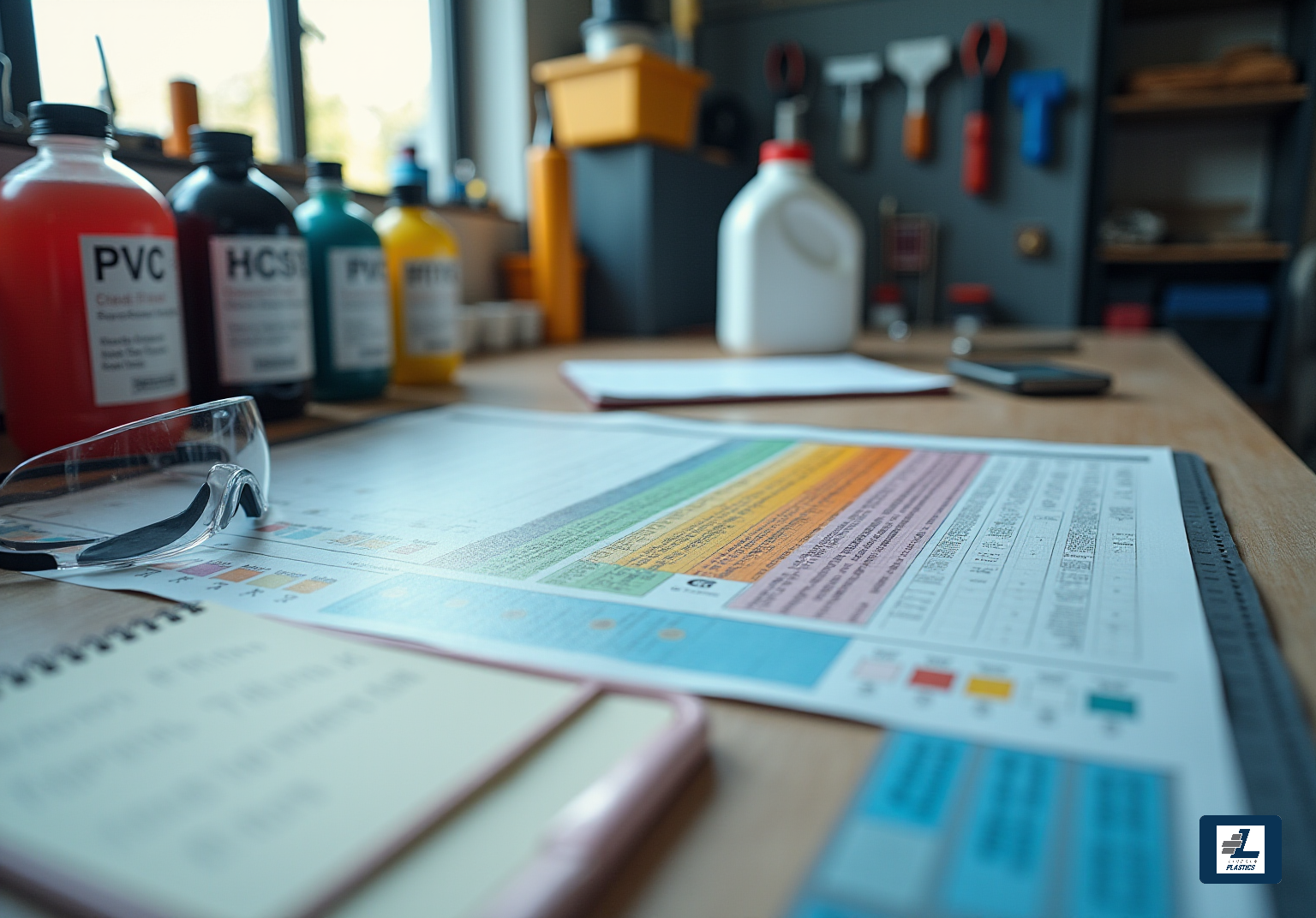
Master the PVC Compatibility Chart: A Step-by-Step Guide
Introduction
Understanding how materials work together is super important in engineering and manufacturing, especially when it comes to Polyvinyl Chloride (PVC). The PVC compatibility chart is a handy tool that gives us insights into how PVC interacts with different substances. This can really affect the durability and safety of our projects. But let’s be honest - navigating these ratings can feel overwhelming. What do they really mean? And how can we use them effectively in real-life situations?
In this guide, we’ll break down the PVC compatibility chart step by step. Our goal is to help you make informed decisions that boost the performance and longevity of your PVC applications. So, let’s dive in!
Understand PVC Compatibility Charts
PVC resistance charts, also known as the compatibility charts, are super handy when it comes to figuring out how durable Polyvinyl Chloride (PVC) is against different substances. These charts break down substances into compatibility ratings, ranging from excellent to not recommended, giving engineers and manufacturers some crucial insights. Understanding these ratings is key to selecting materials that will hold up well when they come into contact with specific chemicals.
So, what do these ratings mean? Here’s a quick rundown:
- A (Excellent): No significant effect on the material, which means it’s got strong resistance.
- B (Good): There might be minor effects over time, so while it’s generally resistant, keeping an eye on it is a good idea.
- C (Fair): Expect moderate effects; it’s a heads-up to be cautious and think carefully about how you use it.
- D (Not Recommended): This one’s a red flag - significant degradation is likely, so it’s time to look for alternatives.
You can’t underestimate the importance of the compatibility ratings. For instance, maintaining product purity, making it a solid choice for applications involving chlorinated drinking water and various substances used in industrial processes. Plus, the compatibility chart guarantees that materials won’t mess with water quality through leaching, which is super important for everyone involved.
Let’s look at some real-world examples to see how PVC performs. In waste management, standard PVC does a great job handling common household and industrial chemicals. And if you need something tougher, there are specialized formulations for more aggressive environments. Also, PVC shines in outdoor applications, showing off its resilience against outdoor conditions like UV exposure and sudden pressure changes.
By getting a handle on the evaluations, manufacturers can make smart choices that enhance safety and longevity in their projects. This leads to more reliable and efficient operations, which is what we all want, right?
Interpret the Compatibility Chart
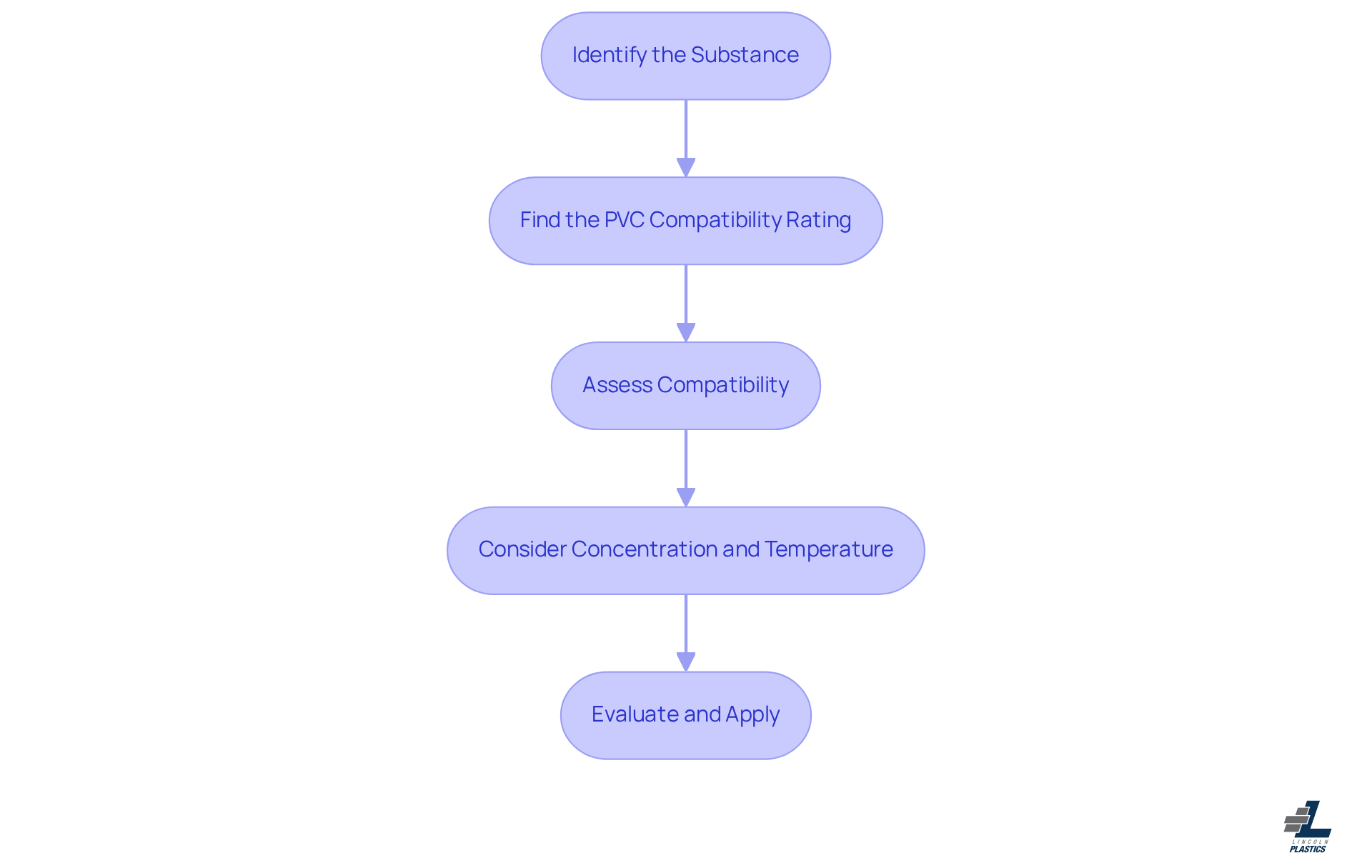
Interpreting the compatibility chart may seem tricky at first, but it’s really not that complicated! Let’s break it down together:
- Step: Start by finding the substance you want to use in the left-hand column of the chart. Easy enough, right?
- Rating: Next, move horizontally across the row to identify the PVC rating that corresponds to your substance.
- Fit: Now, based on that rating, you can figure out if PVC is a good fit for your needs. For instance, if you see an 'A' rating, you’re in luck - PVC is an excellent choice! But if it’s a 'D', you might want to look at other materials. Here’s a quick rundown of the ratings:
- A = Excellent
- B = Good
- C = Fair
- D = Severe Effect
- N/A = Information not available
- Consider Concentration and Temperature: Don’t forget that the concentration and the temperature it’ll be used at. Standard PVC holds up well up to 140°F (60°C). Always check the chart for any specific conditions.
You know, in different environments. Take potassium carbonate, for example - PVC works great there! But be careful; it’s not suitable for everything. Substances like esters or chlorinated hydrocarbons can cause PVC to break down, leading to higher maintenance costs.
Understanding these ratings is key to ensuring your projects last and perform well. Regular evaluations and sticking to guidelines can really boost PVC’s effectiveness in industrial settings, making it safe and reliable for various applications. So, are you ready to dive into your next project with confidence?
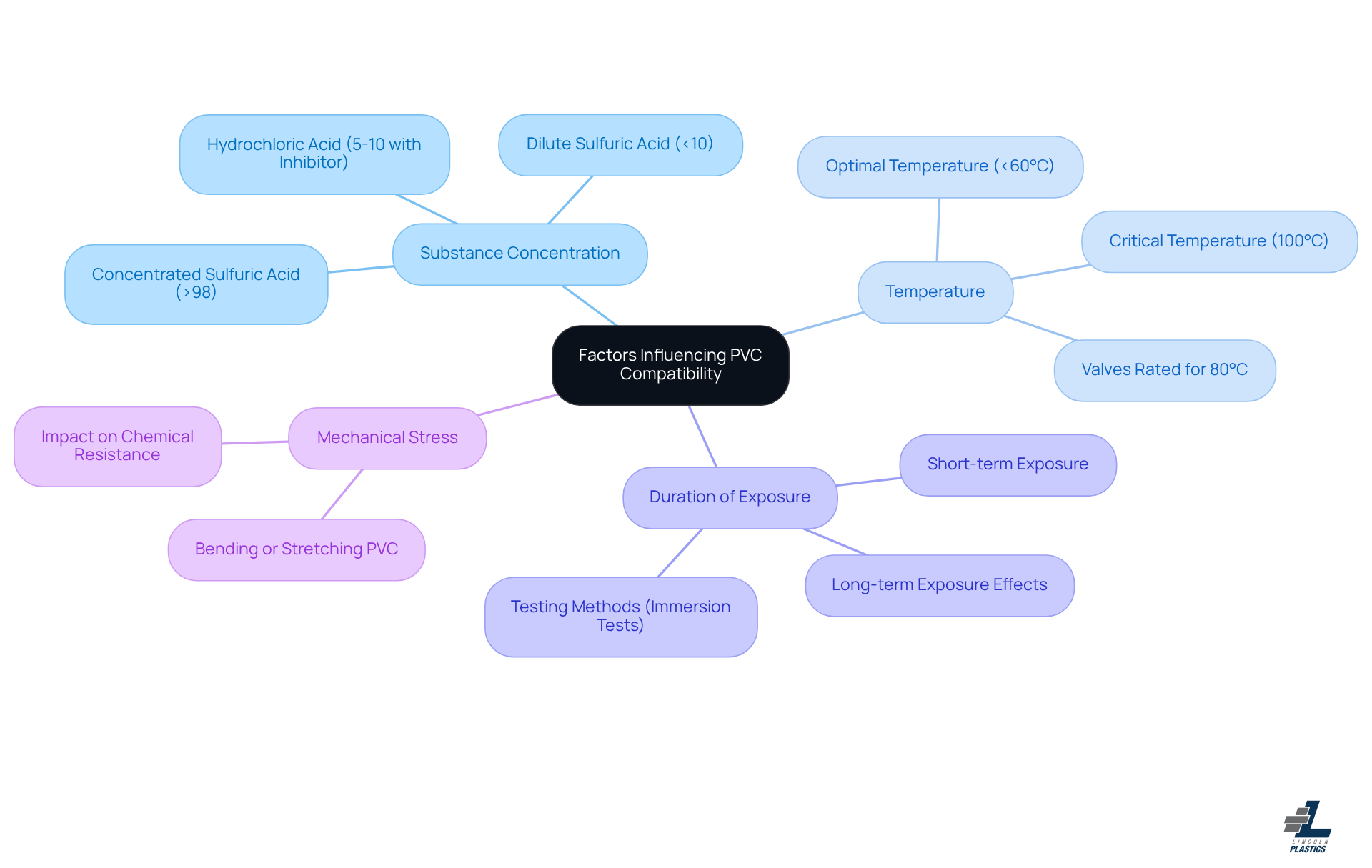
Consider Factors Influencing Compatibility
When it comes to PVC and chemicals, a few key factors really make a difference in how well they get along.
- Substance Concentration is a big one. For example, if you’re dealing with high concentrations (over 98%), watch out! It can really eat away at PVC, compromising its strength in no time. On the flip side, if you’re using a diluted version (below 10%), it’s not nearly as harmful. So, always check the compatibility using the chart based on the specific concentration you plan to use. And don’t forget, PVC can handle certain concentrations (5%-10%) if you add a stabilizer. That’s crucial for those applications!
- Now, let’s talk about temperature. PVC usually holds up well under 60°C, but push it to 100°C, especially with valves rated for 80°C, and you might see some softening or even failure. Remember, as the temperature rises, PVC’s resistance drops, so keep that in mind when you’re picking your materials.
- Next up is the exposure duration. If PVC is in contact with harsh substances for too long, it can suffer degradation. Even low levels of sulfuric acid can lead to aging and performance issues over time. So, think about how long the PVC will be exposed to these substances. Testing methods like accelerated aging tests can help you understand how well PVC will perform under specific conditions, as indicated in the compatibility chart.
- Don’t overlook mechanical stress either! If your PVC is bending or stretching while exposed to chemicals, that can really weaken its resistance. Make sure to consider these mechanical conditions to keep your PVC components reliable and long-lasting.
By keeping these factors in mind, you can really boost the reliability and performance of your PVC applications. It’s all about making sure they can handle the chemical environments they’ll face!
Apply the Chart to Real-World Scenarios
To effectively use the compatibility chart in real-life situations, let’s explore a few scenarios together:
- Installation: When installing PVC systems, it’s super important to check the suitability chart. You want to make sure the PVC can handle specific conditions. For instance, if a specific fertilizer is rated 'B', keep an eye on the system for any signs of wear over time. Did you know that modern PVC drip systems boast an impressive 92% water utilization efficiency? That’s way better than traditional flood irrigation methods, which usually sit around 60% to 70% efficiency. Over a 7-year lifecycle, these systems can save an average of 8,200 gallons of water waste per acre each year. That’s a big win for agriculture, especially in drought-prone areas.
- Processing: Now, let’s talk about processing environments. PVC is often used for piping systems here too. Make sure to consult the compatibility chart to see if it is suitable for specific chemicals. It’s best to steer clear of chemicals rated 'C' or 'D' to avoid leaks or system failures. The good news? Some chemicals, like sodium carbonate, prove its durability and structural integrity in these applications.
- Food Safety: When it comes to food processing, checking PVC’s compatibility with cleaning agents and food substances is crucial. A cleaning agent rated 'A' means the PVC won’t degrade, keeping everything safe and compliant with health regulations. It’s essential to ensure PVC is suitable for food-related uses, especially regarding health standards. Plus, it is non-toxic, making it a safe choice for food conveyance and storage.
By applying the compatibility chart in these scenarios, you can ensure your PVC applications are not just safe and efficient but also compliant with industry standards. So, let’s enhance operational reliability together!
Conclusion
Understanding the PVC compatibility chart is super important for anyone working with Polyvinyl Chloride. It gives you key insights into how this versatile material interacts with different substances. By getting a handle on the ratings and factors that affect compatibility, manufacturers and engineers can make smart choices that help their projects last longer and stay safe.
Now, let’s talk about those PVC compatibility ratings. They range from excellent to not recommended, and it’s crucial to think about things like substance concentration, temperature, and mechanical stress. Real-world examples show how using the compatibility chart correctly can boost efficiency and compliance in industries like irrigation, processing, and food and beverage.
In summary, leveraging the PVC compatibility chart not only helps you pick the right materials but also improves operational reliability and safety. By applying this knowledge, you can navigate the tricky world of chemical interactions with PVC, leading to successful project outcomes. Embracing these insights is key for anyone looking to optimize their use of PVC in various applications, ensuring both performance and compliance with industry standards.
Frequently Asked Questions
What are PVC compatibility charts?
PVC compatibility charts, also known as PVC resistance charts, help determine how durable Polyvinyl Chloride (PVC) is against various substances by providing compatibility ratings.
What do the compatibility ratings on PVC charts signify?
The ratings range from A (Excellent) indicating strong resistance with no significant effect, to D (Not Recommended) which signifies significant degradation is likely.
What does an 'A' rating mean on the PVC compatibility chart?
An 'A' rating means there is no significant effect on the material, indicating strong resistance to the substance.
What does a 'B' rating indicate?
A 'B' rating indicates there may be minor effects over time, suggesting the material is generally resistant but should be monitored.
What should be expected with a 'C' rating?
A 'C' rating suggests moderate effects are expected, advising caution and careful consideration in usage.
What does a 'D' rating warn about?
A 'D' rating is a red flag, indicating significant degradation is likely and that alternatives should be considered.
Why are PVC compatibility chart ratings important?
These ratings are crucial for selecting materials that will maintain their integrity when in contact with specific chemicals, enhancing safety and longevity in various applications.
How does PVC perform in water treatment applications?
PVC's non-reactive nature ensures product purity, making it suitable for applications involving chlorinated drinking water and water treatment substances, supported by NSF/ANSI 61 certification.
Can PVC handle aggressive environments?
Yes, standard PVC is effective in wastewater treatment and can handle common household and industrial chemicals, while specialized formulations are available for more aggressive environments.
How does PVC perform in irrigation systems?
PVC demonstrates resilience against outdoor conditions such as UV exposure and sudden pressure changes, making it a reliable choice for irrigation systems.
List of Sources
- Understand PVC Compatibility Charts
- lessoamerica.com (https://lessoamerica.com/news/blog/guide-to-select-pvc-pipes-and-fittings.html)
- ifanultra.com (https://ifanultra.com/why-choose-pvc-for-chemical-resistance.html)
- calpaclab.com (https://calpaclab.com/pvc-polyvinyl-chloride-chemical-compatibility-chart?srsltid=AfmBOope0GQzJdb_v56vGV9r3wt8_9JRcxF-pPHhgkybh19TT1e7ZA7P)
- Interpret the Compatibility Chart
- china-me.com (https://china-me.com/news/article/a-comprehensive-guide-to-polyvinyl-chloride)
- lessoamerica.com (https://lessoamerica.com/news/blog/guide-to-select-pvc-pipes-and-fittings.html)
- blue-white.com (https://blue-white.com/article/ensuring-chemical-compatibility-in-water-treatment-equipment?srsltid=AfmBOooOpoUFROwZg2C1-Pkri-u1BJBHy7voiIutCvEWoQK6HlXBEz5l)
- calpaclab.com (https://calpaclab.com/pvc-polyvinyl-chloride-chemical-compatibility-chart?srsltid=AfmBOooc5Qg8jYZr2Mb361C4imX0FIPK5o6HPb6CGBvmaBKsCW-3AZxG)
- atlasfibre.com (https://atlasfibre.com/essential-guide-to-pvc-chemical-compatibility-and-application-safety)
- Consider Factors Influencing Compatibility
- plasticpipevalve.com (https://plasticpipevalve.com/news/how-do-temperature-fluctuations-affect-the-performance-of-chemical-plastic-valves-in-chemical-processes.html)
- phtopindustry.com (https://phtopindustry.com/is-sulfuric-acid-safe-for-pvc-pipes)
- mcwaneductile.com (https://mcwaneductile.com/blog/why-would-high-temperatures-affect-piping-material-selection)
- atlasfibre.com (https://atlasfibre.com/essential-guide-to-pvc-chemical-compatibility-and-application-safety)
- linyangpvc.com (https://linyangpvc.com/a-news-exploring-chemical-resistance-in-pvc-film-applications.html)
- Apply the Chart to Real-World Scenarios
- atlasfibre.com (https://atlasfibre.com/essential-guide-to-pvc-chemical-compatibility-and-application-safety)
- fortunebusinessinsights.com (https://fortunebusinessinsights.com/polyvinyl-chloride-pvc-market-109398)
- lidaplastic.com (https://lidaplastic.com/news/drip-irrigation-using-pvc-pipe-20760.html)
- PVC is a Solution for Water Conservation – Irrigation - Vinyl (https://vinylinfo.org/news/pvc-is-a-solution-for-water-conservation-irrigation)
- PVC Pipe – the Solution to Water, Energy and Carbon Waste - Vinyl (https://vinylinfo.org/news/pvc-pipe-the-solution-to-water-energy-and-carbon-waste)
Related posts

Why Custom Pipe Extrusion Matters More Than Ever
Standard pipe sizes don’t always work. Learn how Lincoln Plastics delivers custom diameters, wall thicknesses, and finishes in right-sized runs.


Reducing Trip Hazards with Custom Cord Management
Loose cords are more than messy — they’re a safety hazard. Lincoln Plastics’ custom cord covers and Flexiduct solutions improve safety and efficiency.
The Power of Custom Plastic Profiles for OEMs
Off-the-shelf profiles force compromises. Learn how Lincoln Plastics designs custom extruded profiles for OEMs with exact specs and right-sized runs.
